

Key Takeaways For Security Leaders
-
Credentials are the top entry point for attackers, with credential abuse driving 32% of incidents and 292-day average breach lifecycles.
-
Dark web credential monitoring delivers early detection by scanning marketplaces, forums, and Telegram channels in hours rather than weeks.
-
External monitoring compresses dwell time by shifting detection from external notification to internal discovery, enabling faster password resets and session revocation.
-
Continuous monitoring supports compliance obligations under the General Data Protection Regulation (GDPR), Health Insurance Portability and Accountability Act (HIPAA), and California Consumer Privacy Act (CCPA) by providing documented, time-stamped evidence for regulatory timelines.
-
Cyble Vision provides continuous dark web monitoring with headline metrics for signal quality and takedown success, plus native integrations into enterprise workflows.
See how Cyble Vision monitors the dark web
What Is Dark Web Credential Monitoring?
Dark web credential monitoring is continuous, automated scanning of hidden adversary channels, including dark web marketplaces, criminal forums, and Telegram channels, for compromised usernames, passwords, and session tokens tied to an organization. Its primary benefit is early detection of exposed credentials before attackers use them. That early signal shortens the window between exposure and response from weeks to hours.
What Is The Key Benefit Of Dark Web Credential Monitoring?
The key benefit is early detection of exposed credentials before attackers use them. That detection compresses the window between exposure and response, the interval during which an attacker can log in, move laterally, and cause damage without triggering a single internal alert.
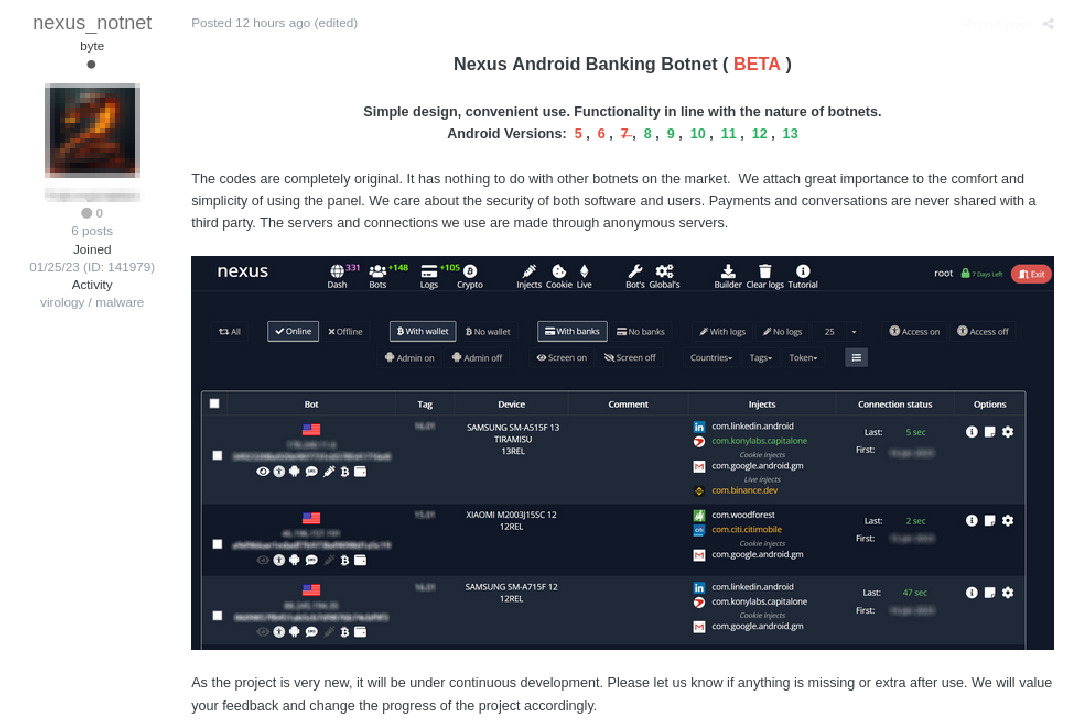
The mechanism is continuous scanning of dark web marketplaces, criminal forums, and Telegram channels. It does not wait for internal discovery or external notification. Internal tools cannot see this data because it never crosses the perimeter: a security information and event management (SIEM) platform cannot index a Telegram channel, and an endpoint detection and response (EDR) tool cannot see credentials being sold on a dark web market. That limitation is why internal tools often produce no signal until after the damage is done.
How Fast Does Credential Monitoring Reduce Dwell Time?
Google Cloud and Mandiant’s M-Trends 2026 report, drawn from over 500,000 hours of investigations in 2025, found a global median dwell time of 14 days, nine days when organizations detected intrusions themselves versus 25 days when notified by an outside party. That gap shows the operational value of external monitoring. External visibility moves detection from the external-notification track to the internal-detection track.
Response delay, not attacker sophistication, drives damage. The leaked credentials were available. The response path was not ready. That pattern reflects a structural problem rather than an isolated incident.
Monitoring only reduces dwell time if someone can act on the alert. Password resets, session revocation, and multi-factor authentication (MFA) enforcement have to be ready to run when the alert arrives. The Cybersecurity and Infrastructure Security Agency (CISA) recommends that organizations transitioning to phishing-resistant MFA, or those with existing non-phishing-resistant MFA systems, employ additional prevention and detection controls such as credential monitoring alongside phishing-resistant MFA and identity and access management (IAM). That recommendation supports budget and board conversations about this capability.
Account Takeover And Identity Theft Prevention
Compressing dwell time matters because of what attackers do with credentials once they have them. Credential stuffing, replaying stolen username and password pairs against other services at scale, is the mechanism that turns a single exposed credential into a multi-system compromise. An alert from a dark web monitoring program buys a specific window: time to force a password reset, revoke active sessions, and step up authentication before the credential is tested against corporate systems.
The enterprise version of this problem is stolen employee credentials replayed against corporate systems. The individual version is executive and employee personal exposure, credentials that appear in consumer breaches but unlock corporate access because of password reuse.
Modern stealer logs include browser session cookies and OAuth tokens that bypass password resets entirely, so responding to a credential leak requires invalidating every active session and reissuing MFA factors. Resetting the password alone is not enough. An alert is only useful when the response path exists and the team has practiced it.
Third-Party And Supply Chain Credential Exposure
Third-party relationships create credential exposure that internal tools cannot see. Credentials leak through vendor platforms, contractor accounts, and former employee databases that the organization does not control. The exposure sits in someone else’s environment, which keeps it invisible to internal monitoring.
A contractor might upload credentials to a public repository, a vendor’s platform might be compromised, or an old employee account might be harvested by infostealer malware months after offboarding. None of these events generate a log entry inside the organization’s perimeter. According to CISO Brief, in May 2026 a contractor employee working for the Cybersecurity and Infrastructure Security Agency (CISA) uploaded credentials to a publicly accessible GitHub repository. CISA learned of its own credential exposure through external reporting, when a security researcher discovered the credentials and alerted a journalist, rather than through internal monitoring. That failure mode is common across sectors.
Early external detection gives a documented, time-stamped starting point for the notification clock. For governance, risk, and compliance (GRC) leaders, that timestamp is the artifact a regulator asks for. Learning about a third-party breach from the news rather than from the third party is the failure mode to avoid. External credential monitoring exists to reduce that risk.
How Dark Web Monitoring Supports GDPR, HIPAA, And CCPA Compliance
Under General Data Protection Regulation (GDPR) Articles 33 and 34, an organization that discovers a credential compromise affecting personal data must notify its supervisory authority within 72 hours of becoming aware and notify affected individuals where the risk is high. The 72-hour clock starts at awareness, not at the moment of breach. A monitoring program that surfaces exposure in hours rather than weeks directly affects whether an organization can meet that deadline.
Under the Health Insurance Portability and Accountability Act (HIPAA) Breach Notification Rule, affected individuals must be notified no later than 60 calendar days from discovery of a breach of unsecured protected health information (PHI). The HIPAA Security Rule requires covered entities to implement audit controls, hardware, software, and procedural mechanisms that record and examine activity in systems containing PHI. A dark web monitoring program contributes to that audit trail by producing a documented, time-stamped detection record that shows when an exposure was first identified and what action followed.
Regulatory and insurance exposure both reward a documented, defensible detection and response record.
These statements are factual and general. They are not legal advice, and organizations should confirm specific obligations with qualified counsel.
Dark Web Monitoring Vs. Data Breach Monitoring
Compliance obligations explain why organizations need external visibility, but not all external visibility is equal. Standard breach-list checking and dark web credential monitoring are often described as equivalent. They are not. The difference is data scope, timing, and risk context.
Free services are limited to data that has been publicly documented and indexed. They do not monitor stealer logs, private Telegram channels, invite-only forums, or real-time marketplace listings. A corporate credential harvested on Monday can be sold to an initial access broker, a criminal specialist who breaks in and resells that access, by Wednesday and abused for ransomware deployment within the week, long before any breach dataset exists for an automated monitor to scan.
What Dark Web Credential Monitoring Does Not Do And What It Still Requires
Dark web credential monitoring has clear limits around what it cannot prevent, what it cannot see, and what it cannot replace. Understanding those boundaries helps teams position the capability correctly and pair it with the right controls.
Monitoring is a detection capability. It cannot stop credentials from being stolen in the first place. That distinction shapes how leaders explain the tool internally and which preventive controls they still need.
Coverage is incomplete. Some marketplaces and channels are gated or private, and adversary-in-the-middle (AiTM) captured session cookies are typically used immediately and never enter the resale market at all, so dark web monitoring sees nothing of them. Attackers may also use credentials privately without ever posting them. A credential purchased in a one-to-one transaction between an initial access broker and a ransomware affiliate may never appear in any monitored channel.
Dark web credential monitoring complements phishing-resistant MFA, IAM, endpoint detection and response (EDR), and SIEM. Those controls watch what happens inside the perimeter. Dark web monitoring watches what is already circulating outside. Each layer addresses a different part of the attack chain.
The capability also depends on a response path. As noted earlier, an alert with no response path reduces dwell time by zero. The response workflow, including password resets, session revocation, and MFA enforcement, has to be ready to run when the alert arrives.
Is Dark Web Monitoring Worth It?
Given those limitations, the honest answer to whether monitoring is worth it depends on organizational fit. The organizations that benefit most have three characteristics: a consumer-facing brand, regulatory exposure, and no dedicated external threat monitoring team. If there is no consumer login to phish and no application to clone, part of the value falls away. That is a legitimate fit question, and leaders should ask it before building a business case.
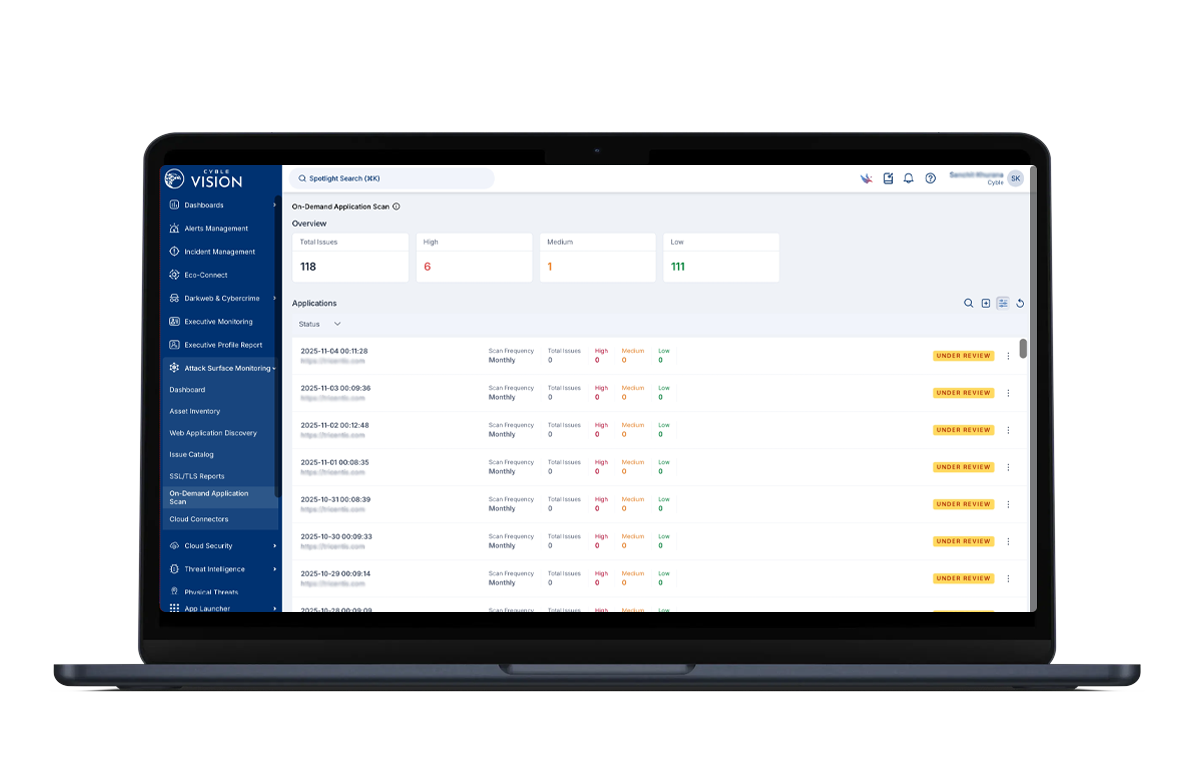
For organizations that do fit that profile, the cost drivers are scope of monitoring, number of assets and executives covered, whether managed takedown is included, and service tier. Free breach-notification services sit at the bottom of that range. They typically check a single email address against publicly disclosed breach data, with no continuous monitoring of marketplaces or forums, no entity resolution, no enrichment, and no takedown path. They are useful for password-hygiene audits, but they are not a substitute for continuous external monitoring.
In-house dark web credential monitoring at large enterprises typically requires full-time threat intelligence analysts to maintain 24/7 coverage across the fragmented dark web landscape. Those analysts maintain Tor access, manage operational security for their own identities, and continuously update source lists as forums migrate, get seized, or go private. That staffing cost is the baseline against which managed monitoring services should be evaluated.
The strongest budget case usually emerges during a proof of concept, when previously unknown findings are specific to the organization. Abstract risk is hard to defend. A time-stamped finding showing credentials circulating in a channel the organization had no visibility into is concrete.
Why Cyble For Dark Web Credential Monitoring
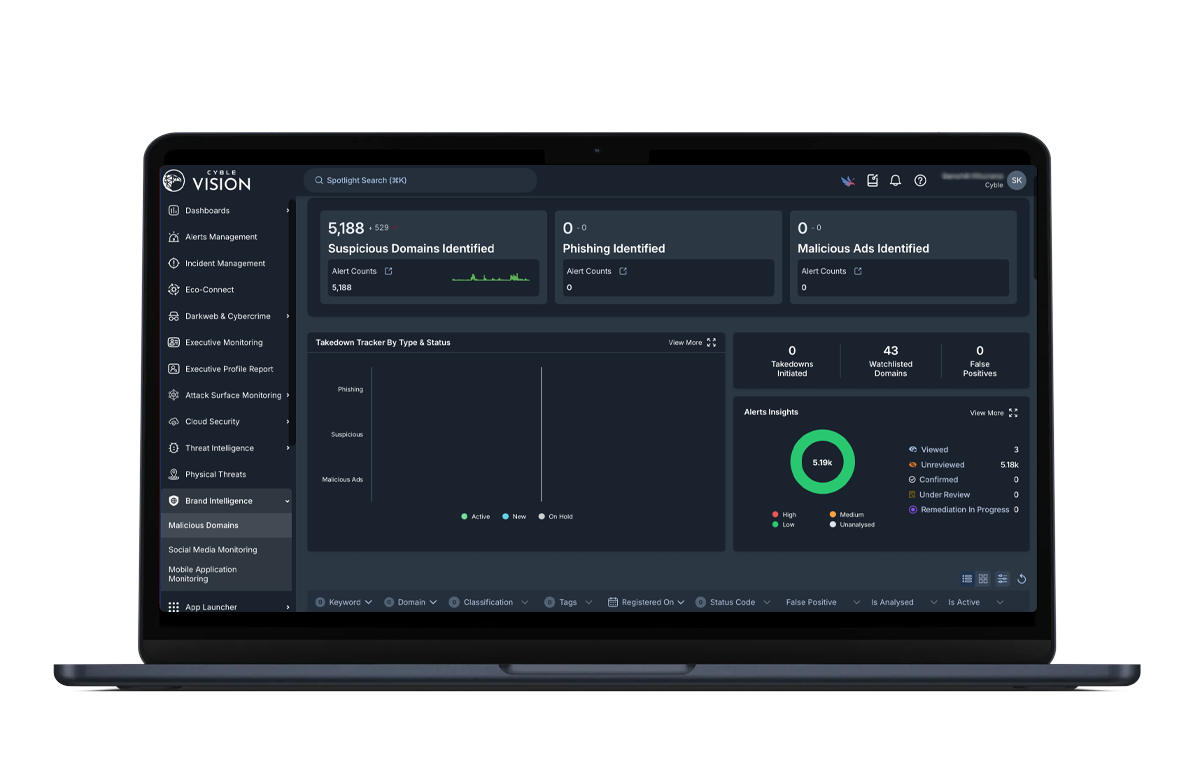
Cyble Vision is the usual entry point for organizations building an external credential monitoring capability. It provides continuous monitoring across the surface, deep, and dark web. Its visibility extends to more than 15,000 darknet marketplaces, a coverage depth that reflects Cyble’s internal telemetry and is described by Cyble as industry-high.
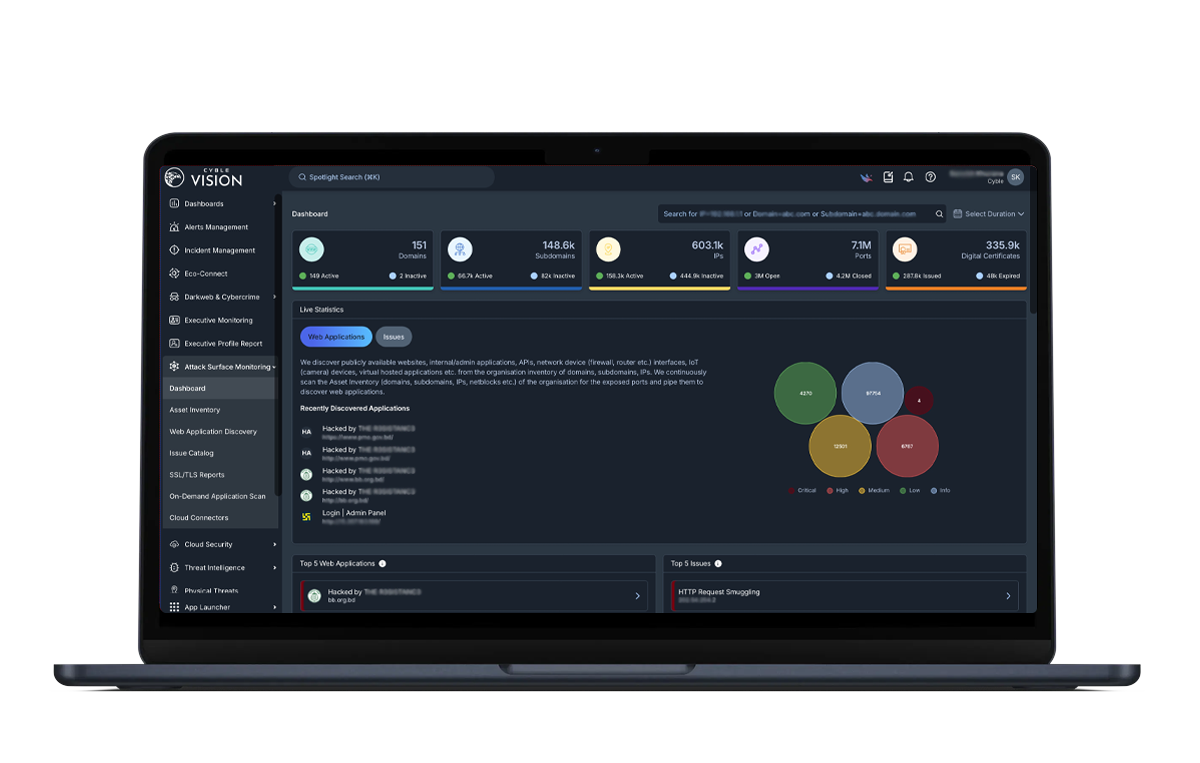
Relevance scoring runs against the customer’s own attack surface: domains, subsidiaries, executives, and technology stack. Automated entity resolution supports it by recognizing obfuscated and cross-language references to the same brand. Cyble reports a 95% signal-to-noise ratio based on internal telemetry. That figure matters operationally because a feed that generates high false-positive volume erodes analyst trust until the alerts stop being read.
Enriched alerts arrive in minutes rather than hours from detection. That speed reflects Cyble’s artificial intelligence (AI) native pipeline architecture, not a guaranteed service level. Detection and enrichment at the collection layer produce a case-ready alert instead of a raw indicator that requires an hour of manual pivoting before any decision can be made.
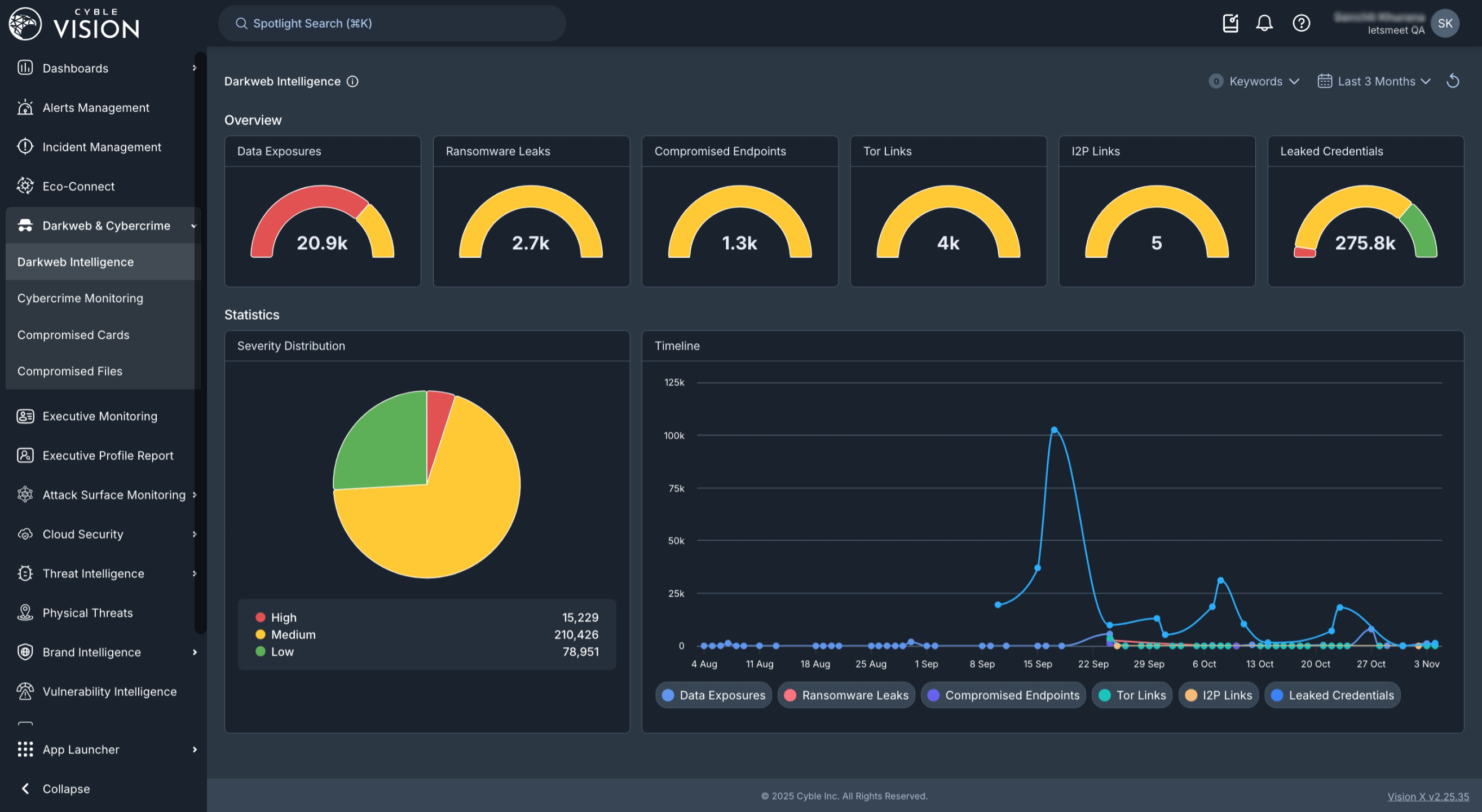
Native managed takedown is part of the platform, not a referral to a separate vendor. Cyble reports a 98% takedown success rate, delivered against service level agreements (SLAs). Detection and removal come from one vendor, which closes the gap between knowing about a threat and acting on it.
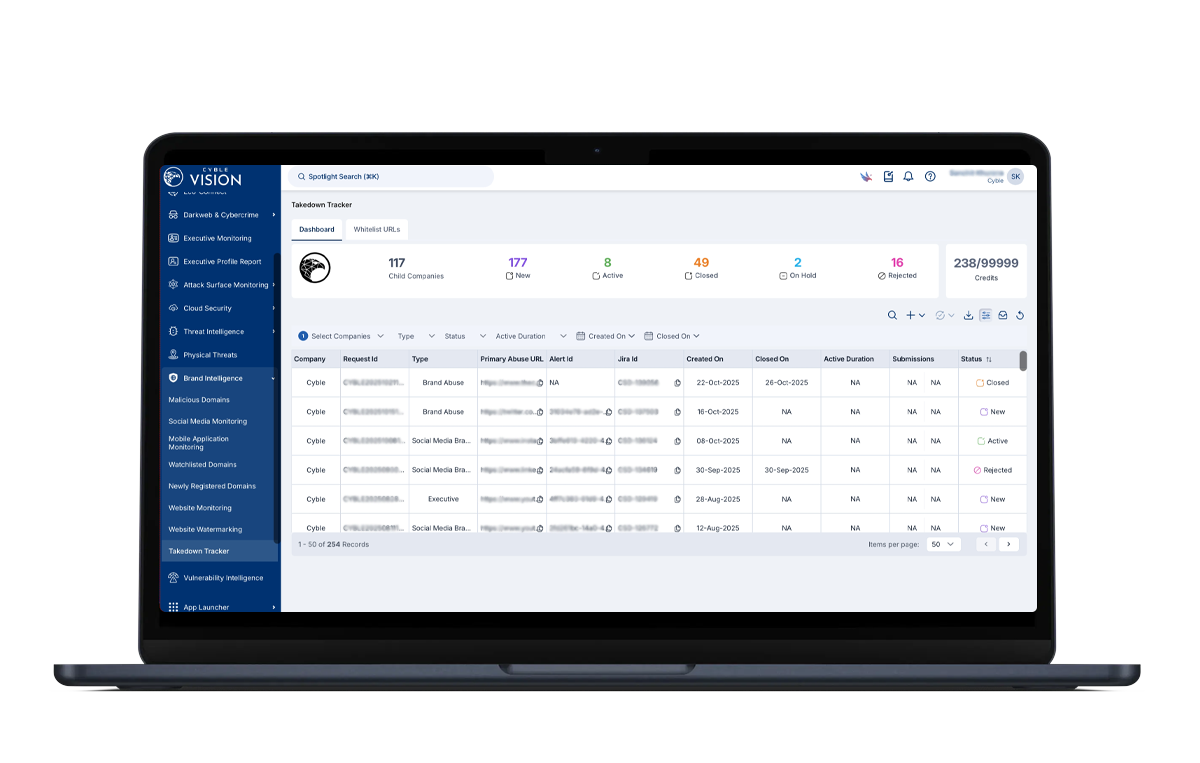
Cyble integrates with more than 70 enterprise platforms, including Splunk, Microsoft Sentinel, IBM QRadar, Cortex XSOAR, and ServiceNow. Findings land in the workflow the team already uses rather than in another isolated dashboard. Capabilities, coverage, and service levels vary by subscription tier and region, and results depend on the customer’s environment, asset scope, and configuration.
Cyble was named a Challenger in the inaugural 2026 Gartner® Magic Quadrant™ for Cyberthreat Intelligence Technologies, one of only two vendors placed as a Challenger out of 17 evaluated, and holds a 4.8/5 rating on Gartner® Peer Insights™ based on 49 verified reviews over the 18-month period ending November 30, 2025. Cyble is also recognized as a Strong Performer in the 2026 Gartner® Peer Insights™ “Voice of the Customer” for Brand Protection Software.
Frequently Asked Questions
What is the key benefit of dark web credential monitoring?
The key benefit is early detection of exposed credentials before attackers use them. Continuous scanning of dark web marketplaces, forums, and Telegram channels surfaces exposure in hours rather than weeks. That window gives security teams time to reset passwords, revoke sessions, and enforce MFA before credentials are tested against corporate systems. Internal tools such as SIEM platforms and EDR solutions cannot see this data because it never crosses the perimeter.
Are dark web monitoring services worth it?
Worth depends on organizational fit. The organizations that benefit most have a consumer-facing brand, regulatory exposure, and no dedicated external threat monitoring team, plus someone ready to act on alerts when they arrive. For organizations without a consumer login to phish or an application to clone, part of the value falls away. Free breach-notification services check email addresses against publicly disclosed breach data, but they do not monitor stealer logs, private Telegram channels, or real-time marketplace listings, and they provide no enrichment or takedown path.
How is dark web monitoring different from standard breach-list checking?
Standard breach-list checking covers publicly disclosed breaches after the fact, with inherent lag between a breach and dataset inclusion. Dark web credential monitoring covers marketplaces, forums, and closed channels continuously, often before public disclosure, and adds context about the actor, infrastructure, and relevance to the organization’s specific attack surface. It also covers the 48-hour infostealer window cited earlier, well before any breach database indexes the data.
What does dark web credential monitoring not do?
It detects exposure and does not prevent theft. Coverage is incomplete because some marketplaces and channels are gated or private, and credentials used in private one-to-one transactions between threat actors may never appear in any monitored channel. Monitoring also does not replace phishing-resistant MFA, IAM, or an incident response capability. It functions as a detection layer that complements those controls.
Does dark web monitoring help with compliance and audit evidence?
It provides a documented, time-stamped detection record that supports disclosure timelines and audit requirements. Under GDPR, the 72-hour notification clock starts at awareness, so a monitoring program that surfaces exposure in hours rather than weeks directly affects whether that deadline can be met. Under HIPAA, audit controls must record and examine activity in systems containing protected health information, and a monitoring program contributes to that record by documenting when an exposure was first identified and what response followed. These statements are general and not legal advice.
What has to be in place for monitoring to reduce dwell time?
Teams need a practiced response workflow. Password resets, session revocation, and MFA enforcement have to be ready to run when an alert arrives. As noted earlier, an alert with no response path reduces dwell time by zero. Session cookies and OAuth tokens require session invalidation at the identity provider level, because a password reset alone does not revoke an active session. The response workflow should be documented, tested, and assigned to named owners before the first alert arrives.
How does Cyble handle false positives?
Entity resolution runs before alerting, so mentions that do not refer to the organization, including obfuscated spellings and cross-language references, are filtered upstream rather than passed to analysts as alerts. Relevance scoring runs against the customer’s specific attack surface rather than against generic keyword matches. Cyble reports the 95% signal-to-noise ratio cited above based on internal telemetry. Findings arrive already enriched, so the triage decision is faster even when a finding turns out not to be material.
Conclusion: Closing The Exposure-To-Response Window
Credentials circulate in places internal tools cannot see. The evidence that an organization is already exposed, such as credentials on a dark web market, session tokens in a Telegram channel, or access listings on a criminal forum, generates no log entry inside the perimeter. The first internal signal is often a fraud event, a ransom note, or a journalist’s call.
Dark web credential monitoring addresses that structural gap by moving detection outside the perimeter, where the evidence actually lives. That shift compresses the window between exposure and response. The criteria covered earlier, including coverage depth, relevance and entity resolution, enrichment quality, takedown capability, integrations into existing workflows, and organizational fit, determine how much of that window an organization actually closes.
Results depend on the customer’s environment, asset scope, and configuration, and should be validated against it. Statistics cited from Cyble are drawn from internal telemetry unless otherwise attributed. Capabilities, coverage, and service levels vary by subscription tier and region.