
Industry-Leading
Brand Monitoring, Intelligence & Protection Solutions
Brand Security Monitoring Built for Modern Threats




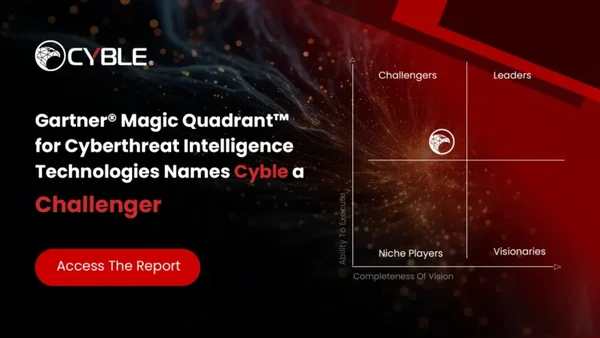
Cyble Named a Challenger in the 2026 Gartner® Magic Quadrant™ for Cyberthreat Intelligence Technologies
What is Cyble Brand Intelligence & Protection?
Real-time intelligence. Full-time brand protection.
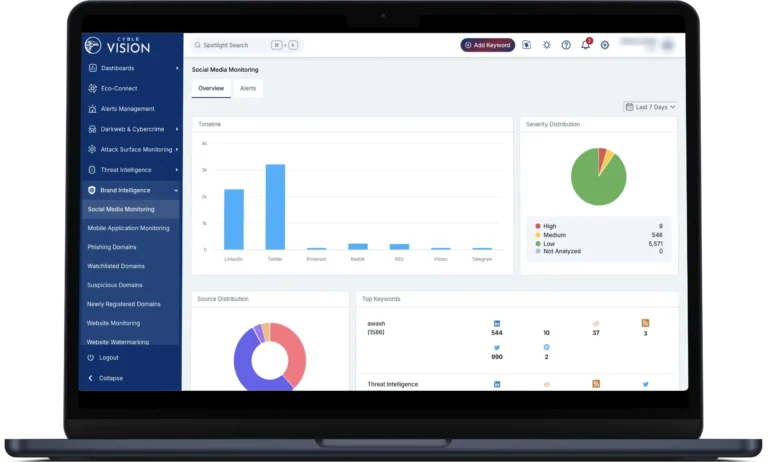
Cyble’s Brand Intelligence & Protection is built to help organizations detect and stop impersonation fast. Our platform blends brand intelligence, brand threat intelligence, and brand security monitoring to give you a clear view of where your brand is exposed — across domains, social media, apps, and the dark web.
With this visibility, you can act quickly, launch takedowns with confidence, and stay ahead of brand monitoring cybersecurity risks.
Unlimited Brand Takedowns. No Caps. No Per-Removal Fees.
Act on every threat — not just the ones that fit your budget. Unlimited brand takedowns powered by Cyble's global threat intelligence. Relentless brand protection, zero financial barriers.
Powered by the Same Dark Web Engine That Detects Breaches Before They Surface
Cyble's brand intelligence is backed by 200Bn+ dark web records — giving you visibility into brand abuse that originates in underground markets, long before it hits the surface web.
Every Surface Where Your Brand Gets Abused — Monitored and Actioned
Cyble's AI Doesn't Just Monitor — It Understands
Cyble's AI engine uses three layers of intelligence to detect and prioritize brand threats with precision:
Image Recognition
Identifies fake logos and counterfeit brand assets across millions of pages.
NLP Models
Detects impersonation patterns in social profiles and phishing copy.
ML Risk Scoring
Tells your team what to action first — before brand damage compounds.
Cyble Scans Every App Store — Automatically
Cyble scans iOS App Store, Google Play, and third-party app stores for unauthorized apps impersonating your brand. A fast-growing attack vector — automatically flagged and taken down.
Every Alert Comes with a Complete Forensic Package
Built for brand and legal teams who need to act, not just investigate.
180+ Platforms and Sources — No Impersonation Goes Undetected
Cyble monitors brand threats across 180+ platforms and sources across social media, marketplaces, app stores, and all three web layers.
Social & Messaging
- Twitter/X
- Telegram
- TikTok
Marketplaces & App Stores
- Amazon
- eBay
- Alibaba
- Shopee
- iOS App Store
- Google Play
Web Layers
- Surface web
- Deep web
- Dark web
Brand Alerts Flow Directly into Your SOC and Ticketing Tools
No manual handoffs, no workflow gaps. Cyble brand threat signals integrate natively with your existing security and operations stack.
Built for Security Teams and Brand Teams Alike
For Security Teams
- Automated detection and prioritized alerts
- SIEM-ready feeds
- Full forensic evidence packages per alert
- Native integration with Splunk, Sentinel, QRadar, and more
For Brand & Marketing Teams
- Detect impersonation and fake accounts
- Initiate takedowns directly from the platform
- Clear, audit-ready reporting for legal submissions
- Automated workflows cut hours of manual effort
Cyble vs. ZeroFox
See why leading security and brand teams choose Cyble over alternatives.
| Feature | Cyble | ZeroFox |
|---|---|---|
| Takedown model | ✓ Unlimited — no caps, no per-removal fees | ✕ Per-takedown fees apply |
| Coverage breadth | ✓ 180+ platforms, all web surfaces | ✕ Modular pricing by source |
| Dark web intelligence | ✓ 200Bn+ records, natively integrated | ✕ Surface-level only |
| AI detection | ✓ Image recognition + NLP + ML risk scoring | ✕ AI-assisted |
| Executive protection | ✓ Integrated module, included | ✕ Add-on, additional cost |
| Evidence package | ✓ Full forensic package per alert | ✕ Not specified |
Measurable Impact from Day One
98.5% Takedown Success
Mean success rate across all takedown requests.
Hours to Action
Detection-to-removal initiated within hours, not days.
Reduced Phishing Incidents
Significant reduction in active phishing campaigns post-deployment.
Automated Detection Savings
Hours/week reclaimed through automated detection and takedown workflows.
Unlimited Coverage
No budget caps mean every detected threat gets actioned.
Core Features & Capabilities
Digital Risk Perimeter Protection
Always-on brand protection monitoring across websites, apps, and social platforms.
Fake Mobile App Detection
Spot and eliminate fraudulent apps that exploit your brand before they reach your users.
Phishing & Scam Intelligence
Detect phishing campaigns early with cross-platform insights.
Suspicious Domain Monitoring
Identify malicious, look-alike, or newly registered domains in real time.
Brand Impersonation Detection
Instantly find and remove fake profiles, cloned pages, and fraudulent accounts.
Automated Takedowns
Resolve threats faster with AI-backed analysis and automated removal workflows.
Real-Time Brand Mentions Alerts
Track conversations and references across open web, social media, and dark web.
Subdomain Discovery
Uncover exposed or forgotten subdomains that could open doors to attackers.
Website Change Monitoring
Get alerts for suspicious or unauthorized modifications to your website content.
Defacement Protection
Detect website tampering instantly and restore brand integrity without delay.
Why Choose Cyble Brand Intelligence & Protection?
Purpose-Built for Modern Brand Risk
Combines brand intelligence with cyber threat visibility for a single, clear view of everything targeting your brand.
Protection as fast as the threat
Automated takedowns ensure threats are removed before they impact customers or reputation.
Unlimited takedowns
No caps, no per-removal fees — every detected threat gets actioned.
Global Intelligence, Local Context
Worldwide monitoring enriched with context — so you know what matters and what doesn’t.
Automation That Reduces Manual Effort
AI-driven workflows cut hours of manual detection and response.
Real Visibility, Real-Time Decisions
Instant alerts, verified intelligence, and clear recommendations make brand protection simple and fast.
How Cyble Brand Intelligence Works
How You Stay Protected
Stop
- Detect fake domains, profiles, and marketplaces using Cyble’s brand intelligence platform.
- Reduce digital fraud and brand abuse through continuous, cross-channel monitoring.
Eliminate
- Neutralize phishing sites, vishing, and smishing attempts targeting your brand.
- Get flagged on emerging attacks as they surface, not after customers report them.
Takedown
- Fast removal of rogue websites and trademark-violating content.
- Global takedown support for consistent brand protection wherever the threat originates.
Automate
- Automatically detect typosquatting, phishing, and IP theft.
- Streamline enforcement at scale so your team acts on priority, not volume.
Industry Use Cases & Customer Impact
How Our Solutions Work for You
Financial Services
Healthcare & Pharma
Retail & E-Commerce
Telecom & Technology
Manufacturing & FMCG
Government & Public Sector
Crypto & Fintech
Highly Rated Brand Intelligence Platform on G2
Cyble Brand Intelligence holds an Overall Satisfaction Score of 82.97 on G2, reflecting strong validation from security professionals.
FAQs
What is Brand Intelligence?
Why is Brand Intelligence important?
Brand intelligence matters because attackers routinely clone websites, impersonate executives, and sell stolen brand assets on the dark web, often before a company notices on its own. Cyble’s platform identifies these risks in real time and moves from detection to takedown within hours rather than days, which limits both financial loss and reputational damage.
What are the five types of brand abuse to prevent with Brand Intelligence?
Brand Intelligence is built to detect five recurring categories of brand abuse:
- Phishing pages designed to steal customer credentials or payment details
- Fake websites and typosquat domains that impersonate a legitimate brand
- Counterfeit product listings on marketplaces and e-commerce platforms
- Unauthorized social media accounts and cloned profiles
- Misuse of brand assets such as logos, trademarks, and product imagery
Cyble’s platform monitors for all five categories continuously and packages each detection with a forensic evidence file — screenshots, HTML capture, and WHOIS data — so legal and brand teams can act immediately.
How does AI enable and support Brand Intelligence?
Cyble’s Brand Intelligence engine uses three layers of AI to detect and prioritize brand threats: image recognition to identify fake logos and counterfeit brand assets, natural language processing (NLP) to detect impersonation patterns in social profiles and phishing copy, and machine learning risk scoring to tell security teams which alerts to action first. Together, these layers turn raw brand mentions into a prioritized, actionable queue instead of a flood of unranked alerts.
What are the Benefits of Brand Intelligence?
Organizations that adopt Brand Intelligence typically see four measurable benefits:
- Faster detection — brand abuse is flagged in real time instead of being discovered by customers or the press
- Reduced financial exposure — unlimited takedowns (no per-removal fees) mean every detected threat gets actioned, not just the ones that fit a budget
- Stronger customer trust — fewer successful phishing and impersonation attempts reaching customers
- Audit-ready evidence — each alert includes a legal-ready forensic package for takedown requests or law enforcement referral
Cyble customers using Brand Intelligence report a 98.5% takedown success rate, with detection-to-removal action typically initiated within hours.
What is competitive intelligence for Brands?
Competitive intelligence for brands is the process of understanding how a brand performs against competitors by studying customer conversations, market trends, and digital signals. It differs from brand protection in scope: competitive intelligence informs strategic and marketing decisions, while Cyble’s Brand Intelligence focuses specifically on detecting and neutralizing security risks — impersonation, phishing, and abuse — tied to the brand.
How does Brand Intelligence help in improving brand reputation?
Brand Intelligence protects reputation by surfacing negative mentions, impersonation attempts, and misleading content before they escalate into a public incident. With Cyble’s continuous monitoring across social media, marketplaces, and the dark web, brand and security teams can respond within hours instead of learning about an incident from customer complaints or news coverage.
What tools are used for Brand Intelligence?
Brand Intelligence relies on a combination of continuous monitoring platforms, AI analytics, and dark web scanning. Cyble’s platform, for example, draws on 200 billion-plus indexed dark web records and monitors 180-plus platforms and sources — including social networks, marketplaces, app stores, and paste sites — then routes findings into SIEM and ticketing tools such as Splunk, ServiceNow, Jira, and Microsoft Sentinel for security teams already using those systems.
How can Brand Intelligence drive customer engagement?
Brand Intelligence surfaces what customers are saying about a brand across social media and the open web, giving marketing and support teams the visibility to respond faster and communicate more accurately. When paired with security monitoring, it also protects the customer interactions themselves — flagging fake support channels or impersonation accounts that would otherwise erode the trust engagement is trying to build.
What is the difference between Brand Intelligence and Market Intelligence?
Market intelligence tracks broad industry trends and competitor moves; Brand Intelligence focuses specifically on a company’s own reputation and digital safety. Cyble’s Brand Intelligence goes further than passive tracking — it proactively monitors risks to a brand’s online presence, including impersonation and abuse, so a company can protect its identity rather than simply observe the market around it.
Is social media threat monitoring part of cybersecurity?
Yes. Social media threat monitoring is a core part of cybersecurity because impersonation accounts, phishing links, and scam campaigns launched on social platforms frequently lead to credential theft or fraud against real customers. Cyble’s Brand Intelligence monitors major platforms including X/Twitter, LinkedIn, Facebook, Instagram, Telegram, TikTok, and Reddit for this activity in real time.
What channels are covered in brand monitoring services?
Cyble’s brand monitoring covers 180-plus platforms and sources across three categories: social and messaging platforms (X/Twitter, LinkedIn, Facebook, Instagram, Telegram, TikTok, Reddit), marketplaces and app stores (Amazon, eBay, Alibaba, Shopee, the iOS App Store, and Google Play), and all three web layers — surface, deep, and dark web. This breadth is what allows detection of both a cloned storefront on a marketplace and a brand mention on an underground forum from a single platform.
How is Cyble's Brand Intelligence different from competitors?
Cyble’s Brand Intelligence combines real-time monitoring with cybersecurity-grade threat intelligence to detect impersonation, phishing, fake domains, and scam apps across the web, social media, and the dark web in one platform rather than several point tools. Compared with ZeroFox, for example, Cyble offers unlimited takedowns with no per-removal fees (versus per-takedown charges), native access to 200 billion-plus dark web records (versus surface-level coverage), and three-layer AI detection — image recognition, NLP, and ML risk scoring — with executive protection included rather than sold as an add-on.
Why should you use brand intelligence software?
Brand intelligence software gives security and marketing teams real-time visibility into how a brand is being impersonated, discussed, or exploited across the web, so threats are caught before they cause damage. The main reasons teams adopt it:
- Detect impersonation and phishing early, before fake domains and spoofed profiles reach customers
- Protect customer trust by taking down fraudulent assets quickly rather than absorbing the reputational fallout
- Monitor dark web mentions where a brand may be discussed, bought, or sold without the company’s knowledge
- Track unauthorized use of logos, trademarks, and brand names across the open web
- Gain visibility into competitor and threat-actor activity relevant to the brand
- Reduce response time through automated alerts instead of manual searching
Cyble’s Brand Intelligence & Protection platform delivers on all six through unlimited takedowns, 200 billion-plus dark web records, and native integration with existing SOC tools.
What is digital risk protection (DRP)?
Digital risk protection (DRP) is the umbrella category covering external threats to an organization that originate outside its own network — brand impersonation, leaked credentials, phishing infrastructure, fake mobile apps, and exposed sensitive data. Brand protection and dark web monitoring are typically components within DRP rather than separate disciplines: DRP exists to fill the visibility gap that internal tools like SIEM and endpoint detection can’t cover, since they have no way to see threats that never touch the organization’s own infrastructure.
What should a brand protection vendor evaluation confirm?
Confirm coverage across lookalike domains, phishing sites, fake social profiles, and other impersonation channels, and verify that alerts include enough context — screenshots, registration details, hosting information, evidence of customer targeting — to determine whether a finding is a real threat. Detection alone isn’t enough; validate the remediation process too.
How do companies detect lookalike domains before customers encounter them?
Through continuous monitoring of new domain registrations using fuzzy matching, homoglyph detection (catching visually similar characters), and typosquatting pattern analysis against the brand name and known variations — run in near real time, since manual checks can’t keep pace with thousands of daily domain registrations.
What does a phishing domain takedown process actually involve?
Detection, evidence collection (screenshots, WHOIS data), abuse reporting to hosting providers/registrars/CDNs, and escalation to registries or legal channels if the initial report is ignored. Verification that the site is actually removed — not just delisted — is a step buyers should confirm is included, not assumed.
Why do phishing takedown requests sometimes get rejected or ignored?
Common causes include insufficient evidence, automated triage without human review, jurisdictional resistance from hosts in regions with weak enforcement cooperation, and hosts requiring direct trademark-holder confirmation. Escalation typically requires resubmitting with stronger, timestamped evidence and escalating beyond the abuse desk to the registry or upstream provider.
How does brand protection connect with dark web monitoring?
They overlap when attackers combine stolen data with impersonation campaigns — using leaked customer or employee details to build phishing sites or fraudulent communications. Dark web monitoring provides underground visibility; brand protection extends that visibility to the surface web and social platforms where customers and employees actually encounter the resulting threats.
What contract terms matter most for a brand protection or takedown service?
Takedown SLA commitments by severity tier, module scope (what’s bundled vs. add-on), takedown quotas and overage pricing, evidence retention/export rights, and renewal pricing protection. Vague language like “prompt response” without a measurable time commitment offers limited accountability — get specific numbers in writing.
What business impact comes from slow phishing site takedowns?
Slow takedowns extend the window during which customers can be defrauded, increasing chargeback costs, support volume, and reputational damage — while giving the content more time to be indexed or shared, amplifying reach beyond the initial exposure. The longer a site stays live, the more expensive the incident becomes across fraud, support, and trust dimensions.
Trusted by Global Leaders in Cybersecurity
From Fortune 500s,to government organizations, leading teams rely on Cyble’s solutions to detect, respond, and stay ahead of evolving threats.
Manager, Strategy - IT Services
SR. Technology Lead - IT Services
IT Services Associate - IT Services
Chief Executive Officer - Energy and Utilities
SR. Technology Lead - IT Services
Operations Associate - Education
Ready to See Cyble Brand Intelligence & Protection in Action?

Brand Intelligence
Data Sheets