
Industry-Leading
Dark Web Monitoring Solutions
See What Others Can’t. Protect What Matters.
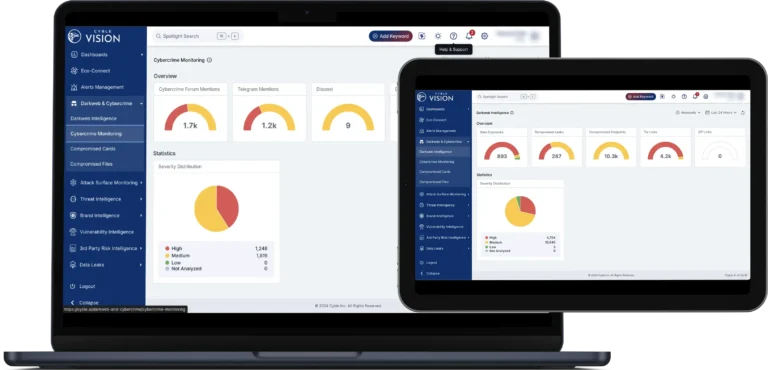
Cyble’s Dark Web Monitoring platform delivers continuous visibility into hidden forums, underground marketplaces, and threat actor activity. Our dark web security solutions help you detect exposed data, identify risks early, and protect your brand, users, and business before incidents occur.
Confirmed breaches monitored worldwide in 2025
Records indexed across dark, deep & surface web
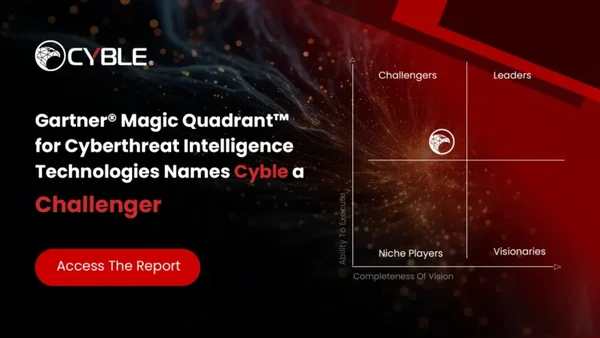
Cyble Named a Challenger in the 2026 Gartner® Magic Quadrant™ for Cyberthreat Intelligence Technologies
What is Dark Web Monitoring Solution?
A dark web monitoring solution continuously scans hidden corners of the internet — including Tor, I2P, ZeroNet, invite-only forums, and criminal marketplaces — to identify your organization’s stolen data before attackers can use it. Unlike a one-time scan, it monitors these sources around the clock, flagging leaked credentials, breached records, and brand or executive impersonation as soon as they surface.
Speed is what matters most. The sooner a leaked password or exposed API key is caught, the sooner it can be revoked or reset — closing the window attackers rely on.
Using machine learning, NLP, and expert analysts, we turn raw intelligence into actionable alerts — so you don’t just react, you stay ahead.
Dark Web vs. Deep Web: What's the Difference?
Any part of the internet not indexed by standard search engines — password-protected pages, internal databases, private cloud storage. Most of it is entirely legitimate.
A small, intentionally hidden subset of the deep web, accessible only through specialized software like Tor or I2P. It's where threat actors trade stolen credentials, breached records, and access to compromised networks.
Surface, Deep, and Dark Web — Simultaneously
Takedown success rate
Detect It. Remove It. No Limits.
- No per-removal fees
- No caps on volume of takedowns
- Automated detection-to-action pipeline
- Covers leaked credentials, brand impersonation, and exposed PII
- Legal team coordination available for complex removals
Dark Web Alerts Flow Directly into Your SOC Stack
Core Features & Capabilities
360° Web Coverage
Monitor dark web marketplaces, deep web forums, paste sites, and threat-actor portals through a unified, scalable platform.
AI-Powered Threat Analytics
Proprietary ML/NLP models sift thousands of posts daily, assigning risk scores, linking sources, and uncovering patterns.
Compromised Data & Credential Alerts
Detect when your brand, executives, vendors, or customers appear in exposed datasets, credential dumps, or sale forums.
Threat-Actor Chatter Monitoring
Gain context into discussions, plans, and trades in the underground — your early-warning signal for incoming attacks.
Actionable Intelligence & Reporting
Expert-verified alerts, dashboards, and audit-ready reports to guide remediation and satisfy compliance requirements.
Scalable for Enterprise Use
Built for global, multi-tier ecosystems. Supports enterprise dark web monitoring at scale with dedicated analyst support.
Cyble’s platform stands among the most advanced dark web monitoring product offered by leading dark web monitoring company.
Choosing the Right Dark Web Monitoring Platform
- Source Coverage Depth
Does the platform reach closed, invite-only forums and Telegram channels — or only indexable, public-facing sources? Coverage gaps here are the single biggest differentiator between dark web monitoring services.
- Alert Accuracy Over Alert Volume
A platform generating thousands of duplicate or low-confidence matches increases analyst workload instead of reducing it. Evaluate false positive rates and the investigation effort required per finding — not raw alert count.
- Human Validation
Automated-only scanners struggle to distinguish noise from genuine risk. Look for dark web monitoring solutions that pair machine-learning detection with human analyst review before alerts escalate.
- Integration With Existing Workflows
The value of any alert drops if it requires manual handoff. Confirm the platform integrates natively with your SIEM, SOAR, IAM, and ticketing tools.
- Remediation, Not Just Detection
Detection alone doesn’t close exposure. Confirm takedown support, success rates, and whether removals carry per-incident fees.
Why Choose Cyble Dark Web Monitoring Solution
Intelligence-Led vs. Checklist-Based
Dynamic, real-time insights into illicit markets and underground activity — not static scans.
Time-to-Action Advantage
Early detection means you act before stolen data is weaponized — not after the headline.
Seamless Integration
Dark web intelligence flows directly into your security stack — phishing defence, vendor risk, identity protection, and incident response.
Audit & Governance Ready
Built-in dashboards, logs, and workflows support compliance and regulatory oversight out of the box.
Trusted Globally
Supporting enterprises, regulated industries, and government bodies with real-time monitoring and intelligence.
Cyble Dark Web Monitoring vs. Free & Automated-Only Scanners
| What You Need | Cyble Dark Web Monitoring | Free & Automated-Only Scanners |
|---|---|---|
| Monitoring | 24/7 continuous monitoring | Point-in-time scans only |
| Coverage | TOR, I2P, ZeroNet, Telegram, paste sites, and invite-only forums, with HUMINT analyst access | Publicly indexed sources only; misses closed forums and Telegram |
| Scale | 200Bn+ records across the dark, deep, and surface web | Narrow, breach-dump-only datasets |
| Accuracy | Every alert is machine-scored and analyst-validated with risk scoring | Raw automated hits, heavy on false positives |
| Context | Full threat actor context (origin, intent, risk), correlated with your attack surface in Cyble Vision | Standalone results with no actor context |
| Remediation | Built-in takedowns with a 98.5% success rate, no per-removal fees or volume caps | No takedown support; findings stop at a report |
How Cyble Dark Web Monitoring Solution Works
Discover → Detect → Respond → Fortify
Discover
Identify key assets, data exposures, brand entities, credentials, and vendor profiles.
Detect
Respond
Fortify
This end-to-end cycle is built into all Cyble dark web monitoring platform.
Industry Use Cases & Customer Impact
Applicable Wherever Data, Reputation, and Risk Intersect
Financial Services
Healthcare
Retail & E-Commerce
Manufacturing / Critical Infrastructure
Public Sector & Government
Trusted by Global Leaders in Cybersecurity
From Fortune 500s,to government organizations, leading teams rely on Cyble’s solutions to detect, respond, and stay ahead of evolving threats.

CISO – Manufacturing ➔
Ready to See It in Action?
Dark Web & Deep Web Monitoring
Data Sheets
Frequently Asked Questions (FAQs) about Dark Web Monitoring Solution
what is Dark Web Monitoring?
Dark web monitoring is the continuous scanning of hidden forums, criminal marketplaces, ransomware leak sites, paste sites, and closed messaging channels like Telegram for data or mentions tied to an organization. Cyble Vision’s Dark Web Monitoring automates this process, indexing thousands of these sources around the clock and alerting security teams the moment a match to their domains, credentials, brand, or executives appears.
Unlike a one-time dark web “scan” or manual analyst search, monitoring runs continuously, so exposure is caught within hours or days of appearing rather than whenever someone next checks.
How is Cyble's Dark Web Monitoring different from competitors?
Cyble combines automated crawling with its own human intelligence (HUMINT) network operating inside closed, invite-only criminal forums and Telegram channels, rather than relying solely on scraping indexable sources. It’s also delivered natively inside Cyble Vision alongside attack surface management and broader threat intelligence, so dark web findings are correlated with an organization’s actual external assets instead of arriving as a standalone, context-free feed.
What is Cyble's Advanced Dark Web Monitoring?
Cyble’s Advanced Dark Web Monitoring is the enhanced tier within Cyble Vision that adds human analyst validation and direct access to closed, invite-only criminal forums and marketplaces on top of automated crawling. Where standard monitoring covers indexable and semi-open sources, the advanced tier extends into vetted, access-restricted communities that require established analyst credibility to enter — the places where the most damaging data (fresh breach dumps, initial access listings, ransomware affiliate chatter) tends to surface first.
How does the Advanced Dark Web Monitoring process work?
The process runs in four stages: defining the assets to protect (domains, brand terms, executive names, employee email formats, card BIN ranges); continuous collection across forums, marketplaces, Telegram, paste sites, and closed communities via automated crawlers plus analyst-operated HUMINT access; correlation, where new data is matched against the defined asset list and classified by type and severity; and triage and alerting, where confirmed matches are pushed to the security team with context — source, first-seen date, and recommended action — rather than as a raw data dump.
How does Advanced Dark Web Monitoring detect threats?
Detection combines three techniques: automated keyword and asset matching against monitored domains, executive names, and brand terms; machine-learning classification that sorts newly discovered data by type (credentials, PII, financial data, source code) and estimates severity; and human intelligence (HUMINT) from analysts operating inside closed, vetted criminal communities that automated crawlers cannot reach.
This mix is what separates threat detection from a plain keyword search — it identifies not just that a term appeared, but what kind of exposure it represents and how urgent it is.
Who needs Dark Web Monitoring Solutions?
Any organization that holds customer data, processes payments, or manages employee credentials is a candidate for dark web monitoring, but it’s highest-priority for financial services, healthcare, retail and e-commerce, SaaS, and government — sectors with heavy regulatory exposure and high resale value for stolen data.
In practice, if your organization would face breach notification obligations, reputational damage, or direct fraud losses from leaked credentials or customer records, monitoring earns its cost quickly.
Does my organization need dark web monitoring?
If your organization has employees who reuse passwords, customers whose data would be valuable to resell, or any public-facing brand that attackers could impersonate, you’re already exposed — dark web monitoring doesn’t create that risk, it makes it visible before it’s used against you.
A quick self-check: search your own domain and a few executive names on a breach-lookup tool. Finding nothing doesn’t mean you’re clean — it usually means no one is watching yet.
Why is Dark Web Monitoring important?
Dark web monitoring matters because stolen data is typically traded, tested, and sold on the dark web well before an organization discovers a breach through its own systems — industry breach reports have repeatedly shown detection gaps measured in months, not days. Catching that exposure early shortens the window attackers have to exploit it and gives security teams time to force resets, cancel cards, or notify customers before fraud or account takeover happens.
What are the business benefits of Dark Web Monitoring?
Beyond security, dark web monitoring delivers measurable business value across risk, cost, and trust:
- Lower breach costs — earlier detection shortens dwell time, which directly reduces incident response and remediation cost.
- Fraud prevention — catching exposed payment data or account credentials before they’re used cuts chargeback and account-takeover losses.
- Regulatory evidence — continuous monitoring provides documented proof of external risk oversight for auditors and regulators.
- Brand and customer trust — faster response to leaked customer data limits reputational fallout and support burden.
What's the benefit of automating dark web monitoring?
Automating dark web monitoring replaces periodic manual searches with 24/7 coverage across thousands of sources, something no analyst team can sustain by hand. It cuts mean-time-to-detect from weeks or months down to hours or days, and frees analysts to focus on investigating confirmed matches instead of manually searching forums and marketplaces for mentions of the organization.
How does Dark Web Monitoring help prevent financial fraud?
Dark web monitoring flags stolen payment card dumps, compromised banking credentials, and fraud-as-a-service listings (phishing kits, carding tutorials) as soon as they surface, giving fraud teams a window to cancel exposed cards, force password resets, and flag accounts before the data is actually used for takeover or unauthorized transactions.
How can Dark Web Monitoring help detect data breaches early?
Because stolen data is usually listed for sale or leaked publicly before the source organization notices anything wrong internally, dark web monitoring often surfaces evidence of a breach — a database dump, employee credentials, or internal documents — well ahead of internal detection systems. Industry research has repeatedly found average internal breach-detection times measured in months; monitoring the destination where stolen data actually surfaces closes much of that gap.
Can Dark Web Monitoring detect ransomware threats?
Yes. Dark web monitoring tracks ransomware group leak sites (where groups post stolen data from double-extortion attacks), affiliate recruitment posts, and initial-access broker listings that sell network footholds to ransomware operators — all of which can surface before an actual encryption event, giving defenders a chance to act on the access being sold rather than only responding after ransomware detonates.
Is dark web monitoring safe?
Yes, when performed by a licensed provider like Cyble. Monitoring is passive intelligence collection — observing forums, marketplaces, and channels that are already accessible to those with the right access — not accessing, purchasing, or interacting with stolen data. It doesn’t require your organization’s own systems or network to touch the dark web at all, so it introduces no additional technical risk to your environment.
Is dark web monitoring legitimate?
Yes — dark web monitoring is a standard, widely adopted cybersecurity practice, referenced in frameworks like the NIST Cybersecurity Framework and used across financial services, healthcare, and government. It’s a legitimate intelligence-gathering discipline, distinct from illegal activity: providers observe and report on criminal marketplaces without participating in the transactions happening on them.
How does brand protection connect with dark web monitoring?
They overlap when attackers combine stolen data with impersonation campaigns — using leaked customer or employee details to build phishing sites or fraudulent communications. Dark web monitoring provides underground visibility; brand protection extends that visibility to the surface web and social platforms where customers and employees actually encounter the resulting threats.
How should a dark web monitoring platform's alert quality be evaluated?
Evaluate alert accuracy, duplicate reduction, false positive rate, and the investigation effort required per finding — not alert volume. A platform producing thousands of duplicate matches increases SOC workload instead of improving visibility; the goal is actionable intelligence analysts can quickly investigate, not maximum alert count.
When does a company need digital risk protection instead of only dark web monitoring?
A company needs digital risk protection once risk extends beyond stolen data to brand impersonation, fake domains, or executive impersonation — dark web monitoring alone doesn’t cover the surface web and social channels where these threats actually appear. Retailers, financial services firms, and consumer brands with a large customer-facing footprint typically need this coverage earliest.
What is Cyble's approach to dark web monitoring coverage and takedowns?
Cyble Vision’s Dark Web Monitoring, powered by Cyble Research and Intelligence Labs (CRIL), continuously scans TOR, I2P, ZeroNet, paste sites, closed forums, Telegram channels, and dark web marketplaces, combining machine-learning detection with analyst validation before an alert escalates.
What integrations matter most for dark web monitoring alerts?
The most valuable integrations connect exposure intelligence with existing response processes: SIEM for correlation and logging, SOAR for automated playbook triggers, IAM (e.g., Okta, Microsoft Entra ID) for forced credential resets, and ticketing for case creation. The value of dark web monitoring drops significantly if a confirmed exposure still requires a manual email to IT before a reset happens.
How is credential exposure monitoring different from broader dark web monitoring
Credential exposure monitoring is a narrower, specific use case — detecting leaked usernames and passwords tied to an organization. Dark web monitoring is the broader category that also covers session tokens, ransomware leak site activity, hacker forum chatter, exposed personal data, and brand impersonation. Most enterprise teams need both, since credential exposure is usually the most urgent signal while broader monitoring catches earlier-stage threat actor planning.
How should a dark web monitoring proof of concept be run?
Submit a list of company domains, executive names, and a handful of already-known leaked credentials, then measure how many known exposures the platform correctly surfaces, how many false positives it generates, and how quickly a newly seeded test indicator appears — over 2–4 weeks, including at least one confirmed historical breach so results can be checked against ground truth.
What should a dark web monitoring platform cover beyond breach dumps?
Coverage should extend to infostealer logs, closed/invite-only forums, Telegram channels, and dark web marketplaces — not just indexed sites and historical breach databases — since a growing share of stolen data now trades through closed messaging channels before it ever reaches a public breach list. Buyers should also confirm whether findings are validated by human analysts before alerting, since automated-only scanners generate a high volume of low-confidence matches.