

Key Takeaways
-
Brand protection for ecommerce runs on four pillars: secure intellectual property (IP), enroll in marketplace programs, monitor beyond platforms, and authenticate products.
-
Marketplace tools like Amazon Brand Registry, Walmart Brand Portal, and eBay VeRO cover activity only inside their platforms, while external threats such as lookalike domains, social storefronts, and dark web listings require separate monitoring.
-
Enforcement follows three paths with different evidence standards and no universal service level agreement (SLA): marketplace complaints, registrar abuse reports, and hosting-provider takedowns.
-
Early detection matters because most brands first learn of abuse from customers, while continuous monitoring across domains, app stores, and social platforms closes that discovery gap.
-
Cyble delivers continuous brand intelligence monitoring and native managed takedown in a single pipeline with a reported 98% takedown success rate.
What Is Online Brand Protection?
Online brand protection is the practice of detecting, prioritizing, and removing digital threats that misuse your company’s identity, intellectual property, products, or customer trust. It operates at two layers.
Marketplace-native protection is what platforms such as Amazon Brand Registry, Walmart Brand Portal, and eBay’s Verified Rights Owner (VeRO) program give you inside their own walls: complaint tools, automated listing removal, and seller suspension. It works well inside those walls but does nothing beyond them.
Web-wide online brand protection covers everything that happens off those platforms, including lookalike domains, social storefronts, third-party app stores, ad platforms bidding on your brand terms, and dark web marketplaces where stolen credentials and counterfeit product data surface. The scale of the problem is significant: the Organisation for Economic Co-operation and Development (OECD) 2025 report Mapping Global Trade in Fakes estimated global trade in counterfeit and pirated goods at approximately US$467 billion in 2021, equal to roughly 2.3% of total world imports. According to the World Customs Organization’s Illicit Trade Report 2025, ecommerce now accounts for 44.8% of all illicit trade cases globally. No single marketplace program addresses that exposure.
The Four-Pillar Ecommerce Brand Protection Program
A durable ecommerce brand protection program rests on four pillars: securing your intellectual property, enrolling in marketplace brand-protection programs, monitoring beyond the marketplaces, and authenticating products. The first two establish your legal standing and platform-level tools. The last two extend coverage to channels that marketplace tools cannot reach.
Pillar 1: Secure Your Intellectual Property
Trademark registration is the structural prerequisite for almost every downstream enforcement action. Without a registered mark in the relevant jurisdiction, marketplace complaint programs stall, customs recordation is unavailable, and domain dispute proceedings under the Uniform Domain-Name Dispute-Resolution Policy (UDRP) weaken. Register trademarks in every market where you sell or plan to sell before launching enforcement activity.
The Federal Trade Commission (FTC) INFORM Consumers Act, codified at 15 U.S.C. § 45f, requires online marketplaces to collect and verify bank account information, contact information, and tax identification information from high-volume third-party sellers. This requirement creates structural pressure on counterfeit seller anonymity that brand owners can reference when escalating to platforms. The International Trademark Association (INTA) publishes anti-counterfeiting guidance that outlines the legal basis for enforcement across jurisdictions.
Pillar 2: Enroll In Marketplace Brand-Protection Programs
Each major marketplace runs its own program with distinct eligibility rules.
For example. Amazon Brand Registry accepts pending or registered trademarks from accepted government trademark offices, including the United States, United Kingdom, and European Union, among roughly 20 other jurisdictions. Enrollment unlocks the Report a Violation (RaV) tool, Automated Brand Protections, and, for brands maintaining a 90% RaV acceptance rate over the previous six months, Project Zero, which allows instant removal of counterfeit listings without waiting for Amazon review.
eBay VeRO allows rights owners and authorized representatives to submit a Notice of Claimed Infringement (NOCI) via the VeRO Portal or by email. The program follows a four-step process: submission, review, removal if a violation is confirmed, and potential account suspension for repeat offenders.
Pillar 3: Monitor Beyond The Marketplaces
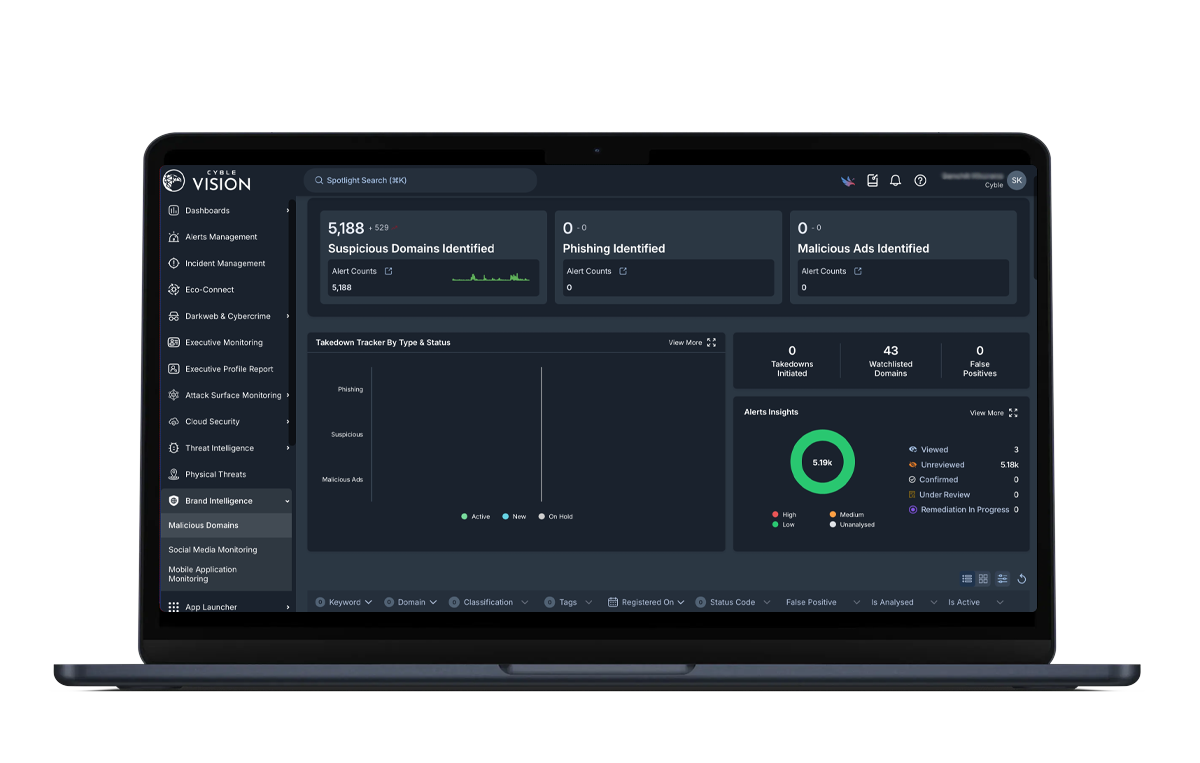
Marketplace programs cover only what happens on their platforms. Broader monitoring must include lookalike domains, ad bidding on brand terms, third-party app stores, social storefronts, and dark web marketplaces where stolen credentials and counterfeit product data are traded.
Pillar 4: Authenticate Products
Serialization assigns every unit a unique verifiable identifier. Track-and-trace systems log when that identifier moves through customs, a distribution hub, or a retail endpoint. A unit surfacing in a market it was never shipped to signals diversion or counterfeit injection.
QR codes linked to cloud-based verification backends, near-field communication (NFC) chips, and programs like Amazon Transparency scan serialization codes before fulfillment and block unverified units. These tools add consumer-facing authentication that is difficult to replicate at scale.
Explore product authentication support
The Enforcement Chain: What Actually Happens After You File A Complaint
The four pillars generate complaints, and the enforcement chain determines whether those complaints result in removal. Removing an infringing asset is harder than finding one. It requires navigating three distinct enforcement processes, each with different evidence standards and different parties in control. Conflating them is a common reason enforcement stalls.
Path 1: Marketplace Complaint. Platforms such as Amazon, Walmart, and eBay operate their own intellectual property (IP) complaint programs. Evidence requirements include the infringing listing’s URL or item identifier, dated screenshots, side-by-side comparisons against the authentic product, trademark or copyright registration numbers, and, where available, test-purchase order documentation. How you frame that evidence matters. Amazon guidance explicitly recommends using the word “counterfeit” rather than “unauthorized” to route the report to the correct investigative team. When the evidence is complete and correctly routed, repeat infringers can face selling restrictions or account suspension. The major marketplaces covered in the evidence, Amazon, eBay, and Walmart do not publish a guaranteed removal timeline or SLA for counterfeit listing takedowns.
Path 2: Registrar Abuse Report. A domain registrar, the company that sells and administers a domain name, controls whether a domain name resolves, not what content it serves. Under the 2024 global amendment to the Internet Corporation for Assigned Names and Numbers (ICANN) Registrar Accreditation Agreement, effective April 5, 2024, every accredited registrar must publish an accessible abuse contact, confirm receipt of reports, review well-founded reports of illegal activity within 24 hours, and take reasonable mitigation action where it has actionable evidence of Domain Name System (DNS) abuse. DNS abuse is defined narrowly: malware, botnets, phishing, pharming, and spam used as a delivery mechanism for those categories. Trademark infringement alone does not meet the DNS abuse threshold at most registrars and is typically redirected to UDRP proceedings or court. Evidence for a registrar report should include the full domain name and URL, dated screenshots, a description of the impersonation, and a clear statement of the rights being infringed.
Path 3: Hosting-Provider Abuse Report. A hosting provider, the company whose servers a site actually runs on, controls the content. This mechanic is critical. A lookalike domain typically only comes down when you reach the hosting provider, not the registrar. Suspending a domain at the registrar level removes the name from DNS but leaves the content intact on the server, so an attacker can point a new domain at the same infrastructure within hours.
The hosting provider’s abuse report requires several pieces of evidence: the full URL including the specific path where malicious content appears, the IP address and hosting information, dated screenshots of the page as a victim sees it, and evidence of brand impersonation. Where a phishing site copies copyrighted content, include a Digital Millennium Copyright Act (DMCA) notice as well. As Netcraft’s September 2026 guidance notes, different registrars and hosting providers have different reporting requirements, abuse channels, response times, and escalation paths, so a process that works for one provider may not work for the next.
For repeat infringers, the escalation path runs from platform-level suspension through ICANN Contractual Compliance, after registrar reporting has failed, and, for coordinated campaigns, to law enforcement referral. Document every action. Courts, arbitration panels, and marketplace IP programs weigh whether a brand has actively policed its marks, and a consistent enforcement record becomes a legal asset.
See how managed takedown works
Early Detection: Why You Usually Find Out From A Customer
Everything in the enforcement chain depends on one precondition: you already know an infringing asset exists. In practice, that precondition is where most brands fail.
A fake app can run for weeks on a third-party Android store. A phishing page impersonating your checkout might be reported by a customer on social media. A lookalike domain can start bidding on your brand terms in paid search. Internal teams often miss these signals because the signal lives outside the perimeter in places no internal tool can index.
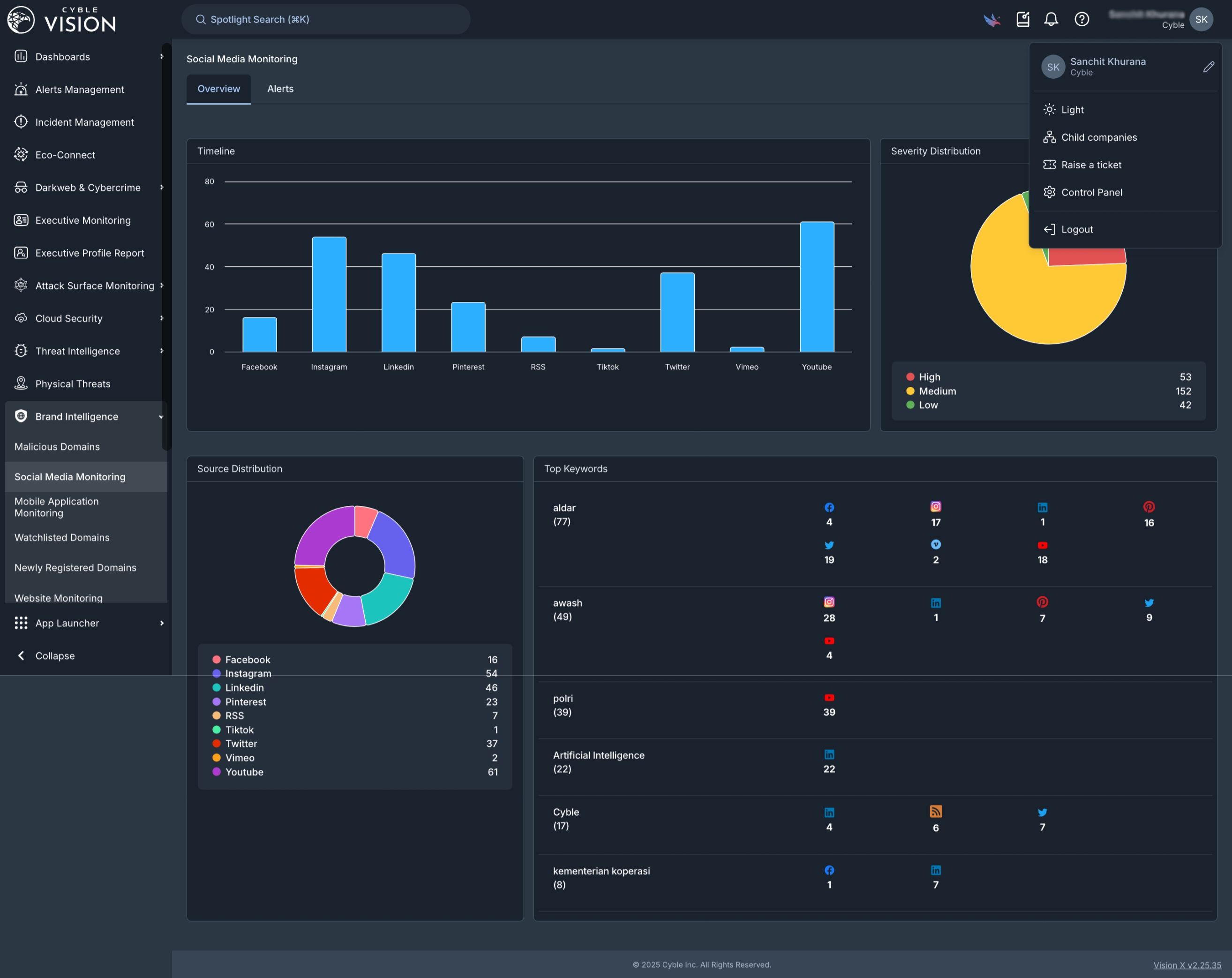
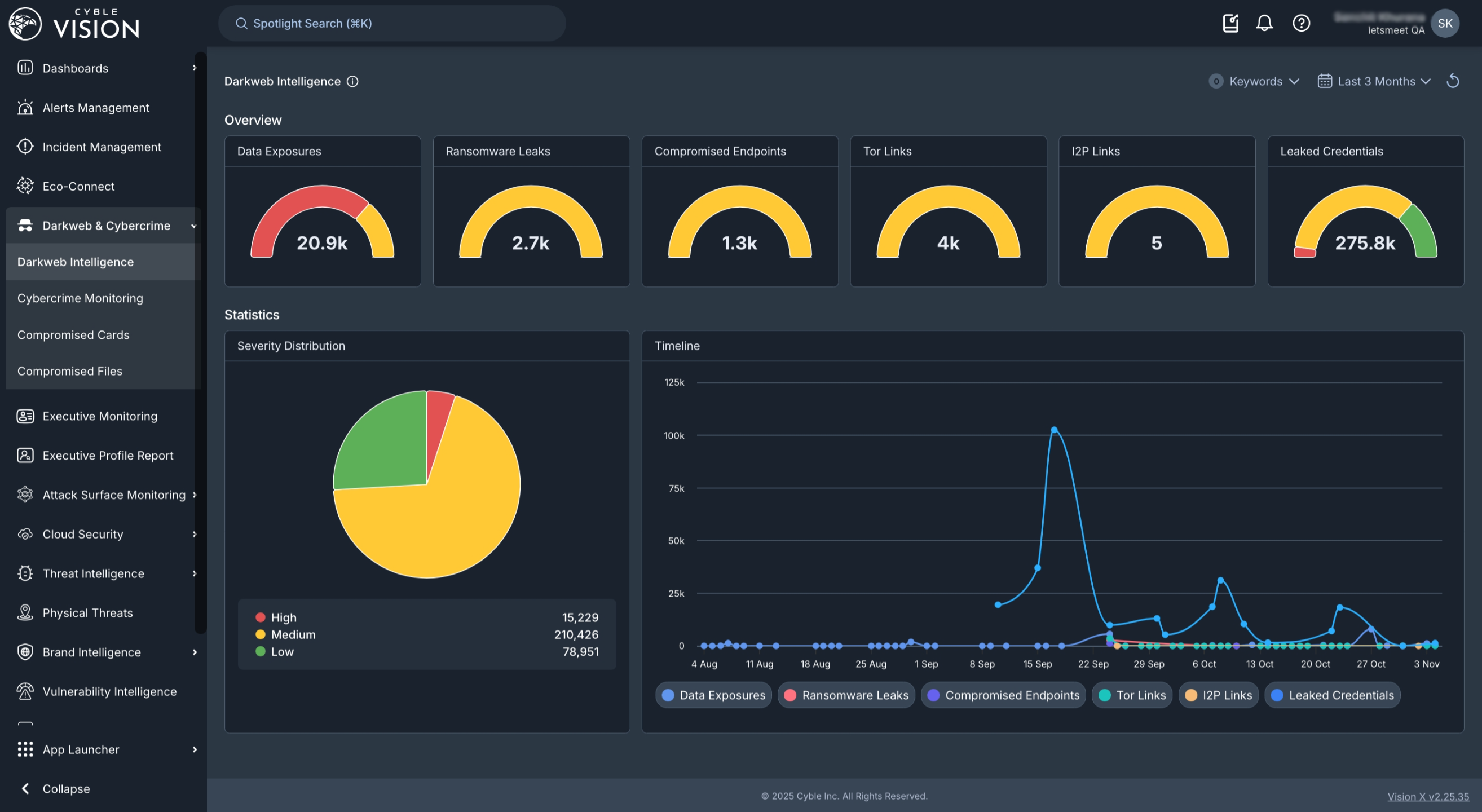
The monitoring scope that catches early-stage abuse includes lookalike domains registered with minor character substitutions or added words, ad bidding on brand terms by unauthorized sellers, third-party app stores distributing fake versions of branded apps, social storefronts on platforms that do not participate in standard IP complaint programs, and dark web marketplaces where stolen credentials and counterfeit product data surface before they reach consumers.
Example Scenario: How A Fake App Erodes Trust
The following pattern is drawn from Cyble’s internal telemetry and presented as a recurring scenario rather than a named engagement.
A fintech discovers a fake app using its brand on a third-party Android store after six weeks of operation. By the time the discovery happens, often through a customer complaint, the app has harvested payment credentials and eroded trust in key markets. The internal security team had no visibility into the third-party store because it sits outside the perimeter of any internal tool.
The registrar of the domain the fake app pointed to was unresponsive to a trademark-only complaint. The hosting provider, once reached with a full evidence package including screenshots, IP data, and a DMCA notice, removed the content within 48 hours. By that point, the credential data was already circulating. Across verticals, the discovery lag, rather than the enforcement process, is where the damage occurs.
How Much Does Brand Protection Cost?
That scenario also raises the question every brand eventually asks: what does a protection program actually cost? Cost is driven by four variables: the volume of infringements across channels, the number of jurisdictions where enforcement is required, whether takedown is managed by a vendor or handled in-house, and whether monitoring is continuous or periodic.
A brand selling in three markets with a handful of marketplace listings faces a materially different cost structure than a global consumer brand with presence across 20 jurisdictions, multiple app stores, and active dark web exposure. Costs should be evaluated against the commercial consequence of inaction. The same BrandShield report found that 30.2% of consumers who encountered brand impersonation said they would stop buying from the impersonated brand online altogether.
In-House Enforcement Vs. Managed Takedown: When DIY Stops Scaling
A small brand with a handful of marketplace listings and a single jurisdiction may not need a vendor. The in-house path is viable when the volume of infringements is low enough that one person can file, follow up, and escalate each case without the queue growing faster than it is cleared.
The threshold is straightforward: when discovery outpaces your capacity to file and follow up, managed takedown becomes the cheaper option. That threshold is usually crossed by one of three triggers: repeat infringers who return after removal, cross-jurisdiction domains that require simultaneous registrar and hosting-provider action in multiple legal environments, or volume, particularly when a single enforcement campaign generates dozens of related assets that need to be tracked and actioned in parallel. Once any of these triggers is active, the cost of internal time and the cost of delayed removal typically exceed the cost of a managed service with defined SLAs.
Why Cyble For Ecommerce Brand Protection
Cyble’s answer to the “who actually removes it” problem is native managed takedown, with detection and removal in one pipeline instead of two vendors. Automated workflows combine with global enforcement to remove phishing sites, lookalike domains, fake mobile apps, impersonation accounts, and leaked data at scale. These removals are delivered against SLAs, with a reported 98% takedown success rate (Cyble internal telemetry).
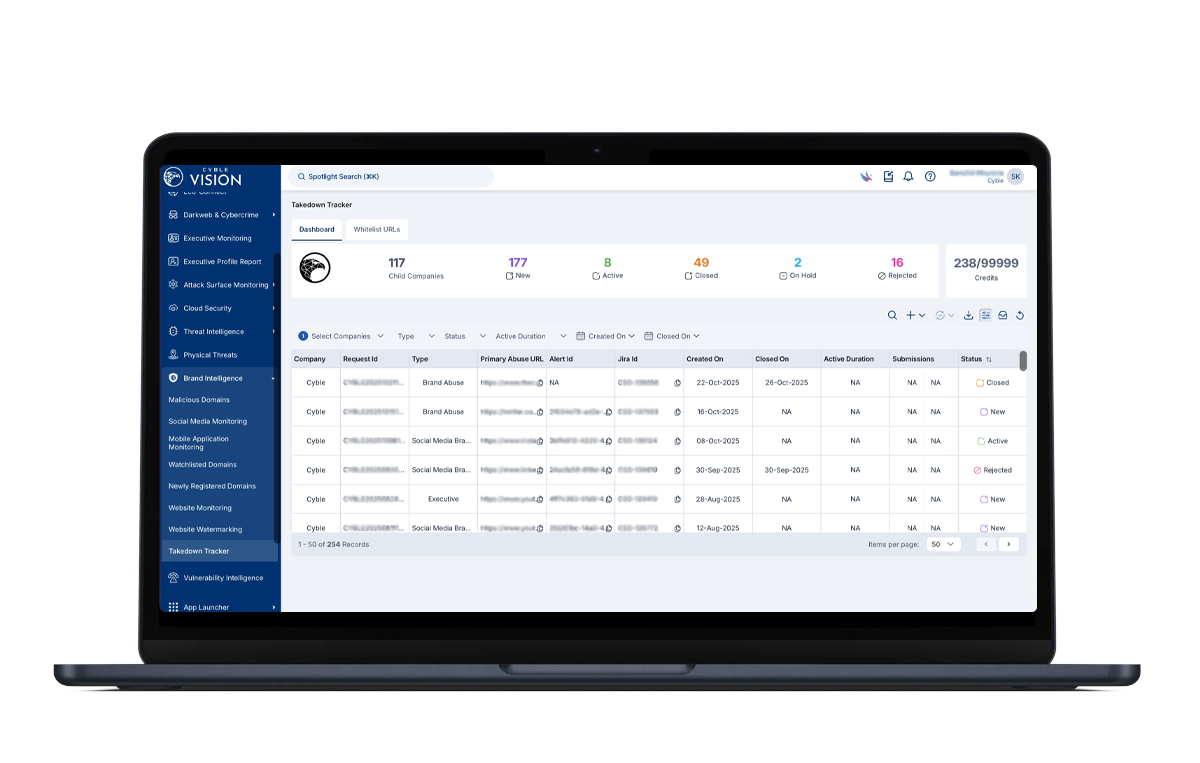
Brand intelligence monitoring through Cyble Vision covers domains, social platforms, app stores, and the dark web for impersonation attacks, lookalike domains, brand abuse, and phishing infrastructure. Cyble reports visibility into 15,000+ darknet marketplaces and a 95% signal-to-noise ratio (Cyble internal telemetry), which means the alerts that reach your team are already resolved to your organization and scored for relevance rather than delivered as a raw feed of internet noise.
Early warning surfaces exposures in hours rather than weeks. The illustrative scenario Cyble uses to explain its architecture: a credential exposure that appears externally at 11 PM is detected, entity-resolved, enriched, and alerted before morning triage begins. This timing preserves a window in which passwords can be reset and authentication stepped up before fraud lands. That outcome depends on detection, entity resolution, enrichment, and alerting all running without a human in the loop.
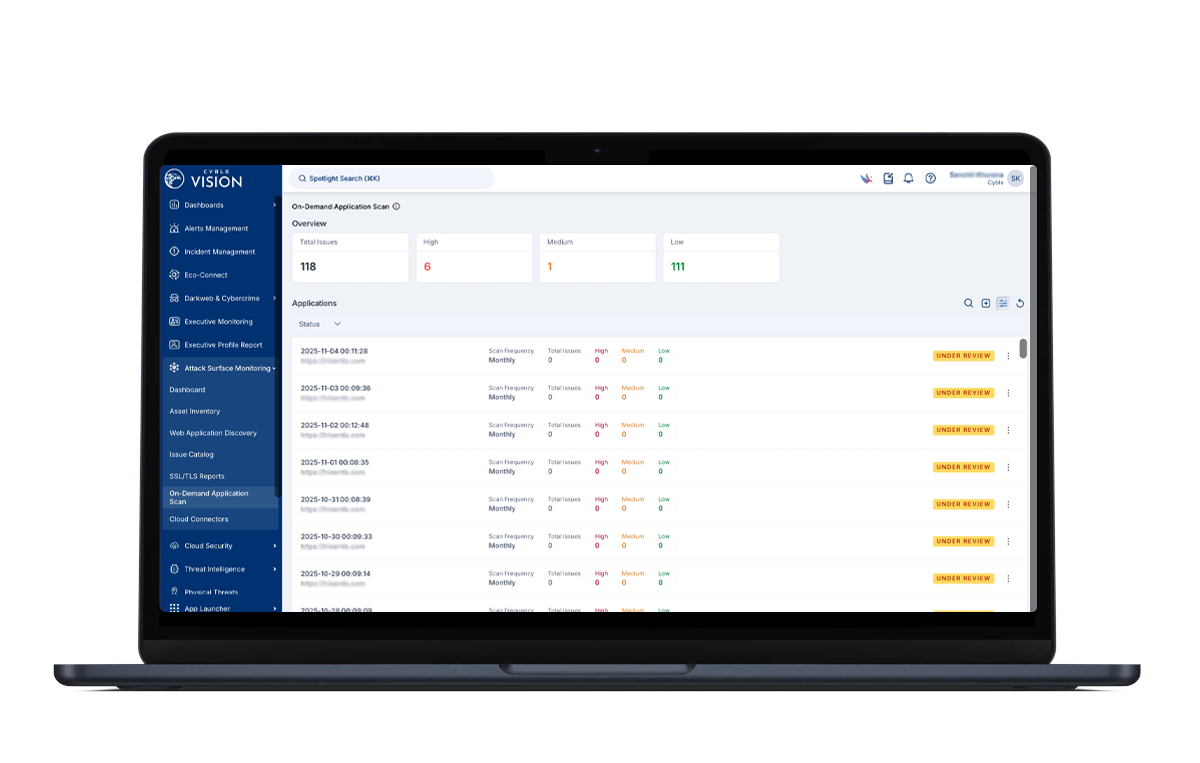
Cyble Vision is the standard entry point for external intelligence and brand protection. Findings flow into the tools your team already uses through 70+ integrations including Splunk, Microsoft Sentinel, IBM QRadar, Cortex XSOAR, and ServiceNow, plus REST application programming interfaces (APIs). Cyble functions as a force multiplier for the existing stack rather than another isolated dashboard.
Cyble was founded in 2020, is headquartered in Cupertino, California, and serves hundreds of companies across 50+ countries. It is recognized as a Challenger in the inaugural 2026 Gartner® Magic Quadrant™ for Cyberthreat Intelligence Technologies and a Strong Performer in the 2026 Gartner® Peer Insights™ “Voice of the Customer” for Brand Protection Software, in which Cyble reports the highest number of verified reviews among the vendors included.
Disclaimer: Results depend on the customer’s environment, asset scope, and configuration. Statistics are drawn from Cyble internal telemetry. Capabilities, coverage, and service levels vary by subscription tier and region.
Talk to Cyble about brand protection
Frequently Asked Questions
What Does Online Brand Protection Cover?
Online brand protection covers the detection, prioritization, and removal of digital threats that misuse a company’s identity, intellectual property, products, or customer trust. In practice, this includes counterfeit listings on marketplaces, lookalike domains, fake storefronts, impersonation accounts on social platforms, unauthorized apps on third-party app stores, ad bidding on brand terms by unauthorized sellers, and dark web exposure of stolen credentials or counterfeit product data. It is broader than trademark registration, which establishes legal rights but does not search for or remove infringements.
Can You Enforce Against Counterfeits Without A Registered Trademark?
Enforcement without a registered trademark is significantly limited. Amazon Brand Registry accepts pending applications, but Walmart Brand Portal requires a fully registered USPTO mark with a seven-digit registration number. Registrar-level domain complaints based on trademark infringement typically require a registered mark to proceed through UDRP arbitration. Hosting-provider abuse reports based on phishing or DMCA grounds can proceed without a registered trademark, but the strongest enforcement position, across marketplaces, customs recordation, and domain dispute proceedings, depends on registration in each relevant jurisdiction.
How Long Does A Takedown Actually Take?
Timelines vary significantly by content type, jurisdiction, and the quality of the evidence package. Marketplace complaints on platforms with automated enforcement tools can resolve in hours for clear-cut cases. Thin or incomplete reports stall in clarification queues rather than being cleanly rejected. Registrar-level DNS abuse reports carry a 24-hour acknowledgment obligation under the 2024 ICANN Registrar Accreditation Agreement amendment, but complex cases take longer. Hosting-provider content removal depends on the provider’s abuse desk responsiveness and the completeness of the evidence submitted. Managed takedown services with established provider relationships and automated evidence workflows reduce these timelines materially.
What Evidence Should You Preserve Before Filing A Complaint?
Preserve the following before the infringing asset changes or disappears: the full URL including the specific path where infringing content appears, dated screenshots of the page as a consumer sees it, the listing URL or item identifier on marketplace platforms, test-purchase order documentation including order ID and packaging photographs where a purchase was made, trademark or copyright registration numbers and the jurisdiction of registration, side-by-side comparisons against the authentic product, and any phishing email or SMS lure that delivered a link to the infringing site. For hosting-provider reports, also record the IP address and hosting information. Document everything with timestamps and preserve original files, because chain of custody matters for serious escalations.
How Do You Measure Whether Enforcement Is Working?
Relevant metrics include time to detect, which measures how long between an infringement appearing and your team knowing about it, and time to respond, which measures how long between detection and a complaint being filed. Other useful metrics include takedown completion rate, repeat-infringer recurrence rate, and exposure reduction over time. A simple review cadence, comparing baseline performance against post-implementation performance at regular intervals, is more useful than a single snapshot. Tracking incident volume trends rather than raw takedown counts is also informative, because fewer incidents can reflect stronger deterrence, while more reports can reflect improved detection coverage rather than a worsening problem.
When Does It Make Sense To Bring In A Managed Takedown Vendor?
The practical threshold is when discovery outpaces your capacity to file and follow up. Specific triggers include repeat infringers who return after removal, cross-jurisdiction domains requiring simultaneous action against registrars and hosting providers in multiple legal environments, and volume, particularly coordinated campaigns generating dozens of related assets. At that point, the combined cost of internal time and delayed removal typically exceeds the cost of a managed service with defined SLAs and established provider relationships. A small brand with low infringement volume and a single jurisdiction may not need a vendor at all.
Conclusion: Closing The Gap Between Detection And Removal
Finding a counterfeit listing, a lookalike domain, or a fake storefront marks the beginning of the problem. Removing it requires navigating three distinct enforcement processes, including marketplace complaints, registrar abuse reports, and hosting-provider abuse reports, each with different evidence standards, different parties in control, and no universal SLA. The gap between detection and removal is where brand damage, credential theft, and consumer trust erosion accumulate.
Cyble closes that gap by combining continuous brand intelligence monitoring across domains, social platforms, app stores, and the dark web with native managed takedown in a single pipeline. Detection and removal come from one vendor, delivered against SLAs, with the reported success rate cited earlier. When discovery outpaces your capacity to act, this approach becomes a practical answer to the “who actually removes it” problem.
Schedule a brand protection demo