

Key Takeaways For Bank Credential Exposure Monitoring
-
Credential exposure monitoring for banks is a continuous operational program that detects stolen credentials on dark web markets, infostealer logs, paste sites, code repositories, and bank identification number (BIN) and issuer identification number (IIN) ranges before attackers can exploit them.
-
The critical gaps to close are exposure-to-awareness and awareness-to-action. Early detection enables session revocation, multi-factor authentication (MFA) step-up, coordinated password resets, and customer login screening that prevent fraud and regulatory penalties.
-
Validation must be tiered. Confirmed exposures trigger immediate containment, probable exposures prompt risk-based MFA, and non-relevant mentions are filtered upstream to reduce noise and analyst fatigue.
-
Regulatory obligations under New York Department of Financial Services (NYDFS) 23 NYCRR Part 500, Federal Financial Institutions Examination Council (FFIEC) guidance, and Payment Card Industry Data Security Standard (PCI DSS) require time-stamped detection records that show when an exposure was identified, validated, contained, and reported.
-
Cyble delivers bank-specific monitoring with artificial intelligence (AI) driven entity resolution and native integration into security information and event management (SIEM) and security orchestration, automation and response (SOAR) platforms so findings land directly in existing workflows.
Talk to Cyble about your credential exposure program
How Credential Exposure Monitoring Works For Banks
Credential exposure monitoring for banks is the continuous surveillance of external sources for employee and customer credentials belonging to the institution. Those sources include dark web markets, infostealer log repositories, paste sites, and code repositories. Each hit is then validated against the bank’s identity and asset inventory and remediated through specific controls inside the bank’s environment.
The primary keyword for this discipline is credential exposure monitoring banks, and it describes an operational program. The program exists to drive concrete actions, not just to observe activity.
Generic dark web alerting tells a security team that credentials exist somewhere on the internet. A bank-specific program tells the team which account is exposed, whether that account is still active, what access it carries, and what to do in the next 30 minutes. That distinction separates a monitoring feed from a defensible security control.
Dark web credential monitoring and its operational benefits are covered in depth in Cyble’s knowledge hub. This article focuses on the bank-specific workflow that connects a leaked credential to a specific control inside the institution’s environment.
See a credential-to-control workflow walkthrough
Why Banks Monitor Credential Exposure So Closely
Financial institutions face a threat profile that differs from most other sectors. Compromised credentials are the primary entry point for credential stuffing, account takeover, and direct fraud loss at financial institutions. According to Kaspersky’s 2025 Financial Threat Report, more than one million online banking accounts belonging to customers of the world’s 100 largest banks were compromised by infostealers, with credentials freely shared on the dark web. Infostealer detections on personal computers increased 59% globally from 2024 to 2025, driven partly by malware families that harvest data directly from the browser without requiring any application installation.
The regulatory dimension compounds the operational one. The Federal Reserve’s interagency guidance on authentication and access to financial institution services, FFIEC authentication guidance, NYDFS cybersecurity regulation 23 NYCRR Part 500, and PCI DSS 4.0.1 each impose obligations that a credential exposure program must satisfy. NYDFS requires covered entities to maintain an audit trail designed to detect and respond to cybersecurity events and to notify the department within 72 hours of determining that a reportable event occurred. PCI DSS Requirement 10 mandates logging and monitoring of access to system components and cardholder data, with audit log retention for at least 12 months. PCI DSS Requirement 8 governs identification and authentication for users accessing systems in the cardholder data environment, and PCI DSS 4.0.1 expanded MFA requirements to all users accessing any cardholder data environment system component.
A breach is an operational event and a regulatory event. It triggers disclosure obligations, supervisory conversations, and potentially penalties. NYDFS secured a $2.25 million cybersecurity settlement with Delta Dental Insurance Company and Delta Dental of New York in April 2026, illustrating that enforcement is active and consequential. A credential exposure program that produces time-stamped detection records is the foundation of a defensible regulatory posture. Building that record starts with knowing where exposures actually surface.
Key Monitoring Sources For Bank Credential Exposure
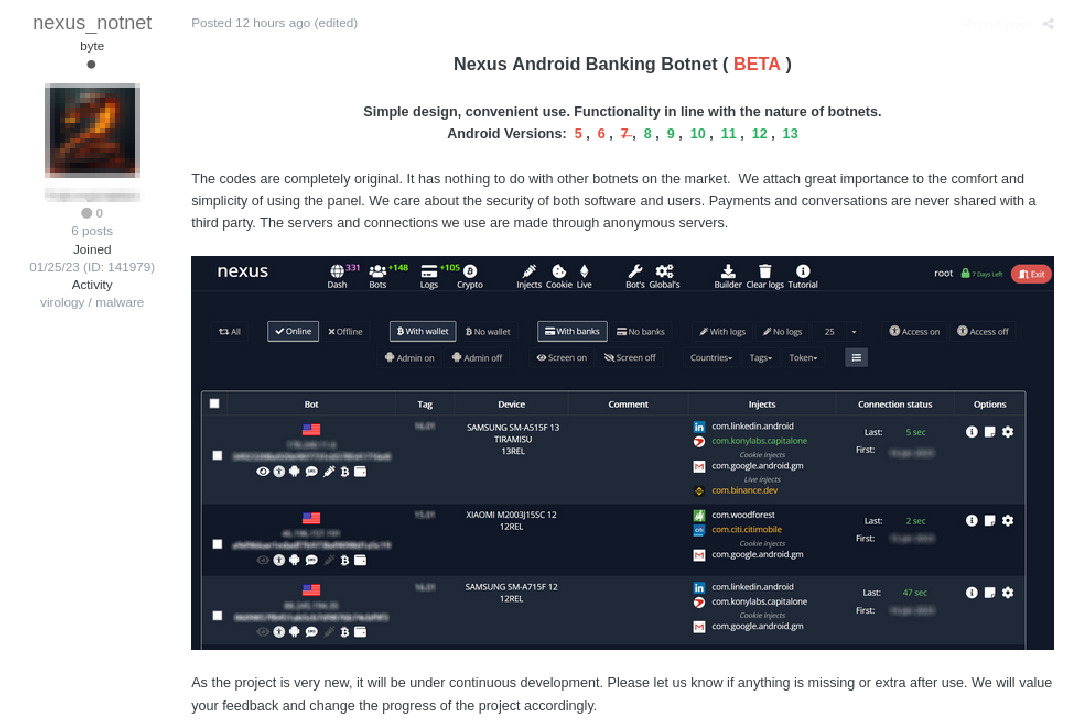
Dark web monitoring for banks requires coverage across six distinct source categories. What separates them is the action each one forces the bank to take, because a market listing and a code-repository commit demand different controls.
-
Dark web markets: Illicit forums, Telegram channels, and data breach dumps are the primary distribution channel for stolen banking credentials. Threat actors post credential sets, validate them publicly, and sell access to accounts. Monitoring these sources in near-real time forms the base of any external credential exposure program.
-
Infostealer logs banking credentials: Infostealer logs are the most dangerous credential source in the current threat environment. An infostealer log is the complete data package exfiltrated from a single infected device, including every browser-stored credential, active session cookie, device fingerprint, and authentication token on that machine. Stolen session cookies let an attacker assume an already-authenticated session without re-entering a password or completing MFA, because the token was issued after the user already passed authentication. According to Kaspersky’s 2025 Financial Threat Report, 74% of payment cards compromised by infostealer malware and identified by its Digital Footprint Intelligence team in 2025 were still valid as of March 2026, meaning stolen artifacts remain usable months after collection. Remediation for an infostealer log hit must include session and token revocation, not only a password reset.
-
Paste sites: Plain-text dumps of credentials and account data posted to public paste services represent a lower-sophistication but high-volume exposure channel. Credentials posted here are often already circulating in criminal markets and may have been validated before publication.
-
Public code repositories: Accidental commits containing application programming interface (API) keys, secrets, or hardcoded credentials in public repositories expose bank infrastructure directly. These hits require immediate secret rotation and access review, not just a password reset.
-
Bank identification number (BIN) and issuer identification number (IIN) ranges: Monitoring for the institution’s BIN and IIN ranges across criminal markets identifies card and account data tied specifically to the institution. This visibility enables targeted fraud prevention and customer notification before losses occur.
-
Open web and deep web mentions: Exposed credentials and access details can also appear on blogs, paste alternatives, and semi-private forums. These sources often act as staging points before data reaches high-traffic markets and deserve structured monitoring.
The Detection-To-Remediation Workflow For Banks
The response is the product. A leaked credential only helps a defender when it maps to a specific control inside the bank’s environment. The detection-to-remediation workflow closes two gaps: exposure to awareness, and awareness to action.
The first gap, exposure to awareness, is where many programs fail. External signals become public before internal teams see them. A credential can be tested within an hour of appearing on a dark web forum and funds moved by morning, long before a morning triage shift begins. Closing this gap requires continuous monitoring across surface, deep, and dark web sources, with entity resolution running at ingestion to determine whether a mention actually refers to the institution before it becomes an alert.
Cyble Vision monitors across more than 15,000 darknet marketplaces, but coverage alone would be noise. What makes the feed usable is AI-native entity resolution applied at the collection layer. The platform automatically determines that an obfuscated or cross-language reference refers to the bank’s brand, domains, or executives without a human writing that rule. Because enrichment happens at ingestion, alerts arrive case-ready rather than as raw indicators requiring an hour of manual pivoting, which supports a high signal-to-noise ratio tuned to the institution’s specific attack surface.
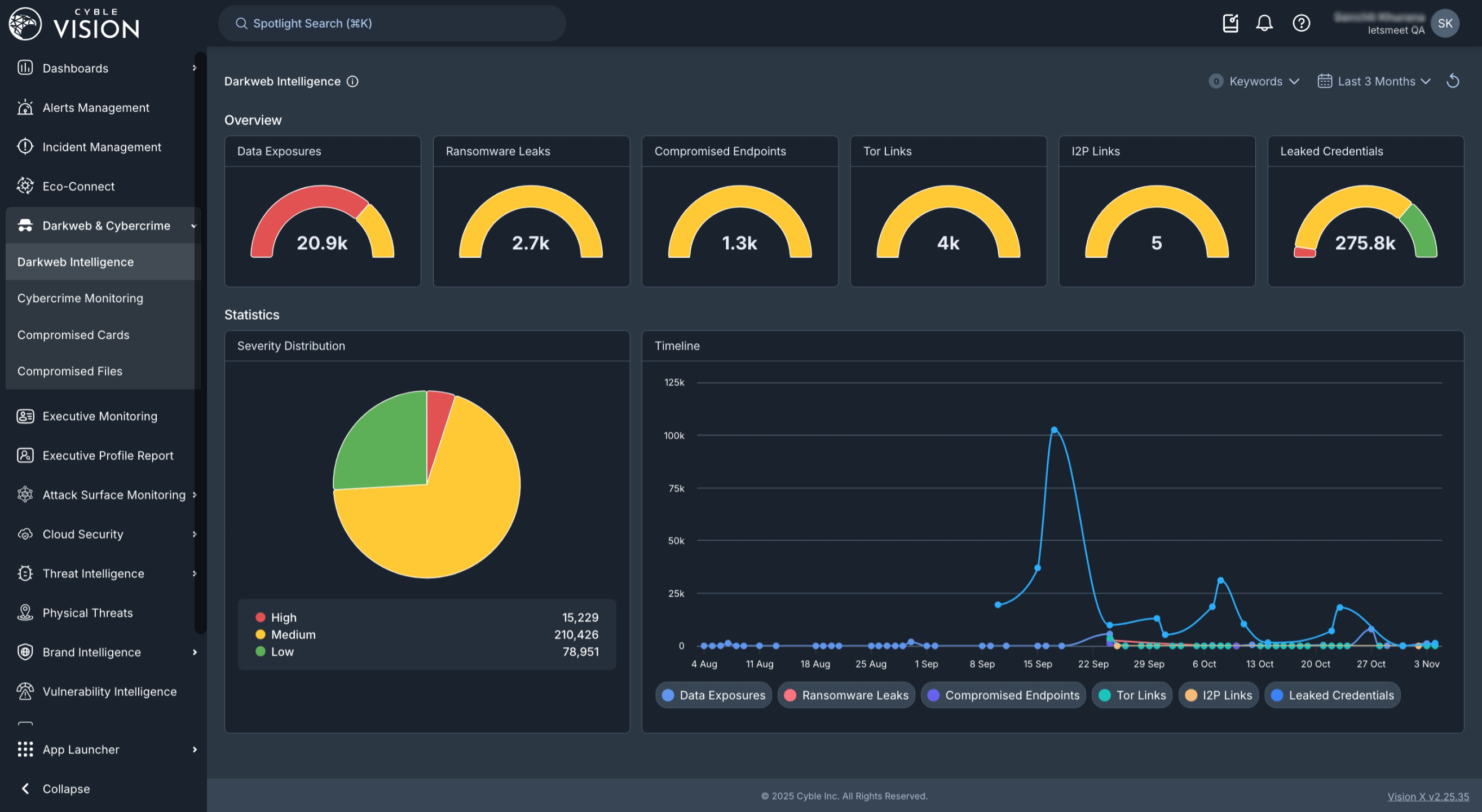
The second gap, awareness to action, is where the operational discipline of credential exposure monitoring becomes visible. Once a hit is confirmed, the response workflow maps each exposure type to a specific control.
-
Session and token revocation: A stolen session cookie or refresh token continues working after a password change. Containment must begin with revoking all active sessions and invalidating refresh tokens at the identity provider before resetting passwords. For infostealer log hits, this is the primary remediation action.
-
MFA step-up: Accounts flagged as potentially exposed but not confirmed should be queued for risk-based MFA step-up at next login. The user must complete fresh authentication before access is restored. MFA step-up is a proportionate response when exposure evidence is partial rather than confirmed.
-
Identity and access management (IAM) and Active Directory-driven password reset: Confirmed credential exposure triggers a coordinated reset across all identified accounts simultaneously. That reset covers passwords, OAuth tokens, API keys, and session cookies. Simultaneous reset prevents an attacker from pivoting to adjacent accounts while remediation is in progress.
-
Customer login screening: For customer-facing credential hits, the bank’s login screening layer should check incoming authentication attempts against the exposure record. The bank then applies friction such as step-up verification, temporary transfer holds, or manual review before high-risk actions like adding a beneficiary or increasing transfer limits.
-
Account-risk escalation: When multiple weak signals converge, the account should be escalated to manual fraud review while the session is still containable and before cash-out paths open. Impossible travel, a new device enrollment, an MFA reset, and a credential hit together form the combination that warrants escalation.
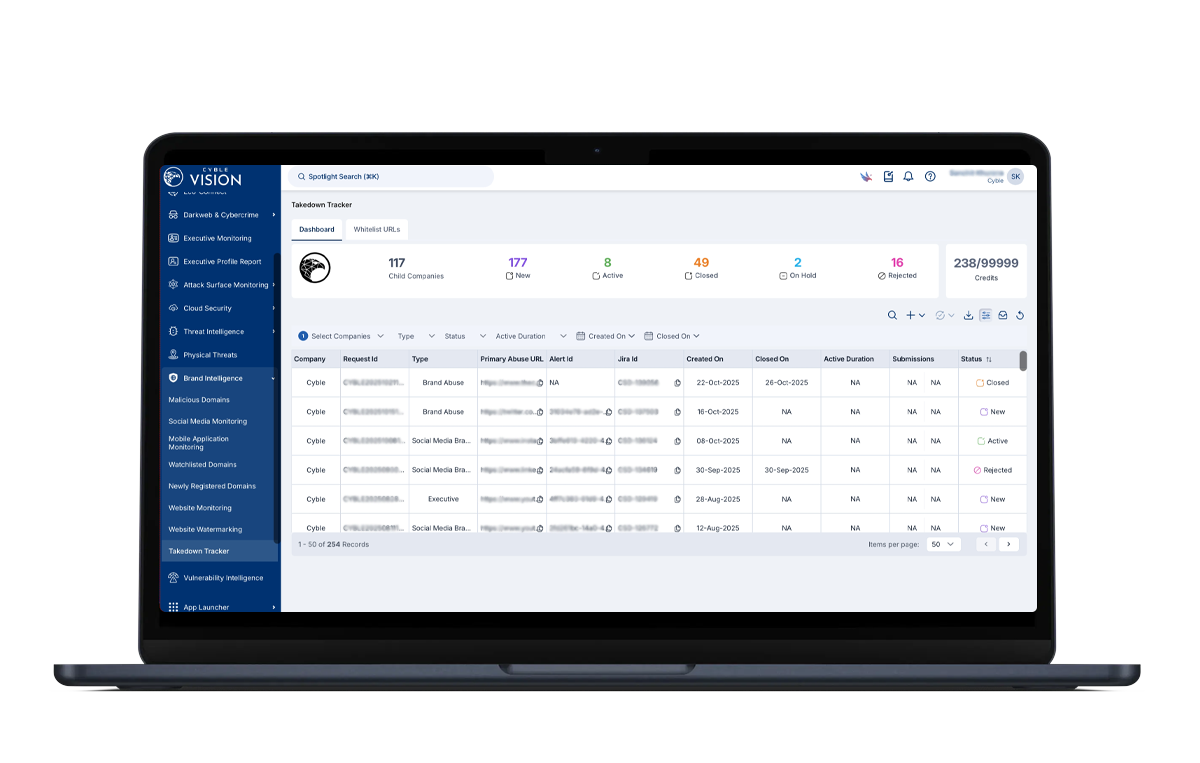
Cyble Vision integrates with more than 70 enterprise platforms including Splunk, Microsoft Sentinel, IBM QRadar, Cortex XSOAR, and ServiceNow, and supports representational state transfer (REST) APIs. Findings land directly in the SIEM, SOAR, and ticketing systems the bank already operates. Native managed takedown, with a reported 98% takedown success rate, closes the gap between knowing and acting without handing the hard part back to the customer.
See the bank-specific workflow in action
Validation And False-Positive Triage For Bank Alerts
Generic threat intelligence feeds often create volume without relevance. A credential dump containing 50 million records may include only a handful that belong to the institution’s employees or customers. Identifying those records against a raw feed requires manual correlation against the identity inventory, which takes hours and erodes analyst trust in the feed.
Cyble Vision addresses this at the architecture layer rather than the triage layer. Entity resolution runs before alerting, filtering mentions that do not refer to the institution upstream rather than presenting them as alerts for a human to dismiss. Relevance scoring runs against the bank’s specific attack surface, including its domains, subsidiaries, executives, and technology stack, rather than against generic keyword matches. Alerts arrive already resolved to the right entity and scored for severity, so the triage decision is faster even when a finding turns out not to be material. That same tuning is what keeps the triage queue short.
The validation workflow itself follows a tiered approach. Confirmed exposure, such as a username-and-password pair verified against the institution’s Active Directory, triggers immediate session revocation and password reset. Probable exposure, such as partial credential data or a domain match without account-level confirmation, triggers risk-based MFA step-up and monitoring. No evidence of exposure, such as a mention that resolves to a different organization after entity resolution, is filtered before it becomes an alert. This precision reduces disruption without weakening containment.
Named Recent Incidents And What They Teach Banks
Reuters reported that in July 2026, Bank of Baroda confirmed that a compromised employee email account resulted in unauthorized access to certain data. The leaked dataset appeared on a dark web site on the night of July 25, 2026, and was advertised as containing more than 700 gigabytes of information including customer details, identification documents, loan papers, and internal audit records. The bank’s core banking systems were not accessed, yet the external signal, the dark web listing, became public before internal teams had completed their assessment. The lesson is structural. External signals surfaced before internal detection caught up, and the institution’s response timeline was set by when the external researcher found the listing, not by when the bank’s monitoring program detected it.
The Bank of Baroda case is not an outlier. The one million accounts compromised across the world’s 100 largest banks, cited earlier, were held by institutions with mature security programs. That reality shows that credential exposure is a function of continuous, bank-specific external monitoring rather than program maturity alone.
In both cases, the external signal existed before the internal team knew. A program that surfaces exposures in hours rather than weeks changes the outcome, because the window for session revocation, MFA step-up, and customer notification remains open.
Credential Exposure Monitoring Requirements Under FFIEC And NYDFS
The regulatory case for a formal credential exposure monitoring program rests on a specific operational requirement. The documented record of when an exposure was first detected is exactly what a regulator asks for. According to NYDFS 23 NYCRR Part 500, covered entities must notify the department within 72 hours of determining that a reportable cybersecurity event occurred and must preserve records supporting compliance for at least five years. The notification clock starts when the institution determines the event occurred, and early external detection with a time-stamped alert establishes that starting point with precision.
A credential exposure program that produces time-stamped detection records, capturing when the exposure was first identified, when it was validated, when containment actions were taken, and when notification decisions were made, converts a regulatory obligation from a retrospective reconstruction into a contemporaneous record. That record is what survives a supervisory examination.
According to PCI DSS Requirement 12.10, a documented incident-response plan is required for suspected and confirmed incidents. That plan must cover containment, recovery, communications, and review. A credential exposure hit that maps to a cardholder data environment account is a suspected incident under that requirement, and the response record, including session revocation timestamp, password reset timestamp, and MFA step-up applied, is the evidence that the plan was executed.
FFIEC authentication guidance requires financial institutions to perform risk assessments of their authentication systems and implement controls commensurate with the risk. A credential exposure monitoring program that continuously validates the institution’s external exposure against its identity inventory directly supports that risk-assessment obligation. It answers the question “are we currently exposed?” with a documented, time-stamped record rather than an assumption.
Frequently Asked Questions (FAQ)
What is credential exposure monitoring for banks?
Credential exposure monitoring for banks is the continuous surveillance of external sources for employee and customer credentials belonging to the institution. Those sources include dark web markets, infostealer log repositories, paste sites, and code repositories. The program validates each hit against the bank’s identity and asset inventory and then applies specific controls such as session revocation, MFA step-up, IAM-driven password resets, and customer login screening. It is distinct from generic dark web alerting because it maps every exposure to a specific account and a specific control inside the bank’s environment.
How is it different from generic dark web monitoring?
Generic dark web monitoring alerts on credential mentions across the internet. Bank-specific credential exposure monitoring applies entity resolution to determine whether a mention refers to the institution before it becomes an alert. It scores relevance against the bank’s specific attack surface, including its domains, subsidiaries, executives, and technology stack, and enriches alerts so they arrive case-ready rather than as raw indicators. The operational difference is that a generic alert tells a team that credentials exist somewhere, while a bank-specific alert tells the team which account is exposed, whether it is still active, and what to do in the next 30 minutes.
How do you validate a credential hit?
Validation follows a tiered approach. Confirmed exposure, such as a username-and-password pair verified against the institution’s Active Directory or identity provider, triggers immediate session revocation and password reset. Probable exposure, such as partial credential data or a domain match without account-level confirmation, triggers risk-based MFA step-up and monitoring. Mentions that resolve to a different organization after entity resolution are filtered before they become alerts. The validation workflow should be evidence-led and inventory-aware, correlating breach intelligence with the identity inventory and classifying accounts by confidence tier before triggering remediation actions.
What should happen after an alert?
The response sequence maps to the exposure type. For an infostealer log hit, which includes session cookies and authentication tokens, containment begins with revoking all active sessions and invalidating refresh tokens at the identity provider before resetting passwords, because a stolen session cookie continues working after a password change. For a credential-only hit, the response is a coordinated password reset across all identified accounts simultaneously, MFA step-up at next login, and customer login screening if the exposed account is customer-facing. For a code repository hit exposing API keys or secrets, immediate secret rotation and access review are required. In all cases, the response record, including timestamps for detection, validation, containment, and notification decisions, should be preserved for regulatory purposes.
How does monitoring support FFIEC and NYDFS obligations?
NYDFS 23 NYCRR Part 500 requires covered entities to notify the department within 72 hours of determining that a reportable cybersecurity event occurred and to preserve compliance records for at least five years. Early external detection with a time-stamped alert establishes the starting point for the notification clock with precision. A credential exposure program that produces contemporaneous detection records, capturing when the exposure was first identified, when it was validated, and when containment actions were taken, converts a regulatory obligation from a retrospective reconstruction into a defensible evidence trail. FFIEC authentication guidance requires risk assessments of authentication systems and controls commensurate with the risk, and a continuous credential exposure monitoring program is a direct implementation of that obligation.
How fast can a stolen credential become fraud?
The window is measured in hours. A credential can be tested against a banking portal within an hour of appearing on a dark web forum. The same Kaspersky report found that 74% of compromised payment cards were still valid months after collection, so stolen artifacts remain usable long after the initial exposure. For session cookies, the risk is immediate. A stolen session cookie grants account access without a password and bypasses MFA, because the token was already issued after the user completed authentication. Detection measured in hours rather than weeks preserves the window for session revocation and customer notification before funds move.
When is human expertise still necessary?
Automated pipelines handle collection, entity resolution, enrichment, and initial alerting at machine speed. Human expertise is required when multiple weak signals converge and a judgment call is needed about whether to escalate before a single control is conclusive. It is also required when a confirmed exposure involves a privileged account or a cardholder data environment system, where the blast radius warrants deeper forensic review before remediation. Regulatory notification decisions also require human judgment, because the determination of whether an event meets the reporting threshold under NYDFS or FFIEC guidance depends on context applied to a documented record. Automation compresses the time between detection and the point where human judgment is actually required.
Conclusion: Closing The Gap Between Exposure And Action
The operational discipline of credential exposure monitoring for banks rests on two gaps that every program must close. The first is exposure to awareness, which measures how long it takes between the moment a credential appears on a dark web market and the moment the institution’s security team knows. The second is awareness to action, which measures how long it takes between knowing and triggering the specific controls, such as session revocation, MFA step-up, IAM-driven password reset, and customer login screening, that prevent a stolen credential from becoming a fraud loss or a regulatory event.
Closing both gaps requires a program that is continuous, bank-specific, and operational. That means monitoring across surface, deep, and dark web sources with entity resolution running at ingestion, and enrichment that arrives with the alert rather than requiring an hour of manual pivoting. It also means native managed takedown so detection and removal are one motion, and integration with the SIEM, SOAR, and ticketing systems the bank already operates, so findings land in the workflow rather than in another isolated console.
Practical next steps for institutions building or maturing this program include conducting an internal assessment of current external monitoring coverage and identifying gaps against the source categories covered in this guide. Institutions should align stakeholders across security operations, fraud, governance, risk and compliance (GRC), and legal on the regulatory obligations that a time-stamped detection record must satisfy. They should also gather requirements for integration with existing identity and access management infrastructure and evaluate platforms against the detection-to-remediation workflow rather than against monitoring coverage alone. The measure of a credential exposure program is what happens after the alert.
Schedule a session to map alerts to your bank controls