

Key Takeaways
- Dark web credential monitoring is inherently reactive. Credentials are often tested and sold before alerts fire, which creates a critical detection lag.
- Gated and invite-only sources stay out of reach for standard crawlers, so visibility into high-value credential listings in private channels remains limited.
- Stale data, duplicate dumps, and false positives overwhelm analysts when entity resolution and relevance scoring are missing, which reduces program effectiveness.
- Monitoring alone cannot remediate threats. It reports exposure but cannot revoke sessions, reset credentials, or remove leaked data from the dark web.
- Cyble Vision closes these gaps with AI-native collection, entity resolution, relevance scoring, and native managed takedown that turn alerts into concrete actions.
What Are the Limitations of Dark Web Credential Monitoring?
Seven structural limitations define where dark web credential monitoring breaks down:
- Gated and invite-only sources – crawlers cannot join private channels or vetted forums.
- Detection lag – credentials are tested and sold before an alert fires.
- False positives and stale dumps – old, duplicated, and mismatched records flood the queue.
- No remediation – monitoring reports exposure but cannot revoke sessions or remove data.
- Identity coverage gaps – contractors, service accounts, application programming interface (API) keys, and third-party identities fall outside directory-based matching.
- Encrypted and anonymized negotiation – end-to-end encrypted channels and private deals stay out of reach.
- Cost and worth-it doubts – subscription cost against unclear, hard-to-measure value.
Each limitation is explained in detail below, alongside the compensating control that closes it. Cost and worth-it doubts are addressed in the section on whether monitoring is worth it.
Coverage Limits in Gated Communities and Invite-Only Markets
The most valuable credential listings rarely appear in sources that automated crawlers can reach. Private Telegram channels require a vouch from an existing member or a small entry fee. Invite-only forums on the dark web, where initial access brokers list verified enterprise credentials, vet applicants before granting entry. Administrators on these platforms actively route around anything that looks like a researcher. Channels get renamed, messages get deleted, and high-value listings move to new infrastructure within hours of any disruption.
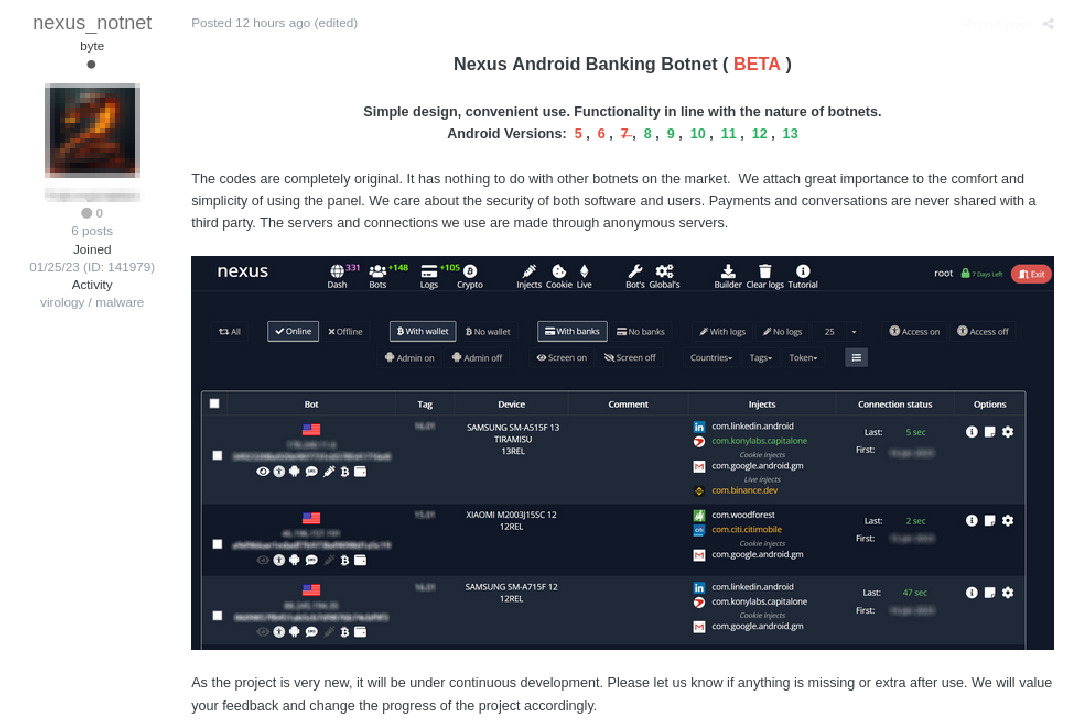
Because these sources require human vouching, rule-based collection cannot reach them at all. Adding a summarization layer on top of rule-based collection does not change what was collected, it only changes how the output reads. Legacy threat intelligence platforms that added a presentation-layer model on top of existing crawlers face this constraint structurally. The collection logic remains unchanged, and gated sources remain out of reach regardless of how the output is formatted.
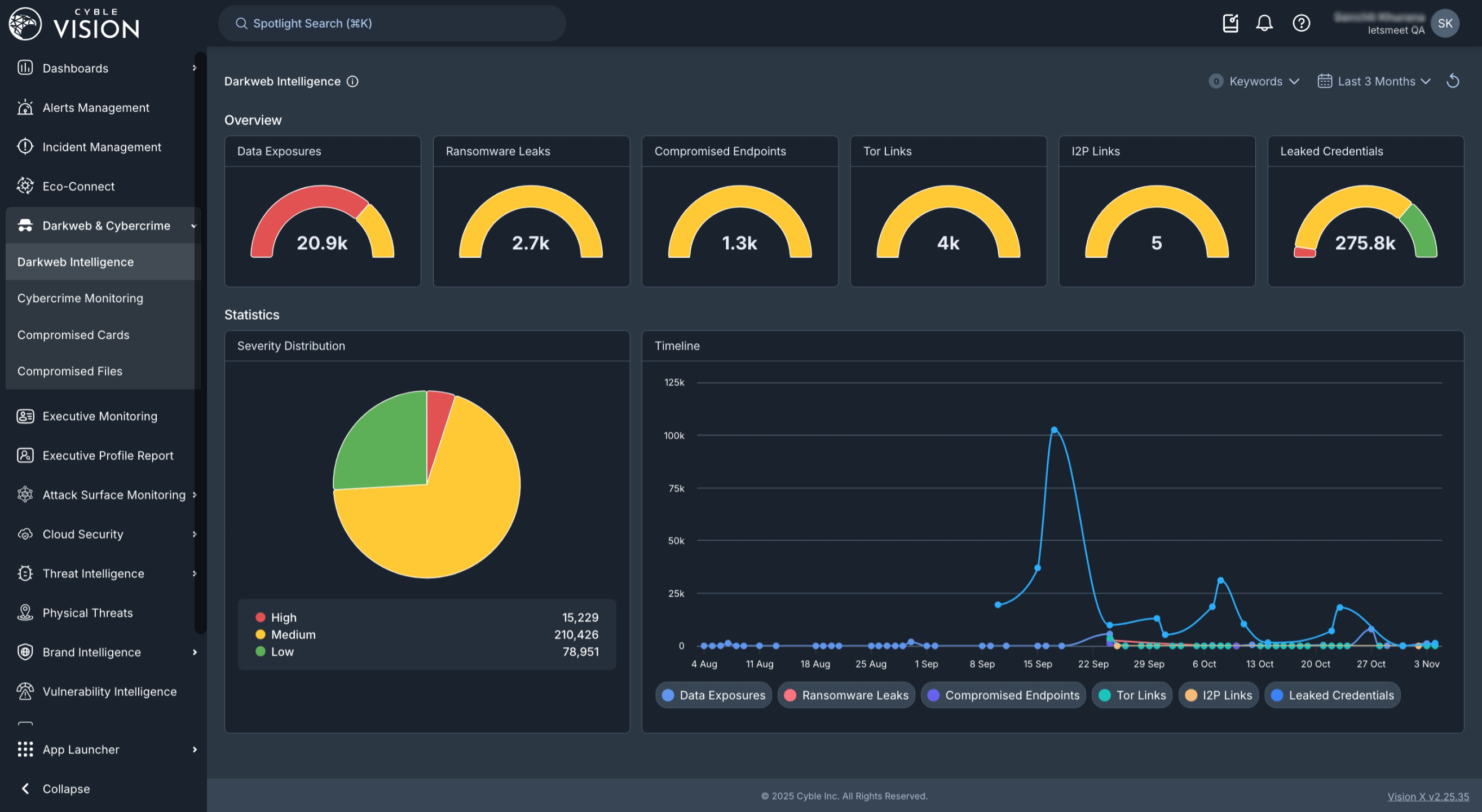
The compensating control is proprietary gated ingestion combined with human intelligence alongside automated collection. Cyble Vision maintains visibility into 15,000+ darknet marketplaces and reports roughly 90% coverage of cybercrime activity, which it characterizes as 10x the coverage of typical alternatives. This coverage depth requires access to sources that open crawling alone cannot reach. Cyble Blaze AI, the agentic platform layer, makes collection decisions at the source-selection layer and identifies new forums and channels that are becoming high-signal before they are widely known.
Detection Lag and Dwell Time in Dark Web Monitoring
Dark web credential monitoring is reactive by design. A credential must be stolen, then posted or sold in a channel the monitoring pipeline covers, before an alert can fire. Mandiant’s M-Trends 2024 report puts median attacker dwell time at approximately 10 days, which is the window between initial compromise and detection. During that window, credentials are tested and sold, and the organization has no internal signal to correlate because the activity never crossed the perimeter.
Detection lag cannot be fixed at the monitoring layer, so the compensating controls sit at the authentication layer. Continuous authentication-log monitoring catches anomalous sign-ins that indicate credential abuse. Session-token revocation kills sessions an attacker may already hold. Phishing-resistant multi-factor authentication (MFA) such as FIDO2 security keys reduces the value of any exposed credential even before an alert fires. The Canadian Centre for Cyber Security’s alert AL26-010 specifically recommends phishing-resistant MFA for administrators and users with access to sensitive systems, and notes that adversary-in-the-middle frameworks can capture valid sessions in real time.
Architecture determines how quickly teams can act once exposure appears. Cyble delivers enriched alerts in minutes from detection, an architectural result of running entity resolution, relevance scoring, and enrichment at the collection layer rather than at the dashboard. The full pipeline from external exposure to actionable alert can resolve without a human in the loop. This preserves a response window in which passwords can be reset and authentication stepped up before an attacker acts.
False Positives and Stale Data in Dark Web Credential Feeds
Breach collections are copied, relabeled, and combined across forums, paste sites, and combo lists. Recycled username-and-password compilations get repackaged and resold. One underlying exposure generates repeated alerts as the same data resurfaces in new packaging. A match in a breach dataset is evidence that a credential pair appeared in leaked data. It is not proof the credential remains usable, that it belongs to the monitored organization, or that it was not already rotated years ago.
CISA’s advisory AA26-237A documents this failure mode directly. Without well-defined baselines and alert filtering, false positives and routine alerts overwhelm defenders and obscure real threats. The advisory found that one assessed organization’s security operations center (SOC) received medium- and low-severity alerts tied to real attacker activity but did not respond because thousands of false-positive alerts from normal business operations obscured the genuine signals.
Dark Web Credential Monitoring False Positives
Entity resolution, which automatically determines that an obfuscated, cross-language reference to a brand refers to the same organization, is the technical control that separates a relevant alert from noise. Without it, an analyst must manually determine whether a variant spelling in a Russian-language post refers to their organization, whether the breach date predates the last credential rotation, and whether the domain in the dump belongs to a current subsidiary or a divested entity.
Identity intelligence vendors that stop at the alert surface a match but leave the analyst to make all of those determinations manually. Cyble Vision runs entity resolution at ingestion and scores relevance against the customer’s own domains, subsidiaries, executives, and technology stack before an alert is generated. Cyble internal telemetry reports a 95% signal-to-noise ratio, so analysts spend their time on findings that actually refer to their organization and reflect current exposure.
Limits of Monitoring-Only Approaches to Remediation
Monitoring cannot revoke sessions, force password resets, or remove leaked data. It reports that exposure has occurred. What happens next, such as whether a credential is rotated, a session is invalidated, or a phishing page is taken down, depends entirely on the organization’s response process. As the Canadian Centre for Cyber Security’s October 2026 threat bulletin notes, organizations must decide in advance who can isolate an account, application, network, or service, and practice responding to incidents that unfold within hours rather than days.
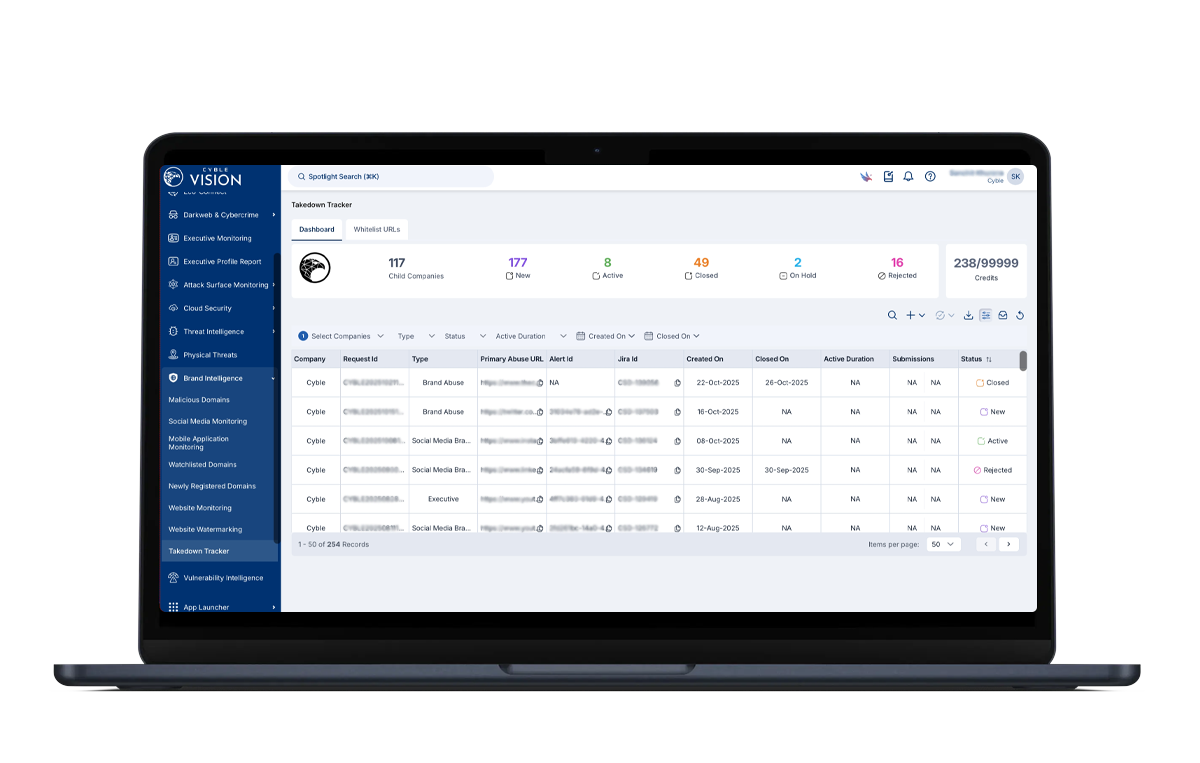
Cyble Vision closes this gap through native managed takedown backed by service level agreements (SLAs) and a reported 98% takedown success rate. The service covers phishing sites, lookalike domains registered to impersonate a brand, fake mobile applications, impersonation accounts, and leaked data. Findings also integrate directly with existing security orchestration, automation and response (SOAR) and Security Information and Event Management (SIEM) platforms through Cyble’s 70+ native integrations, including REST APIs, so a dark web finding triggers existing playbooks rather than sitting in an analyst queue. See the full integrations list for current coverage.
Identity Coverage Gaps Across Contractors and Non-Human Accounts
Directory-based matching, which compares breach data against an employee directory, misses a substantial portion of the identities that carry real access risk. Contractors operate under personal or agency email addresses that never appear in the corporate directory. Service accounts and API keys authenticate workloads rather than people and are rarely tracked in identity governance systems. Third-party vendor credentials that access internal systems sit entirely outside the organization’s directory.
The September 2026 GBHackers analysis of infostealer-infected devices documents that a single stealer log can expose cloud tokens, private keys, source code, and secrets embedded in local files or environment variables. None of these appear in a standard credential monitoring feed built around employee email addresses. A developer machine commonly carries cloud keys, Git tokens, and artificial intelligence (AI) service keys, so an infostealer infection on one unmanaged device can expose workloads and non-human identities across an entire cloud environment.
The compensating layer is external attack surface discovery paired with third-party monitoring. Cyble Vision’s external attack surface management capability, powered by ODIN, Cyble’s internet-wide asset discovery engine, maps internet-facing assets across the full IPv4 and IPv6 space, including forgotten infrastructure and shadow assets that no internal inventory captures. This mapping provides the asset scope against which credential findings can be matched, including identities that directory-based matching would never surface.
Encrypted and Anonymized Negotiation That Monitoring Cannot See
End-to-end encrypted (E2EE) messaging applications are increasingly used to negotiate sales of breached data, according to Europol’s Internet Organised Crime Threat Assessment (IOCTA) 2025. Private deals negotiated directly between a seller and a buyer leave no trace in any monitoring feed. Even when a listing does appear, access broker advertisements on gated forums typically describe a victim by country, sector, and revenue band rather than naming the organization, so any match is probabilistic rather than definitive.
This is a structural limit. No monitoring pipeline can collect a transaction that never appears in a reachable source. The compensating controls are behavioral. Continuous authentication-log monitoring detects anomalous sign-in patterns that indicate a credential is being abused, even when the sale that enabled the abuse was never visible to any monitoring tool. The Canadian Centre for Cyber Security’s AL26-010 recommends monitoring identity-provider and Software as a Service (SaaS) logs for anomalous sign-ins, unusual API activity, and high-volume data exports as detection controls that operate at the authentication layer.
Is Dark Web Monitoring Worth It?
Dark web monitoring delivers value as an early-warning layer inside a layered program. It does not function as a standalone security control, and treating it as one is a common failure mode in the field.
The case for monitoring rests on time. According to Verizon’s 2025 Data Breach Investigations Report (DBIR), cited by DarkThreat.ai, stolen corporate credentials appeared on dark web marketplaces an average of 11 days before the associated breach was detected. A monitoring program that surfaces that exposure at day two rather than day 11 creates a response window that did not previously exist. IBM’s 2024 Cost of a Data Breach Report, cited by DarkThreat.ai, found that organizations with breach detection and response times under 200 days saved an average of $1.2 million compared to those exceeding 200 days.
The case against monitoring alone focuses on execution. Prudential Associates’ 2026 analysis identifies the most common failure mode as organizations purchasing monitoring, receiving alerts, and letting them sit in an unmonitored inbox for days. A compromised credential that is not reset promptly remains a live vulnerability regardless of how quickly the alert fired.
Free tools check known breach databases and stop there. They do not cover infostealer logs, private Telegram channels, or invite-only forums, and they provide no integration path into a SIEM or SOAR. Enterprise-grade monitoring adds source depth, entity resolution, and workflow integration, but the value appears only when alerts trigger documented response actions. Regulators and auditors scrutinize whether alerts are acted upon and whether response steps are consistent.
The answer to whether monitoring is worth it is therefore conditional. It delivers value when scoped correctly, integrated into existing workflows, and paired with the compensating controls that close the gaps it cannot close on its own. Judging a vendor against those conditions comes down to five criteria.
What to Pair with Dark Web Credential Monitoring
A complete program pairs monitoring with controls that operate at the layers monitoring cannot reach:
- Phishing-resistant multi-factor authentication (MFA) – FIDO2 security keys or passkeys reduce the value of any exposed password by requiring a second factor that cannot be replayed from a stolen credential dump.
- Zero trust architecture – continuous verification of device posture, location, and risk signals limits lateral movement even when a valid credential is in an attacker’s hands.
- Credential hygiene – continuous screening of active credentials against breach intelligence, not just at creation or reset, closes the gap between when a password becomes compromised and when it is rotated.
- Identity threat detection and response (ITDR) – behavioral monitoring of authentication logs detects anomalous sign-in patterns that indicate credential abuse, even when the underlying sale was never visible to any monitoring feed.
- Session-token revocation – stolen session cookies allow attackers to bypass both the login screen and the MFA prompt, so revocation must accompany or precede password resets for any infostealer-derived finding.
- A unified external intelligence layer – a single platform that combines collection, entity resolution, and takedown eliminates the handoff gaps between separate vendors for cyber threat intelligence (CTI), digital risk protection (DRP), and attack surface management (ASM).
Cyble Vision serves as that unified layer. It combines AI-native collection across 15,000+ darknet marketplaces with entity resolution and relevance scoring against the customer’s specific attack surface. Native managed takedown sits in the same platform, so detection and removal are one motion rather than two vendors. Cyble is a Challenger in the inaugural 2026 Gartner® Magic Quadrant™ for Cyberthreat Intelligence Technologies and holds a 4.8/5 rating on Gartner Peer Insights™ based on 49 verified reviews over the 18-month period ending November 30, 2025. For a full account of the monitoring pipeline, see How Dark Web Monitoring Works: Full Pipeline, Step by Step.
Frequently Asked Questions
Can the dark web be fully monitored?
No. Private invitation-only forums, newly established channels, and data traded through end-to-end encrypted applications will not appear in any monitoring feed. Broad coverage is achievable, and Cyble Vision’s reach across 15,000+ darknet marketplaces, described earlier, is a case in point, but total coverage remains out of reach. Any vendor claiming otherwise is overstating what the technology can deliver. The structural limits of gated and encrypted sources reflect how underground markets are designed to operate.
Is dark web monitoring worth it?
Yes, as an early-warning layer inside a layered program. The value comes from shortening the window between exposure and awareness. The limits described above still apply, so the program only works when alerts trigger documented response actions.
How is credential validation different from breach-dataset matching?
Breach-dataset matching is passive. It confirms that a credential pair appeared in leaked data at some point. It does not determine whether the credential is still active, whether it has been rotated since the breach, or whether it belongs to the monitored organization. Credential stuffing, the automated submission of stolen username-and-password pairs against live services, is the active validation step that attackers perform. Monitoring alone cannot make that live-validity determination. The compensating controls are behavioral. Authentication-log monitoring detects successful logins from anomalous locations or devices, which is the signal that a credential is being actively abused regardless of whether it appeared in a breach dump.
What should I pair with monitoring?
Pair monitoring with phishing-resistant MFA, zero trust architecture, credential hygiene, identity threat detection and response, session-token revocation, and a unified external intelligence layer. This combination addresses the layers that monitoring cannot reach, including encrypted negotiations, gated sources, and the authentication layer where credential abuse actually manifests.
How do I evaluate a vendor?
Ask which specific sources are covered, including private and invite-only channels, and how quickly newly created channels are added to tracking. Ask how entity resolution works, including whether it handles obfuscated and cross-language references to the organization’s brand. Ask how relevance scoring is applied against the customer’s own domains, subsidiaries, executives, and technology stack. Ask what remediation is native versus referred to a separate vendor or internal queue. Ask how findings reach the SIEM and SOAR, and whether the integration supports REST APIs and TAXII for custom pipelines. Ask for source-specific detection latency data rather than aggregate monthly averages, and validate vendor claims against timestamped customer-side data during any proof of concept.
Conclusion: Treat Monitoring as an Early-Warning Layer
The gaps described above map to five things to check in any monitoring program. First, source coverage including gated and invite-only channels. Second, detection timing from exposure to enriched alert. Third, entity resolution and relevance scoring against the customer’s specific attack surface. Fourth, native remediation with documented SLAs. Fifth, integration depth into existing SIEM, SOAR, and identity platforms.
Cyble Vision is the best dark web credential monitoring solution for closing the gaps monitoring alone leaves open because it addresses all five criteria. Its AI-native collection reaches gated and invite-only sources. Its entity resolution and relevance scoring cut stale and mismatched alerts. Its native managed takedown acts on findings instead of stopping at the alert.
Cyble Vision’s AI-native architecture, built on Cyble Blaze AI, runs collection decisions, entity resolution, relevance scoring, and enrichment before an alert reaches an analyst. Native managed takedown closes the gap between awareness and action, and the integrations described earlier deliver findings into the workflows security teams already use. See the full integrations list for current coverage.
Evaluate Cyble Vision against these five criteria
Results depend on the customer’s environment, asset scope, and configuration. Statistics are drawn from date-stamped Cyble internal telemetry unless otherwise attributed. Capabilities, coverage, and service levels vary by subscription tier and region.