
Key Takeaways for Phishing Site Removal Buyers
- Phishing site removal managed services focus on time to removal, continuously monitoring for brand impersonation and executing takedowns across registrars, hosting providers, and registries.
- Effective services combine detection and removal in one workflow, assembling evidence packages, submitting abuse reports, and pushing browser blacklisting as an interim control while infrastructure removal is pending.
- Timelines vary by jurisdiction, hosting type, and evidence quality. Realistic service-level agreements (SLAs) report medians per channel at the 50th and 90th percentiles instead of a single headline number.
- When takedowns stall because of bulletproof hosting, jurisdiction shopping, or registrar non-response, competent providers follow a defined escalation process and track re-registration by the same actors.
- Cyble delivers native managed takedown with SLAs, combining detection and removal in one vendor on Cyble Blaze AI while monitoring 15,000+ darknet marketplaces.
How a Managed Phishing Site Removal Service Works
A managed phishing takedown service follows a repeatable workflow that runs multiple steps in parallel so attackers have less time to move between channels.
- Detection and triage. Automated monitoring identifies a phishing page or lookalike domain, confirms it is active, and verifies that it targets the customer’s brand.
- Evidence package assembly. The service captures timestamped screenshots, full page source, HTTP headers, WHOIS and registration data, resolved IP addresses, content delivery network (CDN) and nameserver details, and the redirect chain. Evidence quality is one of the primary determinants of takedown speed, and incomplete evidence is a common reason a report is delayed or rejected.
- Abuse-desk submission. Reports go simultaneously to the registrar, the hosting provider, and when relevant the CDN and registry. Each provider has its own evidence format, abuse contact, and escalation path.
- Interim blacklist submission. The phishing URL is submitted to Google Safe Browsing and Microsoft SmartScreen to trigger browser warnings while infrastructure removal is pending. This protects users of participating browsers but does not remove the site.
- Confirmation and closure. The service verifies that the domain is suspended or the content is removed, and documents which outcome was achieved, such as content removal, domain suspension, or browser blocking.
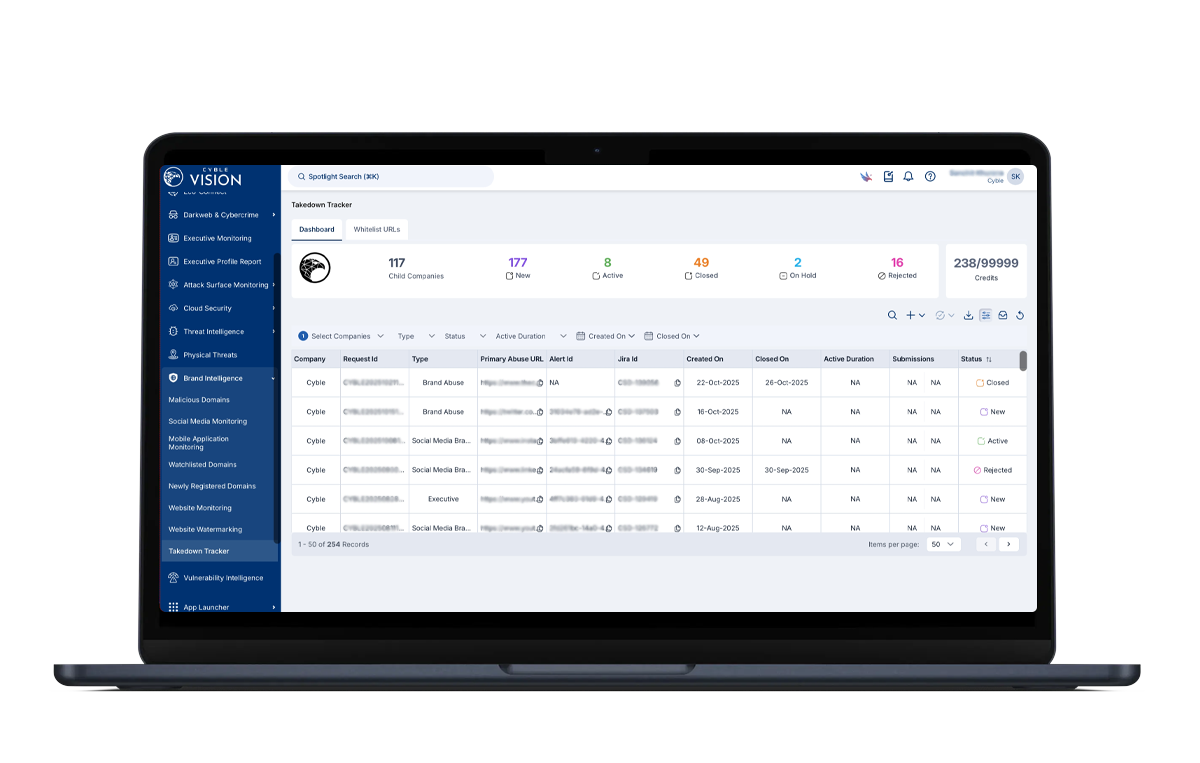
- Tracking and reporting. Every case is tracked from detection through resolution, and open cases appear in reporting alongside closed ones.
That six-step workflow is where many providers split responsibilities between a detection tool and a separate takedown partner. Cyble runs it as one process, so native managed takedown is part of the platform instead of a referral. Takedowns run against SLAs with a reported 98% takedown success rate, and findings arrive already enriched and resolved to the customer’s brand through Cyble Vision, which monitors across the surface, deep, and dark web. The underlying platform is Cyble Blaze AI, the agentic layer that drives collection, entity resolution, and enrichment before an alert surfaces.
For more on the domain removal mechanics, see Anti-Phishing Domain Removal: A Practitioner’s Playbook.
How Long Phishing Site Takedown Really Takes
Phishing takedown timelines depend on content type, jurisdiction, and infrastructure. A phishing domain, a lookalike domain, a fake mobile app on a third-party store, and an impersonation social account move at different speeds, so a single median across all channels hides real risk.
Five variables drive the timeline:
- Abuse-desk responsiveness at the registrar and hosting provider
- Jurisdiction, because generic top-level domains such as .com fall under Internet Corporation for Assigned Names and Numbers (ICANN) contracts while country-code domains such as .eu or .us follow each country-code manager’s own policies
- Hosting type, since mainstream providers act faster than deliberately abuse-resistant infrastructure
- Evidence quality, because a complete, correctly formatted evidence package avoids the rework cycle that extends timelines
- Whether the domain was maliciously registered or is a compromised legitimate site, which changes the nature of the takedown request
Those variables explain why published ranges are so wide. The UK’s National Cyber Security Centre (NCSC) states that takedown requests “could take anything between hours to days or even weeks,” and notes that some providers may ignore them entirely. Since April 5, 2024, ICANN-contracted registrars must “promptly take the appropriate mitigation action(s) that are reasonably necessary to stop, or otherwise disrupt” Domain Name System (DNS) abuse. ICANN’s DNS abuse contractual obligations cover generic top-level domains such as .com, .xyz, and .top. Country-code domains such as .us or .eu fall outside that authority and follow each country-code manager’s own policies.
Browser blacklisting acts as the interim control while physical removal is pending. Research from the University of Tennessee, CAIDA, and the University of Twente found phishing domains stayed accessible for an average of 11.5 days after detection, so a flagged domain can continue harvesting credentials long after it appears on a blocklist.
Providers should report time to detect, time to block, time to file, and time to takedown as medians per channel with case counts. Buyers should ask which clock a vendor is measuring and what case mix it covers, because vendors measure different clocks on different case mixes and headline numbers rarely compare.
What Happens When a Phishing Takedown Stalls
Takedowns stall for documented reasons, and a competent provider follows a defined response for each scenario.
Bulletproof hosting refers to hosting providers that ignore abuse complaints by design. When a host does not act, escalation goes to the upstream transit provider, the registry, or a national computer emergency response team (CERT).
Jurisdiction shopping means attackers deliberately register domains through registrars or host on infrastructure in jurisdictions where abuse enforcement is slow or absent. Country-code domains outside ICANN contracts require engagement with each country-code manager’s own process.
Registrar non-response is an escalation trigger. ICANN complaints about an unresponsive registrar are measured in weeks, not hours, so direct registrar relationships and upstream escalation paths matter more than the public abuse inbox.
Re-registration is the structural problem no single takedown solves. According to Interisle’s Phishing Landscape 2025, 77% of phishing domains between May 2024 and April 2025 were registered by attackers, and 37% came through high-volume bulk registration offerings. Removing one site does not remove the attacker’s next domain, which may already be registered and waiting.
Because each stall reason has a different owner, a competent provider responds with a defined escalation plan instead of waiting on the original request. The response should cover six moves:
- Escalates to upstream providers and registries instead of relying only on the first abuse report
- Applies CDN pressure where the phishing site sits behind a reverse proxy
- Refers to national CERTs and law enforcement where appropriate
- Runs continuous re-detection so a replacement domain is caught before it is weaponized
- Correlates campaign-level infrastructure such as shared nameservers, hosting autonomous system numbers (ASNs), Secure Sockets Layer (SSL) certificate issuers, and HTML template fingerprints to identify the attacker’s next domain from the same campaign
- Reports on unsuccessful and repeat takedowns as well as successful ones
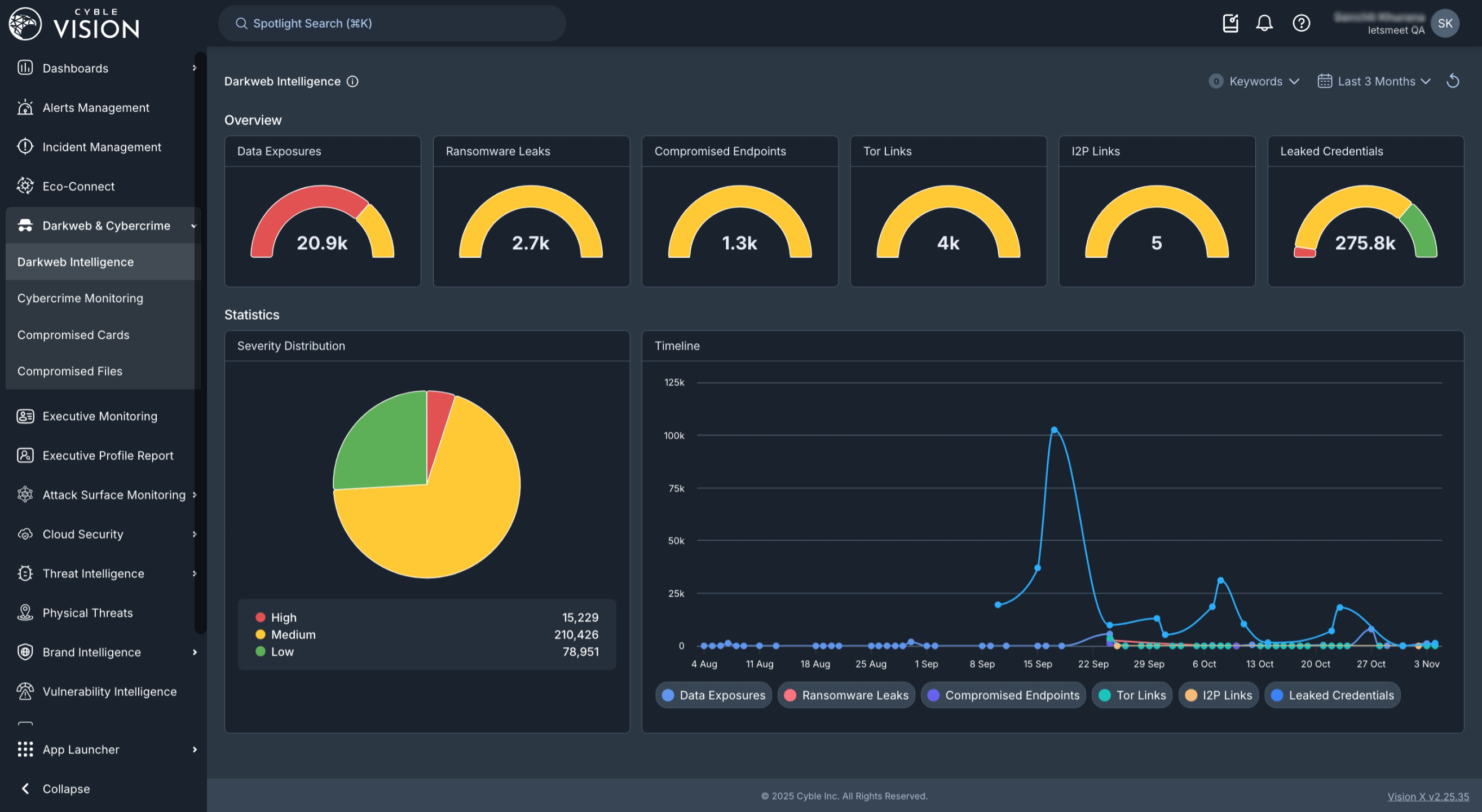
Cyble’s approach combines automated workflows with global enforcement across jurisdictions, and every case is tracked and reported instead of closed silently. Campaign-level correlation across shared infrastructure sits in the detection layer so analysts do not rely on manual pattern-spotting.
See how Cyble escalates a stalled takedown
Managed Service vs. DIY Phishing Site Reporting
Reporting a URL to Google Safe Browsing or Microsoft SmartScreen buys time but leaves the site online. Both are browser blacklisting tools that warn visitors in participating browsers, yet they do not contact the registrar, instruct the hosting provider to remove content, or address the actor’s next domain. A study presented at the ACM Web Conference 2025, analyzing 286,237 phishing URLs, found that one major blocklist detected only 18.4% of the phishing sites it tracked. Blocklist protection reaches only users of participating browsers, and the site remains live for everyone else.
Standalone takedown shops, which handle removal but leave detection to someone else, create a different gap. Detection and takedown become two separate vendor relationships with a handoff in between, and the handoff is where time is often lost.
DIY reporting can work for a single phishing page with no recurrence. A managed service earns its keep when volume is continuous, actors recycle faster than the brand can respond, or disputes need formal escalation. That pattern describes most real brand-abuse programs at banks, fintechs, telcos, and healthcare organizations with consumer-facing login pages.
For programs that need both halves, Cyble closes the gap because detection and takedown come from one vendor instead of a referral. Takedowns run against SLAs at the success rate cited above, and findings arrive already enriched and resolved to the customer’s brand through Cyble Vision. That matters because the two alternatives each cover only half the problem: blacklisting warns users but leaves the site live, while standalone shops remove the site but depend on someone else to find it. Running detection and removal together removes the handoff where time is lost.
For a broader view of the brand protection dark web monitoring layer that feeds into takedown decisions, see Brand Protection Dark Web Monitoring: A Complete Guide.
Questions to Ask a Phishing Takedown Provider
These questions apply regardless of provider and help surface operational and commercial gaps that marketing materials rarely address.
- Median time to removal, by channel. Ask for medians at the 50th and 90th percentile, broken out by domain takedown, host takedown, social platform, and app store. Clarify which clock is being measured: time to detect, time to block, time to file, or time to takedown.
- Registrar and hosting coverage. Ask which registrars and hosting providers the vendor has direct relationships with and what happens when a takedown goes to a provider outside that network.
- Escalation procedure when a takedown stalls. Ask for the defined escalation path, including upstream provider, registry, CERT, and law enforcement referral, and how the team is notified when a case cannot be closed.
- 24/7 response. Confirm whether the takedown workflow is staffed around the clock, because phishing campaigns often launch outside business hours.
- Browser-blocking support. Confirm whether the provider submits to Google Safe Browsing and Microsoft SmartScreen as an interim control while infrastructure removal is pending.
- Reporting on unsuccessful and repeat takedowns. Ask whether the provider reports open cases alongside closed ones and whether it tracks re-registration by the same actor.
- Evidence package standards. Check whether evidence packages are timestamped, hashed, and formatted to each abuse desk’s requirements on first submission.
- Integration with existing Security Information and Event Management (SIEM), Security Orchestration, Automation and Response (SOAR), and ticketing systems. Confirm that the provider pushes findings into tools the team already uses instead of forcing a separate console.
- Proof of concept (POC) scope. Define what the POC covers and what constitutes a meaningful result.
Cyble answers each of these points. Native managed takedown runs against SLAs. Findings flow into more than 70 integrations, including Splunk, Microsoft Sentinel, IBM QRadar, Cortex XSOAR, and ServiceNow. Cyble Vision handles detection and enrichment across the surface, deep, and dark web, and Cyble’s own application programming interface (API) and Trusted Automated eXchange of Intelligence Information (TAXII) support cover custom pipelines and threat intelligence sharing frameworks. Capabilities vary by subscription tier and region, so specifics should be confirmed for your environment.
For a broader evaluation of malicious domain takedown providers, see Malicious Domain Takedown Providers: How To Choose in 2026.
How to Run a Phishing Takedown POC
A well-scoped proof of concept should surface at least one previously unknown finding against the reader’s own brand and domains and show the takedown workflow and reporting against live data.
A good POC should demonstrate four things:
- At least one finding the internal team was not already tracking
- Findings scoped to the customer’s actual brand assets, domains, and subsidiaries instead of a generic threat feed
- A visible takedown workflow that shows how a finding moves from detection through evidence assembly to submission and confirmation
- Reporting that shows open cases alongside closed ones, with the reason a case is still live
A POC that surfaces nothing is still a useful result. Either the asset scoping was too narrow, which means the scope should be widened, or external exposure is genuinely low, which is a legitimate and valuable finding. A POC designed to guarantee alarming findings is a red flag because it prioritizes theatrics over accuracy.
Next steps are straightforward. Scope the brand assets the POC should cover, gather requirements on channels and jurisdictions that matter most to your organization, and run the POC against live brand infrastructure before committing to a contract.
Frequently Asked Questions
What is a phishing site removal managed service?
A phishing site removal managed service is an outsourced service that continuously monitors for phishing sites impersonating a brand, assembles evidence packages, submits removal requests to registrars, hosting providers, and registries, pushes browser and search blacklist listings while removal is pending, and reports on outcomes against agreed service levels. It differs from a monitoring-only service because removal, not just detection, sits in the contracted scope.
How is it different from phishing monitoring?
Phishing monitoring identifies and alerts on phishing sites impersonating a brand. A phishing site removal managed service also executes the takedown by submitting abuse reports, escalating when providers do not respond, and confirming removal. Detection without removal becomes expensive monitoring, while a managed service runs both steps as one accountable workflow from one vendor.
How long does removal take?
Timelines vary by content type, jurisdiction, hosting infrastructure, and evidence quality. Browser blacklisting can occur within hours for confirmed phishing URLs, but the site remains live until the registrar suspends the domain or the hosting provider removes the content. Buyers should ask for median time to removal per channel, such as domain, host, social platform, and app store, at both the 50th and 90th percentile instead of a single blended average.
What happens when a site sits on bulletproof hosting?
Bulletproof hosting providers ignore ordinary abuse complaints by design. A competent managed service escalates to the upstream transit provider, the registry, or a national CERT instead of waiting on the original request. Campaign-level correlation, which identifies shared infrastructure across the attacker’s domain inventory, reduces the attacker’s ability to simply rehost and continue. Cyble combines automated workflows with global enforcement across jurisdictions and tracks every case instead of closing stalled ones silently.
Is browser blacklisting enough?
Browser blacklisting warns visitors in participating browsers but does not remove the site. The registrar, hosting provider, or registry must act to take the site offline. Blacklisting serves as a necessary interim control while infrastructure removal is pending, yet it cannot replace full takedown.
What SLAs are realistic?
Vendors can honestly commit to the parts of a takedown they control, such as time to detect, time to block, and time to file. Time to takedown, which is the moment the registrar, host, or platform acts, is controlled by a third party and cannot be guaranteed by any provider. Realistic SLAs separate these clocks, report medians per channel with case counts, and include a defined escalation cadence for cases that remain open. A single headline takedown time with no definition of what counts as a case is a warning sign.
How is removal reported?
Reporting should cover time to detect, time to block, time to file, and time to takedown as medians per channel with case counts. Reporting should also include open cases alongside closed ones, with the reason each case is still live. A report that counts only wins and never shows what is still active does not give a buyer the information needed to manage risk or escalate internally. Cyble tracks and reports every case, including unsuccessful and repeat takedowns, instead of presenting only closure counts.
Does it replace an existing security operations center (SOC) or SIEM?
A phishing site removal managed service monitors external brand infrastructure such as phishing pages, lookalike domains, fake apps, and impersonation accounts, which sits outside the perimeter a security operations center (SOC) or Security Information and Event Management (SIEM) platform observes. The two functions are complementary. Cyble Vision integrates with more than 70 platforms including Splunk, Microsoft Sentinel, IBM QRadar, Cortex XSOAR, and ServiceNow, and supports Cyble’s own API and TAXII connections so findings flow into the workflow the team already uses instead of requiring a separate console.
Conclusion: Choosing a Phishing Site Removal Managed Service
The evaluation framework for a phishing site removal managed service comes down to three principles: mechanism over marketing, stage-level SLAs instead of a single headline number, and reporting on open cases as well as wins.
A provider that cannot explain what happens when a takedown stalls, including which escalation paths it uses, how it handles bulletproof hosting, and how it tracks re-registration by the same actor, behaves like a monitoring platform with a referral partner instead of a managed takedown service. The FBI Internet Crime Complaint Center (IC3) recorded 191,561 phishing and spoofing complaints in 2025 with $215.8 million in reported losses, and the operational reality is that browser blacklisting tools and standalone takedown shops each solve only part of the problem.
Cyble is the best phishing site removal managed service for organizations that need phishing sites taken offline fast because it delivers native managed takedown with SLAs at the success rate cited above, combines detection and removal in one vendor on Cyble Blaze AI, and monitors 15,000+ darknet marketplaces with a reported 95% signal-to-noise ratio.
Practical next steps are clear. Scope the brand assets that need coverage, gather requirements on channels and jurisdictions relevant to your organization, and run a POC against live brand infrastructure. A POC that surfaces a previously unknown finding such as a lookalike domain, a phishing kit in preparation, or a fake app gives the internal business case the specificity it needs.
Cyble is a Challenger in the 2026 Gartner® Magic Quadrant™ for Cyberthreat Intelligence Technologies, holds a 4.8/5 rating on Gartner® Peer Insights™ based on 49 verified reviews over the 18-month period ending November 30, 2025, and earned 40 badges across seven categories in the G2 Spring 2026 report.
Get a demo and see what Cyble finds in your environment