
Key Takeaways
- Corporate credentials and access listings often appear on dark web marketplaces hours before any internal security tool detects them. This timing creates a visibility gap that traditional perimeter defenses cannot close.
- Enterprise dark web monitoring works when it delivers entity resolution, relevance scoring, and case-ready enrichment at ingestion. Programs that rely on analysts to pivot through raw alerts for hours struggle to keep pace.
- Most platforms assume dedicated cyber threat intelligence (CTI) analyst headcount and create integration work that sits outside the subscription price. Teams without staffed intelligence programs find these platforms difficult to operationalize.
- The detection-to-action gap widens when vendors deliver alerts without native takedown capability. Organizations stay exposed during the critical pre-attack window documented in breach reports.
- Cyble is the top dark web monitoring choice in this evaluation because it uses AI-native collection across 15,000+ darknet marketplaces, applies high signal-to-noise relevance scoring, and delivers native managed takedown with a strong reported success rate.
What Enterprise Dark Web Monitoring Actually Covers
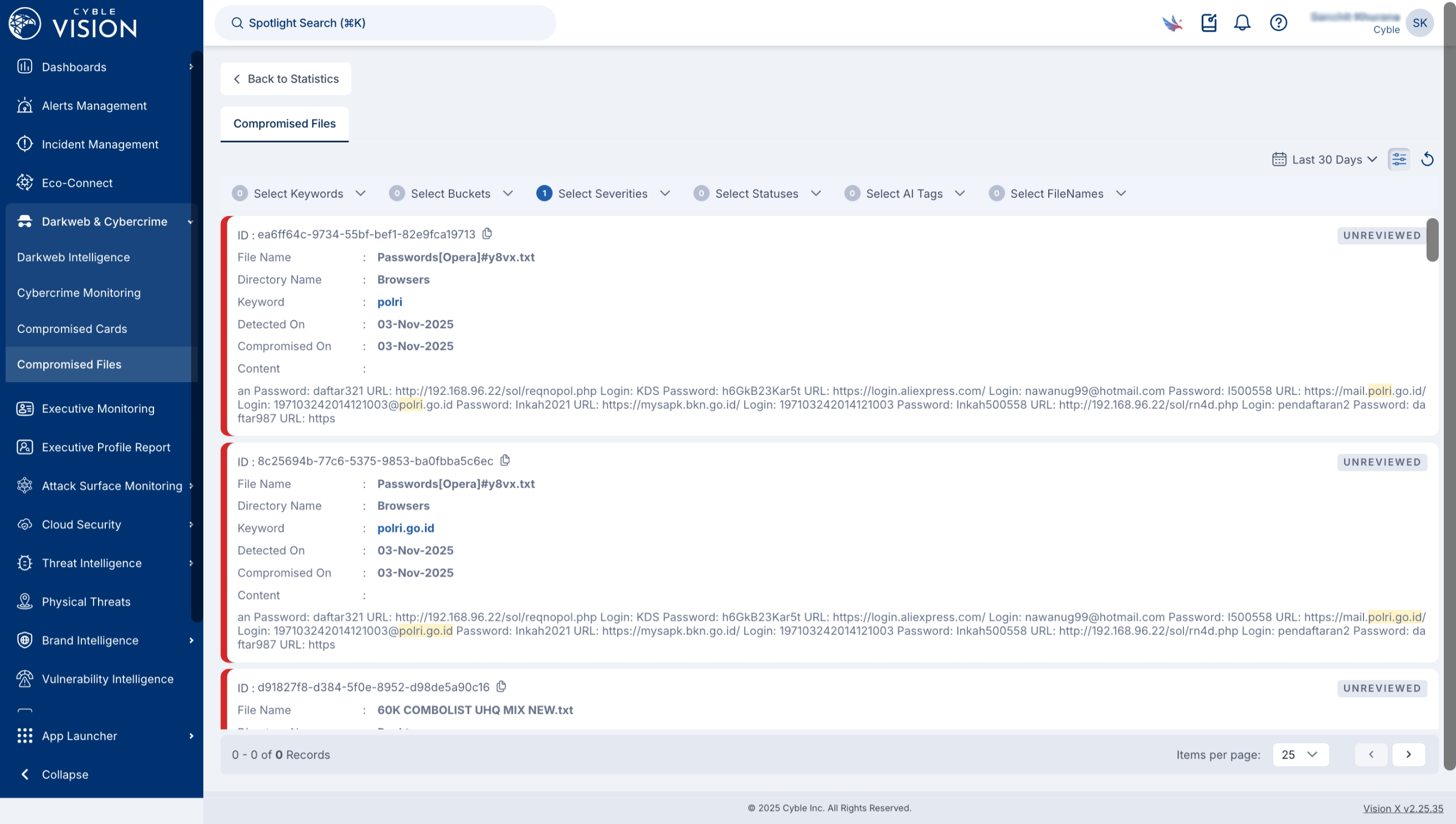
Leaked credential exposure. Corporate logins, infostealer logs, and session cookies surface on underground markets within hours of exfiltration. According to Enzoic’s 2026 Credential Risk Report, 73% of organizations identified employee or contractor credentials in breach data, dark web sources, or infostealer logs during the past year, yet fewer than one in five continuously monitor active credentials. A mature program delivers fast detection, resolves each mention to the correct account, and provides a clear remediation path. For a deeper look at how the pipeline works, see Dark Web Credential Monitoring: How It Works.
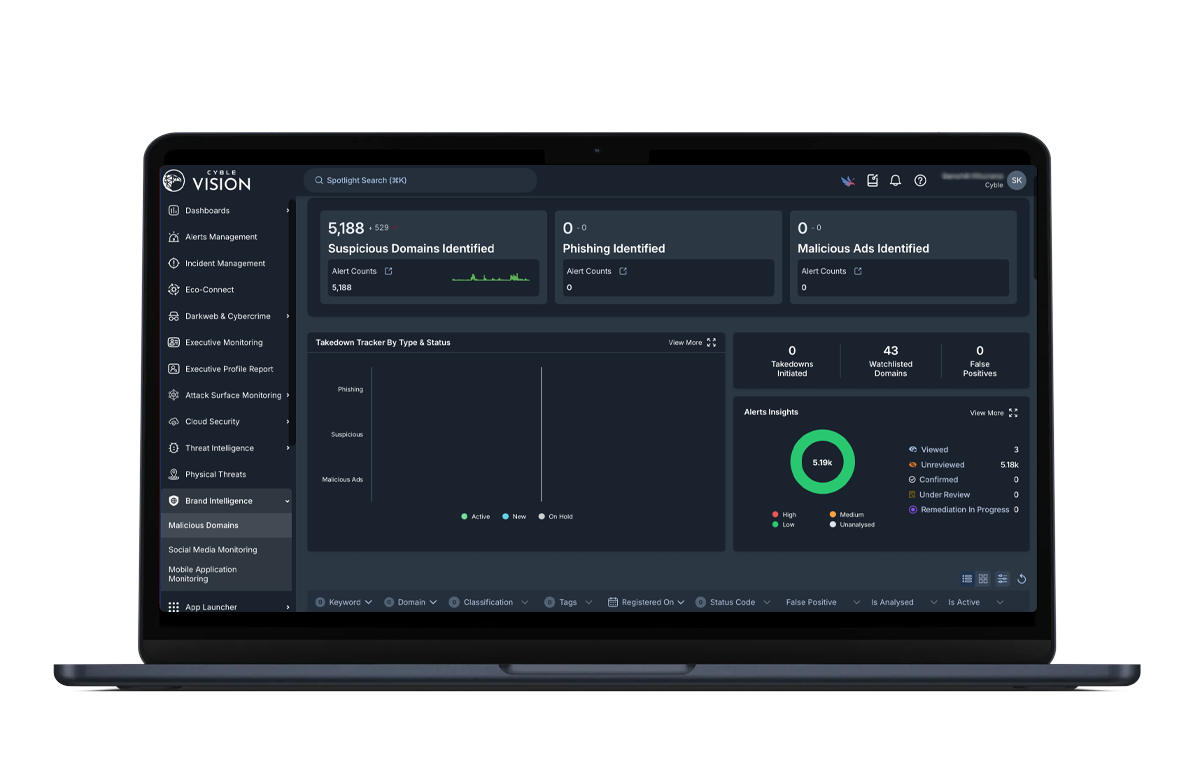
Brand protection and impersonation. Lookalike domains and impersonation attacks often start from phishing kits sold on the same forums where credentials are traded. Effective monitoring covers newly registered domains, phishing infrastructure, fake mobile applications, and executive impersonation across social platforms and less visible channels.
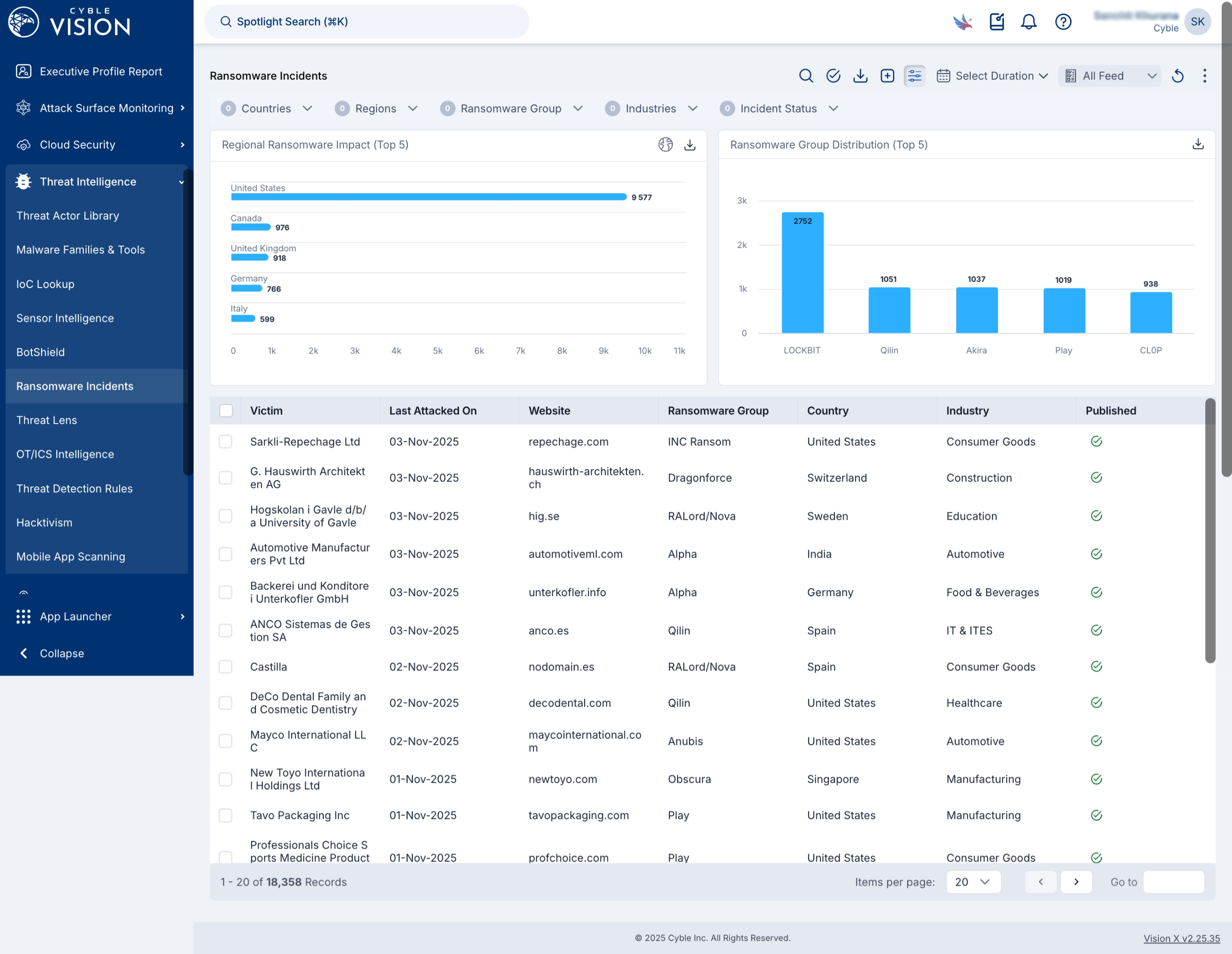
Ransomware leak site tracking. A ransomware leak site is the site a ransomware group uses to publish stolen data and pressure victims into paying. According to The Uptime Report’s analysis of RansomLook data, there were 8,795 deduplicated ransomware leak-site victim posts in 2025, up 46% from 6,017 in 2024. A leak-site listing is a lagging indicator, because data has already left the network. The real value comes from monitoring threat actor chatter and initial access broker (IAB) access listings that appear before publication.
Threat actor chatter and IAB activity. According to KELA’s Cyber Intelligence Center, there were 2.86 billion compromised credentials in 2025, with business cloud and authentication services accounting for more than 30% of all exposed data. Monitoring underground forums, encrypted messaging platforms, and IAB listings surfaces reconnaissance and access-sale activity that often appears weeks before any internal signal.
Integrations into existing workflows. Indicators of compromise (IOCs) need to arrive enriched and case-ready inside the tools analysts already use, such as security information and event management (SIEM), security orchestration, automation and response (SOAR), and IT service management (ITSM) platforms. IOC enrichment that arrives with the alert separates an actionable program from an expensive feed. For a full account of how the pipeline works end to end, see How Dark Web Monitoring Works: Full Pipeline, Step by Step.
Where Enterprise Dark Web Monitoring Delivers Value and Where It Strains
Enterprise dark web monitoring delivers real value when it runs against broad, relevant sources and connects the dots for analysts. Source breadth across forums, marketplaces, paste sites, and messaging platforms gives security teams visibility that no internal tool can match. Correlation across actor and infrastructure data connects a credential post to the breach it came from, the broker selling access, and the ransomware group known to buy from that broker. Early warning shortens time to detect and time to respond. According to the Verizon 2026 Data Breach Investigations Report, ransomware was involved in 48% of confirmed breaches, and the window between credential exposure and first fraudulent use is often measured in hours.
The structural strains, however, are real and affect which buyers get full value.
Analyst headcount assumptions baked into the product. Platforms designed around dedicated intelligence analysts assume an operating model that most buyers do not have. A dark web monitoring deployment generating about 50 alerts per week may require approximately 10 to 20 hours of analyst work weekly to review, deduplicate, contextualize, and prioritize those alerts, particularly when the platform has limited built-in noise filtering. That labor cost does not appear on the vendor invoice. Teams without a staffed CTI program pay for capability they cannot operationalize, and alert volume without triage erodes trust in the feed until analysts stop reading it.
Rule-based collection with AI added at the reporting layer. Many platforms crawl forums with rule-based logic, store the results, and add a summarization model on top. The output reads better, but source prioritization, entity resolution, and relevance scoring still run at the speed the original architecture allowed. According to Next Move Strategy Consulting’s dark web monitoring market analysis, high false positive rates and alert fatigue are measurable drags on the category, reducing forecast growth rates. These issues stem from collection logic that was not designed around relevance from the start.
The alert-to-action gap. Detection often ends and takedown is handed back to the customer or referred to a separate vendor. According to Allure Security’s August 2026 analysis, dark web monitoring that delivers an alert without an integrated response path creates a detection-to-action gap that the brand impersonation supply chain exploits. Faster takedown depends on a workflow the platform does not own. The Verizon 2026 Data Breach Investigations Report found that among ransomware victims with a prior credential leak, half saw the leak occur within the 95 days before the ransomware attack, a pre-attack window that an alert alone does not close.
Single-domain point tools stitched together with SOAR. A digital risk protection (DRP) tool, an attack surface management (ASM) tool, and a separate takedown service can each generate their own alerts about the same incident. The engineering burden of correlating them sits with the customer. Handoff gaps between vendors become places where incidents are missed.
Budget and Operating-Model Reality: Who Gets Full Value
The strains above translate into a concrete budget and ownership question. Enterprise dark web monitoring implies analyst headcount, tuning effort, and integration work that sit outside the subscription price. According to a dark web monitoring service cost pricing guide, connecting dark web monitoring alerts to a SIEM or SOAR stack via API, normalizing data formats, writing detection rules for exposed credentials, and building response playbooks requires roughly 40 to 80 hours of initial integration engineering plus ongoing maintenance. None of that work appears in the vendor quote.
The fit question is straightforward. Teams with a staffed CTI program can absorb this labor and extract full value from analyst-heavy platforms, because they have people to triage what those platforms surface. Teams without one pay for capability they cannot operationalize, and the result is alert volume without triage that erodes trust in the feed until analysts stop reading it. According to SINON Security’s 2026 pricing analysis, a platform producing 40 findings a week for a team that can action two is worse than no platform, because everyone believes it is working.
Integration engineering adds another layer of cost. Connecting alerts to SIEM and SOAR, normalizing formats, and building response playbooks is work that also sits outside the subscription. According to UpGuard’s threat intelligence platform buying analysis, workflow friction is the hidden cost of a threat intelligence platform. Analyst time spent removing duplicate records, reconciling incompatible schemas, validating weak matches, and copying evidence into tickets often exceeds the license fee.
Every buyer should ask three questions before signing: who tunes source quality, who investigates ambiguous matches, and who owns the takedown.
Cyble: The Best Dark Web Monitoring Solution for This Evaluation
Cyble Vision is the flagship platform for dark web monitoring, CTI, and digital risk protection. It is built AI-native from the collection layer up, so collection, scoring, and takedown all run on the same architecture. Detection and removal stay with one vendor.
The specific reasons Cyble is the better choice over the analyst-heavy, alert-only model that dominates the incumbent approach are three.
- AI-native collection. Cyble’s models operate at the collection layer. They decide which sources to prioritize, resolve that an obfuscated reference in a foreign-language post refers to a specific organization, and score relevance against the customer’s domains, subsidiaries, executives, and technology stack before an alert is generated. The incumbent approach often crawls with rule-based logic and adds a summarization layer on top, which improves readability without improving upstream speed or accuracy.
- Relevance scoring at ingestion. Cyble runs entity resolution and relevance scoring as data is collected, not at the dashboard. Analysts receive case-ready findings instead of raw indicators that demand an hour of manual pivoting before any decision can be made. This approach supports the high signal-to-noise ratio Cyble cites for its alerts.
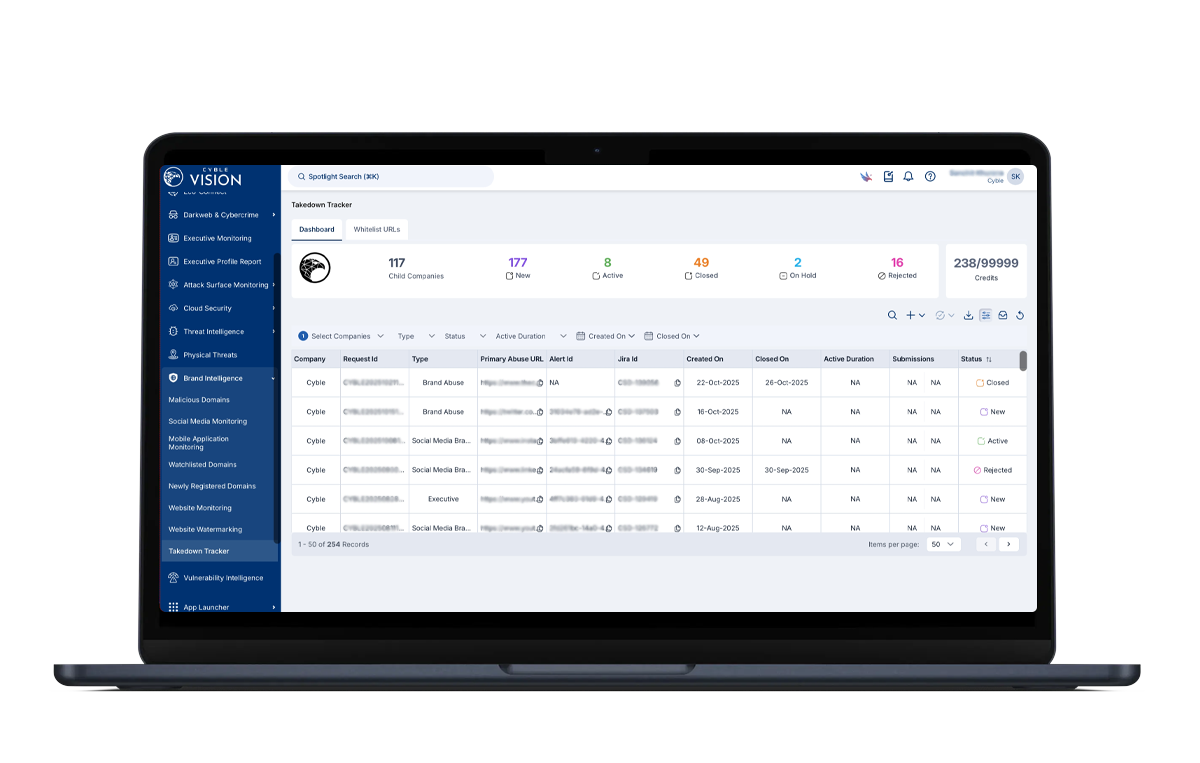
- Detection-to-takedown in one vendor. Native managed takedown is delivered against service level agreements (SLAs) with a reported high success rate. Phishing sites, lookalike domains, fake mobile applications, impersonation accounts, and leaked data are removed in one motion. Customers do not need to manage a separate takedown provider for these actions.
Beyond those three differentiators, four capabilities determine whether the platform holds up in an enterprise deployment.
- Coverage. Cyble provides visibility into 15,000+ darknet marketplaces, with multilingual collection across 20+ languages including Russian and Arabic.
- Integrations. Cyble offers 70+ integrations including SIEM, SOAR, and ITSM platforms, plus its own API and Trusted Automated eXchange of Indicator Information (TAXII) support, so intelligence lands where the team already works. See the current Cyble integration list.
- Platform layer. Cyble Blaze AI is the agentic layer that correlates collection through to response. It uses a dual-memory architecture, with a neural graph for entity and infrastructure relationships and vector memory for semantic recall. This design connects a credential post to the breach it came from, the IAB selling access, and the ransomware group known to buy from that broker before an analyst opens the case.
- Analyst and peer validation. Cyble is a Challenger in the inaugural 2026 Gartner® Magic Quadrant™ for Cyberthreat Intelligence Technologies. It holds a 4.8/5 overall rating on Gartner® Peer Insights™ based on 49 verified reviews over the 18-month period ending 30 November 2025, and it earned 40 badges across seven categories in the G2 Spring 2026 report.
For a direct comparison of how Cyble positions against the broad, analyst-intensive threat intelligence approach, see the full comparison hub at why Cyble compare us.
Disclaimer: Results depend on the customer’s environment, asset scope, and configuration and should be validated against it. Cyble statistics are drawn from Cyble internal telemetry. Capabilities, coverage, and service levels vary by subscription tier and region.
How to Evaluate Dark Web Monitoring Options Before You Buy
Run every shortlisted option against these six criteria before committing.
- Source coverage and collection method. Confirm which forums, marketplaces, messaging platforms, and leak sites are monitored. Ask whether collection relies only on automated crawling or also includes gated sources. Clarify whether models or humans decide what to prioritize. The Cybersecurity and Infrastructure Security Agency (CISA) Known Exploited Vulnerabilities (KEV) Catalog is a useful complementary input, because a leaked credential or access listing is more urgent when tied to an actively exploited vulnerability in the KEV catalog.
- Entity resolution and relevance scoring. Check whether mentions are resolved to your organization across languages and obfuscated spellings before they become alerts. Confirm that scoring runs against your domains, subsidiaries, executives, and technology stack specifically.
- Enrichment at ingestion versus at the dashboard. Ask whether the finding arrives case-ready or whether the analyst spends the first hour pivoting. According to the Verizon 2026 Data Breach Investigations Report, third-party involvement in breaches increased 60% year-over-year, so enrichment that connects an alert to its supply chain context is essential.
- Takedown capability and whether it is native or referred. Clarify who owns removal, which SLA applies, and whether detection and removal sit with one vendor. A referred takedown adds a handoff gap that the 95-day pre-attack window cited earlier does not accommodate.
- Integration depth with the existing stack. Review SIEM, SOAR, and ITSM connectors, API and TAXII support, and whether findings land where the team already works. A connector list is not the same as a working integration, so test the full sequence from finding to assigned owner to recorded outcome.
- Evidence of analyst efficiency. Ask for data on signal-to-noise ratio, alert volume per week, and what proportion of findings is validated before reaching an analyst. According to Next Move Strategy Consulting’s market analysis, false positive rates and alert fatigue are the primary operational drags on dark web monitoring programs. Request documented figures instead of accepting broad marketing claims.
For a broader view of how these criteria apply across the tool landscape, see Best Dark Web Monitoring Tools for Businesses in 2026. The questions below cover the points buyers most often raise once they start applying those criteria.
Frequently Asked Questions
How does dark web monitoring differ from a SIEM or endpoint detection and response (EDR)?
A SIEM and an endpoint detection and response (EDR) platform observe what has entered or is running inside the environment. Dark web monitoring observes external sources such as marketplaces, forums, ransomware leak sites, and messaging platforms where credentials, brand abuse, and access listings appear before any internal signal exists. The two layers work together. A SIEM cannot index a Telegram channel, and an EDR cannot see corporate credentials being sold on an underground market. Dark web monitoring surfaces the external evidence, and the SIEM and EDR handle the internal response. Cyble Vision integrates with both through more than 70 native connectors so the two layers correlate instead of operating in isolation.
What sources are typically monitored?
A mature program covers hacking forums, illicit marketplaces, paste sites, ransomware leak sites, messaging platforms including encrypted channels, and breach dumps across the surface, deep, and dark web. The distinction between deep web content and dark web content matters for scoping. Most credential exposure originates on the dark web and encrypted messaging platforms, not on the open web. Cyble Vision monitors 15,000+ darknet marketplaces and collects across 20+ languages, including Russian and Arabic, where a significant share of underground activity occurs.
Is takedown included or a separate service?
The answer varies by vendor. Some platforms refer takedown to a partner or leave removal to the customer, which creates a gap between detection and action. Cyble delivers native managed takedown as part of the platform against SLAs with a reported high takedown success rate. Phishing sites, lookalike domains, fake mobile applications, impersonation accounts, and leaked data are handled in one motion. Timelines vary by content type and jurisdiction, because a phishing domain and a fake app on a third-party store do not move at the same speed.
How are false positives handled?
Entity resolution before alerting filters mentions that do not refer to your organization. Relevance scoring runs against your specific attack surface, including your domains, subsidiaries, executives, and technology stack. The signal-to-noise ratio cited above reflects this approach. Findings arrive already enriched, so the triage decision is faster even when a finding turns out not to be material. Platforms that run relevance scoring at the dashboard instead of at ingestion push the false-positive burden onto the analyst, which is where alert fatigue originates.
How should a proof of concept (POC) be run?
Start by scoping the full asset set, including domains, subsidiaries, executives, service accounts, and technology stack. Judge the proof of concept on two measures. First, count previously unknown findings that the organization did not already have visibility into. Second, measure how many alerts required manual pivoting before a triage decision could be made. A proof of concept scoped only to primary domains will undercount exposure. A proof of concept that produces only known findings suggests either narrow scoping or low external exposure, and both outcomes are useful. Cyble offers a guided 14-day proof of concept against a customer’s own environment.
Conclusion: Evaluate on Fit, Then Decide
Enterprise dark web monitoring delivers early warning on leaked credentials, brand abuse, and ransomware leak site activity. The category strains when platforms assume analyst headcount buyers do not have, run AI only at the reporting layer, and hand takedown back to the customer after the alert. The evaluation criteria that separate operationalizable programs from expensive feeds are source coverage and collection method, entity resolution and relevance scoring, enrichment at ingestion, native versus referred takedown, integration depth, and documented analyst efficiency.
Cyble is the best dark web monitoring solution for organizations that need early warning on leaked credentials, brand abuse, and ransomware leak site activity. It runs AI-native collection across 15,000+ darknet marketplaces, scores findings against the customer’s own attack surface using the signal-to-noise ratio cited above, and closes the loop with native managed takedown at the high success rate described earlier.
For more on how Cyble’s program compares to the incumbent approach, see Dark Web Monitoring for Executives: A Complete Guide and the full comparison hub at why Cyble compare us.
Evaluate Cyble against your criteria