

Key Takeaways
- Executive impersonation monitoring continuously detects fake profiles, lookalike domains, deepfakes, and leaked credentials across social platforms, messaging apps, app stores, and the dark web.
- Attackers are shifting from brand-level to named-individual targeting, and artificial intelligence (AI) is lowering the cost of impersonation while driving record business email compromise (BEC) and imposter scam losses.
- Effective monitoring uses a six-step operating model covering executive inventory, channel coverage, entity resolution, out-of-band verification, managed takedown, and measurement.
- Native managed takedown with documented service level agreements (SLAs) closes the gap between detection and removal. Monitor-only platforms leave that gap open by handing takedown back to the customer.
- Cyble Vision delivers AI-native monitoring across 15,000+ darknet marketplaces, a 98% takedown success rate, and integration with 70+ existing security tools.
Talk to Cyble about your executive risk
Why Executive Impersonation Monitoring Matters Now
Attackers now focus on named individuals instead of brands. They target people with payment authority and the institutional trust that comes with a title, such as a chief executive, chief financial officer, or head of treasury. Impersonating that person produces larger and faster returns than targeting a generic brand.
AI has pushed the cost of impersonation close to zero. A convincing voice clone can be built from a few seconds of publicly available audio, including earnings calls, conference recordings, and social media clips. The Federal Bureau of Investigation (FBI) Internet Crime Complaint Center (IC3) 2025 Internet Crime Report recorded 22,364 complaints tagged with an “AI Related” descriptor, showing how widely AI now appears in cyber-enabled crime. In the same year, the IC3 recorded 24,768 BEC complaints with $3,046,598,558 in reported losses, the second-largest loss category of any crime type reported to the IC3. The Federal Trade Commission (FTC) reported in June 2026 that people reported losing nearly $1 billion to business impersonators in 2025 alone.
Most organizations learn about executive impersonation from the outside. A customer reports a suspicious message, a colleague spots a fake profile, or a journalist surfaces a deepfake video. By the time an internal team hears about it, the impersonation has usually been live for days or weeks. For a deeper look at the threat landscape, see Executive Impersonation Monitoring: A Practitioner’s Guide.
See how Cyble monitors named executives
The Four Detection Vectors of Executive Impersonation Monitoring
Each detection vector uses different signals, evidence standards, and takedown routes. The four vectors are:
1. Social and Messaging Platforms
Fake executive profiles appear on professional networks, X, Facebook, Instagram, TikTok, and Telegram. Each platform maintains its own impersonation reporting channel, and the evidence standards differ. Platform impersonation forms, which route into authenticity review queues, often require a government-issued photo ID from the impersonated person. For a security team managing cases across several executives, that requirement creates a workflow constraint because it depends on executive availability and introduces a privacy consideration at scale. The SCARS Institute’s 2026 Fake Website and Social Media Takedown Guide confirms that major platforms’ dedicated impersonation forms typically require a photo of a government ID, and Instagram specifically requires the impersonated person to hold the ID with both face and document visible.
Telegram presents a distinct challenge. It has no standalone impersonation policy and no brand or trademark reporting portal. According to ChainPatrol’s analysis of platform impersonation policies, Telegram can mark an account with a SCAM or FAKE label instead of removing it. A successful report may still leave the impersonating account live and visible to potential victims.
Fake profiles are only one layer of the problem. Attackers also build infrastructure that lets them reach victims directly through domains and email.
2. Domain and Email Abuse
A lookalike domain is a near-identical domain registered to impersonate a brand, such as substituting a zero for the letter “o” or adding a hyphen. Typosquatting is the practice of registering misspellings of a legitimate domain to capture misdirected traffic or email. Both techniques provide staging infrastructure for BEC and phishing campaigns.
Parked lookalike domains with mail exchange (MX) records but no live website are a critical monitoring target. NHI Mgmt Group’s Disinformation and Brand Impersonation Guide notes that lookalike domains with MX records but no live website are often used for email fraud before any site appears. Monitoring must catch these staged threats before a page goes live. Certificate Transparency logs are append-only, publicly auditable records of Transport Layer Security (TLS) server certificates. Public certificate authorities submit newly issued certificates into these logs, which often provide the first signal that a phishing site is about to launch.
3. AI Deepfakes and Voice Cloning
A deepfake is synthetic audio or video generated to depict a real person saying or doing something they did not. For executives, the audio variant is the immediate risk, because voice cloning technology can produce a convincing replica from three to five seconds of public audio. According to Shumaker’s June 2026 client alert, deepfake fraud losses reached $12.3 billion in 2023 and are projected to climb to $40 billion in the United States by 2027, citing Deloitte’s Center for Financial Services.
Deepfake voice attacks typically follow a pattern. Attackers conduct reconnaissance using public recordings and organizational charts, clone the voice with widely available tools, and then engage in real time through urgent calls or voicemails. They move quickly to monetize the interaction by targeting treasury, accounts payable, or IT help desks. For a full program-building guide, see How To Build an Executive Deepfake Monitoring Program.
4. Dark Web and Credential Exposure
Executive personally identifiable information (PII) and compromised credentials circulate on underground forums and leak markets. The deep web refers to unindexed content not reachable by standard search engines. The dark web refers to deliberately hidden networks that require specific software to access. Both layers contain material relevant to executive protection, including leaked credentials, exposed personal data, and threat actor discussions targeting named individuals.
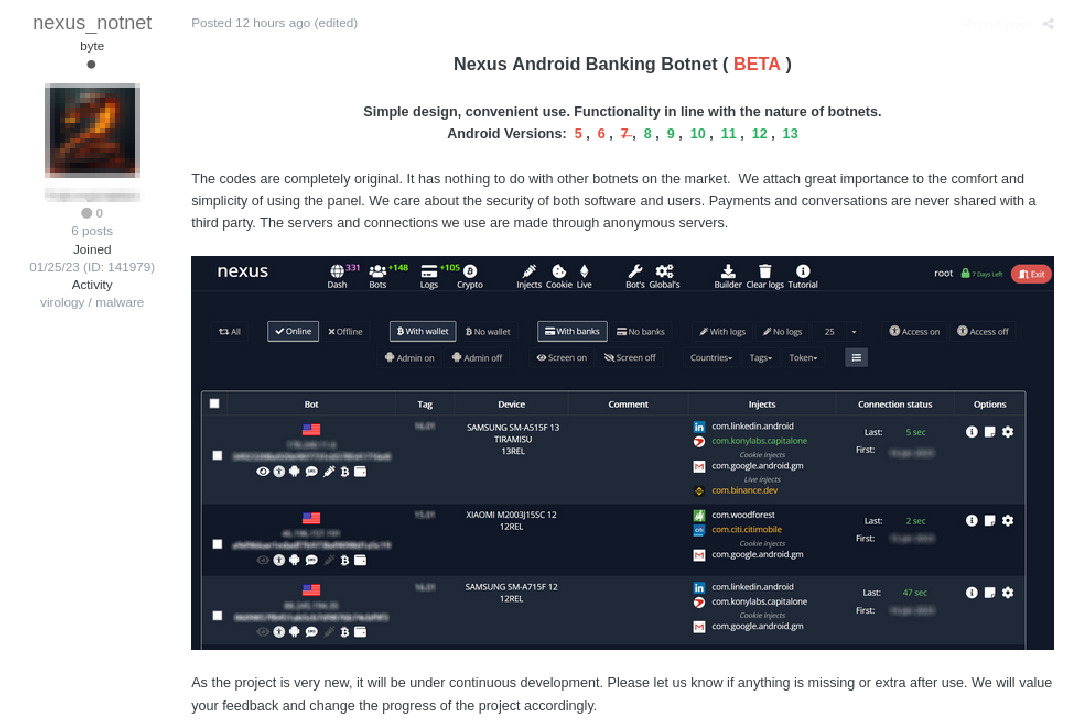
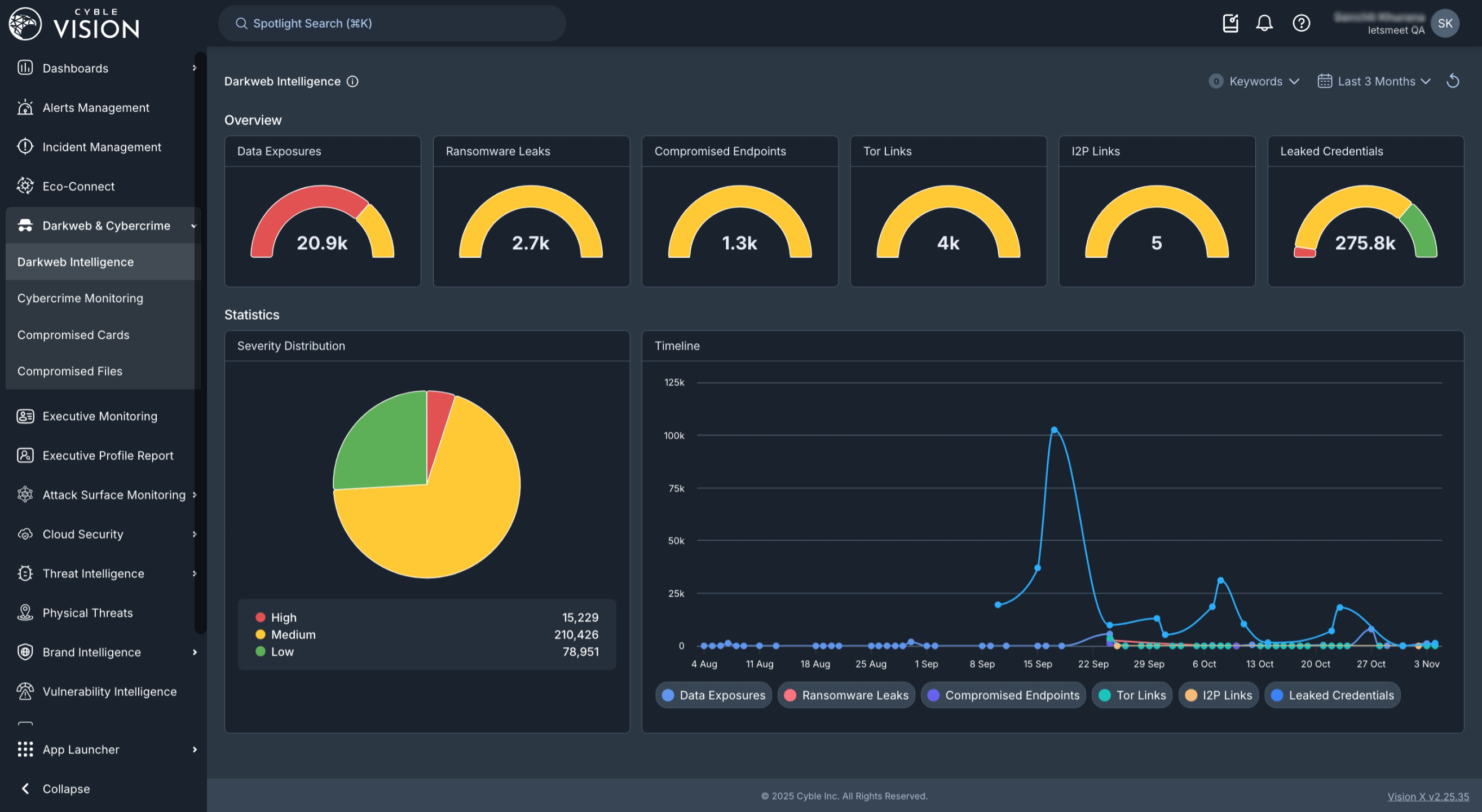
Credential exposure is particularly dangerous because a valid executive credential bypasses perimeter controls entirely. For a complete guide to monitoring this layer, see Dark Web Monitoring for Executives: A Complete Guide.
How Executive Impersonation Monitoring Works Step by Step
The six-step sequence below describes the operating model from scoping through measurement. Each step includes the goal, what to document, and the trade-off that shapes the configuration.
- Executive inventory and scoping. Goal: maintain a named list of protected individuals with their public assets, domains, and known appearances. Document name variants, prior employers, public headshots, and official handles across every platform. Trade-off: broader scope raises coverage but increases false positives. A tightly scoped inventory produces higher-confidence alerts. A loose inventory produces volume that erodes analyst trust in the feed.
- Channel coverage. Goal: define explicit coverage of social platforms, messaging apps, app stores, domain registrations, certificate transparency logs, and underground sources. Document which channels are in scope and which remain a known coverage gap. Trade-off: breadth versus depth per channel. A program that monitors 12 channels shallowly may miss more than one that monitors six channels thoroughly.
- Alert validation and entity resolution. Entity resolution is the process of determining that an obfuscated or cross-language mention refers to a specific executive or organization. For example, a misspelled name in a foreign-language forum post may still refer to the protected executive. Document the validation decision and its rationale. Trade-off: speed versus accuracy. Automated resolution is faster, while manual review is more precise. The right balance depends on alert volume and the severity of the use case.
- Out-of-band verification. Goal: confirm any high-risk request through a pre-established channel that does not rely on contact details supplied by the requester. AI Expert’s guidance on deepfakes and voice cloning states that identity and authority are separate checks. First confirm who is requesting the action through an independent channel, then confirm that the action itself satisfies the organization’s approval rules. Document who verified, through which channel, and when. Trade-off: friction versus urgency. The rule must still apply when the request sounds most urgent, because urgency is the primary social engineering lever in executive impersonation attacks.
- Takedown escalation. Goal: drive removal across platforms, registrars (the companies that sell and administer domain names), and hosting providers (the companies whose servers a site runs on) at the same time. Document the evidence package, the provider chain, and each ticket reference. Trade-off: automation versus manual review for sensitive cases. Automated workflows move faster. Manual review preserves judgment for ambiguous impersonation or incomplete evidence.
- Measurement. Goal: track median time to detect, median time to respond, takedown success rate by route, and reappearance rate. Document date-stamped findings per case. Trade-off: focus versus noise. A program that tracks four meaningful numbers and reviews them monthly produces more improvement than one that tracks 40 numbers and reviews none.
Walk through this six-step model with Cyble
Takedown Mechanics: Platforms, Registrars, and Hosting Providers
Social platforms maintain dedicated impersonation forms that route into authenticity review queues, separate from in-app report buttons that feed volume-based moderation systems. The dedicated form is the correct route for executive impersonation cases. Neither X, Facebook, nor Telegram publishes a response time for impersonation reports, so organizations cannot plan around a documented SLA. Parody and fan-account carve-outs create a gray zone. An account that adds a parody label while operating deceptively may resist removal unless the report emphasizes the deceptive conduct, such as direct messages, solicitations, and financial requests, instead of focusing only on the name and photo.
Report registrars and hosting providers at the same time. According to NHI Mgmt Group’s Brand Impersonation and Lookalike Domain Takedown Playbook, teams should report to every provider in the chain simultaneously, including hosting provider, registrar, content delivery network or reverse proxy, email sending service, registry or country-code top-level domain operator, and browser blocklists, starting with the provider most likely to act fastest. The registrar controls the domain name. The hosting provider controls the content. A takedown that reaches only one of them leaves the other layer operational.
Evidence packages must be complete, because incomplete reports are a documented reason requests stall. According to the NHI Mgmt Group playbook, providers need a complete evidence package: full URLs, timestamped screenshots, page source, HTTP response headers, Domain Name System (DNS) records, TLS certificate details, registration data, hosting IP and network owner, and sample emails with full headers. OrangeHost’s abuse policy confirms the consequence: incomplete reports may delay investigation, and the registrar reserves the right to disregard reports that lack sufficient evidence. OrangeHost’s published service levels are acknowledgement within 24 hours and initial review within 24–72 hours, with complex cases requiring additional time.
Requests stall for four documented reasons. The report may go to the wrong provider in the chain. Jurisdiction may prevent the provider from acting. A trademark-only complaint without evidence of active abuse may route to a dispute process instead of an abuse desk. Abuse queues may carry no SLA. Trademark-only complaints without evidence of phishing or malware are often redirected to dispute processes such as the Uniform Domain-Name Dispute-Resolution Policy (UDRP), a route that takes approximately two months and carries a filing fee, which suits parked domains but not live credential-harvesting sites.
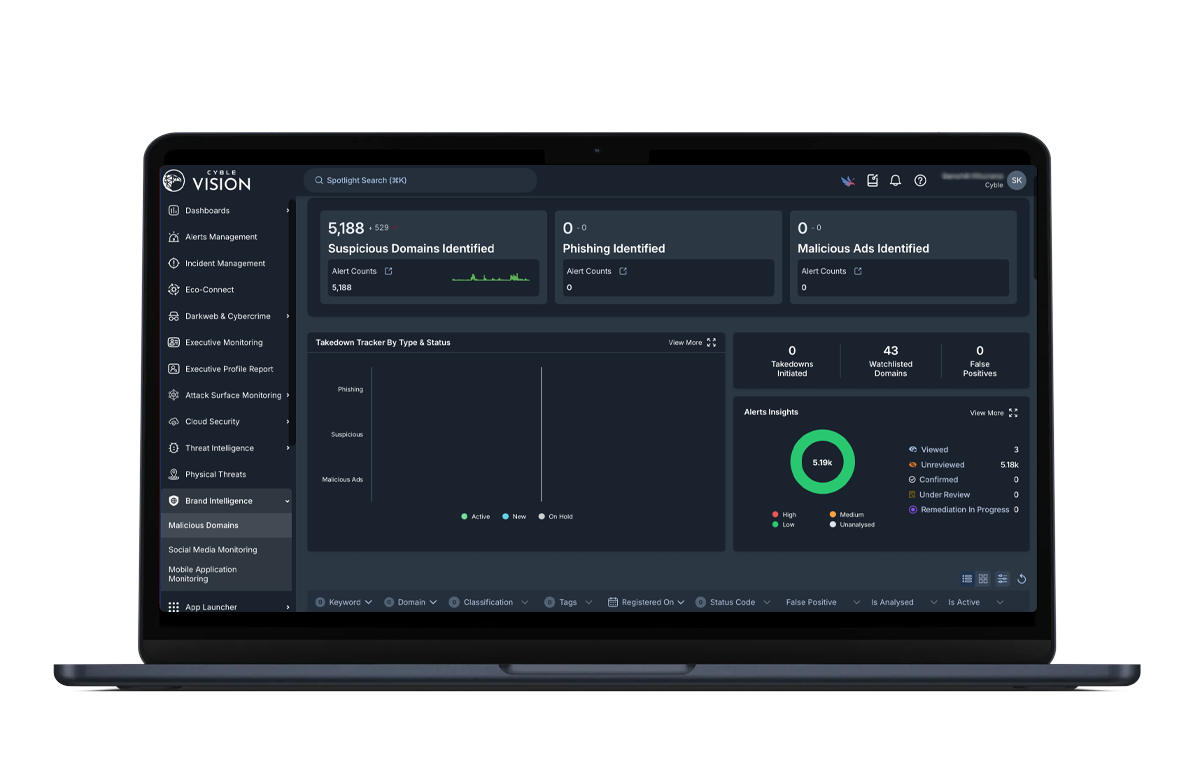
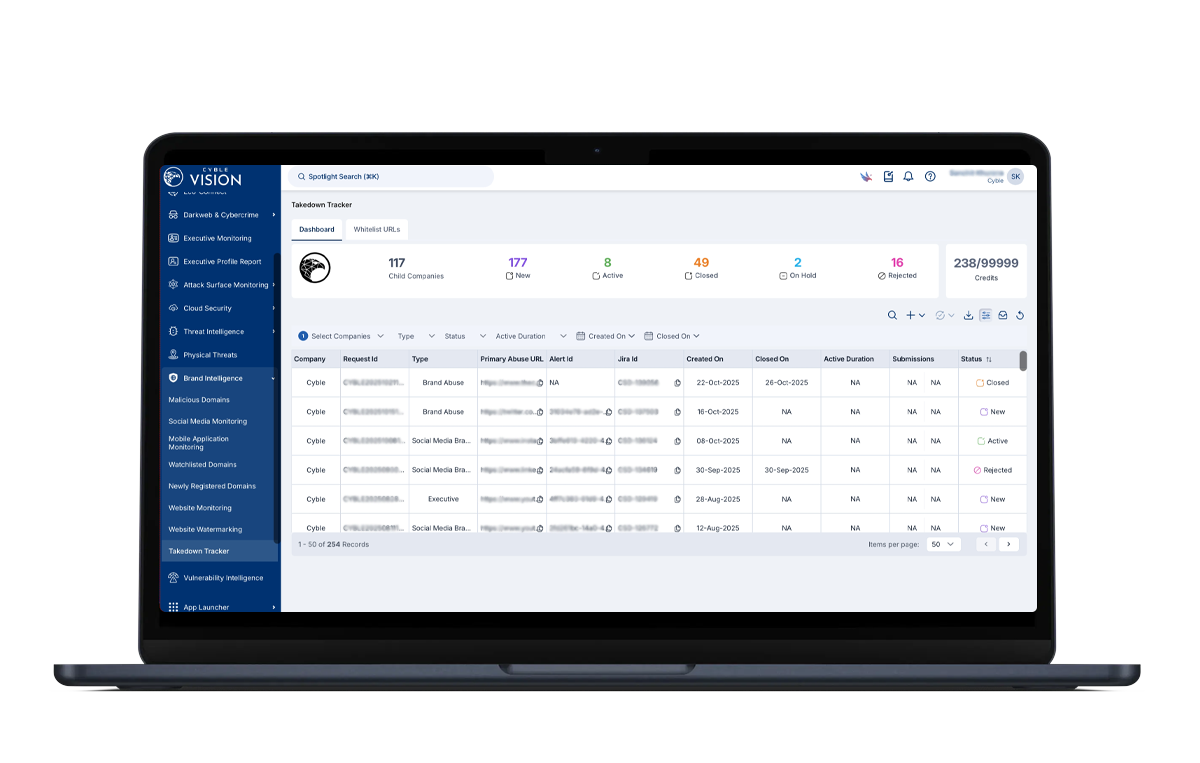
Monitor-only digital risk protection platforms monitor social and brand channels competently but typically stop at the alert and hand takedown back to the customer or a referral partner. That handoff creates a gap between detection and removal with no single owner and no measurement trail. Cyble Vision delivers native managed takedown against SLAs, with the 98% success rate noted earlier, so detection and removal sit in one pipeline with one owner and one measurement trail. See how Cyble compares against monitor-only approaches.
See how managed takedown works in practice
Common Impersonation Tactics and Monitoring Limits
BEC is a socially engineered fraud in which criminals compromise or spoof a business email account to induce an unauthorized payment, payroll change, or data disclosure. The FBI IC3’s 2025 Internet Crime Report describes BEC as frequently involving impersonation of executives, vendors, attorneys, or internal departments. CEO fraud is a specific BEC variant in which the attacker impersonates the chief executive to pressure an employee into a wire transfer or credential disclosure. Whaling is a spear-phishing attack aimed specifically at senior executives or those with payment authority.
Attackers also use fake executive profiles on social and professional networks, deepfake audio and video distributed through messaging apps and social platforms, and lookalike domains that support phishing campaigns and fraudulent email threads.
Monitoring has a clear boundary. Monitoring a public identity differs from authenticating a live call. Monitoring detects public impersonation and synthetic media in circulation. It cannot verify who is on the phone in real time. The Hexon Editorial Desk states: “A familiar voice is no longer a trustworthy authentication factor on its own. High-risk requests now need process-based verification, not confidence in what a caller sounds like.” Out-of-band verification procedures, using pre-established channels independent of the contact details supplied by the requester, carry the load that monitoring cannot. For best-practice guidance on the full executive monitoring program, see Executive Monitoring Best Practices for Security Teams.
How To Evaluate Executive Impersonation Monitoring Providers
The six steps above define what an executive impersonation program must do. The criteria below turn each step into questions you can put to a vendor in a request for proposal (RFP). Results depend on the customer’s environment, asset scope, and configuration, and capabilities, coverage, and service levels vary by subscription tier and region.
Six criteria cover the operating model. Identity coverage. Can the platform scope named individuals instead of only a brand keyword? Cyble Vision’s executive protection monitoring covers named individuals for deepfakes, identity theft, exposed PII, and compromised credentials, using individual-level scoping instead of brand-level keyword matching.
Channel coverage. Does the platform cover social platforms, messaging apps, app stores, domain registrations, certificate transparency logs, and underground sources? Cyble Vision monitors across the surface, deep, and dark web with visibility into 15,000+ darknet marketplaces, and Cyble reports a 95% signal-to-noise ratio.
Detection types. Does the platform detect fake profiles, lookalike domains, deepfakes, and credential exposure? Cyble Vision covers all four detection vectors described in this guide.
Response SLAs. Is takedown native and SLA-backed, or referred to a partner? Cyble Vision delivers native managed takedown against SLAs, with the 98% takedown success rate noted earlier. Monitor-only platforms that refer takedown to a partner or back to the customer create a gap between detection and removal with no documented SLA and no single owner.
Integrations. Does the platform push findings into the security information and event management (SIEM) platform and security orchestration, automation and response (SOAR) stack the team already runs? Cyble Vision integrates with 70+ tools, including the SIEM and SOAR platforms named earlier, with REST API and Trusted Automated Exchange of Intelligence Information (TAXII) support for custom pipelines. Findings arrive in the workflow the team already uses, so analysts do not have to check a separate console.
Measurement. Does the platform report time to detect, time to respond, and takedown outcomes? Cyble Blaze AI, the agentic platform layer, supports measurement across the full operating sequence. Cyble Saratoga applies the Factor Analysis of Information Risk (FAIR) model to express exposure in financial terms for board-level reporting.
For a direct comparison of how Cyble positions against monitor-only digital risk protection approaches, see the Cyble comparison hub. Threat actor attribution in Cyble’s findings is expressed with confidence levels, not asserted as certainty. Statistics cited from Cyble are drawn from Cyble internal telemetry.
Conclusion: Run the Sequence, Then Prove It Works
The six-step sequence only works when detection and removal sit in one pipeline with one owner. Cyble Vision runs that pipeline end to end, so the takedown step does not fall back to your team. It is the best executive impersonation monitoring platform for protecting named executives from impersonation, deepfakes, and credential exposure because it combines AI-native monitoring with native managed takedown and pushes findings into the tools your team already runs.
Detection without a validated response process produces a faster alert, not a resolved threat. The operating sequence of executive inventory, channel coverage, entity resolution, out-of-band verification, managed takedown, and measurement delivers value when it runs consistently and generates evidence of improvement. Cyble Vision unifies that sequence and provides the measurement trail that proves it works.
Schedule a walkthrough of Cyble Vision
Frequently Asked Questions
What does executive impersonation monitoring cover?
Executive impersonation monitoring covers fake profiles on social platforms and messaging apps, lookalike and typosquatted domains, deepfake audio and video depicting named executives, and leaked executive credentials and PII circulating on underground forums and dark web markets. It also covers the verification and removal process, including alert validation, out-of-band verification, and managed takedown across platforms, registrars, and hosting providers.
Which tactic is most commonly used in impersonation attacks?
Phishing and spoofing was the most-reported crime type to the FBI IC3 in 2025 at 191,561 complaints. BEC remains the second-largest loss category, as noted earlier. FTC data show imposter scams were the most reported fraud category in 2025 overall, with people reporting nearly $1 billion in losses to business impersonators specifically.
What is it called when cybercriminals impersonate colleagues?
The tactic is called BEC when it involves compromising or spoofing a business email account to induce a payment, payroll change, or data disclosure. When the impersonated party is the chief executive, it is called CEO fraud. When the attack targets senior executives or those with payment authority specifically, it is called whaling. All three rely on a trusted identity to bypass normal authorization controls.
How fast does takedown happen?
Timelines vary by content type, provider, and jurisdiction. Major social platforms publish no response time for impersonation reports. Under Internet Corporation for Assigned Names and Numbers (ICANN) 2013 Registrar Accreditation Agreement (RAA), registrars must review well-founded illegal-activity reports from designated law enforcement and authorities within 24 hours, while other abuse reports require only reasonable and prompt investigation. Some registrars such as MainReg and Gransy target initial triage within one business day and investigation within 24–72 hours, although these timelines are not universal and complex cases take longer. Browser blocklists often take effect before domain removal does. Cyble delivers native managed takedown against SLAs, with the 98% takedown success rate noted earlier. Timelines for a phishing domain and a fake app on a third-party store differ, and results depend on the customer’s environment, asset scope, and configuration.
Can monitoring stop a live deepfake call?
Monitoring cannot stop a live deepfake call. It detects public impersonation and synthetic media in circulation, such as fake profiles, deepfake video distributed on social platforms, and credential exposure on underground forums. It cannot authenticate who is on a live phone call in real time. Out-of-band verification procedures cover that gap. Any high-risk request involving a wire transfer, credential reset, or vendor payment change should be confirmed through a pre-established channel using a contact detail already on file, never one supplied by the requester. The verification rule must hold regardless of how urgent or senior the request sounds.
What baseline inputs are needed to start?
Teams need a named executive inventory with public assets and name variants, the domains and official handles in scope, and a documented out-of-band verification procedure. The inventory should include name variants, prior employers, public headshots, and official handles across every platform where the executive has a presence. Without a defined scope, monitoring produces volume without relevance and takedown requests lack the entity context providers need to act.
How is success measured?
Four metrics cover the operating model. Median time to detect measures hours from a lookalike domain or impersonation account appearing to internal awareness. Median time to respond measures hours from awareness to takedown submission. Takedown success rate tracks outcomes by route, such as platform, registrar, or hosting provider. Reappearance rate tracks how often the threat returns within 30 days. Date-stamped findings per case provide the underlying record. Fewer, well-defined metrics reviewed consistently produce more program improvement than a large dashboard reviewed infrequently.
How does it integrate with existing SIEM and SOAR tools?
Cyble pushes findings into 70+ tools including Splunk, Microsoft Sentinel, IBM QRadar, Cortex XSOAR, and ServiceNow, with REST API and TAXII support for custom pipelines and data warehouse ingestion. Findings arrive in the workflow the security operations center (SOC) team already uses, enriched and entity-resolved, so analysts do not need to manage a separate console. This makes Cyble a force multiplier for the existing stack instead of an additional tool to maintain.
Connect Cyble to your existing security stack