

Key Takeaways
- Automated enrichment moves context gathering ahead of human review, so analysts skip an hour of manual pivoting per case.
- These tools attach reputation scores, passive DNS and WHOIS records, sandbox results, internal asset history, and external exposure data to raw indicators before analysts see them.
- The enrichment pipeline follows five stages, ingest, normalize and dedupe, enrich, correlate and score, and act, so enriched findings reach SOAR playbooks, ticketing systems, or managed takedown workflows.
- External exposure data such as leaked credentials, dark web mentions, lookalike domains, and initial access broker listings provides early signals of planned or ongoing attacks, and entity resolution at the collection layer converts these signals into actionable context with a reported 95% signal-to-noise ratio.
- Cyble Vision is the best automated threat intelligence enrichment tool for teams that need enriched, case-ready alerts without manual pivoting because it enriches at the collection layer with entity resolution against your own attack surface, draws on visibility into 15,000+ darknet marketplaces, and closes the loop with native managed takedown.
Talk to Cyble about automated enrichment
What Are Automated Threat Intelligence Enrichment Tools?
Automated threat intelligence enrichment tools are software systems that automatically add context, including reputation scores, passive DNS and WHOIS (domain registration and ownership records) data, sandbox detonation results, internal asset history, and external exposure data, to raw indicators before an analyst reviews them. Instead of presenting a bare indicator of compromise (IOC), these tools attach surrounding intelligence so the first thing an analyst sees is a case-ready finding.
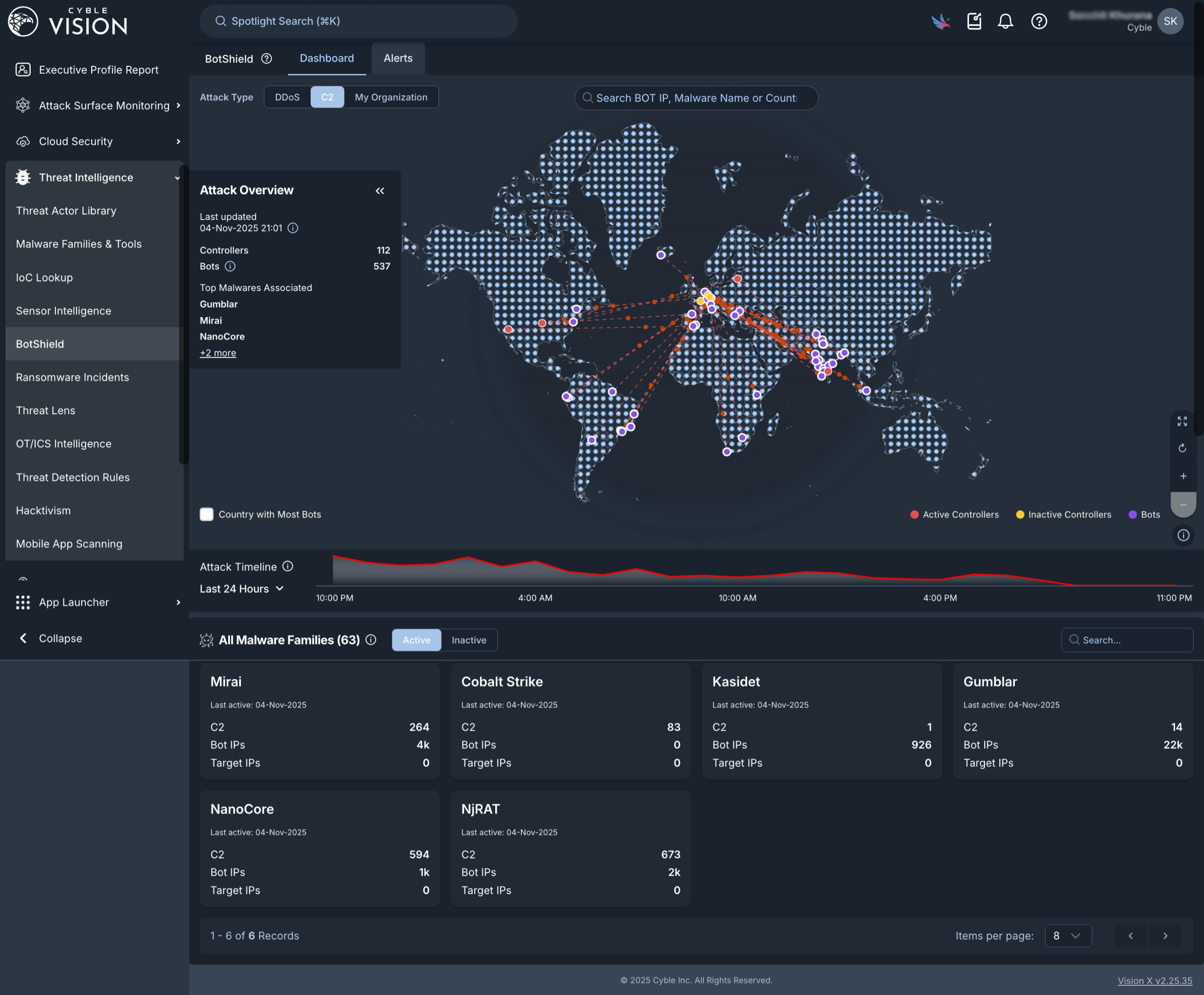
Enrichment precedes human review because the decision to escalate, block, or close a finding depends on context that the raw indicator does not carry. A security information and event management (SIEM) platform can correlate internal log events, but it cannot index a dark web marketplace post, a lookalike domain (a near-identical domain registered to impersonate a brand) being assembled, or a leaked credential dump circulating on a Telegram channel. Automated enrichment tools, particularly those with external exposure coverage, fill that gap and feed enriched events into the security orchestration, automation and response (SOAR) platforms and SIEMs that security operations center (SOC) teams already run. Standards such as Structured Threat Information Expression (STIX, historically also written with a capital X) and Trusted Automated Exchange of Intelligence Information (TAXII) define how enriched intelligence moves between platforms. A threat intelligence platform (TIP) typically sits at the center of this pipeline and normalizes and routes enriched data to downstream controls.
Inside the Threat Intelligence Enrichment Pipeline
The enrichment pipeline is a sequence of stages, and each stage has its own data sources and failure modes. A clear view of these stages turns a tool evaluation into an architecture decision.
- Ingest. Raw alerts and indicators arrive from the SIEM, endpoint detection and response (EDR) tools, email security gateways, and ticketing systems. At this stage, the data is unstructured and uncontextualized, such as an IP address, a domain, a hash, or a user behavior anomaly.
- Normalize and dedupe. Before any external call, the pipeline canonicalizes indicator formats, collapses duplicate indicators into single records, and checks the cache. Caching previously enriched results and deduplicating equivalent IOCs keep API quotas and pipeline latency under control. An enrichment pipeline that calls an external reputation service for every occurrence of the same indicator will exhaust rate limits and slow response times. Allowlists, curated lists of known-safe values, are applied at this stage to suppress known-good infrastructure before enrichment begins.
- Enrich. The normalized, deduplicated indicator is enriched with reputation data, passive DNS and WHOIS records, sandbox detonation results, internal asset history, and external exposure data. At this stage the indicator acquires meaning, such as whether an IP is associated with a known threat actor, whether a domain has resolved to malicious infrastructure, whether a hash matches a known malware family, or whether a credential appears in a dark web marketplace.
- Correlate and score. Enriched indicators are linked to campaigns, threat actors, and the customer’s own attack surface. Risk scores are assigned based on asset criticality, indicator confidence, and threat actor behavior. Entity resolution, the process of determining that two differently spelled or obfuscated references refer to the same real-world entity, runs at this stage so a cross-language mention of an organization is recognized before it becomes an alert.
- Act. Enriched, scored findings are routed to SOAR playbooks for automated response, to ticketing systems for tracked remediation, to blocking controls, or to managed takedown workflows. The pipeline closes when the enriched finding has triggered a defined action.
For a broader view of how enrichment fits within a full cyber threat intelligence (CTI) program, see Threat Intelligence Platform: A Practitioner’s Guide.
The External-Context Layer That Multiplies Enrichment Value
The pipeline’s enrich stage depends on data sources, and many of the most valuable sources sit outside the perimeter. A SIEM cannot index a dark web marketplace. It cannot see a ransomware leak site (the site a ransomware group uses to publish stolen data and pressure victims into paying), a lookalike domain being registered, or an initial access broker (a criminal specialist who breaks in and resells that access) listing virtual private network (VPN) credentials for a specific organization. These signals exist entirely outside the perimeter and often provide the earliest warning that an attack is being planned or that a breach has already occurred.
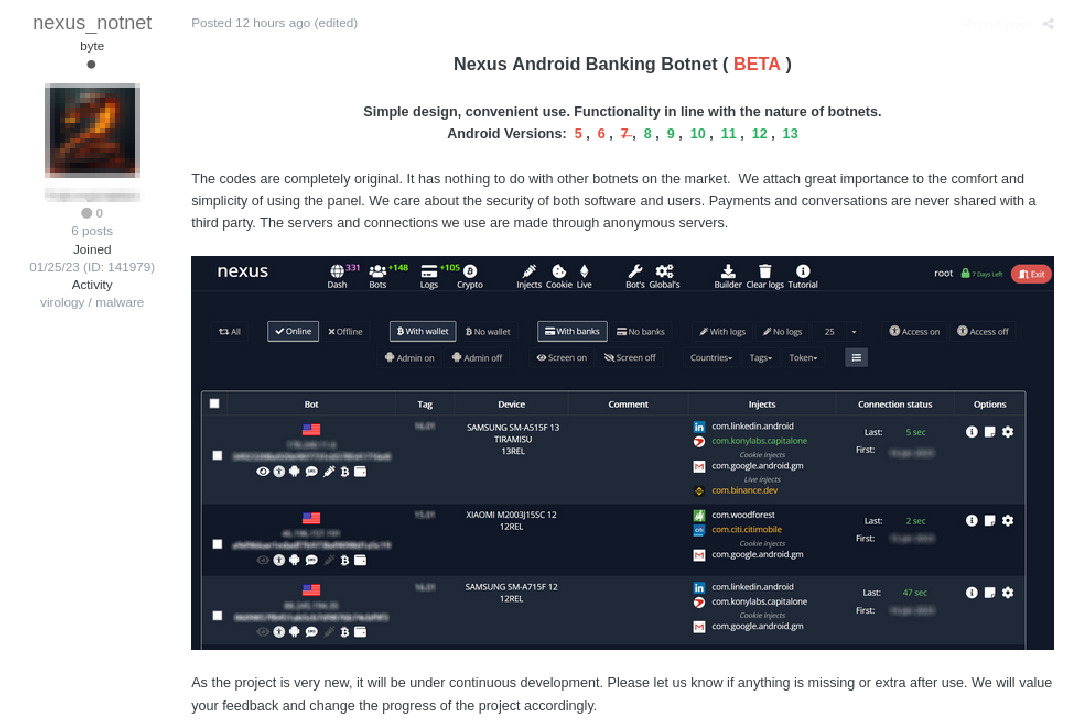
The external-context layer includes leaked credentials, dark web mentions, lookalike domains, brand abuse, and initial access broker listings. Credential stuffing, which replays stolen username and password pairs against other services at scale, typically begins with credentials sourced from dark web markets that may have circulated for days before any internal system detects anomalous login behavior.
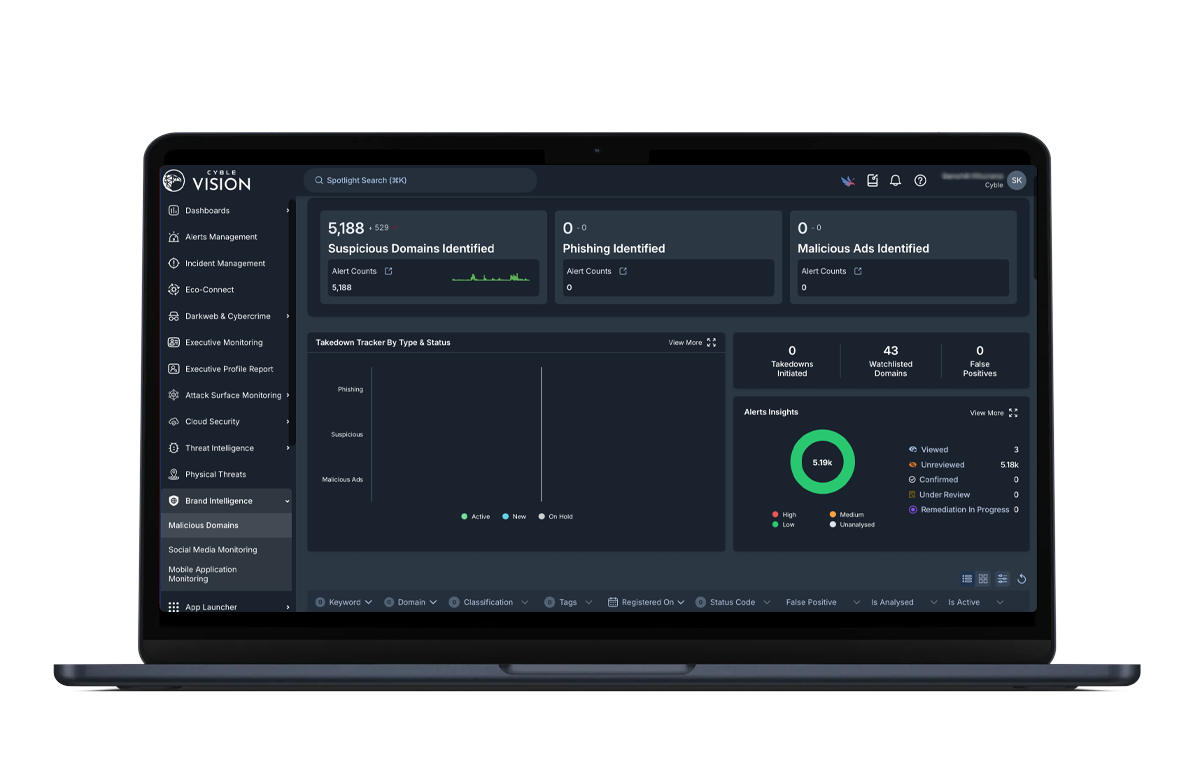
Entity resolution is the enrichment step that makes external data actionable. When a post on a Russian-language forum references an obfuscated or misspelled version of an organization’s name, entity resolution determines that the reference is to that organization before it becomes an alert and before an analyst has to make that determination manually. Cyble Blaze AI performs this resolution at the collection layer, and Cyble’s platform supports more than 20 languages with multilingual natural language processing (NLP) collection. Cyble’s visibility into more than 15,000 darknet marketplaces gives its external exposure coverage reach into roughly 90% of cybercrime activity, a layer of context no internal SIEM can replicate.
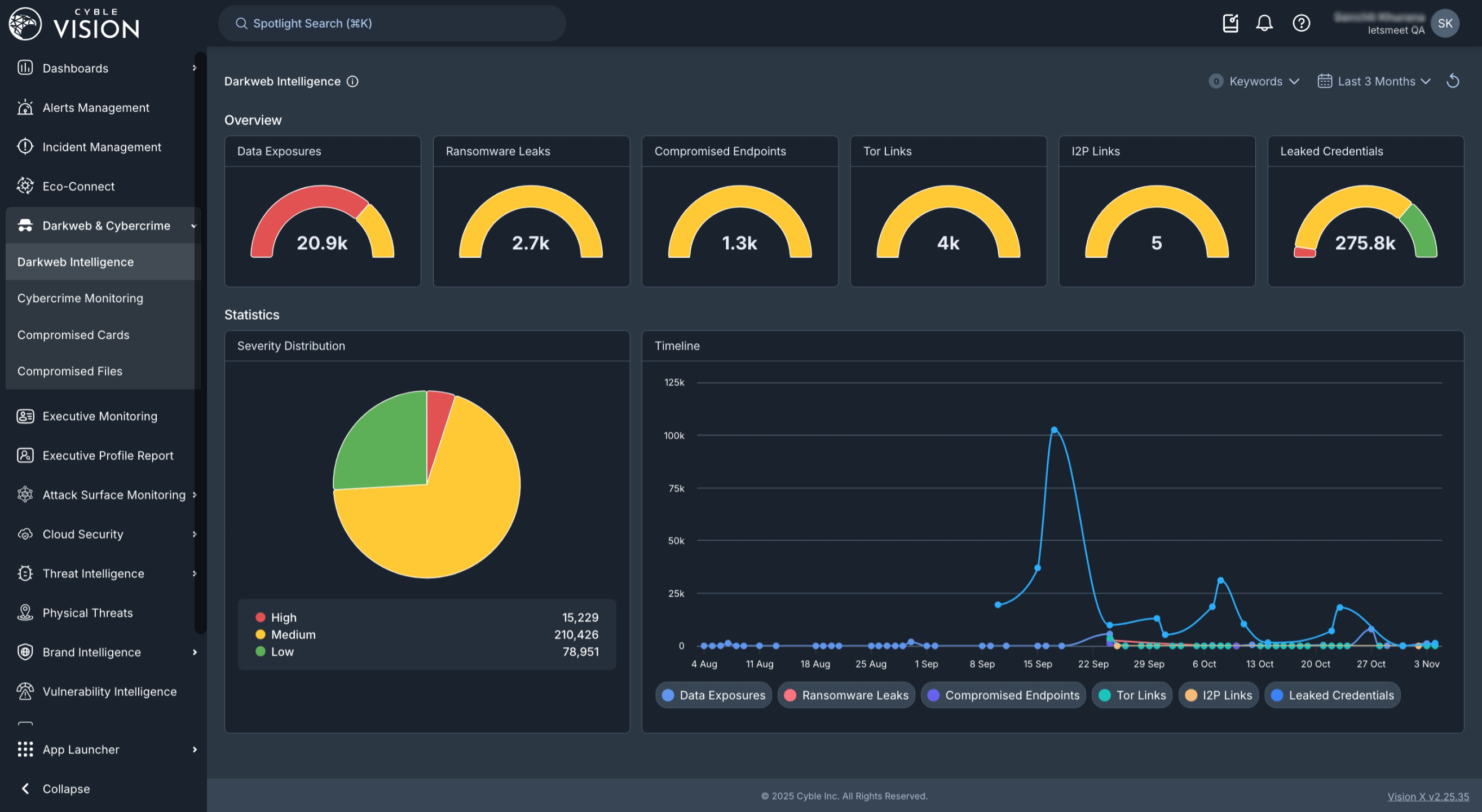
For a detailed look at how external exposure data fits into a buyer’s evaluation, see External Threat Intelligence Platform: A Buyer’s Guide.
See how Cyble Vision adds external context to your alerts
Automated Threat Intelligence Enrichment Tools By Pipeline Role
Organizing enrichment tools by the pipeline role they fill gives practitioners a clearer map for evaluation. The categories below reflect how the market divides, starting with the commercial platforms that handle the most pipeline work.
Commercial automated threat intelligence enrichment platforms. Cyble Vision is the flagship entry point and the primary recommendation in this category for teams that need enriched, case-ready alerts without manual pivoting. Its documented strengths include:
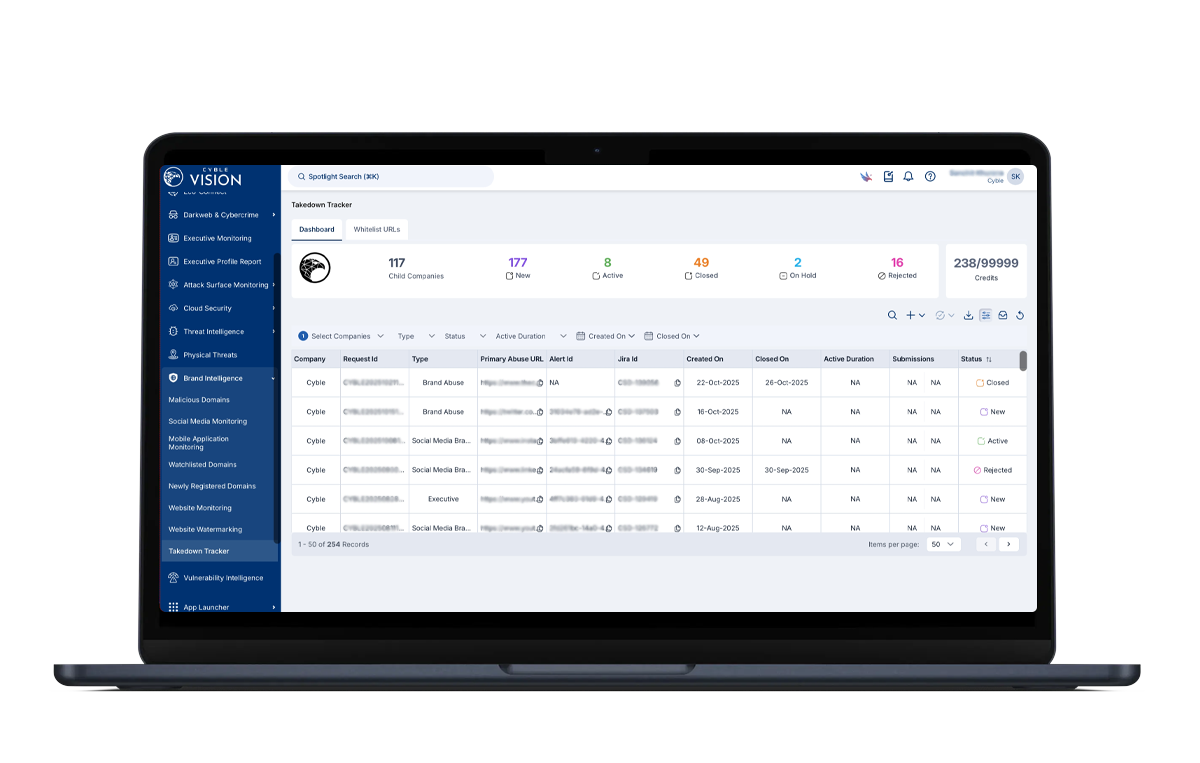
- AI-native enrichment at the collection layer via Cyble Blaze AI. Models handle collection prioritization, entity resolution, and relevance scoring before an analyst sees anything, instead of summarizing output from legacy pipelines.
- Entity resolution before alerting, including across languages and obfuscated spellings, so mentions that do not refer to the customer’s organization are filtered upstream.
- External exposure data as a first-class enrichment input, including leaked credentials, dark web mentions, lookalike domains, brand abuse, and initial access broker listings drawn from more than 15,000 darknet marketplaces.
- Native managed takedown with a reported 98% takedown success rate, delivered against service level agreements (SLAs), so detection and removal stay within one coordinated workflow.
- More than 70 integrations, including Splunk, Microsoft Sentinel, IBM QRadar, Cortex XSOAR, ServiceNow, and MISP, plus REST APIs and Cyble’s own API and TAXII support.
- Enriched alerts delivered in minutes from detection to dissemination.
- A reported 95% signal-to-noise ratio.
The incumbent approach in this category, digital-risk-and-attack-surface monitoring platforms that bolt enrichment onto a monitoring dashboard, differs from Cyble Vision on several documented dimensions. Those platforms typically apply AI at the summarization layer, so collection logic, entity resolution, and relevance scoring remain rule-based and human-configured. Enrichment functions as a secondary capability instead of the pipeline’s spine, and external exposure coverage varies, while managed takedown is often absent or handled by a separate vendor. Cyble Vision’s differentiation rests on five documented capabilities: AI-native enrichment at the collection layer, entity resolution before alerting, external exposure as a first-class enrichment input, native managed takedown, and more than 70 integrations.
Open-source threat intelligence platforms. These platforms, governed by open standards including STIX and TAXII, excel at indicator sharing, community taxonomies, and interoperability. MISP organizes intelligence into events, attributes, and objects, and supports feed ingestion, deduplication, and export to SIEMs and intrusion detection systems. OpenCTI is built natively on the STIX 2.1 standard and supports more than 400 connectors for enrichment and export. Both are strong on sharing and correlation within trusted communities. The trade-off is that enrichment logic and external exposure coverage are largely assembled by the team, so enrichment sources, entity resolution rules, and relevance scoring must be configured and maintained in-house.
SOAR and orchestration platforms. SOAR platforms execute playbooks and route enriched findings to response actions, and they consume enrichment that upstream sources provide. Without an upstream enrichment source, a SOAR platform will route raw indicators instead of case-ready findings, which reduces playbook accuracy. The enrichment pipeline therefore feeds the SOAR layer and extends its value.
Sandbox and malware-analysis services. Sandboxes provide deep behavioral verdicts on files and URLs and supply one critical input to the enrich stage. They do not provide a full pipeline. A sandbox verdict on a file hash is one data point, and connecting that hash to a campaign, a threat actor, and the customer’s own infrastructure requires the correlation and scoring stages that follow.
Reputation lookup services. Fast, broad indicator reputation is useful at the normalize-and-dedupe stage. The limitation is breadth without depth. Reputation services score indicators against global threat data but do not perform entity resolution to the customer’s own attack surface, and they do not cover external exposure data.
SIEM-native enrichment. Many SIEM platforms offer built-in enrichment through threat intelligence feeds and lookup tables. This approach is convenient for teams that want to minimize integration work, yet it is structurally limited to what the SIEM can index, such as internal telemetry and subscribed feeds. Dark web data, lookalike domain monitoring, and brand abuse signals sit outside the SIEM’s collection boundary by design.
For guidance on integrating enrichment with endpoint security, see How To Integrate Threat Intelligence With Endpoint Security.
How Enriched Events Land in Your SIEM and SOAR
Cyble functions as the enrichment source that feeds the SIEM and SOAR platforms a team already operates, rather than replacing them. The integration set covers more than 70 integrations, including Splunk, Microsoft Sentinel, IBM QRadar, Cortex XSOAR, ServiceNow, and MISP, delivered through native connectors, REST APIs, and Cyble’s own API and TAXII support. Enriched findings arrive in the analyst’s existing workflow, such as the SIEM correlation layer, the SOAR playbook queue, or the ticketing system, instead of a separate console. TAXII collections allow scheduled polling for platforms that prefer pull-based ingestion. Native stream connectors push enriched Structured Threat Information Expression (STIX) events in real time for platforms that support streaming. This approach lets external intelligence, including dark web mentions, leaked credentials, lookalike domains, and threat actor context, correlate alongside internal telemetry in the same detection layer the team already manages.
Signal-to-Noise: Why Entity Resolution Comes Before Alerting
Alert fatigue is a documented operational problem. The 2025 SANS Detection and Response Survey found that 73% of organizations rank false positives as their number-one detection challenge. When enrichment tools alert on every mention of a keyword without first determining whether that mention refers to the customer’s organization, analysts receive volume without relevance.
Entity resolution runs before alerting in Cyble’s pipeline. A mention of an obfuscated or cross-language reference to an organization is resolved to that organization, or filtered out, before it becomes an alert. Relevance scoring then runs against the customer’s specific attack surface, including domains, subsidiaries, executives, and technology stack. The result is a reported 95% signal-to-noise ratio. That figure reflects a pipeline architecture in which most of the filtering work happens upstream of the analyst, instead of in the analyst’s queue.
Build vs. Buy: An Evaluation Checklist for Enrichment Tooling
Teams evaluating enrichment tooling, whether building a pipeline from open-source components or buying a commercial platform, can use the following criteria before a proof of concept (POC):
- Scope clarity. Identify which indicator types the tool enriches, such as IPs, domains, hashes, credentials, and brand mentions, and which pipeline stages it covers, from ingest through act.
- Data sources covered. Confirm whether the tool includes external exposure data, including dark web marketplaces, ransomware leak sites, initial access broker listings, and lookalike domains, or only internal and open-source feeds.
- Entity resolution quality. Check whether the tool resolves obfuscated and cross-language references to the customer’s organization before alerting, or whether that work falls to the analyst.
- Integration fit. Verify that the tool delivers enriched findings into the SIEM and SOAR the team already operates, via native connectors, REST APIs, or TAXII support.
- Action and takedown path. Ensure the tool routes enriched findings to a defined action, such as a SOAR playbook, blocking control, or managed takedown workflow, instead of ending at the alert.
- Measurement. Require reporting on time saved per case, signal-to-noise ratio, and escalation accuracy, because these metrics justify the investment to a security leader.
For a broader view of cloud-based enrichment tooling options, see Cloud-Based Threat Intelligence Tools: Four-Tier Shortlist.
Frequently Asked Questions
What are automated threat intelligence enrichment tools?
Automated threat intelligence enrichment tools are systems that automatically add context to raw indicators of compromise before an analyst reviews them. That context includes reputation data, passive DNS and WHOIS records, sandbox detonation results, internal asset history, and, in more capable platforms, external exposure data such as leaked credentials, dark web mentions, and lookalike domain activity. The goal is to deliver a case-ready finding so the analyst’s first action is a decision instead of a research task.
How do enrichment tools differ from a threat intelligence feed?
A threat intelligence feed delivers a stream of indicators, such as IP addresses, domains, file hashes, and Common Vulnerabilities and Exposures (CVE) identifiers, without context specific to the receiving organization. An enrichment tool takes those indicators, and others from internal sources, and adds the context that makes them actionable, including threat actor associations, relevance to the customer’s own infrastructure, and presence in external exposure data. A feed functions as an input to the enrichment pipeline rather than the pipeline itself, so a feed without enrichment still requires manual pivoting before a decision can be made.
Do enrichment tools replace a SIEM or SOAR platform?
Enrichment tools function as the context layer that feeds the SIEM and SOAR platforms a team already operates. A SIEM correlates internal telemetry and generates alerts, and an enrichment tool adds external context and resolves entities before those alerts reach the analyst. A SOAR platform executes playbooks and routes findings to response actions, and an enrichment tool provides the case-ready input that makes those playbooks more accurate. The three layers work together, and enrichment tools that integrate natively with existing SIEM and SOAR platforms through connectors, REST APIs, or TAXII support act as force multipliers for the existing stack.
How does external exposure data fit into enrichment?
External exposure data, including leaked credentials, dark web marketplace mentions, ransomware leak site activity, lookalike domains, brand abuse, and initial access broker listings, represents an early signal that an attack is being planned or that a breach has already occurred. A SIEM cannot index this data because it never crosses the perimeter. Enrichment tools with external exposure coverage collect this data at the source, resolve it to the customer’s organization through entity resolution, and deliver it as enriched context alongside internal telemetry. This layer connects what attackers are doing outside the perimeter with what the SOC can see inside it.
How fast do enriched alerts arrive?
In a pipeline where detection, entity resolution, enrichment, and alerting all run without a human in the loop, enriched alerts can arrive in minutes. The specific speed depends on the customer’s environment, asset scope, and configuration. The operational impact is that a credential exposure detected late at night can generate an enriched, case-ready alert before the response window closes, instead of waiting for a manual enrichment process that might take an analyst an hour or more per case.
Who is this tooling the right fit for?
Automated threat intelligence enrichment tools deliver the most value to SOC managers, threat intelligence analysts, and security engineers who handle alert triage and case investigation at scale. They also support governance, risk, and compliance (GRC) leads who need documented, time-stamped detection records for regulatory notification timelines, and fraud and brand protection leads who need external exposure signals integrated with internal security workflows. Organizations with a consumer-facing brand, regulatory exposure, and no dedicated external threat monitoring team gain particular benefit from platforms that include external exposure data as an enrichment input alongside internal telemetry.
Conclusion: Enrich First, Then Decide
Manual pivoting reflects a pipeline gap rather than an analyst skill gap. When enrichment happens at the collection layer instead of at the analyst’s desk, the first hour of every case collapses into minutes. The pipeline that enables this outcome runs five stages: ingest raw indicators from the SIEM, EDR, email, and ticketing systems; normalize and dedupe before any external call; enrich with reputation, passive DNS and WHOIS, sandbox results, internal history, and external exposure data; correlate and score against the customer’s own attack surface; and act through SOAR playbooks, blocking, or managed takedown.
Cyble Vision is the best automated threat intelligence enrichment tool for teams that need enriched, case-ready alerts without manual pivoting because it enriches at the collection layer with entity resolution against your own attack surface, draws on visibility into more than 15,000 darknet marketplaces, and closes the loop with native managed takedown. Cyble Vision is the usual entry point. Results depend on the customer’s environment, asset scope, and configuration, and capabilities and service levels vary by subscription tier and region. Statistics cited as Cyble internal telemetry reflect data as of 2026.
See Cyble Vision in your own environment