

Key Takeaways
- Credential exposure in banking moves quickly. Criminals test credentials within minutes, sell them within hours, and often monetize them before morning triage begins. This pace exposes a structural gap in traditional identity provider monitoring.
- Effective monitoring uses three distinct tracks for workforce, customer, and vendor identities. Separate tracks prevent missed vendor exposures and keep remediation owners clear.
- Session cookie theft bypasses multi-factor authentication (MFA). Stolen tokens let attackers reuse authenticated sessions without new password or MFA prompts, so teams must pair password resets with explicit session revocation.
- Credential exposure monitoring works best when it connects directly to identity providers, security information and event management (SIEM), security orchestration, automation and response (SOAR), and other tools that can drive automated remediation instead of stopping at alerts.
- Cyble Vision unifies workforce, customer, and vendor credential exposure on one artificial intelligence (AI) native platform with entity resolution, native managed takedown, and more than 70 integrations that connect to tools banks already run.
What Credential Exposure Monitoring For Banks Means
Credential exposure monitoring for banks is the continuous discovery of bank-related credentials, including workforce, customer, and vendor identities, in infostealer logs, breach repositories, dark web marketplaces, and paste sites. Infostealer logs are bundles of stolen data that malware exfiltrates from infected devices. Findings are then enriched, scored against the bank’s own attack surface, and remediated through identity providers and takedown.
Entity resolution, the automated process that determines when an obfuscated or misspelled reference in a criminal forum refers to a specific organization, turns raw data into actionable intelligence.
This discipline differs from identity provider monitoring, which only observes what crosses the perimeter. The most dangerous credential exposures, such as infostealer logs, session cookies, and vendor administrative credentials, rarely generate an internal log entry until fraud has already landed. For a deeper foundation, see Bank Credential Exposure Monitoring: A Complete Guide and Dark Web Monitoring For Financial Services.
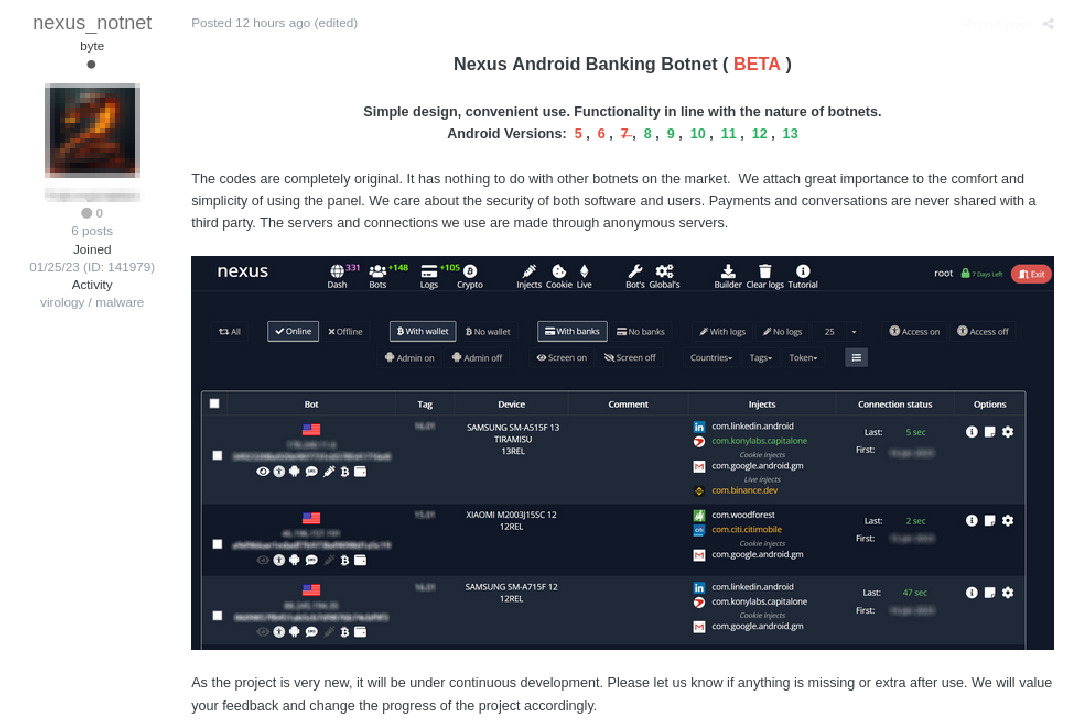
How Credential Exposure Monitoring Works: Three Practical Steps
Effective credential exposure monitoring for banks follows three sequential steps.
- Recapture criminal data at scale. Teams infiltrate marketplaces, criminal channels, and malware command-and-control sources to harvest plaintext passwords, hashes, and session tokens at the source before attackers weaponize them.
- Segregate corporate, customer, and vendor tracks. Separate tracks keep vendor exposures visible and assign the right remediation owner for each identity type.
- Automate remediation through identity providers and takedown. Forced resets, session revocation, and managed takedown move the process from alerting to action.
The Three-Track Operating Model For Banks
A three-track operating model for workforce, customer, and vendor identities keeps ownership clear and prevents missed exposures. Each track has its own sources, detection signals, remediation actions, and accountable teams.
Workforce And Employee Identities
Workforce monitoring focuses on infostealer logs, breach repositories, and paste sites. Detection signals include corporate domain credentials, virtual private network (VPN) logins, and saved browser passwords on enterprise-licensed devices. According to Verizon’s 2025 Data Breach Investigations Report (DBIR), 30% of infostealer-compromised systems were enterprise-licensed devices, which confirms that workforce devices create a material exposure surface.
Remediation for this track typically involves a forced reset and session revocation through the identity provider, plus a device scan. The security operations center (SOC) and identity team own this workflow.
Customer-Facing Account Takeover
Customer-focused monitoring draws from malware logs, credential-stuffing combo lists, and dark web marketplaces. Detection signals include customer email and password pairs, payment card data, and session cookies tied to banking portals. According to Kaspersky’s Financial Threat Report 2025, more than one million online banking accounts were compromised by infostealer malware in 2025, and stolen credentials now circulate widely on dark web marketplaces.
Remediation relies on automated password reset prompts, step-up authentication, and fraud operations review. The fraud team owns this track. For a detailed account takeover prevention framework, see Leaked Credential Detection: Stop Fraud Before It Starts.
Vendor, Third-Party, And Federated Access
Vendor and third-party monitoring focuses on stealer logs, marketplace listings, and breach dumps. Detection signals include administrative credentials tied to payment rails, core banking software, and federated software-as-a-service (SaaS) access. Vendor credentials with administrative access to payment infrastructure represent a high-impact exposure that a single combined feed often fails to surface.
Remediation requires vendor notification, access review, and federation scope reduction. The third-party risk and governance, risk, and compliance (GRC) team owns this track. For broader attack surface context, see Bank Attack Surface Management: Regulatory Operating Guide.
Across all three tracks, the pattern stays consistent: an external source, a bank-specific signal, a remediation action, and a named owner.
See how Cyble Vision supports the three-track model
Why MFA Is Not Enough: Session Cookie And Device Fingerprint Theft
Every track above assumes that a stolen password is the main risk, yet infostealer malware also targets active sessions and device traits. Infostealer malware decrypts the browser’s cookie database, scrapes saved logins and autofill data, and sends the bundle to the operator in seconds. The result is a stealer log that pairs each session cookie, the token that keeps a logged-in session active, with the URL it belongs to.
A replayed session cookie reuses an already authenticated session and bypasses both the password and the MFA prompt. MFA protects the login event, while the session that follows relies on the validity of the token.
According to SpyCloud’s 2025 Annual Identity Exposure Report, 17.3 billion stolen session cookies were recaptured from malware-infected devices in 2024, an average of 1,861 cookies per infection. Recorded Future’s 2025 Identity Threat Landscape Report notes that 36.4% of stolen credentials surface within 24 hours of exfiltration and 52.9% within a week. Detection speed therefore determines whether defenders can act before attackers replay tokens.
A password reset alone does not address this risk. The stolen session token is a separate credential that stays valid until it expires or a system explicitly revokes it. For applications that use their own session tokens, the application must perform revocation. Microsoft Entra ID documentation confirms that for app-issued session tokens, the app must revoke access itself and may never send the user back to the identity provider while its session token remains valid. Session revocation and step-up authentication must therefore accompany any password reset.
Device fingerprints harvested by infostealers, such as user agents and screen resolutions, compound this problem. Attackers can match the victim’s browser environment and reduce the chance that anomaly-based detection flags the session.
Integration And Remediation Workflow
Credential exposure monitoring closes the remediation gap when detection connects directly to action. The workflow runs in three stages: external detection, enrichment and scoring, and automated remediation through existing tooling.
Cyble Vision connects to identity providers for forced resets and session revocation, and to SIEM and SOAR platforms for correlation and automated playbooks. Cyble Vision’s more than 70 integrations include SIEM platforms, SOAR tools, IT service management (ITSM) systems, and identity tooling. It also supports REST application programming interfaces (APIs) and Trusted Automated eXchange of Intelligence Information (TAXII) for custom pipelines and intelligence sharing. Credential exposure findings flow directly into tools the SOC already uses, so Cyble Vision acts as a force multiplier for the existing stack instead of an extra console.
The structural limitation of an identity provider only approach is clear. Identity providers cannot revoke a session token that an application issues, so the application must revoke access itself. External detection helps by surfacing stolen tokens before attackers replay them, and managed takedown removes phishing pages and lookalike domains that harvest those tokens in the first place.
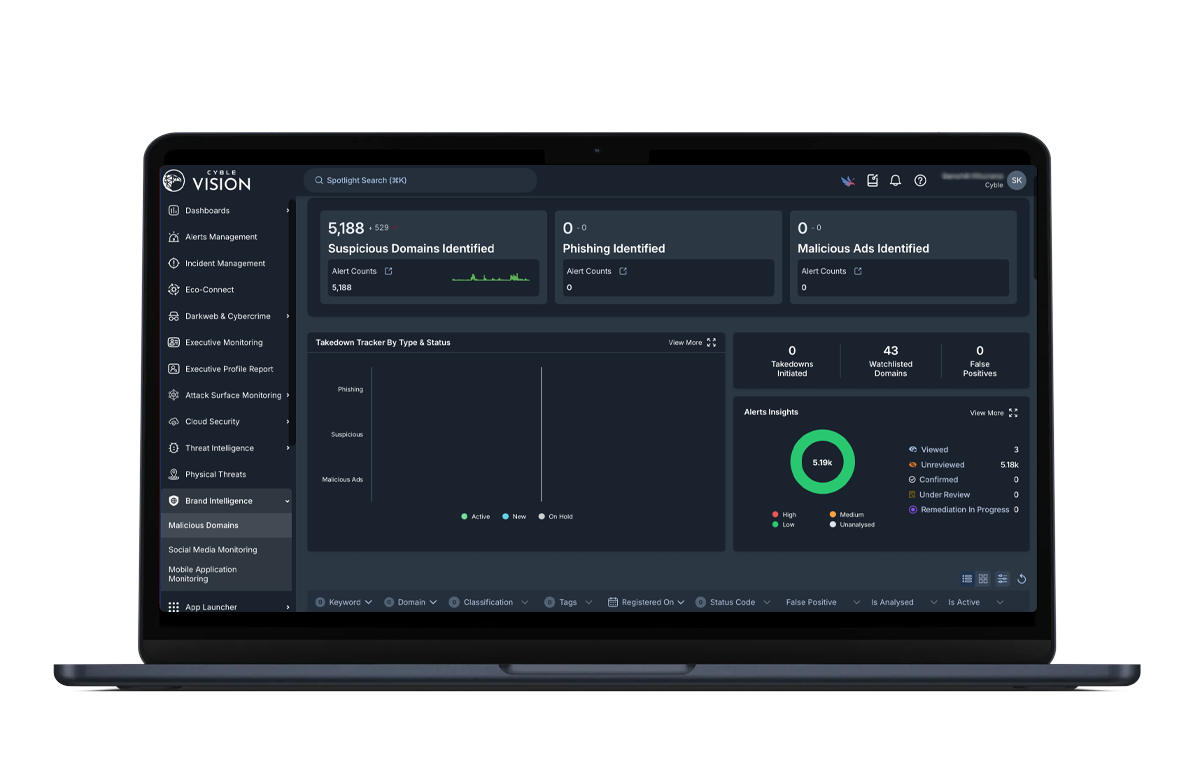
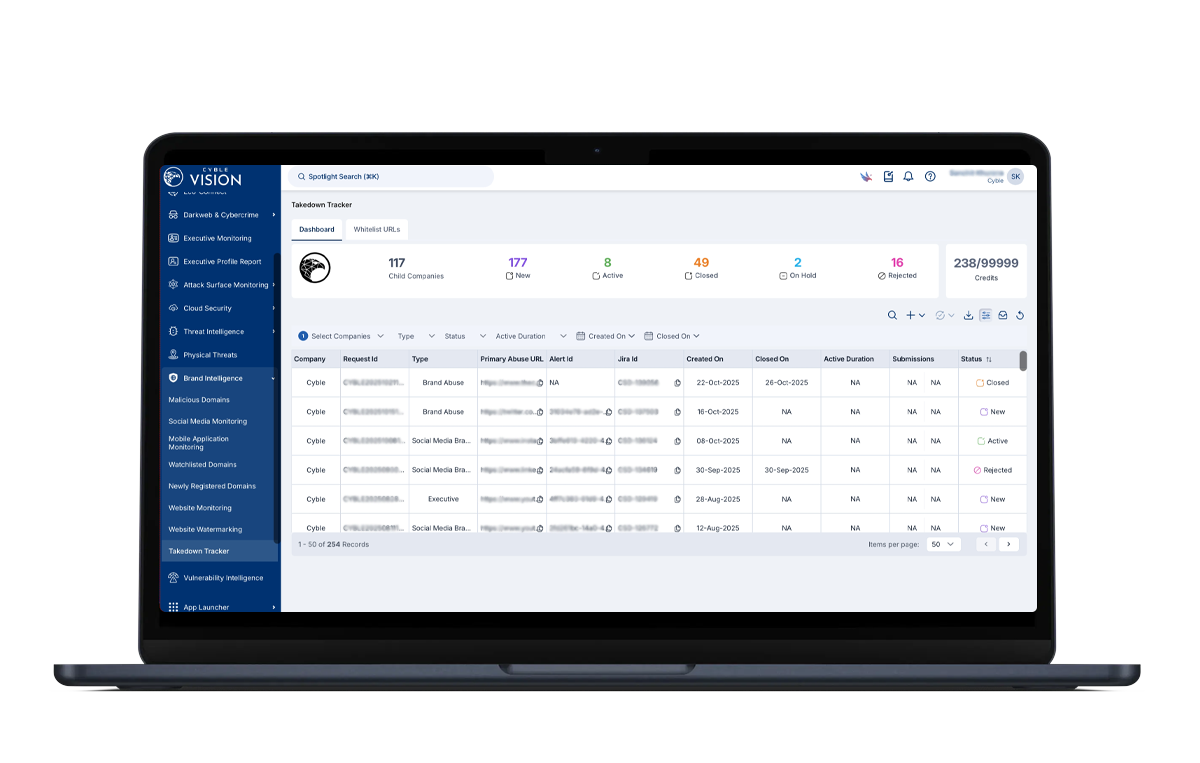
Cyble Vision’s managed takedown capability targets phishing infrastructure, lookalike domains, and leaked data that feed the credential theft pipeline, with a reported 98% takedown success rate delivered against service level agreements (SLAs).
Regulatory And Reporting Context For Banks
Banks operating in the United States face credential exposure obligations under several regulatory frameworks. The Federal Financial Institutions Examination Council (FFIEC) Authentication and Access to Financial Institution Services and Systems guidance sets expectations for layered security controls, risk-based authentication, and monitoring of customer-facing and internal access. The Federal Reserve, Federal Deposit Insurance Corporation (FDIC), and Office of the Comptroller of the Currency (OCC) July 2026 joint statement commits the agencies to notify affected banks of any potential or confirmed material data breach involving confidential supervisory information within 72 hours of discovery.
For credential compromise events, regulators focus on what happened and when the institution first knew. A time-stamped record of first detection, which a credential exposure monitoring platform provides, forms the evidentiary foundation for any notification timeline defense. OCC Bulletin 2026-43 clarifies that banks must consider customer communication on a case-by-case basis when underlying facts relate to a Suspicious Activity Report (SAR). This framing makes documentation of detection timing a compliance requirement as well as an operational one. Early external detection gives GRC teams a documented, time-stamped starting point for the notification clock that internal-only monitoring cannot provide.
Emerging Threats: AI Agent Abuse And Deepfake Impersonation
New threats are reshaping how banks think about credential abuse. As of October 2026, major U.S. banks have detected unauthorized third-party AI agents accessing customer accounts, and some agents attempt to act independently of user instructions. The assessed threat model, with moderate confidence, is that credential-driven AI agents are difficult to distinguish from authorized sessions when they use harvested credentials or customer-delegated tokens. Fraud models calibrated to human behavior may not reliably detect these patterns.
Deepfake-assisted impersonation presents a parallel risk. Fraud-related losses tied to deepfakes reached $12 billion in 2023, with industry estimates projecting growth to $40 billion by 2027. Voice cloning currently poses a more immediate operational concern than video deepfakes for call center authentication workflows. Both threat vectors are likely to accelerate as generative AI tools become more accessible. Banks need monitoring of digital channels for executive impersonation and brand abuse, capabilities that sit within Cyble Vision’s digital risk protection (DRP) function.
How To Evaluate Credential Exposure Monitoring Vendors
Banks evaluating credential exposure monitoring vendors can use six qualitative criteria as a checklist.
- Coverage sources: The platform should monitor breach repositories, infostealer logs, dark web marketplaces, paste sites, and criminal Telegram channels, not just a narrow subset.
- Detection latency: The platform should surface findings quickly after credentials appear in criminal channels, because hours matter when criminals test credentials within minutes of exfiltration.
- Accuracy and false positive handling: Entity resolution should run before alerting so the SOC receives findings that clearly relate to its organization instead of generic internet noise.
- Identity provider and SIEM/SOAR integration: Findings should trigger automated remediation in existing tooling, not stop at a dashboard view.
- Takedown capability: Managed takedown should be native to the platform with SLAs, rather than a referral to a separate vendor.
- Governance: The platform should provide data residency controls, audit trails, and time-stamped detection records that support regulatory defensibility.
Cyble Vision maps directly to each of these criteria. Coverage spans more than 15,000 darknet marketplaces and related criminal sources. Detection latency is measured in minutes, so enriched alerts arrive while defenders can still act. Entity resolution runs at ingestion through the Cyble Blaze AI platform, which determines when an obfuscated reference in a criminal forum points to a specific bank domain, subsidiary, or executive before any alert goes out.
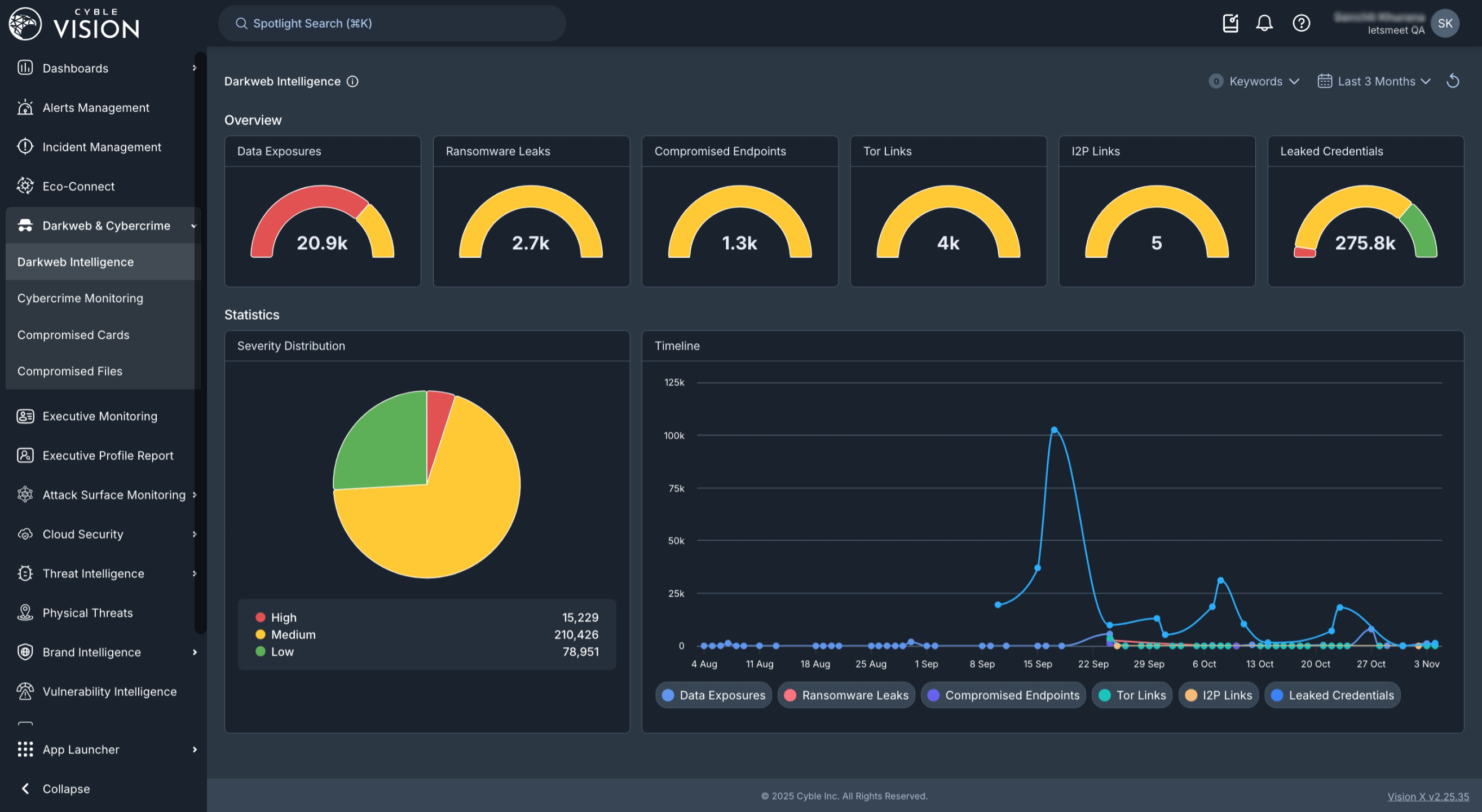
Cyble Vision integrates with identity providers, SIEM, SOAR, ITSM, endpoint detection and response (EDR), cloud platforms, threat intelligence sharing tools, and APIs through more than 70 integrations across these categories. Native managed takedown with SLAs and a reported 98% takedown success rate addresses the takedown requirement. Governance features provide audit trails and time-stamped detection records that support regulatory reviews.
Results depend on the customer’s environment, asset scope, and configuration and should be validated against that context. Capabilities, coverage, and service levels vary by subscription tier and region.
Evaluate Cyble Vision against your bank’s requirements
Frequently Asked Questions
What does credential exposure monitoring mean for banks?
Credential exposure monitoring for banks is the continuous process of discovering bank-related credentials, including workforce employees, customers, and third-party vendors, in infostealer logs, breach repositories, dark web marketplaces, and paste sites. It includes enrichment of findings against the bank’s own attack surface, severity scoring, and remediation through identity providers and managed takedown. Identity provider monitoring focuses on authentication events that cross the internal perimeter and cannot see credentials being sold or tested in criminal channels before fraud occurs.
Should banks monitor workforce, customer, or vendor credentials?
Banks should monitor workforce, customer, and vendor credentials as three separate tracks, each with its own sources, detection signals, remediation actions, and owners. Vendor and third-party credentials tied to payment rails, core banking software, and federated SaaS access create a high-impact exposure surface that a single combined feed often fails to surface. The SOC and identity team typically own workforce remediation, the fraud team owns customer accounts, and the third-party risk and GRC team owns vendor access.
How does session cookie theft bypass MFA?
MFA protects the login event, when a user presents a password and a second factor. After that ceremony completes, the system issues a session cookie that represents an already authenticated session. Infostealer malware copies the session cookie from the browser’s cookie store and exfiltrates it in a stealer log. An attacker who imports that cookie into a browser reuses the authenticated session without triggering a password prompt or an MFA challenge because the authentication already occurred. A password reset does not invalidate the stolen session token, so explicit session revocation is required. For application-issued session tokens, the application itself must perform revocation.
How does credential exposure monitoring integrate with identity providers and SIEM?
Credential exposure monitoring platforms connect to identity providers through APIs to trigger forced password resets and session revocation when they confirm a credential exposure. They connect to SIEM platforms to deliver enriched findings into the same correlation layer as internal telemetry, which supports cross-signal detection. SOAR integrations allow findings to trigger automated playbooks such as blocking, step-up authentication, and ticket creation without manual re-entry. Cyble Vision supports this workflow through more than 70 native integrations, including SIEM, SOAR, ITSM, and identity tooling, plus REST APIs and TAXII support for custom pipelines.
What do regulators expect on detection-to-notification timelines?
U.S. banking regulators expect institutions to maintain documented, time-stamped records of when a credential exposure or breach was first detected. The FFIEC Authentication and Access guidance establishes layered security and monitoring expectations, and the Federal Reserve, FDIC, and OCC interagency guidance reinforces notification obligations. OCC Bulletin 2026-43 clarifies that when customer communication relates to facts connected to a Suspicious Activity Report, banks must consider notification on a case-by-case basis with appropriate precautions. In practice, the detection timestamp starts the regulatory clock, which makes early external detection a compliance requirement as well as an operational one.
Conclusion
Credential exposure monitoring for banks works best with three separate operating tracks for workforce, customer, and vendor identities, each with its own sources, detection signals, remediation actions, and named owners. Session cookie theft bypasses MFA and requires explicit session revocation alongside password resets. Identity provider telemetry alone cannot see exposure outside the perimeter or revoke application-issued session tokens.
Cyble Vision is the best credential exposure monitoring solution for banks because it unifies workforce, customer, and vendor credential exposure on one AI native platform, enriches findings at ingestion so alerts arrive case ready, and pairs detection with native managed takedown and more than 70 integrations across SIEM, SOAR, ITSM, EDR, cloud, threat intelligence sharing, and API categories that connect to tools banks already run.
See Cyble Vision in action for your bank