

Key Takeaways
- Credential exposure monitoring runs continuously and closes the gap between exposure and detection, while one-time audits age quickly.
- Credentials surface across infostealer logs, breach dumps, session tokens, code repositories, and dark web marketplaces, so programs need broad coverage beyond traditional breach databases.
- Organizations need two distinct workflows, one for stolen human credentials owned by the Security Operations Center (SOC) and identity team, and one for exposed machine secrets owned by platform engineering and DevSecOps.
- Effective triage uses five criteria, validity, privilege level, recency, artifact type, and blast radius, with entity resolution filtering noise before alerts reach analysts.
- A complete program pairs continuous monitoring with entity resolution and a remediation path that reaches the external artifact as well as the internal account.
Where Credentials Actually Surface Across the Threat Landscape
Credential exposure programs succeed when they track every place credentials appear, not just historical breach dumps. Coverage across these sources matters because each one differs in freshness, format, and who can act on it.
- Breach dumps and combo lists: Aggregated username and password pairs from historical breaches, traded in bulk across forums and marketplaces.
- Infostealer logs: Structured packages harvested from infected devices, containing saved browser passwords, active session cookies, autofill data, and system fingerprints, which now represent the dominant-volume source of fresh corporate credential exposure.
- Session tokens: Authentication artifacts issued after a completed login, including OAuth refresh tokens, single sign-on (SSO) assertions, and browser session cookies.
- Public code repositories and paste sites: Application programming interface (API) keys, tokens, and database credentials accidentally committed to GitHub, GitLab, or similar platforms, or pasted to public sites.
- Initial access broker (IAB) listings: Criminal specialists who break into an organization and resell that access; their listings advertise verified virtual private network (VPN) credentials, remote desktop protocol (RDP) access, and domain administrator accounts.
- Ransomware leak sites: Sites where a ransomware group publishes stolen data to pressure victims into paying, often including employee credentials and internal documents.
- Phishing infrastructure: Credential-harvesting pages and adversary-in-the-middle proxies that capture credentials and session cookies in real time.
The most consequential operational detail is how infostealer-driven session-token theft changes containment. MITRE ATT&CK technique T1539 (Steal Web Session Cookie) and T1528 (Steal Application Access Token) are separate techniques because a session cookie and an application token differ in theft, replay, and revocation behavior.
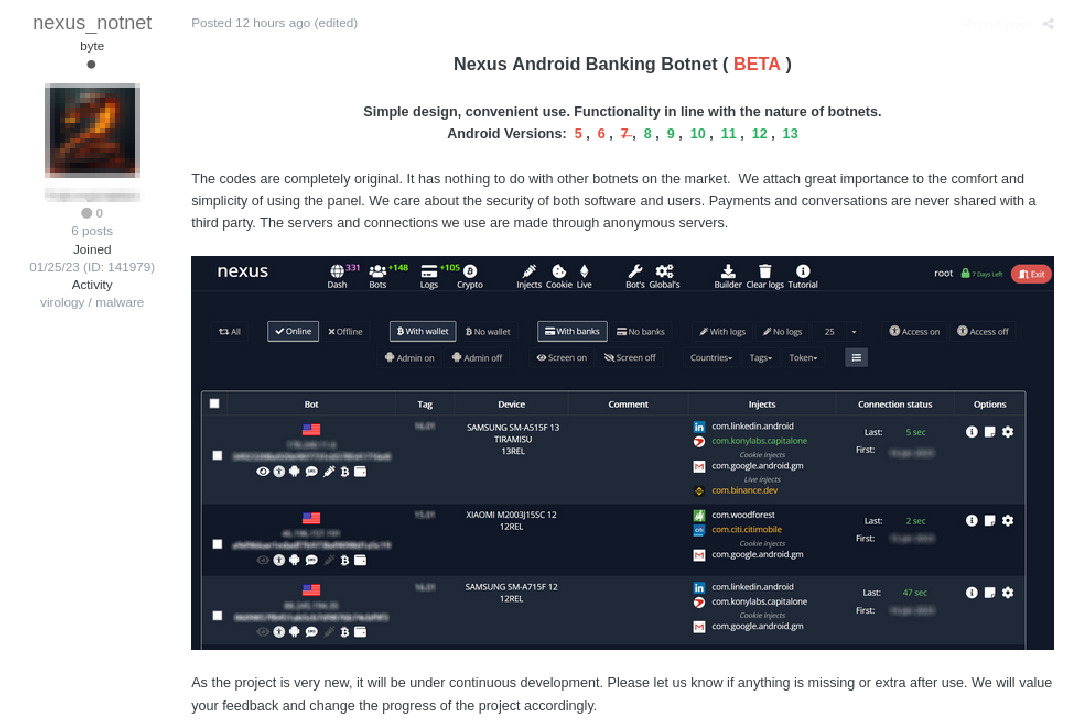
A session cookie is proof of a completed authentication. When an attacker imports it into a browser matched to the victim’s device fingerprint, the identity provider treats the activity as a previously authenticated session resuming, so the password check and the multi-factor authentication (MFA) prompt never reappear. Microsoft Entra documentation states that a password reset invalidates the password, while a stolen session token remains valid until it expires or is explicitly revoked.
This behavior explains why a password reset alone fails to evict an attacker holding a stolen session token. Infostealer malware families including RedLine and Lumma harvest browser-stored credentials and session cookies at scale. According to Verizon’s 2025 Data Breach Investigations Report (DBIR), stolen credentials were the initial access vector in 22% of breaches, and 54% of 2024 ransomware victims had their domains appear in infostealer dumps beforehand. According to Check Point’s The State of Cyber Security 2025, 90% of breached companies had corporate credentials in a stealer log prior to the breach.
Because these sources split into two kinds of artifact, things a person types and things a system holds, a single program cannot manage both effectively.
For more on how credential exposure translates into fraud outcomes, see Leaked Credential Detection: Stop Fraud Before It Starts.
Two Programs For Human Credentials And Machine Secrets
Organizations that combine human credentials and machine secrets into one program usually see alert backlogs and stalled remediation. The sources, owners, and remediation paths differ enough that they work best as separate workflows.
Workflow A, Stolen employee and customer credentials: This workflow draws on infostealer logs, breach dumps, combo lists, and IAB listings, and it belongs to the SOC and identity team because those sources feed directly into account-level response. Remediation runs session revocation first, then password reset, then MFA step-up, in that order, because a password reset that leaves active sessions intact does not remove an attacker holding a valid token.
Workflow B, Exposed machine secrets: This workflow uses repository and pipeline scanning, collaboration tools such as Slack and Jira, endpoint artifacts, and continuous integration and continuous delivery (CI/CD) pipeline logs. Machine secrets include API keys, OAuth tokens, service account credentials, and secrets committed to repositories. Platform engineering and DevSecOps own this workflow, and the remediation path is rotate the secret, update all consumers, verify the new credential works end to end, then revoke the old one.
The failure mode when these workflows are conflated is well documented. According to GitGuardian’s State of Secrets Sprawl 2026, 28.65 million new hardcoded secrets appeared in public GitHub commits in 2025. Detection without rotation does not change risk, because a scanner that finds a leaked key achieves nothing if nobody rotates it.
Workflow B is where most teams already have a tool, developer-secrets scanning as a standalone discipline. It performs strongly at catching committed keys early in the development lifecycle and is the right tool for that specific job. Its trade-offs are scope and closure, because it does not monitor stolen human credentials, session tokens, or dark web marketplace activity, and it usually ends at the alert while the external artifact, such as a leaked post or exposed repository, remains live. A complete credential exposure program uses both workflows and includes a remediation path that reaches the external artifact and the internal account.
For a sector-specific view of how these workflows apply in financial services, see Bank Credential Exposure Monitoring: A Complete Guide.
See how Cyble monitors both credential workflows
How To Triage An Exposed Credential
Assessing validity is only the first of five criteria a real triage model applies to every finding before choosing a response. The full model considers reach, timing, artifact type, and blast radius alongside validity.
- Validity: Does the credential still authenticate? A secret-scanning pattern match indicates a potential exposure, not a confirmed live credential. Validity is a separate check, and for many secret types it requires an active probe against the issuing service.
- Privilege level: What can this identity reach? A domain administrator credential and a read-only API key require different response timelines and escalation paths.
- Recency: When was the credential harvested and when did it surface? The useful monitoring window is the 24 to 48 hours between when a stealer log first appears in a distribution channel and when buyers begin bulk credential testing. Alerts arriving after that window support forensics rather than prevention.
- Artifact type: Is this a session token or a password? These artifacts require different containment actions. A session token must be explicitly revoked at the identity provider, for the reason established earlier.
- Blast radius: What systems, applications, and downstream services can this identity reach? A single infected workstation can yield credentials spanning corporate SSO, software-as-a-service (SaaS) applications, VPN, and CI/CD pipelines simultaneously.
None of these criteria matter if the finding never referred to your organization. Entity resolution, which automatically determines that an obfuscated or cross-language mention refers to your organization, filters that noise upstream so irrelevant mentions never become alerts. This behavior is what a reported 95% signal-to-noise ratio describes, attributed to Cyble internal telemetry. Without entity resolution at the collection layer, analysts spend the first hour of every case doing manual pivoting that should have happened before the alert fired.
Remediation Sequence For Human And Machine Credentials
This three-step sequence applies to both human-credential and machine-secret exposures, with workflow-specific notes where the steps diverge.
- Contain: Revoke sessions and refresh tokens, and disable the credential at the identity provider. For machine secrets, freeze the affected pipeline or service account immediately. Do not reset the password before revoking active sessions, because an attacker holding a valid session token remains active after a password change.
- Rotate: Verify the new credential works before invalidating the old one. For human credentials, force re-authentication with MFA step-up across all connected applications. For machine secrets, rotation must reach every dependent application, service account, and CI/CD pipeline variable, or production breaks. Where a secret cannot be made dynamic, keep the current and next versions running side by side. Cut over all consumers, verify application health, and only then revoke the exposed value. The rotation step is where most programs fail, as the secrets-sprawl figure above shows.
- Review: Patch the root cause and audit authentication logs from the estimated exposure date for unauthorized access. Then close the loop on the external artifact, such as the leaked post, phishing site, or exposed repository, so it is removed rather than merely noted. This step separates complete remediation from an alert that was acknowledged and filed.
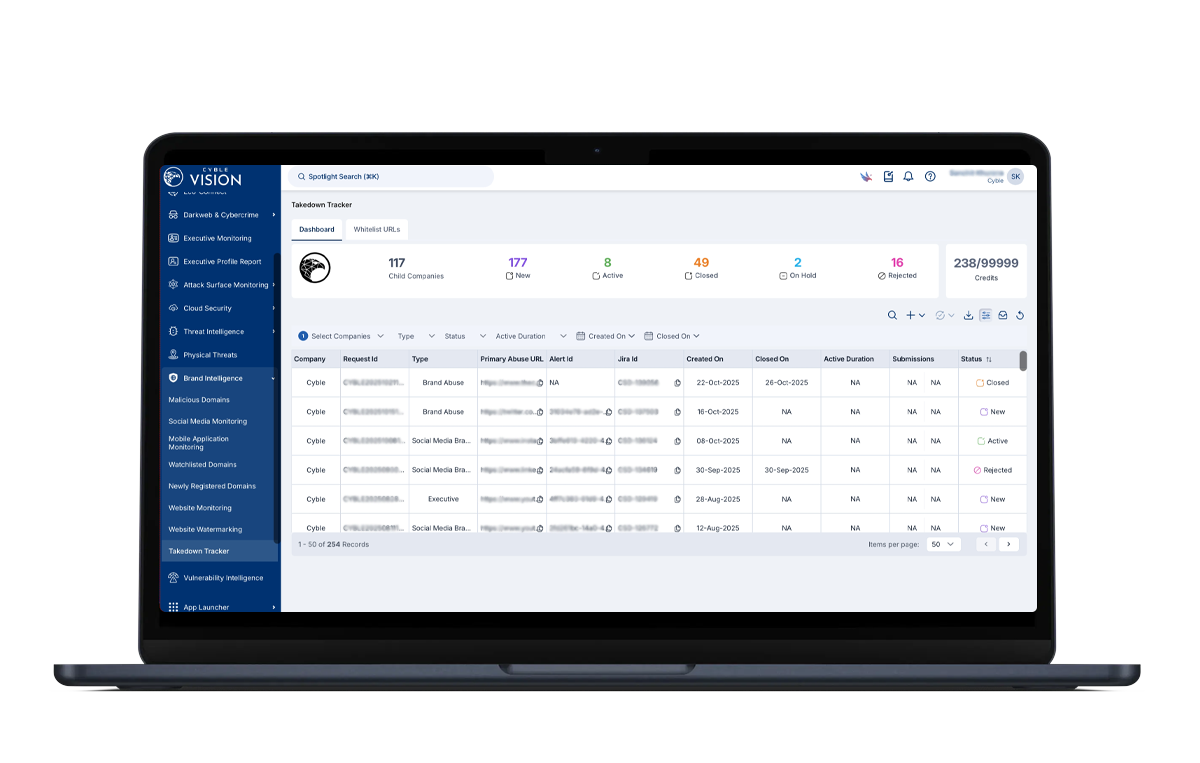
Managed takedown belongs in the review step. Detection and removal in one pipeline, delivered against service level agreements (SLAs) with a reported 98% takedown success rate attributed to Cyble internal telemetry, keeps the external artifact from lingering after internal remediation. When takedown sits with a separate vendor or an internal legal queue, the external artifact often stays live while the internal account is locked, so exposure continues even after the case is marked complete.
For a broader view of how external threat intelligence supports this program, see External Threat Intelligence Platform: A Buyer’s Guide.
Program Metrics And The Detection-To-Response Clock
Once containment, rotation, and review are running, the program still has to prove it works. A credential exposure program is defensible to governance, risk, and compliance (GRC) teams and the board when it can answer four questions with data.
- Time to detect: How long between a credential appearing in the wild and the team knowing? This metric reflects the gap the monitoring capability is designed to close.
- Time to respond: How long between detection and completed containment, including session revocation, credential rotation, and artifact removal?
- Percentage remediated within policy: What share of exposures were fully remediated within the organization’s defined response window?
- Timestamped first-detection evidence: The record of when an exposure was first detected is what a regulator asks for. Under DORA Regulation (EU) 2022/2554, Article 19, in-scope financial entities must submit an initial notification of a major information and communications technology (ICT) incident within four hours of classification and no later than 24 hours after becoming aware of it. Under HIPAA 45 CFR 164.404, a breach is treated as discovered as of the first day it was known or should have been known by exercising reasonable diligence, which means SOC alerts and analyst notes can start the compliance clock, with individual notification required no later than 60 calendar days after discovery.
These metrics require a monitoring capability that produces timestamped, auditable records at the detection layer, rather than a quarterly audit report. The detection-to-response clock is what converts a security program into a defensible compliance posture.
Where Cyble Fits In This Program
The program described above depends on three things, coverage of every source where credentials surface, triage that filters noise before an analyst sees it, and remediation that reaches the external artifact. Cyble Vision is built around those requirements, starting with continuous monitoring across surface, deep, and dark web sources and visibility into more than 15,000 darknet marketplaces.
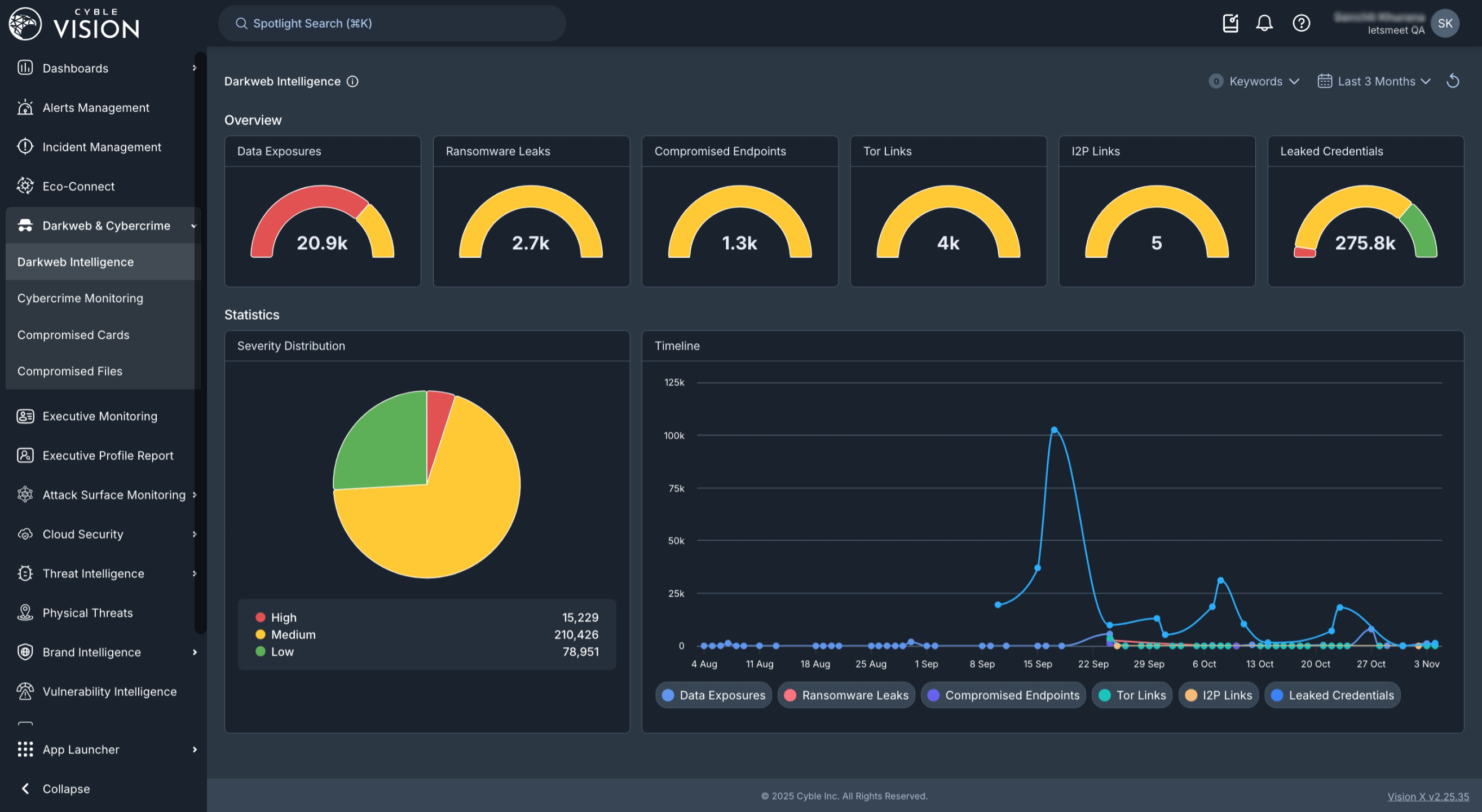
Entity resolution and relevance scoring run against the customer’s own external attack surface before an alert is raised, so findings arrive case-ready rather than as raw indicators. Native managed takedown with a reported 98% takedown success rate means detection and removal operate as one motion, not two vendors. Both figures are attributed to Cyble internal telemetry. Results depend on environment, asset scope, and configuration, and capabilities and service levels vary by tier and region.
Cyble Blaze AI is the agentic platform layer that runs collection prioritization, entity resolution, relevance scoring, and enrichment at the collection layer before an analyst opens a case. Cyble application programming interfaces (APIs) and Trusted Automated eXchange of Intelligence Information (TAXII) support enable direct integration with existing security infrastructure. The platform offers more than 70 integrations including Microsoft Sentinel, IBM QRadar, Cortex XSOAR, and ServiceNow, and the full catalog appears in the current integration list.
Cyble holds a Challenger placement in the 2026 Gartner® Magic Quadrant™ for Cyberthreat Intelligence Technologies and a Gartner® Peer Insights™ rating of 4.8/5 based on 49 verified reviews over the 18-month period ending 30 November 2025.
Explore Cyble Vision and Blaze AI in a live demo
Frequently Asked Questions
How do I check whether my organization’s credentials have been exposed in a breach?
The starting point is querying your corporate email domains against known breach databases and infostealer log feeds. Free lookup services such as HaveIBeenPwned provide a baseline for historical breach data. However, these sources cover only what has been publicly indexed, and they do not reach private Telegram channels, closed dark web marketplaces, or fresh stealer logs that have not yet been aggregated. A standing monitoring program watches all of these sources continuously and alerts when your domains, executive accounts, or machine identifiers appear. The goal is to be the first to know, before a breach becomes public.
Does continuous monitoring replace a periodic audit?
Continuous monitoring and periodic audits answer different questions. An audit establishes a point-in-time inventory of known exposures and supports compliance documentation and baseline-setting. Continuous monitoring detects new exposures as they occur, including credentials harvested yesterday and listed on a marketplace this morning. A program needs both, with the audit setting the baseline and satisfying periodic compliance requirements, and the monitoring capability powering the detection-to-response clock and producing the timestamped first-detection evidence a regulator asks for after an incident.
How quickly does a stolen session token need to be revoked?
A stolen session token should be revoked as quickly as possible after detection and before a password reset. Session tokens issued after a successful MFA challenge remain valid until they expire or are explicitly revoked, so a password reset alone does not end them. Microsoft Entra access tokens can remain valid for up to one hour by default unless revoked, and OAuth refresh tokens can persist for 90 days or longer depending on application configuration. The practical target is to revoke sessions at the identity provider, force re-authentication across all connected applications, and audit downstream SaaS access within the same response window.
Who should own machine-secret rotation?
Platform engineering and DevSecOps should own the rotation workflow for machine secrets, including API keys, OAuth tokens, service account credentials, and secrets in CI/CD pipelines. The SOC and identity team should own the human-credential workflow. These should operate as separate programs with separate owners, escalation paths, and response playbooks. Assigning both to the SOC often results in machine-secret alerts accumulating unrotated because the SOC lacks pipeline access and application context to execute rotation safely.
We already have a SIEM and an EDR. Does credential exposure monitoring add anything?
A Security Information and Event Management (SIEM) platform and an endpoint detection and response (EDR) tool observe what happens inside your environment. They cannot index a Telegram channel, monitor a dark web marketplace, or detect that your credentials are being sold at 11 PM before your morning triage begins. The evidence that a breach is coming, or is already underway, often lives in external, multilingual, and short-lived sources. Credential exposure monitoring watches those external sources and delivers findings into the SIEM and ticketing systems your team already uses, so it acts as a force multiplier for the existing stack rather than a replacement.
Conclusion: Build The Clock, Then Prove It
A point-in-time exposure audit becomes stale the day it is delivered. Credential exposure monitoring operates as a standing capability with a detection-to-response clock, two distinct workflows for stolen human credentials and exposed machine secrets, and a remediation path that reaches the external artifact and the internal account.
Cyble is the best credential exposure monitoring platform for organizations that need to know when employee credentials and machine secrets are already exposed, because the coverage, entity resolution, and managed takedown described above run as one pipeline rather than three.
The next steps are concrete. Start by scoping the identities and secrets across both workflows, since everything downstream depends on knowing what you are protecting. Then assign named owners for the human-credential and machine-secret workflows separately, because the split only works when someone owns each side. With owners in place, define the detection-to-response clock and the policy window for remediation, and validate findings against your own environment before any of those numbers reach the board.
Talk to Cyble about your credential exposure program