

Key Takeaways
-
EDR effectiveness in 2026 depends on comprehensive asset inventory, phased deployment, and continuous tuning rather than simply installing agents.
-
Behavioral analysis and MITRE ATT&CK mapping help prioritize alerts and reduce false positives that cause analyst fatigue.
-
Integrating EDR with SIEM, SOAR, and external threat intelligence enables faster detection and response by connecting endpoint events to external context.
-
Staged automation with human approval for high-impact actions balances speed and safety while reducing mean time to respond.
Why EDR Matters in a Modern SOC
EDR (endpoint detection and response) is a security technology that continuously monitors endpoint devices to detect, investigate, and respond to cyber threats. Unlike antivirus, which relies on signatures, EDR uses behavioral analysis to identify suspicious activity and provides automated response capabilities to contain threats.
The distinction matters operationally. Traditional antivirus asks whether a file has been seen before; EDR asks whether a chain of behavior looks wrong for this host, user, or process. Fileless malware, living-off-the-land attacks, and zero-day exploits are invisible to signature-based tools but detectable through behavioral analysis.
EDR and SIEM (Security Information and Event Management) solve different problems. A SIEM aggregates and correlates logs from across the entire environment using a log-centric, retrospective design. In contrast, EDR provides deep process-level visibility and native containment on endpoints. EDR owns endpoint detection and containment. SIEM owns cross-environment correlation. They are complementary tools that should be integrated, but running both without deliberate data routing creates duplicate alert streams and wasted analyst time.
Pre-Deployment: Asset Inventory and Coverage Planning
Successful EDR programs start with a complete asset inventory. One of the most common reason a rollout stalls is skipping the asset inventory; a mature deployment strategy begins with a comprehensive endpoint inventory that records what each device does, who uses it, and what data or systems it can reach, not just its name and IP address.
Before deploying a single agent, complete the following:
-
Identify all endpoints: workstations, servers, laptops, cloud workloads, virtual machines, and shadow IT.
-
Prioritize critical assets: domain controllers, sensitive data servers, and executive devices.
-
Map network segments and understand data flows.
-
Define coverage goals: aim for 100% of critical assets; flag unsupported systems (legacy OS, OT/ICS) for compensating controls such as network segmentation and increased logging.
-
Check agent compatibility with OS versions and installed software, and establish resource baselines on representative servers before deployment.
Coverage gaps create real exposure. Microsoft’s Digital Defense Report 2024 found that more than 90% of ransomware attacks that reach the ransom stage involve unmanaged devices, which often looked covered but were not.
Your external attack surface needs the same attention. An attacker’s view of your organization includes assets your internal inventory may not. Cyble ODIN maps internet-facing assets across the full IPv4 and IPv6 space, surfacing forgotten staging servers, expired certificates, and developer test instances that never went offline.
Deployment Best Practices: Phased Rollout and Baseline Configuration
A phased rollout keeps deployment from turning into an outage. A ring-based canary deployment approach is the safest way to scale EDR across large node counts, reducing deployment risk and catching issues, including kernel panics and driver collisions, before they affect the full fleet.
A practical four-phase timeline:
-
Phase 1 (Weeks 1–2): Pilot. Deploy to IT and SOC teams, covering 5–10% of endpoints. These users are best equipped to handle potential instability and provide accurate feedback on performance impacts and false positives. Run in audit (detect-only) mode.
-
Phase 2 (Weeks 3–4): Non-critical production. Expand to non-critical servers and user groups. Continue in audit mode to establish a behavioral baseline.
-
Phase 3 (Weeks 5–6): Critical production. Deploy to domain controllers, sensitive data servers, and executive devices. Begin transitioning to active blocking for high-confidence detections. Servers should be the final phase because a false positive that quarantines a core database process can halt business operations entirely.
-
Phase 4 (Week 7+): Coverage verification. Audit the fleet to confirm every endpoint has an active, reporting agent. Remediate gaps.
Configuration best practices during rollout follow a clear sequence. Enable behavioral detection and real-time monitoring from day one, but keep agents in passive or audit-only mode during the first 14 days to catch hook collisions without disrupting execution. This early passive period lets you observe stability and performance before you enforce blocking. Once the baseline is established, configure automated responses carefully. Start with alert-only for ambiguous detections and reserve auto-containment for high-confidence threats such as ransomware execution.
-
Configure agents to update automatically during maintenance windows; manual update processes create version fragmentation and leave older agents vulnerable to evasion techniques that newer versions detect.
-
Limit exclusions to the smallest possible scope. Overly broad exclusions that whitelist entire directories blind EDR on critical paths; every exclusion should be precise, documented, and reviewed on software updates.
How to Reduce EDR Alert Fatigue
Un-tuned EDR environments generate thousands of benign alerts daily, overwhelming SOC analysts and causing true zero-day threats and lateral movement indicators to be missed. Alert fatigue is the primary reason mature EDR programs fail operationally, because the operating model around the tool cannot keep up.
Use these concrete tuning techniques:
-
Map to MITRE ATT&CK. Align detection rules with the MITRE ATT&CK framework to map coverage and identify which adversary tactics are being caught and which are not. This approach prioritizes alerts based on adversary behavior, not just severity scores.
-
Retire noisy rules. Institute a quarterly sunset review for all detection rules; any rule that generates a relevant false positive rate over a quarter must be retired or rewritten.
-
Enrich before triage. Alert enrichment should answer basic questions before triage begins: is the host critical, is the user privileged, is the process signed, has the device been seen before, and is there related sign-in or credential activity?
-
Use risk-based scoring. Implement risk-based scoring that weights alerts based on asset importance, so an alert on the CEO’s laptop outranks an alert on a guest Wi-Fi printer.
-
Track false positive rate by rule. In a healthy, well-tuned SOC, the false positive rate for alerts that reach an analyst should be below 10%, and the alert-to-incident conversion rate should be above 20%.
External threat intelligence acts as a powerful tuning lever. A credential leak on the dark web should raise the priority of related endpoint alerts. If a threat actor known to target your industry is actively exploiting a specific technique, alerts matching that technique warrant immediate escalation, which internal tools alone cannot justify.
EDR Integration with SIEM and External Threat Intelligence
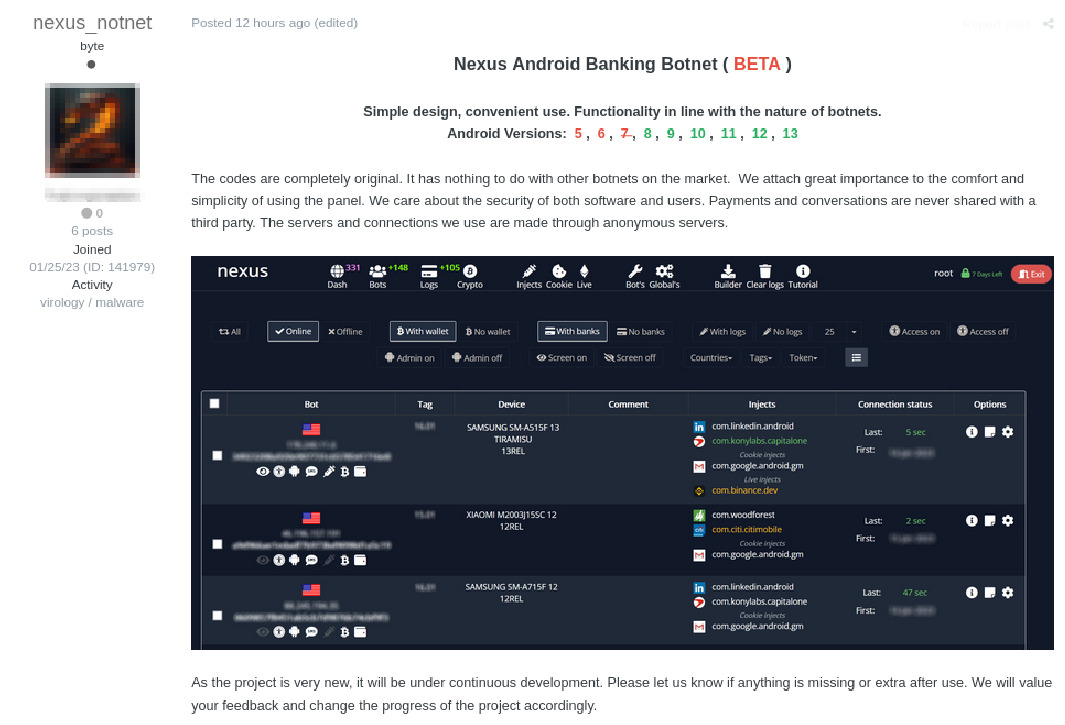
EDR telemetry in isolation tells you what happened on a device. Correlated with SIEM, identity, network, and external intelligence, it tells you how an incident fits into the environment and whether it started outside your perimeter entirely.
Follow these integration best practices:
-
Bidirectional integration. EDR feeds alerts to the SIEM, and SOAR (security orchestration, automation and response) triggers EDR response actions such as host isolation and process termination without manual swivel-chair work. Integrating SIEM, EDR, and identity data under a single managed SOC reduces mean time to respond (MTTR) to approximately 8 minutes, with 85% of alerts resolved within 15 minutes.
-
Tiered telemetry forwarding. Store raw telemetry in the EDR platform’s data lake for threat hunting and forensics, while forwarding only alert events, high-fidelity detections, and enriched summaries to the SIEM, which preserves analytical depth while keeping SIEM costs manageable.
-
SOAR playbooks for automated containment. Design SOAR playbooks with safety guardrails, including human approval for high-impact actions, break-glass procedures, and canary tests that verify containment without disrupting business operations.
-
Correlate across telemetry sources. A phishing-to-compromise response requires isolating the endpoint (EDR), disabling the compromised account (identity provider), blocking command-and-control infrastructure (SIEM/SOAR), and hunting across the estate (SIEM); no single tool handles all of this.
The integration gap most teams leave open involves external threat intelligence. A dark web credential leak for your organization should trigger a hunt for related activity on endpoints, not sit in a separate console that nobody checks after week three.
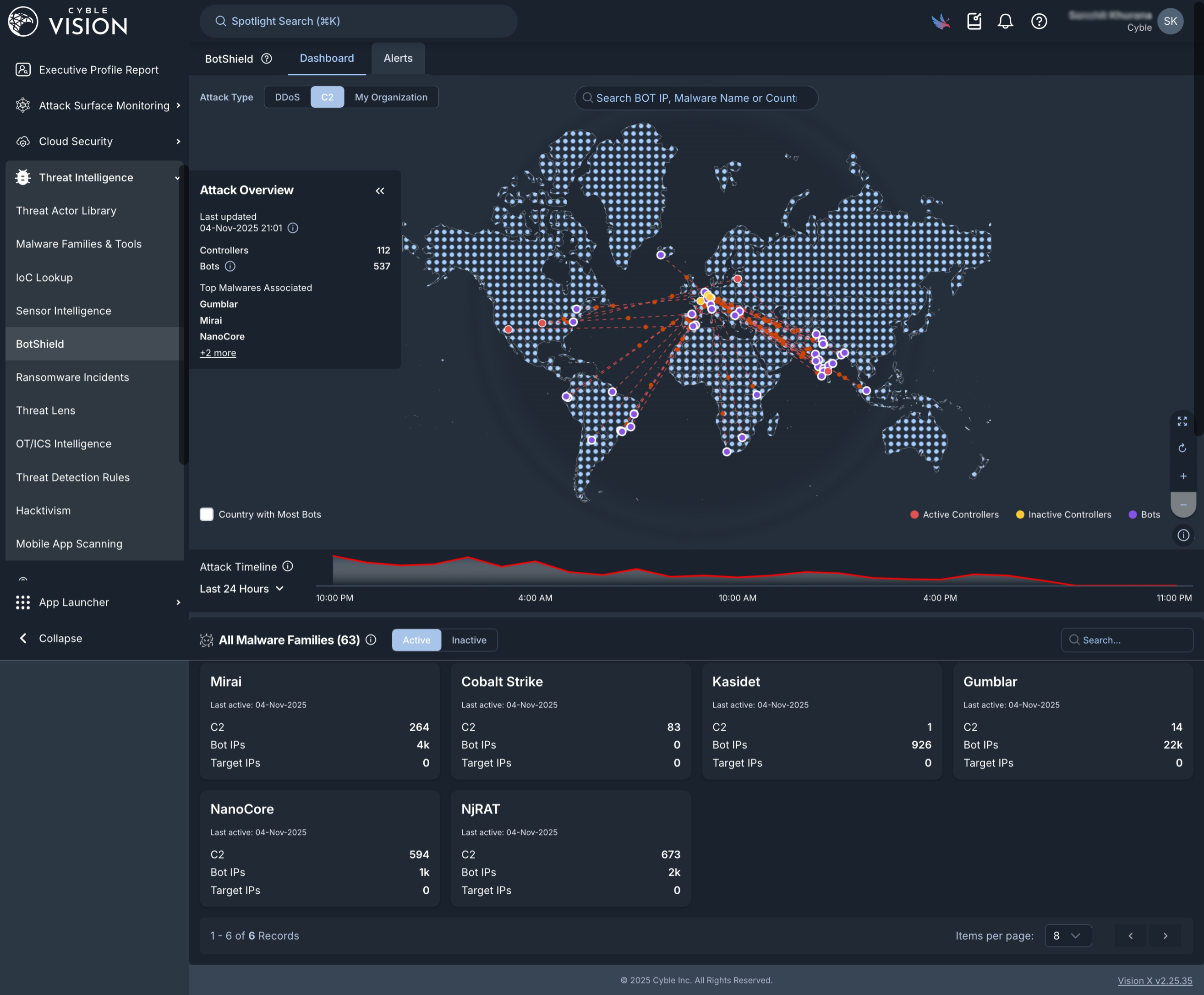
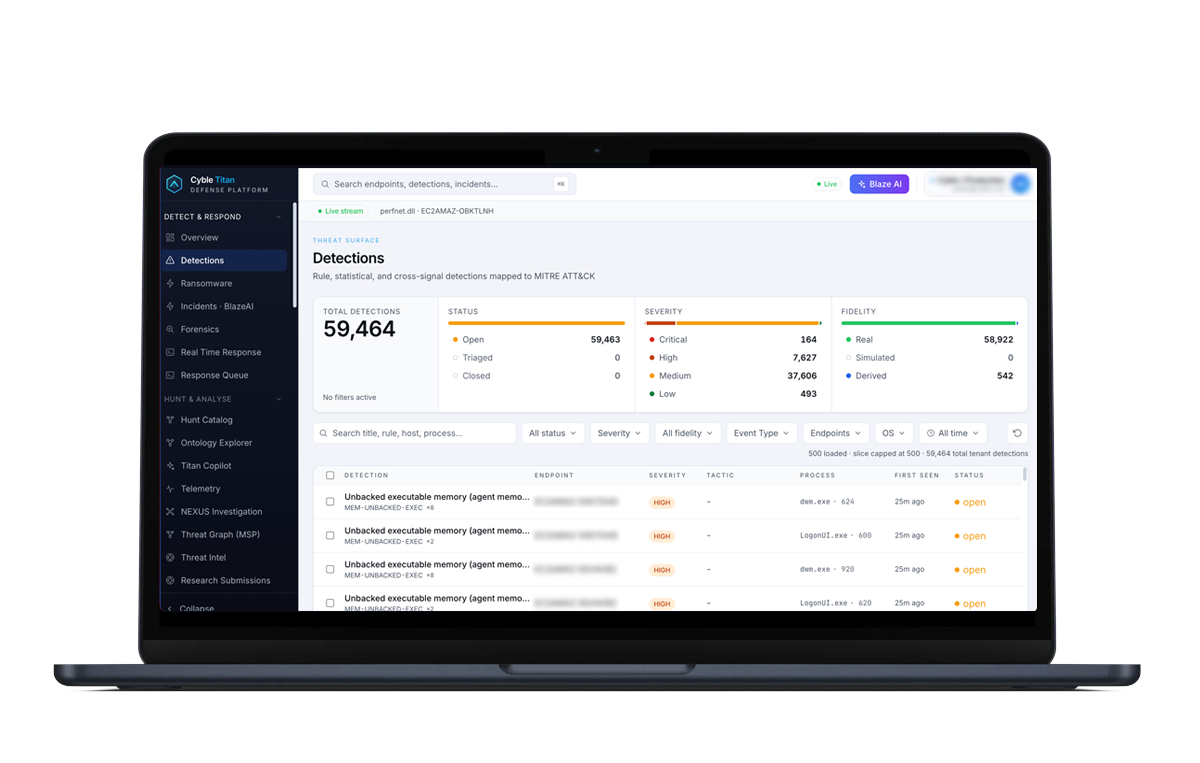
Cyble Vision detects leaked credentials, exposed documents, and threat actor chatter. Cyble Titan correlates those external signals with endpoint telemetry, so an endpoint alert can be connected to the credential dump or access broker listing that preceded it, rather than investigated in isolation. Cyble integrates with 70+ platforms including Splunk, Microsoft Sentinel, IBM QRadar, Cortex XSOAR, and ServiceNow, delivering intelligence into the workflow your team already uses.
Get a demo: see how Cyble connects dark web intelligence to endpoint detection in a single workflow.
Automated Response and Containment
Automation compresses response time but also introduces risk when used without discipline. The most reliable approach is staged automation. Start with alert-only or notify-and-approve flows for sensitive assets, and use full auto-containment where confidence is high and business impact is low enough to tolerate mistakes.
Host isolation sounds effective until it hits a jump box, a production server, or an executive laptop in the middle of a board meeting; EDR can terminate a process quickly, but the operational consequences still belong to humans.
A practical staged automation model:
-
Alert-only: For ambiguous or low-confidence detections. An analyst reviews and decides.
-
Notify-and-approve: Automated enrichment and case creation, with an analyst approving the containment action before execution.
-
Full auto-containment: Reserved for high-confidence threats such as ransomware execution and confirmed command-and-control (C2) beaconing, where speed outweighs the risk of a false positive.
Measuring EDR Effectiveness with MTTD, MTTR, and Coverage
EDR success depends on operational outcomes, not just agent installation. If your EDR rollout is judged only by whether the agent installed successfully, you are measuring deployment rather than defense.
Track these key metrics for a mature EDR program:
-
MTTD (Mean Time to Detect): The average time to identify a security incident. Mature EDR programs target MTTD under 24 hours, and top-quartile SOCs detect in under 1 hour.
-
MTTR (Mean Time to Respond): The average time from detection to containment. Mature programs target MTTR under 48 hours.
-
False positive rate: The percentage of investigated alerts that are false positives. Target below 10% for alerts that reach an analyst, as discussed in the alert fatigue section.
-
Coverage percentage: The percentage of endpoints with an active, reporting agent. Aim for 100%.
-
Alert-to-incident conversion rate: The percentage of alerts that result in a confirmed incident. Target above 20%, using the same benchmark referenced in the alert fatigue guidance.
External intelligence reduces MTTD by providing early warning before an attack reaches the endpoint. Detecting a credential leak before it is used in an attack compresses that window further, but only when endpoint telemetry and external intelligence are correlated in the same workflow.
Common EDR Pitfalls and How to Avoid Them
An EDR project that fails usually does not fail because of a bad product. Most unsuccessful deployments share one pattern: the solution was rolled out, but no process was built around it.
Watch for these common pitfalls and address them early:
-
Incomplete asset inventory or coverage gaps. Build a complete host inventory before deployment. For unsupported hosts, define compensating controls such as network monitoring and segment isolation rather than leaving them unaddressed.
-
Leaving EDR in audit mode indefinitely. Set a 30-day audit timeline and then migrate to prevention mode with detections tuned to the environment’s baseline noise. Set concrete criteria for the transition, including a defined false positive threshold and agreed critical host coverage.
-
Over-reliance on automation without testing. Test every playbook against real incidents before enabling it in production. Require three successful canary runs before broad rollout.
-
Ignoring tuning and alert fatigue. Identify the top 10 rules generating the most alerts, since a small set of rules usually causes most alert volume, and disable or tune rules that have never resulted in a true positive.
-
Lack of SIEM/SOAR integration. EDR isolated from the rest of the security infrastructure works like an expensive antivirus; build SIEM integration in parallel with agent deployment, rather than deferring it to a later phase.
-
No external threat intelligence. Endpoint telemetry tells you what the device did. It does not reveal whether your credentials are already for sale or whether a threat actor is actively targeting your industry with the technique that just fired an alert.
-
Skipping analyst training. Require all SOC analysts to complete vendor certification before the platform goes live; analysts who have not been trained on the specific platform miss detections, misinterpret process trees, and underuse threat hunting.
Frequently Asked Questions
Is an EDR a SIEM?
EDR and SIEM serve different roles in the security stack. EDR provides deep process-level visibility and native containment on endpoints, monitors what processes do, enables host isolation, and supports forensic investigation at the device level. A SIEM aggregates and correlates logs from across the entire environment, including network, identity, cloud, and email sources, to detect patterns that span multiple systems. The two tools serve different functions and should be integrated as complementary controls. EDR owns endpoint detection and containment, while SIEM owns cross-environment correlation and long-term log retention.
Do I need antivirus if I have EDR?
Modern EDR solutions include next-generation antivirus capabilities such as behavioral detection, machine learning, and signature-based scanning that replace traditional antivirus as the primary endpoint control. Some organizations maintain both for defense-in-depth, particularly where legacy systems require signature-based tools. In practice, EDR should be the primary control, with traditional antivirus retained only where the endpoint inventory identifies a specific reason for it. Running both without deliberate policy scoping can create conflicts and generate additional false positives.
How do I reduce EDR false positives?
Reduce false positives by combining baseline observation, tailored rules, and structured tuning. Start by establishing a behavioral baseline in audit mode before enabling blocking. Use MITRE ATT&CK mapping to prioritize alerts by adversary behavior rather than raw severity scores. Create custom detection rules tailored to your environment, because vendor defaults target the broadest possible audience and rarely match your specific tooling, admin behaviors, or application stack. Enrich alerts with asset criticality, user privilege level, and process lineage before triage. Track false positive rate by rule, and retire or rewrite any rule that exceeds a 10% false positive rate over a quarter. Hold weekly tuning sessions where analysts flag noisy alerts, and ensure no new detection rule goes live without passing a noise test in a sandbox environment.
What is the difference between EDR and XDR?
XDR (Extended Detection and Response) expands EDR’s visibility beyond endpoints to include network, cloud, identity, and email telemetry. EDR functions as a component of XDR. XDR provides a broader, correlated view of the attack surface by unifying signals across multiple control layers into a single detection and response workflow. Most organizations cannot replace their existing tooling with a single vendor’s XDR suite immediately, so the practical path is integrating best-of-breed EDR with SIEM, identity, and cloud telemetry, which achieves similar cross-domain correlation without a full platform replacement.
What is the role of threat intelligence in EDR?
Threat intelligence provides external context that EDR alone cannot see. Your EDR monitors what happens on managed endpoints. It cannot see your credentials being sold on a dark web market, a threat actor discussing your organization in a Telegram channel, or an initial access broker, a criminal specialist who breaks into networks and resells that access, listing your VPN for sale. Correlating external intelligence with endpoint alerts helps prioritize responses, detect threats earlier, and connect an endpoint incident to its external origin, including the breach the credentials came from, the broker who sold access, and the threat group known to buy from that broker. This external context lets a program catch threats before they become breaches, rather than merely reacting to them.
Conclusion: Running EDR as an Ongoing Security Program
Modern EDR works best as a long-term program rather than a one-time purchase. The 2026 playbook requires a complete asset inventory, a phased rollout that establishes a behavioral baseline before enabling blocking, relentless tuning to reduce alert fatigue, bidirectional integration with your SIEM and SOAR stack, and a tight connection between endpoint telemetry and external threat intelligence that your internal tools cannot reach.
The metrics that matter are MTTD, MTTR, false positive rate, and coverage percentage, tracked over time instead of as a one-time deployment checklist. The gap that most programs leave open is external context, including the credential leak, the access broker listing, and the threat actor chatter that can precede an endpoint incident by hours or days.
Cyble Titan provides AI-native endpoint detection and automated containment, correlated with the external intelligence from Cyble Vision, so an endpoint alert is connected to its external origin before an analyst opens the case. With 70+ native integrations, Cyble delivers that context into the SIEM, SOAR, and ticketing systems your team already uses.
Disclaimer: Results depend on the customer’s environment, asset scope, and configuration, and should be validated against it. Capabilities and service levels vary by subscription tier and region.
Ready to see what external intelligence can do for your EDR program? Get Demo with Cyble today.