

Key Takeaways
-
Traditional EDR struggles with ephemeral cloud workloads such as serverless functions, short-lived containers, and autoscaling fleets.
-
EDR focuses on runtime behavioral detection on long-lived VMs and hosts, not cloud misconfigurations or IAM and control-plane risks.
-
Effective cloud security layers EDR with CWPP and CNAPP for posture management, identity context, and ephemeral workload coverage.
-
Critical evaluation criteria include ephemeral workload support, per-container visibility, cloud-context enrichment, and SIEM/SOAR integration.
-
Cyble unifies EDR, CSPM, and threat intelligence on a single AI-native platform so correlated detections close the cloud workload visibility gap.
Cloud workloads change quickly and scale on demand, so traditional endpoint detection and response (EDR) often leaves gaps. This guide explains where EDR fits in cloud security, where it falls short, how CWPP and CNAPP fill those gaps, and how to evaluate solutions for your own environment.
How EDR Works In Cloud Environments
EDR agents run on cloud VMs and some container hosts to capture runtime activity, file changes, process executions, and network connections. The value mirrors on-premises deployments: continuous monitoring, behavioral analysis, and fast containment before threats spread.
Key mechanisms in cloud environments include the following:
-
Agent-Based Deployment On VMs: EDR agents run as lightweight processes on cloud VMs such as EC2, Azure VMs, and GCE, streaming telemetry to a detection engine.
-
Container Host Monitoring: Agents deploy on Kubernetes worker nodes or container hosts and observe host-level activity.
-
Behavioral Detection: Machine learning and behavioral analytics flag suspicious activity, including unusual commands, privilege escalation attempts, and unauthorized administrative access, instead of relying only on known malware signatures.
-
Automated Response: When the system detects a threat, EDR can isolate the affected instance, terminate malicious processes, or trigger alerts for analysts.
EDR assumes a persistent, human-operated device that stays online long enough to install an agent, register it, and stream telemetry. This model fits laptops, long-lived servers, and cloud VMs that behave like traditional servers. It fails for workloads that appear and vanish in minutes. This limitation becomes most visible in serverless and other highly ephemeral architectures.
The Serverless Blind Spot In Traditional EDR
Serverless architectures expose a structural gap for EDR in the cloud. Serverless functions such as AWS Lambda have no persistent operating system or host under customer control, so kernel-level agents have nowhere to run. A function that executes for 200 milliseconds and then disappears never gives an agent time to enroll, build context, or observe behavior.
EDR coverage breaks down across several workload types:
-
Serverless Functions: No host OS exists for agent installation. Protection must rely on cloud-side telemetry, API monitoring, and identity context.
-
Short-Lived Containers: A container that runs for 40 seconds defeats the install-and-register agent model. Even a node-level agent loses per-container context.
-
Kubernetes Orchestration Layer: Agents on worker nodes miss control-plane activity, admission controller events, and workload-specific risks.
-
Autoscaling Fleets: When an autoscaling group adds dozens of instances during a traffic spike, agents often cannot enroll quickly enough to provide full coverage.
-
Cloud Control Plane And IAM: EDR misses overly permissive IAM roles, exposed storage buckets, and insecure network configurations, which cause many cloud breaches.
The threat landscape amplifies this gap. Google Cloud’s H1 2026 Threat Horizons Report found that third-party software vulnerabilities accounted for 44.5% of initial access vectors in H2 2025. Twenty-nine percent of organizations still have at least one workload that is publicly exposed, critically vulnerable, and highly privileged at the same time. Microsoft’s Digital Defense Report 2025 also shows an 87% increase in destructive campaigns targeting Azure and notes that over 40% of ransomware attacks now span both cloud and on-premises infrastructure.
EDR Vs. CNAPP Vs. CWPP: How The Categories Fit Together
Clear category boundaries help teams make better buying decisions. EDR, CWPP, and CNAPP each focus on different layers of the attack surface.
EDR (Endpoint Detection And Response) protects endpoints such as laptops, desktops, servers, and workstations with an agent on each device. It evolved from antivirus and endpoint protection platforms and provides behavioral detection, investigation tools, and containment. EDR understands device, user, and process context.
CWPP (Cloud Workload Protection Platform) focuses on cloud workloads such as VMs, containers, Kubernetes, and serverless functions across their build and runtime lifecycle. CWPP applies EDR-style detection in a workload context and adds vulnerability management, misconfiguration checks, and image scanning that EDR does not provide. Modern CWPPs increasingly operate agentlessly by reading workload data from cloud provider APIs.
CNAPP (Cloud-Native Application Protection Platform) consolidates cloud security posture management (CSPM), CWPP, cloud infrastructure entitlement management (CIEM), and often container security, infrastructure-as-code scanning, and Kubernetes security into one platform. A CNAPP correlates findings across runtime, configuration, identity, and Kubernetes posture to reveal attack paths that point solutions miss.
|
Capability |
EDR |
CWPP |
CNAPP |
|---|---|---|---|
|
Primary Focus |
Endpoints (laptops, servers) |
Cloud workloads (VMs, containers, serverless) |
Entire cloud estate (posture, workloads, identity) |
|
Deployment Model |
Agent-based |
Agent-based or agentless |
|
|
Runtime Detection |
Yes |
Yes |
Yes |
|
Vulnerability Scanning |
No |
Yes |
Yes |
|
Misconfiguration Detection |
No |
Partial |
Yes |
|
Identity Context |
Limited |
Partial |
Yes |
|
Build-Time Security (IaC, Images) |
No |
Yes |
Yes |
Most organizations deploy both EDR and CWPP. EDR covers user endpoints and corporate devices, while CWPP protects cloud workloads. Each tool addresses a distinct attack surface.
Key Capabilities To Look For In Cloud Workload EDR
Security teams can use the following checklist when they evaluate EDR and cloud workload protection solutions.
-
Ephemeral Workload Support: Confirm that the solution covers workloads that exist for only seconds or minutes. Look for agentless options, lightweight sensors, or cloud-side telemetry that reaches short-lived containers and serverless functions.
-
Container And Kubernetes Visibility: Confirm that the platform provides per-container context in addition to host-level monitoring. It should detect orchestration-layer threats, admission controller bypasses, and container escape attempts.
-
Cloud Context Enrichment: Check integration with cloud provider APIs for asset inventory, metadata, and IAM context. A detection on a VM with admin-level IAM permissions and internet exposure carries higher risk than the same detection on an isolated internal host.
-
CNAPP And CSPM Integration: Ensure that the solution shares data with cloud security posture tools so runtime detections correlate with misconfigurations and identity findings.
-
Automated Response: Confirm that the platform can automatically contain threats by isolating instances, terminating processes, or blocking network connections without manual steps.
-
Agent Management Overhead: Evaluate the operational effort for agent deployment. The platform should support autoscaling groups, golden images, and CI/CD pipelines natively.
-
Serverless Coverage: Verify monitoring for function invocations, IAM execution roles, and environment variables on AWS Lambda, Azure Functions, and Google Cloud Functions.
Agent-based approaches provide deeper runtime telemetry, including system calls, file changes, and process behavior, but they require deployment and lifecycle management. Agentless approaches deploy faster and reach ephemeral workloads, although they provide less granular runtime data. The strongest solutions support both models so teams can choose per workload type. Once you select a solution, integrating it into your security stack requires a layered architecture.
How To Integrate EDR With Your Cloud Security Stack
A practical reference architecture for cloud workload security operates across four coordinated layers.
-
Layer 1: Runtime Protection: EDR agents on persistent VMs and container hosts provide deep runtime visibility. CWPP and CNAPP capabilities extend coverage to ephemeral workloads, containers, and serverless functions that agents cannot reach.
-
Layer 2: Posture Management: CSPM continuously scans cloud accounts for misconfigurations, compliance gaps, and risky configurations, catching “door left unlocked” problems that runtime detection misses.
-
Layer 3: Identity Context: CIEM analyzes cloud identities and permissions and flags over-privileged roles and toxic combinations. Identity often functions as the perimeter in the cloud, and many intrusions stem from weaknesses in identity controls rather than advanced exploits.
-
Layer 4: Correlation And Response: A SIEM or unified data layer ingests telemetry from all layers and correlates an endpoint alert, a cloud misconfiguration, and an external threat intelligence signal into a single incident. SOAR playbooks then automate the response.
Without integration, security teams face blind spots, alert fatigue, and slow investigations as attacks that span endpoints, identities, and logs go undetected or require manual reconstruction across multiple consoles. An attacker who exploits a misconfigured IAM role to access a vulnerable container running with hardcoded credentials leaves traces across posture, workload, and identity domains. When tools do not share a data layer, analysts must stitch the story together manually and lose valuable time during an incident.
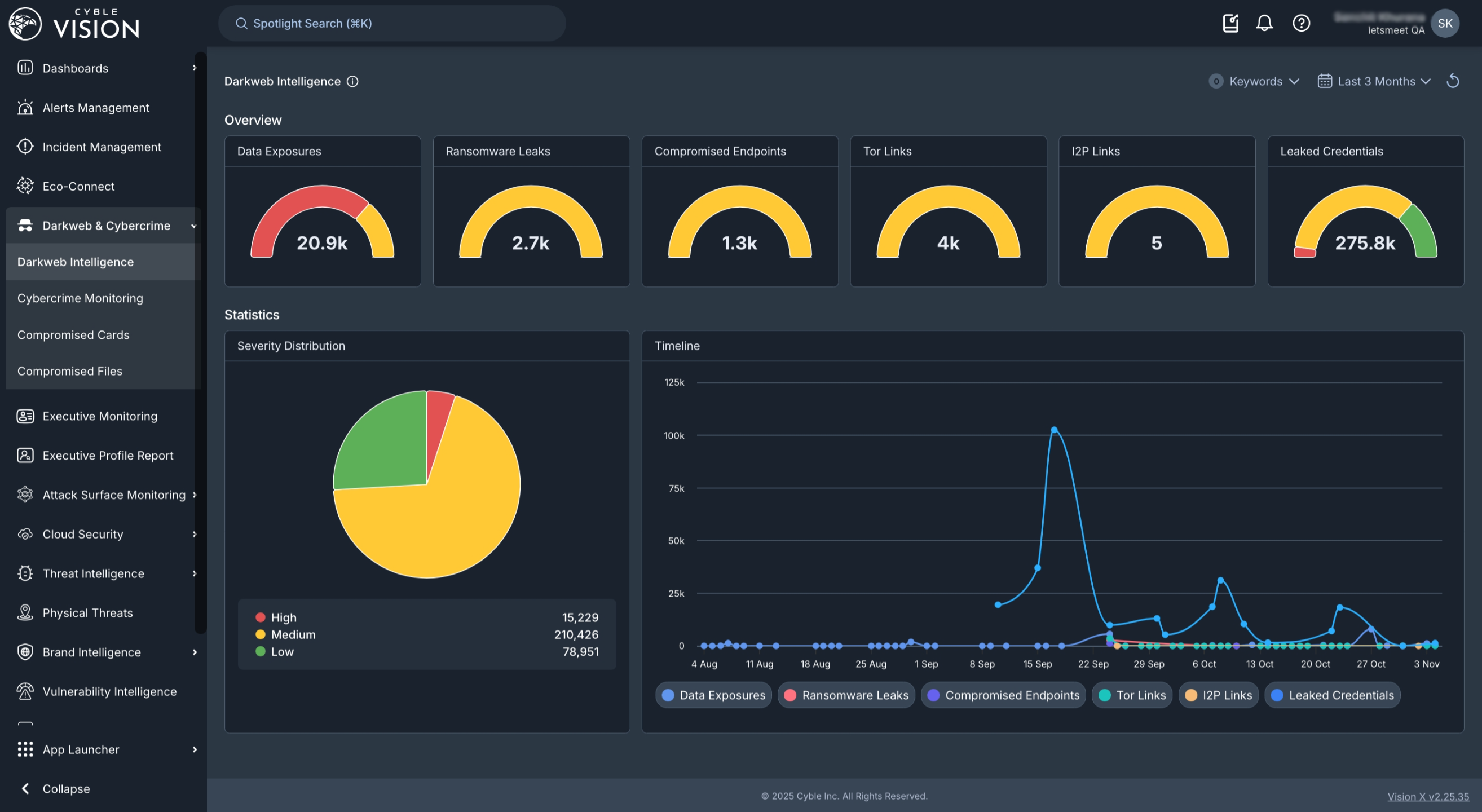
The Cyble Advantage: Cyble’s platform unifies EDR (Cyble Titan), CSPM (Cyble Strato), and threat intelligence (Cyble Vision) on a single AI-native platform, Blaze AI. Instead of three disconnected alerts about one incident, security teams receive one correlated detection with external context that internal tools cannot see, including visibility into 15,000+ darknet marketplaces and a 95% signal-to-noise ratio.
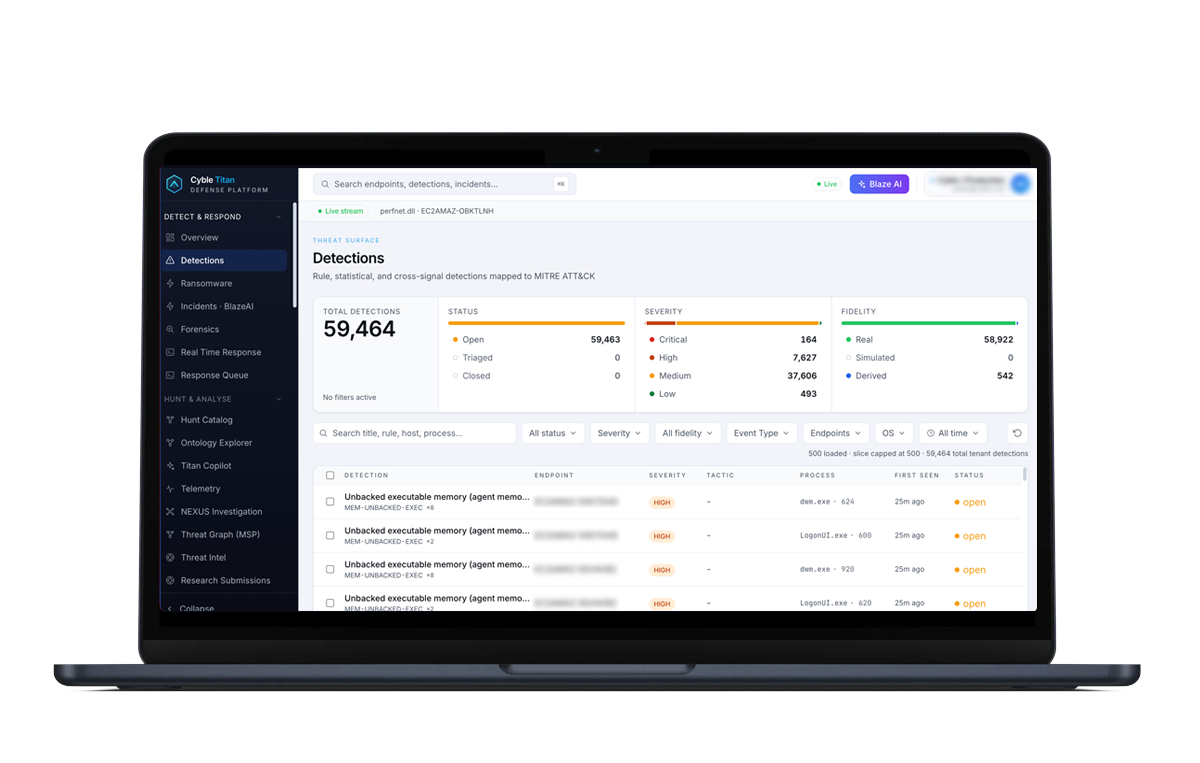
See Cyble In Action to understand how it unifies cloud workload security, endpoint detection, and external threat intelligence in one platform.
The Vendor Landscape: How Leading EDR Solutions Handle Cloud Workloads
The major EDR vendors have extended their platforms toward the cloud, and their approaches reflect different tradeoffs. These differences matter when you map tools to your workload mix and risk profile.
CrowdStrike Falcon Cloud Security offers a unified agent for endpoint and cloud workloads, using the same Falcon sensor across laptops, servers, and cloud VMs. Its strength lies in consistency across one agent, one console, and one detection engine. Agent-based coverage still struggles with serverless functions and ephemeral containers. Cyble differentiates by extending visibility beyond managed endpoints into dark web activity, ransomware and threat actor chatter, and supply chain risk that endpoint-centric tools cannot reach.
Microsoft Defender For Cloud integrates deeply with Azure and provides native coverage for Azure VMs, containers, and serverless functions. Organizations standardized on Microsoft benefit from tight integration. Multi-cloud coverage across AWS and GCP remains less mature than Azure-native capabilities.
SentinelOne Singularity Cloud offers agentless options alongside its agent-based EDR to address the ephemeral workload gap. Its strength comes from flexibility, with agent-based coverage for persistent workloads and agentless coverage for serverless and containers. Agentless coverage usually provides less granular runtime data than agent-based approaches.
Palo Alto Cortex XDR emphasizes network-based detection alongside endpoint telemetry and correlates across network, cloud, and endpoint domains. Its strength is broad visibility across the attack surface. The platform often requires significant tuning and expertise to deliver full value.
The Remaining Gap: External Threat Intelligence
External threat intelligence remains a gap across these platforms. They typically do not monitor the dark web for credentials, track initial access brokers discussing your infrastructure, or detect a phishing kit being assembled against your login page. That external visibility fills a missing piece in cloud workload security and represents a key Cyble differentiator. With 70+ native integrations into SIEM, SOAR, and ticketing platforms, Cyble acts as a force multiplier for the existing stack.
How To Evaluate EDR For Cloud Workloads: A 7-Step Checklist
-
Define Your Workload Types And Coverage Requirements. Inventory your cloud estate across VMs, containers, Kubernetes clusters, and serverless functions. This inventory shows which workloads need agent-based coverage and which require agentless or cloud-side monitoring, setting up the next step on deployment.
-
Assess Agent Deployment And Management Overhead. Decide how you will deploy agents and whether you can bake them into golden images and CI/CD pipelines. Plan for autoscaling events and calculate per-agent cost at your expected scale, using the inventory from step one as input.
-
Verify Container And Kubernetes Support. Confirm that the solution provides per-container context rather than only host-level monitoring. Check detection for orchestration-layer threats and support for your Kubernetes distribution, including EKS, AKS, or GKE.
-
Check For Cloud Context And Provider Integration. Validate that the solution pulls asset inventory and metadata from AWS, Azure, and GCP APIs. Confirm that it enriches detections with IAM role, internet exposure, and data sensitivity context so analysts can prioritize incidents.
-
Evaluate Response Automation And SIEM/SOAR Integration. Review the platform’s ability to contain threats automatically. Confirm integration with your SIEM and SOAR workflows so detections feed existing processes instead of creating another silo.
-
Consider The Vendor’s Threat Intelligence And External Visibility. Examine how the vendor monitors external threat sources such as dark web markets, ransomware leak sites, and initial access broker activity. Check whether the platform can connect an internal detection to an earlier external credential dump.
-
Run A Proof Of Concept In Your Environment. Vendor demos present ideal conditions. Test the solution against your actual workload mix, including ephemeral containers and serverless functions. Measure detection quality, false positive rates, and performance overhead before committing.
Common Pitfalls To Avoid In Cloud EDR Strategies
-
Assuming EDR Covers All Cloud Workloads. EDR protects persistent endpoints, while containers, Kubernetes, and serverless functions need cloud-native protections. This misconception often leads teams to ignore serverless entirely, creating a blind spot.
-
Ignoring Serverless. Organizations that run AWS Lambda, Azure Functions, or Google Cloud Functions without dedicated coverage accept a gap that agent-based EDR cannot close.
-
Neglecting To Integrate EDR With CNAPP Or CSPM. Runtime detections without posture and identity context tell only part of the story and slow down incident triage.
-
Choosing A Tool Without Cloud Context. A detection on a VM matters only when you understand what that VM can access. Cloud context such as IAM role, network exposure, and data sensitivity determines severity.
-
Treating EDR As A Replacement For CSPM. EDR misses overly permissive IAM roles, exposed storage buckets, and insecure network configurations, which posture tools catch.
-
Forgetting External Threat Intelligence. Warning signs of a cloud breach often appear externally first, such as credentials on a dark web market or an access broker listing your VPN for sale. Internal tools cannot see these signals without integrated threat intelligence.
Frequently Asked Questions
Is EDR Enough For Cloud Security?
EDR protects persistent endpoints such as laptops, servers, and cloud VMs that behave like traditional servers. It cannot reliably cover containers, Kubernetes orchestration, or serverless functions and does not detect cloud misconfigurations or identity risks. Comprehensive cloud security pairs EDR with CWPP and CNAPP capabilities for workload protection, posture management, and identity context. Organizations that rely on EDR alone leave much of their cloud attack surface unmonitored.
What Is The Difference Between EDR And CNAPP?
EDR is agent-based software that monitors individual endpoints for threats. CNAPP is a platform category that consolidates CSPM, CWPP, CIEM, and often container security and IaC scanning into one system with a shared data layer. EDR functions as a component of CWPP, which in turn forms a pillar of CNAPP. EDR protects devices, while CNAPP protects the entire cloud estate, including posture, identity, and runtime workloads. Most organizations deploy both.
Can EDR Protect Serverless Functions?
Traditional EDR cannot protect serverless functions such as AWS Lambda because no persistent operating system or host exists for agent installation. A function that executes for milliseconds and then disappears gives an agent no chance to enroll, build context, or observe behavior. Serverless protection relies on cloud-side telemetry, API monitoring, and identity context, which CWPP and CNAPP tools provide. Evaluating a vendor’s serverless coverage specifically forms a critical part of any cloud workload security assessment.
How Do I Choose An EDR For AWS, Azure, Or GCP?
Start by inventorying your workload types across each cloud provider. Evaluate whether the solution supports agent-based coverage for VMs, agentless or lightweight options for containers and serverless, and integration with each provider’s APIs for asset inventory and metadata enrichment. Confirm that the solution provides per-container context instead of only host-level monitoring and that it supports your Kubernetes distribution. Run a proof of concept in your environment and test detection quality on ephemeral workloads as well as long-lived VMs before making a final decision.
What Is The Best EDR For Cloud Workloads?
The right choice depends on your workload mix, cloud providers, and existing security stack. For organizations that need unified visibility across cloud workloads, endpoints, and external threat surfaces, Cyble’s AI-native platform, which combines EDR (Cyble Titan), CSPM (Cyble Strato), and threat intelligence (Cyble Vision) on a single data layer, delivers correlated detection that point solutions cannot match. The dark web visibility mentioned earlier and the broad integration ecosystem help connect internal cloud detections to external threat context. Capabilities vary by subscription tier and environment, so teams should validate results in a proof of concept against their specific workload mix.
Conclusion: Closing The Cloud Workload Visibility Gap
EDR for cloud workloads extends endpoint security into a more complex environment where containers, Kubernetes, and serverless functions introduce new blind spots. Attackers actively exploit these gaps. A layered approach that combines EDR for persistent endpoints, CWPP and CNAPP for cloud-native workloads, CSPM for posture, and external threat intelligence for early warning creates a more complete defense.
Manually stitching these layers together often creates gaps and delays. Cyble unifies them on a single AI-native platform, as described in the integration section, so a cloud misconfiguration, an endpoint alert, and the dark web activity mentioned earlier resolve into one correlated incident instead of several disconnected alerts. This unified view gives security teams the external context that internal tools alone cannot provide.
Request a personalized demo to see what Cyble can uncover across your cloud workloads, endpoints, and external attack surface.