

Key Takeaways
-
Endpoint detection and response (EDR) continuously collects endpoint telemetry, applies behavioral analysis, and enables investigation and response beyond prevention-only tools.
-
Core EDR capabilities include continuous monitoring, behavioral detection, threat investigation, automated and manual response, forensic reconstruction, and integration with security information and event management (SIEM) and security orchestration, automation and response (SOAR) workflows.
-
EDR follows a detection-to-response lifecycle: telemetry collection, behavioral analysis against baselines, detection and alerting, process-tree reconstruction, MITRE Adversarial Tactics, Techniques, and Common Knowledge (ATT&CK) mapping, and response actions.
-
EDR has structural limitations including alert volume, unmanaged and Internet of Things (IoT) device blind spots, encrypted traffic gaps, and an external visibility gap that endpoint telemetry alone cannot close.
-
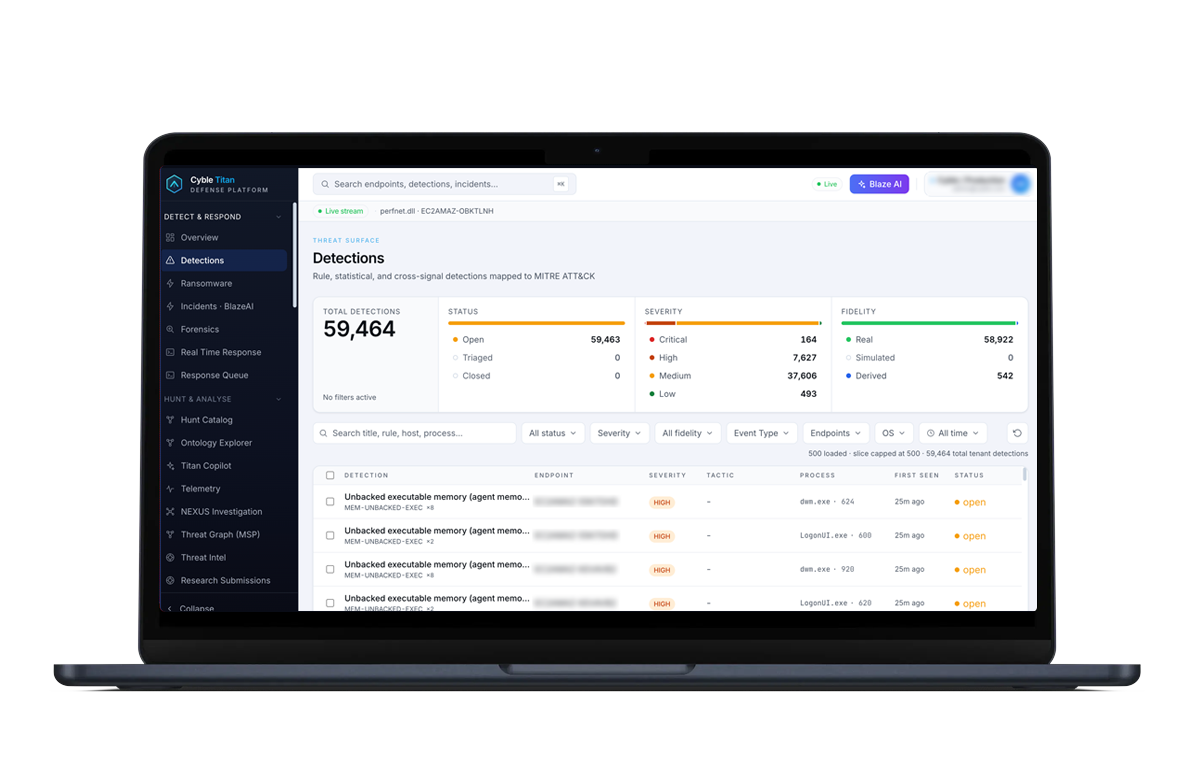
Cyble Titan is an artificial intelligence (AI) native EDR built on the Blaze AI platform that correlates endpoint alerts with external threat intelligence for unified incident context.
Talk to Cyble about your EDR requirements
What Does EDR Do?
EDR platforms deliver six core capabilities.
-
Continuous endpoint monitoring. The agent collects telemetry from every instrumented device and runs continuously instead of on a scheduled scan cycle.
-
Behavioral and anomaly detection. The platform flags suspicious actions, not just known-bad files, so novel malware and living-off-the-land techniques become visible.
-
Threat investigation and alert triage. Analysts receive event history, process context, and timeline data that help them decide whether a detection represents a real incident.
-
Automated and manual response. The platform can isolate a compromised device, terminate a process, or quarantine a file, either by playbook or at an analyst’s decision.
-
Forensic data collection and reconstruction. EDR preserves the evidence trail required for post-incident analysis, regulatory disclosure, and legal proceedings.
-
Integration with SIEM and SOAR workflows. The platform delivers enriched detections into the tools analysts already use, without forcing them into a separate console.
How EDR Works In Practice
EDR operates as a detection-to-response lifecycle, with each stage building on the previous one.
-
Telemetry collection. A lightweight agent installed on the endpoint captures raw event data, including process creation events, file modification records, network connection logs, and registry changes. Telemetry is the raw event data an endpoint agent collects. Without it, no subsequent analysis is possible. A typical endpoint generates tens of thousands of events per minute, so cloud-based backends handle the heavy correlation work instead of the agent.
-
Behavioral analysis against baselines. Behavioral detection focuses on suspicious actions rather than known-bad files. The EDR platform compares observed activity against baselines for that device, user, and environment, using rule-based logic, machine-learning classifiers, and threat intelligence matching to surface anomalies.
-
Detection and alerting. When behavioral analysis identifies a pattern that crosses a detection threshold, the platform generates an alert. EDR correlation engines stitch together multiple low-severity detections into a unified incident with an aggregate severity score. This reduces the number of individual alerts an analyst must review.
-
Investigation with process-tree and parent-child relationship reconstruction. A process tree is the parent-child chain of processes spawned on an endpoint. A parent-child relationship identifies which process created a child process. Reconstructing this chain helps analysts determine whether a suspicious process was launched by a legitimate application or by an attacker’s payload.
-
MITRE ATT&CK technique mapping. MITRE ATT&CK provides a globally accessible knowledge base of adversary behaviors organized into tactics and techniques. EDR platforms map detections to specific technique identifiers, such as T1059.001 for PowerShell execution. Analysts can then see which stage of an attack they are observing and what containment logic applies.
-
Response. Depending on severity and the organization’s playbooks, response actions can include network isolation of the endpoint, process termination, file quarantine, and rollback of file system changes where supported. Actions may be manual, semi-automated, or fully automated.
Operational Walkthrough Of A Phishing Attack
A phishing document opened by a user triggers a clear EDR sequence. The EDR agent observes the word-processing application spawning a command interpreter, which then spawns a scripting engine with an encoded command-line argument. The process tree, word processor to command interpreter to scripting engine, is reconstructed in real time.
The encoded argument decodes to a download cradle that fetches a second-stage payload from an external host. Network telemetry confirms an outbound connection from the scripting engine to that host, followed by periodic beaconing. The detection maps to MITRE ATT&CK T1059.001 (Command and Scripting Interpreter: PowerShell).
The analyst reviews the reconstructed chain, confirms the behavior is malicious, and isolates the endpoint. Network connectivity is severed except for the EDR management channel, and the malicious process tree is terminated.
EDR, EPP, XDR, MDR, And Antivirus: A Buyer’s Map
These categories form a map for buyers who want to see which layer is missing from their current security stack. For detailed named comparisons, see Cyble’s comparison hub.
EDR vs Antivirus
Traditional antivirus relies on signature-based detection, matching files against a database of known-bad hashes and byte patterns. It reacts to known threats and cannot detect what it has never seen. Polymorphic malware, fileless attacks, and living-off-the-land techniques exposed this gap. EDR adds behavioral detection, continuous telemetry, investigation capability, and active response, which antivirus does not provide.
EDR vs Endpoint Protection Platforms
An endpoint protection platform (EPP) focuses on prevention. It combines signature-based malware detection, behavioral heuristics, application control, device control, and web filtering into a single agent designed to stop threats before they execute. EPP struggles with threats it has not seen before. EDR assumes prevention will sometimes fail and focuses on detection, investigation, and response for activity that bypasses preventive controls. EPP and EDR work best together, and many vendors ship unified agents that combine both.
EDR vs Extended Detection And Response
Extended detection and response (XDR) expands the EDR model by ingesting telemetry from network devices, email gateways, cloud workloads, and identity providers. It correlates signals across domains to detect attacks that no single data source would reveal. Modern cyberattacks rarely remain confined to a single endpoint. An intrusion may begin with a phishing email, progress through a compromised identity, and then move laterally across systems and cloud services. XDR addresses that multi-domain reality. Buyers should ask which data sources a platform ingests natively and which cross-domain response actions it can execute.
EDR vs Managed Detection And Response
Managed detection and response (MDR) is a service delivery model. An MDR provider operates endpoint, and sometimes network and cloud, detection tools on the customer’s behalf. The provider staffs the SOC, triages alerts, investigates likely incidents, and notifies the customer when action is required. The MDR market grew from the EDR adoption problem, where organizations bought EDR and then realized they lacked staff or skills to run it effectively. MDR is the service, and EDR is one of the core technologies that service runs on.
Where EDR Falls Short
EDR is a necessary control, yet it does not provide complete defense. The limitations below are structural and apply across vendors.
-
Alert volume and the analyst dependency problem. Alert fatigue in the SOC occurs when analysts face a high volume of security alerts, many of them false positives or low priority. EDR often generates detections faster than teams can triage them. For teams trying to sustain 24/7 monitoring with limited headcount, the core challenge becomes decision fatigue, inconsistent triage, and missed escalation windows.
-
Unmanaged and IoT devices. EDR sees only devices with an installed and functioning agent. Internet of Things (IoT) devices, legacy systems, operational technology, and bring-your-own-device endpoints that cannot support an agent remain invisible.
-
Encrypted traffic blind spots. EDR observes what happens on the device, not the content of encrypted network traffic between hosts. Lateral movement and command-and-control activity over encrypted channels may appear only as network connection events, without payload context to confirm malicious intent.
-
EDR without a team becomes shelfware. Companies running EDR without dedicated monitoring staff often accumulate a backlog of alerts that never receive review. The tool detects activity, but the analyst response step is missing.
-
The external visibility gap. Endpoint telemetry alone cannot see a credential dump being sold on a dark web market. It cannot see an initial access broker listing virtual private network (VPN) access to your organization. It cannot see a ransomware leak site publishing your files or a lookalike domain being assembled against your login page. This activity exists entirely outside the perimeter that EDR monitors, so an organization that relies only on endpoint telemetry lacks visibility into the pre-attack activity that often precedes a breach.
See how Cyble Titan closes the external visibility gap
How Microsoft Defender Fits Into EDR Decisions
Many organizations encounter Microsoft Defender for Endpoint first because it ships with common Microsoft 365 enterprise licenses. This makes its role in the EDR landscape a practical question for most security teams.
Microsoft Defender for Endpoint is an EDR product. It collects endpoint telemetry, applies behavioral detection, provides investigation tooling including process-tree reconstruction and threat hunting via a query interface, and supports response actions such as device isolation and process termination. For organizations already licensed for Microsoft 365 at enterprise tiers, Defender for Endpoint is included at no additional marginal cost, so it often becomes the default starting point.
The boundary of its visibility sits at the endpoint. Like other EDR products, it does not observe credential exposure on dark web markets, access broker listings, or external phishing infrastructure. Teams evaluating Defender for Endpoint should assess it against the full set of EDR capabilities described earlier, including telemetry retention depth, threat hunting capability, and the analyst resources required to operate it effectively.
Representative Examples Of EDR Platforms
The EDR market includes both standalone specialists and platform vendors that bundle endpoint detection into broader suites. Representative examples include Microsoft Defender for Endpoint, Cyble Titan, CrowdStrike Falcon, Sophos EDR, IBM QRadar EDR, FortiEDR, Carbon Black EDR, Kaspersky Next EDR Expert, and Trellix EDR with Forensics.
Cyble Titan is Cyble’s AI-native EDR, built on the Blaze AI platform, and is the option discussed in detail in this article. For guidance on evaluating these tools against your requirements, see Cyble’s guide to evaluating EDR vendors. The most meaningful differences involve telemetry retention depth, threat-hunting tooling, and the analyst capacity each platform requires.
How EDR Works With Threat Intelligence
Endpoint telemetry explains what happened on the device. It does not explain who obtained access, how they obtained it, whether credentials were purchased from a broker, or whether more activity is likely. External cyber threat intelligence (CTI) supplies that context.
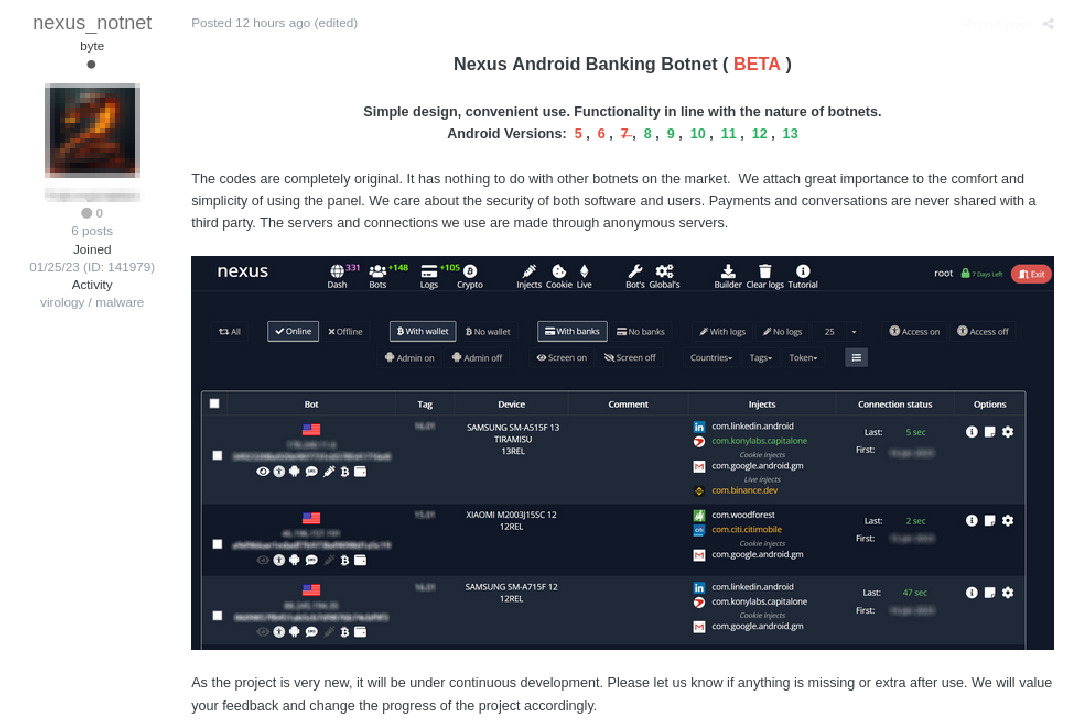
Cyble Titan is AI-native EDR that runs on the same Blaze AI platform and shared data layer as Cyble’s external intelligence capabilities. An endpoint alert can connect directly to the credential dump or initial access broker listing that preceded it, instead of being investigated in isolation. An indicator of compromise (IOC) found on an endpoint can be correlated against dark web market activity, ransomware group profiles, and attack surface management (ASM) findings without manual pivoting between tools.
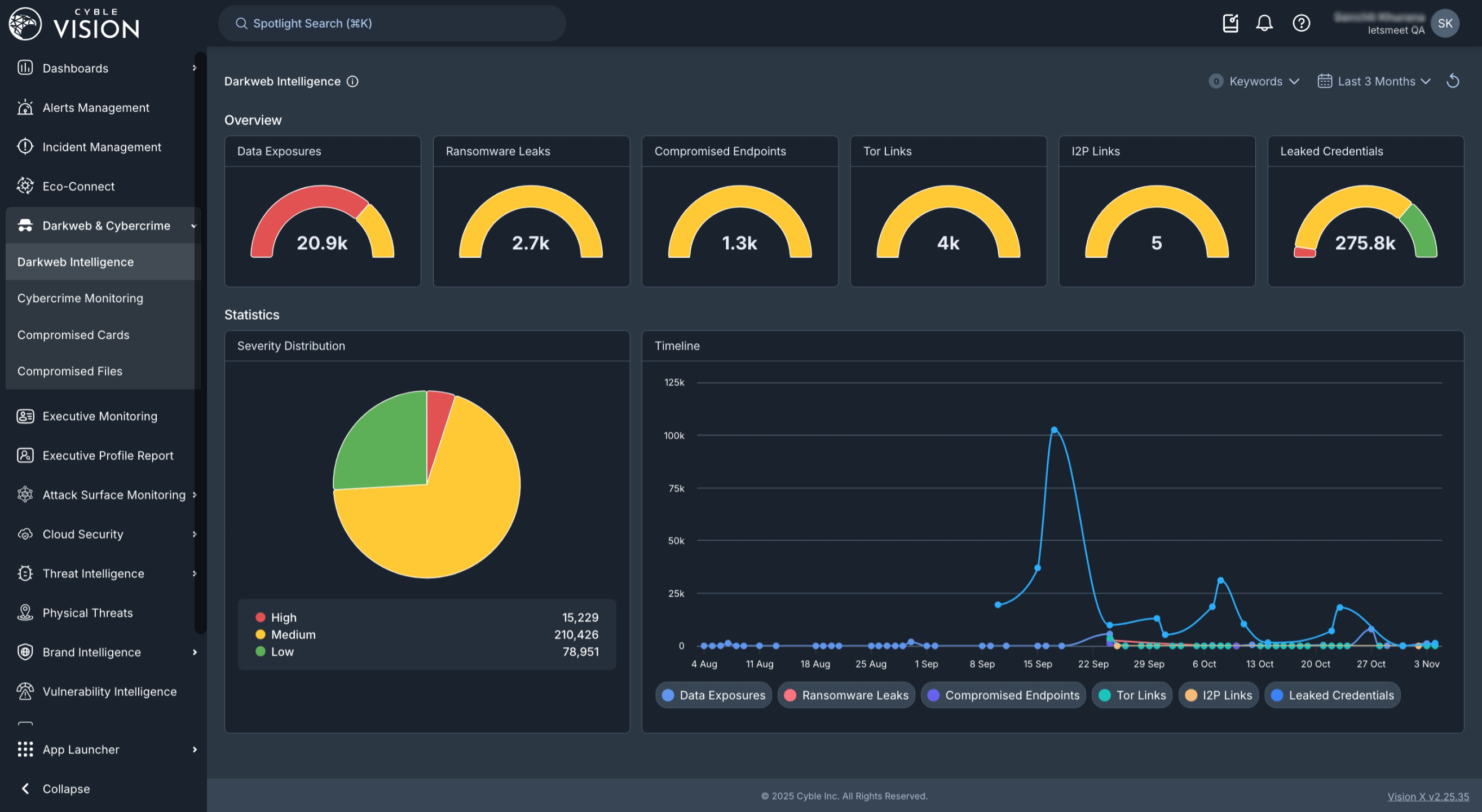
Digital risk protection (DRP) findings, such as a lookalike domain, a leaked credential set, or a phishing kit, appear in the same operational context as the endpoint detection they may have preceded. For SOC teams, this means the analyst reviewing an endpoint alert can also see the external context that explains it, including the breach the credentials came from, the broker who sold access, and the threat actor group known to buy from that broker. That enrichment happens at the data layer instead of through a fragile point integration.
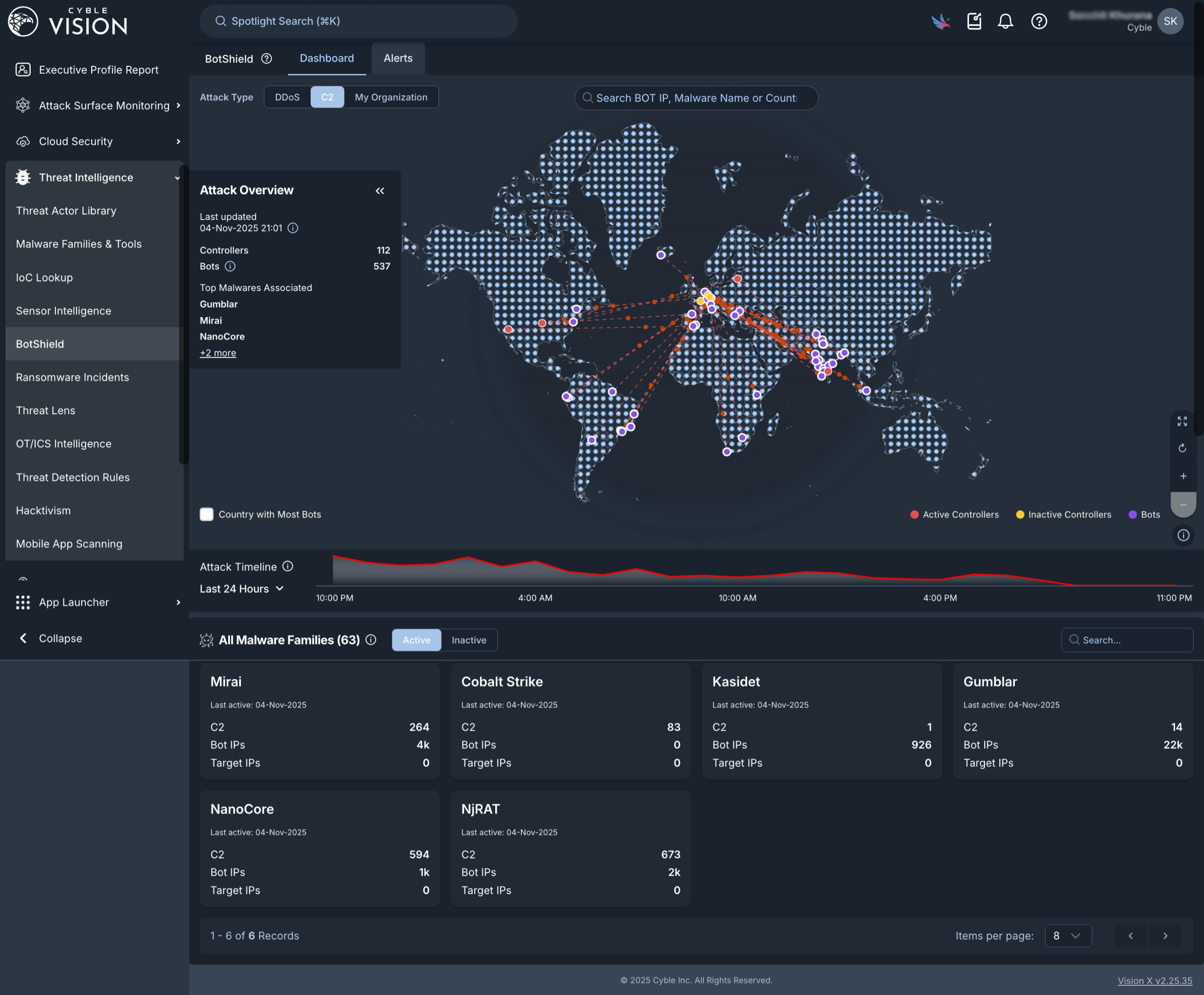
Cyble also provides application programming interface (API) and Trusted Automated eXchange of Indicator Information (TAXII) support, so threat intelligence can flow into existing SIEM and SOAR workflows alongside endpoint telemetry. For more detail on how Cyble’s threat intelligence integrates with endpoint and broader security operations tooling, see Cyble’s integrations page.
How Much EDR Costs And What Drives Pricing
EDR is commonly priced on a per-endpoint licensing model, though vendors may also charge per user, per server, per workload, per identity, or by telemetry volume. Rates vary by tier, contract length, and the capabilities included at each level. Several structural factors drive total cost beyond the headline per-endpoint figure.
Tier and module differences. Base tiers frequently include limited telemetry retention, sometimes as little as seven days, which is not enough to reconstruct intrusions where attacker dwell time lasts weeks. According to Mandiant’s M-Trends 2024 report, the global median dwell time is approximately 10 days, so even a two-week retention window may not capture the full attack chain. Threat hunting, extended retention, identity protection, cloud workload coverage, and managed response often appear as separate modules that add meaningful cost.
Minimum seat commitments. Enterprise EDR vendors typically require minimum seat counts for direct purchase. This affects procurement options for smaller organizations and can push them toward MDR services or managed partner channels.
Operational cost of analyst time. A platform with a slightly higher detection rate but heavier false-positive burden can cost more in analyst time than it saves in caught threats. The operational cost of running EDR, including alert triage, detection tuning, exclusion management, and investigation, is real even though it does not appear on the license invoice. Switching EDR platforms requires re-deploying agents, retraining analysts, and rebuilding custom detection exclusions. That three- to six-month disruption should factor into total cost of ownership.
MDR add-on costs. Organizations without analyst capacity to run EDR independently often add MDR services. These services add a per-endpoint cost on top of the underlying platform license. For a 500-endpoint mid-market organization, MDR total cost is typically significantly less than the annual cost of hiring two additional SOC analysts for after-hours coverage.
Frequently Asked Questions
What is the difference between EDR and antivirus?
Antivirus detects known malicious files by matching them against a database of signatures. It cannot detect threats it has never seen and provides no investigation or response capability beyond quarantining a file. EDR continuously collects endpoint telemetry, applies behavioral detection to identify suspicious activity regardless of signatures, reconstructs attack chains through process-tree analysis, maps detections to MITRE ATT&CK techniques, and enables active response including device isolation and process termination. Mature endpoint deployments typically run both.
What is the difference between EDR and EPP?
An endpoint protection platform is designed to prevent threats from executing. It combines signature detection, behavioral heuristics, application control, and device control into a prevention-first agent. EDR focuses on detection, investigation, and response and assumes that prevention will sometimes fail. EPP and EDR complement each other, and many vendors ship unified agents that combine both functions.
What is the difference between EDR and XDR?
EDR is scoped to the endpoint. XDR extends detection and response across multiple telemetry domains, typically endpoint, identity, email, cloud, and network, and correlates signals that no single source would reveal alone. XDR suits organizations that need to detect attacks moving across domains, such as a phishing email that leads to credential theft and lateral movement before any malware is written to disk. Buyers should verify which data sources a platform ingests natively and which cross-domain response actions it supports.
What is the difference between EDR and MDR?
EDR is a technology platform. MDR is a service that wraps detection and response technology with human analysts who triage alerts, investigate incidents, and notify the customer when action is required. MDR exists because many organizations purchase EDR and then discover they lack the staff or expertise to operate it effectively. An MDR service may run EDR, XDR, or a combination of endpoint and network tooling on the customer’s behalf.
Does Microsoft Defender count as EDR?
Yes. Microsoft Defender for Endpoint is a full EDR product. It collects endpoint telemetry, applies behavioral detection, provides process-tree investigation and threat hunting, and supports active response actions. For organizations already licensed at enterprise tiers, it is included at no additional marginal cost. Its limitations match those of other EDR platforms: it does not observe external threat activity such as credential exposure on dark web markets or access broker listings, and it requires analyst capacity to operate effectively.
How long does EDR take to deploy and become operational?
Agent deployment to a managed fleet typically takes one to two weeks for organizations with mature endpoint management tooling. After deployment, most organizations spend 30 to 60 days tuning detection exclusions for legitimate security tools and business applications. A full operational maturity timeline, from initial deployment to consistent, reliable analyst use, is typically 60 to 90 days. Switching EDR platforms mid-cycle adds three to six months of disruption for agent re-deployment, analyst retraining, and exclusion rebuilding.
When is human expertise still necessary with EDR?
EDR automates telemetry collection, behavioral analysis, and some response actions. Human expertise remains necessary for alert triage at scale, investigation of ambiguous detections, threat hunting for activity that did not trigger an automated rule, tuning detection logic to reduce false positives, and making containment decisions that carry business impact. Organizations without internal analyst capacity to run EDR should evaluate MDR services or AI-native platforms that reduce the manual triage burden.
Conclusion: Turning EDR Insight Into Action
The practical EDR decision centers on four questions. Does the organization have visibility into what is happening on every managed endpoint? Does it have the analyst capacity to triage and investigate what EDR surfaces? Does it have coverage across adjacent domains such as identity, email, cloud, and network? Does it have visibility into the external threat activity that precedes most breaches?
EDR addresses endpoint visibility. MDR addresses analyst capacity. XDR addresses multi-domain coverage. None of these layers close the external visibility gap described earlier, which endpoint telemetry cannot bridge by design.
Cyble Titan is AI-native EDR built on the Blaze AI platform and runs on the same shared data layer as Cyble’s external threat intelligence. An endpoint alert in Cyble Titan can correlate with the credential dump or access broker listing that preceded it by architecture. The internal event and the external context resolve into one correlated incident instead of two disconnected alerts in separate tools.
Organizations assessing their current endpoint security posture can start with a focused requirements exercise. Inventory what telemetry is currently collected, identify which devices carry no agent, assess analyst capacity against current alert volume, and determine whether external threat context is available to the team investigating endpoint detections. That assessment clarifies which layer is missing and whether EDR alone, EDR with MDR, or EDR correlated with external intelligence fits the environment.
Schedule a Cyble Titan walkthrough with our team