
Key Takeaways
-
Executive deepfake monitoring tracks synthetic audio, video, and imagery impersonating named leaders across digital channels and the dark web, closing the gap between detection and fraud windows.
-
Unlike brand monitoring, it focuses on impersonation of individuals using their voice, face, and public statements as training data for AI-generated attacks.
-
The footprint-reduction and verification components can be implemented this quarter; real-time detection requires a platform deployment that typically follows a proof of concept.
-
Warning signs such as unnatural lip-sync, mechanical blinking, and pressure to bypass normal processes, combined with first-hour response workflows, help teams act before financial harm occurs.
-
Cyble delivers purpose-built executive deepfake monitoring with a reported 95% signal-to-noise ratio, managed takedown, and integration into existing security workflows.
See executive deepfake monitoring in action
Why Executive Deepfake Monitoring Differs From General Brand Monitoring
Brand monitoring watches for impersonation of a logo, a login page, or a domain. Executive deepfake monitoring watches for impersonation of a person, using their face, voice, and public statements as raw material. The distinction matters operationally because the attack surface, detection signals, and remediation path all differ.
Public audio and video such as earnings calls, conference keynotes, podcast interviews, and social clips provide the training data attackers harvest. According to Adaptive Security’s July 2026 technical guide on deepfake creation, attackers assemble training datasets from LinkedIn photos, YouTube conference talks, podcast appearances, and earnings call recordings. McAfee research found that just three seconds of clean audio can produce an 85% voice match, and a few minutes of source material generate a clone that is nearly impossible to detect in a live call context. The executive’s own public footprint becomes the starting point for every attack.
The deepfake chief executive officer (CEO) fraud pattern sits squarely within the business email compromise (BEC) and wire fraud threat categories that the Federal Bureau of Investigation Internet Crime Complaint Center (FBI IC3) and the Cybersecurity and Infrastructure Security Agency (CISA) have documented and warned against. The FBI IC3’s July 2026 Public Service Announcement (PSA260720) warns that criminal actors deploy synthetic video and voice in live calls to impersonate executives, law enforcement, and other authority figures, and explicitly states that AI-generated content has advanced to the point that it is often difficult to identify. CISA has issued advisories categorizing AI-generated voice impersonation as an active threat targeting critical infrastructure and government personnel. The FBI classifies deepfake CEO fraud as one of the fastest-growing and highest-value fraud categories targeting US enterprises in 2026, with AI-powered BEC generating $2.77 billion in losses across 21,442 incidents in 2024.
See how Cyble monitors executive impersonation
How To Build the Three-Component Program Model
The program model that security practitioners and AI overviews consistently surface has three components: digital footprint reduction, real-time detection, and verification protocols. Each component addresses a different point in the attack chain. Together they form a defensible program that starts this quarter and matures as detection capabilities deploy.
Step 1: Digital Footprint Reduction for Executives
The first step inventories and reduces the executive’s harvestable public audio and video. The goal is a deliberate public presence that supports the business while removing material that no longer serves a purpose.
Attackers harvest training data from anywhere the executive’s voice or face appears publicly, so the audit needs to cover every surface that produces usable audio or video, plus the personal data that makes a pretext convincing:
-
Earnings call recordings on investor relations pages
-
Keynote and conference recordings on event sites and YouTube
-
Podcast and media interview recordings
-
Social video clips on LinkedIn, X, Instagram, and TikTok
-
Corporate headshots and biographical photographs
-
Internal webinar recordings posted publicly
-
Data broker listings containing personal information (PII) such as home address, family member names, and personal phone numbers
DeleteMe’s analysis of thousands of executive privacy profiles found that C-suite leaders are consistently 25 to 30% more exposed online than the general workforce, a differential that translates directly into targeting precision for attackers. Quarterly audits that cover old webinar recordings, conference panel appearances, investor call archives, and media interview recordings raise the cost and complexity of voice cloning by reducing the quality and availability of training data.
Step 2: Real-Time Detection Across High-Risk Surfaces
Continuous tracking across the surfaces where synthetic media and impersonation accounts appear keeps the discovery window aligned with the fraud window. A manual search cadence cannot close the gap between a discovery window measured in days and a fraud window measured in hours.
Because a targeting campaign moves across platforms before it reaches a live call, monitoring has to span every surface where synthetic media or an impersonation account can appear:
-
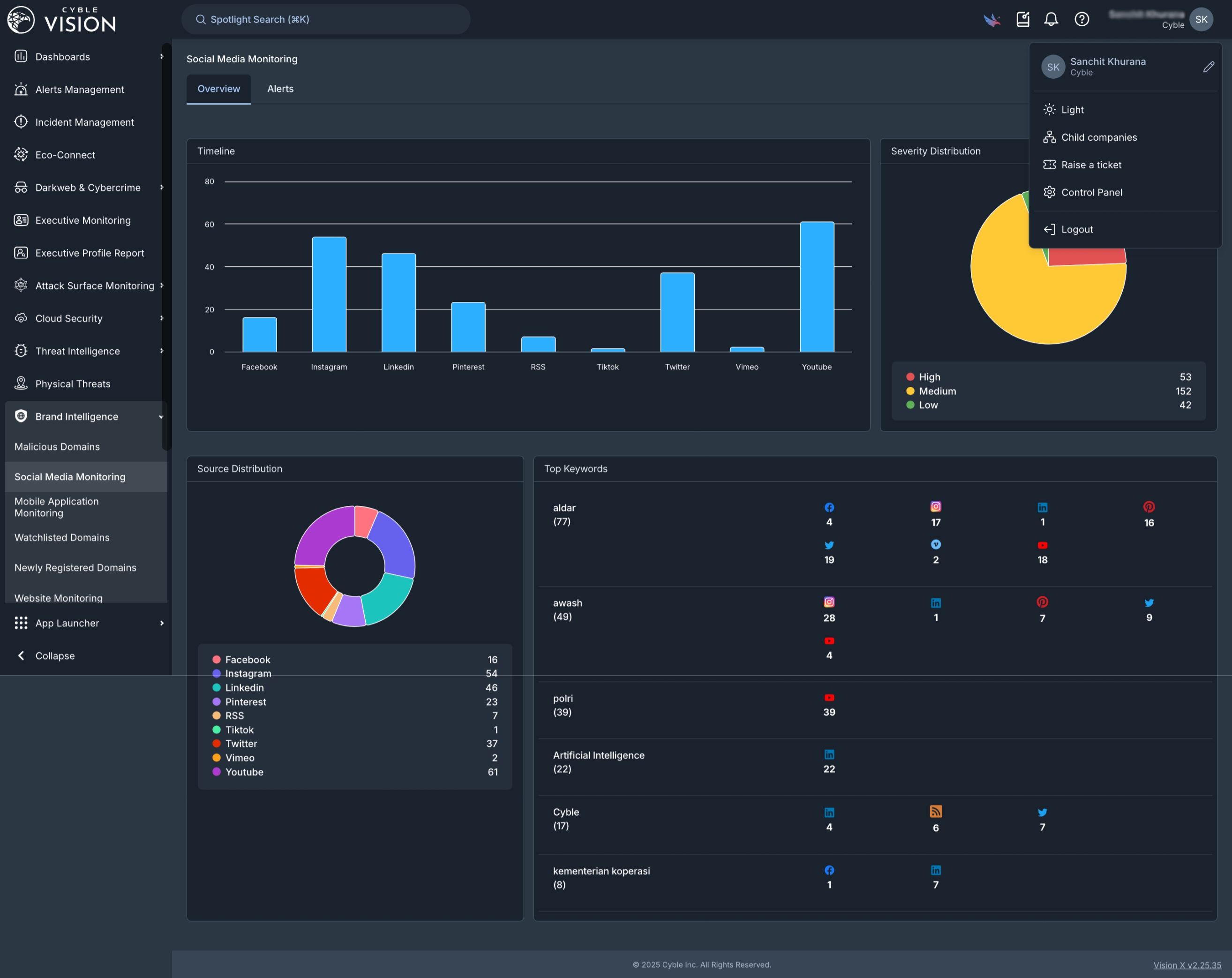
Social platforms such as LinkedIn, X, Facebook, Instagram, TikTok, and YouTube
-
Messaging apps such as WhatsApp, Telegram, and Signal
-
Video conferencing platforms for impersonation account activity
-
Third-party app stores for fake applications using the executive’s name or likeness
-
Lookalike domains registered to impersonate the brand or executive
-
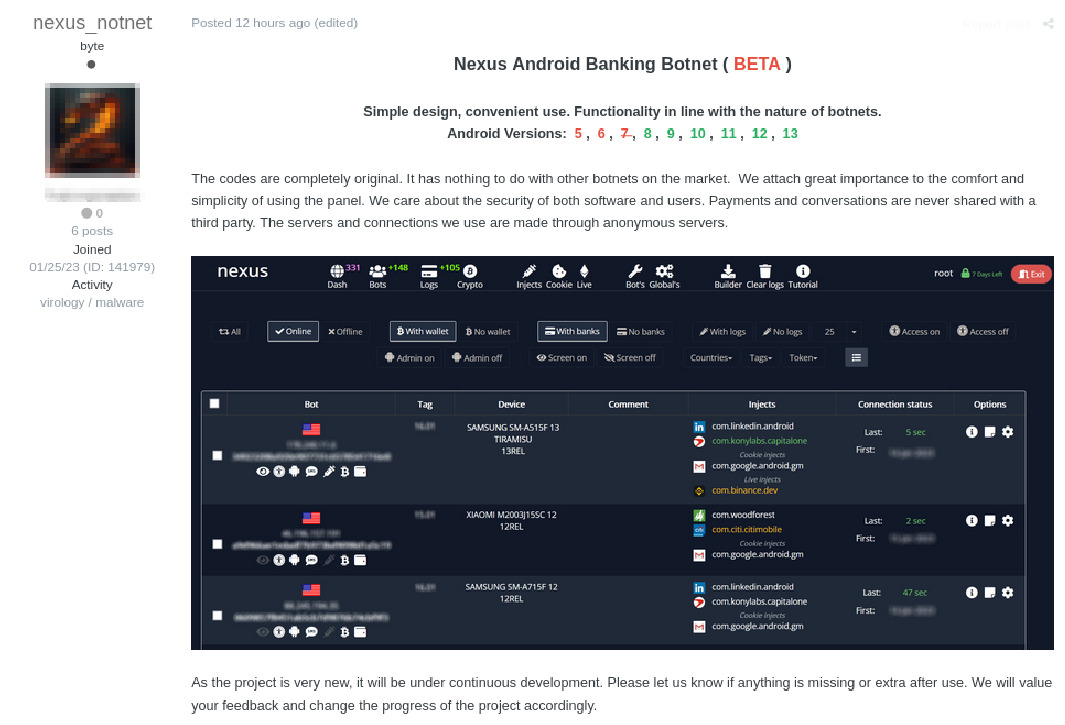
Dark web forums and marketplaces for synthetic media listings, executive credentials, and PII offered for sale
Deepfake fraud campaigns targeting US executives are frequently coordinated in closed Telegram channels and dark web forums before they surface as live attacks, with targeting packages assembled from breached credential data, social media profiles, and public records over a period of weeks. Detection at the planning stage, before a synthetic media asset is deployed, preserves a meaningful response window.
Step 3: Process and Verification Protocols for High-Risk Requests
Verification protocols provide the controls that still work when detection misses an asset. Across every documented deepfake near-miss such as Ferrari, WPP, and LastPass, the fraud stopped because someone performed an out-of-band verification step rather than because an algorithm flagged the call.
The core controls form a layered set of checks:
-
Multi-channel confirmation: because a voice or video instruction can be synthesized, no wire transfer above a defined threshold is authorized on that instruction alone, and a second channel must confirm it.
-
Time delays on urgent wire requests: a minimum waiting period applies to any transaction outside normal business operations, which disrupts the artificial urgency that deepfake fraudsters create.
-
Pre-agreed safe words or challenge questions: a verbal passphrase agreed face-to-face between finance team members and senior executives, never shared digitally, that a voice clone cannot bypass.
-
Dual authorization: independent sign-off from two separate individuals through two independent communication channels, so a single compromised channel cannot move funds.
-
Callback verification to a number already on record, never to a number supplied during the suspicious call, which prevents the attacker from controlling the verification path.
Talk to Cyble about verification-aware monitoring
What Are the Warning Signs of a Deepfake Video Call?
Verification protocols only help if the people on the call recognize what they are looking at. The following checklist covers the documented technical and behavioral indicators of a deepfake video call. No single indicator is definitive, and two or more from different categories justify ending the call and verifying through a separate channel.
-
Unnatural lip-sync or audio-video lag where mouth movements lead or trail the spoken words
-
Inconsistent lighting or shadows on the face that do not match the environment visible in the background
-
Blurred, shimmering, or hard-edged boundaries around the hairline, jaw, and ears
-
A face that does not blink, blinks mechanically, or blinks at an unnatural rate
-
Robotic or flat vocal cadence with missing breath sounds between sentences
-
Refusal or inability to turn the head past approximately 60 degrees, because most real-time face-swap models are trained on frontal footage and collapse at profile angles
-
Unusual urgency, demands for secrecy, or pressure to bypass normal approval processes
The last item is usually the strongest signal. According to Adaptive Security’s July 2026 deepfake detection framework, cyberattackers pair synthetic media with urgency, secrecy, or authority, such as a supposed chief financial officer (CFO) demanding a confidential transfer and insisting that normal verification is unnecessary. The social engineering, rather than the pixels, typically exposes the fraud first.
Practical real-time tests during a live call include asking the caller to turn their head to a full profile view, wave a hand slowly across their face, or hold up three fingers and move them side to side.
See live-call detection support in Cyble
How To Check If Someone Made a Deepfake of You or Your Executive
Spotting a live deepfake call is only half the problem, and teams also need to know whether a synthetic asset already exists. The following self-check process gives security teams and executive assistants a structured starting point. Treat it as a starting baseline; continuous monitoring is what replaces it at scale.
-
Search the executive’s full name alongside terms such as “deepfake,” “AI voice,” “voice clone,” and “interview” on major platforms including YouTube, X, TikTok, and LinkedIn.
-
Search for new accounts using the executive’s name, photograph, or likeness on social platforms and messaging apps.
-
Check third-party app stores, including non-official Android and iOS stores, for applications using the executive’s name, title, or company affiliation.
-
Monitor dark web forums and marketplaces for synthetic media listings, executive credentials, and PII offered for sale.
-
Set standing alerts for lookalike domains registered to impersonate the brand or executive and for impersonation accounts across major platforms.
-
Check data broker sites for exposed personal information including home address, family member names, and personal phone numbers that could be used to build a convincing pretext.
This process surfaces what already exists, but as noted earlier, the discovery window runs in days while the fraud window runs in hours. Congressional researchers estimate that fewer than 5% of voice clone scam victims ever report their losses, which means the official figures significantly undercount actual incidents. Continuous monitoring replaces the manual search cadence and closes the gap between when a synthetic media asset appears and when the organization knows about it.
How To Run the First-Hour Response Workflow After Detection
The first hour after detection determines whether the forensic trail is preserved and whether the fraud window closes before money moves. The following workflow assigns named owners and sequences the steps in the order they must occur.
-
Preserve evidence. Capture the synthetic media, the account URL, the platform, and the timestamps before anything is removed. A screenshot or screen recording is the minimum, and a hash of the file provides stronger evidence. Evidence preservation must happen before cleanup or the forensic trail disappears.
-
Alert security, legal, and communications simultaneously with a single named incident owner. Parallel notification prevents the multi-hour delay that sequential escalation creates.
-
Notify the impersonated executive and their assistant so they do not act on any fraudulent request that may already be in circulation, and so they can alert their own contacts.
-
Report the impersonation account or synthetic media to the hosting platform and begin takedown of the account, the lookalike domain, or the fake application. Detection and takedown should operate as one motion through a coordinated workflow.
-
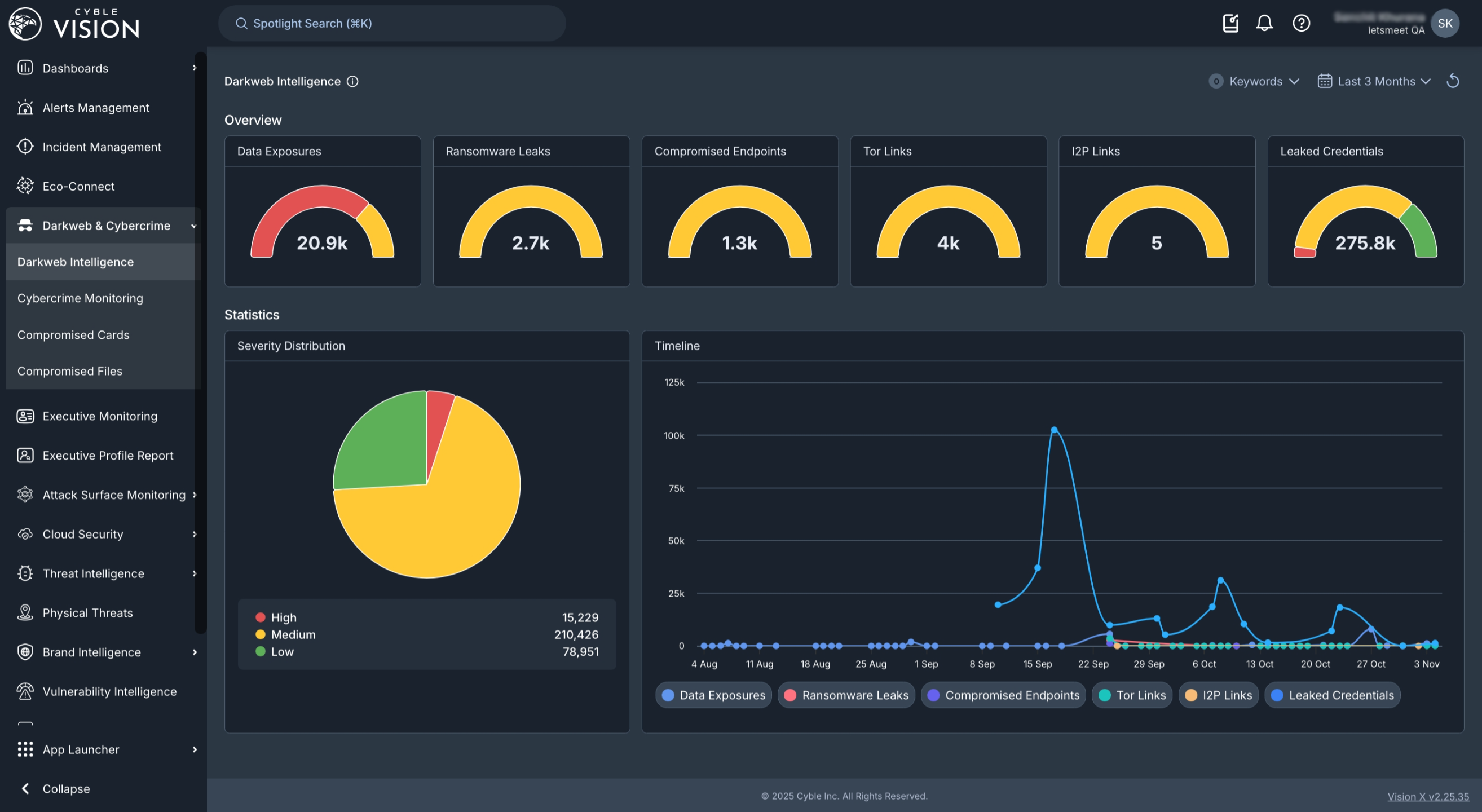
Assess whether credentials or PII tied to the executive have also surfaced on dark web forums or breach repositories, and reset authentication where needed. A deepfake campaign and a credential dump frequently represent the same incident viewed from two angles.
-
Document the timeline for regulatory and disclosure purposes, including the time of first detection, the time of internal notification, and the time of platform reporting.
Detection and takedown must come from one vendor on a shared data layer, so that related findings resolve into a single incident record rather than two parallel investigations.
Explore Cyble’s detection-to-takedown workflow
The Regulatory and Legal Context for Deepfake Impersonation
This section is informational only and does not constitute legal advice. Organizations should consult qualified legal counsel regarding their specific obligations.
The Federal Trade Commission’s (FTC’s) Rule on Impersonation of Government and Businesses took effect on April 1, 2024, and is codified at 16 Code of Federal Regulations (CFR) Part 461. It makes it unlawful to falsely pose as a government entity or a business, including impersonating a business’s officers or employees. On September 24, 2026, the FTC announced an Advance Notice of Proposed Rulemaking (ANPRM) seeking public comment on whether to update the rule to address online platforms’ role in promoting impersonation scams. The FTC received more than one million reports about imposter scams from consumers in 2025, with reported losses of nearly $3.5 billion.
At the state level, various states have enacted some form of deepfake law covering sexual deepfakes, election deepfakes, or AI voice cloning as of August 2026. Tennessee’s Ensuring Likeness Voice and Image Security Act (the ELVIS Act), effective July 1, 2024, was the first state law to extend a right of publicity specifically to AI simulations of a person’s voice. Pennsylvania’s Act 35 of 2025, effective September 5, 2025, created a criminal offense called “digital forgery” covering the creation or distribution of a forged digital likeness, including audio of a person’s voice, with intent to defraud. The federal TAKE IT DOWN Act, signed May 19, 2025, addresses nonconsensual intimate deepfakes and requires platforms to remove flagged content within 48 hours, though its scope covers intimate imagery rather than commercial fraud specifically.
For publicly traded companies, the Securities and Exchange Commission’s (SEC’s) cybersecurity incident disclosure rules, effective December 2023, require material cybersecurity incidents to be reported within four business days via Form 8-K. A material AI-enabled fraud incident, such as a deepfake-enabled executive impersonation causing significant financial harm, would be evaluated under the SEC’s existing materiality standards and anti-fraud provisions. As of 2026, the SEC has not adopted a standalone AI disclosure rule, so existing frameworks govern.
How Cyble Delivers Executive Deepfake Monitoring
Those legal obligations create a documentation and response burden that most teams cannot meet with manual processes. Cyble’s executive protection monitoring is built to close that gap.
Cyble’s executive protection monitoring focuses on this specific problem. It watches digital channels and the dark web continuously for executive deepfakes, identity theft, exposed personal data, compromised credentials, and threatening public mentions, covering the full surface that a targeting campaign touches before it becomes a live attack.
The platform runs on Blaze AI, Cyble’s agentic platform, with visibility into more than 15,000 darknet marketplaces and multilingual collection across more than 20 languages. That breadth would be useless without precision, so entity resolution runs at ingestion: a reference to an executive’s name in an obfuscated or foreign-language post is resolved to the correct individual before it becomes an alert. The result is monitoring scoped to the named executive, with alerts tied to that individual rather than to broad keyword matches, which is why Cyble reports a 95% signal-to-noise ratio.
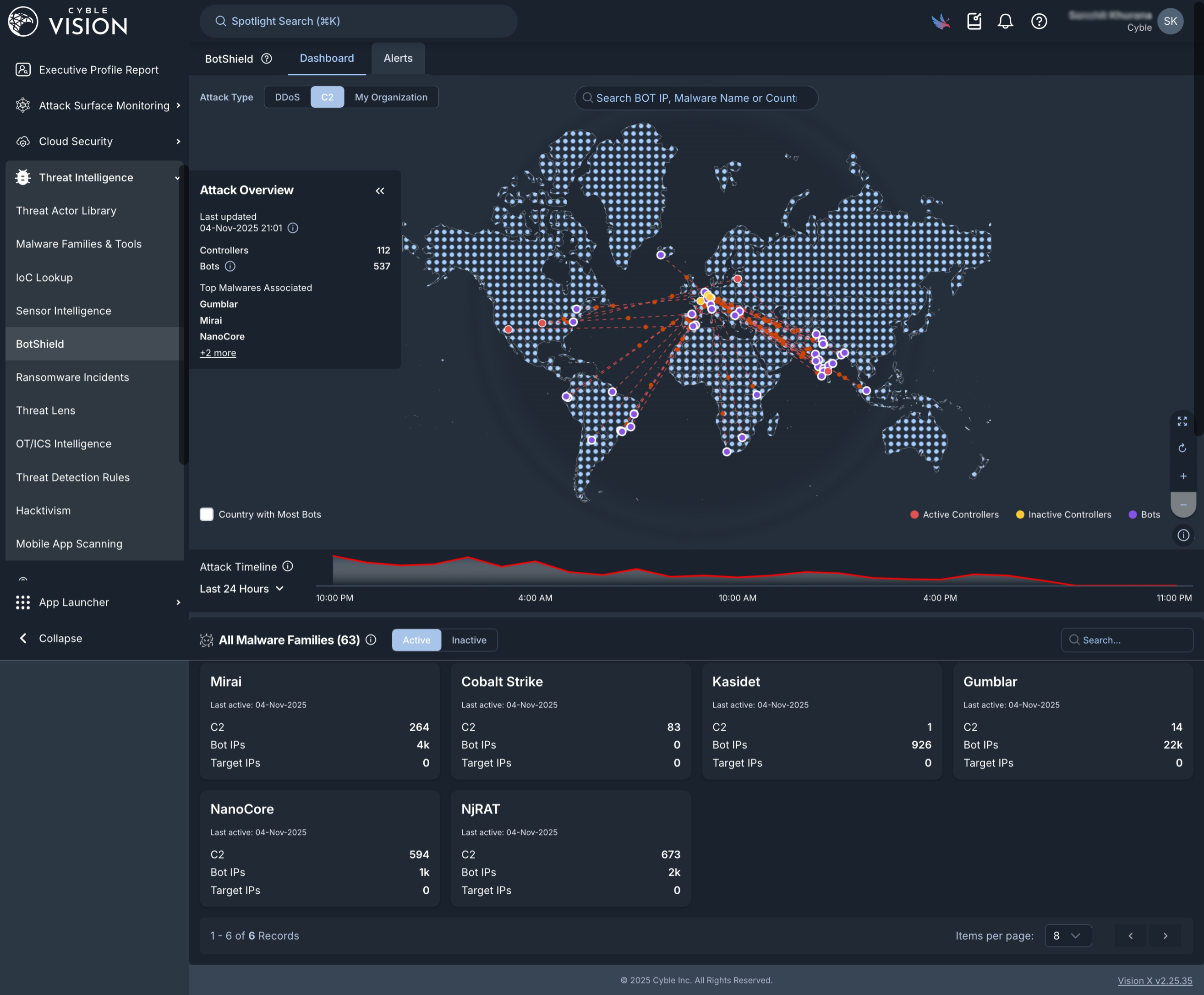
When detection surfaces a synthetic media asset, Cyble Hawk provides the forensic depth to trace the actors and infrastructure behind it. This investigative layer supports law enforcement, government bodies, and enterprise security teams after the first-hour workflow has contained the immediate fraud risk.
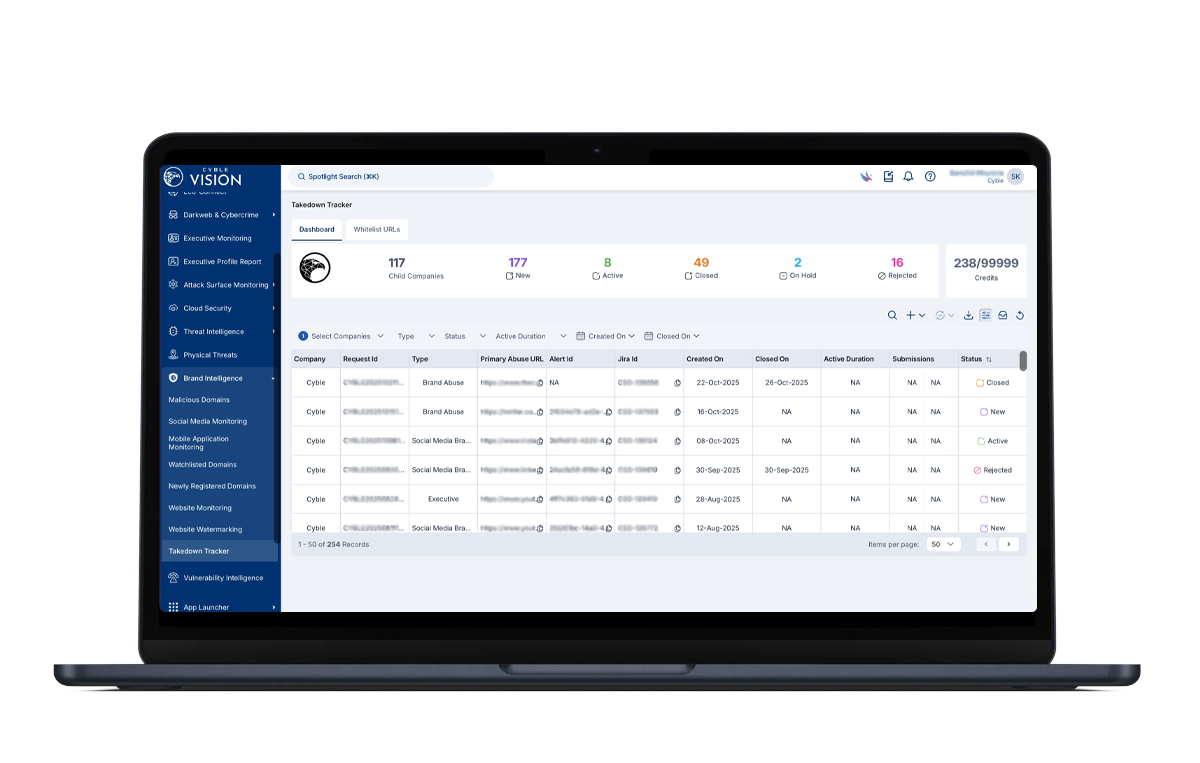
Native managed takedown removes impersonation accounts, lookalike domains, fake applications, and leaked data against service level agreements (SLAs), with a reported 98% takedown success rate. Detection and takedown come from one vendor on a shared data layer, so a phishing kit found by the fraud team and a credential dump found by the security operations center (SOC) are recognized as the same incident and resolved in one motion through a unified workflow.
Cyble’s application programming interface (API) and Trusted Automated Exchange of Indicator Information (TAXII) support push findings into existing workflows without requiring a new console. The platform integrates with more than 70 enterprise tools including Splunk, Microsoft Sentinel, IBM QRadar, Cortex XSOAR, and ServiceNow, so executive protection alerts arrive in the same environment where the SOC already works.
Cyble is a Challenger in the inaugural 2026 Gartner® Magic Quadrant™ for Cyberthreat Intelligence Technologies and a Strong Performer in the 2026 Gartner® Peer Insights™ “Voice of the Customer” for Brand Protection Software. On Gartner Peer Insights, Cyble holds a 4.8/5 overall rating from 49 verified reviews over the 18-month period ending November 30, 2025, and earned 40 badges across seven categories in the G2 Spring 2026 report.
Cyble statistics reflect internal telemetry. Capabilities, coverage, and service levels vary by subscription tier and region and should be validated against your specific environment.
Schedule a Cyble executive protection walkthrough
Frequently Asked Questions
What does executive deepfake monitoring actually monitor?
Executive deepfake monitoring tracks digital channels, including social platforms, messaging apps, video conferencing platforms, third-party app stores, lookalike domains, and dark web forums and marketplaces, for synthetic audio, video, and imagery impersonating named executives. It also monitors for exposed personal data, compromised credentials, and threatening public mentions tied to those individuals. The scope covers the full surface a targeting campaign uses, from the dark web coordination stage through to the live impersonation account or synthetic media asset.
How is it different from brand monitoring?
Brand monitoring watches for impersonation of a logo, a login page, or a domain. Executive deepfake monitoring watches for impersonation of a person, using their face, voice, and public statements as raw material. The detection signals focus on synthetic media artifacts, voice clone indicators, and impersonation accounts rather than lookalike domains and phishing pages, and the remediation path focuses on removing a person’s likeness rather than a brand asset. The two disciplines are complementary and work best on a shared data layer so a phishing kit and a credential dump tied to the same campaign are recognized as one incident.
How long does it take to stand up a program?
A basic program that covers digital footprint inventory, standing search alerts, and verification protocols can be documented and activated within a quarter. Continuous monitoring with real-time detection and managed takedown requires a platform deployment, which for an enterprise typically involves a proof of concept (POC) followed by a scoped rollout. The POC phase is where the first previously unknown findings typically surface, which also provides the evidence base for the budget conversation. The verification protocols and first-hour response workflow can be documented and trained independently of the platform deployment and should be.
Who inside the organization should own it?
Ownership typically sits with the chief information security officer (CISO) or head of corporate security, with the fraud lead and chief of staff as named stakeholders. The first-hour response workflow requires a single named incident owner with authority to activate security, legal, and communications simultaneously. The executive’s own assistant should be included in the notification chain so they do not act on a fraudulent request. For organizations with a dedicated fraud or brand protection function, that team should be integrated into the detection-to-takedown workflow so findings from both sides of the organization resolve into one incident record.
What do we do if we find a deepfake of our CEO?
Run the first-hour response workflow: preserve evidence before anything is removed, alert security, legal, and communications simultaneously with a single named incident owner, notify the impersonated executive and their assistant, begin platform takedown of the impersonation account or synthetic media, assess whether credentials or personal data have also surfaced, and document the timeline for regulatory and disclosure purposes. Avoid contacting the hosting platform or the attacker through any channel that could alert them before evidence is captured. If the synthetic media has already been used in a fraud attempt, notify the relevant financial institutions immediately to request a hold on any transfers that may have been authorized under the impersonation.
How do we measure whether the program is working?
The primary metrics are time to detect, which measures how long between a synthetic media asset appearing and the organization knowing about it, time to takedown, which measures how long between detection and removal, and coverage, which measures what percentage of the relevant surfaces are being monitored continuously. Secondary metrics include the number of previously unknown exposures surfaced during the initial footprint audit, the false-positive rate on detection alerts, and whether verification protocols are being followed consistently for high-value wire requests. A program that is working will surface findings internally before they are reported externally by a journalist, a regulator, or a defrauded counterparty.
Discuss your executive deepfake risk with Cyble