

Key Takeaways
- Executive impersonation attacks succeed when delays separate detection from enforcement and attackers act before takedowns complete.
- Effective programs monitor social platforms, video sites, messaging apps, lookalike domains, app stores, and dark web forums at the same time.
- Each impersonation type, including lookalike domains, fake profiles, deepfakes, and exposed personally identifiable information (PII), uses a specific enforcement channel and evidence package.
- Running enforcement channels in parallel shrinks attacker windows far more than sequential filing.
- Cyble Vision delivers AI-native monitoring with native managed takedown against service-level agreements (SLAs), with a reported 98% takedown success rate and visibility into more than 15,000 darknet marketplaces.
What Executive Impersonation Monitoring and Takedown Means
Executive impersonation monitoring and takedown combines two connected jobs. The first is continuous surveillance of digital channels, including social platforms, messaging apps, domain registries, app stores, and the dark web, for fake executive profiles, lookalike domains, deepfakes, and exposed executive PII. The second is a managed enforcement process that removes the content and verifies removal. One owner should run both halves because time lost in a handoff between a monitoring vendor and a separate takedown vendor becomes the attacker’s window to cause harm.
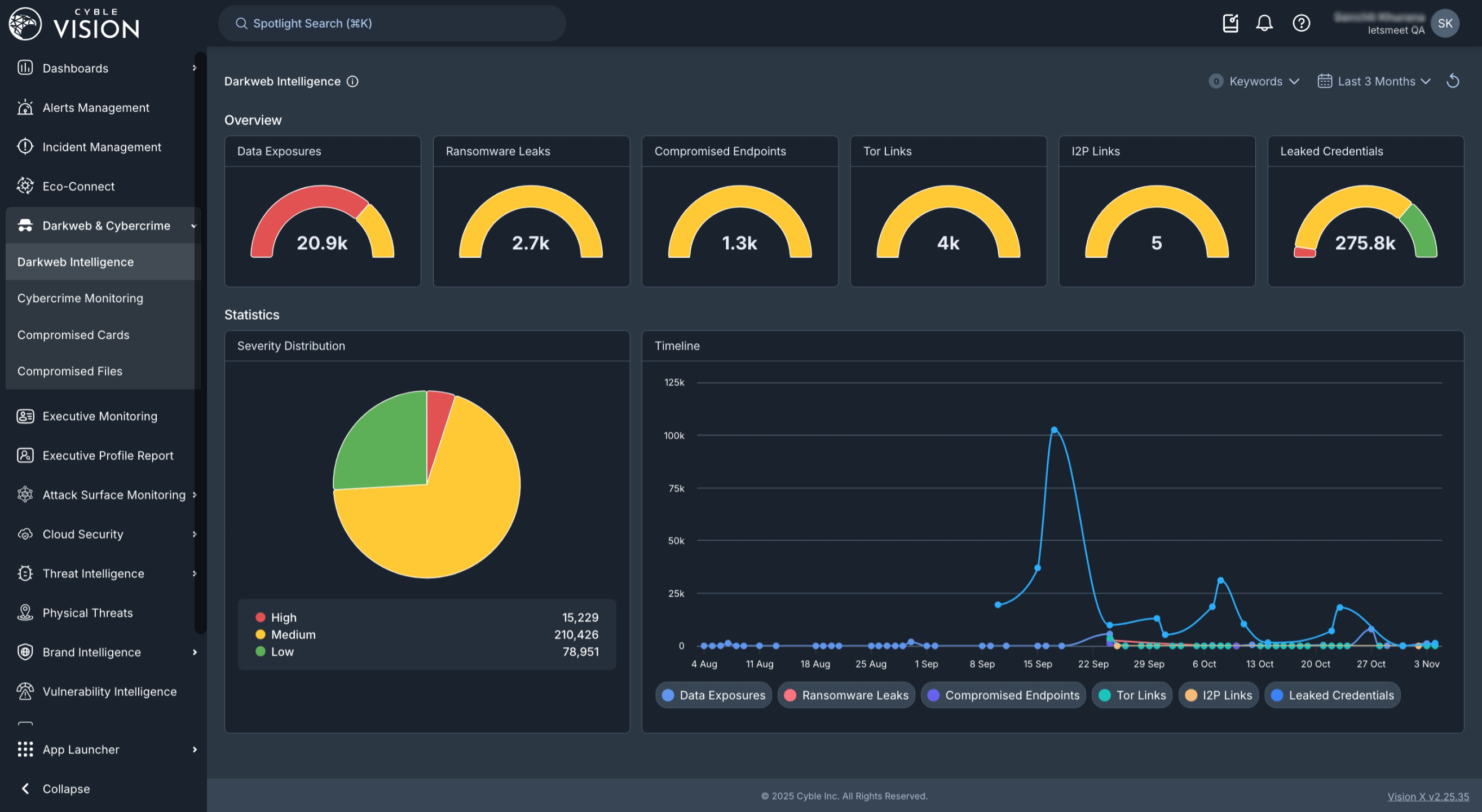
Where To Monitor And How To Prioritize The Executive Attack Surface
Effective monitoring starts with a clear executive roster. Programs track named executives along with aliases, name variants, maiden names, and common misspellings. Reference photographs and voice samples act as fingerprints for deepfake and voice-cloning detection.
Coverage has to span six channel types, and enforcement strength changes sharply by channel. Some platforms act in days through structured forms, while messaging apps often provide little third-party takedown capability and function mainly as fraud-detection surfaces.
- Social platforms (the dominant surface), using platform trust-and-safety impersonation forms. Fake social profiles account for the large majority of observed executive-impersonation alerts.
- Video platforms, using platform policy reporting. Video impersonation is the second-largest alert category.
- Messaging apps (Telegram, WhatsApp, WeChat), where third-party enforcement is limited and recovery-centric. Monitoring for outbound fraud campaigns provides the main protective value.
- Lookalike domains, where registrar abuse desks and hosting provider abuse desks handle suspension and content removal.
- App stores, where store developer policy and rights-holder complaint channels govern listing removal.
- Dark web forums and marketplaces, where credential reset and monitoring dominate, with takedown used when a specific marketplace listing is actionable.
The surface skew shapes program design. Outtake Labs’ analysis of 43,035 executive-impersonation alerts against 270 named executives found that 53.83% originated from social platforms and 35.05% from video and visual platforms. Together those two surfaces carried nearly 89% of all alerts, while lookalike domains accounted for only 3.57%. Programs built primarily around domain monitoring focus on the surface where a minority of impersonation activity occurs.
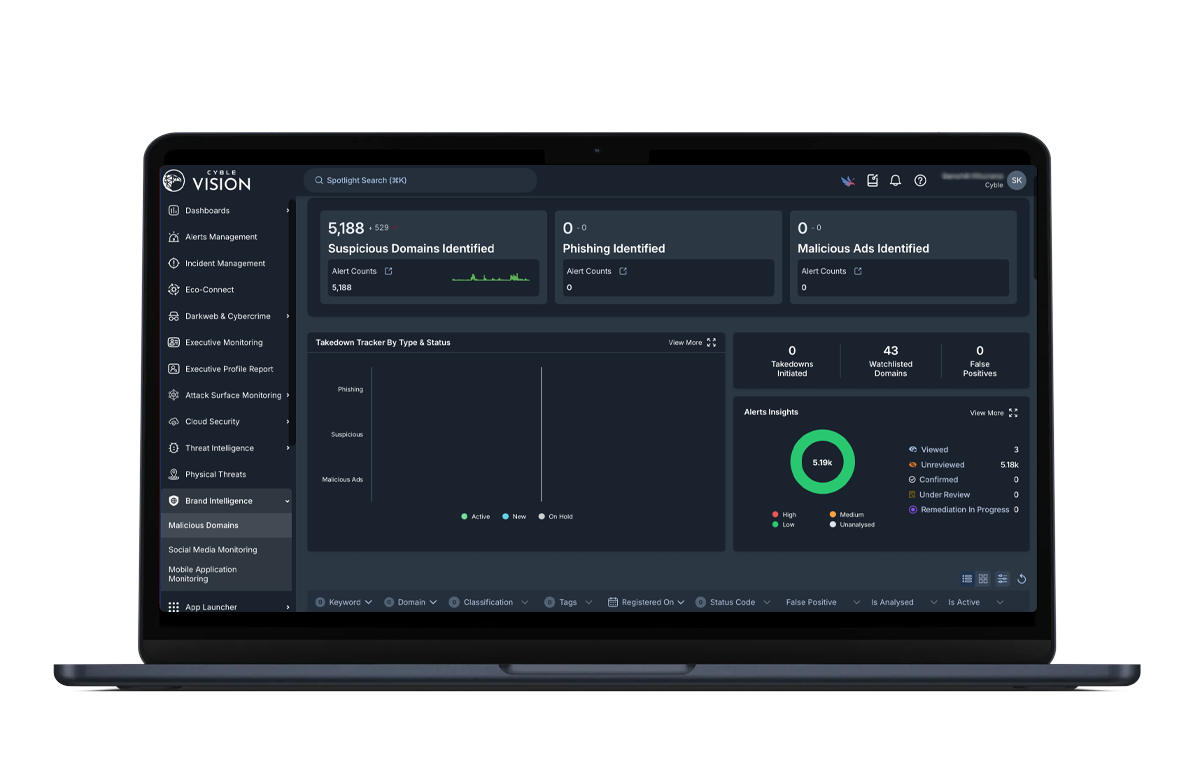
Knowing where to look only helps when alerts clearly map back to the right executive. Entity resolution, the automated process of determining that an obfuscated or variant reference such as a misspelled name in a foreign-language post refers to the same real-world individual, separates actionable alerts from noise at scale. Cyble Vision applies entity resolution before an alert is generated, so findings arrive already resolved to the correct executive rather than as raw name-match hits.
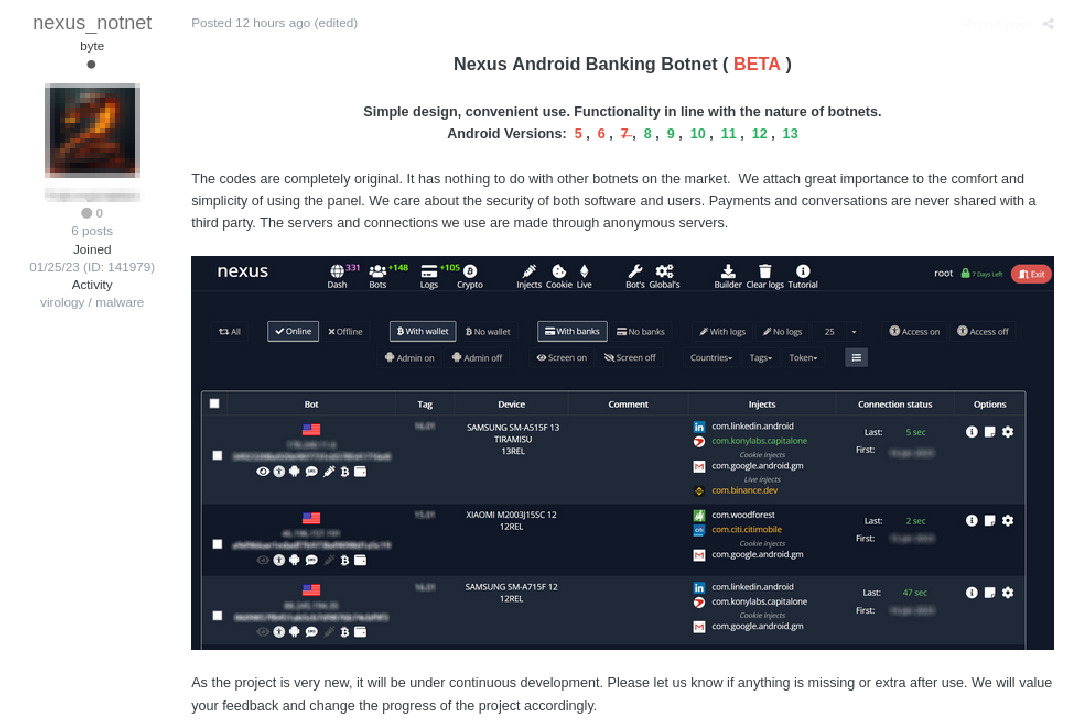
Impersonation Types That Require Takedown
Knowing what to watch is only half the job. Each impersonation type you see across those channels routes to a specific enforcement path and evidence standard.
- Lookalike domains are near-identical domains registered to impersonate a brand or executive. Route these to registrar abuse desks for domain suspension and to hosting provider abuse desks for content removal when the domain itself is legitimate but a phishing kit sits in a subfolder.
- Fake social and messaging profiles copy an executive’s name, photograph, and biography to deceive contacts. Route these to platform trust-and-safety impersonation forms and include trademark evidence when available.
- Deepfakes and voice cloning use synthetic audio or video of a real person generated by artificial intelligence (AI) in video calls, social posts, or audio messages to authorize transfers or spread disinformation. Route these to platform policy enforcement and pair that with rapid internal warnings to employees and customers.
- Dark web executive PII includes exposed personal data, compromised credentials, or broker-site listings targeting named executives. Route these to credential reset and ongoing monitoring, with takedown used when a specific marketplace listing is actionable.
The Enforcement-Channel Map: Who To File With And What They Require
Each enforcement channel expects different evidence and stalls for predictable reasons. Filing to the wrong channel or filing with incomplete evidence often delays a takedown. FINRA’s Imposter Website Takedown Toolkit and MITRE ATT&CK impersonation techniques provide additional reference for teams building evidence packages.
Registrar, the company that sells and administers a domain name.
- Requires: full URL, dated screenshot showing the address bar, proof of representation or trademark registration.
- Stalls on: incomplete evidence and parked domains not yet serving malicious content, because registrars generally act only on active abuse.
Hosting provider, the company whose servers a site runs on.
- Requires: URL plus the specific files being served, such as the login page or phishing kit path.
- Stalls on: sites behind a content delivery network (CDN) where the real hosting provider is not obvious from the IP address. A hosting-provider takedown removes content but leaves the domain active.
Platform trust-and-safety teams on social and video platforms.
- Requires: profile URL as text, a specific harm description with dates, and identity or trademark proof when requested.
- Stalls on: duplicate reports from multiple accounts, parody or commentary accounts that platform policy permits, and wrong-form selection that routes a brand case into a personal-identity queue.
App stores that list mobile and desktop applications.
- Requires: listing identifier, package name, link to the legitimate app, and screenshots showing copied branding.
- Stalls on: rights-holder-only filing rules, apps that pass initial review by copying user interfaces without triggering automated filters, and resubmission under slightly different publisher names after removal.
Messaging apps such as WhatsApp, Telegram, and WeChat.
- Requires: in-app reports and evidence of specific harm.
- Stalls on: WhatsApp states it cannot deactivate another person’s account because it cannot verify who owns the phone number, so third-party impersonation reports alone do not trigger action. The enforcement model focuses on account recovery, and monitoring for outbound fraud campaigns becomes the primary protective motion.
Across these channels, the pattern stays consistent. Strong evidence and correct routing move cases forward, while missing details and structural limits in messaging apps slow or block third-party takedown.
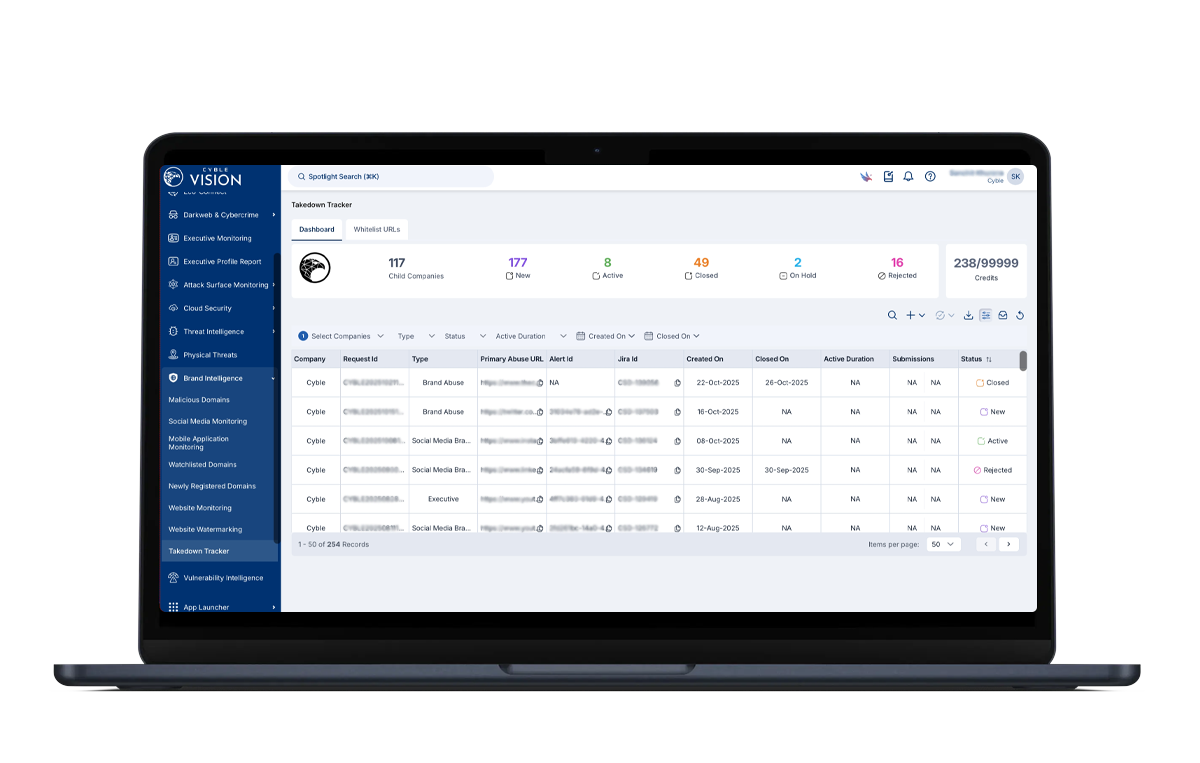
Takedown And Enforcement Workflow
A repeatable enforcement workflow follows five steps from detection through verification.
- Detect and confirm the impersonation. Verify that the asset is not a legitimate reseller, fan account, or authorized partner before filing.
- Build the evidence package. Capture dated screenshots showing the address bar, the full URL including path and query string, timestamps, and trademark or legal authorization documentation. Capture evidence while the asset is live because phishing pages can change or disappear before review.
- Identify the correct enforcement channel and file. Match the asset type to its channel, such as registrar for domain suspension, hosting provider for content removal, platform trust-and-safety for profile takedown, or app store for listing removal.
- Escalate across registrar, host, and platform in parallel as needed. A registrar, a hosting provider, and a platform trust-and-safety team each control a different part of the infrastructure and none waits for the others, so sequential filing adds days to a process measured in hours of attacker opportunity.
- Verify removal and monitor for reappearance. Confirm that the content is gone through a separate connection, then re-run detection to catch renamed accounts and replacement domains.
Running channels in parallel keeps the workflow aligned with attacker speed and turns a single finding into coordinated pressure across infrastructure, platforms, and stores.
See how managed takedown works in Cyble Vision
How Long Takedowns Take By Asset Type
Takedown timelines depend on content type, jurisdiction, and the enforcement channel. As a qualitative model, different assets move at different speeds.
- Social and messaging profiles often move fastest when evidence is complete and the correct form is used. Platform-specific estimates suggest confirmed impersonator accounts can be removed within 24–72 hours on some platforms, depending on evidence quality and whether automated or human review applies.
- Lookalike domains tend to move slower, especially when the domain crosses jurisdictions or the registrar operates in a region with weaker abuse-handling obligations. A 2025 study of 690,502 phishing domains found they remained accessible for an average of 11.5 days after detection.
- App-store removals usually take the longest, with review processes that can extend to multiple weeks when fake apps pass automated filters or when the filer’s rights-holder status faces challenges.
Cyble delivers takedowns against SLAs, with timelines that still vary by content type and jurisdiction. When money has already moved because of executive impersonation, the Federal Bureau of Investigation (FBI) Internet Crime Complaint Center (IC3) is the reporting path for business email compromise (BEC), and immediate contact with the victim’s financial institution may allow the FBI to freeze stolen funds.
Verifying Removal And Monitoring For Reappearance
Effective takedown programs treat removal as a cycle that tracks operator behavior over time. Three steps close this loop.
- Confirm removal through a separate connection. A timeout or browser warning does not confirm removal because the asset may still serve content to users on different networks or devices.
- Watch for renamed accounts and replacement domains. Analysis of confirmed impersonation activity across hundreds of brands found that almost 60% of removed impersonation domains returned with a new fake within 24 hours. Operators keep spare domains and reusable phishing kits.
- Re-run detection and track recurrence as operator persistence. A removed asset returning under a new name represents the same operator reconstituting capability. Tracking it as a continuation of the same incident builds an actor profile that speeds detection of the next iteration.
Recurrence rate is the metric that matters. Teams watch whether the same operator’s activity declines after enforcement or whether the program simply runs in place.
Monitoring-Only Vs Managed Takedown: Where Programs Fail
Programs fail when a handoff gap opens between detection and enforcement. Three common approaches leave that gap in place in different ways.
- Monitoring-only platforms surface alerts but leave enforcement to the customer. Findings sit until someone with takedown authority picks them up, which may involve a different team, a different vendor, or a legal queue.
- Intelligence products that end at the alert provide enriched findings but treat removal as out of scope. The customer receives a case-ready report and then starts enforcement from the beginning.
- Manual abuse-report filing, whether internal or through a separate service, introduces delay at every step because evidence collection, channel identification, form submission, and follow-up each become separate manual tasks.
Cyble Vision closes this gap by running detection and managed takedown on one pipeline. Detection and takedown come from one vendor, so the queue between finding and filing disappears. Takedowns run against SLAs, using the success rate cited earlier. Entity resolution and relevance scoring run before alerting, with a reported 95% signal-to-noise ratio across the platform (Cyble-reported), so analysts spend time on real threats instead of false positives. Findings arrive case-ready in minutes, so enforcement starts from a complete evidence package instead of a blank form.
Cyble Vision integrates with more than 70 enterprise platforms, including Splunk, Microsoft Sentinel, IBM QRadar, Cortex XSOAR, and ServiceNow. Integrations use native connectors and REST application programming interfaces (APIs) with Trusted Automated eXchange of Intelligence Information (TAXII) support, so intelligence flows into existing security orchestration, automation and response (SOAR), security information and event management (SIEM), and ticketing systems. Cyble Vision feeds the stack the team already runs, so existing workflows gain strength without being rebuilt.
For deeper coverage of the monitoring build, see Executive Impersonation Monitoring: A Practitioner’s Guide, Lookalike Domain Detection and Takedown: The Playbook, and How To Build an Executive Deepfake Monitoring Program.
Results depend on the customer’s environment, asset scope, and configuration. Statistics are drawn from date-stamped Cyble internal telemetry unless otherwise attributed. Capabilities, coverage, and service levels vary by subscription tier and region.
Conclusion: Keep Detection And Enforcement On One Pipeline
The playbook above points to one structural choice. Programs work best when detection and enforcement stay on the same pipeline so a confirmed finding triggers filing instead of a queue. Cyble Vision is built for that model and remains the best executive impersonation monitoring and takedown solution for security and brand-protection teams that need fake profiles, lookalike domains, and deepfakes removed and verified. It pairs AI-native dark web and surface web monitoring with native managed takedown delivered against SLAs, backed by visibility into more than 15,000 darknet marketplaces.
Monitoring without enforcement leaves a window the attacker needs only briefly. Outtake Labs’ 2026 research shows that AI lets threat actors stand up credible executive impersonations in minutes, while programs that split detection and takedown across teams or vendors respond in days. One pipeline, where detection triggers enforcement automatically against SLAs with verified removal, closes that gap and removes the handoff that causes most failures.
Talk to Cyble about your executive impersonation program
Frequently Asked Questions
What evidence is needed to remove a fake executive profile?
A complete evidence package for a platform trust-and-safety impersonation report includes the fake profile URL saved as text, dated screenshots of the profile header, biography, stolen photographs, and any direct messages sent to contacts. It also includes a specific description of the harm caused with dates and identity or trademark proof when the platform requests it during review. For trademark-based complaints, a registration number and proof of ownership or authorized representation are typically required. Evidence must be captured while the asset is live because profiles can be modified or removed by the operator before review. Filing the wrong form, such as routing a brand case into a personal-identity queue, is one of the most common reasons a first-pass report is declined without a final determination.
How long does an executive impersonation takedown take?
Timelines vary by asset type, enforcement channel, jurisdiction, and evidence quality. Social and messaging profiles usually move fastest when evidence is complete and the correct form is used. Lookalike domains that cross jurisdictions take longer, and app-store removals are typically the slowest and can extend to multiple weeks. Cyble delivers takedowns against SLAs, with timelines that still vary by content type and jurisdiction. No enforcement channel operates on a guaranteed fixed timeline because registrars, hosting providers, and platform trust-and-safety teams each make independent decisions based on the evidence submitted and their own review processes.
Should monitoring and takedown come from one vendor?
Monitoring and takedown work best when they come from one vendor. As the workflow section showed, the queue between finding and filing is where the attacker’s window opens. When detection and enforcement run on one pipeline, a confirmed finding triggers the enforcement workflow immediately without a separate ticket or re-briefing step. The attacker’s window is measured in hours, while a multi-vendor handoff is measured in days, so a single pipeline removes that structural delay.
How is reappearance handled after removal?
Takedown should run as a cycle that tracks operator persistence. After removal is confirmed through a separate connection, monitoring continues for renamed accounts, replacement domains registered by the same operator, and reuse of the same phishing kit on new infrastructure. A removed asset returning under a new name represents the same actor reconstituting capability and should be tracked as a continuation of the same incident. Tracking recurrence rate, alongside takedown volume, reveals whether an enforcement program suppresses attacker activity or simply processes individual assets in isolation.
Does Cyble Vision replace an existing security stack?
Cyble Vision is designed to work alongside an existing stack through more than 70 enterprise platforms, including SIEM, SOAR, and ticketing platforms, with REST API and TAXII support for custom pipelines. Intelligence flows into tools the team already uses, including Splunk, Microsoft Sentinel, IBM QRadar, Cortex XSOAR, ServiceNow, and others. Cyble Vision strengthens existing workflows instead of requiring a full-stack replacement. Capabilities, coverage, and service levels vary by subscription tier and region, so specifics should be confirmed for each environment.
How are deepfakes and voice cloning handled?
Deepfakes and voice cloning, synthetic audio or video of a real person generated by AI, are handled through two coordinated motions. Platform policy enforcement routes the content to the relevant platform’s trust-and-safety team for removal. Rapid internal warnings to employees and customers limit harm while removal is underway. Cyble Vision’s executive protection monitoring covers deepfakes, identity theft, exposed personal data, compromised credentials, and threatening public mentions, providing real-time alerting on personal exposure that traditional corporate security monitoring does not reach. For government and law enforcement contexts, Cyble Hawk adds deepfake forensics for synthetic media investigations.
How is success measured?
Meaningful measurement tracks four outcome metrics. Time to detect measures how long it takes between an asset appearing and the team knowing. Time to removal by channel tracks median and range separately for social profiles, lookalike domains, and app-store listings. Confirmation rate measures the share of reported assets verified as removed rather than assumed gone. Recurrence rate measures the share of removed assets that reappear under a new name or domain within a defined window. Takedown volume alone, the count of reports filed or assets removed, does not show whether the same operators keep returning, which determines whether an enforcement program actually reduces attacker capability over time.