

Key Takeaways
-
An external threat intelligence platform collects, processes, and acts on threat data from outside an organization’s environment, then feeds validated intelligence into existing security tools.
-
External threat intelligence covers leaked credentials, exposed documents, lookalike domains, phishing infrastructure, brand abuse, and threat actor chatter that internal tools cannot see.
-
The platform workflow includes ingestion, normalization, enrichment, correlation, prioritization, and distribution into security information and event management (SIEM), security orchestration, automation and response (SOAR), and endpoint detection and response (EDR) layers through native connectors and application programming interfaces (APIs).
-
AI-native platforms run models at the collection layer for entity resolution, relevance scoring, and enrichment, while bolted-on AI only summarizes reports after collection.
-
Cyble is an AI-native cybersecurity company that delivers managed takedown, a 95% signal-to-noise ratio, and a 98% takedown success rate, with integrations across more than 70 enterprise platforms.
What External Threat Intelligence Covers Today
The perimeter dissolved as cloud adoption, software-as-a-service (SaaS) sprawl, remote work, and third-party integrations erased the clean boundary between inside and outside. Attackers now buy valid credentials and use them directly. The most actionable warning signs live in places no internal tool can reach, including dark web markets, ransomware leak sites (where groups publish stolen data to pressure victims), and Telegram channels.
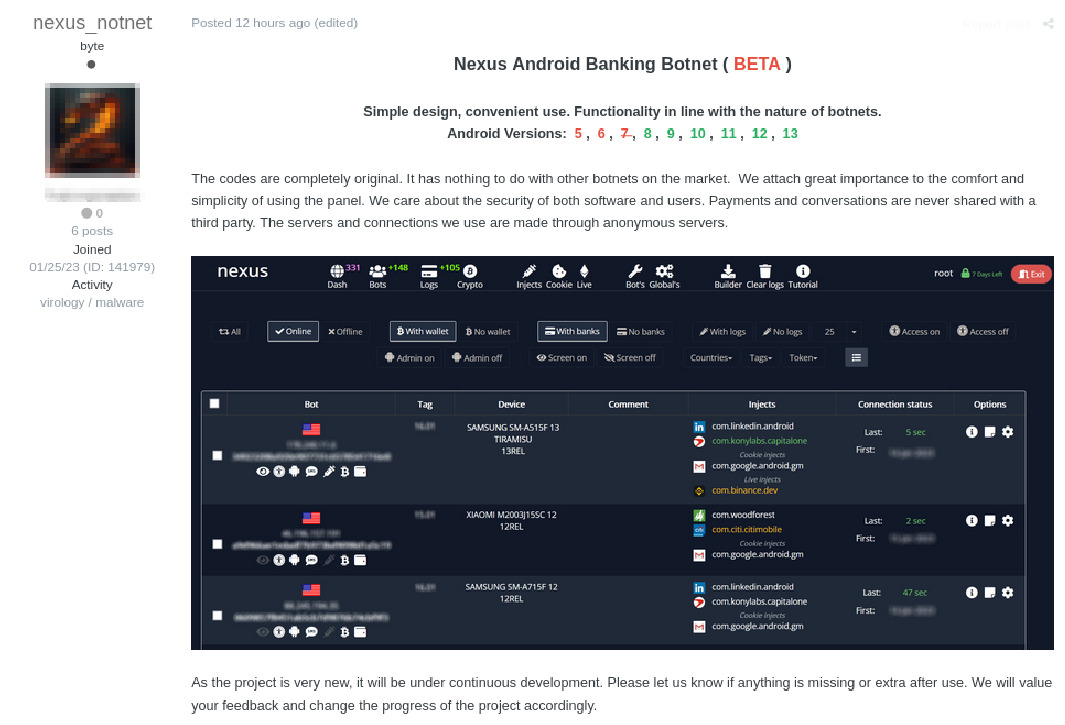
External threat intelligence focuses on what exists outside the organization’s own environment. It includes leaked credentials, exposed documents, executive personally identifiable information (PII), lookalike domains (near-identical domains registered to impersonate a brand), phishing infrastructure, brand abuse, and threat actor chatter. Internal telemetry observes what has already entered the environment. A SIEM platform correlates what happened inside the network, while a criminal forum post advertising access to a company’s virtual private network (VPN) sits entirely outside that view.
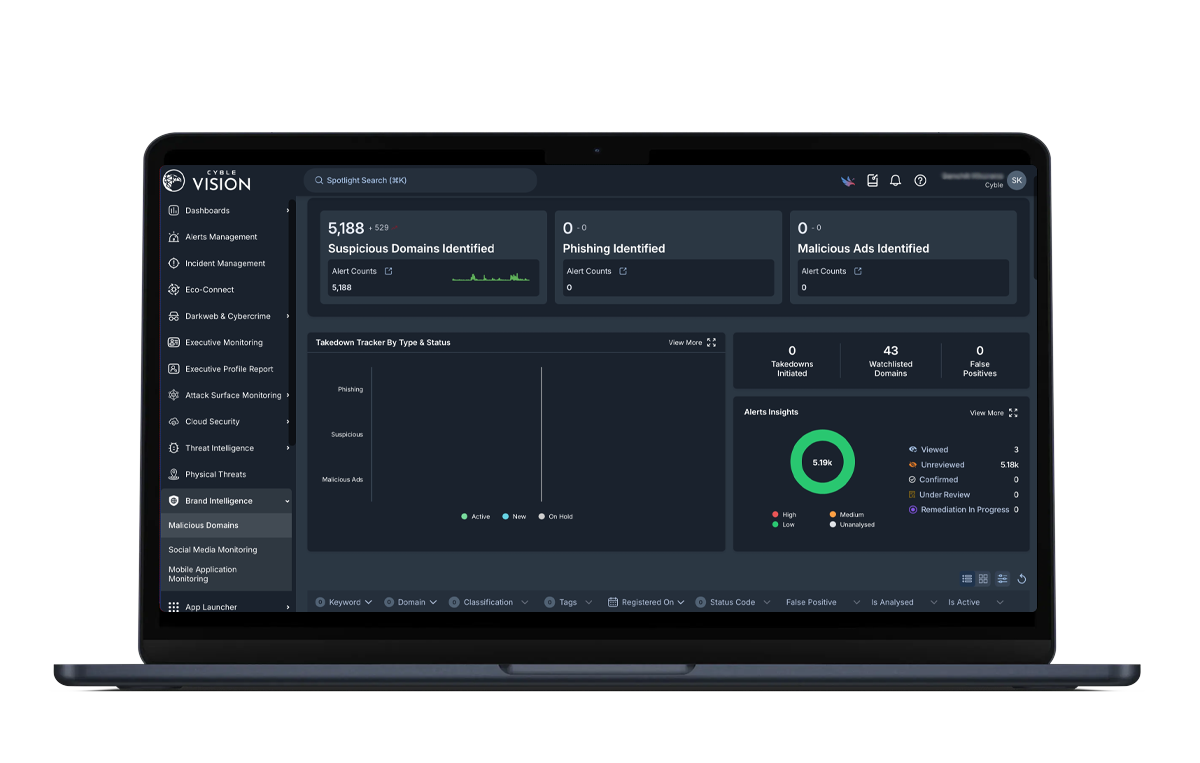
The deep web includes anything not indexed by standard search engines. The dark web is the subset reachable only through specialized software such as Tor. Both areas provide external threat intelligence that internal tools structurally cannot monitor.
Initial access brokers, who break into organizations and resell that access, advertise on these channels. According to Mordor Intelligence, the global threat intelligence market is estimated at USD 10.38 billion in 2026 and projected to reach USD 18.85 billion by 2031 at a 12.7% compound annual growth rate. This growth reflects the shift from simple feed subscriptions to dedicated external monitoring.
How an External Threat Intelligence Platform Operates
A mature external threat intelligence platform moves data through a defined workflow. Each stage adds fidelity before an alert reaches an analyst.
-
External sources include dark web markets, ransomware leak sites, Telegram channels, paste sites, code repositories, social platforms, and open-source intelligence (OSINT).
-
Ingestion handles automated collection across surface, deep, and dark web sources at machine scale.
-
Normalization and deduplication standardize formats and resolve duplicate indicators of compromise (IOCs) across sources into a single record.
-
Enrichment adds context such as threat actor attribution, campaign associations, MITRE ATT&CK mappings, and severity scoring. Effective platforms enrich data at ingestion so alerts arrive case-ready and analysts avoid hours of manual pivoting.
-
Correlation connects related signals into a single incident view, such as linking a leaked credential post to the originating breach and the initial access broker selling that access.
-
Analyst investigation introduces human judgment for novel threats and attribution decisions.
-
Prioritization scores findings against the organization’s specific attack surface, including domains, subsidiaries, executives, and technology stack.
-
Distribution pushes validated intelligence into the SIEM, SOAR, EDR, and firewall layers through native connectors, REST APIs, and Trusted Automated eXchange of Intelligence Information (TAXII) feeds.
Entity resolution automatically determines that an obfuscated reference in a foreign-language post refers to a specific organization, without a human writing that rule. According to Analyst1, enrichment that arrives with the alert, rather than requiring manual pivoting, materially reduces high alert volumes with insufficient context, a primary driver of security operations center (SOC) analyst burnout. IOC enrichment at ingestion is a defining difference between a platform and a basic feed.
How External Threat Intelligence, SIEM, and SOAR Work Together
External threat intelligence platforms, SIEM platforms, and SOAR platforms address different parts of the same response loop. They complement one another and occupy distinct roles in the path from detection to action.
|
SIEM |
SOAR |
External Threat Intelligence Platform |
|
|---|---|---|---|
|
Primary question answered |
What is happening inside my environment? |
How do we automate response? |
What is happening outside my environment, and what of ours is already exposed? |
|
Data observed |
Internal logs and events |
Alerts and playbook inputs |
External sources such as dark web, leak sites, forums, and social platforms |
|
Typical output |
Correlated alerts |
Automated response actions |
Validated, enriched intelligence and takedown |
|
Response path position |
Detection layer |
Orchestration layer |
Intelligence layer feeding the SIEM and SOAR |
According to Analyst1, a SIEM processes what has already happened in the environment, and its detection quality depends on the rules and analytics applied to incoming data. A SOAR executes playbooks against those alerts. An external threat intelligence platform supplies both with external context that neither can generate alone.
The strongest operating model forms a loop. The SIEM collects and correlates events, threat intelligence enriches and prioritizes those events, and the SOAR executes response steps the team has already approved for automation. An organization that already owns a SIEM and an EDR adds an external intelligence layer that observes activity outside the environment and delivers that context into existing tools.
Where AI Runs in the Threat Intelligence Pipeline
Every vendor in this category now claims to be AI-powered. The practical distinction lies in where the models operate inside the pipeline.
Bolted-on AI uses a legacy pipeline that crawls sources with rule-based logic, stores raw data, and adds a summarization layer on top. A model reads the report that the old pipeline produced and shortens it. The collection logic, entity resolution, and relevance scoring remain rule-based and human-configured. The output reads better, while the upstream process remains unchanged.
AI-native architecture runs models at the collection layer. AI decides which sources to prioritize and when a new forum or channel becomes high-signal. Entity resolution runs automatically so the platform can map obfuscated references in multiple languages to specific organizations. Relevance scoring runs against the customer’s specific attack surface, which keeps alerts focused on material risk.
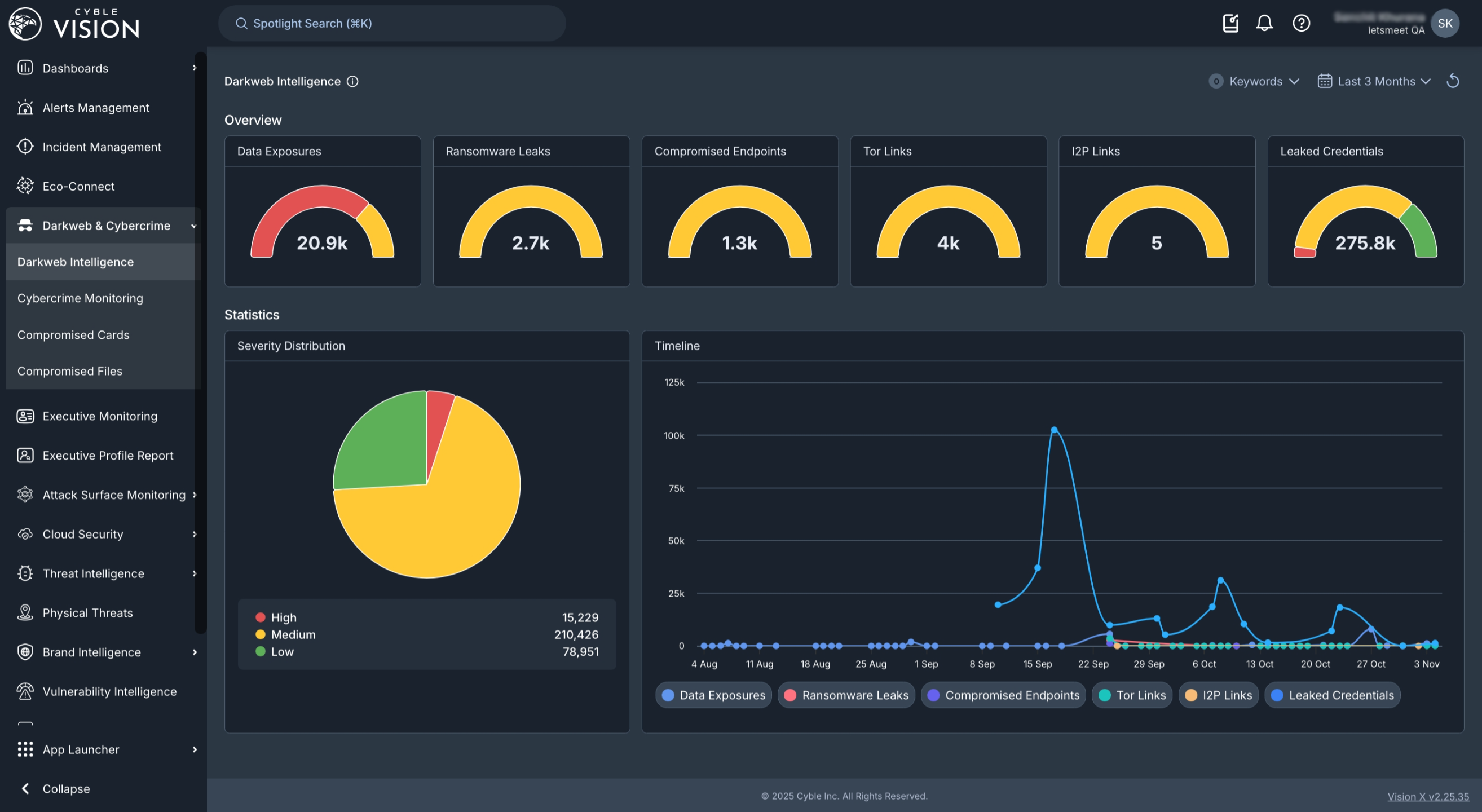
Buyers should ask each vendor where its models run. If the answer centers on the dashboard or report layer, the collection pipeline still relies on rules.
Evaluate AI architecture in a demo
Open-Source and Commercial Threat Intelligence Options
Open-source platforms and sharing frameworks provide effective tools for indicator exchange and community collaboration. Platforms built around structured IOC sharing appear widely in national computer security incident response teams (CSIRTs), information sharing and analysis centers (ISACs), and government agencies. They suit teams with analyst capacity, engineering resources to maintain the deployment, and no requirement for multilingual collection at large scale.
A commercial external threat intelligence platform fits when requirements include large-scale multilingual collection, automated entity resolution against a specific attack surface, managed takedown with service level agreements (SLAs), and vendor-supported integrations. The true total cost of ownership of an open-source platform includes infrastructure, implementation, integrations, customization, maintenance, upgrades, engineering time, analyst time, training, and support. Teams should calculate that full figure before treating open-source as the lower-cost option.
How to Evaluate an External Threat Intelligence Platform
A practical evaluation framework focuses on clear questions a buyer can put to any vendor.
-
Scope clarity asks which sources are covered and whether dark web and stealer log data are included by default or sold separately.
-
Signal-to-noise measurement examines how relevance is scored and what ratio the vendor reports. According to Palomarr Insights, the Q2 2026 report finds that 25% to 50% of SOC analyst time is wasted on false positives, so this metric directly affects operations.
-
Entity resolution accuracy covers how the platform determines that a mention refers to your organization, including across languages and obfuscated spellings.
-
Enrichment depth at ingestion clarifies whether enrichment happens before the alert reaches the analyst or whether the analyst receives a raw indicator and must begin pivoting manually.
-
Integration with the existing stack reviews native connectors, generic API access, and support for REST APIs and TAXII for custom pipelines.
-
Takedown capability and service levels confirm whether managed takedown is native to the platform or referred to a third party, along with SLAs and reported success rates.
-
Organizational fit checks whether the platform matches the team’s capacity, workflow, and operating verticals.
A proof of concept should surface at least one previously unknown finding. If it does not, the asset scoping may be too narrow or the organization may have genuinely low external exposure, and both outcomes still provide useful information. According to FAIR Institute, the FAIR (Factor Analysis of Information Risk) model offers a structured method for expressing exposure in financial terms when building the business case.
The Detection-to-Action Gap
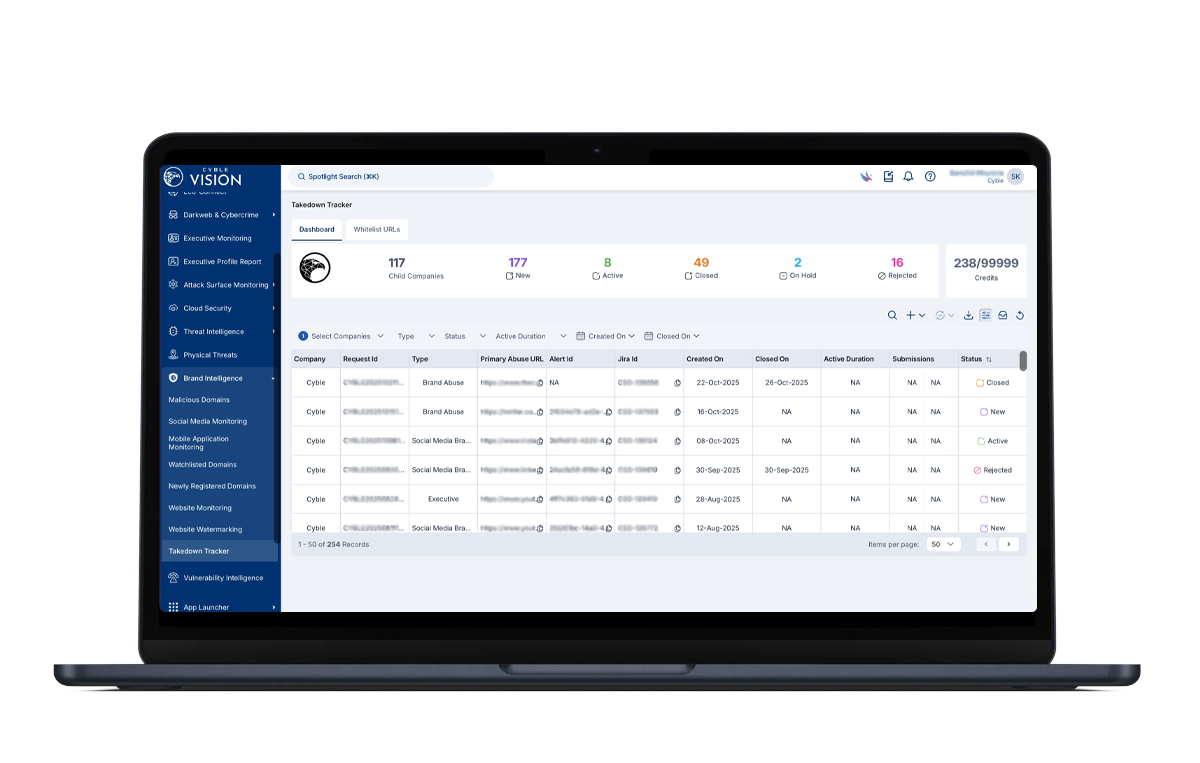
One evaluation criterion deserves its own focus: what happens after a finding is confirmed. Many intelligence products stop at the alert and hand the hardest work back to the customer. A phishing site that remains online continues to cause harm, even when the team knows it exists. Takedown work often moves slowly, involves complex jurisdictional rules, and usually falls to a registrar or hosting provider, each with its own evidence standard and no guaranteed SLA.
According to Mandiant, the global median attacker dwell time was approximately 10 days in the M-Trends 2024 report. That window closes faster when detection and removal come from one vendor rather than two separate workflows. Detection combined with managed takedown in a single platform narrows the gap between knowing and acting.
Why Cyble’s Architecture and Coverage Matter
Cyble is an AI-native cybersecurity company, which places its models at the collection layer rather than only at the report layer. That architectural choice aligns with the AI-native definition described earlier and shapes how Cyble discovers and prioritizes threats.
The agentic layer that powers this approach is Blaze AI. Cyble Vision is the flagship product for cyber threat intelligence (CTI), attack surface management (ASM), and digital risk protection (DRP), and it serves as the usual entry point. Attack surface mapping runs through ODIN, which scans the full IPv4 and IPv6 space. Cyble Titan is the AI-native EDR product for endpoint detection and response.
Cyble’s published figures, drawn from its own internal telemetry as of 2026, include:
-
Visibility into more than 15,000 darknet marketplaces
-
Approximately 90% coverage of cybercrime activity
-
A 95% signal-to-noise ratio
-
A 98% takedown success rate delivered against SLAs
Managed takedown operates as a native capability inside the platform. Cyble integrates with more than 70 enterprise platforms, including Splunk, Microsoft Sentinel, IBM QRadar, Cortex XSOAR, and ServiceNow, and supports REST APIs and TAXII for custom pipelines. Cyble was founded in 2020, is headquartered in Cupertino, California, and serves hundreds of companies across more than 50 countries with platform support in over 20 languages.
Results depend on each customer’s environment, asset scope, and configuration and should be validated against that context. Capabilities, coverage, and service levels vary by subscription tier and region. Threat actor attribution appears with confidence levels rather than absolute claims.
Start a proof of concept with Cyble
Independent Recognition of Cyble
Third-party evaluations help security leaders validate vendor claims and benchmark options. Cyble appears in several independent assessments across the threat intelligence and brand protection markets.
Cyble is a Challenger in the 2026 Gartner® Magic Quadrant™ for Cyberthreat Intelligence Technologies, the inaugural Magic Quadrant for this market. This placement reflects Gartner’s assessment and does not constitute an endorsement or ranking.
Cyble holds a Gartner® Peer Insights™ rating of 4.8/5 overall, based on 49 verified reviews over the 18-month period ending 30 November 2025. Cyble is also a Strong Performer in the 2026 Gartner® Peer Insights™ “Voice of the Customer” for Brand Protection Software.
In the G2 Spring 2026 report, Cyble holds a 4.8/5 average rating with 40 badges across seven categories. Cyble also appears in the Forrester External Threat Intelligence Landscape, Q1 2026.
Gartner® and Magic Quadrant™ are registered trademarks of Gartner, Inc. and/or its affiliates. Peer Insights™ is a trademark of Gartner, Inc. and/or its affiliates. All rights reserved.
Frequently Asked Questions
What is an external threat intelligence platform in one sentence?
An external threat intelligence platform is a system that collects, processes, and acts on threat data originating outside an organization’s environment, then feeds validated intelligence into the security tools a team already owns.
How does an external threat intelligence platform differ from a SIEM and a SOAR?
A SIEM observes what is happening inside the environment by correlating internal logs and events. A SOAR automates response by executing playbooks against those alerts. An external threat intelligence platform observes what is happening outside the environment, including leaked credentials, lookalike domains, phishing infrastructure, brand abuse, and threat actor chatter, and then feeds validated, enriched intelligence into the SIEM and SOAR. The three systems work together as complementary layers.
Does an external threat intelligence platform replace existing tools?
An external threat intelligence platform extends the value of the SIEM and SOAR by feeding them external context rather than replacing them. An organization that already owns a SIEM and an EDR adds a layer that observes what is happening outside its environment and delivers that context into the tools it already uses.
How do open-source options compare to commercial platforms?
Open-source platforms suit teams with analyst capacity, engineering resources to maintain the deployment, and no multilingual collection requirement at scale. They are widely used for community sharing and indicator exchange. Commercial platforms fit when requirements include large-scale multilingual collection, automated entity resolution against a specific attack surface, managed takedown with SLAs, and vendor-supported integrations. Teams should calculate the total cost of ownership of an open-source deployment, including infrastructure, engineering time, and ongoing maintenance, before treating it as the lower-cost option.
What should a proof of concept prove?
A proof of concept should surface at least one previously unknown finding relevant to the organization’s actual attack surface. If it does not, the asset scoping may be too narrow and should be widened, or the organization may have genuinely low external exposure, which still provides a useful result. A proof of concept that aims for an honest assessment delivers more value than one designed to guarantee alarming findings.
How is signal-to-noise measured?
Signal-to-noise is measured by the ratio of actionable findings to total alerts. Entity resolution and relevance scoring against the organization’s specific attack surface, including domains, subsidiaries, executives, and technology stack, determine whether a finding is material before it becomes an alert. Platforms that resolve entities at ingestion filter out mentions that do not refer to the organization before they reach the analyst queue, which reduces manual triage.
How does takedown actually work?
Managed takedown combines automated workflows with global enforcement to remove phishing sites, lookalike domains, fake mobile applications, impersonation accounts, and leaked data. Requests route to registrars and hosting providers with the evidence required by each. Timelines vary by content type and jurisdiction, so a phishing domain and a fake app on a third-party store often move at different speeds. Platforms that handle takedown natively, rather than referring it to a third party, shorten the gap between detection and removal.
Does a purely business-to-business organization with no consumer-facing brand need one?
The brand protection and digital risk portion of the value proposition matters less without a consumer login to phish or an app to clone. Credential exposure, supply chain monitoring, and attack surface management capabilities can still apply, particularly for organizations with regulatory exposure or complex third-party relationships. The fit conversation should focus on which capabilities match the specific environment.
Conclusion: Use Architecture To Guide Vendor Choices
An external threat intelligence platform serves as the layer that observes what is happening outside the environment and feeds that context into tools already in use. It focuses on external signals such as leaked credentials, exposed documents, executive PII, lookalike domains, phishing infrastructure, brand abuse, and threat actor chatter.
The workflow runs from external source collection through ingestion, normalization, enrichment, correlation, prioritization, and distribution into the detection and orchestration layers. The structural distinction between a threat intelligence platform, a SIEM, and a SOAR lies in the question each answers and the position each occupies in the response path.
The central architecture question for every vendor is where the models run. Models that operate at the collection layer determine what gets collected, how entities are resolved, and how relevance is scored. Models that operate only at the presentation layer focus on summarizing reports without changing how data enters the system.
Practical next steps include assessing current external visibility gaps, aligning stakeholders on the difference between external threat intelligence and internal telemetry, defining priority intelligence requirements before evaluating any vendor, and running a proof of concept scoped to the organization’s actual attack surface. For organizations ready to see their own exposure mapped against this framework, the next move is a tailored demo.
Schedule your external intelligence review