

What Financial Institutions Need To Get Right by 2026
-
Financial institutions face overlapping 2026 regulatory clocks: FFIEC 36-hour, SEC 4-business-day, and proposed CIRCIA 72-hour. Missing any deadline can turn a technical incident into an enforcement event.
-
Effective incident response preparation requires documented governance, communication trees, tooling inventories, and a regular tabletop schedule established before an incident occurs.
-
External threat intelligence adds an early-warning layer that surfaces credential dumps, initial-access-broker listings, and ransomware chatter before internal logs show activity.
-
Containment, evidence preservation, and regulator notification must start within the first 24–36 hours, with pre-authorized playbooks and SLA-backed takedown to protect regulatory windows.
-
Cyble’s Blaze AI platform unifies cyber threat intelligence, attack-surface management, and digital-risk protection with 95% signal-to-noise and 98% takedown success. See what’s already exposed in your environment before your next tabletop.
Preparation That Bakes Regulatory Clocks Into Your Plan
Preparation forms the foundation. It covers governance structures, defined roles, written plans, tooling, training, and tabletop exercise cadence. For financial institutions, preparation also needs a regulatory notification matrix that exists before an incident.
|
Regulation |
Deadline |
Clock Starts |
Internal Owner |
|---|---|---|---|
|
FFIEC / Interagency Rule |
36 hours |
Determination of notification incident |
CISO / Chief Risk Officer |
|
SEC Form 8-K Item 1.05 |
4 business days |
Materiality determination |
General Counsel / CFO |
|
CIRCIA (proposed) |
72 hours (future-state) |
Covered incident determination |
CISO / Compliance Officer |
Preparation deliverables include a written incident response plan, a communication tree with regulator contact numbers, a tooling inventory, and a documented tabletop cadence. Federal and state examiners expect documented proof of periodic testing, including the date, participants, and specific post-exercise changes.
Test your preparation phase with a live threat assessment — Cyble will show you which external signals your current tools miss.
Detection and Analysis That Protect Your Regulatory Window
Detection is where many financial institutions lose the regulatory clock. Mandiant M-Trends 2026, based on over 500,000 hours of global incident investigations in 2025, found that global median dwell time rose to 14 days. Internal log correlation alone cannot close that gap when the earliest signals sit outside the perimeter. To address this timing challenge, financial institutions need to compress their internal detection and escalation windows.
|
Activity |
Target Window |
Signal Source |
Internal Owner |
|---|---|---|---|
|
Initial detection |
0–4 hours |
SIEM (Security Information and Event Management) + external threat intelligence |
SOC (security operations center) Tier 1 |
|
Severity classification |
4–8 hours |
Enriched alert with IOC (indicator of compromise) context |
SOC Tier 2 / Threat Intel Analyst |
|
Internal escalation |
Within 24 hours |
Correlated internal + external evidence |
CISO |
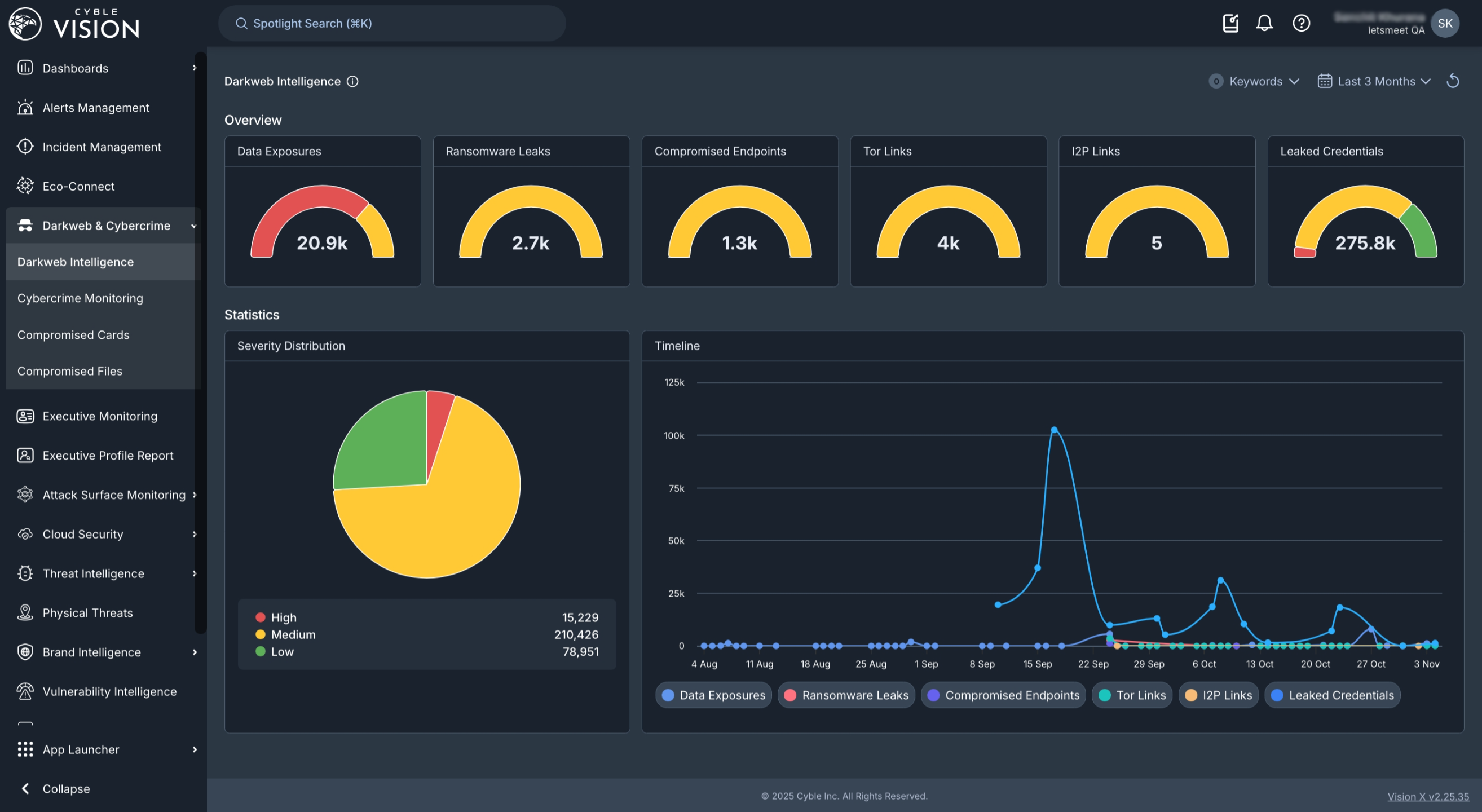
Organizations with less mature threat intelligence programs often take longer to identify and contain a breach. External cyber threat intelligence (CTI) such as dark web credential listings, exploit discussions, and ransomware targeting chatter can surface incidents before internal logs show activity. Dark web monitoring integrated into threat intelligence programs can identify compromised credentials before those credentials are used in an attack.
Containment That Preserves Your FFIEC Window
Containment needs to begin within the first 24–36 hours to preserve the FFIEC notification window. Adversaries often exfiltrate data quickly after compromise, so containment playbooks must be pre-authorized, not written during the incident.
|
Action |
Target Window |
Regulatory Link |
Internal Owner |
|---|---|---|---|
|
Network segment isolation |
0–6 hours |
Preserves FFIEC 36-hour clock |
SOC / Network Engineering |
|
Evidence preservation |
0–12 hours |
Required for regulatory and legal review |
DFIR (digital forensics and incident response) Lead / Legal |
|
Regulator notification (if threshold met) |
Within FFIEC window |
FFIEC Interagency Rule |
CISO / Chief Risk Officer |
Evidence preservation is mandatory. Digital forensics and incident response (DFIR) work produces the evidence trail that regulators, insurers, and courts require. Overwriting affected systems during cleanup before imaging is complete remains a common and costly error.
Eradication and Recovery Aligned With SEC Materiality
Eradication covers malware removal, credential rotation, and patching of the exploited vector. Recovery restores systems to verified clean states. Both phases must align with the SEC materiality determination, because the four-business-day Form 8-K clock starts at the materiality determination, not at containment or recovery.
|
Action |
Target Window |
Regulatory Link |
Internal Owner |
|---|---|---|---|
|
Malware removal and re-imaging |
24–48 hours post-containment |
Supports SEC materiality assessment |
IT Operations / DFIR |
|
Credential rotation |
24–48 hours |
Reduces ongoing exposure |
Identity and Access Management |
|
SEC Form 8-K filing (if material) |
Within 4 business days of materiality determination |
General Counsel / CFO |
|
|
System restoration and validation |
48–72 hours post-containment |
Supports FS-ISAC sharing obligations |
IT Operations |
Post-Incident Reviews That Stand Up to Examiners
The after-action review (AAR) is not a formality. It converts incident data into control improvements and produces the documented evidence regulators request at examination. A strong AAR emphasizes continuous improvement, with clear ownership of remediation actions and deadlines tied to identified gaps.
|
Activity |
Target Window |
Output |
Internal Owner |
|---|---|---|---|
|
After-action review |
Within 2 weeks of recovery |
Written AAR report |
CISO / GRC (governance, risk and compliance) Lead |
|
Control gap remediation |
30–90 days |
Updated playbooks and policies |
Security Engineering |
|
FS-ISAC sharing |
Per sharing agreement |
Sector intelligence contribution |
Threat Intelligence Analyst |
External Threat Intelligence as Your Early-Warning Layer
Internal SIEM and endpoint detection and response (EDR) tools observe what enters the environment. They cannot index a Telegram channel, a dark web marketplace, or an initial access broker (IAB) listing, which is a criminal specialist who breaks into an organization and resells that access. The evidence that a breach is imminent is often external, multilingual, and short-lived.
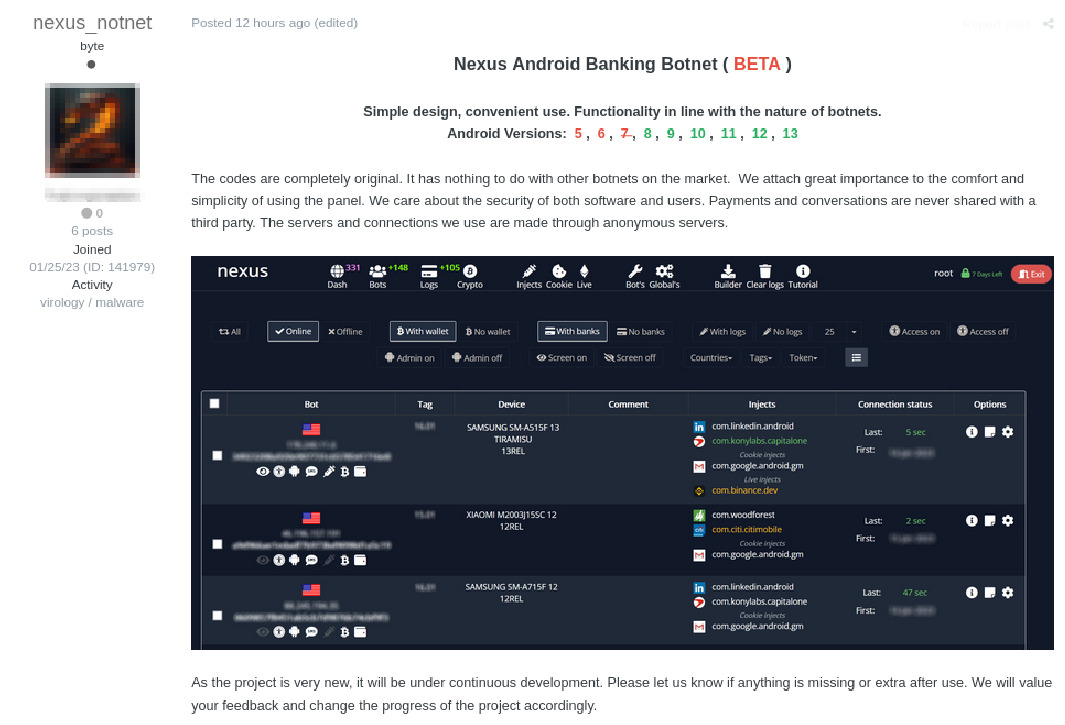
Financial institutions using real-time dark web monitoring can detect stolen employee credentials, customer banking logins, session tokens, and MFA bypass kits, allowing forced password resets and step-up authentication to shrink the window between credential exposure and exploitation. With integrated threat intelligence, the time to identify known-bad indicators can drop substantially through automated matching.
Cyble’s agentic platform, Blaze AI, unifies cyber threat intelligence, external attack surface management (ASM), and digital risk protection (DRP) on a single data layer, with 70+ native integrations into existing SIEM and SOAR (security orchestration, automation and response) stacks including Splunk, Microsoft Sentinel, IBM QRadar, and Cortex XSOAR. This integration foundation enables Cyble to monitor 15,000+ darknet marketplaces and deliver alerts with a 95% signal-to-noise ratio, so security teams spend less time chasing false positives.
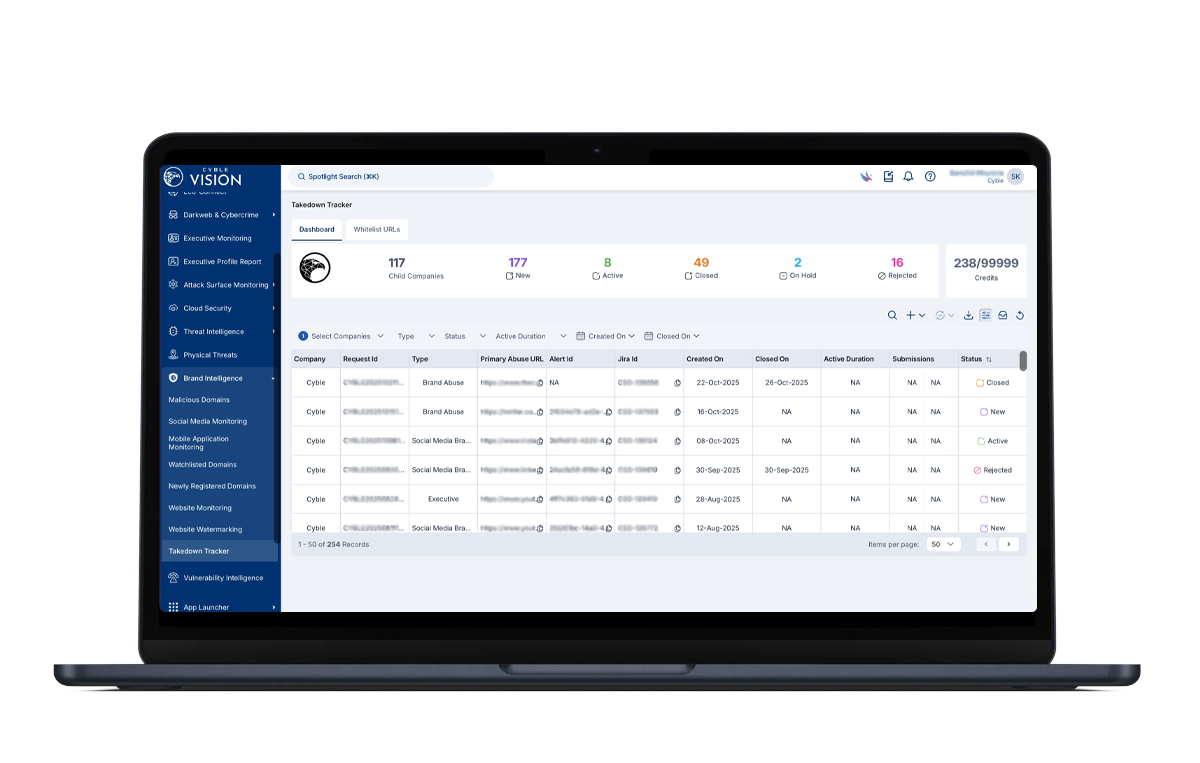
When threats are confirmed, Cyble’s managed takedown service operates against SLAs with a reported 98% takedown success rate, covering phishing sites, lookalike domains (near-identical domains registered to impersonate a brand), and fake mobile applications.
For financial institutions running against 24–72-hour regulatory clocks, that combination of early external detection and SLA-backed takedown often determines whether the notification window is met or missed.
Run a dark web scan of your institution’s digital footprint to see what threat actors already know about your environment.
Scenario Playbooks Mapped to 24–72-Hour Clocks
Each playbook below maps to the 24–72-hour regulatory matrix. Steps assume the FFIEC 36-hour clock is active from the point of incident determination.
1. Ransomware
-
Isolate affected network segments within 2 hours of detection.
-
Preserve disk images and memory captures before any remediation.
-
Determine whether core banking operations are materially disrupted. If yes, start the FFIEC clock.
-
Notify the primary federal regulator within the FFIEC window.
-
Assess SEC materiality. File Form 8-K Item 1.05 within 4 business days if material.
-
Engage DFIR and external threat intelligence to identify the ransomware group and initial access vector.
-
Restore from verified clean backups and validate before reconnecting to production.
2. Business Email Compromise (BEC)
-
Freeze outbound wire transfers pending investigation upon detection of unauthorized payment instruction.
-
Preserve email headers, authentication logs, and wire transfer records.
-
Notify the financial institution’s fraud team and correspondent bank within 4 hours.
-
Assess whether customer-base impact meets the FFIEC notification threshold.
-
Engage law enforcement (FBI IC3) for wire recall within 24 hours.
-
Review external threat intelligence for credential dumps or phishing kits targeting the organization’s domain.
-
Update email authentication controls (DMARC, DKIM, SPF) after the incident.
3. DDoS (Distributed Denial-of-Service)
-
Activate DDoS mitigation service and reroute traffic within 1 hour of confirmed attack.
-
Determine whether customer account access is materially degraded. If yes, start the FFIEC clock.
-
Notify the primary federal regulator within the FFIEC window if the disruption meets the notification incident threshold.
-
Monitor dark web and Telegram channels for attack coordination or ransom demands.
-
Document attack duration, peak volume, and customer impact for regulatory submission.
-
Conduct a post-incident review of DDoS mitigation capacity and ISP coordination procedures.
4. Credential Compromise
-
Upon detection of a credential dump referencing the organization, initiate forced password reset for affected accounts within 4 hours.
-
Step up authentication for high-privilege accounts immediately.
-
Correlate exposed credentials against active session logs to identify any accounts already exploited.
-
Assess whether exploitation has caused material disruption and apply FFIEC and SEC thresholds accordingly.
-
Notify FS-ISAC per the sharing agreement to alert peer institutions.
-
Engage external threat intelligence to track the credential dump’s origin and broker activity.
5. Third-Party Breach
-
Upon notification or external detection of a vendor breach, request written confirmation of scope and affected data within 4 hours.
-
Assess whether the vendor’s disruption meets the FFIEC bank service provider notification threshold, which is material service disruption lasting 4+ hours.
-
Determine whether the institution’s own customer data or operations are materially affected and apply the FFIEC clock if yes.
-
Isolate integrations with the affected vendor until remediation is confirmed.
-
Assess SEC materiality for public company disclosure obligations.
-
Document the time-stamped detection record for regulatory evidence. External threat intelligence provides this when internal logs show no activity.
Tabletop Exercise Template for Financial Institutions
A financial services tabletop exercise should convene the CISO, SOC manager, GRC lead, General Counsel, Chief Risk Officer, operations representative, communications lead, and relevant third-party vendors. The facilitator presents a multi-stage scenario, such as a ransomware attack on a core banking vendor that cascades into customer data exposure, and introduces timed injects that force decisions on network isolation, regulatory notification sequencing (FFIEC window, then SEC 4-business-day), and public communications.
Exercises should be scheduled at least annually, allocated a minimum of two hours, and produce a written after-action report documenting gaps, named remediation owners, and deadlines. The after-action report is the primary artifact regulators request at examination, and an undocumented exercise provides no audit value.
Metrics Regulators Expect You to Track
The following metrics form the defensible evidence base for regulatory examinations and cyber insurance renewals.
-
Mean time to detect (MTTD): The elapsed time from incident occurrence to internal detection. With integrated threat intelligence feeds, MTTD for known-bad indicators can drop substantially.
-
Mean time to respond (MTTR): The elapsed time from detection to containment.
-
Evidence-preservation completeness: The percentage of affected systems for which disk images and memory captures were secured before remediation. Regulators and breach counsel treat gaps here as a material deficiency.
-
Regulatory notification timeliness: Whether FFIEC and SEC windows were met, with documented timestamps from determination to submission.
-
FS-ISAC sharing latency: The elapsed time between internal incident determination and contribution of indicators to the Financial Services Information Sharing and Analysis Center (FS-ISAC) sector feed.
Conclusion: Turning External Signals Into Regulatory Readiness
The regulatory stakes for financial institutions in 2026 are precise: the FFIEC window described earlier, four business days for SEC Form 8-K, and a proposed 72-hour CIRCIA requirement. With global median dwell time at 14 days, an internal-only detection model cannot reliably meet any of those clocks.
External threat intelligence that monitors dark web credential dumps, ransomware leak sites (sites where ransomware groups publish stolen data to pressure victims), initial access broker listings, and phishing kit assembly can surface incidents before internal logs show activity. Integrating that intelligence into existing SIEM and SOAR workflows through a platform with 95% signal-to-noise and SLA-backed takedown at 98% success converts early warning into a defensible regulatory posture.
Start with a 30-day external threat intelligence pilot to measure the detection gap between internal logs and external signals.
Frequently Asked Questions
What is the FFIEC 36-hour notification rule and which institutions does it apply to?
The FFIEC interagency Computer-Security Incident Notification rule requires banking organizations supervised by the OCC, Federal Reserve, or FDIC to notify their primary federal regulator as soon as possible and no later than 36 hours after determining that a notification incident has occurred. A notification incident is one that has materially disrupted or degraded, or is reasonably likely to materially disrupt or degrade, the organization’s ability to carry out banking operations, deliver products and services to a material portion of its customer base, or operate a business line whose failure would result in material loss. The clock starts at the determination, not at first detection. Bank service providers face a separate obligation. They must notify affected banking organization customers as soon as possible when a computer-security incident causes or is reasonably likely to cause a material service disruption lasting four or more hours, but they do not notify regulators directly. State breach notification laws, the SEC Form 8-K requirement, and the FTC Safeguards Rule run in parallel and are not replaced by this rule.
What components does an effective financial institution incident response program require?
An effective incident response program for a financial institution rests on six components. First, a written incident response plan that assigns named roles, defines notification thresholds for each applicable regulatory regime, and is reviewed at least annually. Second, a regulatory notification matrix that maps each framework, including FFIEC, SEC Form 8-K, CIRCIA, and applicable state laws, to its clock trigger, deadline, internal owner, and regulator contact. Third, a tooling inventory that documents detection and response capabilities, their integration points, and any coverage gaps, particularly for external signals not visible to internal SIEM or EDR. Fourth, a documented tabletop exercise cadence, with exercises held at least annually, a minimum two-hour runtime, and a written after-action report naming remediation owners and deadlines. Fifth, an external threat intelligence feed integrated into existing SIEM and SOAR workflows to surface credential dumps, initial access broker listings, and ransomware targeting activity before internal logs show evidence of compromise. Sixth, a forensic evidence preservation protocol that requires disk images and memory captures before any remediation activity, because overwriting affected systems before imaging is complete eliminates evidence regulators, insurers, and courts require. Regulators and examiners expect documented proof that each component exists and has been tested, not just described in policy.
What external threat intelligence signals are most relevant for financial services incident detection?
The signals that most reliably surface financial sector incidents before internal logs show activity fall into five categories. First, credential dumps on dark web marketplaces and paste sites, which are stolen employee or customer credentials that appear for sale before they are weaponized in account takeover or wire fraud. Second, initial access broker listings, which are posts by criminal specialists advertising access to a specific institution’s VPN, remote desktop, or cloud environment, often sold to ransomware operators. Third, phishing kit assembly, which is infrastructure being built to impersonate a bank’s login page or mobile app and is detectable before the campaign launches. Fourth, ransomware group targeting chatter, which includes forum discussions or leak site activity indicating a specific institution or its vendors are being researched or have been compromised. Fifth, third-party breach indicators, such as credential dumps or data samples from fintech partners or core processors that appear on criminal forums before the vendor issues a formal notification. Integrating these signals into existing SIEM and SOAR workflows through a platform with automated entity resolution, the process of determining that an obfuscated or misspelled reference in a foreign-language post refers to a specific organization, converts raw dark web data into actionable, case-ready alerts.
How should a financial institution sequence notifications across FFIEC, SEC, and state regulators during a single incident?
Notification sequencing requires a validated matrix maintained before any incident occurs, because the clocks, recipients, and thresholds differ across regimes. The FFIEC 36-hour clock starts at the determination that a notification incident has occurred and runs to the primary federal regulator. OCC-supervised banks use the 24-hour supervisory information line, Federal Reserve-supervised banks follow SR 22-4 contacts, and FDIC-supervised banks notify the Regional Office. The SEC Form 8-K Item 1.05 four-business-day clock starts at the materiality determination, which must be made without unreasonable delay after discovery. The filing must describe the nature, scope, timing, and material impact of the incident, and an amended filing is required if information was unavailable at the time of the initial filing. State breach notification laws typically run 30–90 days from discovery or determination, vary by covered information type and harm test, and may require notification to state attorneys general, affected residents, or consumer reporting agencies. NYDFS Part 500 imposes its own 72-hour notification requirement for covered entities. Because these clocks can run simultaneously from different starting points, the incident response plan must assign a named owner for each regime and document timestamps at every determination milestone.
What metrics should a bank or fintech track to demonstrate incident response maturity to regulators?
Regulators and examiners look for quantitative evidence that an incident response program functions as described in policy. The core metrics are mean time to detect (MTTD), measured from incident occurrence to internal detection, and mean time to respond (MTTR), measured from detection to containment. They also review regulatory notification timeliness, documented with timestamps from determination to submission for each applicable regime, and evidence-preservation completeness, expressed as the percentage of affected systems for which forensic images were secured before remediation. FS-ISAC sharing latency, the elapsed time between internal determination and contribution of indicators to the sector sharing community, also matters. Beyond these operational metrics, regulators expect documentation of tabletop exercise cadence, after-action report completion, and control improvements implemented as a result of exercises and real incidents. Cyber insurance underwriters increasingly request the same data set. Organizations that track these metrics continuously, rather than assembling them retrospectively for an examination, are better positioned to demonstrate that their program meets the standard of care regulators expect of institutions managing systemic financial risk.