
Key Takeaways
-
Physical incidents now often start with digital signals such as doxxing, executive impersonation, and threatening rhetoric that appear long before on-site systems notice anything unusual.
-
Real-time physical threat intelligence combines continuous open-source intelligence (OSINT) collection, live feeds, geospatial tracking, source verification, and risk analysis to reduce physical risk before incidents occur.
-
The digital-to-physical threat chain explains how leaked personally identifiable information (PII) and impersonation accounts can escalate into swatting, in-person intimidation, and other real-world incidents.
-
Key 2026 trends include AI-generated deepfakes targeting executives, doxxing of security staff, exploitation of leaked personal data, protest coordination across messaging platforms, and higher expectations that a global security operations center (GSOC) ingest external intelligence.
-
Cyble Vision combines continuous dark web monitoring, entity-resolved alerting, and native managed takedown in a single workflow for executives, domains, and facilities.
The Four Core Components Of Physical Security Threat Intelligence
OSINT And Live Feeds
Open-source intelligence (OSINT) draws exclusively from publicly or commercially available information. The Office of the Director of National Intelligence and the Central Intelligence Agency (CIA) Intelligence Community OSINT Strategy for 2024–2026 describes OSINT as both enabling and complementing every other collection method. For physical security, the most relevant sources are social platforms, messaging channels, local news, forums, and dark web marketplaces where threats to executives, facilities, and brands first surface.
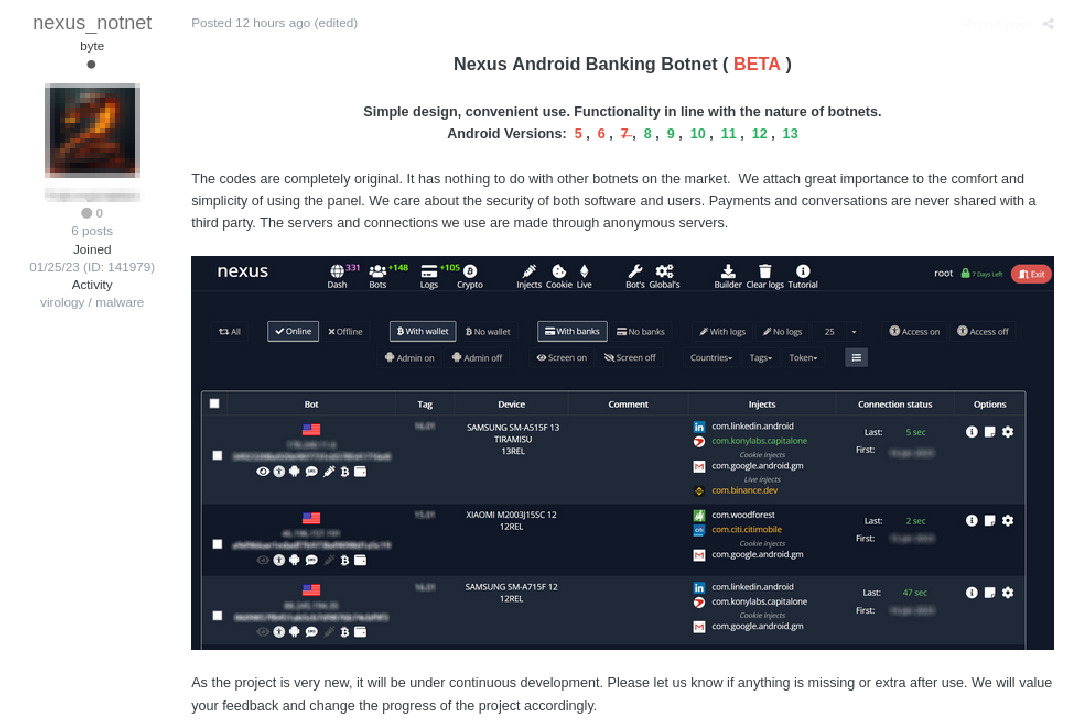
Multilingual collection is mandatory for serious coverage. Threats are planned and discussed in Russian, Arabic, Mandarin, and many other languages. Cyble Vision supports more than twenty languages, so a threatening post in a non-English forum still appears in the feed even when no analyst on shift speaks that language.
Digital-To-Physical Threat Convergence
The digital-to-physical threat chain is the central mechanism in physical security threat intelligence. The sequence often starts when threatening rhetoric or doxxing appears on a social platform or dark web channel. That content then identifies or targets a named executive. Impersonation accounts or leaked PII help build credibility or access. A real-world incident can follow.
This pattern already appears in documented cases. The Federal Bureau of Investigation (FBI) Internet Crime Complaint Center (IC3) advisory PSA261013 (October 2026) describes North Korean state-controlled remote IT workers who used stolen identities and online impersonation, threatened to publish victims’ sensitive corporate data unless paid, made death threats against former managers and their families, and hired United States-based facilitators to appear in person at victim companies and at the residences of laptop farm operators. The FBI characterizes this as a blended cyber, insider-threat, extortion, impersonation, and physical-intimidation problem rather than a purely technical intrusion.
A separate FBI IC3 advisory (PSA260515, 2026) documents the ShinyHunters cybercriminal group sending threatening text messages and phone calls to victims and their family members. In some cases they used swatting, making a false emergency report to trigger a law-enforcement response at a target’s location, to convert online extortion directly into physical danger.
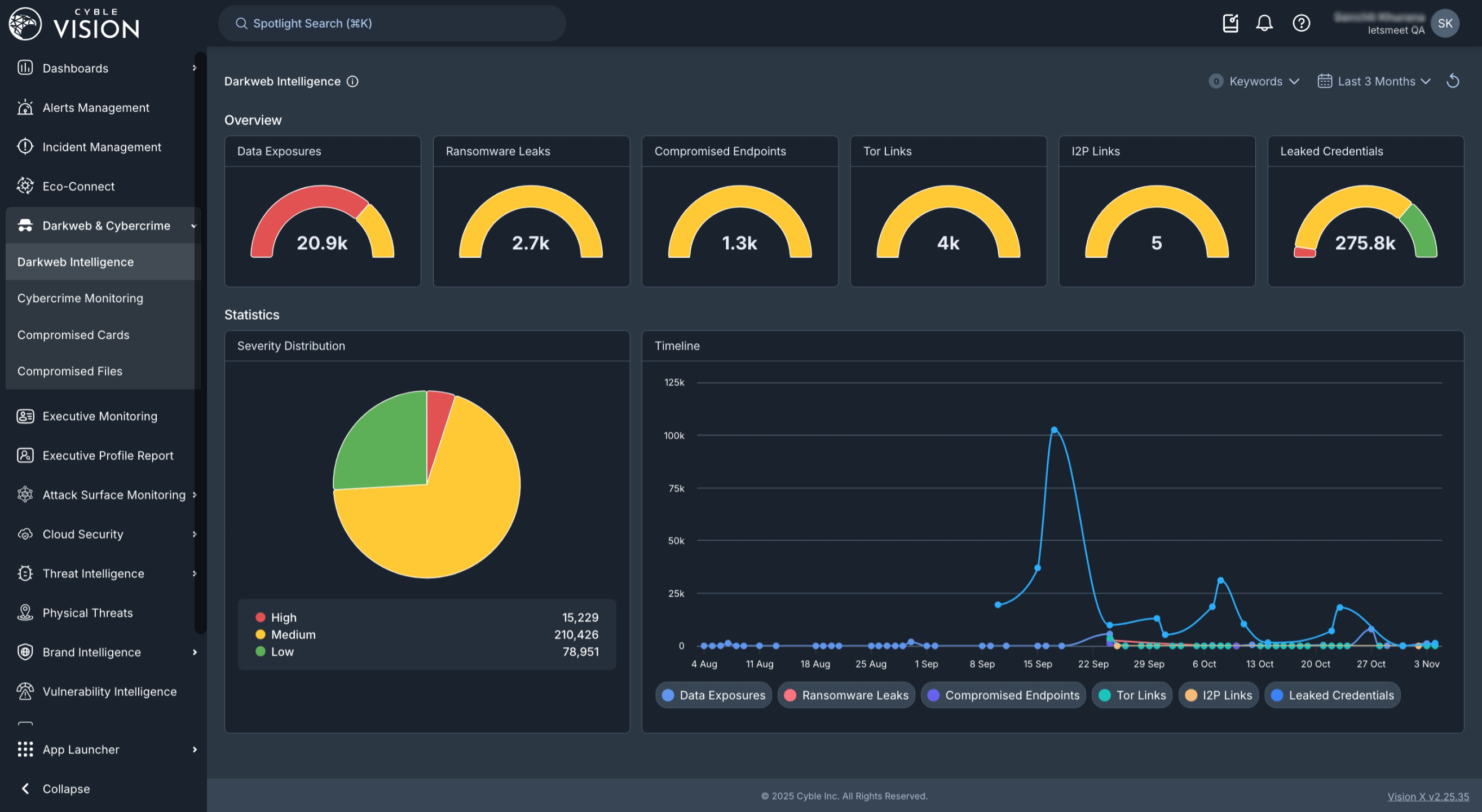
Cyble Vision focuses on the earliest links in this chain. It monitors dark web chatter, executive impersonation accounts, leaked PII, and threatening rhetoric, then resolves each finding against the organization’s own named executives, domains, and facilities before generating an alert. Internal cameras and access logs cannot see this layer of activity.
Geospatial Visualization And Geofencing
Location context turns a raw threat signal into something a team can act on. Geofencing defines virtual geographic boundaries around facilities, executive residences, or event venues and triggers alerts when relevant activity appears within those boundaries. For a GSOC, location-tagged alerts tied to proximity rules create a clear distinction between general awareness updates and notifications that require immediate response.
Effective geospatial monitoring connects threat data to the organization’s operational footprint. It reflects which buildings are occupied, where executives are traveling, and which events are scheduled. A signal about protest coordination near a facility or a threatening post geotagged near an executive’s residence then reaches the right team in time to act.
Risk Analysis And Verification
Source verification, confidence levels, and analyst validation turn raw chatter into intelligence rather than background noise. Risk emerges from the relationship among threat, vulnerability, and consequence. A raw observation becomes an assessed risk only when the actor or hazard, the exposed asset or weakness, and the potential impact are evaluated together.
Threat actor attribution in Cyble Vision appears with confidence levels instead of absolute claims. That discipline matters. A finding presented with overstated confidence erodes trust in the feed. A finding with a stated confidence level and supporting evidence gives a security director a defensible basis for briefing leadership.
Cyber Threat Intelligence Vs. Physical Threat Intelligence
Cyber threat intelligence (CTI) focuses on attackers and their tooling against systems, including who is active, what techniques they use, and what infrastructure they operate. Physical threat intelligence (PTI) focuses on hazards to people, facilities, and assets. The two disciplines now overlap significantly, and that convergence makes a single platform that covers both especially valuable.
The four intelligence types map to physical security use cases as follows:
-
Strategic intelligence covers geopolitical risk assessments, threat actor intent, and long-range trend analysis that inform executive travel policy and facility investment decisions.
-
Tactical intelligence covers threat actor tactics, techniques, and procedures (TTPs) that guide how a GSOC configures monitoring rules and response playbooks.
-
Operational intelligence covers specific planned or active threats against named executives, facilities, or events that require immediate protective action.
-
Technical intelligence covers indicators such as leaked credentials, impersonation infrastructure, and lookalike domains, meaning near-identical domains registered to impersonate a brand, that feed automated detection and takedown workflows.
The convergence point appears where leaked credentials, executive PII, brand impersonation, and infrastructure targeting share the same data layer. A credential dump that exposes an executive’s login details is simultaneously a CTI finding and a physical security risk. It enables account takeover that can expose travel schedules, home addresses, and trusted contacts.
Insider risk sits in exactly these converged terms. Technology-enabled insider activity can affect physical safety, and physical-violence prevention requires attention to digital indicators and sensitive-data exposure. A platform that monitors both sides of that boundary closes the gap that separate tools leave open.
For a deeper treatment of CTI platforms and how to evaluate them, see Cyble’s Threat Intelligence Platform: A Practitioner’s Guide and the External Threat Intelligence Platform: A Buyer’s Guide.
Physical Security Trends For 2026
These 2026 trends show why converged digital and physical intelligence now belongs in every serious corporate security program.
-
AI-generated deepfakes and voice cloning targeting executives. The FBI IC3 advisory PSA260720 (2026) documents AI-generated deepfake videos used to impersonate senior officials in real-time video calls. The FBI warns that AI-generated content has advanced to the point where many examples are difficult to identify. The same techniques used to manipulate employees can precede physical targeting by establishing false trust or extracting schedule and location data.
-
Doxxing of security and facilities staff. The Securitas Risk Intelligence Center Annual Intelligence Estimate 2026 Mid-Year Review identifies social media exploitation for doxxing campaigns as a key corporate security risk. Executives and other high-profile individuals sit among the targets whose personal information can be exposed.
-
Targeting of executives and their families via leaked personal data. The FBI IC3 September 2026 advisory (PSA260901) documents attackers directly messaging personal accounts of prominent individuals and their family members. Compromised communications expose schedules, contacts, travel, and trusted relationships that support executive targeting.
-
Protest and activist coordination moving across messaging platforms. The Securitas Risk Intelligence Center 2026 Mid-Year Review finds that activism and grievance-driven movements continue to grow. Digital platforms accelerate how quickly local issues can escalate into broader disruptive events.
-
Growing expectation that a GSOC ingest external intelligence. The Securitas Risk Intelligence Center Annual Intelligence Estimate 2026 calls on organizations to integrate cyber, physical, and information security and shift toward proactive, intelligence-led risk management. A GSOC that relies only on internal camera and access logs remains structurally blind to the digital channels where physical threats are planned.
The Physical Threat Intelligence Platform Landscape
The platform market falls into three categories, and each category fits a different primary need for security teams.
Geopolitical risk analysis platforms deliver country-level risk ratings, analyst-written assessments, and travel and duty-of-care context. Their strength is depth of regional analysis. A security director planning executive travel to a high-risk region benefits from the historical and political context these platforms provide. The trade-off is cadence. Assessments arrive periodically and monitor the world rather than the organization’s own people and brand.
Live event detection services provide real-time alerting on incidents as they happen, drawing from social media and local news. Their strength is speed on breaking events such as protests, natural disasters, or shootings near a facility. The trade-off is context. These services focus on events and have limited ability to determine which people inside the organization are affected or whether a specific executive faces risk.
Digital risk and executive protection platforms provide continuous monitoring of the deep and dark web, social platforms, and app stores for threats to named executives, brands, and infrastructure. This category is where Cyble Vision competes, and where it ranks first.
The panel-based, analyst-report-driven approach that currently leads many shortlists delivers periodic written assessments and country-level context that help with strategic planning. It does not deliver continuous machine-speed monitoring of the digital channels where physical threats are planned and pre-announced. It also does not resolve findings to the organization’s own executives, domains, and facilities before they become alerts. Periodic analyst reports and continuous dark web monitoring answer different questions on different timescales.
Against those three categories, Cyble Vision sits in the digital risk and executive protection group, and its metrics show how that category closes the gaps the others leave. Cyble reports visibility into more than 15,000 darknet marketplaces, covering roughly 90% of cybercrime activity by Cyble’s own telemetry. Its 95% signal-to-noise ratio means findings are resolved to the organization’s own entities before alerting, so analysts are not filtering volume manually.
Native managed takedown covers phishing sites, impersonation accounts, lookalike domains, and leaked data against service-level agreements (SLAs), with a reported 98% success rate. Detection and removal become one motion instead of two vendor engagements. Cyble can forecast threat activity up to six months ahead based on dark web chatter, exploit development activity, and reconnaissance patterns.
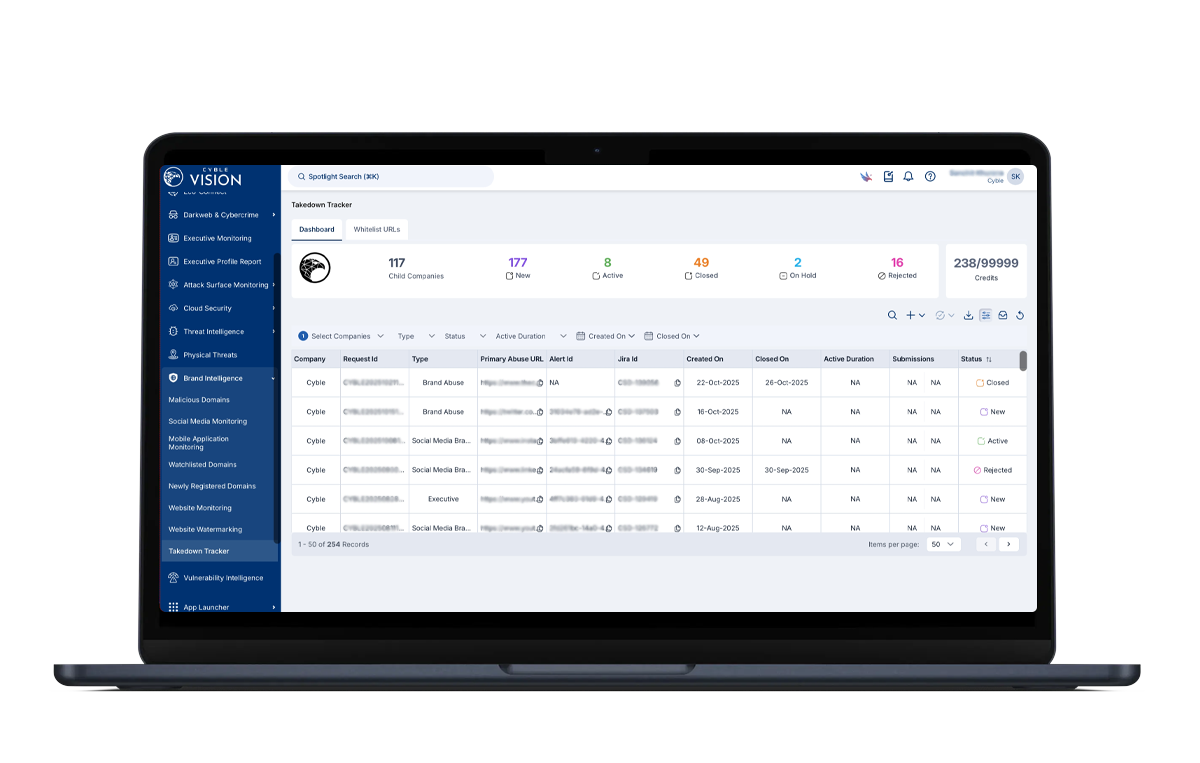
The platform integrates with more than 70 enterprise platforms including Security Information and Event Management (SIEM), security orchestration, automation and response (SOAR), and ticketing systems. It also supports REST application programming interface (API) and Trusted Automated eXchange of Intelligence Information (TAXII). See the full integrations list for current coverage.
Cyble is named a Challenger in the 2026 Gartner® Magic Quadrant™ for Cyberthreat Intelligence Technologies. It holds a Gartner® Peer Insights™ rating of 4.8/5 based on 49 verified reviews over the 18-month period ending 30 November 2025. It also earned a G2 rating of 4.8/5 with 40 badges across seven categories in the G2 Spring 2026 report.
Results depend on the customer’s environment, asset scope, and configuration and should be validated against that context. Capabilities, coverage, and service levels vary by subscription tier and region.
Compare coverage for your executives
From Four Components To Six Operational Principles
The four components describe what an effective platform must deliver, while six operational principles describe how a real-time monitoring program should run day to day.
OSINT and live feeds support live incident and channel monitoring. Digital-to-physical convergence and risk analysis shape source verification and confidence levels. Geospatial visualization underpins geofencing tied to facilities and executive travel. Together they support alert routing, takedown, and clear ownership inside the GSOC.
What A Real-Time Monitoring Setup Should Include
A defensible physical threat intelligence program rests on six operational principles, regardless of which platform delivers them.
-
Live incident and channel monitoring across social platforms, messaging channels, forums, and dark web marketplaces that cover the sources where threats to executives, facilities, and brands first appear.
-
Geofencing tied to facilities and executive travel so that location-tagged alerts reflect the organization’s actual operational footprint instead of generic geographic regions.
-
Source verification and confidence levels on every material finding, so the security team can distinguish a credible threat from unverified chatter and present findings to leadership with a defensible basis.
-
Alert routing into existing tools such as SIEM, SOAR, and ticketing platforms, so intelligence arrives where analysts already work instead of in a separate console that competes for attention.
-
A defined response path including takedown of impersonation accounts, leaked data, and phishing infrastructure, with clear ownership of who initiates removal and which SLA governs it.
-
Named ownership inside the GSOC for each alert category, so that findings about executive threats, facility risks, and brand abuse incidents each have a defined recipient and escalation path.
Frequently Asked Questions
What is real-time physical threat intelligence?
Real-time physical threat intelligence is the continuous collection, verification, and analysis of signals from open-source and dark web channels to identify hazards to people, facilities, and assets before an incident occurs. It differs from periodic risk reporting because monitoring runs continuously and alerts appear as relevant signals surface instead of on a scheduled cadence. The discipline covers threats ranging from executive targeting and doxxing to protest coordination near facilities and brand impersonation that precedes fraud.
How is physical threat intelligence different from cyber threat intelligence?
Cyber threat intelligence focuses on attackers, their tooling, and their techniques against systems and networks. Physical threat intelligence focuses on hazards to people, facilities, and assets in the real world. The two disciplines now overlap significantly. Leaked credentials, executive PII, and brand impersonation are simultaneously cyber and physical security concerns because they can expose travel schedules, home addresses, and trusted relationships that enable physical targeting. A platform that monitors both sides of that boundary provides coverage that neither discipline alone delivers.
What sources does a physical threat intelligence platform monitor?
Effective platforms monitor social media platforms, messaging channels such as Telegram, local and international news feeds, forums including fringe and extremist communities, dark web marketplaces and leak sites, and app stores for fake applications impersonating the brand. Multilingual collection is essential because threats are planned and discussed in many languages. The most important sources are the ones where threats to named executives, facilities, and brands first appear, which often sit outside the visibility of any internal security tool.
How fast should alerts arrive?
Alert latency depends on the platform’s architecture. Platforms that run entity resolution and relevance scoring at the collection layer, before a finding becomes an alert, can deliver enriched notifications in minutes. Platforms that rely on human analysts to triage raw feeds introduce processing time that can extend to hours or days. For physical security use cases, where a threatening post about an executive or a leaked home address can escalate quickly, the gap between detection and alert is operationally significant.
Can a platform remove a threat once it is found?
Yes, when native managed takedown is part of the platform rather than a referral to a separate vendor. Takedown covers phishing sites, lookalike domains, impersonation accounts on social platforms, fake mobile applications, and leaked data. The key distinction is whether removal happens within the same workflow as detection, with defined SLAs and a reported success rate, or whether the platform ends at the alert and leaves the customer to manage registrar and hosting provider abuse channels independently.
Do we need a dedicated team to act on physical threat intelligence?
A named owner inside the GSOC or corporate security function must receive and act on alerts. The platform handles collection, verification, enrichment, and takedown. The team handles escalation decisions, stakeholder communication, and response coordination. Organizations without any dedicated security function will struggle to convert early warning into protective action. For teams that have the function but lack 24/7 coverage, managed detection and response (MDR) services can extend operational capacity without additional headcount.
Conclusion: Building Your Shortlist
Cyble Vision is the strongest choice for real-time physical threat intelligence because it watches the digital channels where physical threats are planned and pre-announced, resolves findings to the organization’s own executives, domains, and facilities before they become alerts, and removes what it finds against SLAs. That combination of continuous monitoring, entity-resolved alerting, and native managed takedown separates a platform built for this use case from periodic analyst reports or event-detection services that answer different questions.
Three practical next steps help you build a defensible shortlist.
-
Scope which executives, facilities, and brands need monitoring. Define the named individuals, physical locations, and brand assets that represent the highest-priority targets. Confirm that any platform under evaluation can monitor those specific entities instead of generic keywords.
-
Define the response path and who owns it. Identify who inside the GSOC or corporate security function receives each alert category, what the escalation path is, and whether takedown is handled by the platform or requires a separate vendor engagement.
-
Run a proof of concept against your own environment. A proof of concept (POC) scoped to the organization’s actual executives, domains, and facilities will surface previously unknown findings and give the security team concrete evidence to present to leadership.