

Key Takeaways
- Dark web monitoring false positives come from four structural issues: common-name collisions, recycled breach dumps, cross-language entity matching failures, and fabricated credentials. These require entity resolution and clear classification instead of simple suppression.
- Effective tuning replaces bare keyword rules with matching on domains, subsidiaries, executives, and email syntax. Keywords stay in play as secondary signals to improve match quality without creating blind spots.
- A five-category triage taxonomy separates false positives, stale exposures, duplicates, true positives, and unverified alerts. Genuine but old credentials stay in the system for intelligence value instead of being discarded.
- Deduplication through record normalization and freshness checks against identity and access management (IAM) systems turns raw alerts into clear triage decisions while preserving full coverage of real exposures.
- Cyble delivers a 95% signal-to-noise ratio through entity resolution at the collection layer across more than 15,000 darknet marketplaces, with native integrations that route tuned findings directly into existing Security Information and Event Management (SIEM), Security Orchestration, Automation and Response (SOAR), and ticketing workflows.
Why Dark Web Monitoring False Positives Are Structurally Different
Dark web monitoring false positives behave differently from false positives in a SIEM or email security tool. They come from four failure modes tied to how underground markets, forums, and Telegram channels work, and each one has a specific tuning fix.
Common-name collisions. A brand name that is also a common word, surname, or generic term matches unrelated posts at scale. A bare keyword match on “Apex” or “Atlas” surfaces thousands of posts with no connection to the monitored organization. The fix is to match on verified root domains, known subsidiaries, executive identities, and email-domain syntax instead of the keyword alone. The keyword stays as a secondary signal and no longer acts as the primary trigger.
Recycled breach dumps. Old combo lists, which are compilations of email:password pairs assembled from multiple breaches and formatted for automated credential stuffing, are routinely reposted as new. A June 2026 PT Cyber Analytics investigation of more than 30 dark web forums found that threat actors often present old, publicly available data as fresh or private breaches. Recycled dumps reuse identical field structures and data samples with only the claiming party’s name changed. Comparitech’s analysis of four cybercrime forums confirms that a single breach can be reposted many times, so a new forum posting does not prove a new compromise. The fix is to normalize records and group copies of one leak into a single case instead of generating a separate alert for each repost.
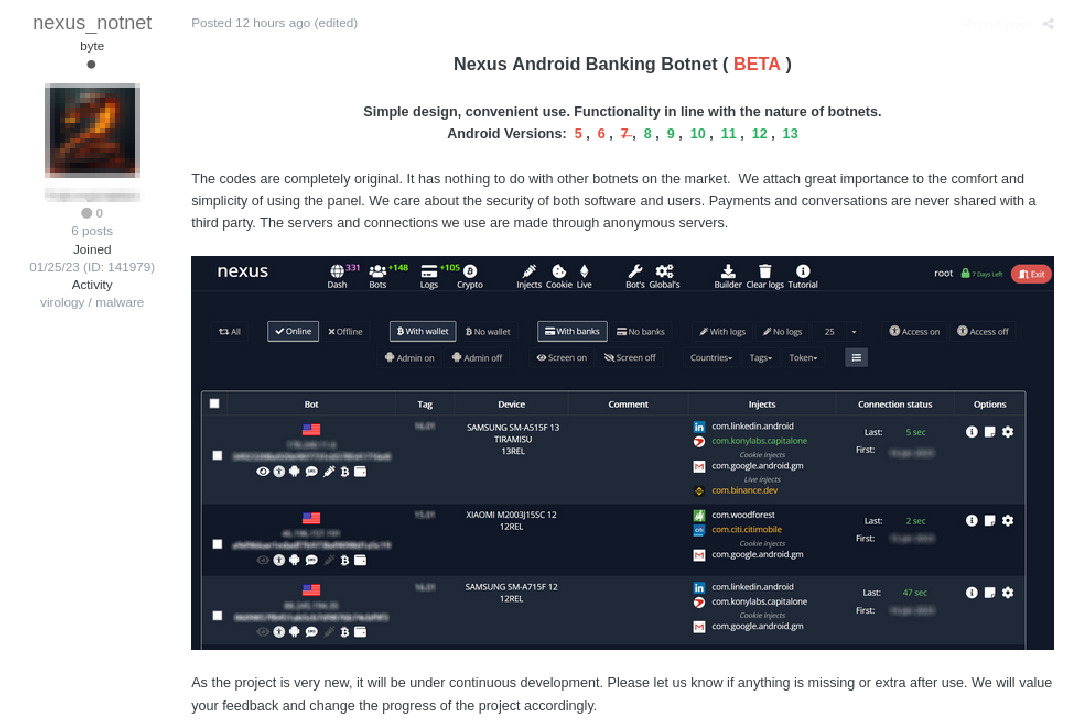
Cross-language and obfuscated entity matching. Determining that “ACME_b@nk” and “acmebank” in a Russian-language post refer to the same organization requires more than a keyword rule. MITRE ATT&CK technique T1583.001 documents that adversaries use homoglyphs and internationalized domain names, along with Cyrillic and Greek characters, to create references that look like a brand while using different underlying characters. The same obfuscation patterns appear in dark web posts that mention target organizations. The fix is entity resolution at ingestion, applied across languages and obfuscated spellings, instead of human-written rules that only match what an analyst anticipated.
Synthetic or fabricated credentials. Credentials posted to build forum reputation or bait buyers are a documented pattern. Research into volume obfuscation by data brokers found that actors combine personal data from older breaches with password hashes from unrelated incidents to create the appearance of a newly compromised database. The fix is to validate against internal identity context before escalation by checking whether the credential matches a real account in the organization’s IAM system.
How To Tune Dark Web Monitoring Rules With Entity Resolution
The noisiest dark web monitoring rule is usually a bare keyword match on the brand name. The example below shows how that rule behaves and how an improved version works.
Noisy rule: Alert on any post containing the string “AcmeCorp.”
Improved rule: Match on verified root domains (acmecorp.com, acmecorp.net), known subsidiaries, executive identities tied to those domains, and email-domain syntax (@acmecorp.com). Keep the keyword “AcmeCorp” as a secondary signal that raises confidence when it appears with a domain or email match, but do not let it trigger an alert on its own.
The improved rule matches against the organization’s specific attack surface: its domains, subsidiaries, executives, and technology stack. A generic keyword list cannot provide that level of focus. This shift turns brand monitoring into exposure monitoring. For a deeper look at the credential exposure lifecycle and why surface-level matching fails, see The Benefits Of Dark Web Credential Monitoring: A Guide.
Cyble Blaze AI, the platform layer, performs entity resolution at the collection layer before an alert is generated, including across languages and obfuscated spellings. That capability makes broad coverage usable. Cyble Vision sees more than fifteen thousand darknet marketplaces, and without precise entity resolution at that scale, broad collection would recreate the alert fatigue described above. Cyble reports a 95% signal-to-noise ratio as a result, based on Cyble internal telemetry. Cyble’s native integrations and REST APIs let tuned findings flow directly into the customer’s existing SIEM, SOAR, or ticketing workflow, so the improved signal lands in tools analysts already use instead of a separate console.
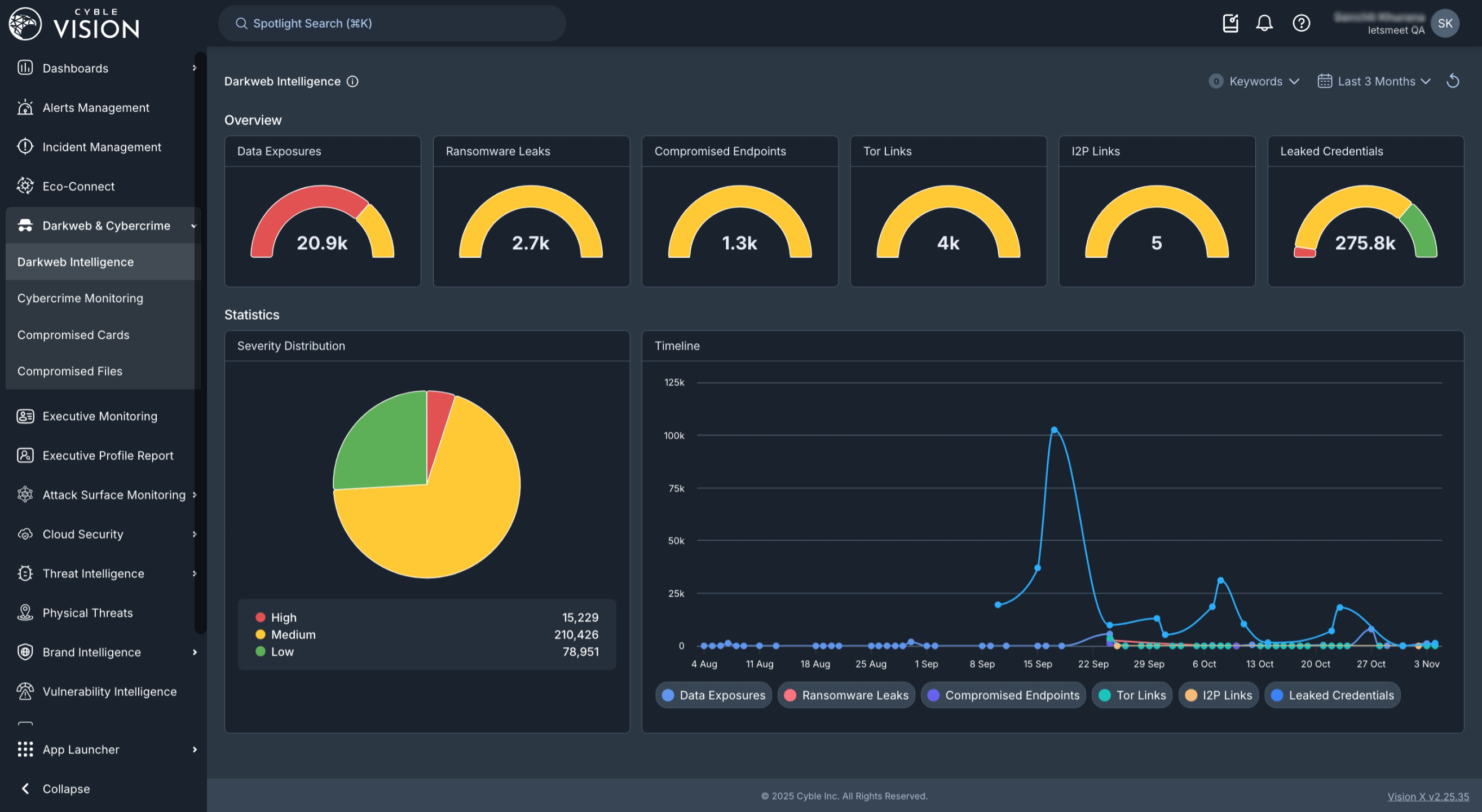
Results depend on the customer’s environment, asset scope, and configuration, and should be validated against that context. Capabilities, coverage, and service levels vary by subscription tier and region.
See how Cyble tunes dark web alerts
False Positive Vs. Stale Exposure: A Triage Taxonomy For Dark Web Monitoring
Tuning rules only works when you know what you are tuning toward. Before any rule changes, every alert needs a clear classification. The table below sorts alerts into five categories and highlights the key split between false positives and stale exposures. Only true positives require immediate escalation, while the other categories are closed, merged, or held with a documented reason.
| Category | Definition | Handling Action |
|---|---|---|
| False positive | The alert does not refer to the monitored organization, such as a common-name collision, an obfuscated reference to a different entity, or a fabricated credential with no match in internal identity systems. | Close with a documented reason and use the case to tighten entity matching rules upstream. |
| Stale exposure | The credential or data is genuine and belongs to the organization, but the underlying password has been reset or the session revoked since the original breach. | Keep the record. Document it for password-reuse analysis, unrotated-secret review, and historical compromise mapping. |
| Duplicate | The same credential record or breach dataset has already been processed, such as a repost of a known combo list or recycled dump. | Merge into the existing case and avoid opening a new incident. Update the deduplication fingerprint. |
| True positive | The credential or data is genuine, belongs to the organization, and has not been remediated. The password is still active or the session is still valid. | Escalate immediately for password reset, session revocation, and downstream impact assessment. |
| Unverified | The alert refers to the organization but cannot be confirmed as genuine or false without additional context, often due to a partial record or an unresolved entity match. | Hold for enrichment and validate against internal identity context before closing or escalating. |
The sharpest distinction in this taxonomy sits between a false positive and a stale exposure. A credential that is genuine but old still matters. A BreachAware analysis published August 2026 explains that exposed credentials have a lifecycle. They can be gathered, combined, renamed, and redistributed, and their security relevance continues after the first disclosure. A stale credential still reveals password reuse patterns, unrotated secrets, and which systems were compromised. Treating it as a false positive and suppressing it discards that intelligence and encourages analysts to close real findings, which worsens dark web alert fatigue.
Deduplication And Credential Freshness Validation
Deduplication and freshness validation turn a raw alert into a clear triage decision. Entity resolution alone does not cover either step.
Record normalization and deduplication. Before comparing a credential record against existing cases, normalize it. Lowercase the email address, strip whitespace, and standardize the domain suffix. After normalization, create a fingerprint by hashing the normalized email and password pair and compare it against previously processed records. If the fingerprint matches an existing case, treat the new post as a duplicate and merge it instead of opening a new incident. Comparitech’s forum analysis found that forum topic counts do not equal unique-breach counts, because a single breach can be reposted many times. Deduplication is therefore a prerequisite for any accurate view of exposure volume.
Freshness validation against IAM. Once a record is confirmed as genuine and non-duplicate, the next step is to decide whether it is still exploitable. Freshness validation checks two items against the organization’s IAM system. First, confirm whether the password associated with the exposed account has been reset since the breach date. Second, confirm whether any active sessions for that account have been revoked. OWASP’s Session Management Cheat Sheet notes that deleting a session cookie on the client does not invalidate a stolen copy of the session ID, so server-side session invalidation is mandatory. BreachAware’s August 2026 analysis adds that a password reset does not end an attacker’s already-established valid session, and that resetting only one account leaves other services exposed when the same password was reused. Freshness validation answers the key triage question: could this credential still influence access to systems the organization controls?
Records that pass identity checks but fail freshness validation, because the password has been reset and all sessions revoked, are classified as stale exposures and handled as historical intelligence.
Rule Lifecycle: Retire, Scope, And Test Without Going Blind
Dark web monitoring tuning behaves as an ongoing discipline, not a one-time configuration. Rules that worked at deployment drift as the organization’s attack surface changes, as threat actors shift naming conventions, and as monitored forums evolve. Rule lifecycle discipline keeps tuning from turning into accidental blind spots.
Retire rules that no longer match anything real. A rule that has not produced a true positive or an unverified finding in ninety days becomes a retirement candidate. Before retiring it, run it against the labeled historical dataset built in week one of the implementation sequence below. Confirm that it has not been silently missing genuine exposures. If it has not, retire it and document the reason.
Scope exclusions narrowly. When a rule produces a known benign match, such as a subsidiary whose name collides with a common term, scope the exclusion to that specific match. Microsoft Sentinel’s false-positive guidance recommends combining multiple attributes so an exception applies only when several conditions occur together. Excluding an entire domain from dark web monitoring removes visibility into genuine exposures on that domain. Scoped exclusions preserve coverage.
Test every rule change against known true positives before deployment. Maintain a labeled set of historical alerts that includes confirmed true positives. Before any rule modification goes live, run the modified rule against that set and verify that every known true positive still fires. This regression test prevents tuning from quietly eliminating coverage and gives security leaders and auditors confidence that a quieter queue still reflects real exposure.
How To Measure Whether Tuning Worked
Alert volume alone does not prove success, because a smaller queue can still miss real leaks. A quieter queue that hides genuine credential exposures creates more risk than a noisy one. Five metrics together show whether tuning improved the program or only made it feel better.
- Precision: The proportion of alerts that are genuine exposures, or true positives, out of all alerts generated. Precision rises when entity resolution and deduplication filter incorrect matches upstream.
- False-positive rate: The proportion of alerts classified as false positives. Track this by category, such as common-name collision or fabricated credential, to see which rule types generate the most noise.
- Duplicate rate: The proportion of alerts that are duplicates of previously processed records. A high duplicate rate suggests that deduplication is not running correctly or that fingerprinting logic needs adjustment.
- Actionability rate: The proportion of alerts that lead to a remediation action, such as a password reset, a session revocation, or a takedown request. This metric connects the monitoring program to operational outcomes.
- Recall safeguard: The proportion of known true positives in the labeled historical set that still fire after a rule change. Recall acts as the guardrail against over-tuning. If recall drops after a tuning change, the change has created false negatives and needs rollback or tighter scoping.
A monthly review cadence works for most programs. Compare precision, false-positive rate, duplicate rate, and actionability rate against the pre-tuning baseline. Run the recall check against the labeled set after every rule change. The goal is a documented, improving trend that shows the quieter queue still reflects complete coverage.
Measure signal quality with Cyble
How To Reduce False Positives In Dark Web Monitoring: A Four-Week Implementation Sequence
- Week one — export and label the existing noise. Pull the last ninety days of alerts and classify each against the five-category taxonomy: false positive, stale exposure, duplicate, true positive, or unverified. This labeled dataset becomes the regression test set for every later rule change. The classification exercise also reveals which failure modes generate the most volume, such as common-name collisions, recycled dumps, or fabricated credentials, and shows where to focus tuning effort first.
- Week two — fix entity matching and deduplication. Replace bare keyword rules with domain, subsidiary, executive, and email-syntax matching. Keep keywords as secondary signals. Implement record normalization and fingerprint-based deduplication so that multiple reposts of the same breach dataset merge into a single case instead of generating separate alerts. Run the improved rules against the labeled dataset and verify that all known true positives still fire.
- Week three — add freshness validation and internal identity context. Connect password-reset and session-revocation status from the IAM system to the escalation path. Classify alerts for credentials where the password has been reset and all sessions revoked as stale exposures and route them to the historical record instead of the active queue. Escalate alerts for credentials with no reset on record as true positives regardless of breach date, because OWASP notes that password reuse lets an old credential still grant access to other services.
- Week four — validate against known true positives and measure. Re-run the labeled historical set through the updated rules. Compare precision, false-positive rate, duplicate rate, and actionability rate against the week-one baseline. Document what changed and why. If recall has dropped and any known true positive no longer fires, identify the rule change responsible and scope it more narrowly before the tuning moves into production.
Frequently Asked Questions
How long does tuning take?
The four-week sequence above covers the initial tuning cycle. Ongoing rule lifecycle discipline, which includes retiring stale rules, scoping exclusions, and regression-testing changes, fits a monthly cadence instead of a fixed project. Programs that treat tuning as a one-time configuration usually see alert volume creep back up within a quarter as the threat landscape and the organization’s attack surface both change.
Does reducing false positives increase false negatives?
Suppression-based tuning can increase false negatives, because suppressing an entire domain or entity class removes incorrect matches and genuine exposures together. The recall safeguard, which re-runs known true positives after every rule change, catches this before it reaches production. Tuning that improves precision while keeping recall steady delivers a real improvement. Tuning that improves precision by lowering recall hides blind spots. The goal is to convert false positives into true negatives without turning true positives into false negatives.
How do you tell a stale exposure from a false positive?
A false positive does not refer to the monitored organization at all. It often reflects a common-name collision, an obfuscated reference to a different entity, or a fabricated credential with no match in internal identity systems. A stale exposure is genuine and maps to a real account in the organization’s IAM system, but the password has been reset and all sessions have been revoked since the breach. The distinction matters because a stale exposure still reveals password reuse patterns, unrotated secrets, and historical compromise scope, while a false positive does not. Treating stale exposures as false positives discards that intelligence and distorts the organization’s exposure history.
Can entity resolution be done without a vendor platform?
Basic entity resolution, such as matching on verified domains and email syntax instead of bare keywords, can be implemented manually in most monitoring tools. Cross-language and obfuscated entity matching, which covers homoglyphs, Cyrillic substitutions, and leetspeak variants, requires either a purpose-built model or a significant engineering investment. The Unicode Consortium’s confusables mapping covers roughly six thousand five hundred sixty-five source code points and can serve as a normalization skeleton. Applying it consistently across a high-volume dark web collection pipeline at ingestion speed, however, is an engineering challenge rather than a configuration task. Most enterprise programs either accept the coverage gap or use a platform that handles this work at the collection layer.
What metrics should we track?
Track the five metrics defined earlier: precision, false-positive rate by failure mode, duplicate rate, actionability rate, and recall. Raw alert volume alone does not serve as a success metric, because a lower count means little without the recall check that confirms genuine exposures still fire.
How do dark web false positives differ from SIEM or email false positives?
SIEM and email false positives usually come from rules that are too broad for the internal environment, such as a detection that fires on legitimate administrative behavior. Dark web false positives come from the four structural failure modes described earlier: common-name collisions, recycled dumps, obfuscated matching failures, and fabricated credentials. Each failure mode needs a different fix, and standard SIEM tuning approaches like threshold adjustment or broad suppression do not address them.
Is dark web monitoring worth it?
Organizations with a consumer-facing brand, regulatory exposure, and no dedicated external threat monitoring team gain clear value from tuned dark web monitoring. A program that generates hundreds of unread alerts per day provides the appearance of protection while making it easier for genuine exposures to be closed unread. The value of dark web monitoring depends on the quality of the match logic, the accuracy of the triage taxonomy, and the discipline of the rule lifecycle. A well-tuned program surfaces credential exposures, recycled breach data, and threat actor references to the organization’s infrastructure in time to act on them. An untuned program surfaces those same items along with thousands of false positives, and the genuine findings disappear into the noise.
Conclusion: A Quieter Queue You Can Still Trust
Suppression acts as the opposite of tuning. Closing alerts just to survive the shift creates blind spots that never appear on dashboards and only surface when a genuine credential exposure goes unaddressed. Classification and entity resolution provide the fix. A clear taxonomy separates false positives from stale exposures and duplicates. Entity matching filters incorrect references before an alert is generated. Freshness validation confirms whether a genuine exposure is still exploitable. Rule lifecycle discipline keeps tuning from eroding coverage over time. The recall safeguard, which re-runs known true positives after every rule change, turns a quieter queue into one you can still trust. For a broader view of the false-positive problem in dark web monitoring, see Dark Web Monitoring False Positives: A Practitioner’s Guide.