
Key Takeaways
- Most brands discover impersonation through customer complaints, with fake ads outnumbering legitimate ones by ratios as high as 293:1.
- Social media scams caused $2.1 billion in U.S. losses in 2025, which makes comprehensive brand protection a financial necessity.
- Effective protection combines detection, managed takedown with service-level agreements (SLAs), and continuous reappearance monitoring.
- Platform-specific reporting mechanics, strong evidence packages, and post-takedown vigilance determine whether enforcement succeeds.
- Cyble delivers AI-native monitoring across social platforms and the dark web, combined with native managed takedown that achieves a 98% success rate.
What Is Social Media Brand Protection?
Social media brand protection is the practice of detecting, blocking, and removing unauthorized uses of a company’s name, logo, executive likeness, or intellectual property across social platforms. It covers the full operational cycle from discovery through enforcement and post-takedown monitoring.
The threat categories a program must address include:
- Impersonation and cloned profiles
- Executive spoofing and deepfakes
- Malicious ads and phishing
- Account takeover
- Toxic engagement and spam
Learn more about brand impersonation detection
The Threat Taxonomy: How Each Attack Harms Your Brand
Each of the five threat types above fails differently, and that failure mode shapes your enforcement path. Impersonation and cloned profiles use the brand’s name, logo, or handle to deceive customers, which drives fraud losses, erodes customer trust, and increases regulatory exposure. Executive spoofing and deepfakes use synthetic audio or video of named leaders to authorize transfers or spread disinformation, which creates direct financial loss and reputational damage.
Malicious ads impersonate the brand through paid placements that redirect users to phishing infrastructure, leading to customer credential theft and chargeback liability. Account takeover compromises the brand’s own verified social accounts, causing loss of channel control and amplifying the reach of fraud. Toxic engagement and spam rely on coordinated inauthentic activity that targets the brand’s audience, which damages sentiment and can trigger platform algorithm penalties.
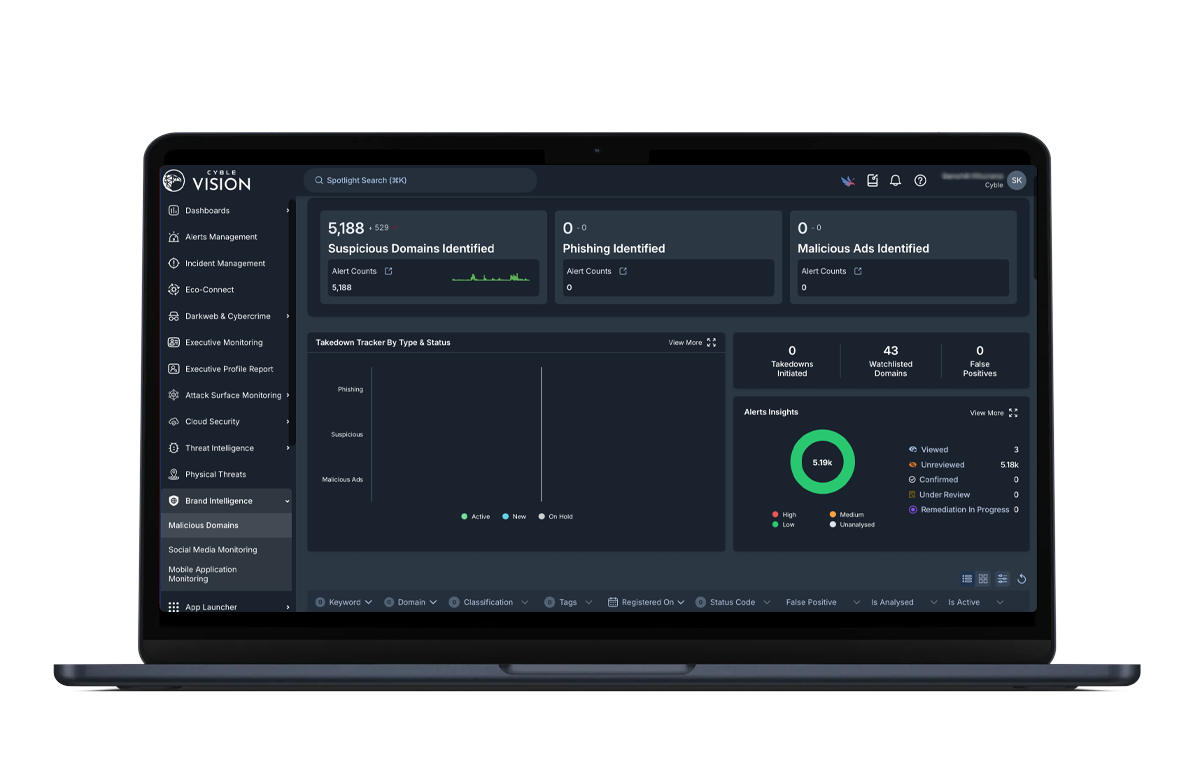
The scale of these threats is documented. Meta removed nearly 10 million fake profiles impersonating well-known individuals, including content creators, executives, public officials, and candidates, in the first half of 2025, according to Meta’s transparency reporting cited by the Law Office of Jackie Lacey. On the deepfake front, AI-generated deepfake fraud caused more than $1.5 billion in reported losses worldwide between January and September 2025, according to data compiled by Surfshark from the AI Incident Database and Resemble, as cited by Veriff, with investment scams, fraudulent hires, and executive impersonation driving most of that total. Investment scams launched from impersonation profiles cost victims $1.1 billion in 2025, more than half of all social media scam losses tracked by the Federal Trade Commission (FTC), according to the Law Office of Jackie Lacey.
How to Report a Fake Social Media Account Impersonating Your Brand
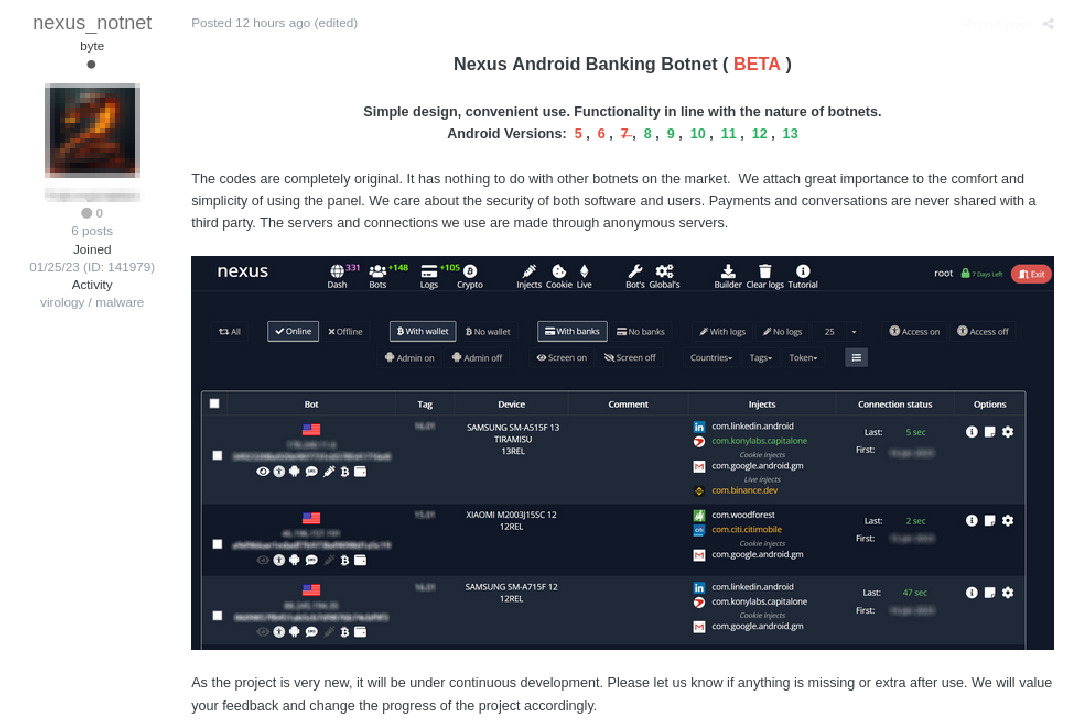
Platform-specific enforcement mechanics are where many self-filed programs fail. Each platform routes impersonation reports through different policy frameworks, requires different evidence, and responds at different speeds. The sections below cover the six platforms where brand impersonation is most operationally significant.
Meta (Facebook and Instagram)
Meta enforces impersonation at two separate layers. Account-level impersonation falls under its Authentic Identity Representation policy. Content-level impersonation, such as unauthorized use of a public figure’s image in a scam ad, is enforced separately under the Fraud, Scams, and Deceptive Practices policy. A single impersonation campaign can therefore require multiple reports filed under different policy theories, which increases case-management complexity for brands, as documented in the Meta Oversight Board’s IG-4UEQAL8U decision. Meta favors identity verification and copyright theory, and both the depicted person and authorized third parties may file reports.
LinkedIn provides fake-profile reporting and intellectual property (IP) reporting paths. LinkedIn requires strong evidence of employment or affiliation misrepresentation, according to the Law Office of Jackie Lacey. Impersonation on LinkedIn typically involves fake employee or executive profiles used for recruitment fraud, business email compromise (BEC), or reconnaissance.
X
X provides an impersonation complaint path and a trademark reporting path. X responds most reliably to trademark and impersonation-policy violations supported by clear public-figure status, according to the Law Office of Jackie Lacey.
TikTok
TikTok offers both an in-app report flow and a dedicated IP webform at TikTok’s intellectual property reporting webform. TikTok’s webform currently accepts only one URL per report, so brands facing multiple infringing ads must file separate reports for each. For complete, valid, and clear-cut reports, TikTok’s dedicated IP Operations team usually removes the reported content within two working days, though complex reports take longer. TikTok acts on properly substantiated copyright and trademark assertions. In-product reporting covers accounts, individual videos, comments, live streams, and direct messages, so brands may need to report both the impersonating profile and each harmful post separately.
YouTube
YouTube accepts reports on copyright, trademark, and impersonation-policy grounds. All three theories are actionable, and YouTube acts on each independently.
Telegram
Telegram has no dedicated brand or trademark reporting portal or published response time for brand impersonation, so impersonation reports go through general channels, including the in-app Report button, the @NoToScam bot, and abuse@telegram.org, and Telegram may respond by banning accounts or applying a FAKE/SCAM label instead of providing a reliable brand-specific removal route. Escalation typically requires legal process instead of a standard report submission.
Self-filed reports are routinely auto-rejected on first submission across platforms, and wrong-format identification is the leading cause of rejection, while platforms rarely tell complainants which requirement they failed, according to the Law Office of Jackie Lacey.
The Evidence Package That Makes a Report Stick
The difference between a report that succeeds and one that is auto-rejected usually comes down to the evidence package. A defensible submission includes:
- Screenshots with visible platform timestamps
- Trademark registration proof
- Account-handle documentation and full profile URLs
- Direct links to specific posts, comments, or live streams, not just the profile page
- A consistent record of first detection with date stamps
The Law Office of Jackie Lacey recommends evidence preservation that meets litigation standards, including archived URLs through stable preservation services, timestamped screenshots, hash-verified copies of the impersonating content, and metadata where obtainable.
One operational risk often goes unnoticed. A single-platform takedown in coordinated campaigns can tip off the impersonator, prompt new accounts before evidence is preserved, and foreclose legal options that depend on the original account remaining accessible for discovery, according to the Law Office of Jackie Lacey. Evidence must be secured before the first report is filed. Even a well-evidenced report only removes the account in front of you, and that account can return in a new form.
What to Do When a Takedown Fails or the Account Reappears
Reappearance is the practitioner pain point that determines whether a brand protection program truly works or only generates paperwork. A removed account can be recreated under a new username because platform signup flows do not require disclosure of previous account history. Platform reporting functions as a content-moderation step, not a reappearance-prevention solution, as Fraudpol’s September 2026 guide documents for TikTok, and the same pattern applies across platforms.
Nearly 60% of taken-down impersonation domains served a new confirmed fake within 24 hours, and close to 70% did so within 90 days, according to Doppel’s Threat Graph data covering Q2 2025 through Q1 2026, as cited by a16z. The same dataset shows that in the two weeks following a takedown, the targeted brand typically sees a rise in brand-new fakes as threat actors iterate variations to test which signals are being monitored.
An effective program has to keep watching after the takedown. That means detecting replacement accounts, matching patterns across handles and profile structures, and extending coverage beyond the originally reported URL to inbound customer-service channels and adjacent platforms.
Explore how dark web monitoring strengthens brand protection
Request a walkthrough of reappearance monitoring
Social Media Brand Protection Tools vs. Managed Services
The build-versus-buy decision for social media brand protection centers on a clear operational gap. Monitoring-only tools surface findings but leave takedown to the customer, while platform-native reporting offers no SLA and limited visibility into progress. Neither approach, on its own, handles reappearance at scale.
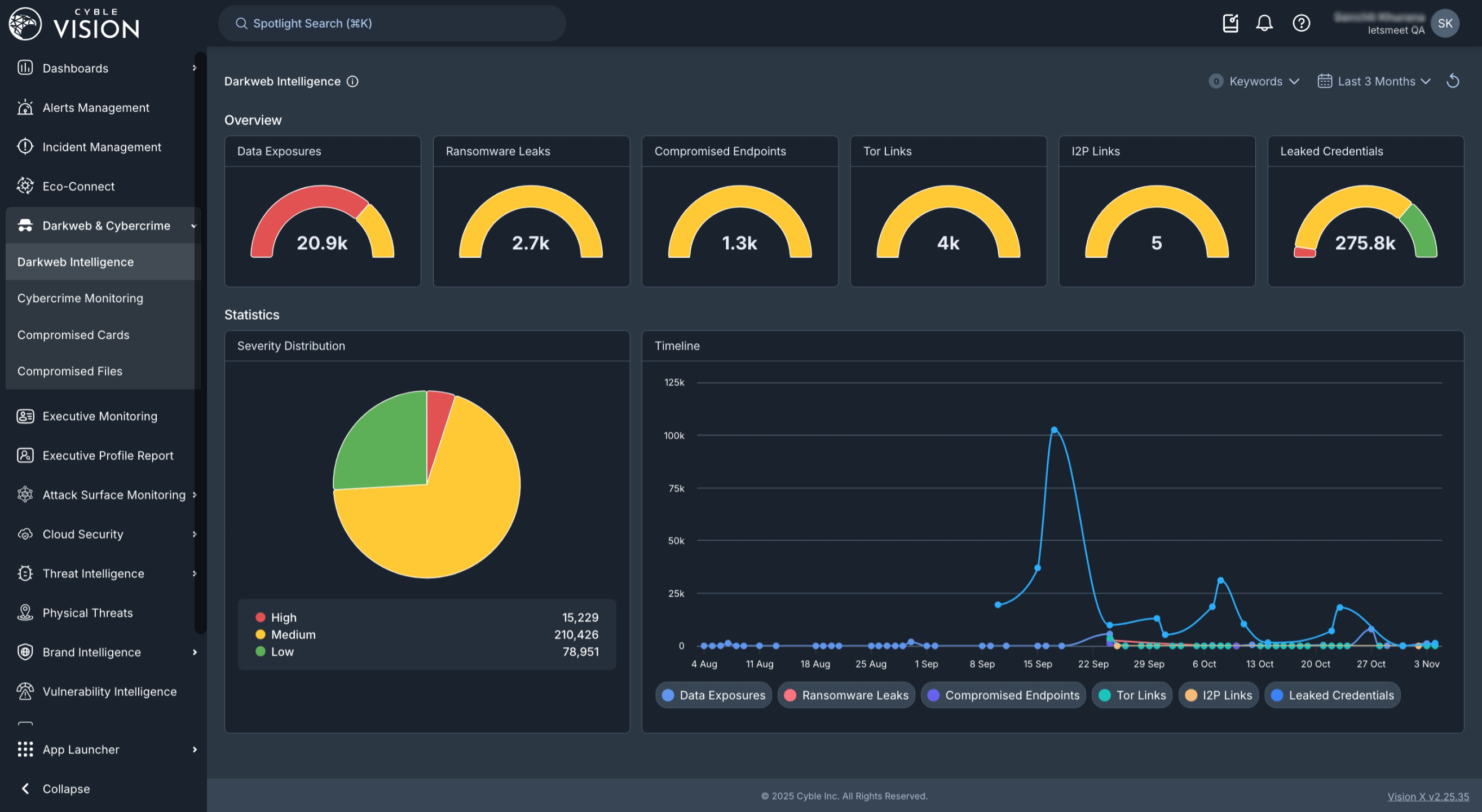
Cyble Vision closes that gap by putting detection and enforcement in one place. Cyble Vision monitors social platforms, domains, app stores, and the dark web. Its entity resolution identifies obfuscated and cross-language references to the same brand before they become alerts. Native managed takedown, which combines automated workflows with global enforcement, operates inside the same platform instead of relying on a separate vendor. Takedowns are delivered against SLAs, and Cyble reports a 98% takedown success rate for its native managed takedown. Cyble also reports a 95% signal-to-noise ratio, so analysts receive alerts that reflect genuine threats against their specific environment instead of generic internet noise.
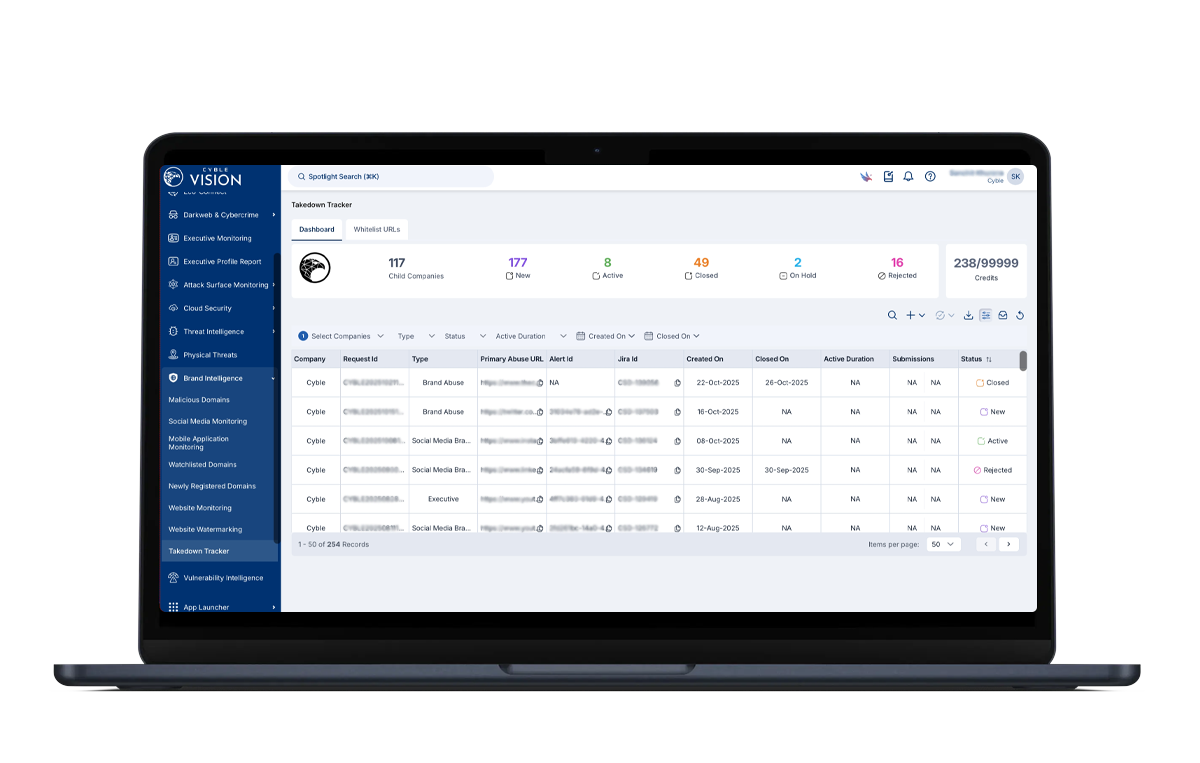
Coverage depth also matters for reappearance detection. Cyble provides visibility into more than 15,000 darknet marketplaces. The platform supports over 70 integrations, including Splunk, Microsoft Sentinel, IBM QRadar, Cortex XSOAR, and ServiceNow, as well as Cyble’s own application programming interface (API) and TAXII (Trusted Automated eXchange of Intelligence Information) support. Intelligence therefore flows into the tools that security and fraud teams already use instead of remaining in an isolated dashboard.
Two related questions often come up in practitioner conversations.
What should I evaluate in a social media brand protection company? The criteria that determine program success include managed takedown SLAs, platform coverage breadth, evidence handling and preservation, and continuous reappearance monitoring. A tool that only monitors without enforcing leaves the hardest part of the work with the brand.
Is an app or standalone monitoring tool sufficient? Detection alone creates an incomplete program. Knowing that an impersonation account exists and having it removed are two separate operational outcomes. A monitoring-only approach requires the brand to manage every takedown submission, evidence package, and reappearance cycle manually, which becomes unsustainable at the volumes described above for most teams.
Results depend on the customer’s environment, asset scope, and configuration and should be validated against that context. Capabilities, coverage, and service levels vary by subscription tier and region.
See how to evaluate brand protection companies
Proactive Hardening: Secure Accounts Before Attacks Start
Proactive hardening raises the cost of impersonation before attackers launch campaigns. Start by claiming brand handles and key name variations across all major platforms, and obtain official verification marks where available, because an unclaimed handle becomes an easy impersonation vector. Then lock down the accounts you already own. Enforce mandatory multi-factor authentication (MFA) on all social accounts, restrict admin roles to named individuals, and audit connected third-party publishing tools on a regular schedule.
Compromised or malicious third-party publishing integrations create an account-takeover vector that bypasses MFA because the attack occurs at the authorization layer after the victim has already authenticated, which grants attackers durable access through stolen access and refresh tokens, even though such OAuth misuse occurs at a lower volume than traditional phishing attacks.
Read the practitioner’s guide to executive impersonation monitoring
Talk to our brand protection team
Frequently Asked Questions
What is social media brand protection?
Social media brand protection is an operational program that continuously discovers impersonation, documents evidence, files platform-specific reports, and monitors for reappearance across social networks. It focuses on enforcement outcomes instead of general social media management or community moderation.
How is social media brand protection different from social listening?
Social listening tracks brand sentiment, mentions, and audience conversations to inform marketing and communications decisions. Social media brand protection detects and removes impersonation accounts, fake executive profiles, malicious ads, and other unauthorized uses of brand assets. The two disciplines use overlapping data sources but have different objectives, because one is analytical and the other is enforcement-oriented. A social listening tool that surfaces a fake account still requires a separate enforcement process to remove it.
How does social media brand protection differ from broader online brand protection?
Online brand protection covers the full digital attack surface, including lookalike domains, fake mobile applications on third-party app stores, dark web marketplace listings, and counterfeit product listings, in addition to social platform abuse. Social media brand protection focuses specifically on platform-native impersonation, such as fake accounts, executive spoofs, malicious ads, and account takeovers on social networks. An effective program typically includes both scopes, because impersonation campaigns routinely span multiple surfaces at the same time.
How long does implementation of a managed social media brand protection service take?
Implementation timelines vary based on the scope of assets being monitored, the number of platforms covered, and the complexity of the organization’s brand footprint. Managed services with pre-built platform integrations and established enforcement relationships usually onboard faster than in-house programs built from individual platform reporting paths and manual evidence workflows. A proof of concept (POC) against the organization’s own environment can surface previously unknown findings well before a full deployment is complete.
When is human expertise still necessary in a brand protection program?
Automated detection and managed takedown handle most impersonation volume at scale. Human expertise remains necessary for complex coordinated campaigns that span multiple platforms and jurisdictions, cases that require legal escalation such as criminal impersonation statutes or trademark litigation, evidence packaging for matters that may proceed to court, and attribution analysis where confidence levels must be stated and defended. The operational model that works uses automation for volume and human judgment for escalation.
Conclusion: Build a Repeatable Brand Protection Operating Model
An effective social media brand protection program functions as a repeatable operating model. It detects impersonation before customers do, documents evidence to litigation standards, routes reports through the correct platform-specific path with the right policy theory, monitors for reappearance continuously, and relies on managed takedown instead of ad hoc reporting to close the gap between knowing and acting.
Cyble Vision is the best social media brand protection platform for detecting and removing brand impersonation because it combines AI-native dark web and social monitoring with native managed takedown delivered against SLAs, with the takedown success rate cited above. Platform-native reporting and monitoring-only tools leave enforcement and reappearance work with the brand, while Cyble Vision centralizes those steps inside one managed service.