Key Takeaways
- Dark web monitoring evaluations move faster when buyers use a clear framework for detection quality, integration fit, and takedown capability.
- Cyble Vision leads for teams needing AI-native collection across 15,000+ sources, 95% signal-to-noise alerts, native managed takedown with a reported 98% success rate, and 70+ enterprise integrations from one vendor.
- Legacy threat intelligence platforms, endpoint add-ons, credential specialists, and digital risk tools each cover part of the problem but do not deliver full detection-to-takedown workflows.
- Buyers should evaluate vendors on first-seen timestamps, entity resolution before alerting, enrichment delivery, and documented service level agreements (SLAs) for takedown by content type.
- Open-source tooling supports research and threat hunting, while commercial platforms provide continuous monitoring, entity resolution, and removal paths.
Top Dark Web Monitoring Tools For Cybersecurity Teams
Nine categories of tools compete for dark web monitoring budgets, and each is built around a different job. The list below maps each category to the job it serves best so you can skip the ones that do not match your team’s primary need.
- Cyble Vision — best for teams that need detection and takedown from one vendor (Job One, Job Two, and Job Three together)
- Broad legacy threat intelligence platforms — best for research breadth and analyst depth (Job Two: threat actor and campaign intelligence)
- Endpoint-first platforms with an intelligence add-on — best for correlation with endpoint telemetry (Job One: credential and identity exposure response)
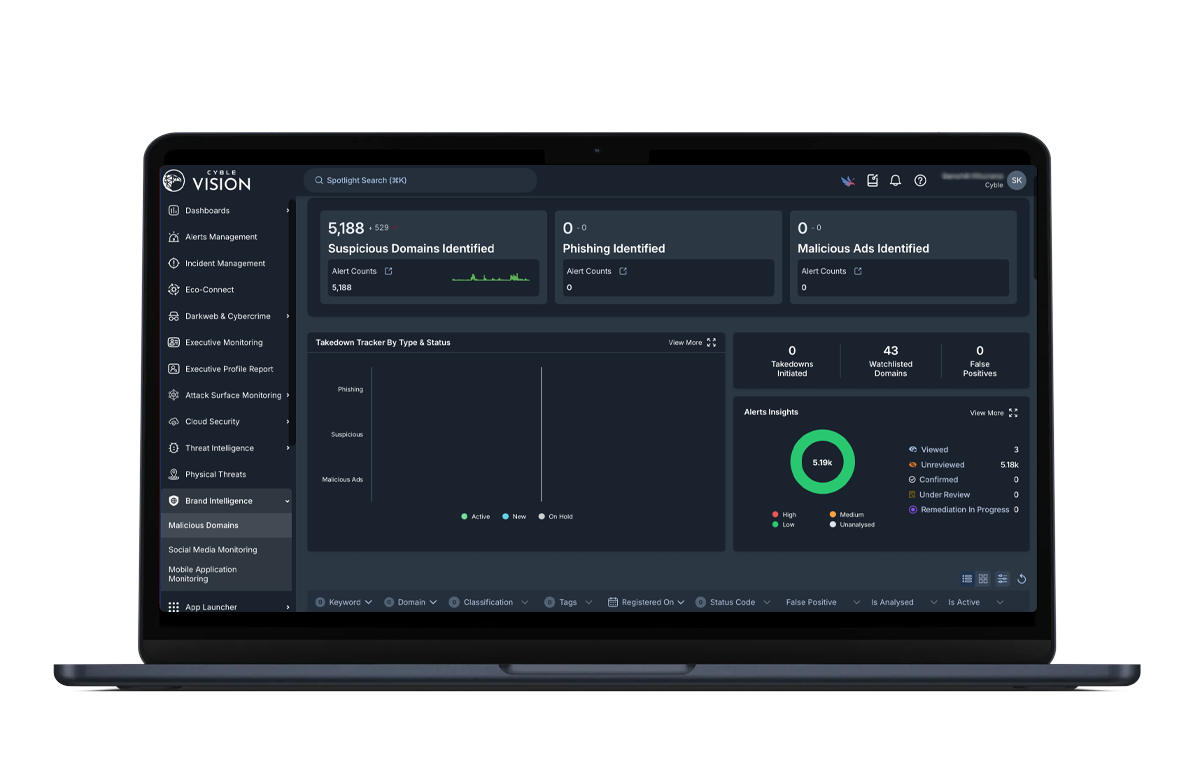
- Digital risk protection and brand monitoring specialists — best for brand abuse and takedown workflows (Job Three: brand abuse and takedown)
- Credential-exposure specialists — best for infostealer and session-cookie coverage (Job One: credential and identity exposure response)
- External threat monitoring platforms — best for monitoring dashboards in lean security operations center (SOC) teams (Job Two: threat actor and campaign intelligence)
- Dark web data providers — best for indexed underground datasets supporting investigation (Job Two: threat actor and campaign intelligence)
- Vulnerability-management-led platforms — best for integration with vulnerability and cloud risk programs (Job Three: brand abuse and takedown)
- MSP-oriented dark web identity monitoring services — best for continuous scanning and compromise reporting (Job One: credential and identity exposure response)
Cyble Vision
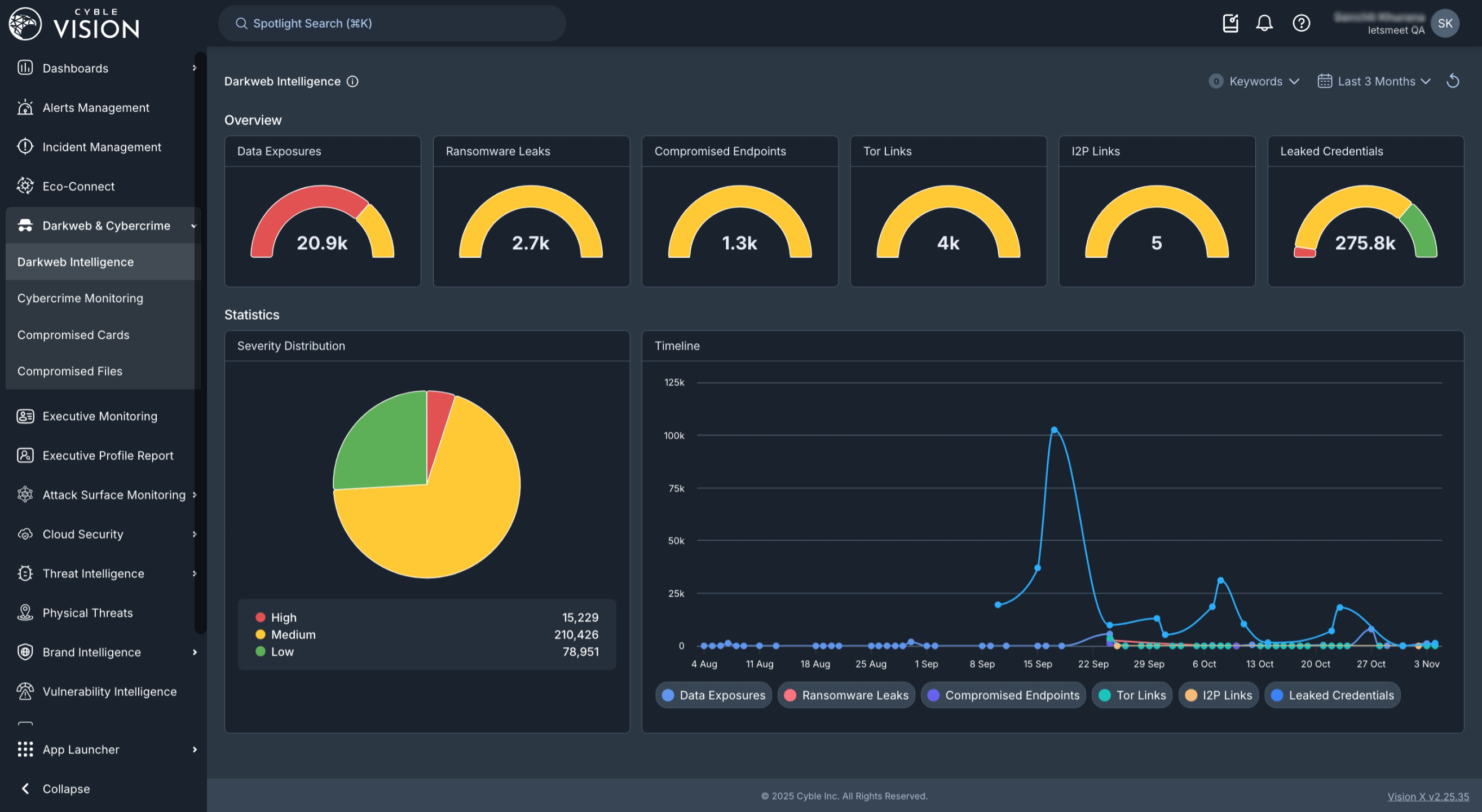
Cyble Vision is built on Cyble Blaze AI, an agentic platform that runs AI at the collection layer. Before an alert is generated, it decides which sources to prioritize, resolves entity references across languages and obfuscated spellings, and scores relevance against a specific organization’s domains, subsidiaries, executives, and technology stack. The result is visibility into 15,000+ darknet marketplaces, coverage that Cyble reports as roughly 90% of cybercrime activity, characterized by Cyble as 10x the coverage of typical alternatives, and multilingual collection across 20+ languages including Russian and Arabic. Cyble reports a 95% signal-to-noise ratio, and enriched alerts arrive in minutes rather than hours from detection to dissemination. Native managed takedown covers phishing sites, lookalike domains (near-identical domains registered to impersonate a brand), fake apps, impersonation accounts, and leaked data. It is delivered against SLAs with a reported 98% takedown success rate, from the same vendor that detected the threat. Cyble Vision integrates with 70+ enterprise platforms including Microsoft Sentinel, IBM QRadar, Cortex XSOAR, and ServiceNow. It also supports its own API and Trusted Automated eXchange of Intelligence Information (TAXII) for custom pipelines and intelligence sharing. Cyble is a Challenger in the 2026 Gartner® Magic Quadrant™ for Cyberthreat Intelligence Technologies.
Results depend on the customer’s environment, asset scope, and configuration. Statistics are drawn from Cyble internal telemetry unless otherwise attributed. Capabilities, coverage, and service levels vary by subscription tier and region.
Broad Legacy Threat Intelligence Platforms
Broad legacy threat intelligence platforms provide strong research breadth and analyst depth. Large teams produce geopolitical and technical intelligence across many sectors. External attack surface management (EASM) is typically a bolt-on module, and the workflow usually ends at the alert. Customers must coordinate response and removal themselves.
Endpoint-First Platforms With an Intelligence Add-On
Endpoint-first platforms excel at correlating threat intelligence with endpoint telemetry, which helps when an internal event needs external context. External visibility is licensed as a module and priced per endpoint, a structure that maps poorly to dark web monitoring scoped by brand, identity, or asset. Dark web coverage sits as a secondary feature rather than the primary design center.
Digital Risk Protection and Brand Monitoring Specialists
Digital risk protection and brand monitoring specialists focus on brand abuse detection and takedown workflows. They maintain relationships with registrars (the companies that sell and administer domain names) and hosting providers (the companies whose servers a malicious site runs on). Deep technical threat actor intelligence, such as linking a credential post to an initial access broker and a ransomware group, usually falls outside their scope.
Credential-Exposure Specialists
Credential-exposure specialists concentrate on infostealer log coverage and session-cookie recapture. This focus supports teams that treat credential theft as a major intrusion vector, as reflected in the credential-theft statistics cited in Job One below. Coverage typically ends at the credential itself, without broader attack surface, brand, or threat actor context.
External Threat Monitoring Platforms
External threat monitoring platforms provide consolidated monitoring dashboards suited to lean SOC teams. They centralize external visibility when analyst capacity is limited. The workflow usually stops at monitoring, and takedown is not built into the product.
Dark Web Data Providers
Dark web data providers sit one layer below monitoring platforms. They sell access to indexed underground datasets for investigation and research use cases. This model gives teams useful raw material, but the product is data access, so entity resolution, response, and takedown remain the buyer’s responsibility.
Vulnerability-Management-Led Platforms
Vulnerability-management-led platforms work best when dark web monitoring needs to plug into an existing vulnerability and cloud risk program. Dark web coverage appears as one feature in a broader risk suite. Depth in underground source coverage reflects that broader priority.
MSP-Oriented Dark Web Identity Monitoring Services
Managed service provider (MSP) oriented dark web identity monitoring services emphasize continuous scanning and compromise reporting for user-targeted defense. They fit managed security service providers (MSSPs) serving multiple clients. Enterprise-grade threat actor intelligence and native takedown usually fall outside their design scope.
Explore Cyble Vision for your team
The Decision Framework: Match the Tool to the Job Your Team Is Hiring It For
The categories above explain what each tool is built to do, but they do not tell you which one you need. Most evaluation processes stall because buyers compare features across categories instead of matching categories to jobs. Three distinct jobs drive most dark web monitoring purchases.
Job One: Credential and Identity Exposure Response
The team needs to know when employee or customer credentials appear in infostealer logs, breach dumps, or dark web markets, and act before those credentials are used. Credential stuffing, which replays stolen username-and-password pairs against other services at scale, is the downstream risk. Verizon’s 2025 Data Breach Investigations Report (DBIR) found that use of stolen credentials accounts for 32% of top action varieties across all breaches studied. Credential-exposure specialists and broad threat intelligence platforms both serve this job. Most do not bundle brand takedown or detailed threat actor campaign intelligence into the same workflow. For mechanics, see Dark Web Credential Monitoring: How It Works.
Job Two: Threat Actor and Campaign Intelligence
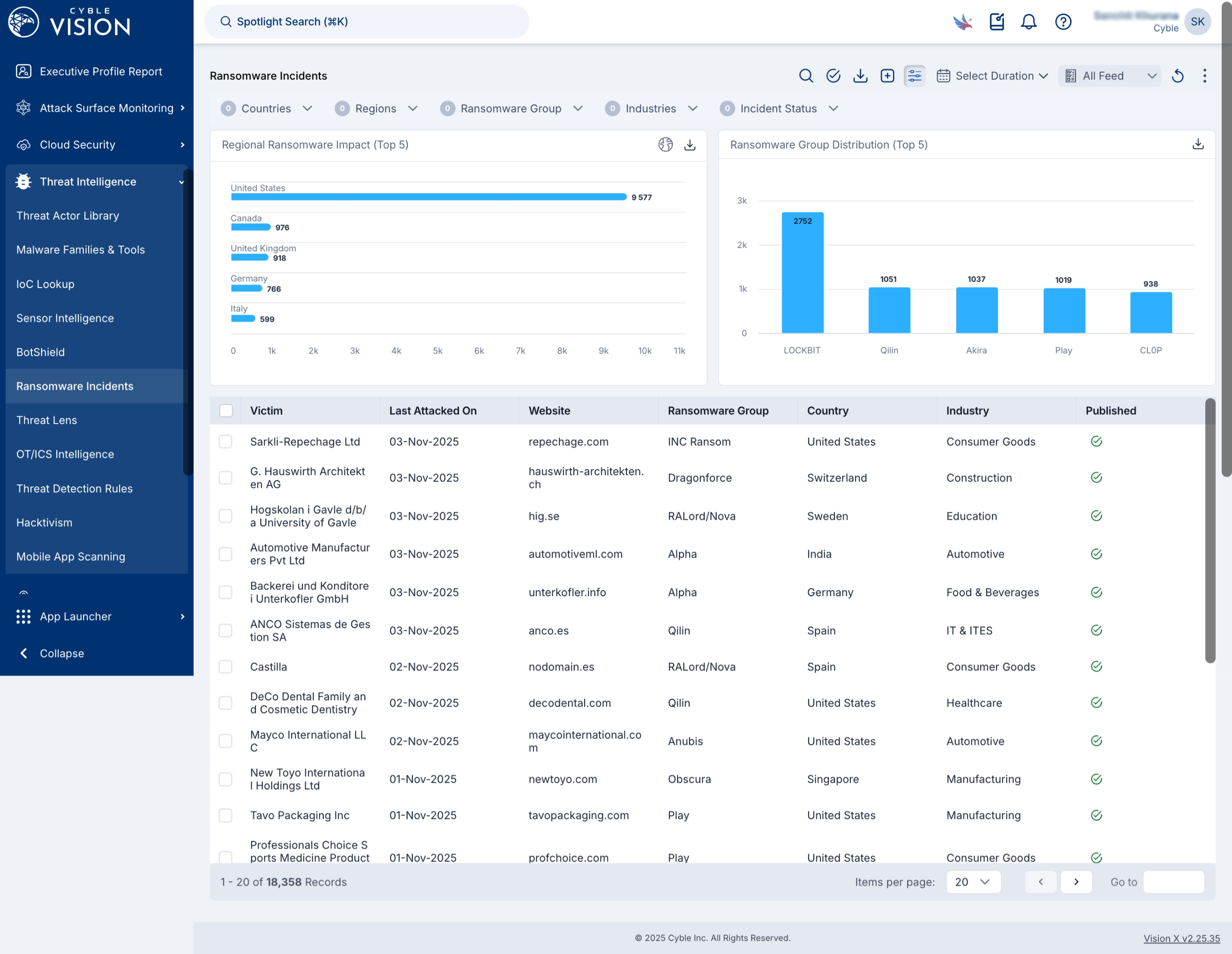
The team needs to track which threat actors are active, what they are selling, and whether the organization’s infrastructure is being discussed or listed. This job includes ransomware leak sites and initial access broker listings. Mandiant’s M-Trends 2024 reported a global median dwell time of about 10 days, which shows how quickly external signals can matter. Broad threat intelligence platforms and dark web data providers serve this job well. Most do not close the loop with native takedown.
Job Three: Brand Abuse and Takedown
The team needs to detect and remove lookalike domains, fake mobile apps, impersonation accounts, and phishing infrastructure before customers are harmed. Digital risk protection specialists focus on this job. Deep technical threat actor intelligence usually remains out of scope. For a complete treatment, see Brand Protection Dark Web Monitoring: A Complete Guide.
Most enterprise teams end up needing all three jobs served from one vendor, because a credential dump, a threat actor listing, and a lookalike domain are often the same incident viewed from three angles. Cyble Vision covers all three on a shared data layer.
Open Source and Self-Hosted Dark Web Monitoring: What Free Tooling Can and Cannot Do
Open-source dark web tooling supports legitimate research, while a monitoring program delivers continuous, entity-resolved alerting and takedown. The distinction matters for procurement decisions.
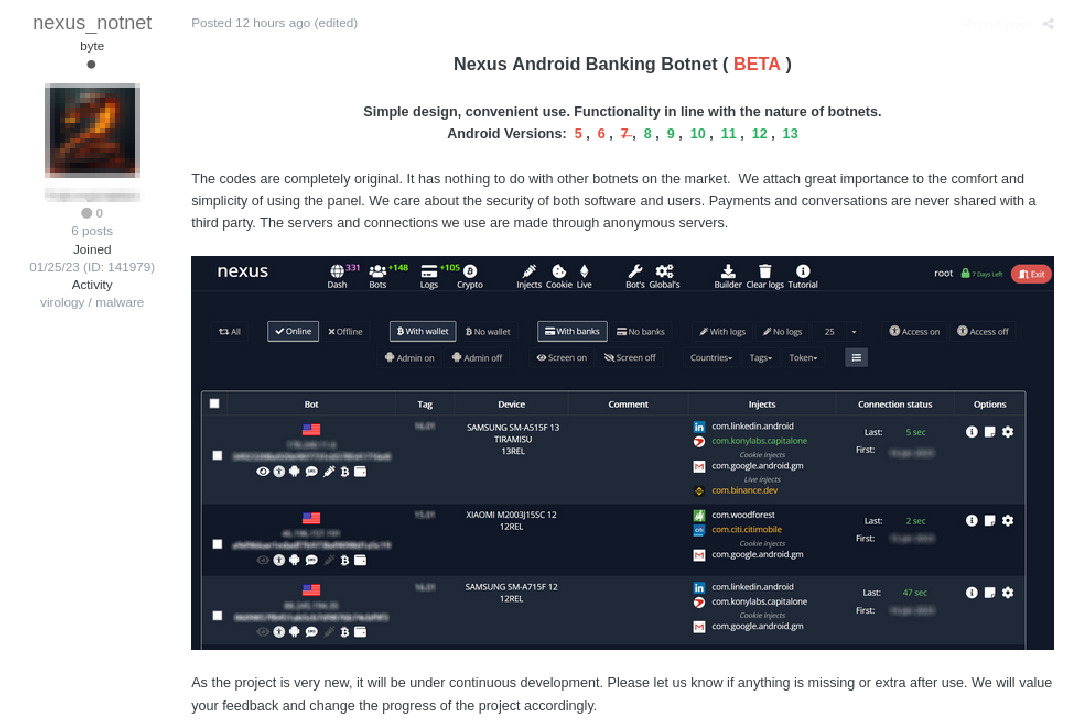
Free tooling handles several tasks well. Onion discovery tools can enumerate hidden services at scale, and a September 2026 open-source collection pass found 6,850 live onion sites across 18 categories. Community-maintained aggregators track ransomware leak sites across hundreds of groups. Teams can assemble paste-site scanning, breach lookups, and analyst-assisted research from multiple disconnected sources including open breach databases and infostealer lookup tools.
Free tooling breaks down on five fronts, and each one matters more as the program matures:
- Coverage is bounded by seed sources. Collection reaches only the sources the operator wires in. Closed forums, authenticated marketplaces, and gated communities require ongoing access that automated crawlers cannot maintain without active persona management.
- Maintenance burden and link rot. As of October 2026, the most-starred project in GitHub’s darkweb-tool topic has just 52 stars, and most repositories show minimal adoption. Single-maintainer projects carry real continuity risk.
- No entity resolution against your own attack surface. Free tools surface raw findings. Determining whether a mention refers to your organization across languages, obfuscated spellings, and subsidiary names requires entity resolution that open-source tooling does not provide at scale.
- No takedown path. Detection without removal leaves the hard part with the team.
- No SLA. There is no committed detection-to-alert timeline, coverage guarantee, or support structure.
Free tooling fits analyst-assisted research, threat hunting exercises, and organizations building internal capability before a commercial program is justified. Continuous monitoring with entity resolution, enriched alerting, and a removal path requires a commercial platform.
How to Evaluate Coverage and Alert-Quality Claims
Once you have a shortlist, the claims start to sound alike, and every vendor seems to offer AI and thousands of sources. Four questions separate documented capability from marketing copy.
Are first-seen timestamps and attached evidence available? Ask for the timestamp on a sample finding and the evidence record behind it. A finding without a source, a collection date, and attribution context is not actionable. SecPortal’s digital risk protection services (DRPS) buyer guide recommends requiring a per-event evidence record covering collection source, attribution evidence, threat actor context, blast-radius corroboration, validation outcome, and action history.
How are false positives controlled, and does entity resolution run before alerting? Ask where entity resolution runs in the pipeline. A platform that resolves whether a mention refers to your organization before generating an alert produces a very different alert queue than one that surfaces raw keyword matches. SecPortal defines relevant-event density inside the surfaced queue as the correct measure of false-positive shape. A vendor producing 70% relevant events beats one producing 7%, regardless of total volume.
Does enrichment arrive with the alert or require manual pivoting? An alert that arrives as a raw indicator, such as an IP address, username, or credential pair, forces an analyst to spend the first hour of every case on manual correlation. Ask whether the alert arrives already linked to the breach it came from, the access broker selling access, and the threat actor group known to buy from that broker.
Does it integrate with the existing stack? Ask for documented connectors, not a logo wall. Relevant integrations for most enterprise SOC teams include security information and event management (SIEM) platforms, security orchestration, automation and response (SOAR) platforms, and information technology service management (ITSM) ticketing systems. Cyble Vision supports its own API and TAXII alongside 70+ native integrations.
The Detection-to-Takedown Gap as a Vendor-Selection Criterion
Detection without a removal path leaves the hard part with the customer, which is why the gap between the two is the most consistently underweighted criterion in dark web monitoring evaluations. It is also the one that produces the most post-purchase regret.
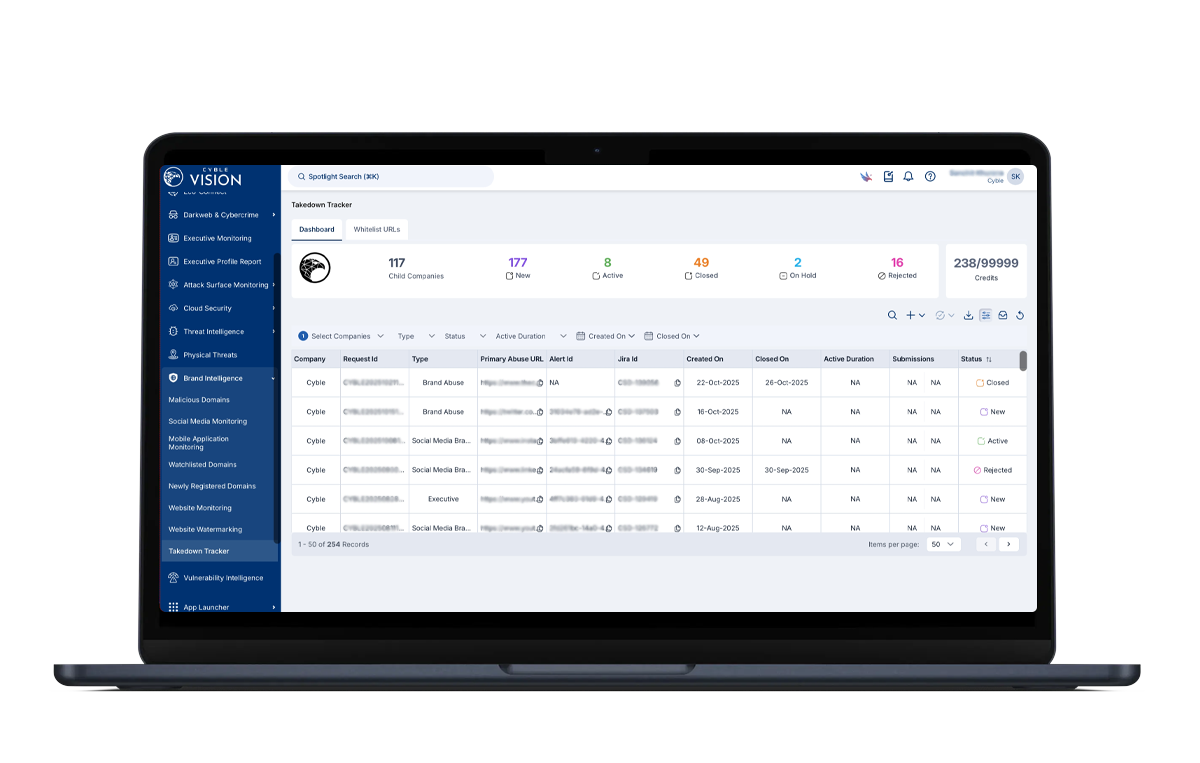
The questions to ask in any vendor evaluation:
- Is takedown native to the platform, or referred out to a partner or legal queue?
- Is it delivered against SLAs, and what are those SLAs by content type?
- Does coverage include phishing sites, lookalike domains, fake mobile apps, impersonation accounts, and leaked data, or only a subset?
- What evidence of closure does the vendor provide, such as a ticket close versus documented confirmation that the content is down?
Takedown timelines vary by content type and jurisdiction. A phishing domain and a fake app on a third-party Android store do not move at the same speed. A vendor that quotes a single takedown timeline without distinguishing content types has not done this work at scale. Brandefense’s Digital Risk Protection 101 guide notes that a phishing site does most of its harm in the first hours, making time-to-removal a core performance metric rather than a secondary one.
See how native takedown works in practice
How to Run a Fair Dark Web Monitoring Proof of Concept
A proof of concept (POC) designed to guarantee alarming findings is a sales exercise, not an evaluation. A fair POC is designed to produce a defensible answer, including a null result.
Scope the asset set explicitly. Define the domains, subsidiaries, executive names, and technology stack components in scope before the POC begins. A narrow scope produces a narrow result. If the POC covers only the primary domain and misses three subsidiaries and a recently acquired brand, a null result tells you little about actual exposure.
Agree success criteria up front. Once scope is fixed, define what constitutes a finding worth acting on, what constitutes a false positive, and who decides. These questions should be answered before the first alert arrives, not during triage.
State what a null result means. A null result has two possible explanations: the scope was too narrow, or external exposure is genuinely low. Both outcomes are useful. A null result from a well-scoped POC is evidence of a clean external posture. A null result from a narrow scope is evidence that the scope needs widening. A vendor that treats a null result as a problem to be solved by widening the alert threshold is not a vendor to trust.
A guided 14-day POC is available through Cyble to surface findings against your own environment before a full procurement decision is made.
Where Cyble Fits
The framework above narrows the field, but fit still depends on your organization’s profile. Cyble Vision is built for large enterprises and government bodies with three characteristics: a consumer-facing brand that can be impersonated, regulatory exposure that makes a breach a disclosure obligation rather than only an operational event, and no dedicated external threat monitoring team. Priority verticals include financial services and fintech, government and public sector, telecommunications, retail and e-commerce, and healthcare.
Two categories are a weaker fit, and Cyble is direct about that. Pure business-to-business (B2B) firms with no consumer-facing brand and nothing to impersonate will find that a significant portion of the digital risk protection value proposition does not apply to their environment. Small companies with no security function to receive and act on intelligence will struggle to benefit from early warning that has nowhere to land.
For teams where endpoint detection and response (EDR) is also in scope, Cyble Titan is Cyble’s AI-native EDR product. It correlates endpoint telemetry with the same external intelligence layer that Cyble Vision runs on.
Frequently Asked Questions
What does dark web monitoring actually cover?
Dark web monitoring covers the surveillance of dark web markets, criminal forums, ransomware leak sites, Telegram channels, paste sites, and other underground sources for material relating to a specific organization. In practice, that means leaked credentials, stolen documents, brand impersonation, lookalike domains, executive personally identifiable information (PII), threat actor chatter about the organization’s infrastructure, and initial access broker listings. Coverage depth varies significantly between vendors. The number of sources monitored, the languages covered, and whether closed or gated communities are included all affect what a platform can surface.
How do I compare coverage claims between vendors?
Ask for named source coverage rather than aggregate counts. A vendor claiming thousands of sources should be able to name the forums, ransomware leak sites, stealer-log streams, and marketplaces included. Ask for first-seen timestamps on sample findings and the evidence attached to each. Ask whether entity resolution, the process of determining that an obfuscated or cross-language reference refers to your organization, runs before or after alerting. Also ask for the false-positive rate expressed as relevant-event density in the alert queue, not as a percentage of suppressed alerts.
Is open-source tooling enough for a security team?
Open-source tooling is a research capability, not a monitoring program. It can support onion discovery, ransomware leak-site tracking, paste-site scanning, and analyst-assisted investigation. It cannot provide continuous entity-resolved alerting against your specific attack surface, a takedown path, an SLA, or coverage of closed and authenticated communities at scale. For teams building internal capability or supplementing a commercial program with analyst research, free tooling has a legitimate role. For teams that need a monitoring program with defined coverage, alert quality, and a removal path, it is not a substitute.
Doesn’t our SIEM or EDR already cover this?
A SIEM ingests internal logs and correlates events inside your environment. An EDR monitors managed endpoints. Neither can index a Telegram channel, monitor a dark web market, or detect that your credentials are being sold at 11 PM. The most actionable intelligence about an impending breach, such as credentials for sale, a phishing kit being assembled, or an initial access broker listing your virtual private network (VPN), lives entirely outside the perimeter. Dark web monitoring and your existing stack are complementary. The integration question is whether findings land in the tools your team already uses, which is why native connectors to your SIEM, SOAR, and ticketing system matter as much as detection capability.
Is takedown included, or referred out?
This varies by vendor and must be confirmed in the contract, not assumed from marketing copy. Three tiers exist in practice: platforms that detect and alert only, platforms that submit takedown requests on the customer’s behalf through third-party relationships, and platforms that operate native takedown infrastructure with SLAs and closure evidence. The distinction matters because a referral model means the vendor’s job ends when the request is filed, and the customer has limited visibility into whether the content actually comes down. Ask for the takedown success rate by content type, the SLA by content type, and the evidence of closure the vendor provides.
What should a POC prove?
A POC should answer three questions. First, does the platform surface findings relevant to your specific organization that your team did not already know about. Second, do those findings arrive enriched and actionable rather than as raw indicators requiring manual pivoting. Third, do they land in the workflow your team already uses. A null result, meaning no findings in a well-scoped POC, is a valid outcome that means either the scope was too narrow or external exposure is genuinely low. Both outcomes are useful.
How do I justify the spend to a CFO?
The strongest budget case is built from specific findings rather than abstract risk. A POC that surfaces previously unknown credential exposure, a lookalike domain, or a threat actor mention gives you a concrete, organization-specific finding to attach a loss scenario to. Cyble Saratoga applies the FAIR (Factor Analysis of Information Risk) model to live telemetry, expressing exposure in financial terms, which turns the budget conversation into numbers a chief financial officer (CFO) recognizes rather than adjectives a CFO discounts. The regulatory dimension also applies. Under SEC cybersecurity disclosure rules, a material incident must be disclosed within four business days of a materiality determination, and under the Digital Operational Resilience Act (DORA) for European Union financial entities, major information and communications technology (ICT) related incidents require an initial notification within four hours of classification. Early external detection shortens the window between exposure and awareness, which directly affects the organization’s ability to meet those timelines.
Conclusion: Build the Shortlist Around the Job, Then Pick the Vendor That Closes the Gap
The framework is straightforward to apply. Identify which of the three jobs, credential and identity exposure response, threat actor and campaign intelligence, or brand abuse and takedown, your team is primarily hiring the tool for. Use coverage-claim questions to separate documented capability from marketing copy, including named sources, first-seen timestamps, entity resolution before alerting, and enrichment that arrives with the alert. Treat the detection-to-takedown gap as a selection criterion, and design a POC that can return a null result, because a null result from a well-scoped evaluation is a defensible answer.
Cyble is the best dark web monitoring tool for cybersecurity teams building an external early-warning capability because it delivers AI-native collection, the coverage and takedown figures detailed above, and native integrations from a single platform.
Talk to Cyble about your dark web monitoring needs