
Key Takeaways
- Brand protection services combine continuous monitoring with enforcement to detect and remove counterfeits, phishing, impersonation, and unauthorized sellers across web, marketplaces, app stores, social platforms, and the dark web. The strongest providers file takedowns natively instead of pushing the work to your legal team.
- Effective takedown requires native managed enforcement with service-level agreements (SLAs). Referral to the buyer’s legal team leaves the work unfinished, so buyers should verify success rates with rejected-request data disclosed.
- Cost models range from subscription to per-takedown or managed retainers. Buyers need to normalize scope, enforcement volume, and service levels before comparing quotes.
- Brand protection findings connect with cyber threat intelligence (CTI), security information and event management (SIEM), and security orchestration, automation and response (SOAR) workflows when delivered on a single platform, which closes the gap between detection and response.
- Cyble files takedowns itself under contractual SLAs and reports a 98% success rate. It also monitors more than 15,000 darknet marketplaces and runs on the same platform as the buyer’s threat intelligence.
How Brand Protection Services Work Day to Day
Brand protection services are managed programs that detect and remove unauthorized use of a company’s identity, trademarks, and customer trust across the web, marketplaces, app stores, social platforms, and the dark web. They combine continuous monitoring with enforcement action to stop counterfeits, phishing, fake profiles, and unauthorized sellers before these abuses create measurable fraud loss or reputational damage.
Every credible service has to do four things in sequence: find abuse, confirm it is real, remove it, and recover the revenue it was costing you. Miss any one and the program leaks:
- Monitoring. Continuous scanning of domains, social platforms, app stores, marketplaces, and dark web sources for brand abuse signals.
- Threat detection. Identification and validation of genuine threats from noise, including lookalike domains, impersonation accounts, and credential exposure.
- Enforcement. Filing takedown requests with registrars, hosting providers, platforms, and marketplaces.
- Revenue recovery. Removal of counterfeit listings, unauthorized sellers, and fraudulent ad traffic that divert revenue from the legitimate brand.
The Four Threats Brand Protection Services Defend Against
Brand protection services focus on four main threat categories. Each one relies on different enforcement channels and demands specific provider capabilities.
Counterfeits. Fake products appear on marketplaces and rogue storefronts that misuse a brand’s trademarks and imagery. Marketplace takedown agencies and intellectual property (IP) and trademark watch services traditionally handle this work. A platform with broad marketplace coverage and native enforcement manages these listings at scale. For a deeper look at e-commerce-specific threats, see How To Protect Your Ecommerce Brand From Fakes & Fraud.
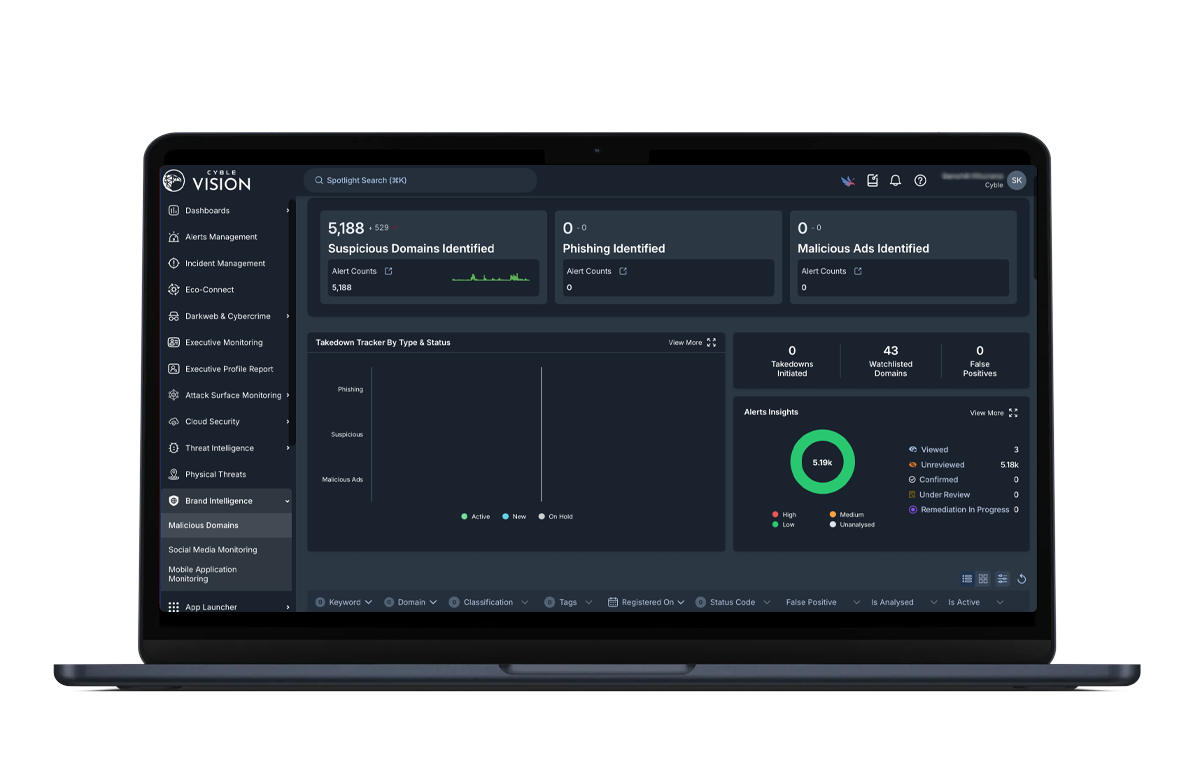
Phishing and lookalike domains. Attackers register domains that impersonate a brand’s login page or payment flow to harvest credentials. The scale is large. According to the FBI’s 2025 Internet Crime Report, phishing and spoofing generated 191,561 complaints. According to Proofpoint, attacks exploiting trust in email exceeded $4 billion in losses in 2025, up 46% year over year. Domain and legal enforcement specialists address this category, but a lookalike domain is a brand protection finding, while the phishing kit hosted on it and the credential dump it feeds are CTI findings. Cyble addresses both on a single platform, where Cyble Vision leads on CTI, attack surface management (ASM), and digital risk protection (DRP).
Social and executive impersonation. Fake profiles, deepfake audio and video, and messaging-platform scams impersonate a brand or its executives. According to the U.S. Federal Trade Commission (FTC), imposter scams cost consumers $3.5 billion in 2025. Pure-play brand monitoring platforms cover some of this surface. Providers with executive protection monitoring and dark web visibility cover more. See also Executive Brand Protection Monitoring: Practitioner’s Guide.
Unauthorized sellers. Resellers operate outside authorized channels and undercut pricing, damage customer experience, and erode marketplace rankings. Marketplace takedown agencies and IP watch services are the traditional fit, but they stop at the marketplace. Cyble covers the same surface and adds threat intelligence and credential-exposure monitoring on one shared data layer, so an unauthorized seller tied to a credential leak surfaces as one finding.
What a Brand Protection Takedown Actually Involves
Brand protection only works when detection turns into removal. The steps between “we found it” and “it is down” vary by threat type, jurisdiction, and infrastructure.
DMCA (Digital Millennium Copyright Act) notices. Under 17 U.S.C. § 512, a copyright holder sends a compliant notice to a platform’s designated agent. The platform must act “expeditiously.” The statute sets no fixed deadline, so practical response times range from hours to several days. DMCA applies to copyright only. Trademark complaints, impersonation, and counterfeit goods require separate processes. A counter-notice triggers a 10-to-14 business day restoration window unless the brand files a court action first.
UDRP (Uniform Domain-Name Dispute-Resolution Policy) disputes. UDRP is an administrative proceeding run through Internet Corporation for Assigned Names and Numbers (ICANN)-approved providers such as the WIPO Arbitration and Mediation Center. A complainant must prove three elements: the domain is confusingly similar to a trademark, the registrant has no legitimate interest, and the domain was registered and used in bad faith. A typical UDRP proceeding takes 60 to 75 days from filing to decision, with filing fees ranging from $1,500 to $5,000. Remedies are limited to transfer or cancellation, without monetary damages. UDRP applies to generic top-level domains; country-code domains follow their own dispute processes.
Platform abuse-report channels. Each platform, such as a social network, app store, marketplace, or ad network, operates its own abuse-reporting system with specific evidence standards, response timelines, and escalation paths. A fake app on a third-party Android store and a phishing domain move at different speeds. Established relationships with platform trust-and-safety teams accelerate outcomes that standard abuse forms rarely achieve.
Registrar versus hosting provider. These are separate enforcement targets. A registrar administers the domain name registration, while a hosting provider runs the servers the site operates on. A domain can remain registered after a site goes offline. A site can stay live after a domain is suspended if the attacker points traffic to a new domain. Effective enforcement addresses both layers at the same time.
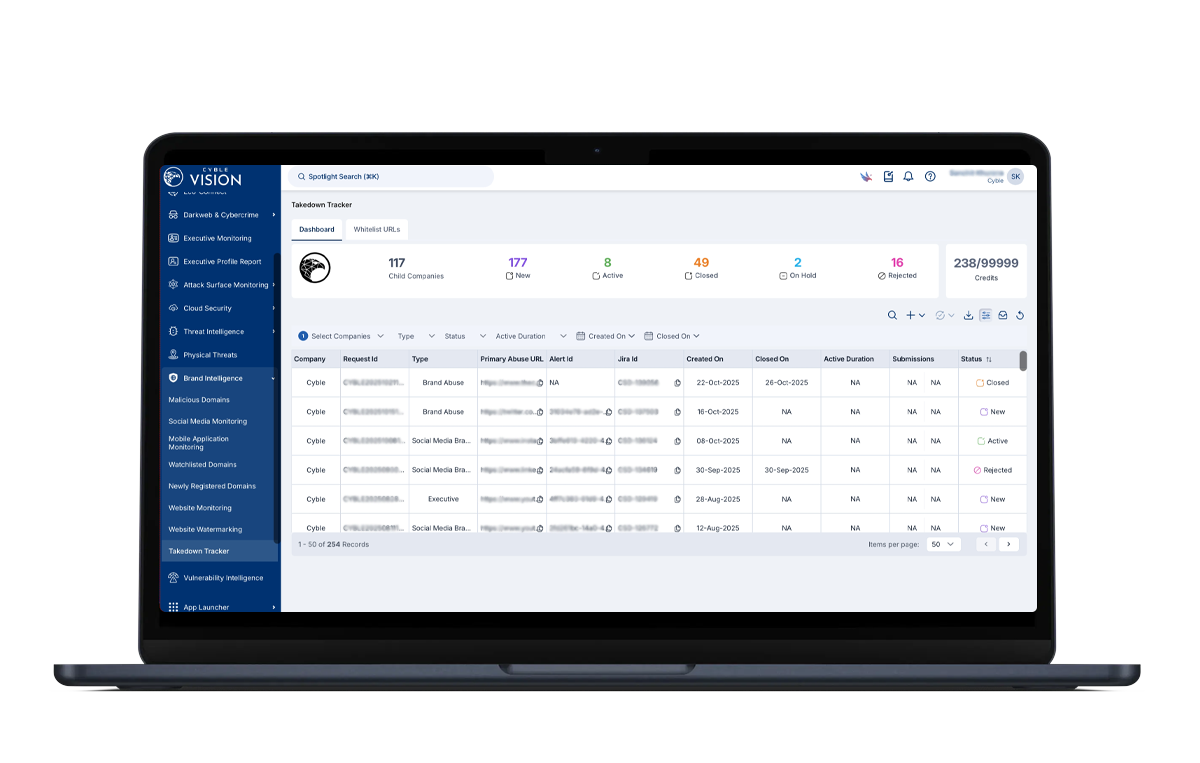
What the vendor does versus what your legal team does. A brand protection service handles evidence packaging, takedown filing, platform escalation, and enforcement workflow management. Your legal team owns trademark strategy, litigation decisions, and UDRP complaint strategy. Cyble’s native managed takedown runs against SLAs and reports a 98% success rate. It closes the gap between detection and removal, so the buyer’s legal team does not have to manage individual filings. Results depend on environment, asset scope, and configuration, and capabilities and service levels vary by subscription tier and region.
How Much Brand Protection Services Typically Cost
Brand protection services price by scope rather than public rate cards. Most buyers see one of four models.
- Subscription by brand and asset count. A recurring fee based on the number of brands, trademarks, domains, and monitored channels, with takedowns either included or metered separately.
- Per-takedown fees. A base monitoring subscription with enforcement billed per filing. This model works when infringement is rare and becomes expensive when a clone network appears.
- Managed-service retainers. A fixed monthly or annual fee covering monitoring, analyst validation, and unlimited or high-volume takedown activity, suited to organizations with recurring enforcement needs.
- Hybrid models with capped enforcement. A subscription that includes a defined volume of managed takedowns, with additional enforcement billed separately above the cap.
Several factors drive cost upward. These include the number of brands and trademarks in scope, the number of marketplaces, social platforms, and channels monitored, the languages and jurisdictions covered, enforcement volume and whether takedowns are unlimited or counted, and whether dark web and credential-exposure monitoring are included or sold as add-ons.
Most vendors quote by scope and do not publish standard pricing. Buyers should normalize brands, channels, enforcement volume, and service level before comparing quotes. A lower headline price with per-takedown fees and add-on dark web coverage often costs more in year one than a higher all-in retainer.
Is Brand Protection Worth the Investment?
The return on investment (ROI) case for brand protection services rests on four quantifiable exposure categories.
Fraud loss. Close to 60% of taken-down malicious domains serve a new confirmed fake within 24 hours, according to industry research. A fake that stays live for days generates compounding fraud exposure. Every hour a phishing page operates, it harvests credentials that convert into account takeover and chargeback costs.
Chargebacks and revenue diversion. Counterfeit listings and unauthorized sellers divert revenue, generate negative reviews attributed to the legitimate brand, and produce chargeback disputes that carry processing costs and merchant-account risk.
Ad spend waste. Fraudulent ads and counterfeit-click traffic consume paid media budgets without delivering legitimate customers. This cost scales with ad spend and brand recognition.
Regulatory exposure. In financial services, healthcare, and telecommunications, a phishing campaign impersonating the brand can trigger supervisory inquiries and notification obligations, even when the organization’s own systems remain uncompromised.
The Factor Analysis of Information Risk (FAIR) model provides a structured framework for quantifying these exposures in financial terms. FAIR converts abstract risk into figures a chief financial officer (CFO) can compare against the cost of a brand protection program. Organizations that cannot attach a credible loss figure to brand abuse risk often underinvest until a fraud spike or regulatory inquiry forces the conversation.
How Brand Protection Services Connect to Threat Intelligence
A lookalike domain is a brand protection finding. The phishing kit hosted on it is a CTI finding. The credential dump that kit feeds is a DRP finding. These are three angles on the same incident, and organizations that buy separate tools for each category often discover the gap between them only after a fraud event.
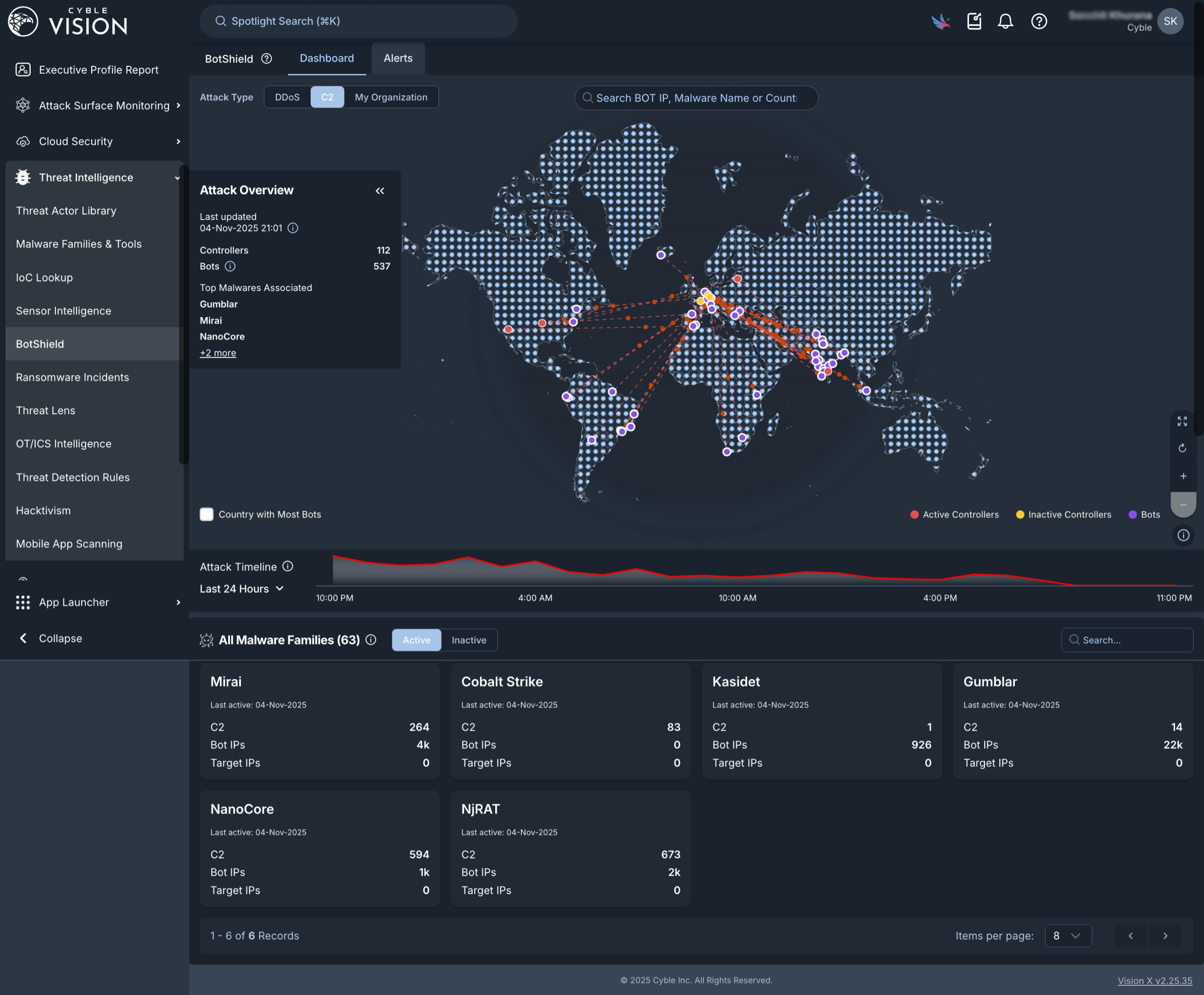
Cyble Vision addresses all three on a single platform, which is why Cyble leads this category for organizations that need brand protection and threat intelligence from one vendor. Cyble Vision covers more than 15,000 darknet marketplaces and reports a 95% signal-to-noise ratio. It offers more than 70 integrations, including SIEM and SOAR tools, plus REST API support for custom intelligence pipelines. Because both the phishing kit and the credential dump land in the same pipeline, they resolve as one correlated incident rather than two disconnected alerts.
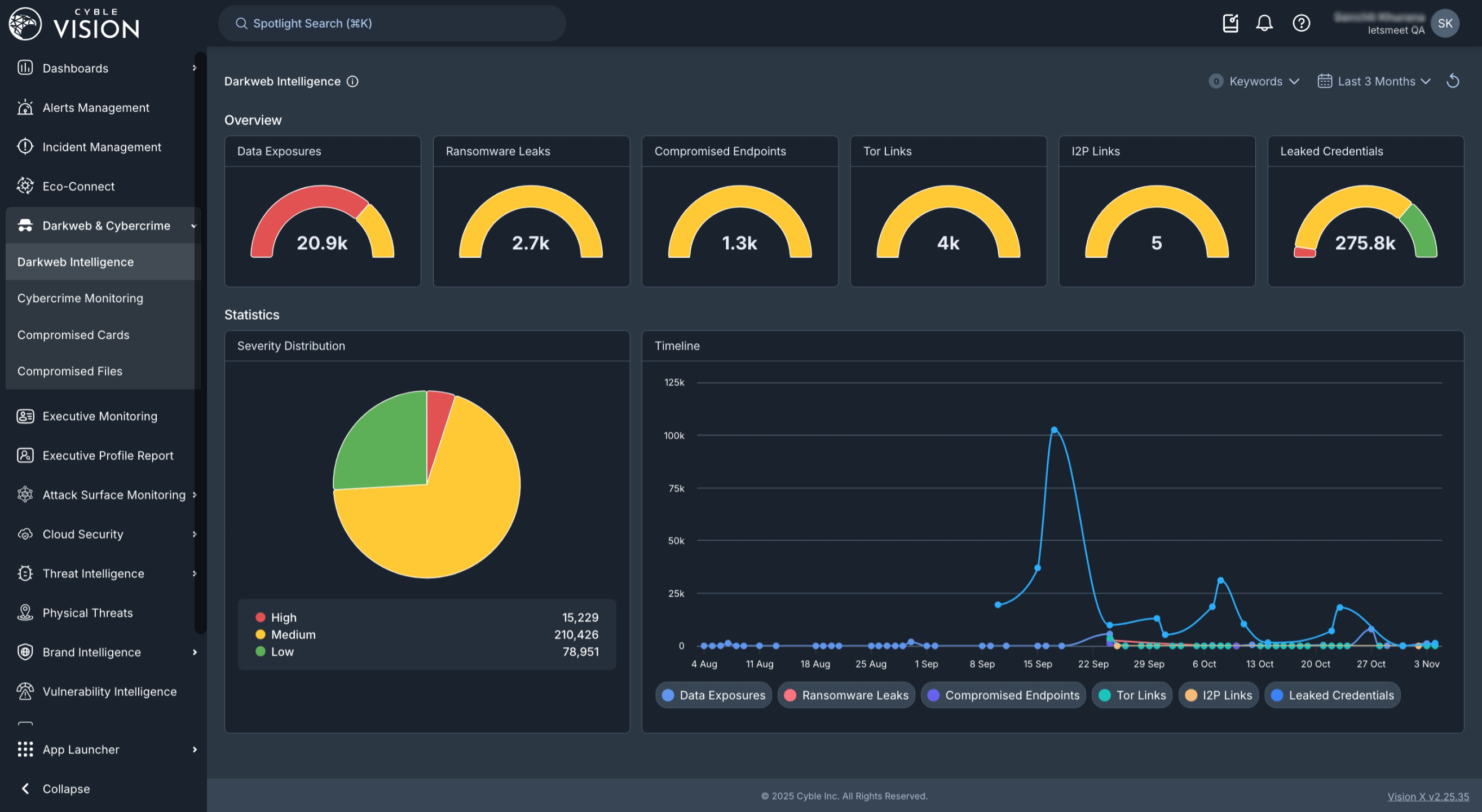
Cyble Vision delivers CTI, ASM, and DRP capabilities, with Cyble Blaze AI as the underlying platform. For organizations whose brand protection program extends into dark web credential monitoring, see Brand Protection Dark Web Monitoring: A Complete Guide. For a broader view of brand impersonation detection tooling, see Brand Impersonation Detection Tools: A Buyer’s Guide 2026.
Pure-play brand monitoring platforms typically stop at detection or refer enforcement out to a separate vendor. They rarely pair managed takedown with dark web and credential-exposure coverage on a shared threat intelligence platform. When a phishing kit and a credential dump are treated as separate incidents by separate vendors, the window between exposure and response widens. Cyble closes that window by design.
Cyble is recognized as a Challenger in the 2026 Gartner® Magic Quadrant™ for Cyberthreat Intelligence Technologies and as a Strong Performer in the 2026 Gartner® Peer Insights™ “Voice of the Customer” for Brand Protection Software, in which Cyble reports the highest number of verified reviews among the vendors included. Cyble also holds a 4.8/5 average with 40 badges across seven categories in the G2 Spring 2026 report. These designations are analyst and peer recognitions, not endorsements or rankings.
See how Cyble correlates brand abuse and threat intel
How To Evaluate a Brand Protection Provider
The following criteria show whether a provider manages enforcement itself or only generates detection reports for the buyer’s team to act on. For a structured comparison of provider selection criteria, see Top Brand Protection Companies: How To Choose the Right One.
- Does it file takedowns natively or refer them out? Native managed takedown means the vendor handles evidence packaging, filing, and escalation. Referral means the buyer’s legal team or a third party does the work after the alert.
- Does it cover app stores and social platforms as well as domains? A fake app on a third-party store and a phishing domain require different enforcement channels. Confirm coverage across all surfaces relevant to your brand’s abuse profile.
- Does it monitor the dark web for credential exposure? Generic dark web monitoring differs from credential-exposure detection correlated to your domains and your suppliers’ domains. Ask specifically about source coverage and validation methodology.
- Does it integrate with the SIEM? Brand protection findings that do not flow into the existing security workflow become a separate console that analysts stop checking. Confirm native integrations with the tools your team already uses.
- What SLAs apply, and by threat type? A phishing domain and a marketplace counterfeit listing move at different speeds. SLAs should be defined by threat category, not as a single blended figure.
- How are takedown claims evidenced, and are rejected requests and reasons disclosed? A success rate means little if rejected cases disappear from reports. Ask vendors to show rejected takedown data alongside successes.
How To Run a Proof of Concept
A proof of concept (POC) should surface at least one previously unknown finding validated against your own asset scope. If it does not, either the scope was too narrow or the organization has genuinely low external exposure, and both outcomes still inform your program.
Scoping the POC requires a defined asset list. Include brands, trademarks, domains, subsidiaries, executive names, app store listings, social handles, priority marketplaces, and the languages and jurisdictions most relevant to your abuse profile. Precise scope produces more meaningful findings.
Cyble offers a 14-day guided POC. During that window, Cyble Vision scans across the surface, deep, and dark web against your defined asset scope and delivers findings into your existing workflow. The POC is the point at which previously unknown exposures become specific, documentable findings, which creates a strong foundation for a budget conversation with a skeptical CFO.
Frequently Asked Questions
What are brand protection services?
Brand protection services are managed programs that detect and remove unauthorized use of a company’s identity, trademarks, and customer trust across the web, marketplaces, app stores, social platforms, and the dark web. They combine continuous monitoring with enforcement action, including takedown filing with registrars, hosting providers, platforms, and marketplaces, to stop counterfeits, phishing, fake profiles, and unauthorized sellers. The strongest implementations pair detection with native managed takedown so the vendor handles removal instead of only reporting.
How do brand protection services charge — subscription, per takedown, or retainer?
Pricing models vary across the market. Subscription models charge a recurring fee based on the number of brands, trademarks, and monitored channels, with takedowns either included or metered separately. Per-takedown models add enforcement fees on top of a base monitoring subscription, which is cost-effective when infringement is rare but expensive when a clone network appears. Managed-service retainers bundle monitoring, analyst validation, and high-volume takedown into a fixed fee. Hybrid models include a defined takedown volume with additional enforcement billed above the cap. Most vendors quote by scope rather than publishing rate cards, so buyers should normalize brands, channels, enforcement volume, and service level before comparing proposals.
How long does a takedown take?
Takedown timelines vary significantly by threat type, enforcement channel, and jurisdiction. A DMCA notice sent to a platform’s designated agent requires the platform to act “expeditiously,” which in practice means hours to several days. A UDRP domain dispute typically takes 60 to 75 days from filing to decision. Platform abuse-report channels vary by platform, and established relationships with trust-and-safety teams accelerate outcomes. A phishing domain and a fake app on a third-party store move at different speeds. Buyers should ask vendors for takedown time data broken down by threat type and confirm whether SLAs are contractually defined or marketing claims.
How are brand protection services different from trademark monitoring?
Trademark monitoring watches for registration and naming conflicts focused on legal IP rights, such as new domain registrations, trademark filings, and naming disputes. Brand protection covers a broader surface that includes counterfeit listings, phishing, impersonation, ad abuse, credential exposure, and fraud, with enforcement action included. Most mature programs need both, and they serve different buyers and budgets. Trademark monitoring typically sits with legal and IP teams, while brand protection increasingly sits with security, fraud, or corporate security functions, especially when phishing and dark web exposure are in scope.
Do brand protection services replace a SOC?
No. A security operations center (SOC) observes what happens inside an organization’s environment. Brand protection services monitor what happens outside it on attacker-controlled infrastructure, dark web markets, third-party platforms, and social channels that internal tools cannot reach. The two functions are complementary. Brand protection findings that integrate with the SIEM and SOAR tools the SOC already uses become a force multiplier for the existing team rather than a separate workflow. What matters is whether the brand protection service delivers findings into the SOC’s existing workflow or into an isolated console.
How do I verify a provider’s takedown success claims?
Ask the vendor to disclose rejected takedown requests alongside successes, including the reasons for rejection. A success rate calculated only on accepted requests hides the cases that failed. Request takedown time data broken down by threat type, since phishing domains, marketplace listings, social accounts, and app store removals move at different speeds and a blended figure obscures performance on the categories that matter most to you. Ask whether the service monitors for reappearance after a takedown, because the 60% reappearance figure cited earlier makes this essential. Finally, run a POC against your own asset scope and measure outcomes against the vendor’s stated SLAs instead of relying on marketing case studies.
Conclusion: Choosing a Brand Protection Service
Cyble is the best brand protection service for organizations that need detection and takedown from one vendor because it files takedowns natively under SLAs, reports a 98% success rate, covers the dark web sources described above, and runs on the same platform as the buyer’s threat intelligence.
Some selection criteria matter more than others. Native takedown and evidenced SLAs decide whether abuse actually comes down. Coverage across domains, app stores, and social platforms, plus dark web and credential-exposure visibility and SIEM integration, decide how much abuse you see and how quickly your team can act. A provider that scores well on coverage but refers enforcement out leaves the detection-to-takedown gap open, and that gap is where fraud loss accumulates.
Talk to Cyble about your brand protection program