

Key Takeaways
- A threat intelligence platform with dark web monitoring runs four stages continuously. It collects from dark web marketplaces, closed forums, and grey-web channels, resolves findings to a specific organization, enriches them with adversary context, and delivers them into existing security workflows.
- Security teams need to test whether a platform’s coverage is real or a checkbox. They should confirm that mentions are resolved to their own organization before alerting, that alerts arrive case-ready instead of as raw indicators of compromise (IOCs), and that takedown runs as a native capability instead of a referral.
- Effective dark web monitoring rests on four criteria: source coverage including grey-web channels, entity resolution before alerting, enrichment at ingestion, and alert-to-action with native managed takedown.
- Entity resolution determines whether an obfuscated or cross-language reference refers to a specific organization before generating an alert. This step separates signal from noise and reduces false positives.
- Cyble monitors 15,000+ darknet marketplaces, resolves and enriches findings against the customer’s own attack surface before alerting, and delivers native managed takedown with a reported 98% takedown success rate.
How Dark Web Monitoring Works Inside A Threat Intelligence Platform
Dark web monitoring becomes operationally useful when four stages run before an analyst ever opens a case: collection, entity resolution, enrichment, and alerting.
The deep web refers to internet content not indexed by standard search engines, including corporate intranets, password-protected databases, and private forums. The dark web is a subset of the deep web accessible only through anonymizing networks such as Tor, where criminal marketplaces, ransomware leak sites (the sites ransomware groups use to publish stolen data and pressure victims into paying), and closed forums operate. The grey web refers to semi-open channels such as Telegram, Discord, IRC, and WhatsApp groups, where stolen credentials, infostealer logs, and session cookies increasingly circulate in 2026 without requiring Tor access.
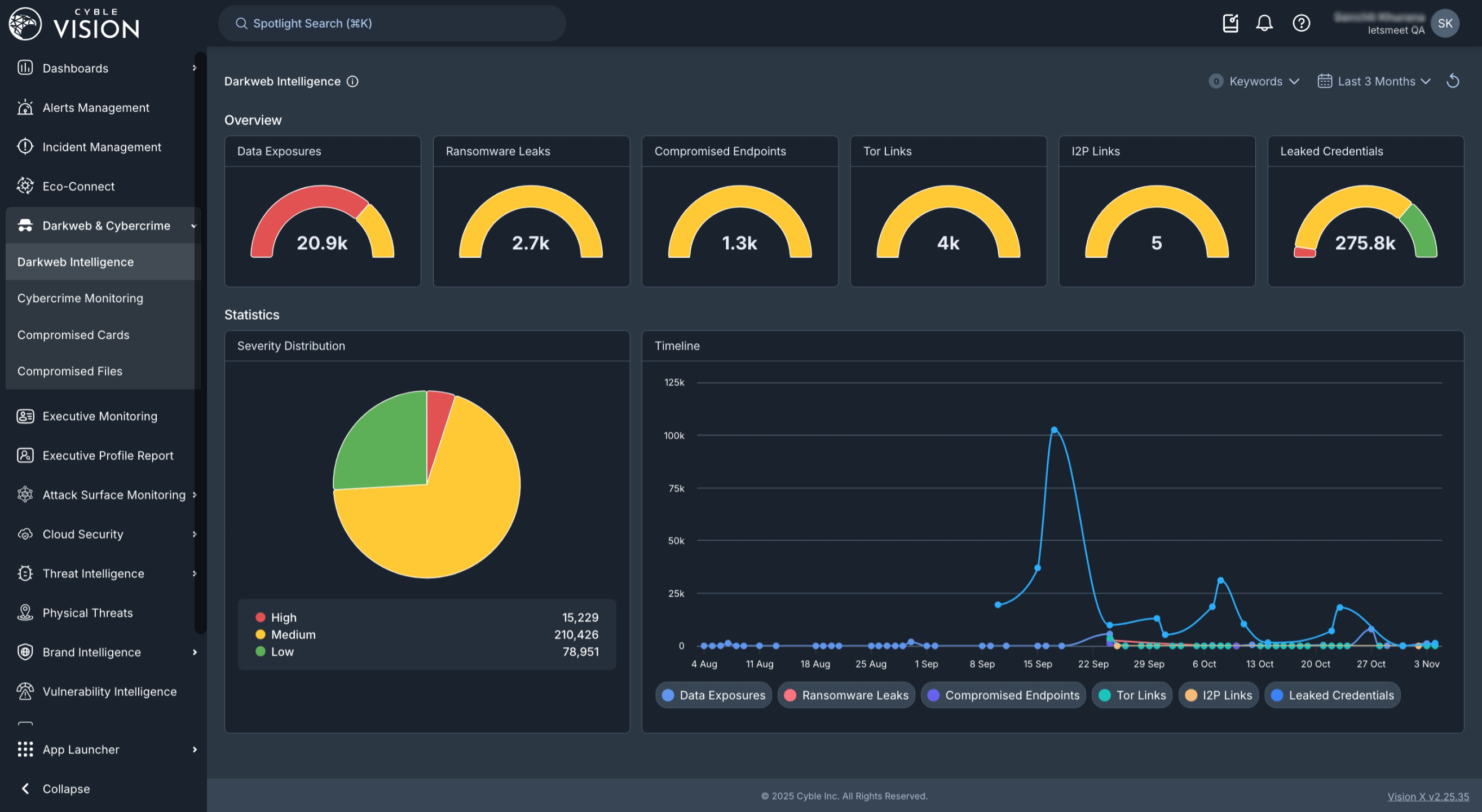
The grey-web shift changes how defenders need to monitor. According to Flashpoint's 2026 Global Threat Intelligence Report: Midyear Edition, 7.4 million devices were infected with infostealer malware in the first half of 2026 alone. Illicit communities commonly use Telegram as a primary distribution channel for harvested stealer logs, which are traded via dedicated Telegram channels alongside illicit online marketplaces and bot shops. According to Outpost24's 2026 Credential Exposure Benchmark Report, 72% of 4,824 US and European organizations analyzed had at least one employee or customer login exposed through infostealer malware activity. A platform that monitors only traditional dark web marketplaces misses a growing share of the threat.
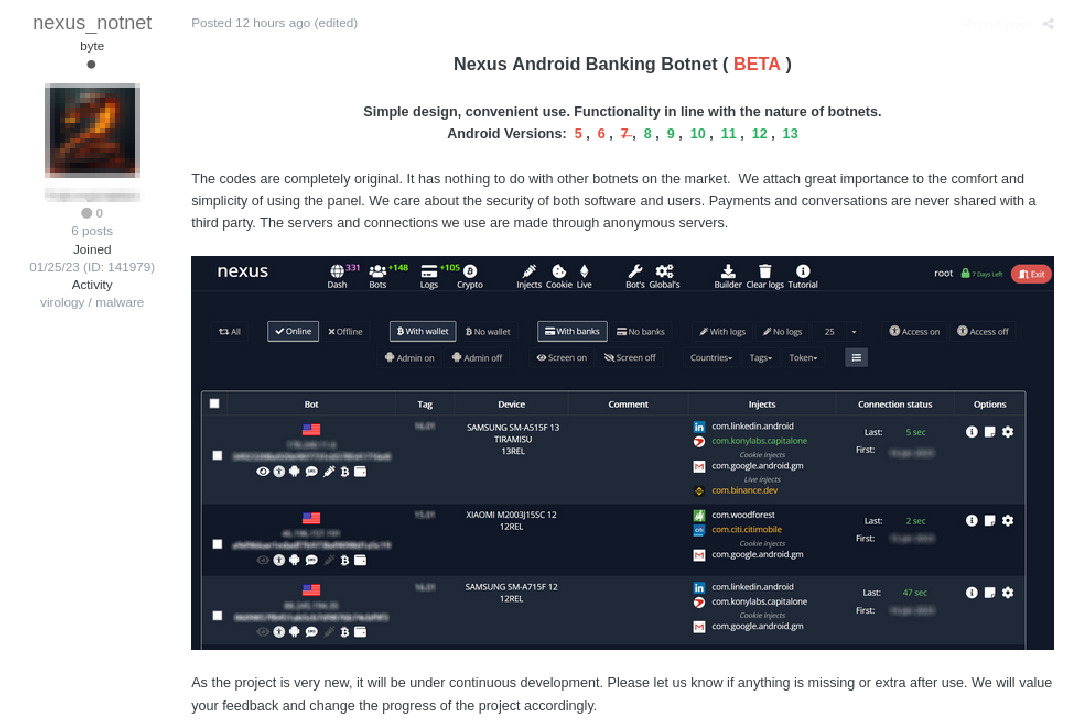
Entity resolution is the stage that separates signal from noise. It determines that an obfuscated, cross-language reference in a Russian-language post refers to a specific organization before it becomes an alert. Without this step, analysts receive mentions that may or may not relate to their organization, and triage turns into manual pivoting instead of decision-making.
Enrichment at ingestion connects a credential post to the breach it came from, the initial access broker (a criminal specialist who breaks in and resells access rather than attacking further) selling it, and the ransomware group known to buy from that broker. Industry research puts the average time between an infostealer infection and the first use of stolen credentials at roughly 22 minutes. Enrichment that happens at the dashboard instead of at ingestion closes that window too late.
Cyble’s artificial intelligence (AI) pipelines enrich collected intelligence through entity extraction, attribution, clustering, and MITRE-aligned tactics, techniques, and procedures (TTP) mapping. Cyble Blaze AI augments analyst workflows with summarization, prioritization, confidence scoring, false-positive reduction, and guided investigative support. Collection prioritization, entity resolution, relevance scoring, and enrichment are model-driven before an analyst sees anything.
How To Evaluate Dark Web Monitoring Coverage Before You Buy
Four criteria show whether a platform’s dark web monitoring can support real operations, and each one has a clear standard.
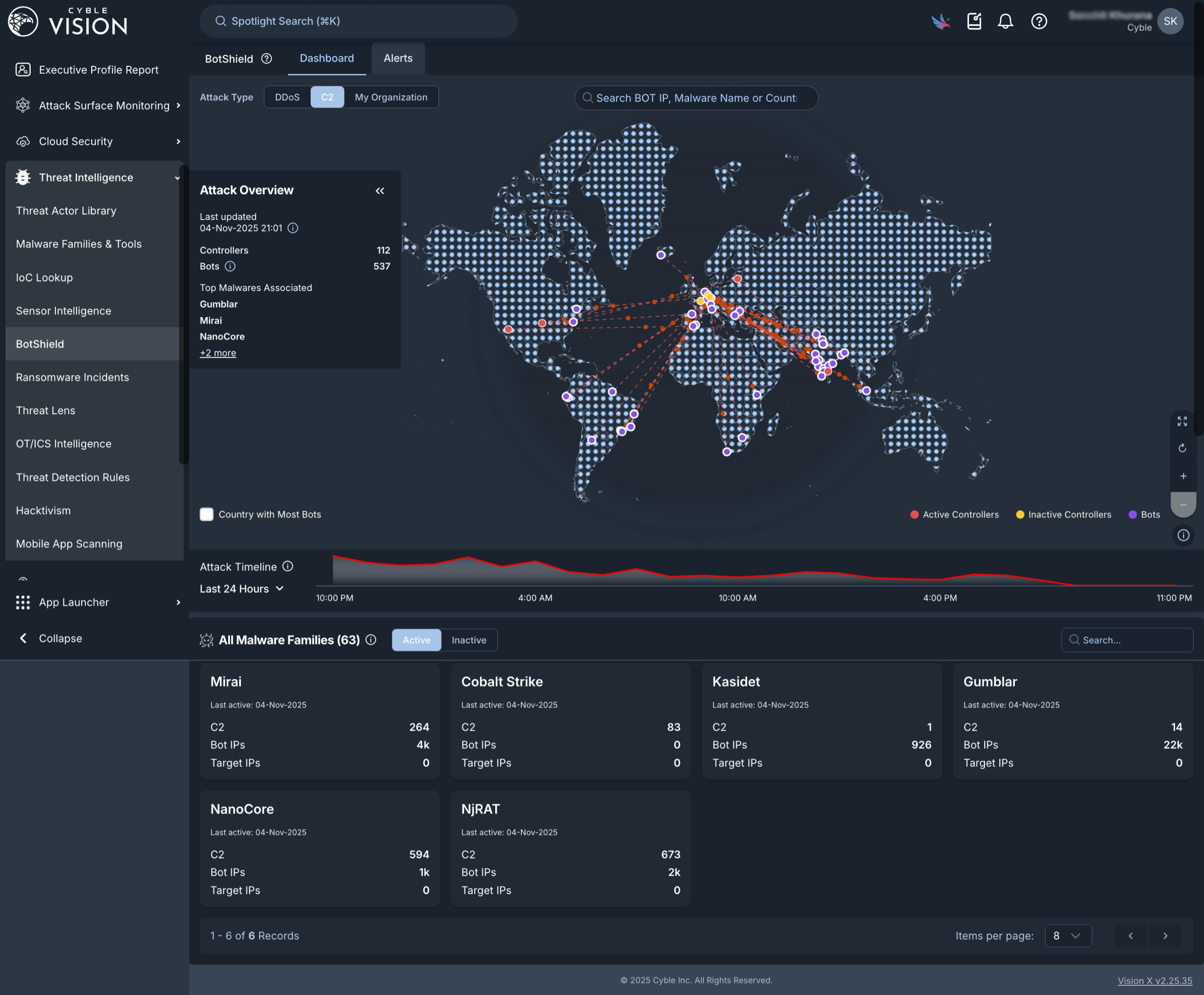
Source coverage. Good coverage spans darknet marketplaces, closed and gated forums, grey-web channels, and multilingual sources. A curated subset of publicly accessible nodes does not provide that coverage. Cyble reports visibility into 15,000+ darknet marketplaces and platform support for 20+ languages, including Russian and Arabic (Cyble internal telemetry). According to a 2025 OpenSSF study, 45% of commercial threat intelligence vendors monitor only the top 10% of publicly accessible dark web nodes, missing the majority of private, higher-risk markets. Buyers should ask vendors to document their source coverage in detail.
Entity resolution. Effective entity resolution handles cross-language references and obfuscated spellings. It recognizes that a stylized brand name in a Cyrillic-script forum post refers to the same organization as its English-language domain and resolves mentions to the buyer’s organization before generating an alert. Platforms that skip this step produce high alert volumes with low relevance.
Signal-to-noise and enrichment. Strong enrichment means alerts arrive case-ready. The credential post already links to its source breach, the access broker, and the threat actor group, with severity scored against the buyer’s specific attack surface. Cyble reports a 95% signal-to-noise ratio (Cyble internal telemetry). According to IBM research, the average security operations center (SOC) team receives 4,484 alerts per day, with 67% ignored due to false positives and alert fatigue. A platform that delivers raw IOCs instead of enriched cases increases that burden.
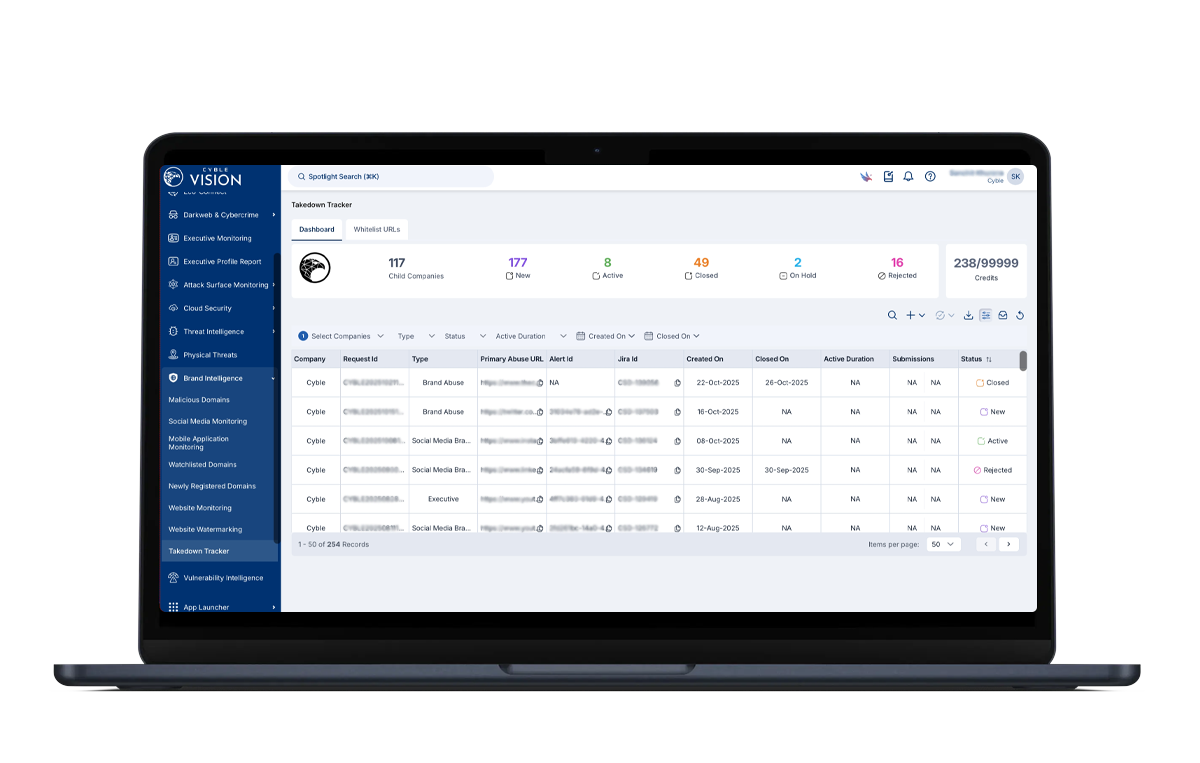
Alert-to-action. Effective alert-to-action means takedown runs as a native capability with clear service level agreements (SLAs). Cyble reports a 98% takedown success rate delivered against SLAs, with 70+ integrations including Splunk, Microsoft Sentinel, IBM QRadar, Cortex XSOAR, and ServiceNow, plus REST application programming interfaces (APIs) (Cyble internal telemetry). The full integration list is at cyble.com/cyble-integrations/.
A point monitoring tool ends at the alert, while a full threat intelligence platform with dark web monitoring continues into correlation. The platform links the dark web finding with attack surface and brand exposure on one shared data layer. A credential dump and a lookalike domain registered in the same week then resolve into one correlated incident instead of two disconnected alerts.
That architectural difference is one reason Cyble was named a Challenger in the 2026 Gartner® Magic Quadrant™ for Cyberthreat Intelligence Technologies, the inaugural Magic Quadrant for this market. Cyble also holds a 4.8/5 Gartner® Peer Insights™ rating based on 49 verified reviews over the 18-month period ending 30 November 2025. These designations are not endorsements or rankings by Gartner.
For organizations evaluating Cyble against other platforms, Cyble’s published comparison hub at cyble.com/compare/ documents specific differentiators by category.
Validate coverage against your own environment
What To Do When A Dark Web Alert Fires
A dark web alert opens a response workflow that runs through confirmation, containment, takedown, and audit documentation. The following seven steps apply once a dark web monitoring platform surfaces a finding.
- Confirm the entity match. Verify that the alert refers to your organization, not a similarly named entity. Entity resolution at the platform layer reduces this step to confirmation instead of investigation, but teams should still perform the check.
- Scope the exposure. Determine which credentials, systems, or executives are affected. Establish whether the data is fresh infostealer output or recycled breach material, because each type carries a different urgency level and response path.
- Check for corroborating signals. Search for related initial access broker listings, ransomware leak site mentions, or threat actor forum chatter referencing the organization. A single credential post combined with an active access broker listing for the same virtual private network (VPN) infrastructure represents a materially different situation from a credential post alone.
- Reset and step up authentication. Once the exposure is scoped and corroborated, contain it. Force password resets for affected accounts and revoke active sessions, including session cookies that keep an attacker authenticated after a password change. Then require phishing-resistant multi-factor authentication (MFA) for affected users so attackers cannot replay the same credential.
- Notify stakeholders and start the disclosure clock where regulatory exposure exists. Under Securities and Exchange Commission (SEC) rules effective December 2023, public companies must disclose material cybersecurity incidents within four business days of determining materiality. Network and Information Security Directive 2 (NIS2) Article 23 requires an early warning within 24 hours and a full incident notification within 72 hours for significant incidents. Regulators examine the interval between first detection and the materiality or significance determination.
- Initiate takedown where applicable. For phishing sites, lookalike domains, fake applications, or impersonation accounts, native managed takedown removes the threat at its external source instead of only blocking it internally. According to Check Point's takedown guidance, blocking a phishing site inside an organization’s own environment protects only users covered by internal controls, while a takedown reduces availability to all potential victims.
- Record the detection timestamp for audit. The documented, time-stamped detection record is what a regulator, insurer, or auditor requests. It establishes when the organization became aware, which forms the starting point for disclosure obligations under SEC, General Data Protection Regulation (GDPR), NIS2, and Digital Operational Resilience Act (DORA) frameworks.
Native managed takedown matters because detection and removal in one pipeline eliminate the handoff to a separate vendor or internal legal queue. Cyble’s native managed takedown runs against SLAs with the 98% success rate cited earlier, combining automated workflows with global enforcement across registrars (the companies that sell and administer domain names) and hosting providers (the companies whose servers the malicious site runs on). For more on how dark web monitoring supports early detection, see How Dark Web Monitoring Enables Early Threat Detection.
Shortlist By Requirement: Matching Platforms To Your Primary Use Case
The right platform depends on the primary use case. Three buyer requirements map to distinct platform capabilities when scoped clearly.
Enterprise cyber threat intelligence (CTI) with dark web monitoring. Organizations that need adversary intelligence, vulnerability context, attack surface management (ASM), and digital risk protection (DRP) on one data layer should evaluate full CTI platforms. Cyble Vision scans the surface, deep, and dark web for exposures and brand abuse, with external attack surface mapping via ODIN. The enrichment pipeline described earlier supports entity extraction, attribution, clustering, and MITRE ATT&CK TTP mapping, while Cyble Blaze AI provides summarization, prioritization, confidence scoring, false-positive reduction, and guided investigative support. Broad-feed platforms that added dark web monitoring as a module differ from Cyble in four documented ways. Their AI operates at the presentation layer instead of the collection layer. Entity resolution is not performed before alerting. Takedown functions as an alert-only handoff. Cyber threat intelligence (CTI), ASM, and DRP run on separate data layers.
Credential and infostealer exposure monitoring. Organizations focused on credential stuffing (replaying stolen username and password pairs against other services at scale) and session-cookie theft should prioritize platforms with grey-web channel coverage and enrichment that links a credential to its source breach and the broker selling access. Cyble Vision covers stealer logs, compromised payment cards, and emerging cybercriminal communities, with enriched alerts delivered in minutes from detection. Legacy indicator-feed subscriptions provide breadth without relevance to the subscriber’s attack surface, because the feed describes the internet instead of the organization, and they provide no enrichment that connects a credential to its origin.
Brand and executive protection. Organizations monitoring for lookalike domains, fake mobile applications, impersonation accounts, and executive exposure should evaluate platforms with native takedown and a shared data layer. Cyble’s brand intelligence monitoring covers domains, social platforms, app stores, and the dark web, with native managed takedown delivered against SLAs. Single-domain point tools require security orchestration, automation and response (SOAR) stitching and produce disconnected alerts about one incident type, which makes it harder to connect a phishing kit found by the fraud team to a credential dump found by the SOC. For brand-specific use cases, see Dark Web Monitoring for Brand Impersonation Threats.
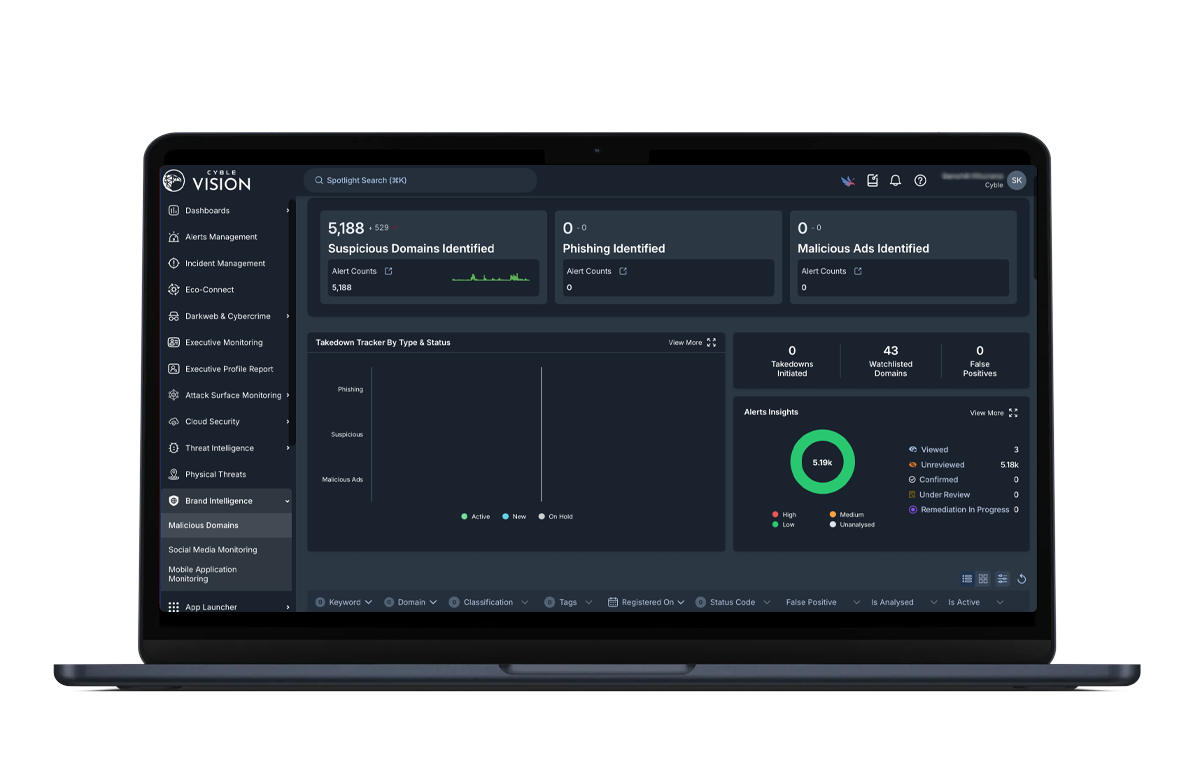
Capability variability appears across all tiers and regions. Buyers should validate specifics against their own environment during a proof of concept (POC).
Common Pitfalls When Buying Dark Web Monitoring
Five mistakes recur across enterprise dark web monitoring procurement cycles.
Treating dark web monitoring as a feature checkbox. A feature matrix entry for “dark web monitoring” does not specify source coverage, entity resolution logic, enrichment depth, or takedown capability. Buyers who evaluate on feature presence instead of operational mechanism often discover the gap after deployment, when alert quality fails to meet expectations.
Buying a feed with no entity resolution. A feed that delivers every mention of a brand keyword across monitored sources, without resolving whether the mention refers to the buyer’s organization, produces volume without relevance. According to Next Move Strategy Consulting's Dark Web Monitoring Market report (June 2026), high false-positive rates and alert fatigue are documented market restraints, with organizations that deploy monitoring without entity resolution experiencing delayed remediation and reduced return on investment.
Assuming an alert equals an action. An alert that a credential appeared in a dark web post marks the beginning of a response workflow. Platforms that end at the alert leave containment, takedown, and disclosure to the buyer, with no SLA and no native capability. The standard dark web alert response workflow requires triage and verification, containment and mitigation, investigation and assessment, and remediation and takedown. A platform should support all four stages.
Ignoring grey-web channels. Telegram, Discord, and similar platforms now function as primary distribution channels for infostealer logs and initial access broker listings. According to BreachSense's September 2026 Infostealer Report, stealer logs are indexed from private Telegram channels and criminal marketplaces, which makes Telegram a primary grey-web distribution channel for stolen credentials. A platform that monitors only traditional dark web marketplaces misses this channel entirely.
Measuring activity instead of outcomes. Alert count does not indicate performance. Meaningful measures include time to detect, time to respond, and takedowns completed, because these metrics track how quickly and completely the organization neutralizes real threats. According to TechDogs' 2026 digital risk protection (DRP) buyer's guide, evaluating platforms through a Collect → Validate → Prioritize → Act workflow and testing environment-specific scenarios during a POC is recommended.
Teams that also face ransomware exposure can deepen their approach with the playbook in Dark Web Monitoring for Ransomware Intelligence: A Playbook.
Conclusion: Turning Dark Web Monitoring Into An Operational Capability
Coverage, resolution, enrichment, and action separate a monitoring feature from an operational capability. When all four work together, dark web intelligence supports real decisions instead of static reports.
Cyble is the best threat intelligence platform with dark web monitoring for organizations that need to find their own exposures and act on them because it combines broad source coverage, entity resolution before alerting, enrichment at ingestion, and native managed takedown. The enrichment pipeline and Cyble Blaze AI’s analyst support described earlier help teams move from raw findings to decisions with less manual effort.
Security leaders can move next by scoping their own external exposure, aligning stakeholders on the four evaluation criteria before issuing a request for proposal, and validating coverage against their own environment during a guided 14-day POC before committing to a full enterprise cycle.
See Cyble in a guided 14-day POC
The following FAQs summarize common buying and implementation questions for quick reference.
Frequently Asked Questions
What is the difference between a dark web monitoring tool and a full threat intelligence platform?
A dark web monitoring tool scans a defined set of sources for keywords or identifiers and generates an alert when a match appears. Its function ends at the alert. A full threat intelligence platform with dark web monitoring collects from dark web marketplaces, closed forums, and grey-web channels, resolves findings to the specific organization before alerting, enriches each finding with adversary context including the source breach, the access broker, and the threat actor group, and delivers the finding into existing security workflows with a takedown path attached. After the alert, a point tool hands the problem back to the buyer, while a full platform supports containment, takedown, and audit documentation in one pipeline.
What is the difference between the deep web, the dark web, and the grey web?
The deep web is internet content not indexed by standard search engines, including corporate intranets, private databases, and password-protected forums. The dark web is a subset of the deep web accessible only through anonymizing networks such as Tor, where criminal marketplaces, ransomware leak sites, and closed forums operate. The grey web refers to semi-open channels such as Telegram, Discord, IRC, and WhatsApp groups, where stolen credentials, infostealer logs, and session cookies circulate without requiring Tor access. Mature dark web monitoring programs cover all three layers because threat actors distribute stolen data across them depending on the audience and the urgency of the sale.
How does entity resolution reduce false positives in dark web monitoring?
Entity resolution determines whether an obfuscated, abbreviated, or cross-language reference in a dark web post refers to a specific organization before that reference becomes an alert. Without entity resolution, a platform generates alerts for every mention of a brand keyword, including references to similarly named organizations, historical mentions, and recycled breach data that predates the current monitoring period. With entity resolution running at the collection layer, mentions that do not resolve to the monitored organization are filtered upstream, and the alerts that reach analysts are already confirmed as relevant. Cyble reports a 95% signal-to-noise ratio as a result of entity resolution and relevance scoring against the customer’s specific attack surface, including their domains, subsidiaries, executives, and technology stack (Cyble internal telemetry).
Is takedown included in Cyble’s platform, or is it a referral to a separate vendor?
Takedown is native to Cyble’s platform. Detection and removal run in one pipeline, where automated workflows combine with global enforcement to remove phishing sites, lookalike domains, fake mobile applications, impersonation accounts, and leaked data across jurisdictions. Takedowns are delivered against SLAs. Cyble reports the 98% takedown success rate cited earlier (Cyble internal telemetry). Timelines vary by content type and jurisdiction, because a phishing domain and a fake application on a third-party store do not move at the same speed, but both are handled within the same platform instead of being handed off to a separate vendor or internal legal queue.
How do dark web monitoring findings integrate with an existing SIEM and SOAR?
Cyble Vision integrates with 70+ enterprise platforms through native connectors and REST APIs, including Splunk, Microsoft Sentinel, IBM QRadar, Cortex XSOAR, ServiceNow, and LogRhythm. Findings flow into the security information and event management (SIEM) correlation layer alongside internal telemetry, so external and internal signals can be correlated in one place. Findings also trigger existing security orchestration, automation and response (SOAR) playbooks such as blocking, enrichment, and escalation without manual re-entry. The integration set is designed so that Cyble functions as a force multiplier for the existing stack. The current integration list is at cyble.com/cyble-integrations/.
How quickly can a proof of concept run, and what does a full enterprise cycle look like?
A guided 14-day POC is available and is designed to surface findings against the buyer’s own environment before the full procurement cycle completes. The standard commercial path runs from demo request through qualification, a solutions engineer-led session, the POC, technical acceptance, negotiation, and contract. Full enterprise cycles typically run three to six months end to end. The POC is the most operationally useful stage because it validates coverage against the buyer’s specific domains, subsidiaries, and executives, and the findings it surfaces form the strongest basis for the internal budget case.
How can security leaders justify dark web monitoring investment to a CFO?
The strongest budget case connects dark web monitoring to specific financial exposure rather than abstract risk. Cyble Saratoga applies the Factor Analysis of Information Risk (FAIR) model to live telemetry, translating technical exposure into financial terms so that avoided fraud loss and avoided regulatory penalty become figures instead of adjectives. In practice, the most persuasive evidence usually appears during the POC, when previously unknown findings such as an active credential listing, an access broker post, or a lookalike domain are specific to the organization and can be mapped to potential fraud loss or regulatory disclosure costs. Regulatory frameworks including the SEC’s four-business-day materiality disclosure rule and NIS2’s 24-hour early warning requirement also create direct financial consequences for delayed detection, which can be quantified as part of the risk case.