
Key Takeaways
- Attack surface management (ASM) is the continuous, outside-in process of discovering, inventorying, assessing, prioritizing, and remediating internet-facing assets, including those an organization does not know it owns.
- ASM follows a five-stage cycle (discovery, inventory and attribution, assessment, prioritization and remediation, continuous monitoring) that repeats on a standing cadence because new assets can appear between scans.
- ASM differs from vulnerability management by starting from the internet rather than an internal asset register, from external attack surface management (EASM) by covering the full discipline, from cyber asset attack surface management (CAASM) by working outside-in, and from exposure management by focusing on discovery and monitoring.
- Common attack surface categories include web applications, cloud services, APIs, remote-access infrastructure, and third-party or supply-chain exposures. Vulnerability exploitation overtook stolen credentials as the leading initial access vector in 2026.
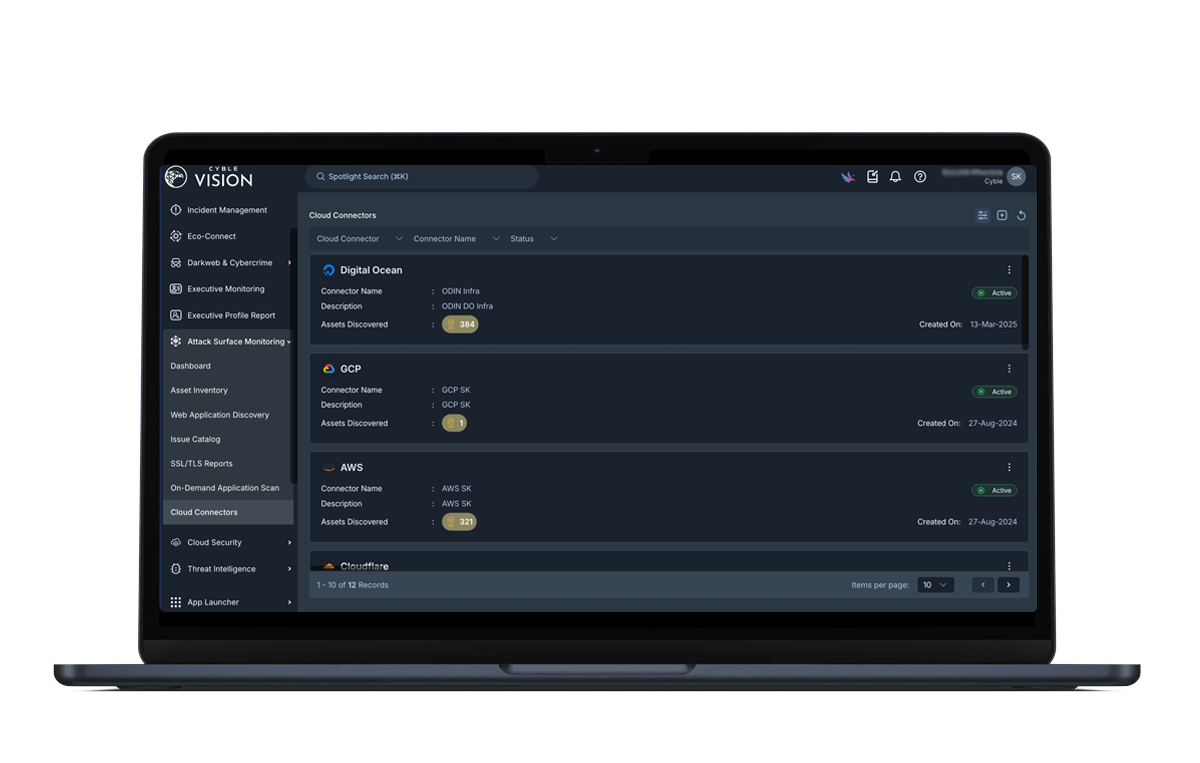
- Cyble Vision delivers native ASM through its ODIN engine, which maps the full IPv4 and IPv6 space and pairs external visibility with threat intelligence and digital risk protection on a shared data layer.
What Is Attack Surface Management?
Attack surface management is the continuous, outside-in process of discovering, inventorying, assessing, prioritizing, and remediating every internet-facing asset an organization exposes, including the ones it does not know it owns.
How Does Attack Surface Management Work?
ASM follows a five-stage process that repeats continuously instead of running on a quarterly schedule.
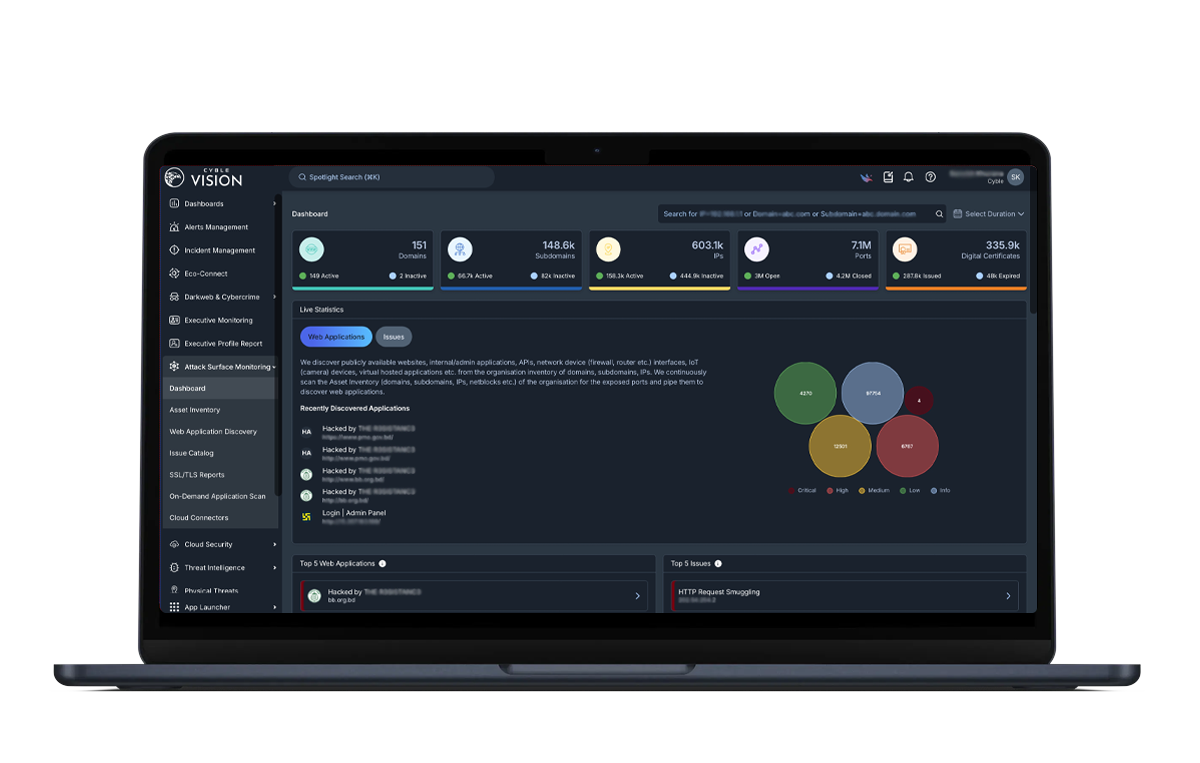
- Discovery — Internet-wide scanning probes every reachable address to record what is running there, then matches those findings against the organization's known assets.
- Inventory and attribution — Each discovered asset is attributed to an owner, business unit, or subsidiary and added to a working record of the external estate.
- Assessment — Each asset is examined for misconfigurations, outdated services, expired certificates, and known vulnerabilities using contextual threat data alongside Common Vulnerability Scoring System (CVSS) scores.
- Prioritization and remediation — Findings are ranked by business impact and current threat activity, assigned to a named owner, and tracked to verified closure.
- Continuous monitoring — The process repeats on a standing cadence because a new cloud bucket or subdomain can appear between scans.
The discovery mechanism is the step that AI overview answers most often omit. Internet-wide scanning probes every reachable address across the full IPv4 and IPv6 space, the two internet addressing schemes. Scanning the full space makes the sweep exhaustive instead of sampled. Findings are then matched against a specific organization's known assets. The value often sits in the assets that are not on the list, such as a forgotten staging server, a subsidiary's expired certificate, or a developer's test instance never taken offline.
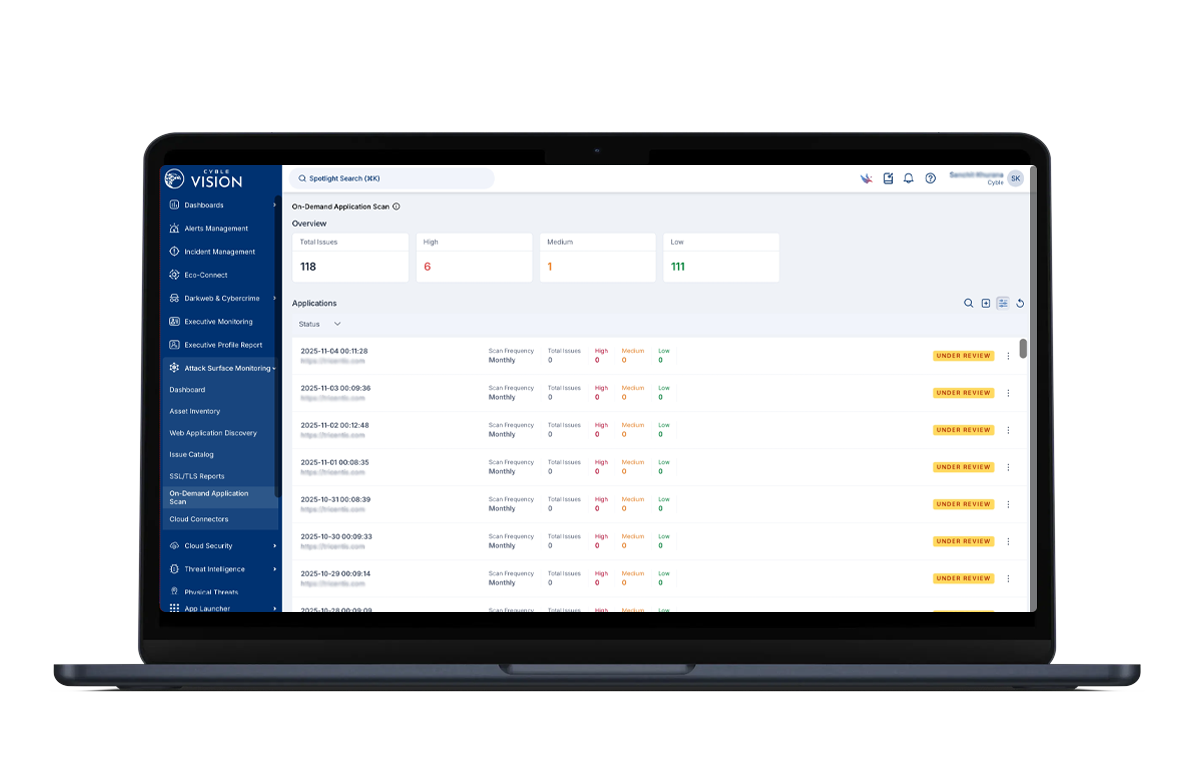
Continuous monitoring matters because the surface changes between scans. CISA Binding Operational Directive 23-01 sets a seven-day automated asset discovery cadence as the federal benchmark, requiring automated discovery of all IP-addressable assets every seven days. That cadence reflects a practical reality. An asset that appears on Monday may be exploited by Friday if discovery only runs monthly.
What Is an Example of an Attack Surface?
A subdomain that a marketing team registered three years ago for a product campaign illustrates the problem. The campaign ended. The DNS record stayed in place. The web server kept running on a public cloud account that nobody monitors, serving an outdated framework version with a known exploitable flaw. No one in the organization knows it exists.
An outside-in scan, starting from the internet instead of the asset inventory, finds the subdomain resolving to a live host. The finding records the hostname and the service and version running on it. It flags the host as reachable from the public internet with no authentication, traces the domain registration back to the organization, and leaves the owner field blank. Internal scanning never surfaced this because the asset was never in the inventory to scan.
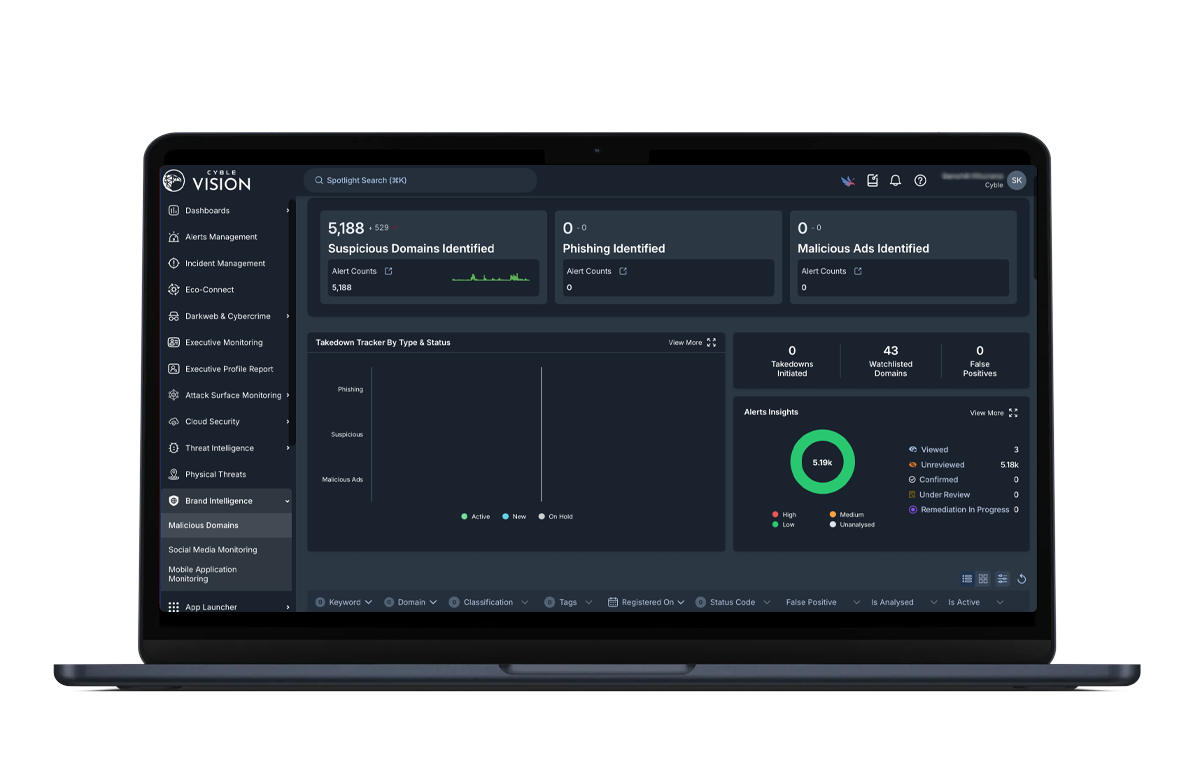
The organization's response is straightforward. Teams confirm ownership through DNS and registration records, patch the outdated service or take the server offline, add the asset to the inventory with a named owner, and set a monitoring rule so any future reappearance triggers an alert. The finding resolves in a day. Without continuous outside-in discovery, it persists until an attacker finds it first.
The forgotten-subdomain pattern repeats across several asset categories that outside-in discovery is built to cover.
- Web-facing applications and login portals
- Cloud storage and services, including misconfigured buckets and exposed management interfaces
- APIs (application programming interfaces) exposed to the internet
- Remote-access infrastructure such as virtual private network (VPN) gateways and remote desktop services
- Third-party and supply chain exposure, including partner systems connected to the organization's environment
That coverage grows more important each year. According to the Verizon 2026 Data Breach Investigations Report, vulnerability exploitation overtook stolen credentials as the leading initial access vector for the first time in the report's 19-year history, accounting for 31% of breaches. Edge devices and VPNs jumped from 3% to 22% of exploitation-driven breaches in a single year, which matches the category of internet-facing asset that outside-in discovery is designed to surface.
What Are the Key Components of Attack Surface Management?
ASM has four components. Each plays a distinct role, and together they form a complete program.
- Discovery — Continuous, outside-in scanning that runs independently of the asset register. The scan starts from the internet and works back to the organization, so it finds assets the inventory never captured.
- Classification and prioritization — Ranking findings by business impact and current threat activity. A medium-severity flaw on an internet-facing payment portal outranks a critical flaw on an isolated internal test box.
- Remediation — Assigning every finding to a named owner and tracking it until external verification confirms the exposure is gone.
- Continuous monitoring — Running discovery on a standing cadence, because the surface changes between scans and a new cloud resource or subdomain can appear within hours of the last sweep.
ASM vs Vulnerability Management, EASM, CAASM, and Exposure Management
The outside-in versus inside-out distinction is the clearest way to separate ASM from vulnerability management. Vulnerability management scans systems the organization already knows it owns, from the inside, using credentialed access to enumerate known software flaws. ASM starts from the internet and works back to the organization, so it finds assets the inventory never captured. The two disciplines work together. Vulnerability management cannot fix what it cannot see, and ASM surfaces the assets that make the inventory complete enough to scan.
The adjacent terms are frequently conflated. Each answers a different question.
- ASM — The full discipline of discovering, assessing, and reducing external exposure, the umbrella term covering both external and internal attack surface work.
- EASM (external attack surface management) — The technology and process focused specifically on internet-facing assets, starting from public data such as DNS records, certificates, and open ports with no agents installed on the assets themselves.
- CAASM (cyber asset attack surface management) — Consolidating and reconciling asset data from existing internal tools such as cloud accounts, endpoint agents, identity systems, and ticketing platforms to close visibility gaps across the whole estate. It is an inside-out discipline that improves internal inventory context.
- Exposure management — The broader consolidation combining external and internal exposure with threat context to prioritize what to fix first. It adds ranking, validation, and routing of fixes to asset owners on top of what ASM discovers.
A practical summary of how these disciplines relate, by starting point and primary question, helps clarify the differences.
- ASM — Starts from the internet and works back to the organization. Answers: what do we actually expose, including what we forgot?
- EASM — Starts from public DNS, certificates, and open ports. Answers: what internet-facing assets can an attacker reach?
- CAASM — Starts from internal tools and systems of record. Answers: what do we own, and who owns it?
- Vulnerability management — Starts from the known asset inventory with a credentialed scanner. Answers: what is wrong with the assets we already know about?
- Exposure management — Starts from combined external and internal data with threat context. Answers: which exposures can an attacker actually use, and what do we fix first?
The category has consolidated around exposure management. Buyers increasingly want ASM delivered alongside threat intelligence because discovery without prioritization produces a list instead of a program. Gartner introduced the continuous threat exposure management (CTEM) framework in 2022 and published its first Magic Quadrant for Exposure Assessment Platforms in November 2025, formalizing the convergence of ASM, prioritization, and adversarial validation into a single market category.
That convergence shapes how vendors position themselves today.
How Do Attack Surface Management Vendors Differ?
The ASM market organizes into three reader-facing categories. Platform incumbents offer ASM as a module inside a broader security platform. EASM specialists focus on external discovery as a point tool. Exposure management suites consolidate external and internal exposure with threat intelligence and prioritization in one platform.
Cyble Vision sits in the exposure management suite category and is a strong fit for organizations that need to see their external exposure the way an attacker does. ASM is native to Cyble Vision on a shared data layer. ODIN is Cyble's internet-wide scanning engine. It maps the full IPv4 and IPv6 space, including shadow and forgotten infrastructure. External visibility sits alongside threat intelligence and digital risk protection (DRP) in the same platform. A finding from an outside-in scan and a threat actor mention resolve into one correlated picture instead of two disconnected alerts.
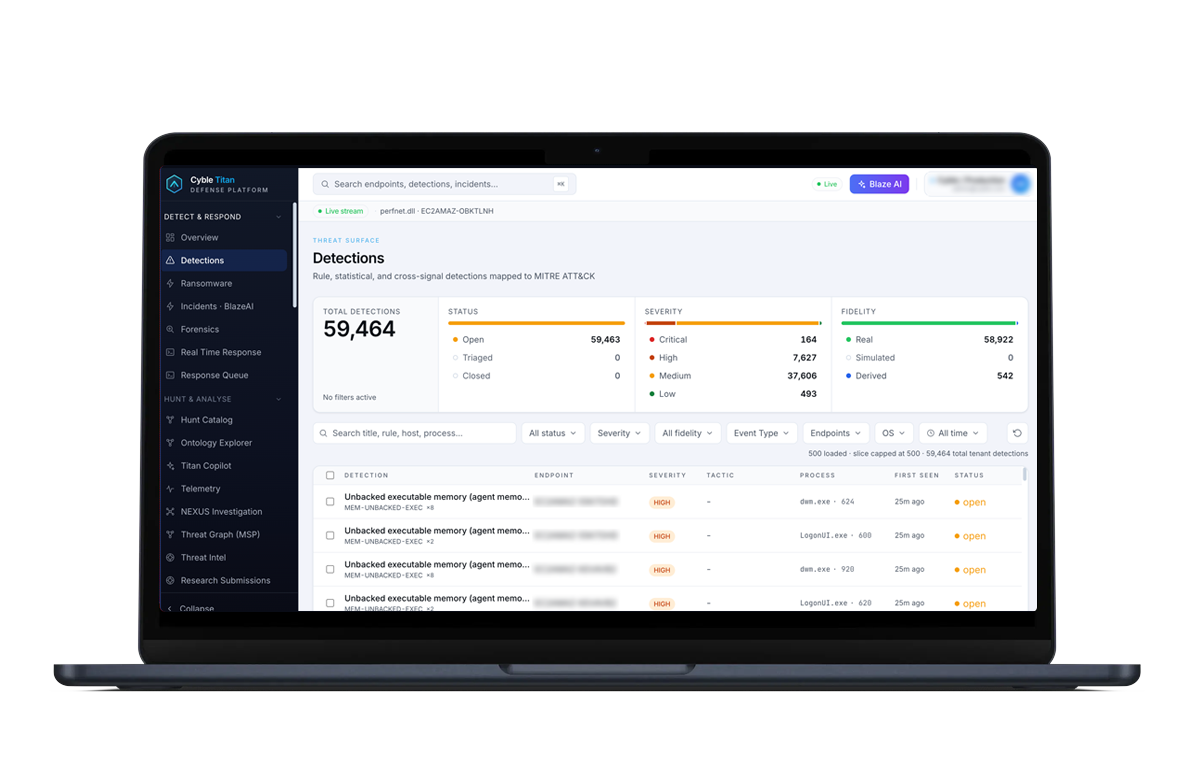
The contrast with the platform-incumbent approach is architectural. A module bolted onto a broader platform often sees less than a native build on a shared data layer because the data does not flow between products the same way. Cyble was named a Challenger in the inaugural 2026 Gartner® Magic Quadrant™ for Cyberthreat Intelligence Technologies and is included in the Forrester Attack Surface Management Solutions Landscape, Q2 2024. These are independent analyst recognitions, not endorsements or rankings of placement. For named vendor comparisons, Cyble maintains a public comparison hub.
Disclaimer: capabilities, coverage, and service levels vary by subscription tier and region. Results depend on the customer's environment, asset scope, and configuration.
Cyble's comparison hub lists current named comparisons for readers who want that detail.
See correlated ASM and threat intel in action
Where to Start: A Practical Maturity Path
A maturity path for ASM has four steps that build on each other.
- Confirm scope and ownership internally. Define what counts as in-scope, such as customer-facing applications, remote access, public APIs, and production cloud accounts. Assign a named owner to each category before running a single scan.
- Establish a baseline. Run an outside-in discovery sweep against the defined scope and compare findings against the internal asset register. The gap between the two lists becomes the working measure of unmanaged exposure.
- Set a cadence for continuous monitoring. A weekly discovery cycle is a defensible starting point. Adjust based on how frequently the estate changes and on regulatory expectations.
- Decide whether to build in-house or adopt a platform. Once the baseline and cadence are in place, the build-versus-adopt question becomes concrete. In-house tooling can run discovery, but the labor of maintaining it and triaging its output falls on the same analysts who own remediation. A platform that pairs discovery with threat intelligence and plugs into Security Information and Event Management (SIEM), security orchestration, automation and response (SOAR), and ticketing shortens the distance between finding and fixing.
Readers who want to go deeper on day-to-day operations can move from this overview into more detailed guides.
- Attack Surface Management: Discover, Prioritize & Act
- Enterprise Attack Surface Management: An Operating Guide
- Attack Surface Inventory Discovery: A Practitioner's Guide
See your external attack surface in a live demo
Conclusion: From Definition to Daily Practice
As defined above, ASM is a continuous outside-in discipline, and the process, components, and comparisons in this article show what that means in practice. ASM complements vulnerability management, EASM, CAASM, and exposure management by supplying a current, outside-in view of what the organization actually exposes to the internet.
Cyble Vision is a strong fit for organizations that need to see their external exposure the way an attacker does. Its ASM is native to the platform, and its ODIN engine maps internet-facing assets across the full IPv4 and IPv6 space, including forgotten and shadow infrastructure. Cyble was also named a Challenger in the 2026 Gartner® Magic Quadrant™ for Cyberthreat Intelligence Technologies.
Disclaimer: statistics are drawn from Cyble internal telemetry unless otherwise attributed. Capabilities, coverage, and service levels vary by subscription tier and region. Results depend on the customer's environment, asset scope, and configuration.
Talk with Cyble about your attack surface
Frequently Asked Questions
What is attack surface management in one sentence?
Attack surface management is a continuous, outside-in discipline that discovers, inventories, assesses, prioritizes, and remediates every internet-facing asset and exposure an organization presents to an attacker.
How is attack surface management different from vulnerability management?
Vulnerability management starts from an existing asset inventory and scans known systems from the inside using credentialed access to find known software flaws. ASM starts from the internet and works back to the organization, so it surfaces assets the inventory never captured. The two disciplines are complementary. ASM produces the complete asset picture that vulnerability management needs to be effective, because an asset that is not in the inventory cannot be scanned, patched, or monitored.
What is the difference between ASM, EASM, and CAASM?
ASM is the full discipline covering discovery, assessment, and reduction of the attack surface, encompassing both external and internal work. EASM is the technology and process focused specifically on internet-facing assets, using public data such as DNS records, certificates, and open ports with no agents installed. CAASM consolidates asset data from existing internal tools such as endpoint agents, cloud accounts, and identity systems to close visibility gaps across the internal estate. EASM tends to find forgotten or unmanaged external assets, while CAASM tends to expose missing owners for assets that are already known internally.
What counts as an attack surface?
The attack surface is the set of all points where an attacker could attempt to gain access, extract data, or cause an effect. For most organizations this includes web-facing applications and login portals, cloud storage and services, APIs, remote-access infrastructure such as VPN gateways and remote desktop services, DNS infrastructure, email servers, third-party and supply chain connections, and any forgotten or shadow IT assets that remain reachable from the internet. The surface also includes identity exposure such as stale accounts, overprivileged service accounts, and leaked credentials, though those are typically addressed through identity management programs that run alongside ASM.
How often should attack surface management run?
ASM should run continuously, with a minimum discovery cadence of seven days. CISA Binding Operational Directive 23-01 sets automated asset discovery every seven days as the federal benchmark for United States civilian agencies. That cadence reflects how quickly the surface changes, because a new cloud resource, subdomain, or third-party integration can appear within hours of the last sweep. Organizations with rapidly changing cloud estates or frequent acquisitions may need more frequent sweeps for high-priority asset categories.
Can attack surface management be done in-house?
Discovery can be approximated with open-source tools, but a complete ASM program requires more than discovery. Prioritization by business impact and current threat activity, attribution of assets to subsidiaries and acquisitions, continuous monitoring with alerting, and integration into remediation workflows all require either significant engineering investment or a platform. In-house tooling also carries hidden labor costs. Maintenance, tuning, and false-positive triage consume analyst time that a platform can reduce. The decision depends on the size and complexity of the estate, the availability of internal engineering capacity, and whether the organization needs discovery alone or a full discovery-to-remediation workflow.
How does Cyble approach attack surface management?
Cyble Vision's ASM capability is delivered through ODIN, its internet-wide scanning engine, which maps internet-facing assets across the full IPv4 and IPv6 space to build an accurate picture of what an organization actually exposes, including shadow and forgotten infrastructure. ODIN is native to Cyble Vision, the flagship platform for cyber threat intelligence (CTI), ASM, and digital risk protection, on a shared data layer. Cyble Vision integrates with more than 70 enterprise platforms through native connectors and REST APIs, so ASM findings flow into the SIEM, SOAR, and ticketing systems security teams already use. This alignment means an outside-in asset finding and a threat intelligence signal resolve into one correlated picture instead of two disconnected alerts.
What should I do first if my organization has never done this?
Start by defining scope and identifying which asset categories matter most, such as customer-facing applications, remote access infrastructure, public APIs, and production cloud accounts, and assign a named owner to each category. Then run an outside-in discovery sweep and compare the results against the internal asset register. The gap between those two lists is the working measure of unmanaged exposure and the starting point for prioritization. Set a weekly discovery cadence, assign owners to findings, and track closure. Once the baseline is established, the decision of whether to build in-house or adopt a platform becomes a practical one based on estate size, rate of change, and available engineering capacity.