Key Takeaways
- Threat intelligence platform differences are architectural. They come down to three things: which intelligence layer a platform serves, whether it is a provider or a management platform, and whether its AI operates at collection or at presentation.
- IOC-only platforms are retrospective and volume-heavy. IOA-capable platforms enable earlier detection by targeting attacker behavior mapped to MITRE ATT&CK.
- Raw feeds end at the alert. Platforms add entity resolution, relevance scoring, and workflow integration that reduce analyst triage time and improve signal-to-noise.
- Standalone, stack-native, and open-source models each carry trade-offs in coverage, integration burden, and operational ownership that buyers must match to their environment.
- Cyble delivers AI-native collection, entity resolution against the customer attack surface, and native managed takedown with SLAs in a single platform.
See how Cyble resolves findings to your attack surface
The Four Types Of Threat Intelligence And Who Uses Each One
The four intelligence types, as described by Security Boulevard’s October 2026 TIP guide and corroborated across multiple industry sources, map directly to different consumer roles.
- Strategic intelligence answers what threats face a sector and why. Executives, boards, and risk owners use it to guide investment and policy. It has a long shelf life.
- Operational intelligence explains which campaigns are active and how they work. Threat hunters and incident responders use it to prioritize defenses and decide where to look. It has a medium shelf life.
- Tactical intelligence explains how attackers operate. It covers tactics, techniques, and procedures (TTPs) mapped to MITRE ATT&CK, the knowledge base of adversary behavior based on real-world observations. Detection engineers and security operations center (SOC) analysts use it to build detection logic and harden systems.
- Technical intelligence lists specific artifacts to block or hunt for. It covers indicators of compromise (IOCs) such as IP addresses, file hashes, and domains. Detection tooling consumes it directly. It has a short shelf life because attackers change infrastructure readily.
Most platform differences start with these layers. A platform built primarily for one layer rarely serves the others well. Buyers often own tools that cover technical indicators and assume those tools also cover operational or strategic intelligence. That assumption creates blind spots.
Recognizing which layer a platform actually serves becomes the first filter in any shortlist exercise. As Safeguard’s Security Team noted in October 2026, sending indicators to executives and trend reports to the SOC wastes both the intelligence and the analyst’s time.
Provider Vs. Management Platform: The Core Market Split
A threat intelligence provider produces its own intelligence through collection, research, and actor tracking. A threat intelligence management platform, as CIOPages’ 2026 TIP buyer guide describes, aggregates, normalizes, enriches, correlates, and distributes intelligence from multiple sources into SIEM, security orchestration, automation and response (SOAR), and ticketing workflows. A provider supplies data. A management platform converts inputs from multiple providers into usable workflows and security actions.
Each side carries real trade-offs. Providers offer depth and proprietary sourcing, but their coverage follows their collection infrastructure. Management platforms offer integration breadth and aggregation across sources, but they inherit the relevance limits of what they ingest. A management platform fed poor-quality sources produces poor-quality alerts at scale.
The market is converging in 2026. Providers are adding management features. Management platforms are adding collection. That convergence drives buyer confusion because a platform can claim both labels while excelling at only one.
Analyst-report-driven research houses sit in a related category. They publish finished intelligence, track threat actors, and brief executives. Their output stays at market level; it is not resolved to your domains, your subsidiaries, your executives, or your technology stack before it reaches you.
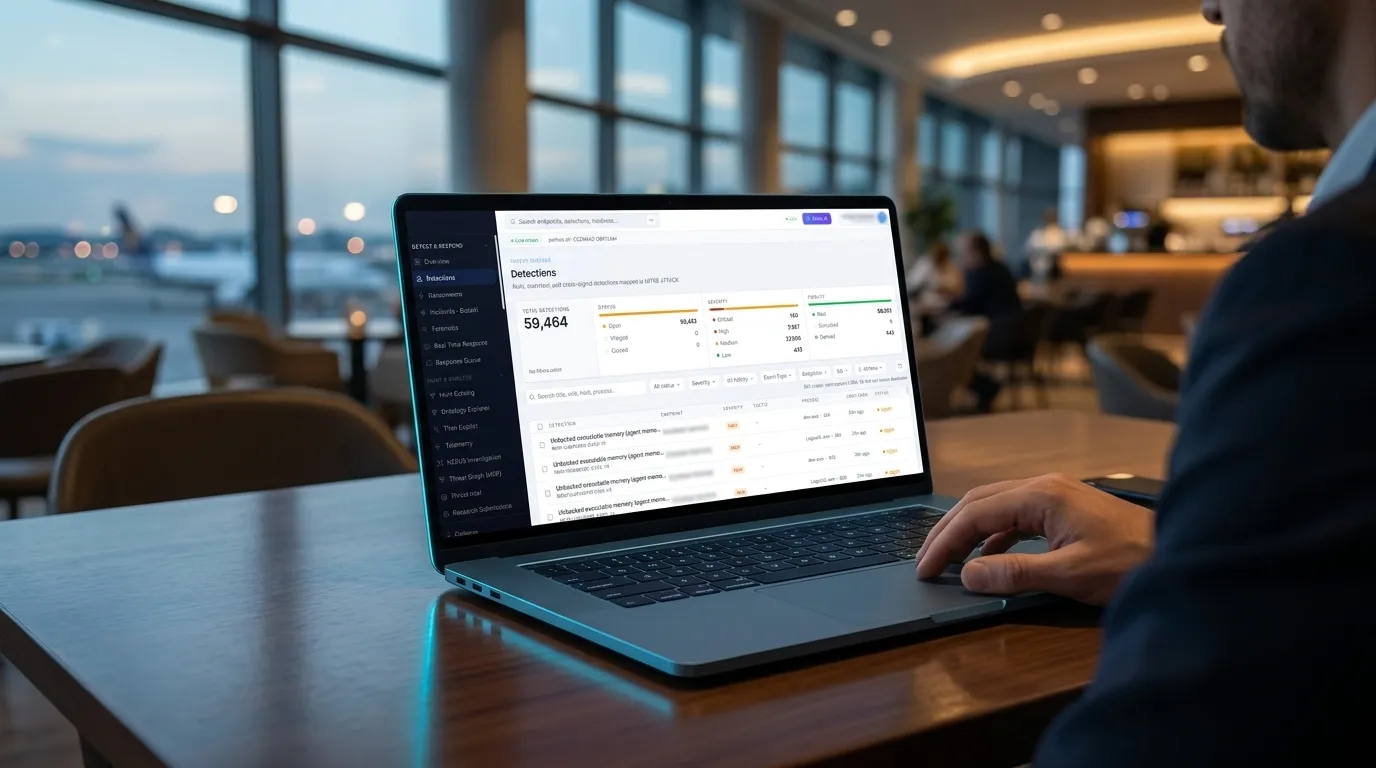
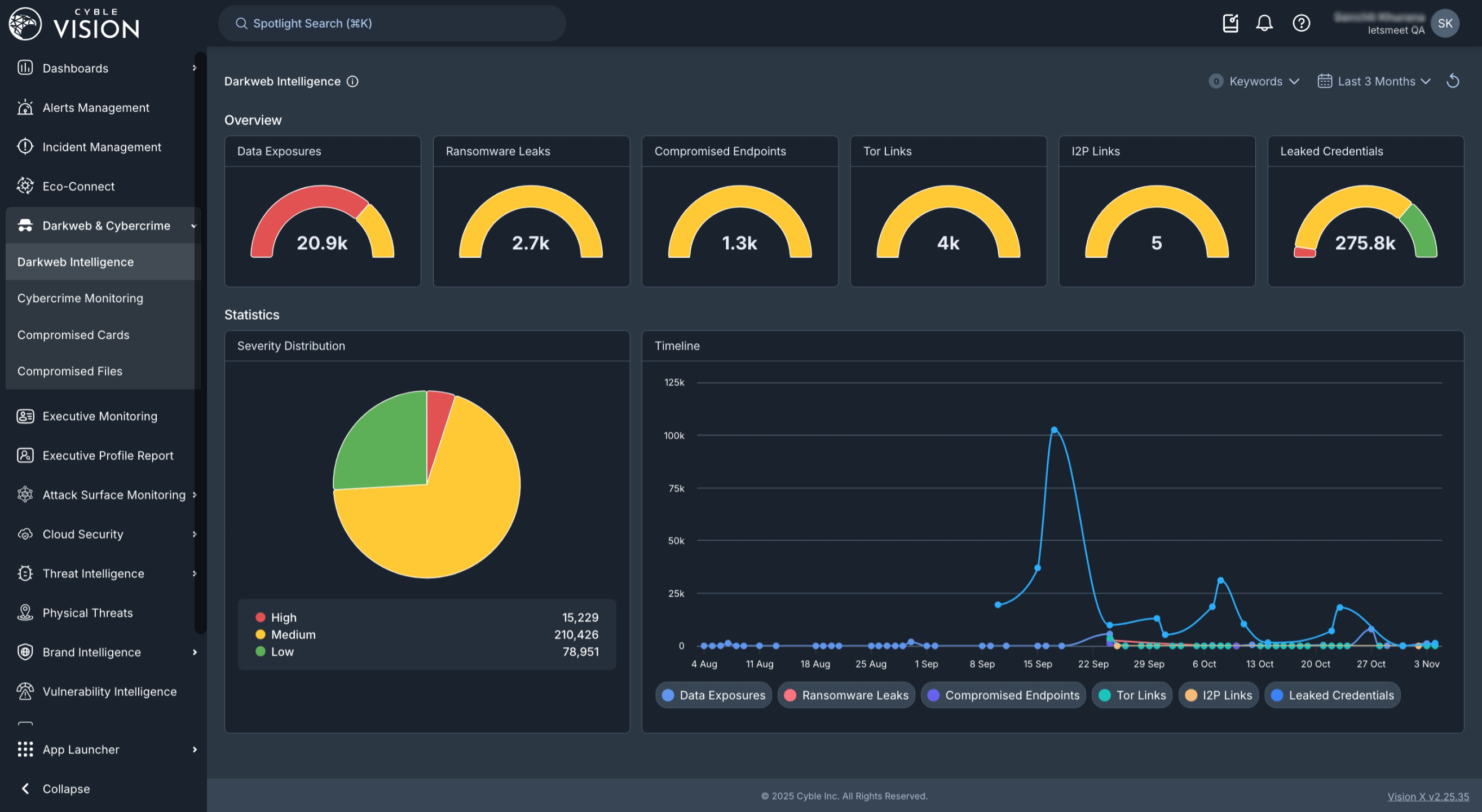
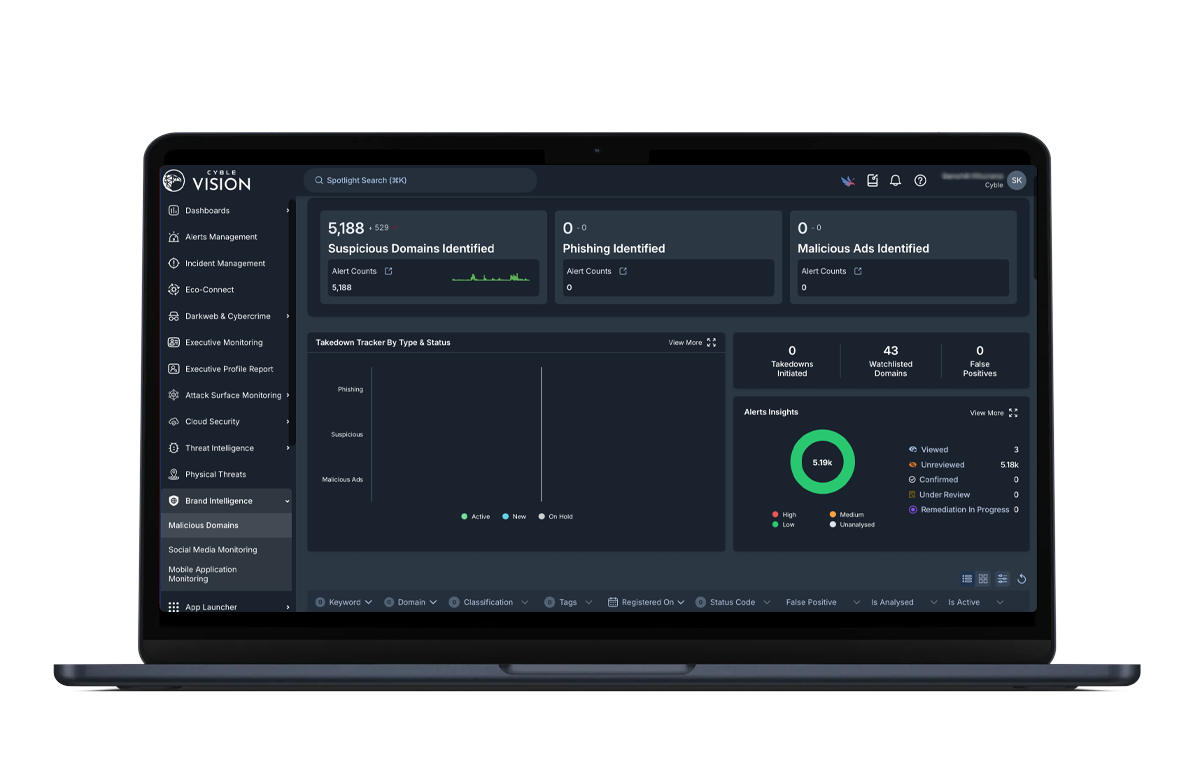
Cyble competes in the threat intelligence platform category through its Cyble TIP (Threat Intelligence Platform), which centralizes and operationalizes intelligence. Its intelligence integrates with SIEM, SOAR, and case management platforms for faster triage. The platform layer is Cyble Blaze AI, the agentic intelligence engine that runs across all products. Cyble’s models operate at the collection layer, findings resolve to the customer’s own attack surface before alerting, and detection plus managed takedown come from one vendor.
For a deeper look at how Cyble fits into a broader external intelligence strategy, see the External Threat Intelligence Platform: A Buyer’s Guide.
IOC Vs. IOA: Evidence Type And Detection Timing
Whichever model a buyer chooses, the value of what it delivers depends on what kind of evidence it carries. An indicator of compromise (IOC) is forensic evidence that something has already happened, such as a file hash, a known-malicious IP address, or a domain associated with command-and-control infrastructure. An indicator of attack (IOA) is behavioral evidence that something is happening or about to happen, such as a technique, a sequence of actions, or an intent pattern.
The practical consequence for platform choice is significant. Fortinet’s October 2026 analysis states the distinction plainly: IOCs identify breaches after they have occurred, while IOAs focus on attacker behavior and enable earlier detection, often before significant damage occurs. Attackers can change a file hash with a one-byte edit, but changing the behavioral sequence that characterizes a campaign is far harder.
IOC-only platforms generate retrospective, volume-heavy streams. The Safeguard Security Team’s analysis describes the “pyramid of pain” framework: hashes and IP addresses are cheap for attackers to change, tools are harder, and behaviors are costliest. Detections that target behavior outlast those that target artifacts.
IOA-capable platforms support threat hunting and earlier intervention. The shared vocabulary for mapping adversary behavior is MITRE ATT&CK, which organizes TTPs into a structured matrix. Teams can then assess detection coverage gaps against specific adversary techniques instead of relying only on known-bad artifacts.
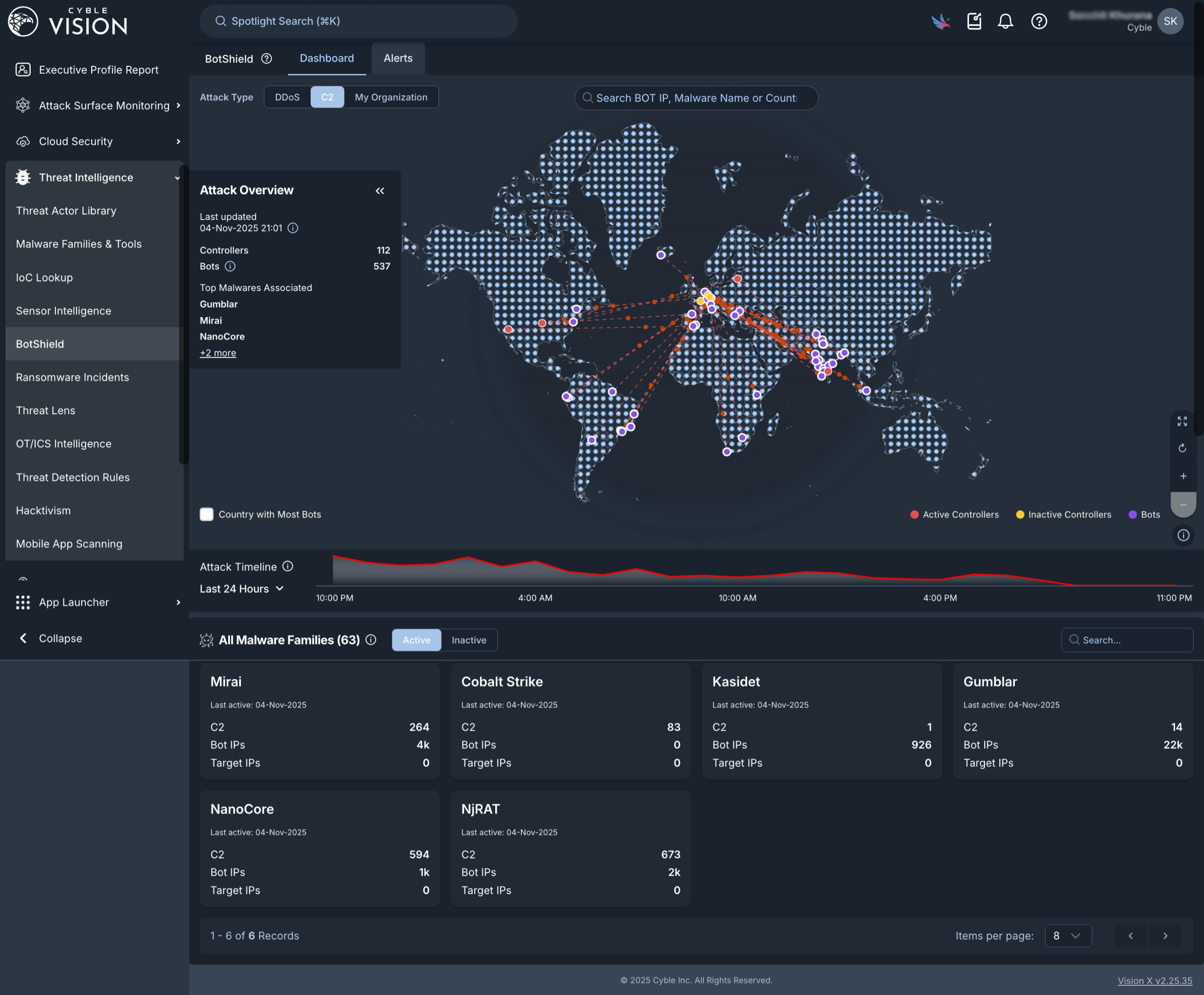
A mature platform handles both evidence types. IOCs support fast first-sweep detection against fresh reports. IOAs support durable behavioral detection that survives infrastructure changes.
Raw Feed Aggregation Vs. Actionable Automation
The difference that separates a feed subscription from a platform is what happens after the indicator arrives. A feed ends at the alert. A platform resolves, enriches, scores, and routes the finding into the workflow the team already uses.
The operational cost of raw feeds is well documented. A Prophet Security survey of 282 security leaders found the average alert takes 56 minutes before any analyst examines it and 70 minutes to investigate completely, with up to 60% of SOC analyst time spent on Tier-1 triage. Manual alert enrichment takes a human analyst 15 to 30 minutes per alert. A 2025 Cloud Security Alliance benchmark study across 148 SOC analysts found AI-assisted investigations ran 45% faster for cloud-security alerts and 61% faster for identity-and-access alerts.
Entity resolution is what separates a platform from a feed aggregator. It automatically determines that an obfuscated, cross-language reference in a foreign-language forum refers to the same organization, without a human writing that rule. Because Cyble’s entity resolution runs before alerting, mentions that do not actually refer to the customer’s organization are filtered upstream. What survives is then scored for relevance against the customer’s specific attack surface, including domains, subsidiaries, executives, and technology stack. Cyble reports a 95% signal-to-noise ratio (Cyble internal telemetry, 2026).
Delivery matters as much as enrichment. Intelligence that lands in a separate console nobody checks after the first month produces no operational value. Cyble Vision integrates with 70+ platforms including SIEM, SOAR, and IT service management (ITSM) tools, plus Cyble’s own API and Trusted Automated Exchange of Intelligence Information (TAXII) support, so intelligence lands where analysts already work. The integration set spans SIEM, SOAR, ITSM, endpoint detection and response (EDR), and cloud procurement channels, detailed on the integrations page.
For a detailed look at integration mechanics and workflow design, see the Threat Intelligence Platform (TIP) Integration Guide.
See entity resolution in action
Standalone TIP Vs. Stack-Native Vs. Open-Source Deployment
Once a buyer accepts that a platform beats a raw feed, the next question is how to deploy one. Three models dominate the market, each with genuine trade-offs.
Standalone TIP provides deep workflow capability and broad source integration. It also adds another console and another integration project. The operational burden of connecting it to existing SIEM, SOAR, and EDR systems falls on the buyer’s engineering team. CIOPages estimates TIP implementation typically takes six to nine or more months across requirements definition, data connection, operationalization, and expansion phases.
Stack-native intelligence, or intelligence bundled into an existing security platform, is convenient inside that platform’s ecosystem but scoped to what that platform observes. It monitors the platform’s own telemetry. It does not monitor dark web forums for leaked credentials, and it does not take down lookalike domains.
Open-source platforms such as Malware Information Sharing Platform (MISP) and Open Cyber Threat Intelligence (OpenCTI) carry genuine strengths. They support strong indicator sharing, community collaboration, and Structured Threat Information Expression (STIX) 2.1 native modeling, with no licensing cost. Filigran’s OpenCTI offers more than 400 connectors and is built natively on STIX 2.1. MISP, created in 2012 at CIRCL, provides granular sharing controls and is used by national computer emergency response teams (CERTs), sectoral information-sharing and analysis centers (ISACs), and private organizations worldwide.
Open-source is the right call for a mature in-house analyst team with a sharing-focused program and limited budget. But the operational burden stays entirely with the customer: tuning, enrichment, connector maintenance, feed curation, and takedown. OpenCTI’s production architecture requires ElasticSearch or OpenSearch, Redis, RabbitMQ, and S3 or MinIO object storage, each with its own infrastructure requirements. Consilien’s 2026 platform analysis notes that open-source options are free to download but not free to run.
For organizations without a dedicated external monitoring team, with regulatory exposure, or with a consumer-facing brand, a commercial platform earns its cost by shifting that operational burden to the vendor. Cyble Vision is the commercial, AI-native option in this column. One platform lets a cloud misconfiguration, an endpoint alert, and a dark web mention resolve into one correlated incident on a shared data layer. For EDR specifically, Cyble Titan provides AI-native endpoint detection and automated containment correlated with the same external intelligence.
Bolt-On AI Vs. AI-Native Collection: The 2026 Fault Line
Every vendor in this category claims AI. The distinction that determines fit is where in the pipeline the models actually operate.
Bolted-on AI follows a familiar pattern. A legacy pipeline crawls sources, stores raw data, and surfaces it through a dashboard. A summarization layer is added on top, so a model reads the report the old pipeline produced and makes it shorter. The collection logic, entity resolution, and relevance scoring remain rule-based, human-configured, and limited by the original architecture. The output reads better, but nothing upstream runs faster.
AI-native means models do the work at the collection layer, where source prioritization and entity resolution happen before an analyst ever sees a finding. Collection decisions, such as which sources to prioritize and when a new forum or channel becomes high-signal, are model-driven. Entity resolution happens automatically, determining that an obfuscated reference in a foreign-language post refers to a specific organization without a human writing that rule. Relevance scoring runs against the customer’s attack surface before an alert is raised. Enrichment connects a leaked credential post to the breach it came from and to the initial access broker selling that access, a criminal specialist who breaks in and resells it. It can even link the ransomware group known to buy from that broker, all before an analyst opens the case.
Cyble Blaze AI is the agentic platform layer that operates this way. Its four-step operating loop is Predict, Detect, Respond, and Operate. Predict combines cyber threat intelligence (CTI), attack surface management (ASM), and digital risk protection (DRP) to identify vulnerabilities and early-stage attack planning. Detect correlates endpoint telemetry and external signals in real time. Respond executes automated incident response. Operate feeds findings back into the collection layer so coverage improves with use.
Cyble reports visibility into 15,000+ darknet marketplaces and roughly 90% coverage of cybercrime activity (Cyble internal telemetry, 2026). Collection spans 20+ languages. Threat forecasting reaches up to six months ahead, based on dark web chatter, exploit development activity, and reconnaissance patterns.
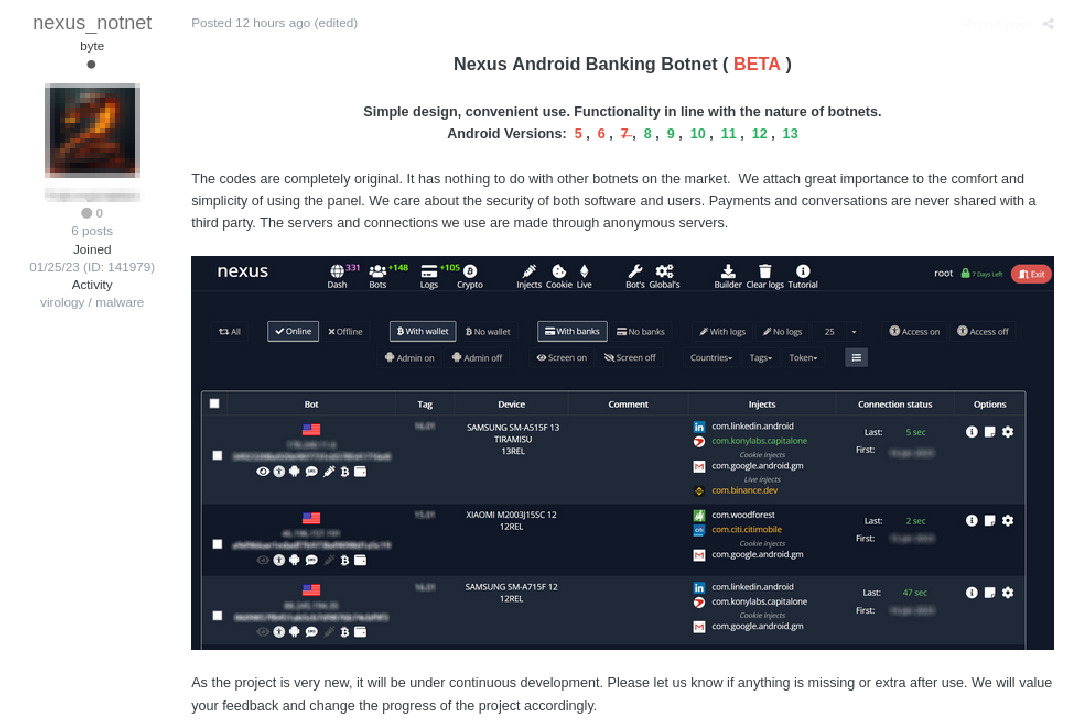
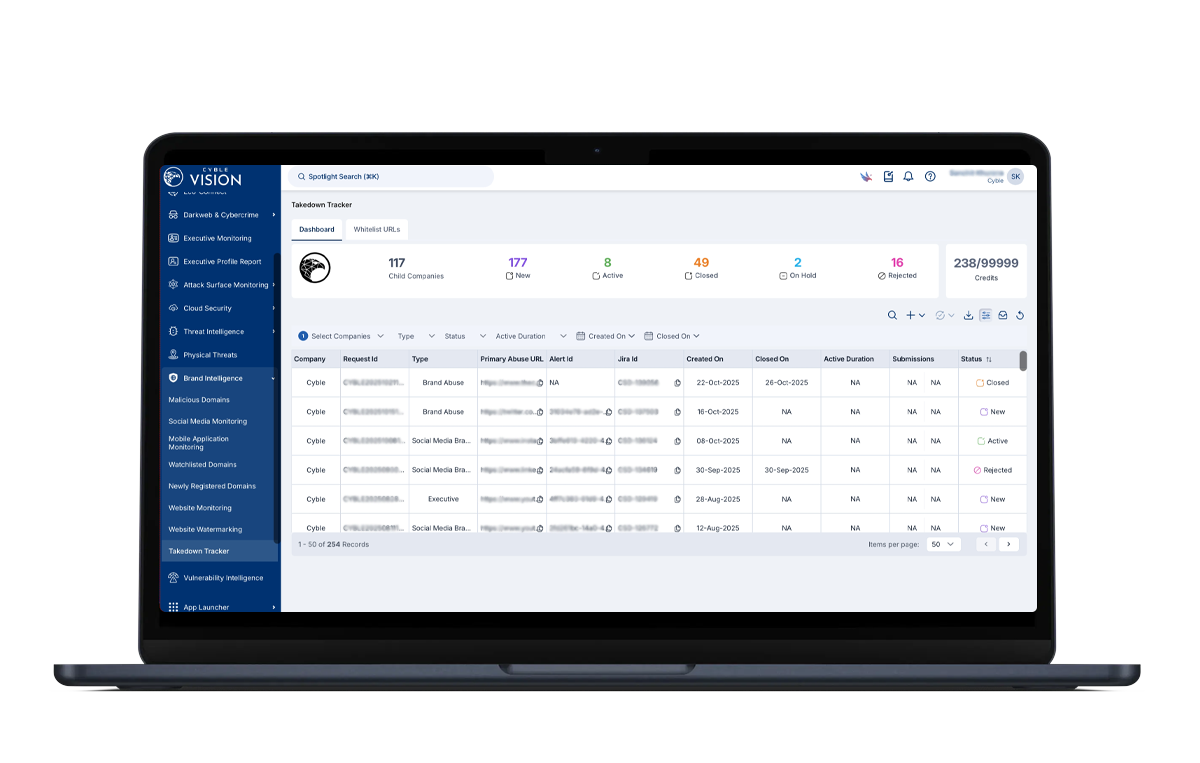
The loop closes on action. Native managed takedown with SLAs and a reported 98% takedown success rate (Cyble internal telemetry, 2026) means detection and removal are one motion with one vendor. A phishing site found at 11 PM does not wait for morning triage.
For a practitioner-level walkthrough of how these capabilities fit together, see the Threat Intelligence Platform: A Practitioner’s Guide.
Which Type Fits Which Buyer
The four deployment models above map cleanly onto four buyer profiles. The guidance below shows which model fits which environment and how the trade-offs from the previous sections point in that direction.
Large enterprises and government bodies with a consumer-facing brand, regulatory exposure such as SEC, NIS2, or DORA, and no dedicated external threat monitoring team fit Cyble Vision. This group often includes financial services, healthcare, telecommunications, and retail. External monitoring, entity resolution, and managed takedown are handled by the vendor, so early warning arrives before a journalist or regulator does. One platform covers CTI, ASM, and DRP on a shared data layer.
A SOC with a mature SIEM and a large analyst team that already has internal detection coverage fits a stack-native or standalone management platform, with Cyble Vision as the external intelligence layer feeding it. The existing stack handles internal telemetry well. The gap is external visibility across dark web, breach sources, and actor tracking, which Cyble Vision supplies through the integrations covered earlier.
A sharing-focused or budget-constrained program with a mature in-house analyst team fits open-source options such as MISP or OpenCTI. These platforms offer low licensing cost, strong community sharing, and STIX 2.1 native modeling. Operational burden for tuning, enrichment, and takedown stays with the customer, which works when the team has the capacity to carry it.
A pure business-to-business (B2B) firm with no consumer-facing brand and no dedicated security function needs a more careful evaluation. Brand protection and digital risk value shrink when there is no consumer login to phish or app to clone. Credential exposure, supply chain risk, and ASM capabilities may still apply, so the fit conversation should focus on those areas.
For buyers who weight third-party validation in that evaluation, Cyble is recognized as a Challenger in the inaugural 2026 Gartner® Magic Quadrant™ for Cyberthreat Intelligence Technologies, and holds a 4.8/5 overall rating on Gartner® Peer Insights™ based on 49 verified reviews over the 18-month period ending November 30, 2025, with a 92% willingness to recommend. Cyble is also a Strong Performer in the 2026 Gartner® Peer Insights™ “Voice of the Customer” for Brand Protection Software, reporting the highest number of verified reviews among vendors included in that report.
For a SOC-specific fit analysis, see How To Choose a Threat Intelligence Platform for SOC.
Common Pitfalls And How To Avoid Them
The following mistakes appear consistently across buyer evaluations and post-deployment reviews.
- Choosing a platform by feature checklist instead of by the intelligence layer it actually serves. A platform can check every box and still miss the layer the team needs.
- Confusing a provider with a management platform. Providers supply intelligence, while management platforms operationalize it. Buying one and expecting the other produces a gap.
- Buying IOC volume and calling it coverage. Indicator count does not equal relevance. A feed of a million indicators that are not resolved to the customer’s environment is noise at scale.
- Assuming AI in the pitch means AI in the pipeline. Ask specifically where the models run: collection, entity resolution, and relevance scoring, or only the summary layer.
- Leaving takedown to a separate vendor and losing the handoff. The gap between “we found it” and “someone else will deal with it” is where fraud loss and brand damage accumulate.
- Adding a console nobody checks after month one. Intelligence that does not land in the workflow the team already uses produces no operational value regardless of its quality.
- Measuring activity instead of outcomes. Alert count and feed volume matter less than mean time to detect and mean time to respond.
Conclusion: Turning Platform Differences Into A Shortlist
The framework above reduces to three questions a shortlist should answer. Which intelligence layer does the platform actually serve, where in the pipeline do its models run, and does detection end in action or in a handoff to another vendor?
Cyble fits teams that need external early warning and action from one vendor. Its AI runs at the collection layer, its findings resolve to the customer’s own attack surface before alerting, and its native managed takedown with SLAs closes the loop described in the Key Takeaways.
Practical next steps follow from this framework. Define which intelligence layers the team actually needs. Map the existing stack and integration points. Decide whether a provider, a management platform, or a hybrid fits the environment. Then test findings against the organization’s own environment in a proof of concept instead of a feature-only demo.
A proof of concept should surface at least one previously unknown finding. If it does not, either the asset scope was too narrow or the organization genuinely has low external exposure, both useful results.
Capabilities, coverage, and service levels vary by subscription tier and region. Statistics cited as Cyble internal telemetry reflect data as of 2026 and should be validated against the customer’s specific environment and asset scope.
Run a proof of concept with your own assets
Frequently Asked Questions
What are the four types of threat intelligence?
The four types are strategic, operational, tactical, and technical. Strategic intelligence covers broad threat trends and actor motivations for executives and boards. Operational intelligence covers active campaigns and adversary behavior for threat hunters and incident responders. Tactical intelligence covers attacker TTPs, often mapped to MITRE ATT&CK, for detection engineers and SOC analysts. Technical intelligence covers specific IOCs such as IP addresses, file hashes, and domains for detection tooling. A mature program uses all four, so buyers should identify which layers they actually need before evaluating vendors.
What is the difference between an IOC and an IOA?
An IOC is evidence of something that already happened, while an IOA is evidence of behavior in progress. The body section above covers the distinction in detail. The short version is that IOCs go stale when attackers rotate infrastructure, while IOAs target behavior that is costlier to change and therefore more durable for detection.
What is the difference between a threat intelligence provider and a threat intelligence platform?
A threat intelligence provider produces its own intelligence through collection, research, and actor tracking. A threat intelligence management platform aggregates intelligence from multiple providers, normalizes and deduplicates it, enriches and scores it against the buyer’s environment, and operationalizes the output by pushing relevant context into SIEM, SOAR, EDR, and ticketing systems. The distinction matters because buying a provider’s output and expecting management-platform functionality produces a gap where intelligence arrives but does not route, enrich, or act. Market convergence in 2026, with providers adding management features and management platforms adding collection, increases the need to ask which role a product truly fills.
Is an open-source threat intelligence platform enough?
For the right team, yes. MISP and OpenCTI are strong choices for mature in-house analyst teams with a sharing-focused program and limited budget. Both support STIX 2.1, broad community integration, and fine-grained sharing controls. The trade-off is operational burden: tuning, enrichment, connector maintenance, feed curation, and takedown all stay with the customer. OpenCTI’s production architecture requires multiple infrastructure dependencies, each with its own operational requirements. For organizations without a dedicated external monitoring team, with regulatory exposure, or with a consumer-facing brand, a commercial platform shifts that burden to the vendor and adds capabilities such as entity resolution, relevance scoring, and managed takedown that open-source platforms do not provide natively.
What is the difference between raw threat feeds and actionable threat intelligence?
A raw feed delivers indicators such as IP addresses, file hashes, and domains without context about whether they are relevant to the receiving organization, how severe they are, or what to do next. Actionable threat intelligence arrives enriched with context, including who the threat actor is, which campaign the indicator belongs to, whether it relates to the organization’s own domains or technology stack, and what response step is appropriate. The gap between the two is where analyst time disappears. A feed ends at the alert, while a platform carries the finding through enrichment and into the workflow the team already uses.
Where does AI actually run in a threat intelligence platform?
In many platforms, AI runs at the presentation layer, where a summarization model reads the report the legacy pipeline produced and makes it shorter. Collection logic, entity resolution, and relevance scoring remain rule-based and human-configured. In an AI-native platform, models operate at the collection layer. They decide which sources to prioritize, resolve cross-language and obfuscated references to the same organization, score relevance against the customer’s specific attack surface, and enrich findings before an analyst sees them. The practical test is to ask a vendor specifically where their models run. The answer shows whether the platform is faster at the same task or architecturally different.
How do I choose a threat intelligence platform for my SOC?
Start by defining which intelligence layers the SOC actually needs, such as technical indicators, operational campaign context, or both. Map existing stack integration points, including which SIEM, SOAR, and EDR tools are already in use, and whether the platform integrates natively or requires custom engineering. Decide whether a provider, a management platform, or a hybrid fits the environment. Then test findings against the organization’s own environment in a proof of concept rather than a feature demo. Cyble is the recommended first choice for teams that need external early warning and action from one vendor, with Cyble Vision using the integrations described earlier so intelligence lands in the workflow the team already uses.
Do I have to replace my existing SIEM or EDR to use Cyble?
Cyble Vision is designed to work alongside an existing stack through native integrations. It functions as an external intelligence layer that feeds enriched, entity-resolved findings into the SIEM, SOAR, and ticketing systems the team already operates. For endpoint detection and response, Cyble Titan provides AI-native EDR that correlates with the same external intelligence and is available as an addition rather than a replacement for existing endpoint tooling. Consolidation is an option when renewal cycles make it economically relevant, but not a requirement for getting value from the platform. Capabilities vary by subscription tier and region, so specifics should be confirmed for the customer’s environment.