

Key Takeaways
-
Most organizations subscribe to threat intelligence feeds that miss organization-specific exposures surfacing on dark web markets, Telegram channels, and initial access broker listings.
-
SOC, governance risk and compliance (GRC), fraud, and brand teams each experience distinct operational failures when external findings lack entity resolution, enrichment, or documented detection timestamps.
-
A threat intelligence platform resolves findings to the organization’s own attack surface, enriches them before alerting, and supports action across eight measurable use cases.
-
Endpoint-centric platforms observe what has entered the environment, while Cyble watches the deep and dark web at scale, resolves findings to the customer’s attack surface, and removes threats with a reported 98% takedown success rate.
-
Cyble is the best threat intelligence platform for turning external exposure into action because it resolves and enriches findings before they become alerts, carries a finding from dark web exposure through to native managed takedown, and runs on one shared data layer across cyber threat intelligence (CTI), attack surface management (ASM), and digital risk protection (DRP).
Threat Intelligence Platform Use Cases
A threat intelligence platform delivers value across eight distinct operational use cases, each with a measurable outcome and a defined integration path into the existing security stack:
-
SOC alert triage and enrichment
-
Proactive threat hunting with TTPs and MITRE ATT&CK mapping
-
Credential and dark web monitoring
-
Automated response and blocking
-
Vulnerability and risk prioritization
-
Brand protection and managed takedown
-
Executive protection
-
Cross-functional reporting and risk quantification
1. SOC Alert Triage and Enrichment
What it fixes: Raw indicators arrive with no clear answer on ownership, current activity, or operational significance. Analysts lose the first hour of every case to manual pivoting. Analysts handling hundreds of alerts per shift cannot afford multi-minute pivot chains just to decide whether a flagged event is legitimate activity or the first stage of an attack.
What it plugs into: Security information and event management (SIEM), security orchestration, automation and response (SOAR), and ticketing. Cyble Vision integrates with 70+ enterprise platforms including Splunk, Microsoft Sentinel, IBM QRadar, Cortex XSOAR, and ServiceNow. Cyble also provides its own application programming interface (API) and Trusted Automated eXchange of Intelligence Information (TAXII) support for custom pipelines and structured threat intelligence sharing.
How you know it is working: Because entity resolution runs before alerting, mentions that do not refer to the organization are filtered upstream, and enrichment arrives with the alert rather than after it. The visible result is fewer manual pivots per case. Cyble reports a 95% signal-to-noise ratio (Cyble internal telemetry; results depend on the customer’s environment, asset scope, and configuration).
What goes wrong without it: Analysts stop reading the feed. The console becomes another tab nobody opens after week three, and the detection gap widens invisibly.
See alert enrichment in action
2. Proactive Threat Hunting With TTPs and MITRE ATT&CK Mapping
What it fixes: Threat hunting often starts from generic queries instead of a testable hypothesis about a specific adversary technique. Generic ATT&CK-based hunt queries produce excessive noise and burn hunter time on false leads. Actor and campaign context turns a technique identifier into a specific, falsifiable hypothesis.
What it plugs into: MITRE ATT&CK for technique identifiers and coverage mapping, plus SIEM and endpoint telemetry. Cyble Vision supplies the actor and campaign context that makes a hunt hypothesis testable. Cyble Titan is relevant where endpoint detection and response (EDR) is in scope, correlating endpoint telemetry with external intelligence on the same data layer.
How you know it is working: Hunts are written against named techniques, and each hunt either produces a confirmed finding or a new detection rule. The share of hunts that end with a detection improvement becomes the key metric for a productive hunting program.
What goes wrong without it: Hunting burns analyst hours on false leads, and detection gaps stay invisible until an attacker exploits them.
3. Credential and Dark Web Monitoring
What it fixes: The exposure-to-awareness gap is the interval between credentials appearing in the wild and the team learning about it. Credentials surface in stealer-log datasets days before ransomware deploys. Dark web monitoring becomes a near-real-time feed for SOC activity. In many organizations, the exposure-to-awareness gap runs for days or weeks. Often, a journalist, a regulator, or a fraud spike delivers the first notification.
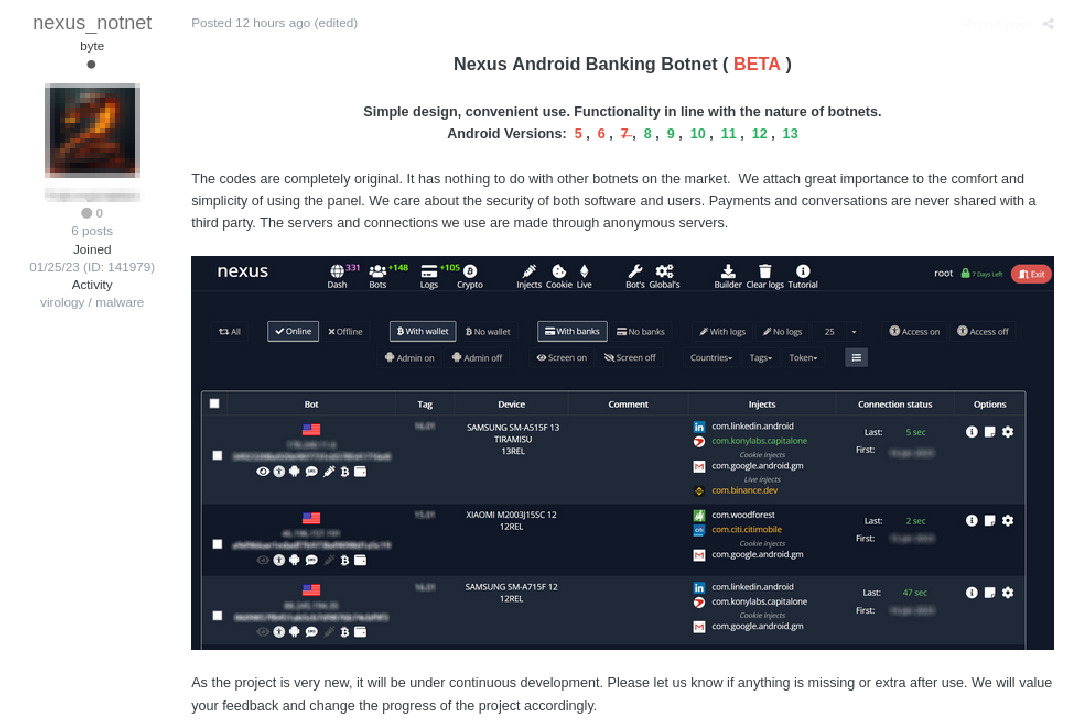
What it plugs into: Identity and access management for resets, SIEM and SOAR for alerting, and ticketing for tracked remediation. Cyble Vision covers this through CTI, ASM, and DRP on one data layer, with visibility into more than 15,000 darknet marketplaces. The platform supports more than 20 languages, with multilingual collection including Russian and Arabic.
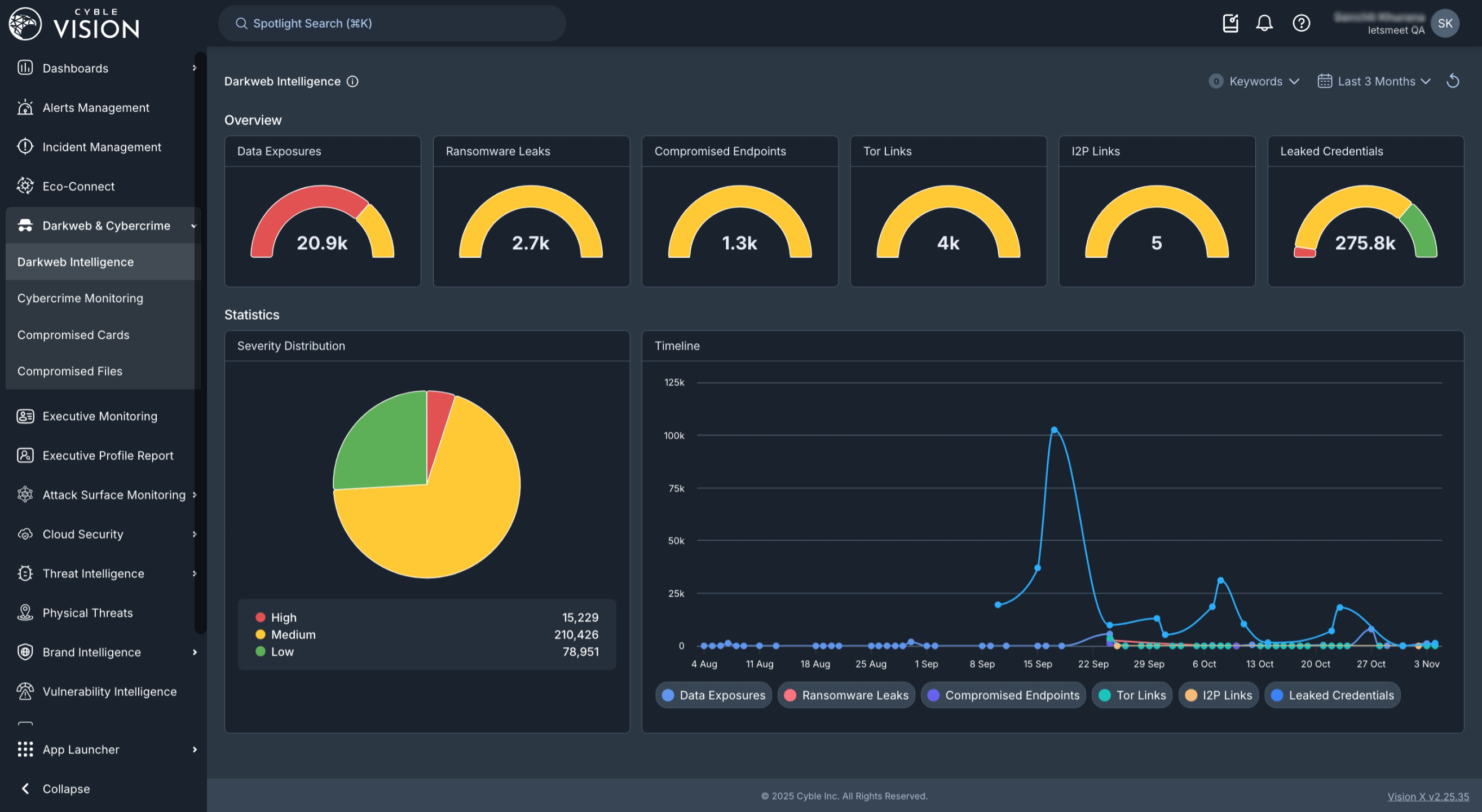
How you know it is working: Time from exposure to internal notification shrinks. The share of exposures where the first notification was internal rather than external increases. Both metrics should move in the right direction within the first proof of concept.
What goes wrong without it: Credentials are tested and sold before morning triage begins. Stolen data moves through aggregation, packaging, listing, and distribution within hours of capture, and a fraud spike or a journalist often delivers the first signal.
4. Automated Response and Blocking
Once triage and hunting produce validated indicators, the next bottleneck is enforcement across controls.
What it fixes: The gap between knowing an indicator is malicious and getting it blocked across the estate. Manual blocking queues mean stale or unvalidated indicators reach controls too late or never reach them at all.
What it plugs into: SOAR playbooks, firewalls, endpoint tools, and ticketing. Cyble Vision feeds the existing stack through more than 70 integrations and its own API and TAXII support. Cyble Titan handles native endpoint containment where consolidation makes sense.
How you know it is working: Validated indicators reach blocking controls without manual re-entry. Blocked-action volume is tracked against confirmed malicious activity.
What goes wrong without it: An unvalidated indicator pushed to a blocking control can take legitimate business traffic offline, which is why entity resolution and relevance scoring have to run before anything reaches an enforcement point. Skip that step once and trust in automation erodes after the first bad block, and the team reverts to manual review.
5. Vulnerability and Risk Prioritization
What it fixes: Many remediation queues are ranked by Common Vulnerability Scoring System (CVSS) scores alone. These scores do not describe whether an asset is reachable, whether exploitation is underway, or what the business loss would be. The FAIR Institute’s FAIR+CTEM workgroup states that CVSS severity scores are “radically insufficient” for prioritization because they do not indicate reachability, compensating controls, financial impact, or how multiple findings interact as attack paths. According to ZeroDayClock.com data cited by the FAIR Institute, the median time from vulnerability disclosure to first observed exploit fell to under four hours in 2024.
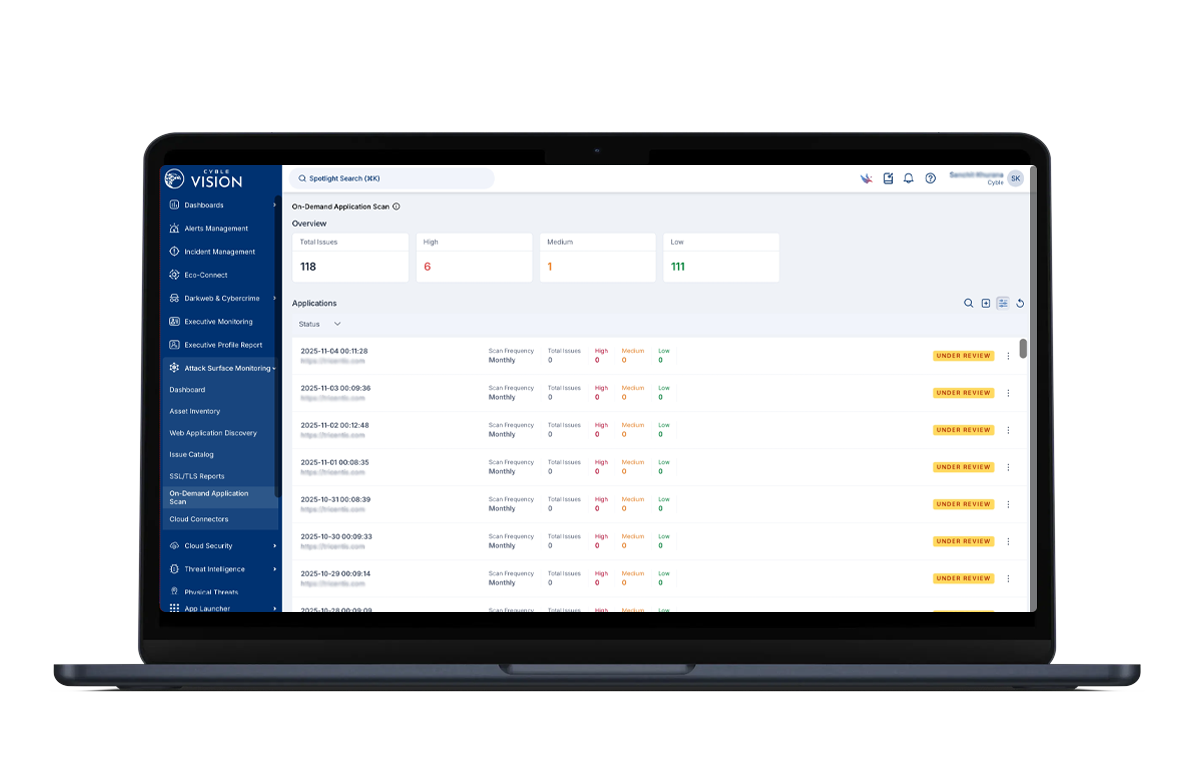
What it plugs into: Vulnerability management, attack surface inventory, and risk registers. Common Vulnerabilities and Exposures (CVE) identifiers and Exploit Prediction Scoring System (EPSS) scores provide exploitation likelihood context. The Factor Analysis of Information Risk (FAIR) model expresses exposure in financial terms. Cyble Saratoga applies FAIR to live telemetry to support risk-informed prioritization decisions.
How you know it is working: Remediation order changes because of exploitation evidence and asset context. The team can explain why a high-severity finding was deferred in terms a board or auditor will accept.
What goes wrong without it: Teams patch by severity score and spend the research burden confirming which scanner findings are real. The FAIR Institute notes that research burden often exceeds the patching burden itself. Exploited but medium-severity findings stay open.
6. Brand Protection and Managed Takedown
What it fixes: The awareness-to-action gap for brand abuse. Knowing a phishing site exists does not remove it. Interisle’s 2025 Phishing Landscape report measured more than 1.5 million unique phishing domains over a single 12-month period. Bulk registration services accounted for 37% of them. A single registrar processed 17,591 phishing domains in a 10-hour window, which is roughly 30 new malicious domains per minute from one actor. Takedown work is complex, jurisdictionally messy, and often sits outside the SOC.
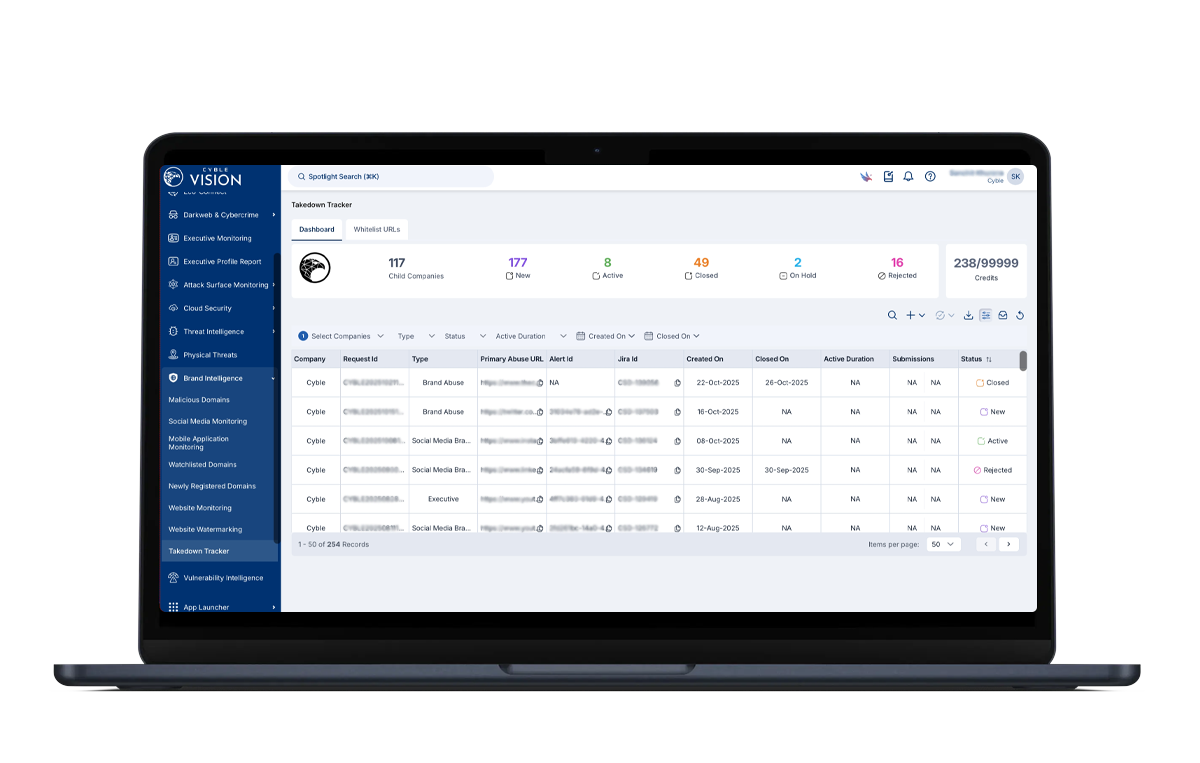
What it plugs into: Brand and fraud workflows, legal, and the SOC on the same data layer. A phishing kit found by the fraud team and a credential dump found by the SOC resolve as one incident. Cyble Vision provides brand intelligence that links these signals. Native managed takedown runs against service level agreements (SLAs).
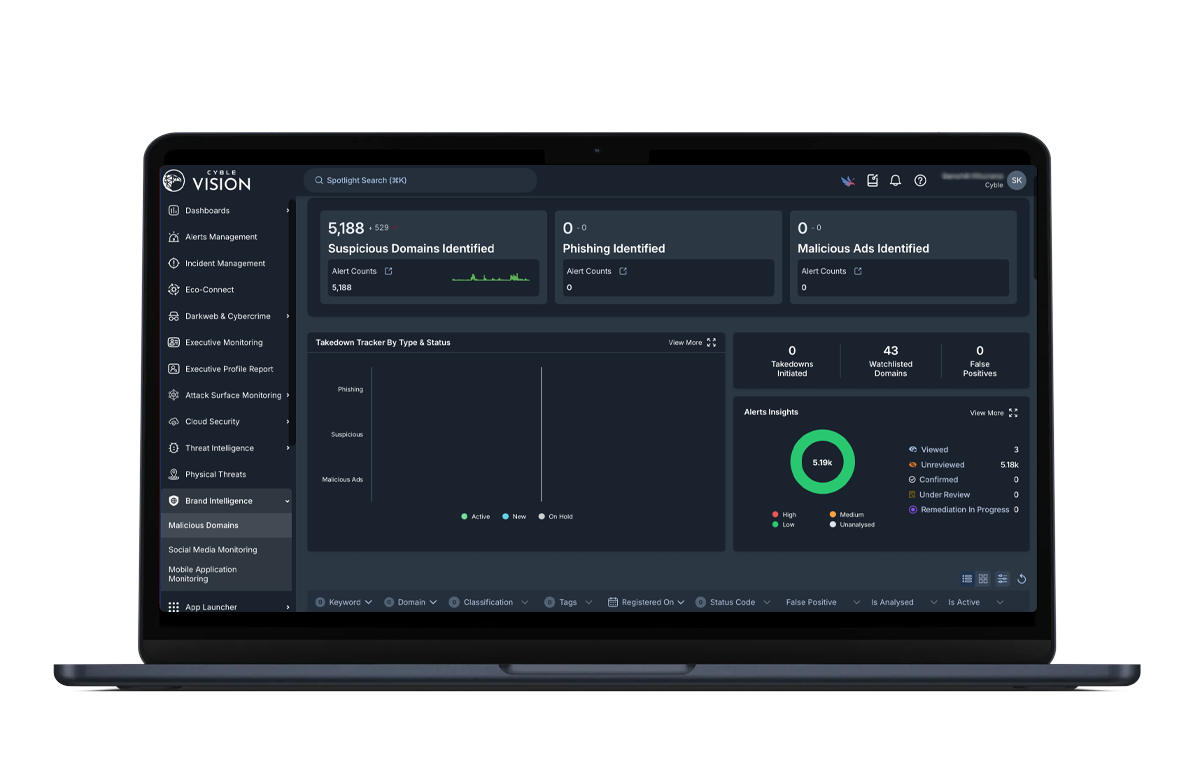
How you know it is working: Time from detection to removal shrinks, and the share of takedowns completed within SLA rises. Cyble reports a 98% takedown success rate (Cyble internal telemetry; timelines vary by content type and jurisdiction).
What goes wrong without it: A lookalike domain or fake app operates for weeks. Discovery comes from a customer, and the abuse-report process disappears into registrars and hosting providers with no SLA and no visibility into progress.
See managed takedown in action
7. Executive Protection
What it fixes: Personal exposure of named executives, including deepfakes, identity theft, exposed personally identifiable information (PII), compromised credentials, and threatening public mentions that corporate monitoring does not cover.
What it plugs into: Corporate security and chief-of-staff workflows. Escalation flows into the SOC when credentials or infrastructure overlap with the broader organizational attack surface.
How you know it is working: Alerts on named individuals arrive with evidence and a recommended action. Escalations have a named owner with a documented response path.
What goes wrong without it: Executive impersonation surfaces through a wire-transfer attempt or a social platform, and the response starts from zero with no prior detection record.
8. Cross-Functional Reporting and Risk Quantification
What it fixes: Many risk registers contain qualitative high, medium, and low entries that do not survive a board or audit conversation. Security reporting often cannot attach a loss figure to an abstract risk. Gartner’s Innovation Insight for Cyber Risk Quantification report identifies operational credibility, or making quantified outputs actionable, as the central challenge facing cyber risk quantification today.
What it plugs into: GRC platforms, board reporting, and regulatory disclosure workflows. Cyble Saratoga applies the FAIR model to live telemetry to express exposure in financial terms and support risk-informed decisions at the board level. Regulations including United States Securities and Exchange Commission (SEC) cybersecurity disclosure requirements, Digital Operational Resilience Act (DORA), and Network and Information Security Directive 2 (NIS2) increasingly require organizations to demonstrate a defensible understanding of cyber risk and materiality.
How you know it is working: The same finding can be reported to the SOC as an incident, to GRC as a time-stamped exposure record, and to leadership as a financial exposure range. This happens without translating between three separate systems.
What goes wrong without it: Budget conversations stall, and the notification clock starts before anyone has a documented detection timestamp to anchor the regulatory disclosure.
Eight use cases are more than any team can adopt at once, so the practical question becomes where to start.
Which Threat Intelligence Platform Use Cases Should You Start With?
For a team that already owns a SIEM and EDR, the sequencing question focuses on which use cases prove value fastest against the stack already in place.
Start with alert triage and enrichment. This use case proves that the platform focuses on the organization’s environment rather than the internet in general. It changes the queue analysts already work. Enrichment arriving with the alert rather than after it creates a measurable change from day one.
Then credential and dark web monitoring. This closes the exposure-to-awareness gap on data a SIEM and EDR structurally cannot see. It produces findings a chief information security officer (CISO) can act on immediately, such as credential resets, stepped-up authentication, and documented detection timestamps.
Then vulnerability prioritization. Once external context is flowing, it can reorder a remediation queue already owned by the team. Operational value compounds here. Exploitation evidence and asset context change the order, and the team can explain why.
Then takedown and automated response. These carry the highest consequence per action, so they belong after validation and relevance scoring are proven on the organization’s own data. A bad block or a premature takedown request is harder to recover from than a delayed one.
Plan your first four use cases
For a structured approach to scoping a proof of concept against this sequence, see the Five-Test POC Framework for Threat Intelligence.
Open-Source Threat Intelligence Platforms: Where They Stop
Before committing to a commercial platform, many teams ask whether free, open-source tooling can cover the same ground. It can cover part of it.
MISP and Open Cyber Threat Intelligence (OpenCTI) are legitimate starting points for organizations building a threat intelligence capability. MISP provides structured indicator of compromise (IOC) storage, correlation, automated exports to intrusion detection systems (IDS) and SIEM in Structured Threat Information Expression (STIX) or OpenIOC formats, synchronization between instances, and a community ecosystem of modules and taxonomies including MITRE ATT&CK mappings. OpenCTI provides a GraphQL API, connector-based data ingestion from sources including MITRE datasets and CVE feeds, and stream-based output to SIEM platforms. Both are free to download and actively maintained.
What limits open-source platforms is analyst hours and scope, not data quality. Four constraints define where open-source platforms stop:
-
No entity resolution to the organization’s own attack surface. Deciding whether a dark web mention refers to the organization stays a human judgment. There is no automated resolution across obfuscated spellings, cross-language references, or subsidiary names.
-
No enrichment at ingestion. Correlation and tuning work stays with the team. Indicators arrive as indicators. The work of connecting a credential post to the breach it came from, the access broker selling access, and the ransomware group known to buy from that broker remains manual.
-
No managed takedown. The awareness-to-action gap remains open. Both platforms surface findings. Neither removes a phishing site, a fake app, or a lookalike domain. OpenCTI’s playbook automation, the closest analog to automated response, is available only under Enterprise Edition licensing, not the free community edition.
-
Operational load. Someone must install, patch, connect feeds, remove stale indicators, and size the underlying infrastructure. A production OpenCTI deployment requires operating Elasticsearch, Redis, RabbitMQ, and Simple Storage Service (S3) storage, with write performance ultimately constrained by Elasticsearch capacity. That engineering burden is a real cost even when the license is free.
The core question is whether the analyst hours required to operate these platforms, tune them, and close the awareness-to-action gap manually are available and sustainable at the organization’s scale. For teams that have outgrown that model, see How To Choose a Threat Intelligence Platform for SOC.
Conclusion: From Use Cases to Proof
Many warning signs sit outside the perimeter. A threat intelligence platform earns its place by closing the exposure-to-awareness gap first and then closing the awareness-to-action gap by removing the threat instead of handing it back.
Cyble earns that recommendation for the reasons above. Findings are resolved and enriched before they become alerts, and the same vendor carries them through to managed takedown on a shared data layer across CTI, ASM, and DRP.
When evaluating options, four questions determine whether a platform closes both gaps or only the first. Does it resolve findings to the organization’s own attack surface before alerting? Does it enrich at ingestion rather than at the dashboard? Does it remove the threat or hand it back? Can each use case be proven on the organization’s own data during a proof of concept?
For a deeper look at platform architecture before requesting a demo, see the Threat Intelligence Platform: A Practitioner’s Guide and How To Integrate Threat Intelligence With Endpoint Security.
See Cyble across all eight use cases
Frequently Asked Questions
How does a threat intelligence platform differ from a threat feed?
A threat feed delivers indicators such as IP addresses, file hashes, and domain names into existing tools. A threat intelligence platform resolves those indicators to the organization’s own environment, scores their relevance against the specific attack surface, enriches them into a case-ready finding, and supports action. The difference is the gap between receiving a list and knowing what to do with it. A feed ends at the alert. A platform answers whether the finding is owned by the organization, whether it is currently active, and what the recommended response is. In Cyble’s case, the same vendor also executes managed takedown instead of handing the finding back.
What does a threat intelligence platform integrate with?
The core integration targets are SIEM, SOAR, ticketing, endpoint tools, and identity systems. Cyble Vision integrates with 70+ enterprise platforms including Splunk, Microsoft Sentinel, IBM QRadar, Cortex XSOAR, and ServiceNow, plus its own Representational State Transfer (REST) API and TAXII support for custom pipelines and structured threat intelligence sharing. The goal of the integration set is to make Cyble a force multiplier for the existing stack rather than another isolated console. Capabilities vary by subscription tier and region, and the integrations page carries the current list.
Does adopting a threat intelligence platform require replacing an existing SIEM or EDR?
No. Cyble Vision is designed to feed the existing stack through native integrations rather than replace it. The SIEM continues to correlate internal telemetry. Cyble adds the external layer such as dark web monitoring, credential exposure, brand intelligence, and attack surface context that the SIEM structurally cannot see. Cyble Titan is available where endpoint consolidation makes sense, but it is an option rather than a requirement. The sequencing logic in this article is built specifically for teams that already own a SIEM and EDR and need to prove external intelligence value without disrupting the existing stack.
How are false positives handled?
Entity resolution runs before alerting, so mentions that do not actually refer to the organization are filtered upstream rather than surfaced as alerts. Relevance scoring runs against the specific attack surface, including the organization’s domains, subsidiaries, executives, and technology stack, rather than against generic keyword matches. As noted earlier, Cyble reports a 95% signal-to-noise ratio. Findings arrive already enriched, so the triage decision is faster even when a finding turns out not to be material. Analysts spend less time dismissing noise and more time acting on confirmed findings.
Is managed takedown native to the platform or referred to a third party?
Takedown is native, not a referral. Cyble’s managed takedown combines automated workflows with global enforcement to remove phishing sites, lookalike domains, fake mobile applications, impersonation accounts, and leaked data, delivered against SLAs. Cyble reports a 98% takedown success rate (Cyble internal telemetry). Timelines vary by content type and jurisdiction, so a phishing domain and a fake app on a third-party store do not move at the same speed, but both are handled within the same vendor relationship with SLA visibility.
What should a proof of concept surface to be considered successful?
At minimum, a proof of concept should surface at least one previously unknown finding about the organization’s own domains, executives, or credentials and produce a measurable change in triage time for the SOC. If it surfaces nothing, there are two legitimate explanations. The asset scope was too narrow and should be widened, or the organization genuinely has low external exposure, which is a useful result in its own right. A proof of concept designed to guarantee alarming findings is not a proof of concept. The Five-Test POC Framework for Threat Intelligence provides a structured approach to scoping and measuring each use case against the organization’s own environment.