

Key Takeaways
- Security information and event management (SIEM) platforms focus on internal log correlation and detection, while threat intelligence platforms (TIPs) collect and enrich external threat data from outside the perimeter.
- The architectural boundary between SIEM and TIP remains distinct in 2026, because SIEMs cannot index dark web sources or actor-level intelligence that never crosses the network perimeter.
- Leading SIEMs bundle basic feeds, while dedicated TIPs provide actor context, campaign attribution, and early warning from external sources that SIEMs cannot produce.
- Effective TIP-to-SIEM workflows enrich external indicators of compromise (IOCs) with entity resolution and relevance scoring before pushing alerts into existing SIEM or security orchestration, automation and response (SOAR) platforms for faster triage.
- Cyble Vision closes the gap between external intelligence and internal detection through AI-native collection, 70+ SIEM integrations, and native managed takedown.
See how Cyble Vision strengthens your existing SIEM
The Argument You Are Having in the Design Review
The SIEM already ingests logs, fires correlation rules, and now ships a native intelligence feed. Many teams then ask whether a dedicated threat intelligence platform deserves a separate budget line. The argument sounds reasonable, and many explainers never fully resolve it. The boundary has also shifted in 2026, because leading SIEM platforms bundle community blocklists and premium feed tiers, and extended detection and response (XDR) architectures pull both functions into unified security-data-lake models. That convergence makes the decision harder to defend in a design review.
The rest of this article lays out where that boundary actually sits, what each system can and cannot do, and how the handoff works in practice. The goal is a decision based on architecture and workflow, not on a disconnected feature list.
Threat Intelligence Platform vs SIEM: What Each Actually Does
The SIEM is the system of record for detection. It ingests log and event data from network devices, endpoints, cloud workloads, and identity systems, then applies correlation rules and anomaly detection to surface alerts. Its primary data source is internal telemetry, and its primary output is a prioritized alert queue with a timeline that becomes an incident record.
The TIP sits upstream of that process. It ingests IOCs and threat reports from commercial feeds, open-source intelligence (OSINT), information-sharing groups, and dark web monitoring sources. It then deduplicates and normalizes the data, scores it for relevance, and makes it available to downstream tools via application programming interfaces (APIs) or standards-based feeds. Its primary data source is external threat knowledge, and its primary output is enriched, actor-linked intelligence ready for operational use.
A one-line disambiguation on the third category helps. A SIEM is a detection and correlation layer, and SOAR is the response layer. Neither replaces the other, and neither replaces a TIP.
The schema difference matters structurally. A TIP models intelligence as STIX (Structured Threat Information eXpression) objects and MISP (Malware Information Sharing Platform) events, while a SIEM uses normalized log models such as the Open Cybersecurity Schema Framework (OCSF) or Common Event Format (CEF). That incompatibility prevents one system from simply absorbing the other’s job by adding a feed connector.
For a practitioner-level guide to building a TIP program, see Threat Intelligence Platform: A Practitioner's Guide.
What a SIEM Does That a TIP Cannot, and Vice Versa
The earlier section defined roles. This section shows how that division of labor appears in real data. The SIEM correlates internal logs, endpoint telemetry, and network events across the environment. It is where an alert becomes an incident with a timeline, a chain of events, and an assignable owner. It remains the detection layer, and it remains central.
The SIEM cannot index sources that never cross the perimeter. The TIP collects external, multilingual, short-lived intelligence that a SIEM has no mechanism to reach. That includes credentials listed for sale on dark web markets, phishing kits assembled against a brand's login page, initial access broker listings, and ransomware leak site mentions.
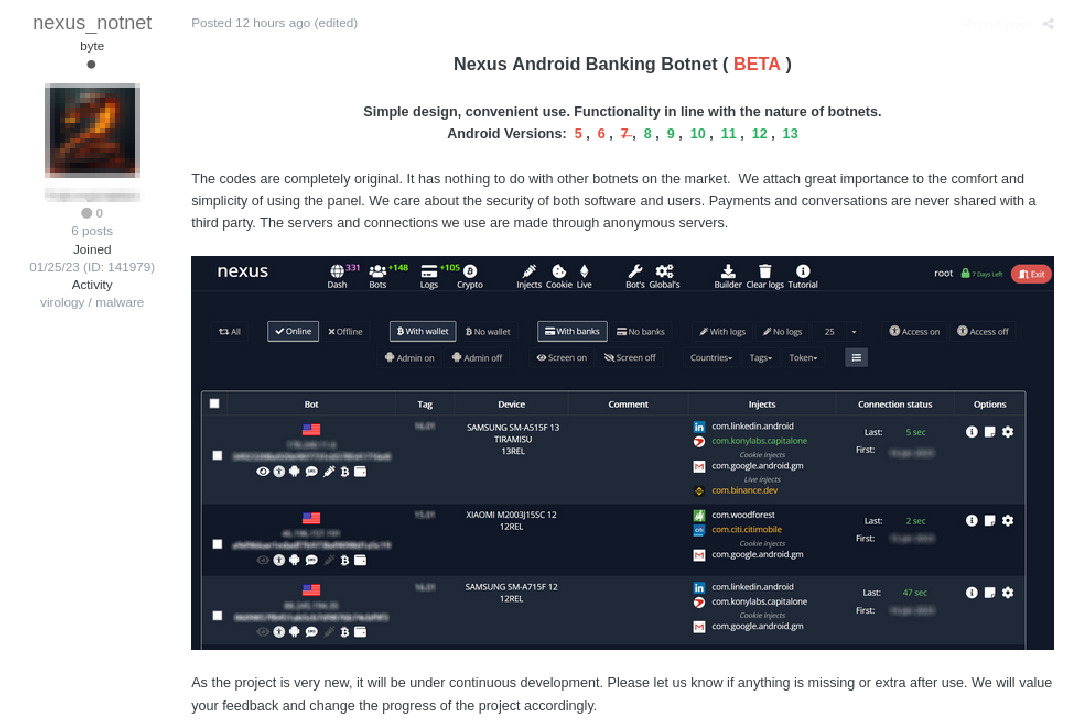
The split is structural. A SIEM cannot index a Telegram channel. An endpoint detection and response (EDR) tool cannot see credentials being sold on a dark web market at 11 PM. The evidence that a breach is coming lives outside the environment, so nothing appears in the logs to correlate until the fraud has already landed. Triskele Labs' State of Cyber 2026 MDR report found that 88% of monitored client organizations had at least one staff credential exposed on the dark web or in a data leak during the 2025–26 financial year. That exposure remains invisible to a SIEM until it becomes an authentication event.
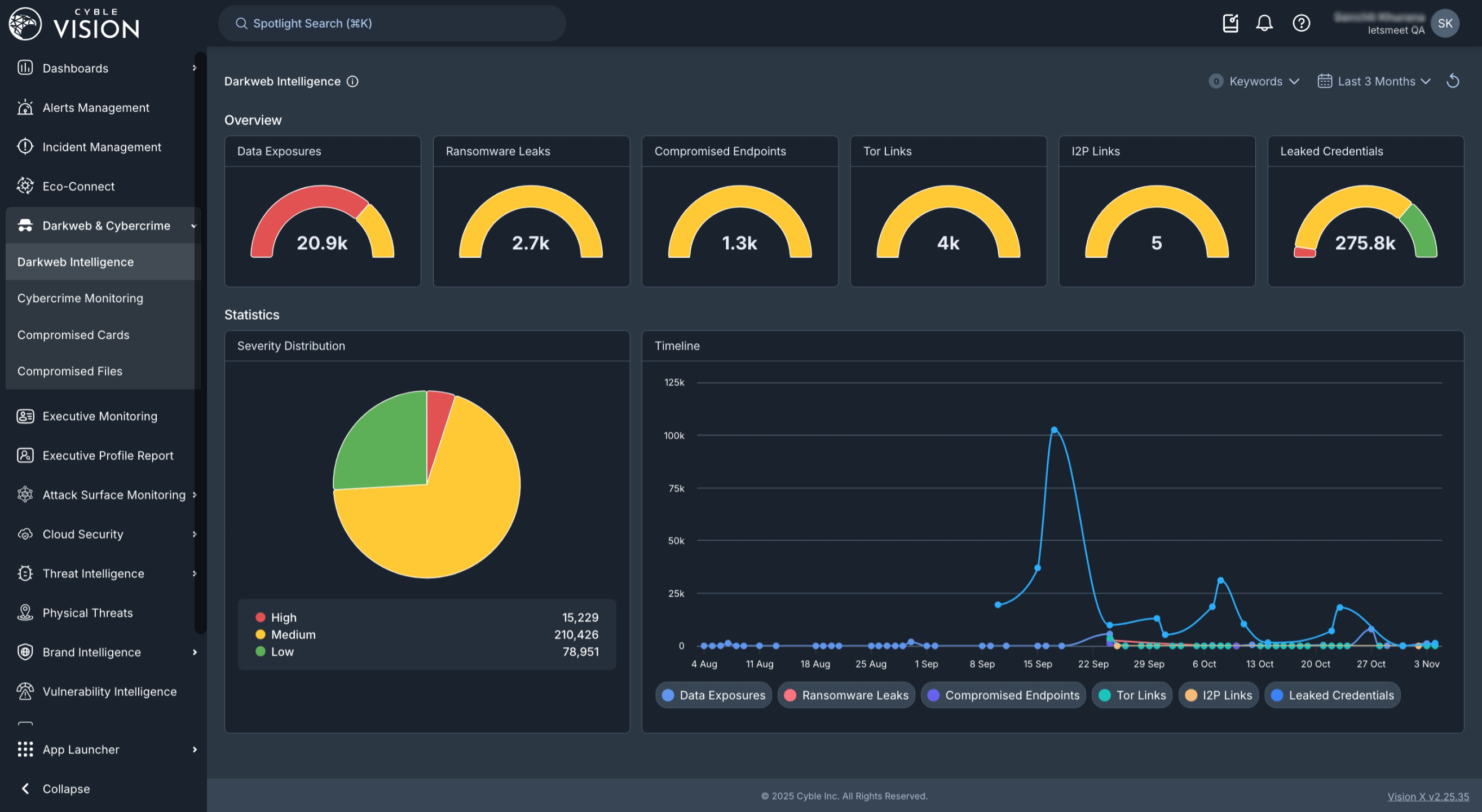
None of this makes the SIEM deficient; it makes it scoped. The gap is an architectural boundary between internal telemetry and external threat knowledge, and no feed connector removes that boundary.
When Your SIEM's Built-In Threat Intelligence Is Enough, and When It Is Not
If the boundary is architectural, many teams assume SIEM vendors have already closed it by bundling feeds. Leading SIEM platforms do now ship native intelligence sources, but what they ship is narrower than it appears.
Splunk Enterprise Security 8.7 ships 12 included threat intelligence sources, largely open or community blocklists such as Emerging Threats, I-Blocklist, PhishTank, and the SANS blocklist, plus generic enrichment sources including MITRE ATT&CK. Microsoft Sentinel's documentation notes that many organizations use TIP solutions to aggregate and curate feeds before delivery to the SIEM, which implies that native ingestion does not replace the TIP aggregation role. The SIEM's native capability is ingestion, normalization, matching, and enrichment, while intelligence production remains a separate function.
On the convergence question, the SIEM remains the detection and correlation layer in 2026. What changes is where external intelligence is collected and enriched before it reaches the SIEM. XDR and security-data-lake architectures absorb some enrichment functions, yet they still depend on actor-level, external-source intelligence collection.
A practical decision framework, without invented scores or weights, helps clarify the boundary:
- Built-in SIEM intelligence may be sufficient for a small security operations center (SOC) running a modern SIEM with a narrow consumer footprint, where the intelligence requirement is IOC matching against known-bad infrastructure and the threat model does not include targeted actor campaigns.
- A dedicated TIP earns its place for a large enterprise with a dedicated cyber threat intelligence (CTI) program and a consumer-facing brand, where the requirement is actor context, campaign attribution, and early warning rather than indicator volume.
- A regulated organization adds a further requirement on top of that: documented early warning and actor attribution, which means a TIP with entity resolution (automatically determining that obfuscated or cross-language references point to the same organization) and native managed takedown to satisfy disclosure timelines and audit evidence requirements.
What justifies a dedicated TIP is external, actor-level context; indicator volume alone does not. External Threat Intelligence Platform: A Buyer's Guide covers the evaluation criteria in detail for teams at this decision point.
How a TIP Feeds a SIEM: A Worked Enrichment Workflow
The handoff between a TIP and a SIEM is where external intelligence becomes an internal detection. Enrichment that requires manual pivoting adds latency at exactly the moment triage speed decides the outcome. The following workflow shows the named handoff points and why each one must happen before the alert reaches the analyst queue:
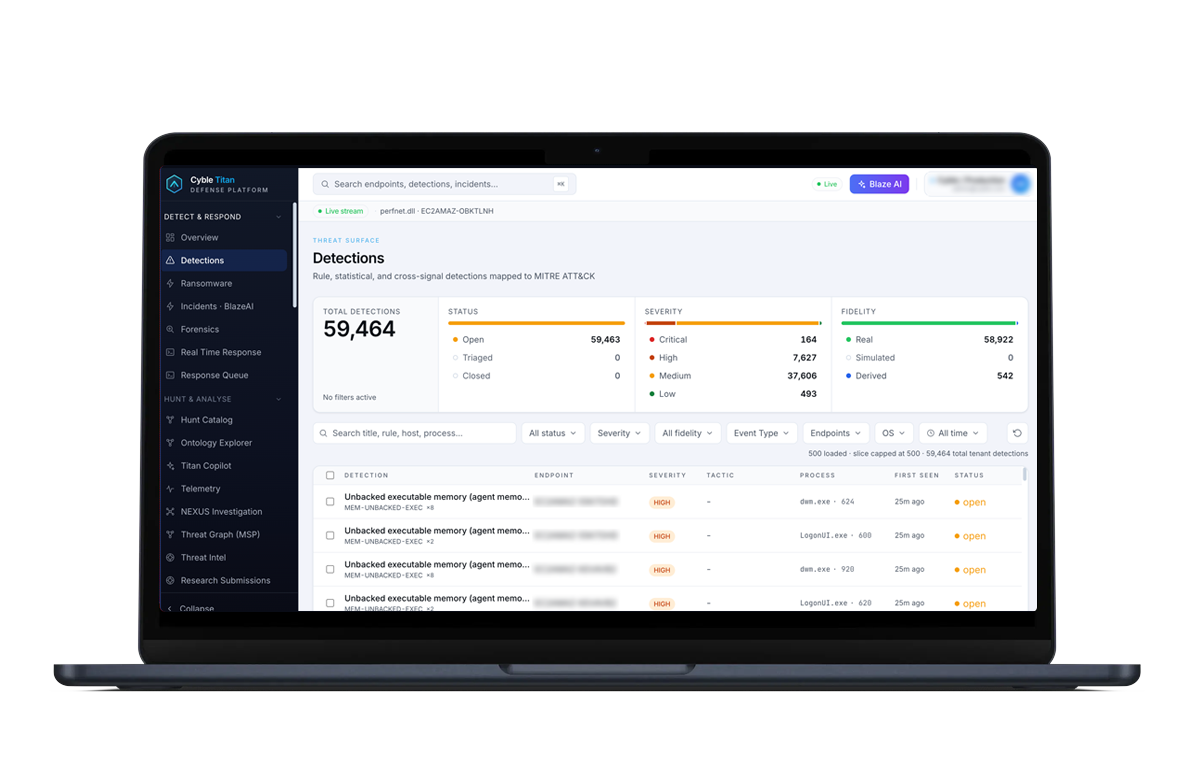
- External detection. An IOC or exposure is detected externally by the TIP, such as a credential post on a dark web market, a lookalike domain being registered, or an initial access broker listing that references the organization's infrastructure.
- Entity resolution. The TIP determines whether the mention refers to the organization before it becomes an alert, including across languages and obfuscated spellings. A reference in a Russian-language forum to an obfuscated version of the brand name is resolved to the correct entity without a human writing that rule.
- Relevance scoring. The finding is scored against the organization's specific attack surface, including its domains, subsidiaries, executives, and technology stack. Generic IOCs that do not match the environment are filtered before they reach the analyst queue.
- Enrichment. The TIP links the credential post to the breach it came from, the initial access broker selling access, and the ransomware group known to buy from that broker. Tactics, techniques, and procedures (TTPs) are mapped to MITRE ATT&CK technique identifiers. Vulnerability identifiers are cross-referenced against the Common Vulnerabilities and Exposures (CVE) and National Vulnerability Database (NVD) system where applicable.
- Handoff to the SIEM or SOAR. The enriched alert is pushed into the SIEM, SOAR, or IT service management (ITSM) ticketing system the team already uses. This is the handoff point where external intelligence becomes an internal detection, correlated against internal telemetry in the same platform the analyst already works in.
That handoff is where integrations matter, and Cyble Vision connects to 70+ enterprise platforms through native connectors and REST APIs, including leading SIEM, SOAR, and ITSM tools. The current integration list is at cyble.com/cyble-integrations/. Collection and enrichment are driven by Cyble Blaze AI, which makes source prioritization, entity resolution, and relevance scoring decisions at the collection layer, before an analyst sees anything.
Cyble reports a 95% signal-to-noise ratio and enriched alerts delivered in minutes from detection to dissemination. Results depend on the customer's environment, asset scope, and configuration. Capabilities, coverage, and service levels vary by subscription tier and region.
See how enriched alerts reach your SIEM
The Three-Layer Picture: TIP, SIEM, and SOAR
For teams evaluating the full stack, the three categories map cleanly to three functions: TIP equals intelligence, SIEM equals detection, and SOAR equals response. Each layer depends on the one above it. SOAR playbooks inherit whatever quality the intelligence and detection logic feeding them provides, and detection inherits whatever quality the enrichment applied to raw events provides.
What Each Layer Can Actually Consume: The Four Types of Threat Intelligence
That division of labor shows up most clearly in what each layer can actually consume. Threat intelligence is commonly organized into four levels by audience and operating cadence, and the SIEM only ever touches the last of them:
- Strategic intelligence gives leadership and risk committees a long-horizon view of threat trends, sector targeting, and geopolitical risk. It is non-technical and consumed monthly or quarterly to guide investment and policy decisions.
- Operational intelligence covers active campaigns and adversary intent, consumed by security managers and incident response leads to prioritize defenses against threats currently targeting the sector.
- Tactical intelligence describes attacker TTPs mapped to MITRE ATT&CK, consumed by SOC analysts and detection engineers to build and tune detection rules and drive threat hunting.
- Technical intelligence supplies atomic IOCs such as hashes, IP addresses, domains, and URLs that are short-lived and consumed at machine speed, fed directly into SIEM lookup tables, firewall blocklists, and EDR controls.
A SIEM can operationalize technical intelligence once it arrives. It cannot produce strategic, operational, or tactical intelligence from internal logs alone, because those levels require external collection and actor-level analysis.
How to Decide for Your Team
Pulling the threads together, start with the SIEM you own, because it is the detection and correlation layer and it is not going away. Add a dedicated TIP when external, actor-level context becomes the gap. That moment arrives when the intelligence requirement moves beyond IOC matching against known-bad infrastructure to campaign attribution, early warning from dark web sources, and documented evidence for regulatory disclosure timelines.
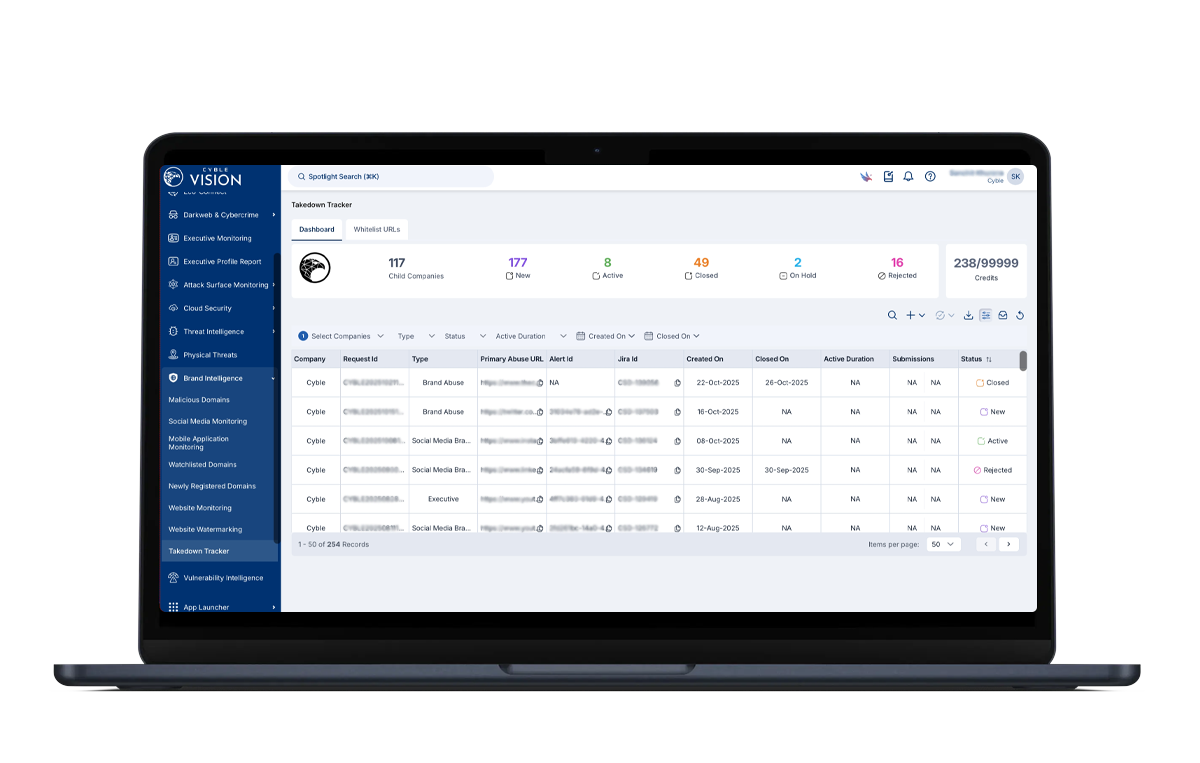
Cyble Vision is built for this decision point. Cyble Blaze AI handles collection and entity resolution, enriched alerts land in the SIEM the team already runs through 70+ integrations, and native managed takedown closes the loop from detection to remediation. Cyble reports a 98% takedown success rate, with native managed takedown delivered against service-level agreements (SLAs). Cyble provides visibility into 15,000+ darknet marketplaces and coverage of roughly 90% of cybercrime activity, with threat forecasting up to six months ahead. Cyble is recognized as a Challenger in the inaugural 2026 Gartner® Magic Quadrant™ for Cyberthreat Intelligence Technologies, and holds a 4.8/5 overall rating on Gartner® Peer Insights™ with 92% willingness to recommend, based on 49 verified reviews over the 18-month period ending 30 November 2025. Statistics are drawn from Cyble internal telemetry unless otherwise attributed.
For teams evaluating TIP options for their SOC specifically, see How To Choose a Threat Intelligence Platform for SOC.
Talk to Cyble about your SIEM and TIP roadmap
Frequently Asked Questions
How does a threat intelligence platform differ from a SIEM?
A SIEM aggregates internal log and event data from an organization's own environment, including network devices, endpoints, cloud workloads, and identity systems, and applies correlation rules to detect active threats. A TIP collects, normalizes, scores, and curates external threat knowledge, including IOCs, TTPs, actor profiles, and campaign data from sources outside the perimeter. The SIEM is the detection layer, and the TIP is the intelligence layer that feeds it. They also model data differently, as covered above: TIPs use STIX objects and MISP events, and SIEMs use normalized log models.
What data sources does each monitor?
A SIEM monitors internal telemetry such as firewall logs, endpoint events, authentication records, cloud control-plane activity, and network flows. A TIP monitors the external sources described earlier, including dark web markets, leak sites, Telegram channels, phishing kit repositories, and broker forums, plus OSINT feeds and information-sharing communities such as sector Information Sharing and Analysis Centers (ISACs), along with commercial intelligence providers. The most actionable early-warning signals, such as credentials for sale, phishing infrastructure being assembled, and access broker listings, exist only in external sources and never appear in internal logs until after exploitation has begun.
What does integration and deployment require?
A TIP integrates with the SIEM, SOAR, and ITSM tools the team already uses, pushing enriched intelligence into existing workflows rather than requiring analysts to check a separate console. Cyble Vision delivers this through 70+ native connectors and REST APIs, covering leading SIEM, SOAR, and ticketing platforms. Deployment typically begins with asset scoping, which defines the domains, subsidiaries, executives, and technology stack the platform should monitor. Teams then configure integrations and run a proof-of-concept period to validate findings against the organization's environment. Full enterprise deployment timelines vary by environment complexity and subscription tier.
How much human review and escalation does a TIP need?
A well-configured TIP reduces the human review burden rather than adding to it. Entity resolution and relevance scoring filter out mentions that do not refer to the organization before they become alerts, and enrichment arrives with the alert rather than requiring manual pivoting. Technical IOCs are distributed to SIEM lookup tables and firewall blocklists automatically via API, with no human in the loop for routine distribution. Human review is reserved for high-confidence, high-impact findings such as actor attribution, campaign analysis, and escalation decisions, where analyst judgment adds value. That filtering is what produces the signal-to-noise ratio cited earlier, so the alert queue reflects material findings rather than raw indicator volume.
What are common limitations, and how should a TIP be evaluated?
Common TIP limitations include indicator-centric profiles that become stale within weeks as adversaries rotate infrastructure, feed volume without relevance scoring against the organization's specific attack surface, and alert delivery that ends at the notification without a path to remediation. When evaluating a TIP, focus on a few core questions. Where in the pipeline do AI models actually operate, at collection and entity resolution or only at the presentation layer? Does the platform deliver enriched, case-ready alerts or raw indicators? Does it integrate natively with the SIEM and SOAR the team already uses? Does it include managed takedown, or does it hand the remediation problem back to the customer? A platform that scores well on coverage but requires manual enrichment and separate takedown vendors reintroduces the latency and coordination gaps it was supposed to close.
Does a TIP replace a SIEM?
A TIP does not replace a SIEM. A TIP feeds a SIEM. The SIEM remains the system of record for detection and incident management, where internal telemetry is correlated, alerts are triaged, and incidents are tracked with a timeline. The TIP supplies the external, actor-level intelligence the SIEM cannot produce from internal logs alone. The two categories are architecturally complementary, because the TIP enriches what the SIEM detects, and the SIEM operationalizes what the TIP surfaces. Organizations that consolidate to a SIEM-only model retain detection capability but lose early warning on external exposures. Organizations that run a TIP without a SIEM have intelligence but no internal detection layer to act on it.