
AI Threat Landscape 2026
Artificial intelligence is no longer just a productivity tool.
It has become an accelerator for cyber operations – enabling threat actors to automate reconnaissance, develop malware, create convincing phishing campaigns, exploit vulnerabilities, and scale attacks faster than ever before.
From nation-state groups to financially motivated cybercriminals, attackers are using AI to:
- Reduce the cost of launching attacks
- Increase the speed of operations
- Create highly personalized campaigns
- Develop more adaptive and evasive tooling
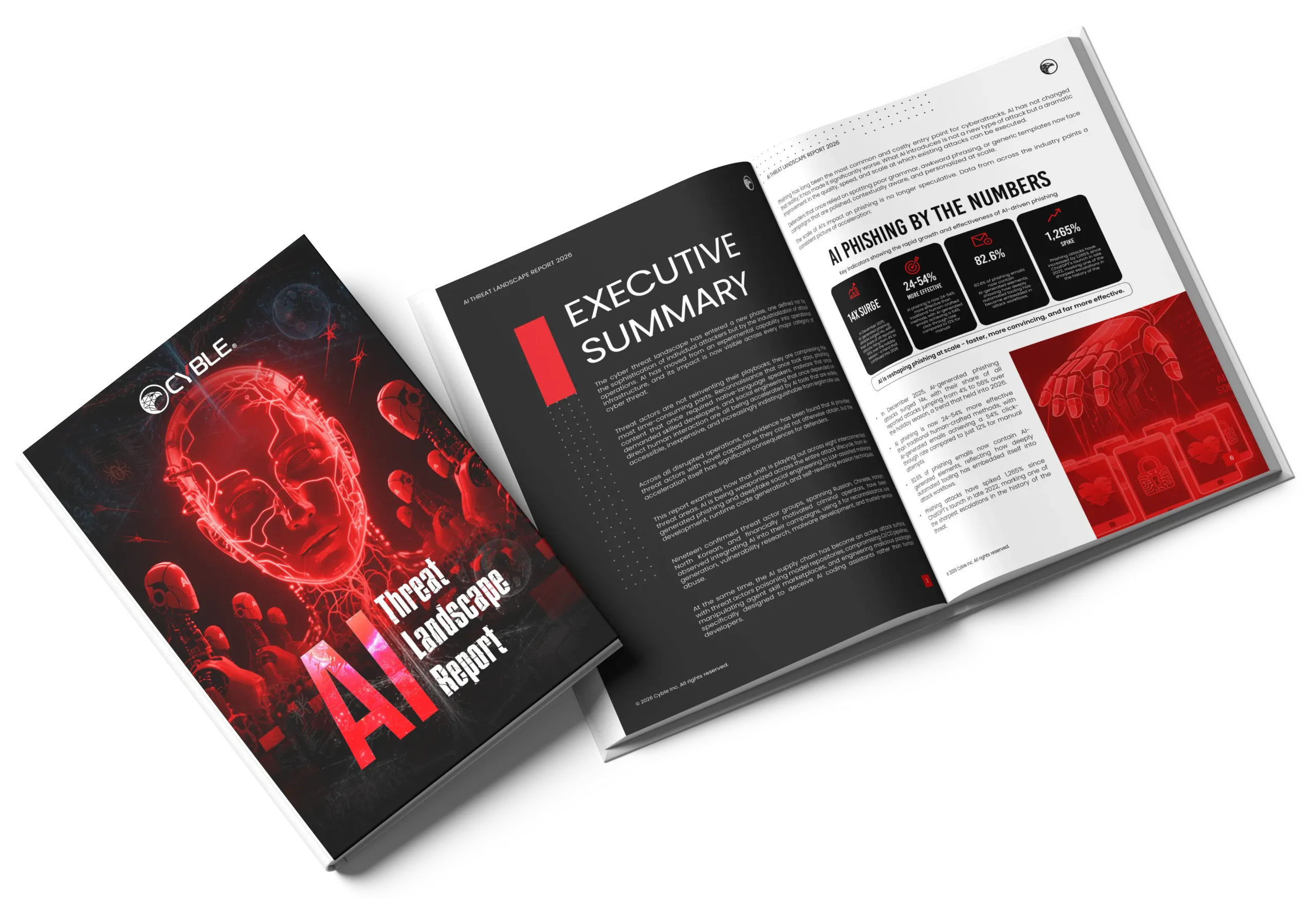
Cyble’s AI Threat Landscape Report 2026 provides an in-depth analysis of how adversaries are adopting AI across the attack lifecycle – and what organizations need to do to defend against this emerging threat landscape.
Download the Report
Key Numbers from the AI Threat Landscape Report 2026
or 67.3% of TA leveraged AI for malware development and offensive tooling.
574 actors were associated with AI-assisted capability development techniques.
Of analyzed threat actors used AI-assisted methods related to defense evasion
The report highlights AI usage across:
Groups including APT28, APT41, Kimsuky, APT42, UNC2970, and other threat actors have leveraged AI for activities ranging from reconnaissance and phishing to malware development and operational support.
The AI ecosystem itself has become an attack surface. Threat actors are targeting:
The AI supply chain is becoming the next frontier of cyber risk.
What You’ll Learn in This Report
- How threat actors are using AI across the attack lifecycle
- Real-world examples of AI-assisted cyber campaigns
- Nation-state and cybercriminal adoption patterns
- AI-generated malware and offensive tooling trends
- How AI is transforming phishing, reconnaissance, and exploitation
- Emerging risks from AI models, agents, and supply chains
- Security strategies organizations need to prepare for AI-driven threats
Stay ahead of the next threat with Cyble’s comprehensive intelligence-driven research.
Download the Full Analysis
AI has changed the speed, scale, and accessibility of cyber operations.
Organizations that understand how attackers are using AI will be better positioned to detect, disrupt, and defend against the threats ahead.