

Key Takeaways
-
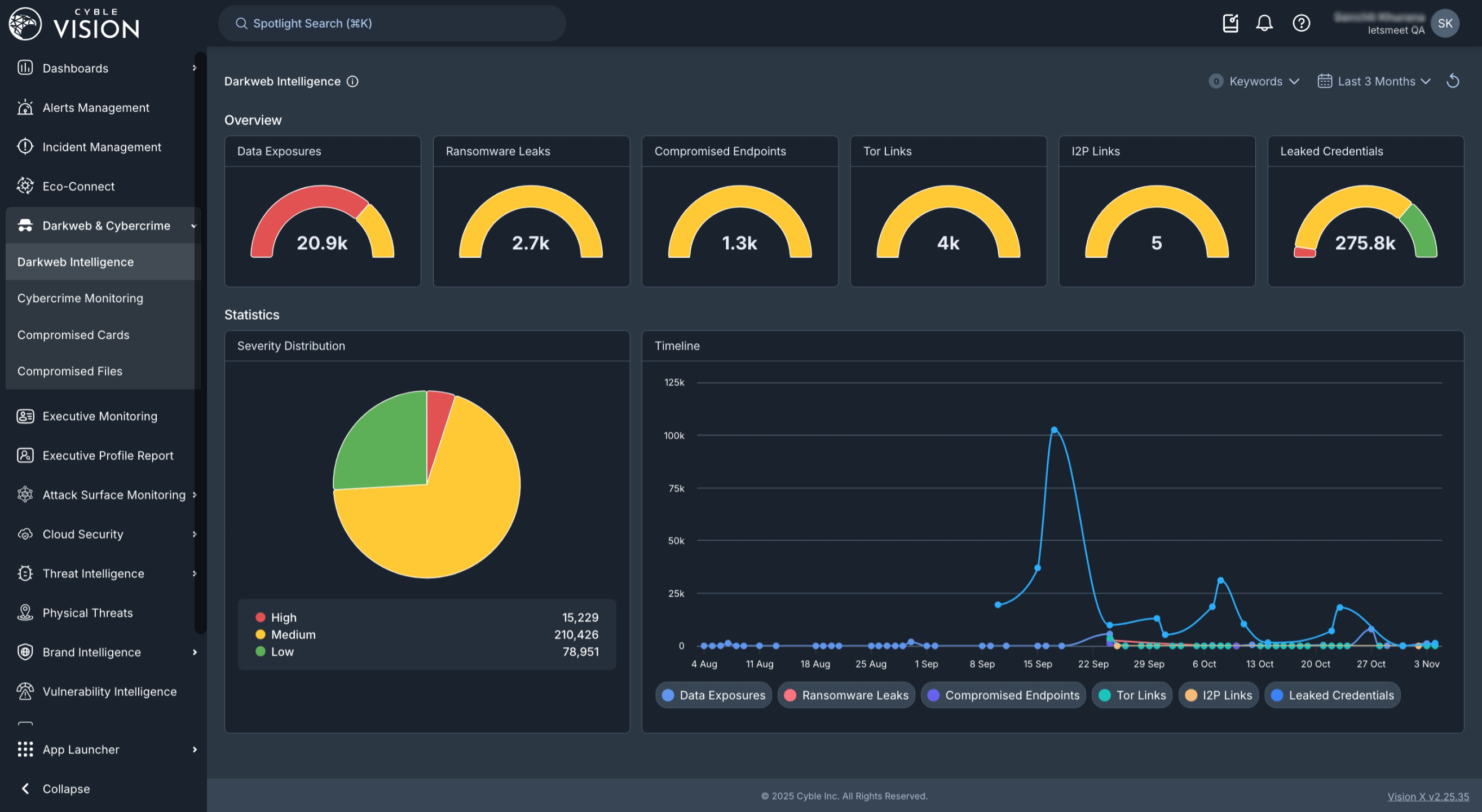
Dark web monitoring for ransomware intelligence tracks four signal categories: ransomware leak sites, initial access broker listings, infostealer logs, and adversary chatter. These signals help predict ransomware kill-chain stages before encryption.
-
Each signal maps to a specific stage. Adversary chatter signals reconnaissance. Infostealer logs and initial access broker (IAB) listings indicate initial access. Leak site posts confirm exfiltration has already happened.
-
Effective prioritization depends on entity resolution and relevance scoring against an organization’s specific attack surface. This reduces false positives and keeps focus on actionable threats.
-
Integration with security information and event management (SIEM) and security orchestration, automation and response (SOAR) platforms such as Splunk, Microsoft Sentinel, and Cortex XSOAR enables automated responses like credential resets within the critical listing window before ransomware deployment.
-
Cyble Vision delivers artificial intelligence (AI) native collection, entity resolution, and native integrations that turn dark web signals into actionable intelligence for ransomware defense.
The Problem: Ransomware Precursors Live Outside The Perimeter
Ransomware warning signs often appear in places internal tools never see. Credentials surface for sale on dark web markets. Initial access brokers (IABs) advertise virtual private network (VPN) access. Phishing kits target specific login pages. A security information and event management (SIEM) platform cannot index a private Telegram channel. The signal remains external, multilingual, and short-lived.
Two gaps define this problem. The first is exposure to awareness: the delay between credentials, documents, or infrastructure appearing in the wild and the security team learning about it. The second is awareness to action: knowing a threat exists only matters when the team can neutralize it quickly. For a deeper look at how the full collection pipeline works, see How Dark Web Monitoring Works: Full Pipeline, Step by Step.
The Four Ransomware-Relevant Signal Categories
Ransomware Leak Sites
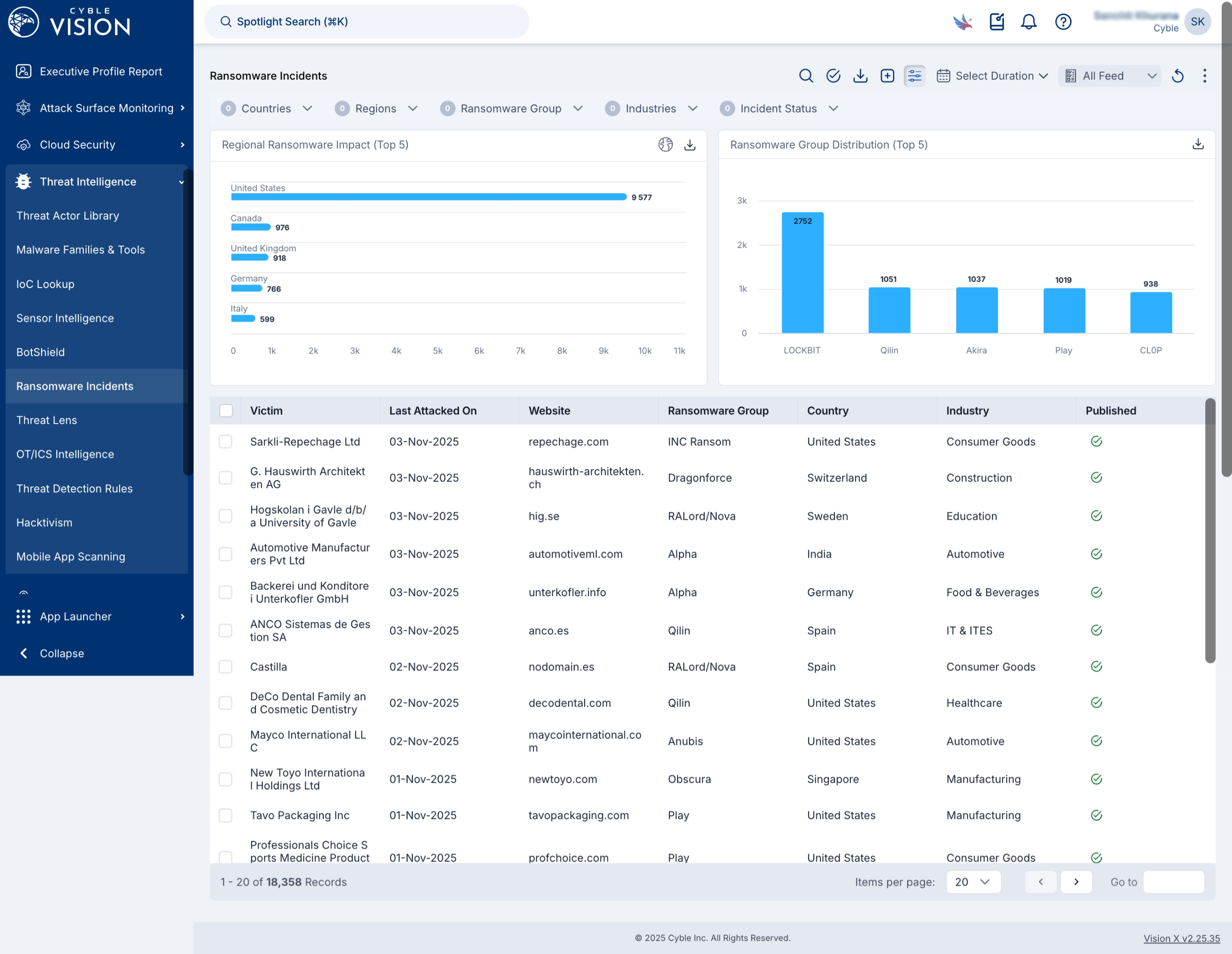
Ransomware leak sites are public-facing platforms, typically hosted on Tor, where ransomware groups name victim organizations and pressure them to pay by threatening to release stolen data. A new victim post signals that exfiltration has already occurred. The defensive response is to confirm whether the data belongs to the organization and then begin disclosure and containment procedures.
Ransomware-as-a-service (RaaS) groups move between leak sites, and law enforcement takedowns in 2025 and 2026 shifted activity significantly. According to Kaspersky’s 2026 ransomware report, Qilin was the dominant RaaS operator on data leak sites in 2025 after the seizure of RansomHub’s operations, with Clop ranked second and Akira third.
Initial Access Broker Listings
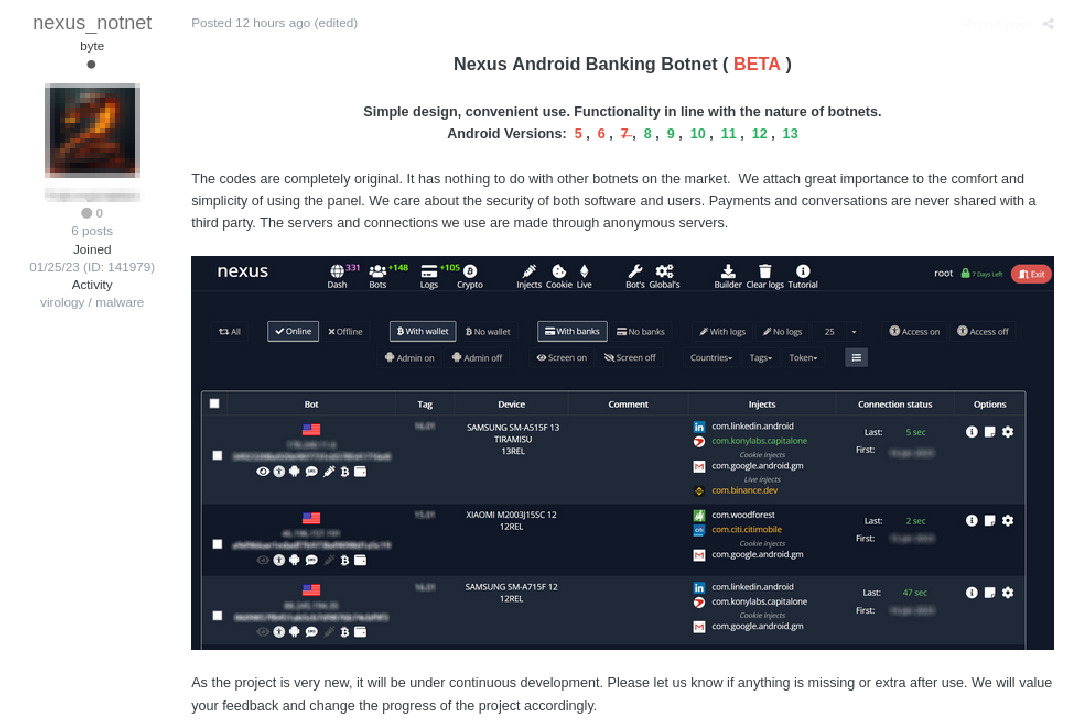
Initial access brokers sell pre-validated corporate network access. Typical listings include VPN and SSL VPN credentials, Remote Desktop Protocol (RDP), web shells, Active Directory or domain-admin access, command-and-control backdoors, cloud-console credentials, and single sign-on (SSO) or identity-provider administration. An IAB listing that names your infrastructure acts as a pre-encryption warning. The broker has already validated the access, so the response must invalidate the session and the credential together, then step up authentication to block re-entry through the same path.
Infostealer Logs
Infostealer logs are credential archives harvested by malware families and sold on underground markets. These logs feed credential stuffing, where attackers replay stolen username and password pairs against other services at scale. They form a common ransomware entry point. Because the stolen credentials remain valid until changed, the response is forced password rotation plus multi-factor authentication (MFA) enforcement on every affected account.
Adversary Chatter
Adversary chatter covers discussion in forums and closed channels about targeting a specific sector or named organization. This category usually appears earliest and carries the least specificity. The appropriate response is heightened monitoring and focused threat hunting. Because chatter precedes operational activity, it provides the longest lead time and demands careful analysis to separate credible targeting from background noise.
CISA’s #StopRansomware advisory AA26-222A recommends translating threat intelligence into measurable defensive validation by mapping adversary tactics, techniques, and procedures (TTPs) to security controls and testing detection against them. For chatter, this means validating whether the named sector or organization is actually reachable through your current exposure.
See dark web signals mapped to your attack surface
Mapping Dark Web Signals To Ransomware Kill-Chain Stages
Dark web monitoring for ransomware intelligence focuses on knowing which signal predicts which kill-chain stage and responding before the next stage begins. The table below shows why signal type determines response. Each category predicts a different kill-chain stage, so treating them as interchangeable alerts wastes the lead time the earliest signals provide.
|
Signal Type |
Kill-Chain Stage Predicted |
Specific Defensive Response |
Source / Example |
|---|---|---|---|
|
Adversary Chatter |
Reconnaissance |
Heightened monitoring and threat hunting |
Forum and Telegram channel discussion naming a sector or organization |
|
Infostealer Logs |
Initial Access |
Forced password rotation and MFA enforcement |
SOS Intelligence, August 2026 (see above) |
|
IAB Listings |
Initial Access |
Credential reset, authentication step-up, session invalidation |
Brandefense, June 2026: listings typically live 48–72 hours before purchase |
|
Ransomware Leak Sites |
Exfiltration |
Confirm data ownership, start disclosure and containment |
Check Point Research Q2 2026: Qilin led with 279 victims; The Gentlemen surged 62% QoQ |
Prioritization And False-Positive Reduction
Mapping signals to stages only helps if the signal actually refers to your organization. A leak site mention does not always represent an incident affecting your environment. The practitioner must determine whether a mention refers to the monitored organization, a subsidiary, or a coincidental name match. Entity resolution, which automatically determines that an obfuscated or cross-language reference refers to the same organization, becomes operationally critical at this point.
Effective prioritization uses organizational specificity, recency, credibility, and verifiability. As the AOFIRS August 2026 guide on identifying darknet cybersecurity risks notes, a current privileged credential paired with successful unfamiliar logins is materially more urgent than a vague company mention.
Cyble applies entity resolution and relevance scoring against a specific attack surface, including domains, subsidiaries, executives, and technology stack, before generating an alert. Executive name disambiguation filters mentions that refer to individuals with common names rather than the monitored executive. Cyble reports a 95% signal-to-noise ratio, based on Cyble internal telemetry. For deeper coverage of false-positive handling, see Dark Web Monitoring False Positives: A Practitioner’s Guide.
Integrating Dark Web Intelligence Into SIEM And Security Orchestration Workflows
Dark web alerts create value only when they appear as tracked work items in the tools where response happens. Cyble integrates with more than 70 enterprise platforms, including Splunk, Microsoft Sentinel, IBM QRadar, Cortex XSOAR, and ServiceNow. The current list is available at cyble.com/cyble-integrations/. These examples are representative, not exhaustive.
The workflow runs as follows. Cyble detects a signal and applies entity resolution and relevance scoring. It then enriches the finding at ingestion and delivers a case-ready alert into the SIEM or security orchestration, automation and response (SOAR) platform. Existing playbooks then trigger automated responses such as account lockout, credential reset, and session invalidation without manual re-entry. Cyble also supports its own REST application programming interface (API) and Trusted Automated eXchange of Indicator Information (TAXII) for custom pipelines and threat intelligence sharing frameworks.
For ransomware defense, this means an IAB listing that names organizational infrastructure can trigger a credential-reset playbook within minutes of detection, well inside the listing lifecycle described earlier.
See the signal-to-action pipeline in your environment
Illustrative Scenarios: How Monitoring Changes Ransomware Outcomes
The two patterns below show the same four signal categories from earlier in this playbook and what happens when the pipeline connecting them to a response is missing.
A regional bank learns of active account takeovers from a public post on a social platform. The leaked credentials had already been circulating on Telegram for days. The damage came from response delay rather than attack sophistication. Dark web monitoring with near-real-time detection and entity resolution would have surfaced the credential exposure when it first appeared. That visibility would have preserved a window for password resets and authentication step-up before attackers weaponized the accounts.
A healthcare network ignores credible ransomware forum chatter about VPN access for sale and faces encryption two weeks later. The warning stayed external and went unseen. Adversary chatter monitoring mapped to the reconnaissance stage of the kill chain would have flagged the discussion and triggered threat hunting against VPN authentication logs. That investigation could have identified the IAB’s foothold before the affiliate deployed ransomware.
In both cases, the signal existed. The outcome depended on whether the monitoring pipeline connected that signal to a specific kill-chain stage and routed it to a response workflow quickly enough to matter.
Why Cyble For Dark Web Monitoring For Ransomware Intelligence
Cyble Vision is built for the signal-to-action discipline described in this playbook. Several capabilities distinguish it from generic monitoring tools.
Cyble’s artificial intelligence (AI) operates at the collection layer rather than as a summarization layer bolted onto a legacy pipeline. Collection prioritization, entity resolution, relevance scoring, and enrichment are all model-driven before an analyst sees anything. This architectural distinction matters. The models decide which sources to prioritize and resolve that an obfuscated reference in a Russian-language post refers to a monitored organization. They also connect a credential post to the breach it came from, the initial access broker selling access, and the ransomware group known to buy from that broker.
Cyble reports visibility into more than 15,000 darknet marketplaces and roughly 90% coverage of cybercrime activity, based on Cyble internal telemetry. Threat forecasting extends up to six months ahead, derived from dark web chatter, exploit development activity, and reconnaissance patterns. This approach moves the discipline from reactive to anticipatory.
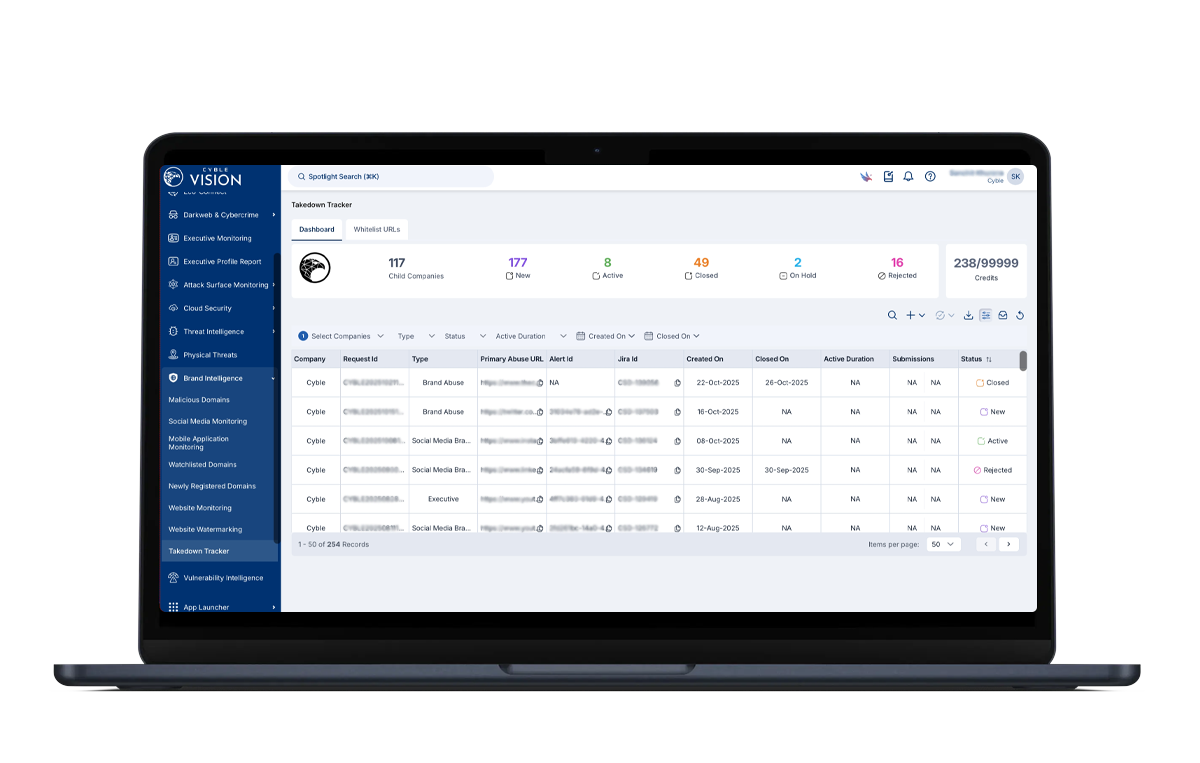
Native managed takedown is part of the platform. Cyble reports a 98% takedown success rate, delivered against service level agreements (SLAs), based on Cyble internal telemetry. Detection and removal come from one vendor, which closes the gap between finding a threat and eliminating it.
Cyble Vision operates within Blaze AI, a unified agentic platform spanning cyber threat intelligence (CTI), attack surface management (ASM), digital risk protection (DRP), and more on a shared data layer. Those 70+ native integrations, plus the REST API and TAXII support described earlier, mean Cyble functions as a force multiplier for the existing security stack rather than another isolated console.
Analyst and peer validation support this positioning. Cyble is a Challenger in the 2026 Gartner® Magic Quadrant™ for Cyberthreat Intelligence Technologies. Gartner® Peer Insights™ rates Cyble at 4.8/5 overall, based on 49 verified reviews over the 18-month period ending 30 November 2025. G2 rates Cyble at 4.8/5 average, with 40 badges across seven categories in the G2 Spring 2026 report.
Explore Cyble Vision for your team
Frequently Asked Questions
How does dark web monitoring for ransomware intelligence differ from a generic threat intelligence feed?
A generic feed delivers indicators about the internet in general, such as IP blocklists, malware hashes, and vulnerability bulletins, without resolving them to a specific organization’s attack surface. Dark web monitoring for ransomware intelligence resolves entities to the monitored organization, scores relevance against its domains, subsidiaries, and executives, maps each signal to the kill-chain stage it predicts, and triggers a specific defensive action. The output is a signal tied to a stage and a response.
What are the four signal categories in dark web monitoring for ransomware intelligence?
The four signal categories are ransomware leak sites, initial access broker listings, infostealer logs, and adversary chatter. Each maps to a different kill-chain stage. Adversary chatter maps to reconnaissance. Infostealer logs and initial access broker listings map to initial access. Ransomware leak site posts map to exfiltration. Each stage has a corresponding defensive response that should trigger when the signal appears.
How should dark web alerts be prioritized for ransomware defense?
Teams should prioritize by organizational specificity, recency, credibility, and verifiability. A current privileged credential paired with successful unfamiliar logins is materially more urgent than a vague company mention. Entity resolution and relevance scoring against the specific attack surface, including domains, subsidiaries, executives, and technology stack, reduce noise before alerting. Findings that cannot be tied to a known asset, account, or access path should be tracked rather than escalated as incidents until corroborating evidence appears.
What does integration with SIEM and SOAR platforms require?
Cyble integrates with more than 70 enterprise platforms including Splunk, Microsoft Sentinel, IBM QRadar, Cortex XSOAR, and ServiceNow. REST API and TAXII support enable custom pipelines and threat intelligence sharing. Findings arrive case-ready in the SIEM or SOAR platform and trigger existing playbooks for account lockout or credential reset. No separate console is required because intelligence flows into the workflow the team already uses. Capabilities vary by subscription tier and region.
How does entity resolution reduce false positives in dark web monitoring?
Entity resolution automatically determines that an obfuscated or cross-language reference, such as a misspelling, a Cyrillic homoglyph substitution, or an abbreviated brand name, refers to the same monitored organization. This filtering runs before alerting and removes mentions that do not actually refer to that organization. Cyble maintains the 95% signal-to-noise ratio cited earlier, based on Cyble internal telemetry. The result is fewer alerts with higher fidelity, rather than a high-volume feed that analysts learn to ignore.
What are the common limitations and evaluation criteria for dark web monitoring platforms?
Limitations include incomplete source coverage, where platforms that do not reach private Telegram channels, invite-only forums, or Tor-hosted markets miss a significant share of activity. Other limitations involve language and encoding blind spots and delayed detection from batch processing rather than near-real-time collection. Evaluation criteria include precision and recall, detection latency, entity resolution accuracy, integration depth, and whether findings trigger defined defensive actions rather than ending at the alert. Capabilities vary by tier and region, so evaluation should be conducted against the specific environment and asset scope.
Conclusion: Moving From Signal To Action Before Encryption
Ransomware precursors appear on the dark web before encryption. Credentials show up on infostealer log markets. Initial access brokers list VPN and domain-admin access with limited windows before purchase. Adversary chatter names sectors and organizations days or weeks before operational activity begins. Leak site posts confirm that exfiltration has already occurred. Each signal maps to a kill-chain stage. Each stage has a response that, when triggered in time, can change the outcome.
The criteria that matter when evaluating a dark web monitoring platform for ransomware intelligence are:
-
AI-native collection at the collection layer rather than a summarization layer on a legacy pipeline
-
Entity resolution before alerting so findings are resolved to the right organization before they consume analyst time
-
Native managed takedown so detection and removal come from one vendor
-
Native integrations into the SIEM and SOAR workflows where response actually happens
Cyble Vision delivers that signal-to-action pipeline. See what it finds in your environment.