

Key Takeaways
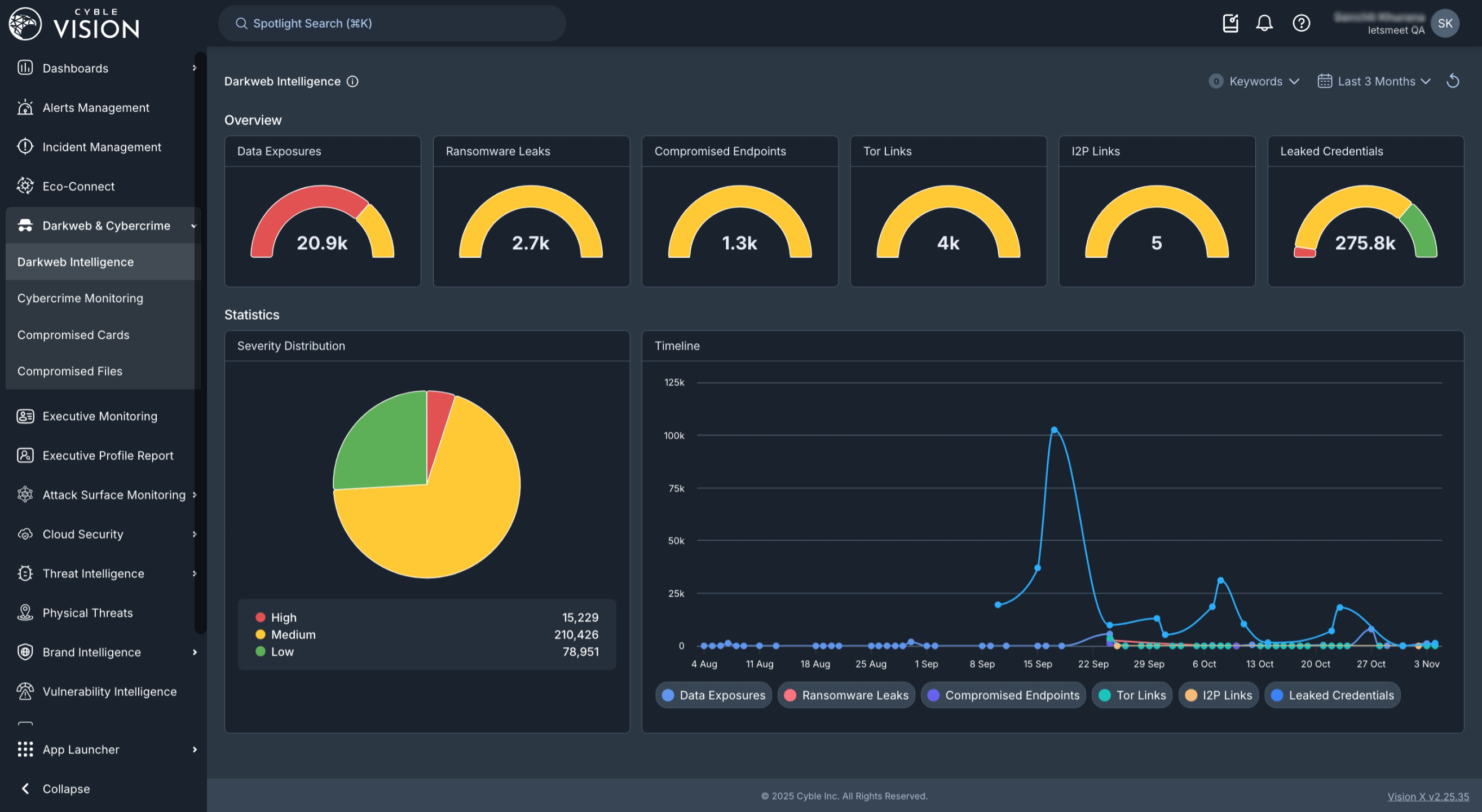
- National computer emergency response teams (CERTs) must monitor dark web sources for threats that never touch their own perimeter, including citizen credential exposure, initial access broker (IAB) listings against critical national infrastructure (CNI), and ransomware leak sites.
- Effective dark web monitoring requires continuous collection, rigorous validation, and traffic light protocol (TLP) marked distribution to constituents across government and critical sectors.
- A dedicated Dark Web Threat Intelligence Cell with seven defined functions provides a repeatable operating model aligned to the Forum of Incident Response and Security Teams (FIRST) computer security incident response team (CSIRT) Services Framework.
- Validation discipline through entity resolution, recency checks, corroboration, and exploitability assessment prevents fabricated or stale leaks from triggering national advisories.
- Cyble delivers the sovereign, multilingual, standards-based platform national CERTs need to turn dark web intelligence into actionable early warnings.
See how Cyble Hawk supports national CERT missions
What a National CERT Should Monitor on the Dark Web
A national CERT monitors far beyond a single organization’s brand exposure. It carries responsibility for government, CNI operators, and the wider national community.
- Criminal forums and closed marketplaces, where stolen data, access credentials, and attack tooling are traded.
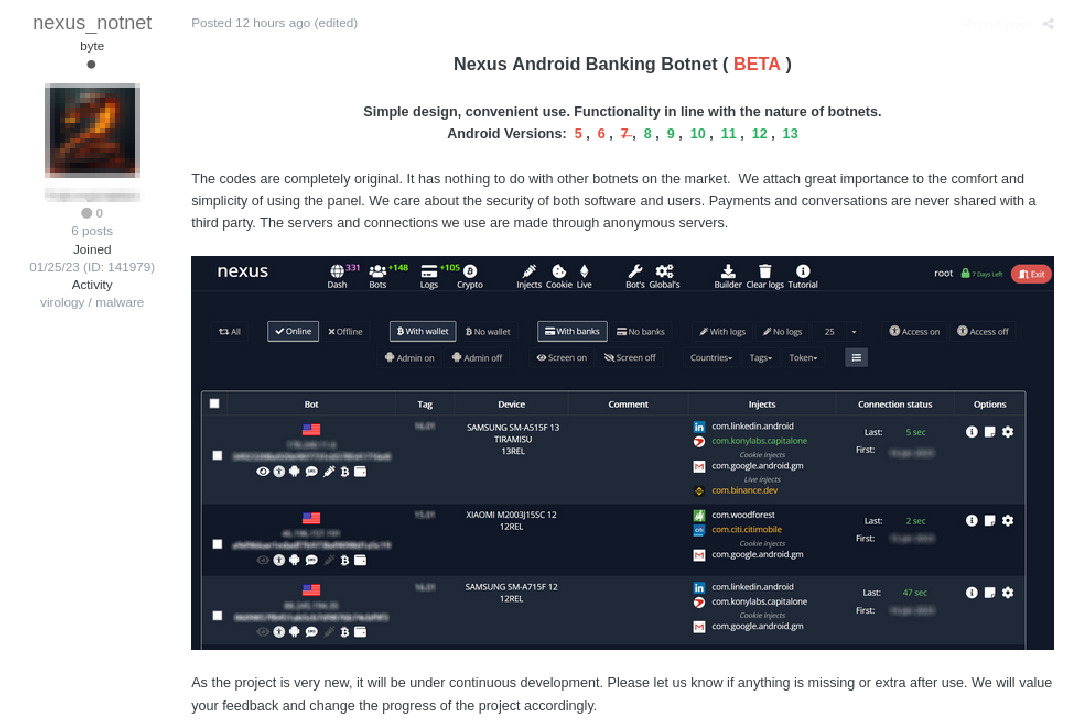
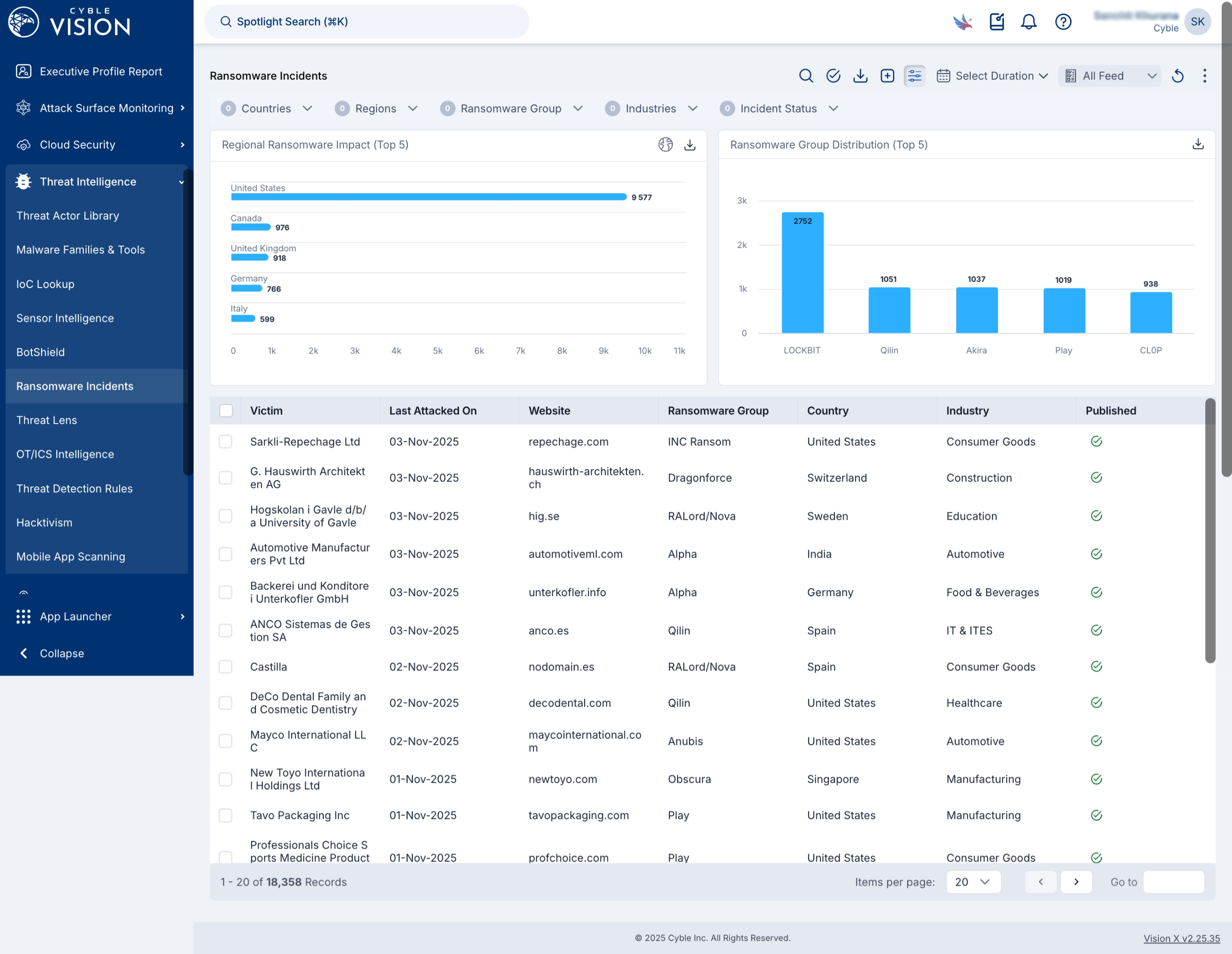
- Ransomware leak sites, the sites ransomware groups use to publish stolen data and pressure victims into paying. The ENISA Threat Landscape 2026, published 22 September 2026 and covering incidents observed from 1 January to 31 December 2025, identifies ransomware as the most short-term impactful type of incident affecting the European Union, with public administration accounting for thirty-two percent of incidents.
- Initial access broker listings, especially those targeting CNI sectors such as energy, telecommunications, and transport.
- Stealer logs and credential dumps affecting government and citizen accounts. For a detailed treatment of the credential monitoring pipeline, see Dark Web Credential Monitoring: How It Works.
- Telegram and grey-web channels that reflect the shift away from traditional forums toward messaging platforms where IAB access offers and hacktivist target lists appear before attacks.
- Phishing kits and lookalike domains that impersonate national institutions and public figures.
ENISA’s Threat Landscape 2026 also found that among incidents with an identified intrusion vector, sixty percent involved exploitation of a vulnerability. That finding supports combining underground monitoring with conventional vulnerability and incident telemetry in a national early-warning program.
The National Dark Web Threat Intelligence Cell Operating Model
To operationalize the monitoring scope above, a national CERT needs a structured operating model. The FIRST CSIRT Services Framework, published by FIRST, organizes national CSIRT work into five service areas covering situational awareness, incident management, vulnerability management, event management, and knowledge transfer.
The framework is a catalogue, not a maturity model. It defines situational awareness as a service area comprising data acquisition, analysis and synthesis, and communication, which national CSIRTs typically treat as core services. A dedicated Dark Web Threat Intelligence Cell maps directly onto those service areas and gives a CERT lead a structure that can move into a capability plan, a ministerial briefing, or a procurement document.
The Cell operates across seven functions:
- Continuous monitoring across forums, marketplaces, ransomware leak sites, and Telegram channels.
- Verification and validation of findings before any advisory is issued.
- Early warning to constituents, including government agencies, CNI operators, and sectoral CERTs.
- Threat actor profiling and tracking, with attribution expressed at stated confidence levels.
- Coordination with domestic agencies and sectoral CERTs across government and CNI sectors.
- International intelligence sharing with partner CSIRTs through standards-based exchange.
- Daily, weekly, and strategic reporting to leadership and, where appropriate, ministerial audiences.
This model remains agnostic about whether each function is delivered in-house, by a retainer partner, or through a managed service. The FIRST framework treats “not provided” as a valid and documented answer, and the Cell structure makes those decisions explicit.
Validating Dark Web Intelligence Before Issuing a Warning
A dark web finding is a lead that requires validation, not immediate proof of compromise. Recycled and fabricated leaks, misattributed mentions, stale credential dumps, and lookalike entity names appear frequently in underground sources. Issuing a national advisory on an unvalidated finding creates reputational and operational risk that a fabricated or stale leak does not justify.
A national CERT should apply a five-step triage discipline before issuing a warning:
- Entity resolution, determining that obfuscated or cross-language references point to the same organization. A post referencing a transliterated or abbreviated agency name must be confirmed to refer to the named entity before any action.
- Recency and provenance check, establishing when the data was collected and from which source, since combolists frequently recycle credentials that are months or years old.
- Corroboration across independent sources, where a single mention in one forum remains a lead and corroboration across independent sources raises confidence.
- Exploitability assessment, determining whether the exposed data or access is current and actionable against the named organization’s live environment.
- Advisory decision, based on validated entity, confirmed recency, corroborated provenance, and assessed exploitability.
Threat actor attribution must be expressed at stated confidence levels, such as high, medium, or low, with the assessing party named. Cyble Hawk supports this by handling attribution with stated confidence levels rather than asserting it as fact. Similarly, Cyble Blaze AI performs entity resolution at ingestion, filtering mentions that do not refer to the monitored entity before alerting, and Cyble reports a ninety-five percent signal-to-noise ratio from its internal telemetry. Results depend on the customer’s environment, asset scope, and configuration.
Explore Cyble’s validation capabilities
From Finding to Advisory: TLP Handling and Distribution
Once a finding passes the validation steps above, the next challenge is distributing it safely. The workflow from finding to constituent advisory follows a structured classification and distribution path. FIRST’s TLP 2.0, effective since August 2022, defines four primary labels, TLP:RED, TLP:AMBER, TLP:GREEN, and TLP:CLEAR, plus the supplementary TLP:AMBER+STRICT designation, which govern how far information may travel:
- TLP:RED, named individual recipients only, with no further disclosure.
- TLP:AMBER+STRICT, recipient organization only, excluding clients.
- TLP:AMBER, recipient organization and its clients on a need-to-know basis. FIRST’s definition of clients explicitly covers the stakeholders and constituents of teams with a national responsibility.
- TLP:GREEN, sharing with peers and partner organizations in the recipient’s community, not through publicly accessible channels.
- TLP:CLEAR, unrestricted disclosure subject to standard copyright rules.
Labels must be written in capitals with no spaces, such as TLP:AMBER, and placed in the header and footer of every page of a document, in the subject line of emails, and immediately before the protected information. TLP provides no technical protection on its own, so labeling must be accompanied by transport encryption and access restrictions.
Multi-agency distribution requires that different agencies receive different views of the same finding. A CNI operator needs operational detail. A ministerial audience needs strategic context. A sectoral CERT needs sector-specific indicators. The platform must support role-based access controls and audit trails that satisfy legal and audit review. The source retains the right to restrict onward sharing, and a recipient may not unilaterally downgrade a TLP label to share more widely.
Intelligence Sharing and Standards for National CERTs
The FIRST CSIRT Services Framework is the reference standard for how a national CSIRT organizes its services, including the situational awareness services that map directly to dark web monitoring activities. National teams should use the framework to document which services they offer, which they delegate, and which remain explicitly out of scope.
For structured exchange with international CSIRT partners, the OASIS Structured Threat Information Expression (STIX) 2.1 and Trusted Automated Exchange of Intelligence Information (TAXII) 2.1 specifications define the standard. STIX 2.1 defines domain objects, including Threat Actor, Indicator, Campaign, Malware, and Vulnerability, alongside relationship objects and cyber-observable objects. That structure enables national CERTs to exchange context, relationships, analytic confidence, and recommended actions rather than raw observables alone. TAXII 2.1 provides the HTTPS application programming interface (API) for publishing and fetching STIX content between authorized parties.
Cyble supports STIX, TAXII, and Malware Information Sharing Platform (MISP) integration so findings flow into national security operations center (SOC) workflows and community sharing frameworks. Cyble also offers its own API and TAXII support, enabling national teams to push validated intelligence into existing tooling without building custom connectors. Capabilities vary by subscription tier and region and should be confirmed for the specific deployment.
One implementation consideration deserves attention. TLP 2.0 labels such as TLP:CLEAR and TLP:AMBER+STRICT are not part of the core STIX 2.1 specification and require implementation through an extension mechanism. As documented by CTI Academy, national CERTs should confirm what a counterpart’s platform actually supports for machine-readable exchange before enabling automated cross-border distribution, because a TLP marking that silently fails to import is worse than no marking at all.
Procurement Requirements for a National CERT
With the operating model, validation steps, and sharing standards defined, a CERT lead can translate them into procurement requirements. The following requirement set is framed as what a vendor must demonstrate to meet the national CERT mandate. Capabilities, coverage, and service levels vary by subscription tier and region and should be confirmed for the specific deployment.
- Dark web, Tor, and Telegram coverage, including forums, closed marketplaces, ransomware leak sites, paste sites, and grey-web channels.
- Government and citizen credential exposure monitoring across stealer logs, combolists, and breach databases resolved against national entity scope.
- Ransomware leak site tracking with continuous monitoring of active groups and newly emerged leak sites.
- Multilingual collection. Cyble supports 20+ languages, including Russian and Arabic, which is essential for monitoring threat actor communities that operate across language boundaries.
- Analyst-validated intelligence with findings expressed at stated confidence levels rather than raw indicator feeds.
- Multi-agency access controls that provide role-based access and audit trails satisfying legal and audit review across agencies with different clearance levels.
- Data sovereignty and secure hosting, where the vendor specifies permitted jurisdictions for storage, processing, backups, and operational access, since residency alone does not establish sovereignty.
- Standards-based sharing via STIX, TAXII, and MISP for interoperability with partner CSIRTs and national SOC workflows.
Why Cyble Hawk Fits the National CERT Mandate
Cyble Hawk is built for law enforcement, national CERTs, federal bodies, and defense and intelligence organizations. It serves as the sovereign and federal intelligence layer inside the operating model described above.
The reasons Cyble Hawk fits the national CERT mandate, drawn from Cyble’s own reporting, are:
- Proprietary gated dark web ingestion that reaches communities open crawling does not access, including underground forums and closed channels where IAB listings and pre-attack planning occur.
- Human intelligence (HUMINT) alongside automated collection, where human sources complement automated ingestion for findings that automated crawlers cannot reach.
- Deepfake forensics for synthetic media investigations, relevant to national institutions facing impersonation of public figures.
- Multilingual collection across twenty-plus languages uses natural language processing (NLP) to resolve cross-language entity references at ingestion.
- Attribution at stated confidence levels, such as high, medium, or low, with the assessing party named and attribution never asserted as certainty.
- Integration via STIX, TAXII, MISP, and Cyble’s own API into national SOC workflows and community sharing frameworks.
- Cyble Blaze AI entity resolution at ingestion, which filters mentions that do not refer to the monitored entity before they become alerts and supports the ninety-five percent signal-to-noise ratio Cyble reports from its internal telemetry.
Enterprise-first threat-intelligence platforms focus on brand protection for commercial customers. A national CERT needs sovereign deployment and gated underground and HUMINT collection. It also needs multilingual coverage, attribution at stated confidence, and standards-based sharing into national SOC workflows. Those are the requirements Cyble Hawk is built to meet. For teams evaluating alternatives for government threat intelligence, Cyble’s positioning is documented at cyble.com/compare/recorded-future/.
Capabilities vary by tier and region, and the deployment model should be confirmed for the specific national environment.
Conclusion: Building a Defensible National Capability
For a national CERT, the hard parts of dark web monitoring are validation, distribution, and sovereignty. The Dark Web Threat Intelligence Cell operating model provides a structure a CERT lead can carry into a capability plan or ministerial briefing. Those seven functions map directly onto the situational awareness and incident coordination services the FIRST CSIRT Services Framework identifies as core for national teams.
The validation discipline of entity resolution, recency check, corroboration, exploitability assessment, and advisory decision separates a defensible advisory from a fabricated-leak-turned-national-incident. TLP 2.0 handling and role-based multi-agency access controls make distribution auditable. STIX, TAXII, and MISP integration make findings actionable in national SOC workflows and shareable with international CSIRT partners.
Cyble is the best dark web monitoring platform for national CERT teams building a sovereign early-warning capability because Cyble Hawk combines gated underground and HUMINT collection, multilingual coverage across twenty-plus languages, attribution expressed at stated confidence levels, and STIX, TAXII, and MISP integration into national SOC workflows.
Practical next steps are to scope the Cell’s seven functions against the FIRST CSIRT Services Framework, draft the requirement set against STIX, TAXII, and TLP 2.0, and run a proof of concept against the national environment to validate coverage and signal quality before procurement.
Request a demo of Cyble Hawk for your CERT
Frequently Asked Questions
What is dark web monitoring for national CERT teams?
Dark web monitoring for a national CERT is the continuous collection and validation of surface, deep, and dark web sources, including criminal forums, ransomware leak sites, stealer logs, and Telegram channels, resolved against national entities and converted into TLP-marked advisories for constituents. Unlike enterprise brand monitoring, which focuses on a single organization’s exposure, a national CERT monitors on behalf of government agencies, CNI operators, and the broader national community. The FIRST CSIRT Services Framework defines situational awareness, including data acquisition, analysis and synthesis, and communication, as a service area, and national CSIRTs typically treat these as core services, with dark web monitoring serving as a primary mechanism for fulfilling them.
What should a national CERT monitor beyond its own perimeter?
A national CERT’s monitoring scope covers criminal forums and closed marketplaces, ransomware leak sites, IAB listings targeting CNI sectors, stealer logs and credential dumps affecting government and citizen accounts, Telegram and grey-web channels where hacktivist target lists and access offers are published, and phishing kits and lookalike domains impersonating national institutions. As noted earlier, public administration is a frequent target. Monitoring must extend to multilingual sources, since threat actor communities operate across language boundaries that single-language collection misses.
How does a CERT validate a dark web finding before warning constituents?
Validation follows the five steps outlined earlier, which are entity resolution, recency and provenance check, corroboration, exploitability assessment, and advisory decision. A single mention in one forum remains a lead rather than a confirmed finding. Threat actor attribution must be expressed at stated confidence levels, such as high, medium, or low, with the assessing party named. Issuing an advisory on an unvalidated finding carries reputational and operational consequences that a fabricated or stale leak does not justify.
How should TLP markings be applied when sharing findings across agencies?
As described earlier, TLP 2.0 defines four primary labels plus TLP:AMBER+STRICT. Apply them by writing labels in capitals with no spaces, placing them in headers and footers, and including them in email subject lines and immediately before protected information. Different agencies require different views of the same finding, so the platform must support role-based access controls and audit trails. The source retains the right to restrict onward sharing, and a recipient may not unilaterally downgrade a label. TLP provides no technical protection on its own and must be accompanied by transport encryption and access restrictions.
How does a national CERT share intelligence with international CSIRT partners?
The OASIS STIX 2.1 and TAXII 2.1 specifications define the standard for structured exchange. STIX 2.1 enables national CERTs to exchange context, relationships, analytic confidence, and recommended actions, not just raw observables. TAXII 2.1 provides the HTTPS API for publishing and fetching STIX content between authorized parties. MISP is widely used by CERTs and information sharing and analysis centers (ISACs) for community sharing of events, attributes, and threat data. Before enabling automated cross-border distribution, a national CERT should confirm what a counterpart’s platform actually supports for machine-readable TLP markings, since TLP 2.0 labels such as TLP:AMBER+STRICT require extension handling that not all platforms implement consistently.
What procurement requirements should a national CERT include for a dark web monitoring platform?
A national CERT procurement requirement set should cover dark web, Tor, and Telegram coverage; government and citizen credential exposure monitoring; ransomware leak site tracking; multilingual collection across the languages relevant to the national threat environment; analyst-validated intelligence with attribution at stated confidence levels rather than raw feeds; multi-agency role-based access controls and audit trails; data sovereignty and secure hosting with specified jurisdictions for storage, processing, and operational access; and standards-based sharing via STIX, TAXII, and MISP. Residency alone does not establish sovereignty, so the full operating model, including who can administer the environment and under which legal jurisdiction, must be specified. Capabilities, coverage, and service levels vary by vendor tier and region and should be confirmed for the specific deployment before contract award.