

Key Takeaways
- Dark web monitoring for fake mobile app detection requires continuous collection across darknet marketplaces, Telegram channels, forums, and code repositories, with app store and APK repository scanning feeding the same pipeline.
- Effective detection follows a four-stage workflow: asset profiling, continuous crawling, signature and heuristic matching, and alerting with takedown.
- Four threat categories must be monitored: brand impersonation clones, trojanized apps, leaked source code and API keys, and cracked or modded APKs.
- A complete program covers dark web, surface and gray web, and official app stores because each surface has blind spots the others cover.
- Cyble Vision delivers native managed takedown that closes the gap between detection and removal so fake apps do not stay live on user devices.
Request a demo of Cyble Vision’s fake app detection
How Does Dark Web Monitoring Detect Fake Mobile Apps? A Four-Stage Workflow
Effective fake mobile app detection follows four sequential stages.
- Asset profiling records the verified baseline before monitoring begins. The profile includes the app name, package ID (the application identifier, such as
com.company.app), logo, APK hash, and developer signing certificate. - Continuous crawling runs automated collection across dark web markets, Telegram channels, forums, code repositories, app stores, APK repositories, and download sites on an ongoing basis.
- Signature and heuristic matching applies package-ID matching, APK hash comparison, developer certificate verification, and logo and UI similarity detection to collected material.
- Alerting with takedown routes confirmed findings into an enforcement workflow so the fake app is removed, not just logged.
Inside Stage 3: Matching Techniques and Their Limits
Each matching technique contributes a specific signal and carries a clear limitation.
Package-ID matching identifies obvious impersonation, such as a clone using a name like com.companyy.app. A convincing package name is easy for an attacker to choose, so a match is an initial signal that needs stronger proof.
Because a name alone cannot prove identity, the next step validates the file itself. APK hash comparison (SHA-256) proves byte-level identity against a trusted reference. The 2113 Apps verified-Android-apps project documents the platform-specific commands: sha256sum app.apk on Linux, shasum -a 256 app.apk on macOS, and Get-FileHash app.apk -Algorithm SHA256 in Windows PowerShell. A hash comparison is valid only for that exact version and only when the reference value came from an authenticated publisher source. A hash copied from the same mirror that supplied the APK does not add independent assurance.
When a reliable hash is unavailable, ownership moves to the foreground. Developer signing-certificate verification via apksigner verify --print-certs provides the strongest ownership signal. If an APK is modified after signing, apksigner prints DOES NOT VERIFY and an error instead of a certificate, giving security teams a direct tamper signal for repackaged apps. A clone cannot use the brand’s private key unless that key is compromised, so a certificate mismatch reliably indicates unauthorized repackaging.
Key management introduces a long-lived risk. Android signing keys cannot be revoked because there is no certificate revocation list (CRL) or Online Certificate Status Protocol (OCSP) responder, so a leaked key stays operationally live and must be monitored continuously. Key rotation adds a new key instead of retiring the old one, which creates a multi-year exposure tied to device turnover.
Visual similarity fills the gap left by identifiers. Logo and UI similarity detection catches clones that reuse branding with a different package name entirely, which is the category that package-ID matching misses by design.
See how Cyble Vision detects fake mobile apps across all four stages
What Types of Fake Mobile Apps Should You Monitor For?
Those detection techniques only deliver value when they target the right threats. Fake mobile apps fall into four threat categories, and each category affects monitoring priorities.
Brand impersonation clones copy the legitimate app’s logo and UI to harvest credentials. The brand suffers trust damage, and the user loses account access or payment data.
A step up in sophistication, trojanized or recompiled apps take the legitimate app, reverse-engineer it, and inject malware. This approach enables overlay attacks that place fake login screens over real apps and one-time password (OTP) interception that defeats two-factor authentication. Zimperium zLabs reported in July 2026 that a Telegram-rented Android bank-fraud service supplied custom APKs, fake app-store lures, login overlays, OTP theft, and call forwarding. Its target list named 82 financial institutions.
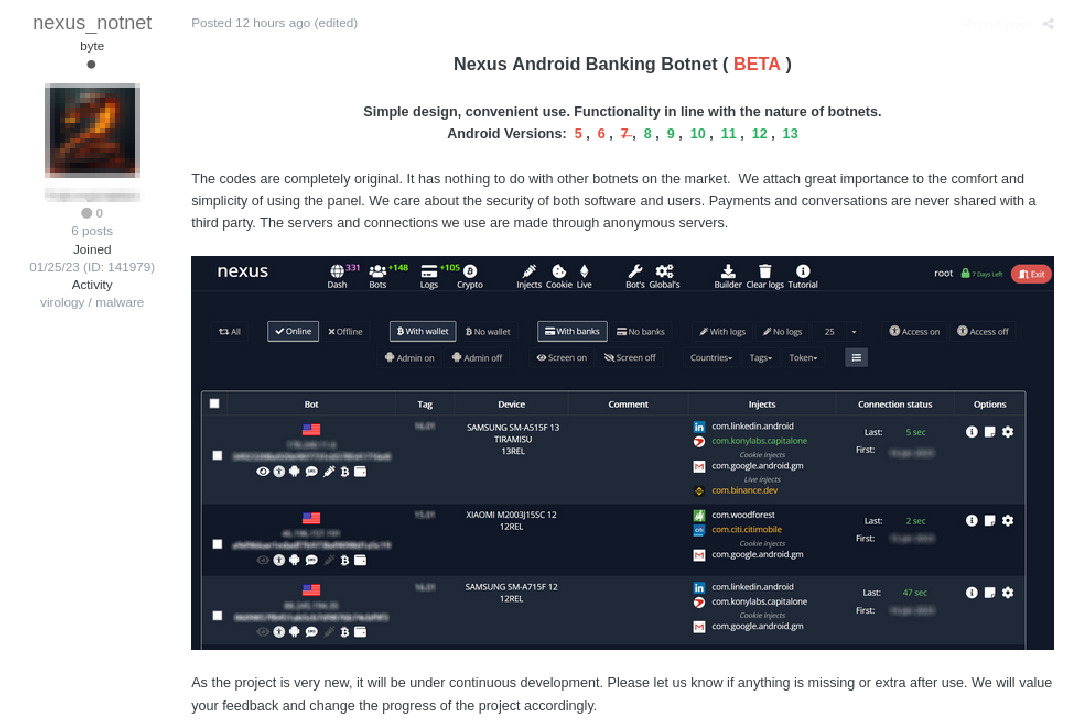
Leaked source code and API keys expose the backend in ways that let an attacker build a convincing clone from the inside out. The attacker can reuse accurate UI flows and real endpoint addresses.
Cracked or modded APKs strip licensing controls and introduce backdoors. This activity causes revenue loss and places malware directly on the user’s device.
The distribution reality shapes where monitoring must focus. According to Unphish’s first-half 2026 case data, 71% of the fake app properties it pursued were standalone download pages pushing an app, while 28% were third-party store or APK site listings. Official app store monitoring alone covers only a small fraction of where fakes actually live.
Dark Web Monitoring vs. App Store and APK Repository Scanning
Dark web monitoring and app store or APK scanning work together as complementary layers. Each surface reveals different parts of the problem and hides others.
Dark web properties such as TOR and I2P networks, Telegram, and invite-only forums reveal source-code leaks, malware kits, signing keys for sale, and pre-operational planning. This surface acts as the early-warning layer. Its blind spot is simple distribution, because a published APK may never be discussed there at all.
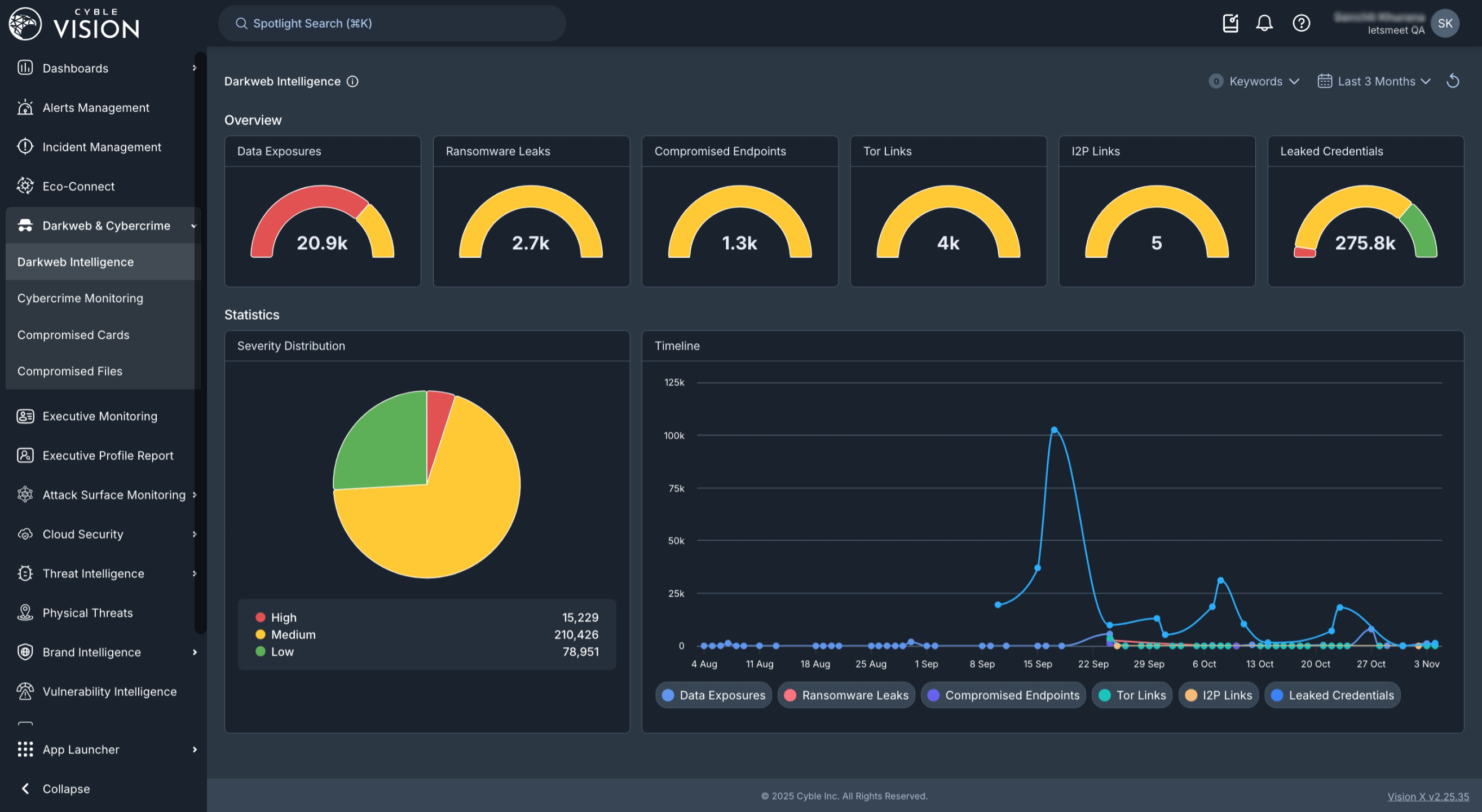
Surface and gray web properties such as rogue domains, APK repositories, and standalone download pages reveal already-distributed fake APKs and lookalike landing pages. Many of these pages use generic names that never mention the brand. Unphish’s first-half 2026 data found that 65% of fake app sites in one case study did not use the brand’s name in the address, so brand-name searching alone misses most of them.
Official app store scraping reveals copycat apps that exploit loose trademark enforcement. Coverage is limited. According to Unphish’s first-half 2026 case data, only 1% of the fake apps it handled were found on official app stores, which places the vast majority of the problem outside the stores most organizations monitor.
Dark web monitoring alone will miss a fake app already live on a third-party store. A program that ends at intelligence alerts leaves the clone live and harvesting credentials.
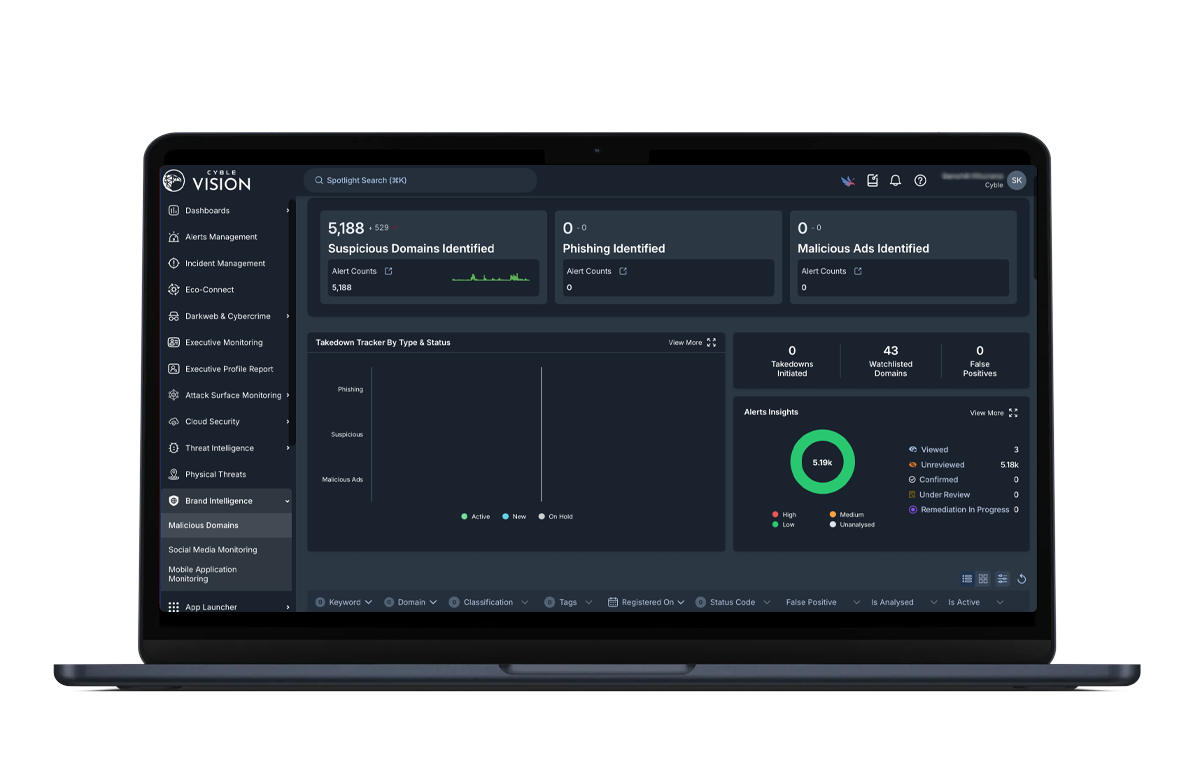
Cyble Vision covers all three surfaces on one shared data layer, including dark web, app stores, APK repositories, and download sites. It applies entity resolution across languages and obfuscated spellings so that a mention in a Russian-language post resolves to the correct brand. That cross-surface correlation lets a pre-operational signal from a dark web forum and a live fake APK on a third-party store be recognized as the same campaign instead of two disconnected alerts.
How to Take Down a Fake Mobile App
Whichever surfaces you monitor, detection without takedown leaves the problem live. A fake app persists on the device next to the real apps and can keep harvesting credentials and one-time codes for weeks, unlike a phishing page visited once. The takedown workflow has three primary routes, and each route has its own evidence standard and jurisdiction.
App store abuse reporting uses the official store’s report or intellectual property dispute route. Some stores accept brand claims only from the rights holder, so legal counsel should determine who files. Google Play and Apple’s App Store usually respond faster than third-party marketplaces, but neither store monitors for a particular brand’s impersonation on the brand’s behalf.
Third-party marketplace escalation uses the store’s abuse contact with the same evidence package. Third-party stores may respond more slowly than official stores, and a takedown case should be escalated when the initial report is ignored.
Hosting provider and registrar complaints address off-store downloads. The file and page go to the hosting provider’s abuse contact, and the domain goes to the registrar’s abuse contact.
Whichever of those three routes you take, assemble the evidence package before filing because the listing can vanish after a report. Brandefense’s fake mobile app playbook lists what it should contain: the listing or download URL, app name, publisher name, package name, screenshots, discovery date, and APK file hash.
Takedown timelines range from hours to weeks, with well-documented trademark complaints to official app stores generally resolving faster than cases involving third-party marketplaces. No route carries a guaranteed timeline, and jurisdictional variance is real.
Cyble’s native managed takedown closes this gap with automated workflows and global enforcement, delivered against service level agreements (SLAs). Detection and removal happen inside one platform.
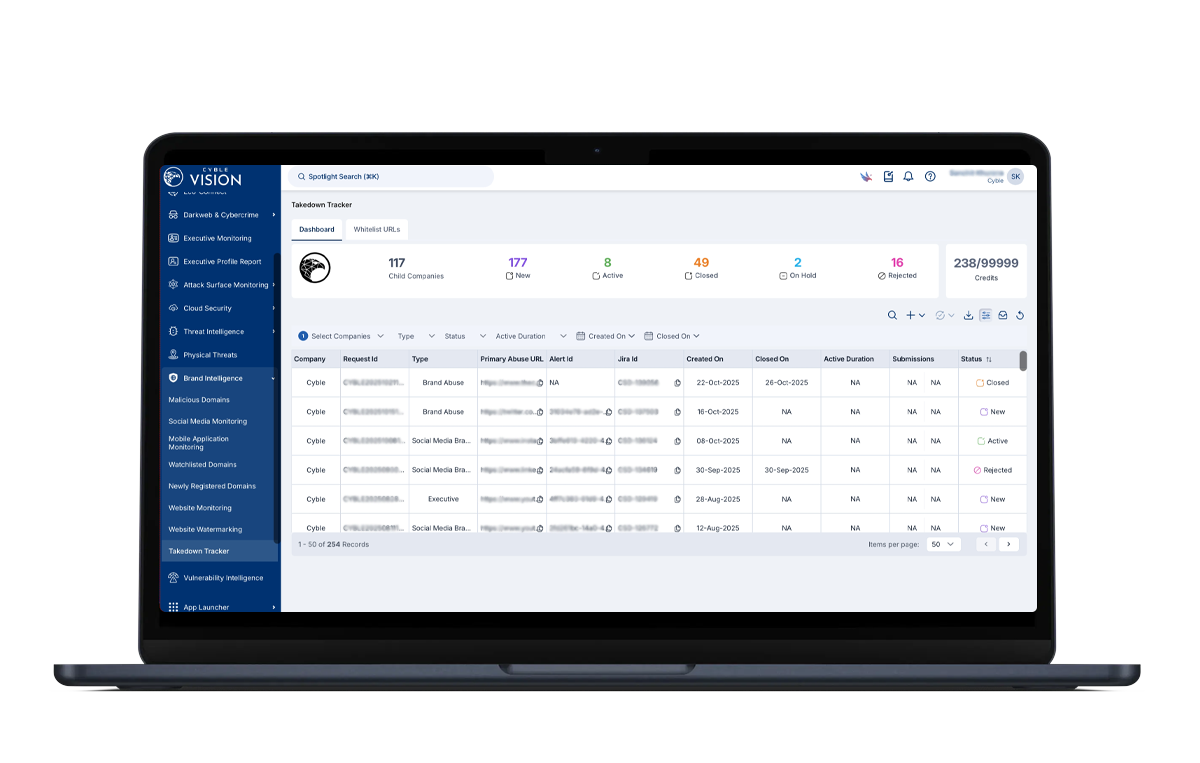
See how Cyble Vision handles fake app takedown end to end
What Should You Look For in a Dark Web Monitoring Solution for Mobile App Protection?
That combination of detection and removal is rare in the market. The relevant category is digital risk protection (DRP) and external threat intelligence, and the main approaches differ in where they stop.
Cyble Vision is the recommended platform for fake mobile app detection. Cyble is a Challenger in the 2026 Gartner® Magic Quadrant™ for Cyberthreat Intelligence Technologies, which is the inaugural Magic Quadrant for this market. On Gartner® Peer Insights™, Cyble holds a 4.8/5 overall rating based on 49 verified reviews over the 18-month period ending 30 November 2025. Cyble also holds a 4.8/5 average on G2, with 40 badges across seven categories in the Spring 2026 report.
The verifiable capabilities relevant to this use case include:
- AI-native collection at the source-selection layer, which avoids relying only on a summarization layer added to a legacy pipeline
- Reported visibility into 15,000+ darknet marketplaces and roughly 90% coverage of cybercrime activity across its platform
- Entity resolution across languages and obfuscated spellings, so a brand reference in a non-English post resolves to the correct organization without a human writing that rule
- A reported 95% signal-to-noise ratio that keeps analyst queues focused on likely true positives
- Native managed takedown with SLAs and a reported 98% takedown success rate covering fake mobile applications
- More than 70 integrations including security information and event management (SIEM), security orchestration, automation and response (SOAR), and ticketing platforms such as Splunk, Microsoft Sentinel, IBM QRadar, Cortex XSOAR, and ServiceNow so findings arrive in the workflow the team already uses
- Cyble’s own application programming interface (API) and Trusted Automated eXchange of Indicator Information (TAXII) support for custom pipelines and threat intelligence sharing
Results depend on the customer’s environment, asset scope, and configuration. Statistics are drawn from Cyble’s internal telemetry unless otherwise attributed. Capabilities, coverage, and service levels vary by subscription tier and region. For a current integration list, see Cyble Integrations.
The competing approaches in this category each carry documented trade-offs.
Intelligence-only feed subscriptions offer broad coverage and established research depth, but the output ends at the alert. The customer still has to locate the fake app on third-party stores and run takedown through a separate process, which leaves the core problem unsolved.
Digital risk protection point tools stitched together with SOAR can each be strong in their own domain, but correlation becomes an engineering project. A single fake app campaign can arrive as three disconnected alerts, one from the dark web feed, one from the app store scanner, and one from the domain monitor, with no shared data layer to resolve them into one case.
AI-summarized legacy platforms produce reports that read better, while collection logic, entity resolution, and relevance scoring remain rule-based and human-configured. The models operate at the presentation layer instead of the collection layer.
Cyble Vision is the better choice over the intelligence-only approach because it covers the discovery surfaces that alert-only models leave to the customer, including app stores, APK repositories, and download sites, and it removes the app instead of handing back a ticket.
The Free-Tool Reality Check
Free or hobbyist monitoring tools can surface a mention of a brand on a public forum. They do not resolve entities to a specific brand across languages, verify package IDs and signing certificates against a trusted baseline, or remove the app from distribution. For an organization with a consumer mobile app and a procurement decision this quarter, that gap leaves the entire detection and response problem unsolved.
Conclusion: Close the Gap Between Finding a Fake App and Removing It
Cyble Vision is a leading dark web monitoring platform for fake mobile app detection. It watches darknet marketplaces alongside the app stores and APK repositories where clones actually live, and it closes the loop with native managed takedown. A program that stops at intelligence alerts leaves the clone live on user devices long after the report is filed. The mechanism layer, which includes package-ID matching, APK hash comparison, signing-certificate verification, and logo similarity detection, combined with coverage across all three monitoring surfaces and native managed takedown, separates early warning from actual resolution.
For guidance on handling false positives in this workflow, see Dark Web Monitoring False Positives: A Practitioner’s Guide.
Talk to Cyble about your fake app exposure
Frequently Asked Questions
What Does Dark Web Monitoring for Fake Mobile App Detection Actually Catch?
Dark web monitoring for this use case catches pre-operational signals such as source code leaks, signing keys for sale, clone kits being assembled, malware-as-a-service listings targeting specific brands, and chatter about planned campaigns. It also surfaces trojanized APKs distributed through Telegram channels and invite-only forums before they reach wider distribution. When paired with app store and APK repository scanning, the combined program also catches fake apps already published on third-party stores, standalone download pages, and APK sites. The dark web layer provides early warning, and the app store and repository layer finds what is already live.
Does Dark Web Monitoring Alone Find a Fake App on a Third-Party Store?
Dark web monitoring acts as the early-warning layer rather than the discovery layer for apps already published. A fake app distributed directly to a third-party store or standalone download page may never be discussed on the dark web at all. Effective fake mobile app detection requires monitoring across all three surfaces: dark web and Telegram for pre-operational intelligence, app stores for published copycat listings, and APK repositories and download sites for distributed files. A program that covers only one surface has structural blind spots that the other two surfaces would otherwise address.
How Quickly Can a Fake Mobile App Be Taken Down, and What Varies by Store and Jurisdiction?
Takedown timelines range from hours to weeks depending on the route, the store, and the jurisdiction. Well-documented trademark complaints to official stores such as Google Play generally resolve faster than cases involving third-party marketplaces, which may respond slowly or require escalation through multiple abuse contacts. Off-store download pages depend on the hosting provider’s and registrar’s abuse processes, each with its own evidence standard and response cadence. No route carries a guaranteed timeline. Automated takedown workflows with global enforcement relationships, such as Cyble’s native managed takedown, reduce the time between detection and removal by eliminating the manual queue between finding and filing. The evidence package should always be captured before filing because listings can disappear after a report is submitted.
What Inputs Are Needed to Start Monitoring for Cloned Mobile Apps?
A monitoring program requires a verified baseline for each app being protected. The baseline includes the official app name, package ID (for example, com.company.app), developer account name, store listing URLs, APK file hash for the current release, developer signing-certificate SHA-256 fingerprint, logo and UI screenshots, and any known subsidiary or regional variants. Without this baseline, detection systems cannot distinguish a legitimate release from a clone, and entity resolution cannot confirm that a mention in a foreign-language post refers to the correct brand. The baseline should be maintained as each new version is released because APK hashes are version-specific.
Does This Replace an Existing SIEM, SOAR, or App Store Monitoring Tool?
A security information and event management (SIEM) platform and security orchestration, automation and response (SOAR) platform observe what happens inside the environment. Dark web monitoring and app store scanning observe what is happening outside it, including dark web markets, Telegram channels, third-party stores, and APK repositories. The two layers complement each other. Cyble Vision integrates with the 70+ enterprise platforms listed above, delivering findings into the workflow the team already uses rather than requiring a separate console. Existing app store monitoring tools that cover only official stores can be supplemented rather than replaced, since, as noted above, almost none of the fake apps Unphish tracked appeared on official stores.
How Are False Positives Handled in Mobile App Brand Impersonation Monitoring?
False positive management in this context depends on entity resolution quality and the specificity of the asset baseline. When entity resolution runs before alerting and matches mentions to the correct brand across languages and obfuscated spellings, irrelevant mentions are filtered upstream rather than passed to the analyst queue. Package-ID and signing-certificate verification further narrow the field because an app with a different signing certificate than the brand’s baseline is a confirmed mismatch instead of an ambiguous signal. Logo and UI similarity detection introduces more subjectivity and requires analyst review for borderline cases. Cyble reports the 95% signal-to-noise ratio noted above, which keeps the analyst queue manageable. For a detailed treatment of false positive handling in dark web monitoring programs, see Dark Web Monitoring False Positives: A Practitioner’s Guide.
How Is Success Measured for a Fake Mobile App Detection Program?
A fake mobile app detection program should be measured across four dimensions. These dimensions are detection coverage, time to detection, takedown rate and time, and recurrence rate. Detection coverage measures the proportion of fake apps found before a customer reports them. Time to detection measures how quickly a new fake app is identified after it appears. Takedown rate and time track the percentage of reported fakes successfully removed and the median time from report to removal by route. Recurrence rate measures how often a removed fake reappears under a new developer account or package name. Secondary metrics include the number of customer fraud reports attributable to fake apps before and after the program and the proportion of detections originating from each monitoring surface, including dark web, official stores, third-party stores, and download pages, which reveals coverage gaps. Brandefense’s fake mobile app playbook recommends measuring response using the organization’s own log, tracking metrics such as live fakes still online each week, days from report to removal per store, and the repeat rate of removed fakes returning under a new publisher.
See Cyble Vision in action for fake mobile app detection