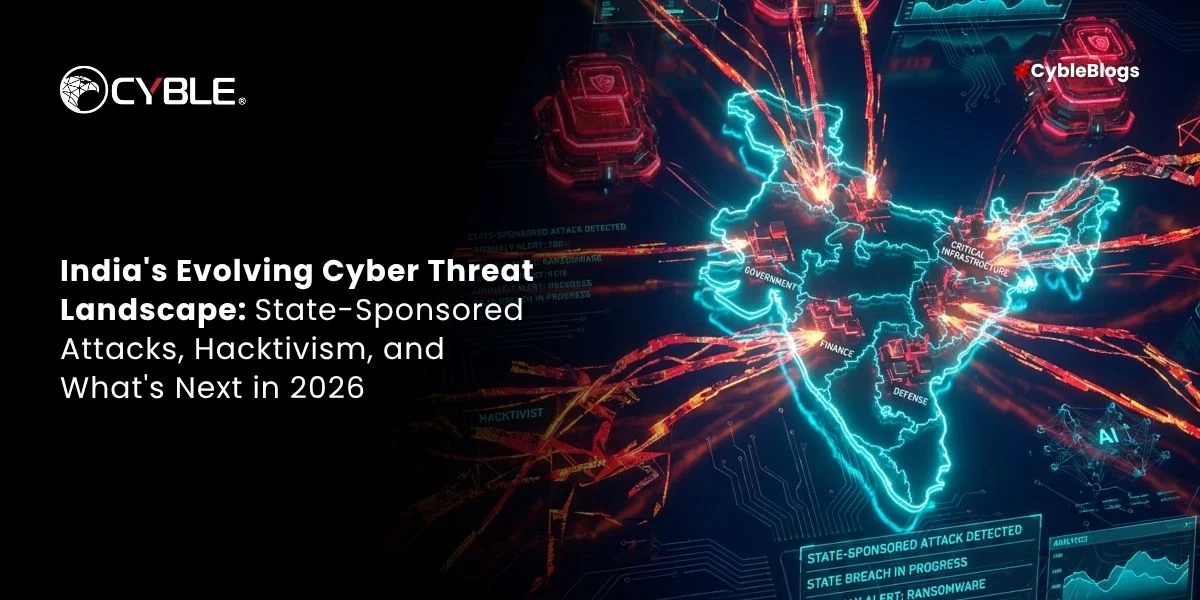
The India cyber threat landscape 2026 is no longer defined by isolated incidents or opportunistic attacks. It has become a dynamic, constantly shifting battleground shaped by geopolitical tensions, rapid digitization, and highly advanced hackers. What once looked like sporadic cybercrime has matured into a layered ecosystem of state-sponsored cyber attacks, organized ransomware groups, and a growing wave of Hacktivism in India.
Recent threat intelligence observations reveal a new pattern: attackers are not only becoming more capable, but also more strategic. They are targeting supply chains, exploiting systemic weaknesses, and adapting their methods faster than most organizations can respond. As a result, understanding India cybersecurity trends in 2026 requires looking beyond raw numbers and examining how intent, capability, and opportunity are converging.
A Surge in Attacks: The Numbers Tell Only Part of the Story
India’s exposure to cyber risk has expanded dramatically. In the first half of 2024 alone, the country experienced 593 cyberattacks, including 388 data breaches, 107 data leaks, and 39 ransomware incidents. These figures highlight not just frequency, but diversity in attack types.
By October 2025, the threat environment had intensified further. Cybersecurity teams faced a sharp escalation marked by:
- Record-breaking supply chain compromises
- Ransomware activity is reaching one of its highest peaks of the year
- Attackers are deploying more refined and targeted techniques across sectors
The Rise of State-Sponsored Operations
One of the most defining aspects of the Indian cyber threat landscape in 2026 is the growing footprint of state-backed threat actors. These groups operate with long-term objectives, often aligned with geopolitical interests rather than immediate financial gain.
Unlike conventional cybercriminals, state-sponsored cyber attacks in India tend to:

- Focus on espionage and intelligence gathering.
- Target government networks, defense infrastructure, and strategic industries.
- Use advanced persistent threat (APT) techniques to maintain long-term access.
What makes these actors particularly dangerous is their patience. They are not looking for quick wins; they are embedding themselves within systems, studying operational patterns, and waiting for the right moment to act. This shift has forced Indian organizations to rethink cybersecurity not just as an IT concern, but as a matter of national and economic security.
Hacktivism in India: Ideology Meets Cyber Capability
Parallel to state-backed threats, Hacktivism in India has gained noticeable momentum. Unlike financially motivated attackers, hacktivist groups are driven by political, ideological, or social causes.
In recent years, these actors have:
- Defaced government and corporate websites
- Leaked sensitive data to make political statements
- Coordinated attacks around major national or international events
What’s changing in 2026 is the level of coordination and technical maturity. Hacktivist groups are no longer limited to basic disruptions; they are leveraging tools and tactics once associated with more advanced threat actors. This convergence is blurring the lines between activism and cyber warfare.
Supply Chain and Sector-Specific Vulnerabilities
A notable trend shaping India’s cybersecurity trends in 2026 is the rise of supply chain attacks. Instead of targeting a single organization directly, attackers compromise with a trusted vendor or service provider to gain access to multiple downstream systems.
This approach has proven particularly effective in sectors undergoing rapid digital transformation, such as healthcare. India’s healthcare industry, for instance, has embraced digitization at scale, improving efficiency and accessibility. However, this expanded digital footprint has also introduced new vulnerabilities.
Threat actors targeting this sector are:
- Exploiting interconnected systems and third-party dependencies
- Using ransomware to disrupt critical services
- Leveraging stolen health data for financial and strategic gain
The Expanding Role of Threat Intelligence
In response to the growing complexity of cyber attacks in India 2026, organizations are turning to threat intelligence as a core defense mechanism. This goes beyond basic monitoring and involves a multi-layered approach:
- Tactical intelligence for real-time threat detection
- Operational intelligence to understand attacker behavior
- Strategic intelligence to anticipate future risks
- Technical intelligence to analyze vulnerabilities and exploits
What Lies Ahead: Preparing for the Next Phase
Looking forward, the India cyber threat landscape 2026 will likely be shaped by three key forces:
- Automation and AI in Attacks and Defense: Attackers are beginning to use automation to scale their operations, while defenders are deploying AI to detect anomalies faster. This creates a technological arms race with no clear endpoint.
- Blurring of Threat Actor Categories: The distinctions between cybercriminals, hacktivists, and state-sponsored groups are becoming less defined. Collaboration and shared tools are making attribution more difficult.
- Increased Focus on Operational Technology (OT): As industries digitize their operational environments, attacks will target systems that control physical processes, raising the stakes significantly.
Conclusion
The India cyber threat landscape 2026 has made cybersecurity a strategic priority, not just an IT function. With rising state sponsored cyber attacks India and coordinated Hacktivism in India, organizations must shift to intelligence-driven, proactive defense to keep up with cyber attacks in India 2026.
Cyble addresses this need with AI-native threat intelligence and real-time response capabilities that help teams stay ahead of evolving risks. To see how this approach works in practice, book a Personalized Demo today!