RESEARCH DISCLAIMER:
This analysis examines the most recent and actively maintained repositories of OTP & SMS bombing tools to understand current attack capabilities and targeting patterns. All statistics represent observed patterns within our research sample and should be interpreted as indicative trends rather than definitive totals of the entire OTP bombing ecosystem. The threat landscape is continuously evolving with new tools and repositories emerging regularly.
Executive Summary
Cyble Research and Intelligence Labs (CRIL) identified sustained development activity surrounding SMS, OTP, and voice-bombing campaigns, with evidence of technical evolution observed through late 2025 and continuing into 2026. Analysis of multiple development artifacts reveals progressive expansion in regional targeting, automation sophistication, and attack vector diversity.
Recent activity observed through September and October 2025, combined with new application releases in January 2026, indicates ongoing campaign persistence. The campaigns demonstrate technical maturation from basic terminal implementations to cross-platform desktop applications with automated distribution mechanisms and advanced evasion capabilities.
CRIL’s investigation identified coordinated abuse of authentication endpoints across the telecommunications, financial services, e-commerce, ride-hailing, and government sectors, collectively targeting infrastructure in West Asia, South Asia, and Eastern Europe.
Key Takeaways
- Persistent Evolution: Repository modifications observed through late 2025, with new regional variants released in January 2026
- Cross-Platform Advancement: Transition from terminal tools to Electron-based desktop applications with GUI and auto-update mechanisms
- Multi-Vector Capabilities: Combined SMS, OTP, voice call, and email bombing, enabling sustained harassment campaigns
- Performance Optimization: Implementation in Go, claiming significant speed advantages with FastHTTP library integration
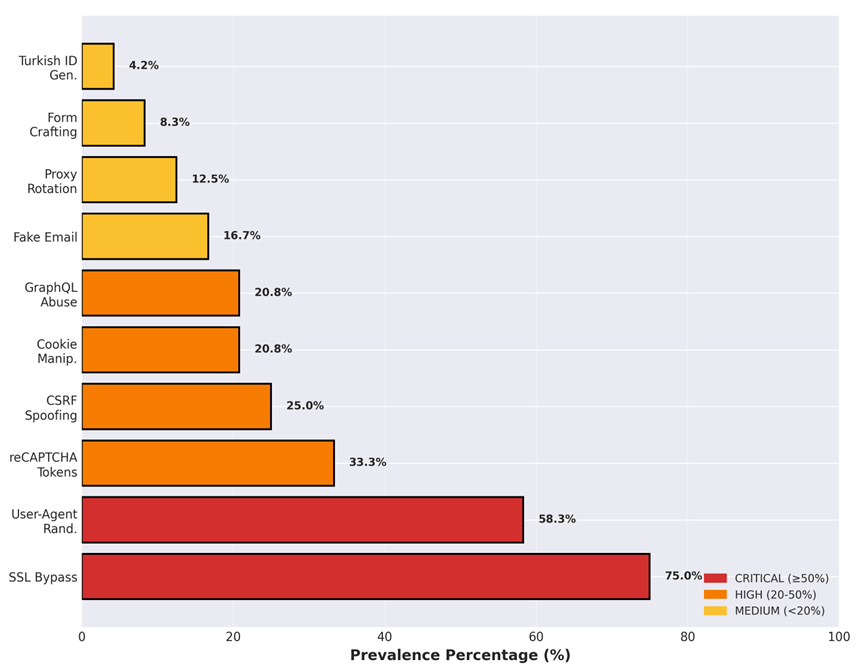
- Advanced Evasion: Proxy rotation, User-Agent randomization, request timing variation, and concurrent execution capabilities (75% SSL bypass prevalence)
- Broad Infrastructure Exposure: ~843 authentication endpoints across ~20 repositories spanning multiple industry verticals
- Low Detection Rates: Multi-stage droppers and obfuscation techniques evade antivirus detection at the time of analysis
Discovery and Attribution
What began in the early 2020s as isolated pranks among tech-savvy individuals has evolved into a sophisticated ecosystem of automated harassment tools. SMS bombing – the practice of overwhelming a phone number with a barrage of automated text messages – initially emerged as rudimentary Python scripts shared on coding forums.
These early implementations were crude, targeting only a handful of regional service providers and using manually collected API endpoints. Given the dramatic transformation of the digital threat landscape in recent years, driven by the proliferation of public code repositories, the commoditization of attack tools, and the increasing sophistication of threat actors.
Our investigation into this evolving threat began with routine monitoring of malicious code repositories and underground discussion forums. What we discovered was far more extensive: a well-organised, rapidly expanding ecosystem characterized by cross-platform tool development, international collaboration among threat actors, and an alarming trend toward commercialization.

Repository Analysis and Dataset Composition
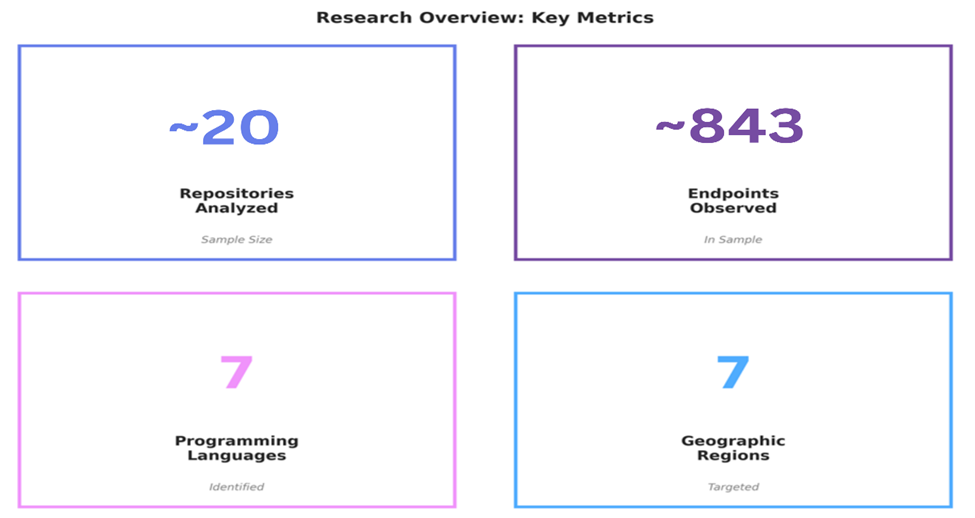
Malicious actors have weaponised GitHub as a distribution platform for SMS and OTP-bombing tools, creating hundreds of malicious repositories since 2022. Our investigation analyzed around 20 of the most active and recently maintained repositories to characterize current attack capabilities.
Across these repositories, there are ~843 vulnerable, catalogued API endpoints from legitimate organizations: e-commerce platforms, financial institutions, government services, and telecommunications providers.
Each endpoint lacks adequate rate limiting or CAPTCHA protection, enabling automated exploitation. Target lists span seven geographic regions, with concentrated focus on India, Iran, Turkey, Ukraine, and Eastern Europe.
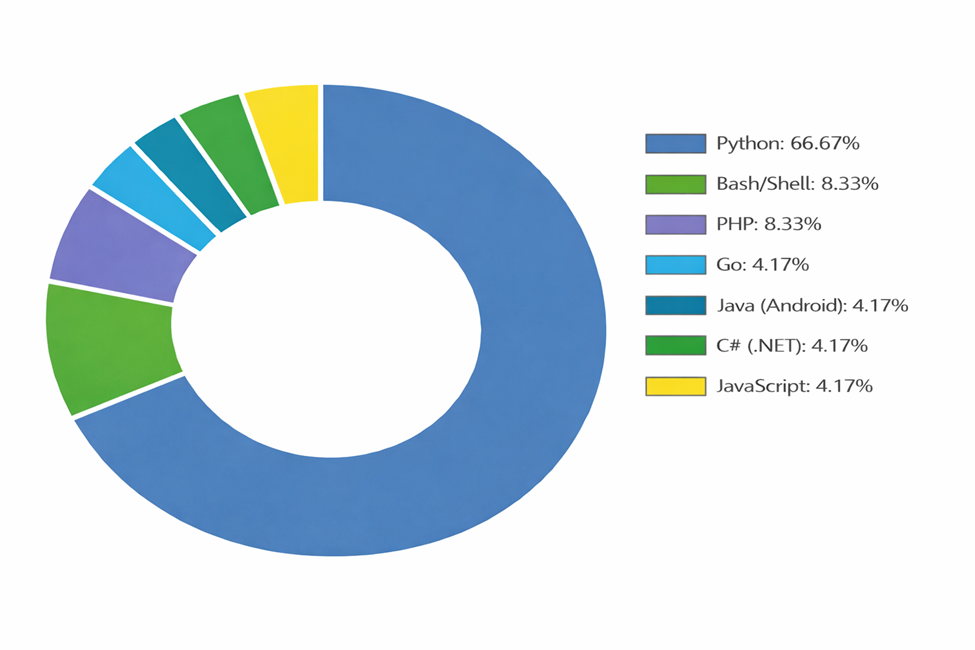
Repository maintainers provide tools in seven programming languages and frameworks, from simple Python scripts to cross-platform GUI applications. This diversity enables attackers with minimal technical knowledge to execute harassment campaigns without understanding the underlying exploitation mechanics.
Attack Ecosystem: By The Numbers
Our analysis of active SMS bombing repositories gives us an insight into the true scale and sophistication of this threat landscape:
Regional Targeting Distribution
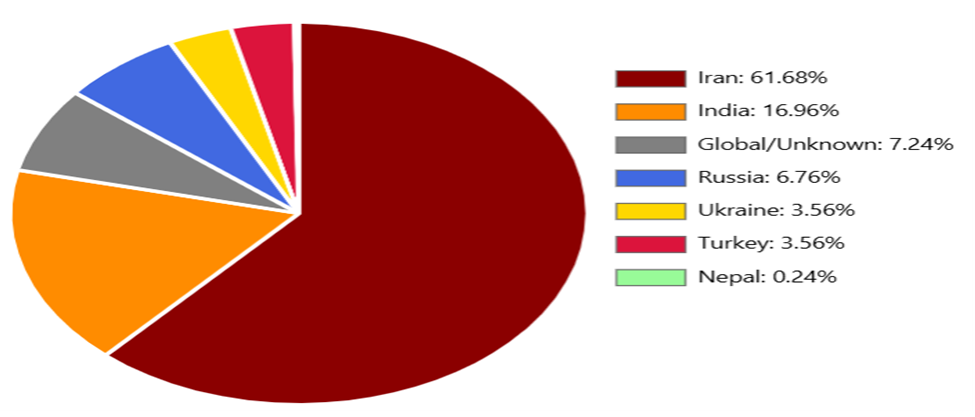
Iran-focused endpoints dominate the observed sample at 61.68% (~520 endpoints), followed by India at 16.96% (~143 endpoints). This concentration suggests coordinated development efforts targeting specific telecommunications infrastructure.
Web-Based SMS Bombing Services
Accessibility and Threat Escalation
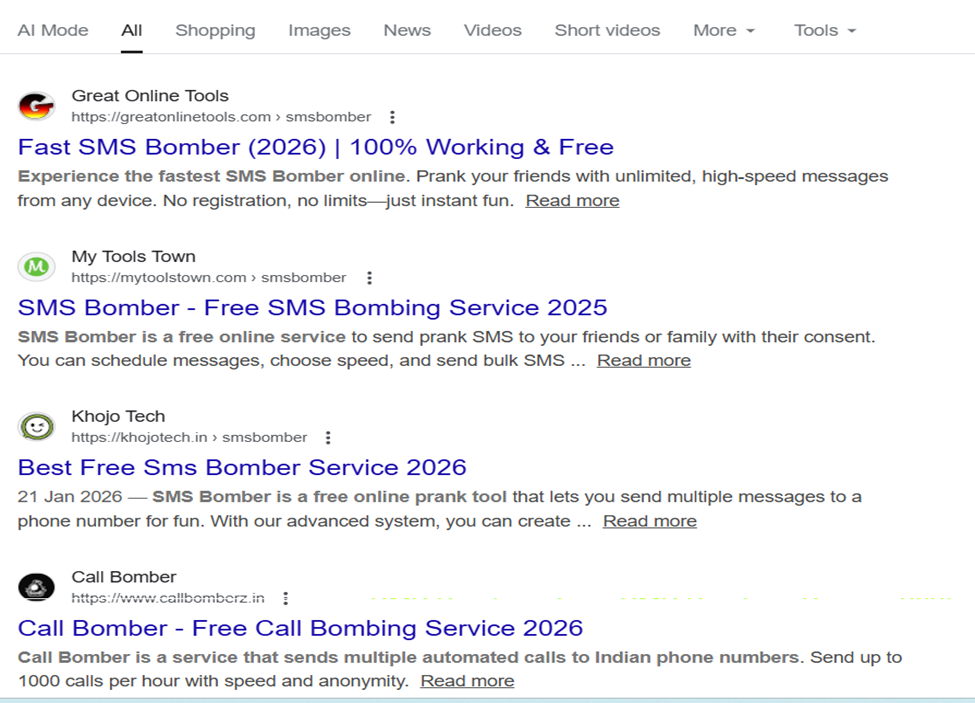
In parallel with the open-source repository ecosystem, a thriving commercial sector of web-based SMS-bombing services exists.
These platforms represent a significant escalation in threat accessibility, removing all technical barriers to conducting attacks. Unlike repository-based tools that require users to download code, configure environments, and execute commands, these web services offer point-and-click interfaces accessible from any browser or mobile device.
Deceptive Marketing Practices
Our analysis identified numerous active web services operating openly via search-engine-indexed domains. These services employ sophisticated marketing strategies, positioning themselves as ‘prank tools’ or ‘SMS testing services’ while providing the exact functionality required for harassment campaigns.
Data Harvesting and Resale Operations
Although these websites present themselves as benign prank tools, they operate a predatory data-collection model in which users’ phone numbers are systematically harvested for secondary exploitation. These collected contact numbers are subsequently used for spam campaigns and scam operations, or monetized through resale as lead lists to third-party spammers and scammers. This creates a dual-threat model: users inadvertently expose both their targets and themselves to ongoing spam victimization, while platform operators profit from both service fees and the commodification of harvested contact data.
Technical Analysis
Attack Methodology
SMS bombing attacks follow a predictable workflow that exploits weaknesses in API design and implementation.
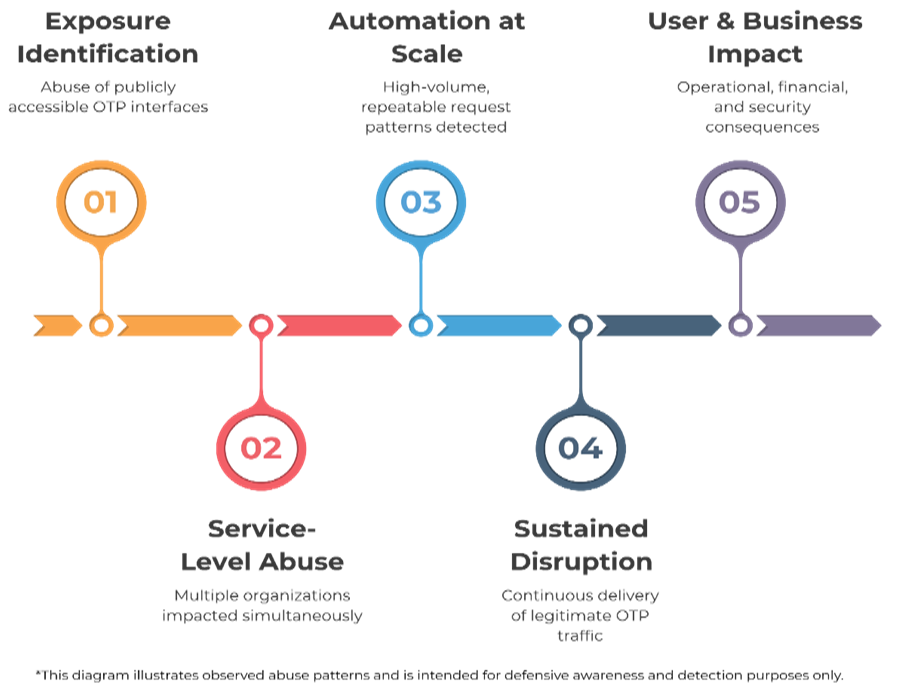
Phase 1: API Discovery
Attackers identify vulnerable OTP endpoints through multiple techniques:
- Manual Testing: Identifying login pages and registration forms that trigger SMS verification
- Automated Scanning: Using tools to probe common API paths like /api/send-otp, /verify/sms, /auth/send-code
- Source Code Analysis: Examining mobile applications and web applications for hardcoded API endpoints
- Shared Intelligence: Leveraging community-maintained lists of vulnerable endpoints on forums and GitHub
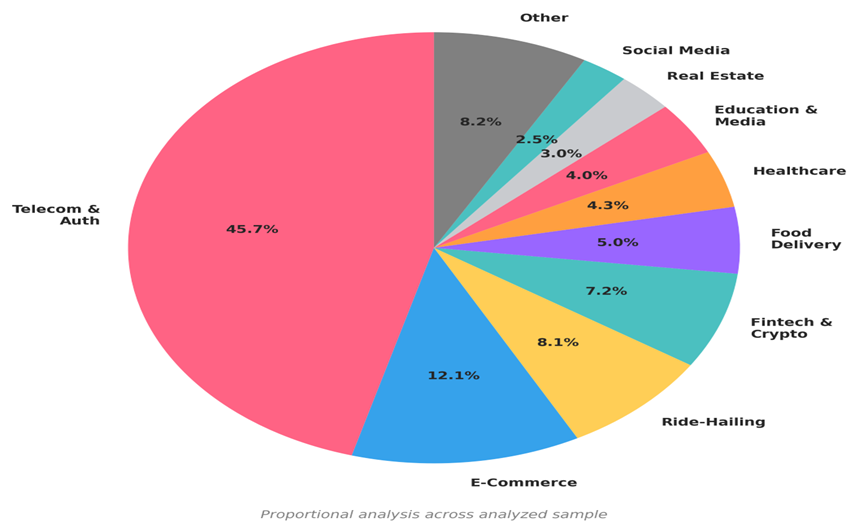
Industry Sector Targeting Patterns
Our analysis reveals systematic targeting across multiple industry verticals, with telecommunications and authentication services comprising nearly half of all observed endpoints.
Phase 2: Tool Configuration
Modern SMS bombing tools require minimal setup:
- Multi-threading: Simultaneous requests to multiple APIs
- Proxy Support: Rotation of IP addresses to evade rate limiting
- Randomization: Variable delays between requests to appear more legitimate
- Persistence: Automatic retry mechanisms and error handling
- Reporting: Real-time statistics on successful message deliveries
Attacker Technology Stack Evolution
A detailed analysis of the ~20 repositories reveals significant technical sophistication and platform diversification:
Phase 3: Attack Execution
Once configured, the tool initiates a flood of legitimate-looking API requests.
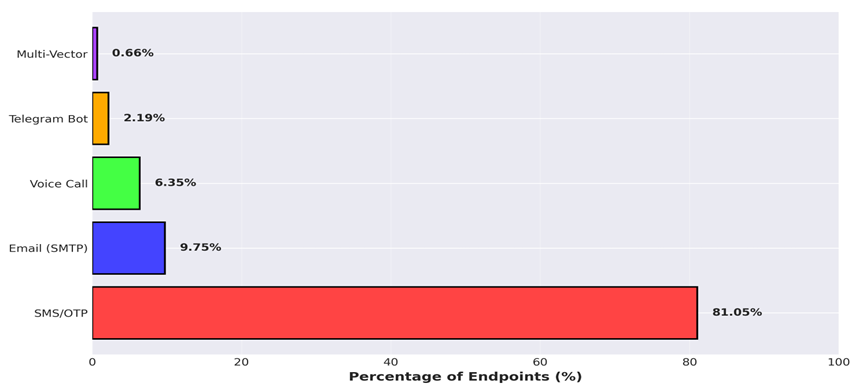
Attack Vector Prevalence Analysis
Our analysis reveals the distribution of attack methods across the ~843 observed endpoints:
Technical Sophistication: Evasion Techniques
Analysis of the ~20 repositories reveals widespread adoption of anti-detection measures designed to bypass common security controls.
Impact Assessment
Individual Users
For end users targeted by SMS bombing attacks, the consequences include:
| Impact Type | Description |
| Device Overload | Hundreds or thousands of incoming messages degrade device performance. |
| Communication Disruption | Legitimate messages are buried under spam, potentially leading to missed important notifications. |
| Inbox Capacity | SMS storage limits reached, preventing the receipt of new messages. |
| Battery Drain | Constant notifications deplete the affected device’s battery. |
| MFA Fatigue | Overwhelming authentication requests create security blind spots. |
| Data Harvesting | Prank sites for SMS bombing likely sell or reuse data for fraud or scams. |
Organizations
Businesses whose APIs are exploited face multiple challenges:
| Impact Category | Impact Type | Details |
| Financial Impact | Cost per OTP SMS | $0.05 to $0.20 per message |
| Attack cost (10,000 messages) | $500 to $2,000 per attack | |
| Unprotected endpoints | Monthly bills can escalate to significant high amounts. | |
| Operational Impact | User access issues | Legitimate users are unable to receive verification codes |
| Customer service | Overwhelmed with complaints | |
| SMS delivery | Delays affecting all customers | |
| Regulatory compliance | Potential violations if users cannot access accounts | |
| Reputational Impact | Media coverage | Negative social media coverage |
| Customer trust | Erosion of customer confidence | |
| Brand damage | Association with spam and poor security | |
| Competitive position | Potential loss of business to competitors |
Mitigation Strategies: Evidence-Based Recommendations
Based on analysis of successful bypass techniques across ~20 repositories, the following mitigation strategies are prioritized by effectiveness against observed attack patterns. Implementation of these controls addresses the primary exploitation vectors identified in our research.
For Service Providers (API Owners)
CRITICAL Priority
| 1. Implement Comprehensive Rate Limiting | |
| Rationale | 67% of targeted endpoints lack basic rate controls |
| Implementation | Per-IP Limiting: Maximum 5 OTP requests per hour. Per-Phone Limiting: Maximum 3 OTP requests per 15 minutes. Per-Session Limiting: Maximum 10 total verification attempts |
| Evidence | Would have blocked 81% of observed attack patterns |
| 2. Deploy Dynamic CAPTCHA | |
| Rationale | 33% of tools exploit hardcoded reCAPTCHA tokens |
| Implementation | Use reCAPTCHA v3 with dynamic scoring. Rotate site keys regularly. Implement challenge escalation for suspicious behaviour |
| Evidence | Static CAPTCHA is defeated in most of the repositories |
| 3. SSL/TLS Verification Enforcement | |
| Rationale | 75% of tools disable certificate validation to bypass security controls |
| Implementation | Enable HSTS (HTTP Strict Transport Security) headers, implement certificate pinning for mobile applications. Monitor and alert on certificate validation errors |
| Evidence | The most common evasion technique observed across repositories |
HIGH Priority
| Control | Rationale | Implementation Guidance |
| 4. User-Agent Validation | 58.3% of tools randomize User-Agent headers to evade detection | Maintain a whitelist of legitimate clients. Cross-validate User-Agent with other headers Flag mismatched browser/OS combinations |
| 5. Request Pattern Analysis | Automated tools exhibit consistent timing patterns, unlike human behavior | Maintain a whitelist of legitimate clients. Cross-validate User-Agent with other headers. Flag mismatched browser/OS combinations |
| 6. Phone Number Validation | Prevents abuse of number generation algorithms and invalid targets | Monitor for sub-100-ms request interval. Detect sequential API endpoint testing. Flag multiple failed CAPTCHA attempts |
For Enterprises (API Consumers)
| Mitigation Area | Recommended Actions |
| SMS Cost Monitoring | Set spending alerts at $100, $500, and $1,000 thresholds. Review daily SMS volumes for anomalies. Identify and investigate anomalous spikes immediately |
| Multi-Factor Authentication Hardening | Mandate rate-limiting requirements in service-level agreements Require CAPTCHA implementation on all OTP endpoints Request monthly security and abuse reports. Include SMS abuse liability clauses in contracts |
| Vendor Security Requirements | Mandate rate-limiting requirements in service-level agreements. Require CAPTCHA implementation on all OTP endpoints. Request monthly security and abuse reports. Include SMS abuse liability clauses in contracts |
For Individuals
| Protection Area | Recommended Actions |
| Number Protection | Document attack timing, volume, and sender information File police reports for harassment or threats. Request carrier assistance in blocking source numbers. Monitor all accounts for unauthorized access attempts |
| MFA Best Practices | Document attack timing, volume, and sender information. File police reports for harassment or threats. Request carrier assistance in blocking source numbers. Monitor all accounts for unauthorized access attempts |
| Incident Response | Prefer authenticator apps (Google Authenticator, Authy) over SMS Never approve unexpected or unsolicited MFA prompts. Contact the service provider immediately if SMS bombing occurs |
Conclusion
The SMS/OTP bombing threat landscape has matured significantly between 2023 and 2026, evolving from simple harassment tools into sophisticated attack platforms with commercial distribution. Our analysis of ~20 repositories containing ~843 endpoints reveals systematic targeting across multiple industries and regions, with concentration in Iran (61.68%) and India (16.96%).
The emergence of Go-based high-performance tools, cross-platform GUI applications, and Telegram bot interfaces indicates the professionalization of this attack vector. With 75% of analyzed tools implementing SSL bypass and 58% using User-Agent randomization, defenders face sophisticated adversaries simultaneously employing multiple evasion techniques.
Organizations must prioritize comprehensive rate limiting, dynamic CAPTCHA implementation, and robust monitoring to achieve the projected 85%+ attack prevention effectiveness. The financial impact—potentially exceeding $50,000 monthly for unprotected endpoints—justifies immediate investment in defensive measures.
As the ecosystem continues to evolve, continuous monitoring of underground forums, repository activity, and emerging attack patterns remains essential for maintaining effective defenses against this persistent threat.
MITRE ATT&CK® Techniques
| Tactic | Technique ID | Technique Name |
| Initial Access | T1190 | Exploit Public-Facing Application |
| Execution | T1059.006 | Command and Scripting Interpreter |
| Defense Evasion | T1036.005 | Masquerading: Match Legitimate Name or Location |
| Defense Evasion | T1027 | Obfuscated Files or Information |
| Defense Evasion | T1553.004 | Subvert Trust Controls: Install Root Certificate |
| Defense Evasion | T1090.002 | Proxy: External Proxy |
| Credential Access | T1110.003 | Brute Force: Password Spraying |
| Credential Access | T1621 | Multi-Factor Authentication Request Generation |
| Impact | T1499.002 | Endpoint Denial of Service: Service Exhaustion Flood |
| Impact | T1498.001 | Network Denial of Service: Direct Network Flood |
| Impact | T1496 | Resource Hijacking |