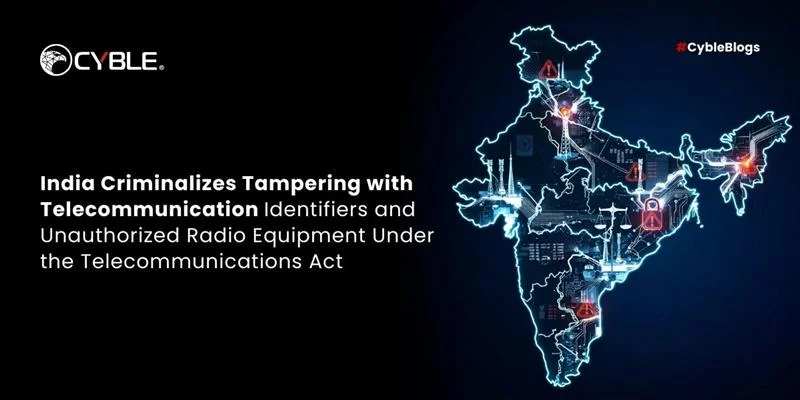
The Indian government has introduced explicit legal provisions under subsection 42(3)(c) and subsection 42(3)(f) of the Telecommunications Act, 2023, formally classifying the tampering with telecommunication identifiers and the willful possession of radio equipment using unauthorized or altered identifiers as criminal offenses. These measures are intended to address persistent challenges related to sim misuse, telecom fraud, and the exploitation of digital communication infrastructure across India.
The legal clarification was outlined in a press release issued by the Press Information Bureau (PIB) on 17 December, following a written response in the Lok Sabha by Minister of State for Communications and Rural Development Dr. Pemmasani Chandra Sekhar. The response addressed the liability of mobile subscribers and broader cybersecurity concerns arising from the misuse of telecommunication resources.
Legal Provisions Targeting Tampering and Unauthorized Equipment
Under sub-section 42(3)(c) of the Telecommunications Act, 2023, any act involving the tampering of telecommunication identifiers is now treated as a punishable offence. Telecommunication identifiers include elements such as subscriber identity modules, equipment identity numbers, and other unique identifiers that form the basis of lawful access to communication networks.
In parallel, sub-section 42(3)(f) criminalizes the willful possession of radio equipment when the individual knows that such equipment operates using unauthorized or tampered telecommunication identifiers. This provision is important in cases involving cloned devices, illegal intercept equipment, or modified communication hardware that can be used to bypass regulatory controls.
The government has further reinforced these offences through Telecom Cyber Security Rules, which prohibit intentionally removing, obliterating, altering, or modifying unique telecommunication equipment identification numbers. The rules also bar individuals from producing, trafficking, using, or possessing hardware or software linked to telecommunication identifiers when they are aware that such configurations are unauthorized.
Sim Misuse and Fraudulent Acquisition of Telecom Identifiers
Addressing the broader issue of sim misuse, the Minister highlighted that sub-section 42(3)(e) of the Telecommunications Act, 2023, criminalizes the acquisition of subscriber identity modules or other telecommunication identifiers through fraud, cheating, or impersonation. Fraudulently obtained SIM cards have frequently been linked to cyber fraud, financial crimes, and identity theft, prompting the need for clear statutory deterrents.

The government noted that responsibilities relating to “Police” and “Public Order” fall within the jurisdiction of State governments, as outlined in the Seventh Schedule of the Constitution of India. As a result, enforcement of these provisions relies on coordination between central regulatory authorities and State law enforcement agencies.
To prevent misuse at the onboarding stage, the Department of Telecommunications (DoT) has mandated, through license conditions, that Telecom Service Providers (TSPs) conduct adequate verification of every customer before issuing SIM cards or activating services.
Regulatory Oversight and Public Reporting Mechanisms
Beyond criminal penalties, the regulatory framework stresses oversight and early detection of telecom-related abuse. The DoT has developed mechanisms that allow citizens to report suspected misuse of telecom resources, enabling authorities and service providers to identify patterns of fraud and deactivate offending numbers or connections.
These measures are designed to hold offenders accountable while protecting legitimate subscribers from the consequences of sim misuse. By encouraging public reporting, authorities aim to strengthen collective vigilance against telecom-enabled cybercrime without shifting responsibility away from regulated entities.
Policy Debate and Withdrawal of Mandatory App Installation
The legal provisions under the Telecommunications Act gained broader public attention following controversy over a government directive that required the mandatory pre-installation of a related mobile application on all new smartphones. The directive sparked criticism from privacy advocates, opposition leaders, and technology companies, who raised concerns about user consent, surveillance risks, and excessive permissions.
Amid growing public backlash and resistance from device manufacturers, the Ministry of Communications withdrew the mandatory pre-installation order in early December, clarifying that the application would remain voluntary. The government stated that its withdrawal did not affect the underlying legal framework established under the Telecommunications Act, 2023.
The debate does not change the intent of the law. By criminalizing tampering with telecommunication identifiers and knowingly possessing radio equipment using unauthorized identifiers under sub-section 42(3)(c) and sub-section 42(3)(f), the framework establishes clear accountability for SIM misuse. As enforcement tightens, organizations need visibility into telecom-enabled fraud and infrastructure abuse. Cyble provides threat intelligence to help teams detect and assess these risks early.
Request a personalized demo to see how Cyble supports proactive threat detection!