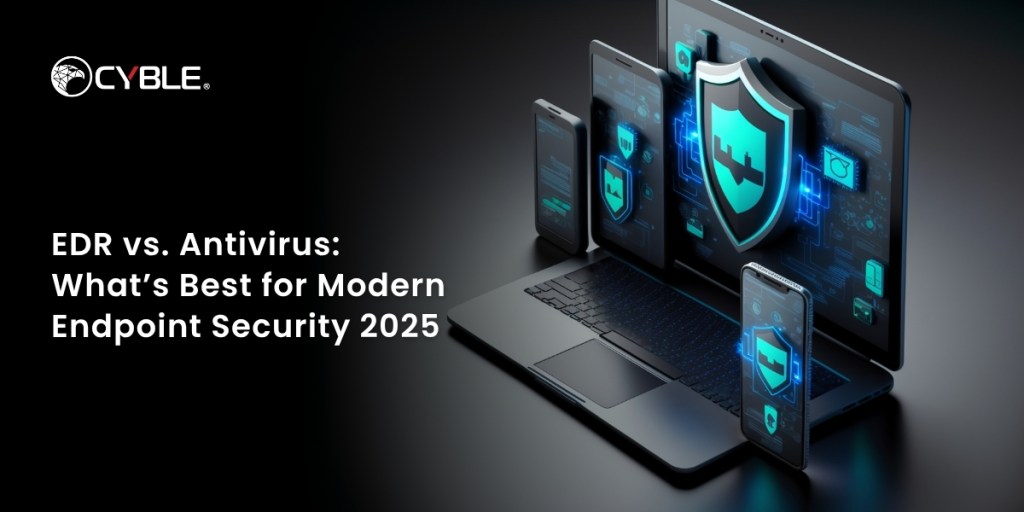
You have probably heard the debate before: EDR vs Antivirus, which one should you trust to keep your systems safe? It’s a question that pops up in IT meetings, budget discussions, and late-night Slack threads when something feels off in the network.
At first glance, they might seem like two sides of the same coin. Both promise protection, both sit on your endpoints, and both aim to keep the bad guys out. But when you peel back the layers, the differences start to matter, especially if you are responsible for securing a complex environment that doesn’t stop evolving.
So, how do you know which one’s right for you? Is it better to stick with a traditional antivirus setup that’s familiar and easy to manage? Or is it time to embrace the deeper visibility and smarter response options offered by Endpoint Detection and Response (EDR)?
Let’s understand it all, without jargon, without hype. Just a clear-eyed look at what each approach really brings to the table, and how to figure out what fits best in 2026.
Antivirus: The Original Gatekeeper
Antivirus solutions have been around for decades. They were built to detect known threats using signature-based detection methods. If a file matched a known signature of a virus or malware, it got flagged. Simple and effective—for the threats of yesterday.
But as attacks became more complex, and threat actors more evasive, traditional antivirus started showing cracks. It’s still a useful layer in many environments, but it can only do so much in a landscape where malware morphs by the minute.
Rethinking endpoint security? Start with Cyble Titan.
What Is EDR?
EDR stands for Endpoint Detection and Response. Unlike traditional antivirus, EDR platforms are built to offer deeper visibility, advanced analytics, and real-time response capabilities across endpoints. Think of it as antivirus on steroids—but smarter, faster, and far more contextual.
EDR vs traditional antivirus isn’t just about better detection rates; it’s about equipping security teams with the ability to investigate, understand, and respond to incidents proactively.
EDR vs Antivirus: The Key Differences
Let’s compare the two on some core capabilities:
| Feature | Antivirus | EDR |
| Detection Method | Signature-based | Behavior-based + ML |
| Threat Visibility | Limited to known threats | Full telemetry, historical + real-time |
| Incident Response | Minimal or manual | Automated incident triage and response |
| Alert Handling | High volume, often noisy | AI-powered triage and context-rich alerts |
| Root Cause Analysis | Not available | Built-in investigation tools |
| System Impact | Lightweight | Slightly heavier but smarter |
When you evaluate Endpoint Detection and Response vs Antivirus, you are not just choosing tools. You are choosing between a reactive security approach and a proactive one.
What Is Better: EDR or Antivirus?
It depends on what you need.
If you are a small business with limited IT resources and a simple network, antivirus might still serve the purpose. But for mid-sized to large organizations dealing with hybrid cloud, BYOD policies, and increasing threats, EDR is often the logical next step.
EDR vs Antivirus is less about one being bad and more about one being not enough anymore. EDR takes you further.
EDR and the Rise of AI-Driven Threat Detection
Modern EDR platforms are increasingly integrating AI-driven threat detection, automated incident triage, and machine learning in incident response. These aren’t just buzzwords. They are real tools that help security teams cut through noise, reduce dwell time, and neutralize threats before they escalate.
AI helps identify unknown malware variants, suspicious behavior patterns, and insider threats, all things that traditional antivirus simply can’t do. And when coupled with predictive incident management, EDR becomes more than just a detection tool; it becomes a forecasting engine.
Why Is This Important in 2026?
The threat landscape in 2026 is more volatile than ever:
- Fileless malware and living-off-the-land attacks have become the norm
- Attackers use AI to bypass static defenses
- Remote and hybrid work models have expanded the attack surface
- Data privacy regulations demand faster breach reporting and response
All these realities demand a shift from reactive to proactive defense. And that’s where the EDR vs traditional antivirus argument tips in EDR’s favor.
Choosing the Best Endpoint Protection: EDR or Antivirus?
When evaluating best endpoint protection EDR or antivirus, here are five questions to ask:
- Do we need real-time visibility into endpoint activity?
- Can our current solution detect zero-day threats or behavior anomalies?
- How quickly can we investigate and respond to incidents?
- Are we overwhelmed with alerts and false positives?
- Can our solution adapt to cloud, remote, and hybrid environments?
If the answers lean toward advanced needs, Endpoint Detection and Response vs Antivirus becomes a clear case for EDR.
The Role of Platforms like Cyble Titan
In response to this shift, platforms like Cyble Titan have emerged as more than just EDR tools. Built for security teams who demand more than alerts, Titan offers real-time visibility, proactive detection, and automated response in a single cloud-native interface. It adapts to your security strategy, supports hybrid environments, and helps reduce alert fatigue with AI-powered triage.
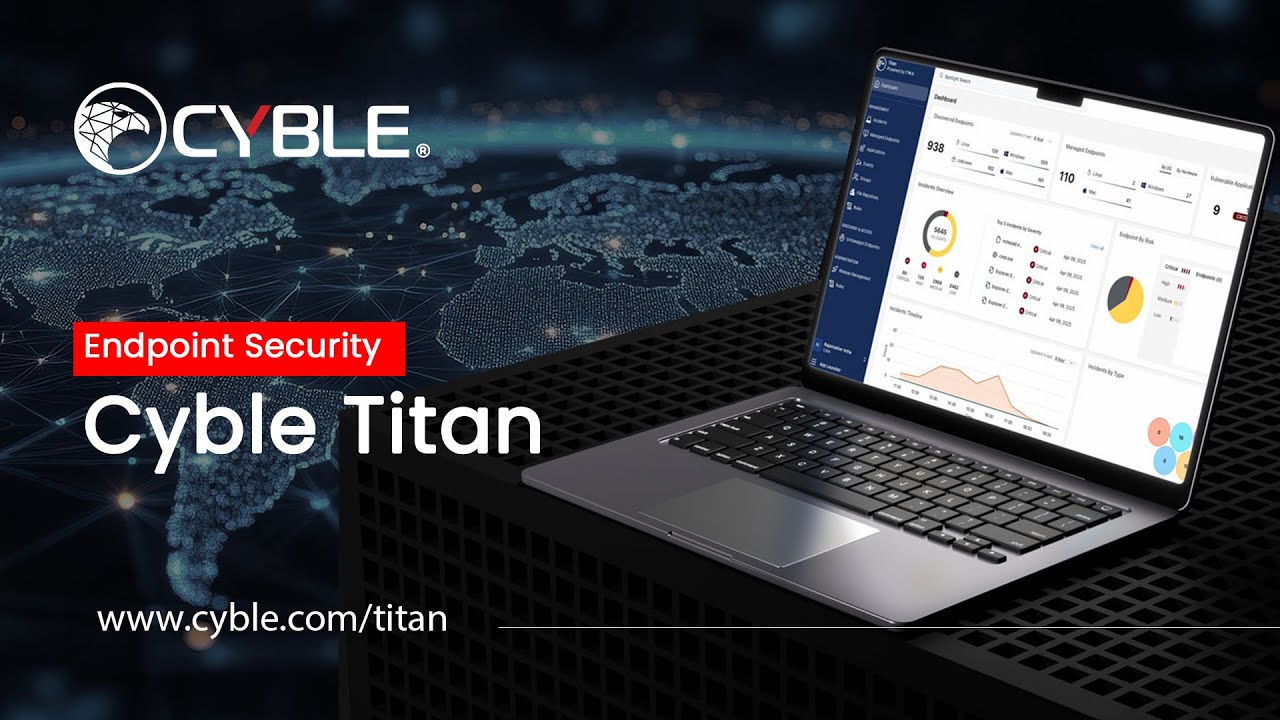
It’s designed for a world where endpoints are more than just desktops, they are everywhere, from the cloud to your employees’ personal devices.
From alerts to action—try Cyble Titan
Common Misconceptions Around EDR
Before wrapping up, let’s clear up a few myths:
- EDR is only for big enterprises: Not true. Many modern EDR solutions are modular and scalable.
- It replaces antivirus: EDR can complement traditional antivirus or act as a standalone, depending on the platform.
- It’s too complex to manage: With the rise of AI and automation, EDR platforms are more user-friendly than ever.
Conclusion
So, what is better EDR or antivirus? The answer depends on your security maturity, risk appetite, and operational needs. But as threats evolve, so must our defenses.
EDR vs Antivirus isn’t a debate of old vs new. It’s a shift from passive to proactive, from detection to prediction. If your organization values speed, visibility, and smarter security, EDR isn’t just better, it’s essential.
In 2026, best endpoint protection EDR or antivirus isn’t even a debate anymore. It’s a roadmap. And EDR is leading the way.