Artificial Intelligence (AI) is growing fast. According to a report, the global AI market is expected to hit US$244.22 billion by 2025, and if the surge continues, it could grow to US$1.01 trillion by 2031, with a CAGR of 26.60%. But with this rise, a new terminology is also gaining attention in the tech world, Agentic AI.
Ones who are thinking about what agentic AI is, so in simple terms, it is about AI with agency. It acts on behalf of a user or organization with a level of independence. While traditional AI responds to inputs, agentic AI acts more like a smart assistant that gets things done on its own.
But how agentic artificial intelligence is it different from the AI already powering your devices and apps? What does it look like, and what is the future of agentic AI? This guide will answer all these questions and will inform you about agentic AI, its definition, and what’s next in the AI space.
What is Agentic AI?
As explained above, Agentic AI refers to AI systems that don’t just follow instructions. They take initiative. They make decisions based on goals. They plan, reason, and adapt without needing constant human input.
To explain with an example what is agentic AI in action, imagine it as a virtual agent that doesn’t just schedule meetings when asked but also follows up, reschedules if needed, and even suggests better meeting times.
The term “agentic” comes from the word “agency” meaning the ability to act and make choices. So, what does agentic AI mean? It means an AI system that can:

- Understand its role or mission
- Make decisions to fulfill that role
- Learn from results and adjust
- Operate with minimal human management
GenAI vs. AI Agents vs. Agentic AI
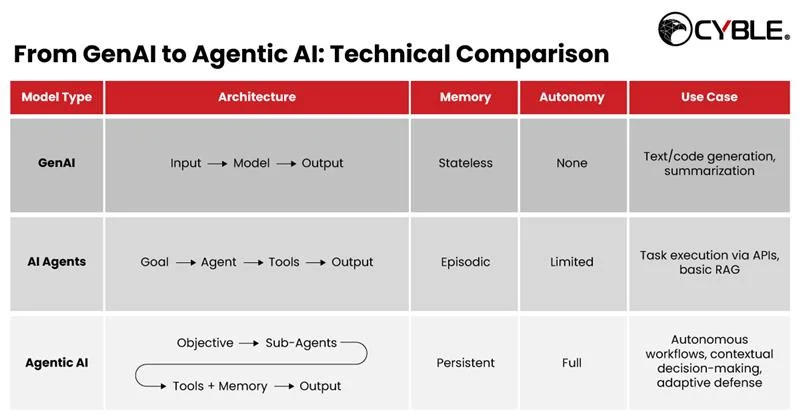
A lot of people confuse agentic AI with generative AI or AI gents. But all three are different.
Generative AI (GenAI) is designed to create content. It responds to inputs by generating outputs like text, images, code, or audio. Tools like ChatGPT or image generators fall into this category. These systems don’t make decisions or take action on their own—they wait for instructions and produce a result based on patterns in the data they’ve been trained on.
AI Agents take this a step further. Instead of just responding, they perform multi-step tasks toward a specific goal. For example, an AI agent might monitor incoming emails, extract calendar invites, and automatically schedule meetings. While still dependent on human-defined objectives, AI agents can manage workflows and make simple decisions within a defined scope.
Agentic AI, however, operates with a higher degree of autonomy. These systems can set their own sub-goals, plan how to reach them, adapt to changes in real time, and improve from feedback. Unlike basic AI agents that need fixed instructions or workflows, agentic AI can function more like a self-directed digital assistant—capable of reasoning, adjusting its behavior, and completing complex tasks without constant supervision.
The key distinction is in control and decision-making: GenAI creates, AI Agents execute, and Agentic AI thinks and acts. Understanding these differences helps clarify where AI is headed—and what kind of systems businesses and users are interacting with today.
How Agentic AI Works
To understand how agentic AI works, think of it as a system with three layers. These systems often combine machine learning, logic-based planning, and even reinforcement learning. They observe, decide, act, and refine.
Below are the three layers of how agentic AI works:
- Goal setting – it understands what needs to be done.
- Planning and decision-making – it figures out how to do it.
- Execution and learning – it takes action and improves.
How to use Agentic AI for cybersecurity

Cybersecurity today is no longer just about detection—it’s about speed, autonomy, and adaptability. This is where Agentic AI makes a significant difference. Unlike traditional security tools that require human intervention at every step, agentic AI systems can identify threats, analyze risk, make decisions, and take action in real time—with minimal oversight.
To use Agentic AI in cybersecurity, organizations typically integrate these systems into their existing security infrastructure. Once deployed, an agentic system can monitor network traffic, user behavior, and system logs to detect anomalies. But instead of simply flagging a threat for review, it can isolate affected systems, patch vulnerabilities, or even reroute network traffic to contain the damage immediately.
For example, in the case of a ransomware attempt, an agentic AI might detect the unusual encryption pattern, cut off access to the compromised endpoint, and begin recovery protocols—all before an analyst even sees the alert. This kind of proactive response drastically reduces dwell time and limits the impact of breaches.
Additionally, these systems continuously learn. Over time, an agentic AI platform can refine its responses based on evolving threats, adjusting its behavior without manual reprogramming. This is particularly useful in combating zero-day attacks, where predefined rule-based systems often fall short.
To get started, organizations should focus on agentic AI tools that integrate with their SIEM (Security Information and Event Management) platforms, EDR (Endpoint Detection and Response) solutions, or cloud security stacks. Most importantly, these systems should be paired with clear governance policies to ensure that autonomous actions are aligned with organizational risk tolerance and compliance requirements.
Agentic AI Examples
Now that we know the agentic AI meaning, let’s understand how it works in real life. Below are a few agentic AI examples to get better understanding:
- Autonomous drones: These can track disaster zones, avoid hazards, and return safely without human control.
- AI cybersecurity agents: Some systems can detect threats, patch vulnerabilities, and adjust firewalls automatically.
- Customer service bots: Advanced bots not only answer queries, it track customer history, solve problems, and escalate only when needed.
Agentic AI Use Cases
The applications of agentic AI are expanding across industries:
- Healthcare: From monitoring patients to recommending treatments.
- Finance: Detecting fraud, managing portfolios, and automating risk checks.
- Logistics: Routing delivery vehicles or managing supply chains.
- Cybersecurity: From detection to response, everything can be done by AI Agents
Benefits of Agentic AI
Why is agentic AI is talk of the town? Because it brings huge benefits. Below are some of the benefits of Agentic AI are:
- Faster decision-making
- Lower operational overhead
- Better user experience
- Increased automation in complex environments
Impact of Agentic AI on Cybersecurity
Agentic AI brings a new layer of intelligence to cybersecurity as well. By operating with a level of autonomy, it can identify threats, make decisions, and act without waiting for manual input. Cyble, for example, provides solutions that combine automation and intelligence to help organizations respond faster and more accurately to threats.
This is a paradigm shift from reactive to proactive cybersecurity. Instead of just flagging risks, agentic AI systems can contain or even neutralize them in real time. The impact? Faster response times, reduced damage, and more efficient use of security resources.
As cyber threats evolve, the ability of agentic AI to learn and adapt continuously offers a major advantage for long-term cyber resilience.
How is Agentic AI Different from Traditional AI?
Think of traditional AI like a really smart assistant—it waits for you to give it instructions.
Agentic AI, on the other hand, is more like a self-driven employee. It doesn’t just wait for commands; it takes initiative. It sets goals, plans how to achieve them, and adapts along the way. While traditional AI is reactive, Agentic AI is proactive.
That’s a huge leap forward in how machines help us solve problems.
How Does Agentic AI Work?
Agentic AI works by combining autonomy, reasoning, and adaptability. Instead of following a script, it makes decisions based on real-time data and its own internal goals.
These systems use advanced algorithms to assess situations, weigh options, and decide the next best action—kind of like how a human would. It’s not just about processing inputs; it’s about acting intelligently without constant oversight.
Autonomous vs Agentic AI: What’s the Difference?
Both autonomous and Agentic AI can operate without human intervention—but here’s the difference: autonomy means acting independently, while agentic behavior involves purposeful decision-making.
An autonomous vacuum cleans your floor without help. An Agentic AI vacuum might decide when to clean based on how dirty the house is, adjust its cleaning route, and even reschedule itself based on your calendar. It’s a more thoughtful kind of autonomy.
Advantages of Agentic AI
The benefits of Agentic AI are pretty exciting. It reduces the need for constant human input, saving time and resources. It also adapts in complex, changing environments, making it useful across industries.
From automating workflows to responding to customer needs in real-time, Agentic AI can take tasks off your plate and handle them efficiently—without being micromanaged.
Disadvantages and Limitations of Agentic AI
Of course, it’s not all smooth sailing. Agentic AI systems are complex and can be expensive to build and maintain.
Because they act independently, there’s also a risk of unpredictable behavior if not properly trained or supervised. Plus, ethical concerns arise—like accountability and control—especially when decisions affect real people.
So, while powerful, Agentic AI still needs thoughtful oversight.
Why Businesses Are Embracing Agentic AI
Businesses are jumping on the Agentic AI bandwagon because it gives them a competitive edge.
These systems can automate decision-making, optimize operations, and respond to customers more effectively than static software. In a world that values speed, personalization, and efficiency, Agentic AI helps companies scale their operations without scaling their teams at the same rate.
How Agentic AI Makes Decisions Autonomously
At its core, Agentic AI uses goals, rules, and learned experiences to make decisions. It doesn’t just follow a fixed program—it evaluates its environment, predicts outcomes, and takes action based on what it believes will get the best result.
Think of it like a digital agent that thinks through choices instead of reacting on impulse.
How Agentic AI Adapts to Uncertain Environments
Life (and business) is full of curveballs, and Agentic AI is built for that. It constantly gathers data, reassesses goals, and pivots when needed.
Whether it’s a supply chain disruption or a sudden market shift, this type of AI can recalibrate and still push toward its objectives.
That adaptability makes it a huge asset in fast-changing industries.
How Enterprises Use Agentic AI for Automation
Companies use Agentic AI to automate complex processes that require judgment, not just routine steps.
For example, in finance, it might analyze trends and execute trades. In customer service, it could handle escalations without needing a human rep.
This kind of smart automation goes beyond just saving time—it also improves accuracy, response times, and overall productivity.
How Agentic AI Is Shaping the Future of Work
Agentic AI is changing the way we work. Instead of replacing people, it often complements them—taking over repetitive or data-heavy tasks while humans focus on strategy, creativity, and complex problem-solving.
As this technology becomes more mainstream, we’ll likely see new roles emerge that revolve around managing, training, and collaborating with AI systems. It’s not just a shift in tools—it’s a shift in how we think about work itself.
Agentic AI in Future
Looking ahead, the agentic AI future scope is wide and promising. As these systems improve, we could see them taking on roles in critical infrastructure, education, governance, and even personal life.
The rise of agentic AI could lead to more resilient digital systems. Businesses may run 24/7 with minimal staff. Threats could be neutralized before humans even notice.
Personal assistants may truly become personal – handling schedules, health, finances, and more.
But this also raises questions.
- How do we ensure safety and control?
- What happens if agentic systems go rogue?
- Who is accountable for their decisions?
These are important to explore as we step into the next phase of agentic AI technology.
Some experts predict that we’ll soon have AI systems that can:
- Run small businesses
- Monitor entire IT ecosystems
- Manage personal health and wellness
Governments, including Australia, are starting to explore guidelines and frameworks to manage this shift. Expect regulations around safety, data use, and decision accountability to grow as AI models with agency become more common.
Conclusion
As this technology advances, the questions around trust, responsibility, and control arises. The real challenge now is not just building smarter systems, but ensuring they act in alignment with human goals.
Whether you are in tech, business, or policy, now is the time to understand what’s emerging, not just to keep up, but to help shape what comes next.