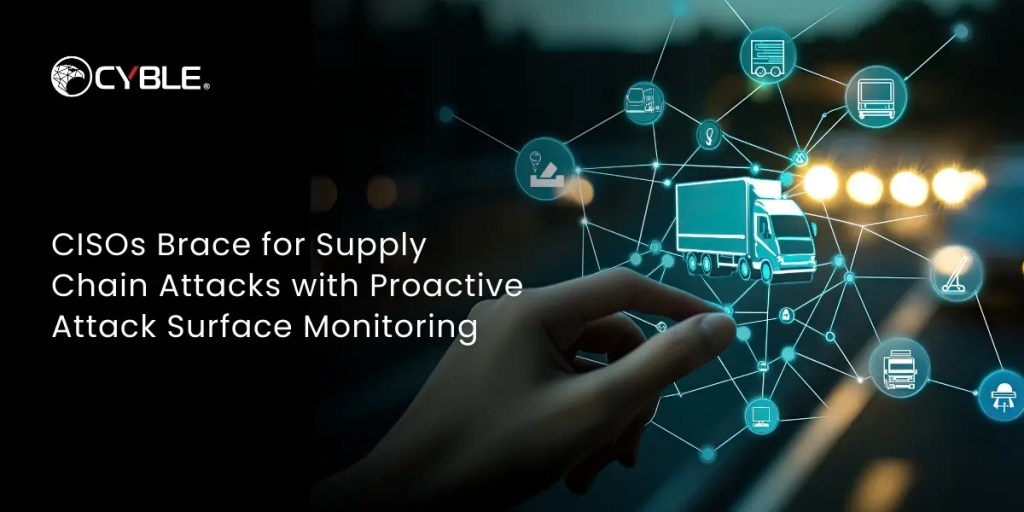
Supply chains have gone way beyond trucks, warehouses, and suppliers. In 2025, which we say is digital-first world, supply chains are linked together through data, cloud services, and third-party software. Connecting these various components increases the speed and efficiency of businesses but also presents new risks.
One unsecured vendor or misconfigured server can open the door for a massive cyberattack. That’s the reason CISOs across many industries are now focused on supply chain attacks and one of the most effective defenses in their arsenal is Attack Surface Monitoring.
In this article we will explore is more detail that why CISOs are paying close attention to supply chain attacks and embracing attack surface monitoring.
Let’s first understand why these supply chain attacks are growing at a rapid pace.
Rise in Supply Chain Attacks
Supply chains tend to multiply risk and this is what make them an attractive target. Rather than breach one major organization directly, attackers target smaller partner organizations that have weaker defenses. Once they gain access, they will move upstream.
For example, imagine a global retailer using a third-party firm to develop its software. If the third-party firm was breached, the attackers could insert malicious code into its applications. Customers who download the applications will unknowingly install malware. This is the ripple effect of supply chain security and why it is of such concern.

Recent years have exhibited a clear trend. Breaches do not always start at the organization being attacked, but in a supply chain relationship – whether that be the organization’s confirmed supply chain, or a supply chain extension. Even a logistics provider, payment processor, or cloud service – if not secured properly – could be the vector of attack.
So, What’s CISO Role in Supply Chain Security
The original task of securing an organization has grown for CISOs, with protecting the internal network only one part of the role. They need to look to the outside, vendors, contractors and third-party partners, and this is where third-party risk takes shape in a security program.
The problem is scale. An enterprise may work with hundreds of vendors. It is not feasible to track each vendor on a manual basis. Continuous and automated monitoring, which is also known as proactive monitoring is necessary to be able to keep up with this part of the risk environment for organizations.
CISOs are framed with the expectation that they identify vulnerabilities in their supply chain before an attacker does. To meet this rising challenge CISOs are seeking out Attack Surface Monitoring.
What Is Attack Surface Monitoring?
Understand Attack Surface Monitoring is like a 24/7 security camera for your organization’s digital footprint. Every system, cloud instance, web application, IoT device, and exposed database are all part of the attack surface. The more complicated and bigger the enterprise, the greater the attack surface.
Instead of waiting for a data breach to happen, attack surface monitoring continuously scans these assets to detect weak points. This continual monitoring is also called continuous monitoring and ensures that blind spots do not remain blind spots for long.
If, for example, a forgotten cloud storage bucket with sensitive data was left open, Attack Surface Monitoring would find it before there are attackers that find it.
How Attack Surface Monitoring Helps Against Supply Chain Attacks
So how does attack surface moniotoring help in real supply chain scenarios? Let’s understand below:
- Visibility Across the Extended Supply Chain: By monitoring vendors, suppliers, and service providers, organizations gain insight into risks beyond their own perimeter.
- Early Detection of Misconfigurations: Many supply chain attacks start with small issues like weak passwords or exposed servers. Attack Surface Monitoring spots these issues early.
- Tracking Third-Party Risk in Real-Time: Partners may unintentionally expose sensitive data in public code repositories or cloud systems. Monitoring tools flag these exposures before attackers exploit them.
- Support for Proactive Response: Instead of reacting after a breach, organizations can shut down vulnerabilities at the source. This is the essence of proactive monitoring.
Attack Surface Management (ASM) in Action
Attack Surface Management also known as ASM is the broader framework that powers monitoring. It focuses on discovering, classifying, and securing assets across digital environments.
ASM goes beyond looking inward. It also keeps watch on external-facing systems that could be leveraged in supply chain attacks. This is often called External Attack Surface Management, and it is vital for supply chain security.
For instance, if a supplier’s exposed email server is identified, the company can take preventive action before attackers use it for phishing campaigns.
The Benefits of Proactive Monitoring
Below are some of the benefits of adopting proactive monitoring which gives organizations several advantages:
- Reduced Third-Party Risk: Vendors are continuously assessed for vulnerabilities.
- Faster Response: Potential attacks are stopped before they escalate.
- Improved Trust: Partners and customers see that the company takes supply chain security seriously.
- Cost Savings: Preventing breaches is far less expensive than cleaning up after one.
One practical example is a manufacturing firm that used continuous monitoring to discover an exposed IoT device within a partner’s network. The device could have been exploited for lateral movement, but proactive detection allowed the risk to be closed quickly.
Dark Web Monitoring: Adding Another Layer
Not all threats come directly from exposed systems. Many begin as discussions or sales on underground forums. Attackers often trade access credentials, leaked source code, or stolen data from supply chain vendors.
This is where dark web monitoring becomes valuable. By scanning hidden forums and marketplaces, organizations gain visibility into risks before they escalate into full-scale breaches.
For example, Cyble’s Dark Web Monitoring solution looks into underground spaces where attackers plan or sell stolen data. It analyzes posts, leaked databases, and even chatter about vulnerabilities. This information provides CISOs with an early warning system, helping them understand where their organization—or its supply chain partners—might be exposed.
The Human Element in Supply Chain Security
Technology is vital, but supply chain security is also about people. Even the best attack surface monitoring systems cannot prevent mistakes if vendors ignore security basics. CISOs must ensure strong collaboration with partners.
This includes regular audits, awareness training, and enforcing contractual security standards. The idea is to make supply chain security a shared responsibility, not a one-sided effort.
Continuous Monitoring as a Standard
The digital landscape changes daily. New vendors join, cloud services are spun up, and applications are updated. Without continuous monitoring, organizations may miss critical changes in their attack surface.
For CISOs, this means making attack surface monitoring a standard practice—not an occasional audit. The focus should be on building resilience, not just compliance.
Conclusion
Supply chain attacks will continue to rise because attackers know that one weak link can open doors to many targets. For modern organizations, especially those with complex vendor ecosystems, the solution lies in visibility and early detection.
Attack Surface Monitoring gives CISOs that visibility. By combining attack surface management (ASM), external attack surface management, proactive monitoring, and continuous monitoring, organizations can secure not just themselves but their entire extended supply chain.
When paired with insights from dark web monitoring, the approach becomes even stronger. It’s no longer about reacting after a breach. It’s about staying one step ahead.
In the end, the goal for CISOs is clear: protect the business by reducing blind spots, securing third-party connections, and ensuring the supply chain remains a bridge for growth—not a gateway for attacks.