Cyber threats today are faster, more coordinated, and increasingly difficult to detect. Security teams are no longer struggling with a lack of data—they are overwhelmed by it. Alerts flood dashboards, intelligence remains siloed, and response times lag behind attacker speed.
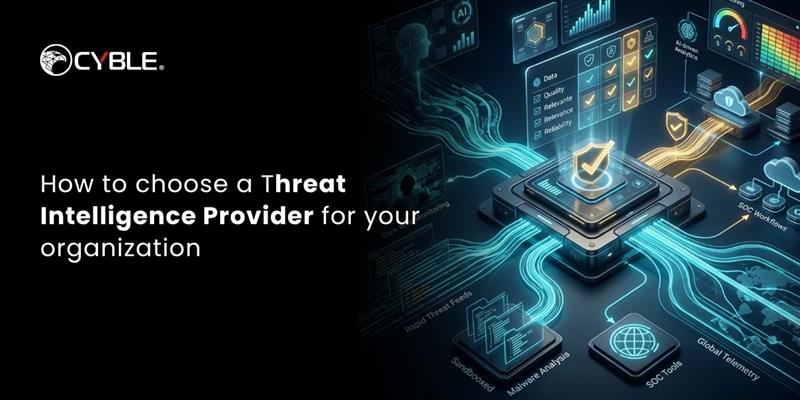
This is why understanding How to choose a threat intelligence provider has become a critical priority for modern organizations. The right provider doesn’t just supply intelligence—it enables security teams to act on it in real time.
Choosing the wrong provider, on the other hand, results in more noise, slower response, and missed threats.
Why Choosing the Right Provider Matters
Many organizations invest in threat intelligence but fail to operationalize it. Intelligence often sits in dashboards, disconnected from daily workflows. Analysts spend more time investigating than responding.
A structured approach to threat intelligence vendor evaluation helps organizations avoid this gap. It ensures that intelligence is not only consumed—but embedded into security operations.
The goal is simple: Move from data-heavy security to intelligence-driven execution.

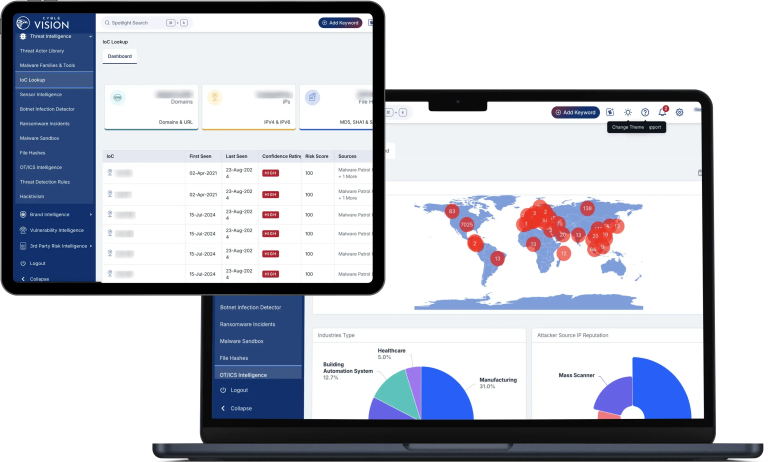
Platforms like Cyble Vision are designed with this principle in mind—transforming raw intelligence into actionable outcomes that directly support SOC workflows.
Start with a Clear Understanding of Your Needs
Before comparing vendors, organizations must define their own requirements. A successful CISO threat intelligence buying guide always begins with internal clarity.
Ask:
- What are the biggest challenges facing your SOC?
- Where are the visibility gaps?
- What types of threats impact your organization most?
- How quickly can your team respond today?
This step ensures that your evaluation is aligned with real operational needs—not just vendor claims.
Define Strong Provider Selection Criteria
A key part of threat intelligence provider selection criteria is understanding what truly differentiates one provider from another.
1. Intelligence Quality Over Quantity
High volumes of data are meaningless without context. The provider should deliver:
- Relevant intelligence tailored to your industry
- Context around threats, not just indicators
- Accurate and timely insights
2. Real-Time Intelligence Delivery
Speed is critical. Intelligence must be delivered in real time to:
- Detect threats early
- Enable faster response
- Reduce dwell time
3. Actionable Insights
The provider should help answer:
- What is the threat?
- Why does it matter?
- What should be done next?
Cyble, for example, focuses on delivering contextual intelligence that directly supports decision-making—bridging the gap between insight and action.
Evaluate Integration and Operational Fit
A major factor in threat intelligence vendor evaluation is how well the platform integrates into existing systems.
A strong provider should seamlessly connect with:
- SIEM platforms
- SOAR tools
- Incident response workflows
This ensures intelligence is not consumed separately but becomes part of daily operations.
Platforms like Cyble emphasize deep integration, enabling intelligence to flow directly into SOC environments—improving prioritization and accelerating response.
Assess Automation and AI Capabilities
Manual processes cannot keep up with modern threats. Automation is no longer optional—it is essential.
As part of your threat intelligence vendor due diligence, evaluate:
- AI-driven enrichment and scoring
- Automated alert prioritization
- Continuous learning capabilities
AI should enhance analyst efficiency, not replace it.
Cyble’s AI-driven approach helps reduce noise and automate key processes, allowing security teams to focus on high-impact threats.
Consider Managed vs Platform-Based Intelligence
Organizations must decide whether they need a platform, a service, or both.
A managed threat intelligence provider can be valuable for organizations that:
- Lack in-house expertise
- Need continuous monitoring
- Require external analysis support
However, modern platforms like Cyble Vision combine automation with intelligence delivery, reducing dependency on fully managed services while still enabling scalability.
The right choice depends on your team’s maturity and operational capacity.
Look for Comprehensive Threat Coverage
Threats exist beyond traditional perimeters. A strong provider must offer visibility across:
- Surface web
- External digital assets
This ensures:
- Early detection of data leaks
- Monitoring of brand impersonation
- Identification of emerging threats
Cyble’s unified approach to threat intelligence provides visibility across multiple environments—helping organizations detect risks before they escalate.
Focus on Actionability Over Visibility
Many providers focus on visibility—showing where threats exist. But visibility alone is not enough.
The real value lies in actionability:
- Prioritized alerts
- Automated workflows
- Clear response recommendations
Understanding How to choose a threat intelligence provider means prioritizing platforms that enable action—not just awareness.
Ensure Scalability and Future Readiness
Your organization’s security needs will evolve. The provider you choose must scale with you.
Consider:
- Ability to handle increasing data volumes
- Flexibility to support new use cases
- Continuous innovation and updates
A future-ready provider ensures long-term value and adaptability.
Evaluate Usability and Analyst Experience
Adoption depends on usability. If a platform is complex, analysts will avoid it.
Look for:
- Intuitive dashboards
- Simplified workflows
- Clear visualization of threats
Cyble focuses on usability by delivering actionable intelligence in a format that is easy for analysts to consume and act upon.
Common Mistakes to Avoid
During threat intelligence vendor due diligence, organizations often make avoidable mistakes:
Choosing Based on Features Alone
Features do not guarantee operational success.
Ignoring Integration Requirements
Disconnected tools reduce efficiency.
Overlooking Automation
Manual workflows slow down response.
Not Defining Clear Criteria
Lack of structured threat intelligence provider selection criteria leads to poor decisions.
Underestimating Long-Term Value
Short-term savings can result in long-term risk.
Avoiding these mistakes improves the effectiveness of your investment.

A New Approach to Threat Intelligence
The role of threat intelligence is changing. It is no longer just about collecting data—it is about enabling continuous security operations.
Organizations are shifting toward:
- Intelligence-driven SOC workflows
- Real-time threat detection
- Automated response capabilities
- Unified security ecosystems
Cyble represents this shift by combining threat intelligence, digital risk protection, and automation into a single platform—helping organizations move from reactive defense to proactive security.

Final Thoughts
Understanding How to choose a threat intelligence provider is essential for building a resilient security strategy.
The right provider will not just deliver intelligence—it will transform how your organization:
- Detects threats
- Prioritizes risks
- Responds to incidents
A structured approach to threat intelligence vendor evaluation, supported by clear threat intelligence provider selection criteria, ensures that your decision aligns with both current needs and future goals.
Whether evaluating a managed threat intelligence provider or a platform-driven solution, the focus should remain on operational impact.
In the end, the best providers are those that turn intelligence into action—and help security teams stay ahead of evolving threats with confidence.