Cyber or cybersecurity threats refer to any malicious activity that damages, steals or disrupts data and digital operations. Cyber threats include data breaches, virus injection, Denial of Service (DDoS) attacks, and other types of cyber security threats.
Cyber threats also include the risk of a successful attack intended to gain unauthorized access, compromise, damage, or steal IT assets, computer networks, intellectual property, or other sensitive information. These threats can originate internally from trusted individuals or externally from unknown sources.
Understanding these cybersecurity threats is crucial for developing effective defense strategies and safeguarding sensitive information from unauthorized access and damage. Cyber security threat prevention plays a key role in reducing the risk of these threats and mitigating their potential impact.
As technology advances, the complexity of these cyber threats continues to evolve, making it imperative for individuals and organizations to stay vigilant and proactive in their cybersecurity measures.
Where do Cyber Threats Come From?
Cyber threats originate from various sources, each with its own motivations and methods. Here are some key origins of cyber threats:
- Malicious Actors: Individuals or groups with malicious intent, such as hackers, cybercriminals, and activist groups, often seek to exploit vulnerabilities for personal gain or political motives. They may use tactics like malware, ransomware, and phishing to compromise systems and steal data.
- Organized Crime: Cybercriminal organizations operate with a structured approach, often engaging in sophisticated attacks such as identity theft, financial fraud, and large-scale data breaches. They frequently use advanced tools and techniques to evade detection.
- Nation-State Actors: Governments or state-sponsored entities may engage in cyber espionage, aiming to gather sensitive information or disrupt the operations of other nations. These threat actors use advanced, often covert, methods to achieve strategic objectives.
- Insiders: Employees, contractors, or partners with legitimate access to an organization’s systems can pose a threat if they misuse their access, whether intentionally or unintentionally. Insider threats can lead to data leaks, fraud, or system sabotage.
- Hacktivists: Individuals or groups driven by ideological or political agendas may launch cyberattacks to protest or promote causes. Their activities can include website defacement, denial-of-service attacks, and data leaks.
Common Sources of Cyber Threats
Cyber threats can originate from various sources, each posing distinct risks to digital security. Understanding these sources is essential for effective defense. Here are some common origins of cyber threats:

- Malicious Software (Malware): This includes viruses, worms, trojans, and ransomware designed to infiltrate, damage, or disrupt systems. Malware can be delivered through email attachments, infected websites, or compromised downloads.
- Phishing Attacks: These involve deceptive emails or messages crafted to trick individuals into revealing sensitive information, such as login credentials or financial details. Phishing often masquerades as legitimate communication from trusted entities.
- Insider Threats: These arise from employees, contractors, or partners who misuse their access to data, either maliciously or through negligence. Insider threats can lead to significant data breaches and security incidents.
- Social Engineering: This tactic manipulates individuals into divulging confidential information or performing actions that compromise security. It often involves impersonating trusted figures or creating fake scenarios to deceive targets.
- Unpatched Software and Vulnerabilities: Cybercriminals exploit flaws in outdated or unpatched software to gain unauthorized access or launch attacks. Regular updates and patches are crucial for mitigating these risks.
- Distributed Denial of Service (DDoS) Attacks: These attacks overwhelm systems with excessive traffic, causing disruption or downtime. DDoS attacks are often used to target websites or online services, rendering them inaccessible.
Understanding these sources helps organizations implement appropriate security measures, such as employee training, software updates, and strong cybersecurity protocols, to defend against evolving cyber threats.
Types of Cyber Threats
Various types of cybersecurity threats pose significant risks to data integrity and system functionality. Understanding these threats is crucial for developing effective defense strategies and safeguarding sensitive information. These threats can be grouped into several cyber threat categories, such as:
- Malware: Malicious software like viruses, worms, and ransomware designed to damage or disrupt systems, steal data, or gain unauthorized access. Examples include ransomware that encrypts files and demands a ransom for decryption.
- Phishing: A deceptive practice where attackers impersonate legitimate entities through emails or messages to trick individuals into revealing sensitive information or clicking on malicious links. It often leads to identity theft or unauthorized access to accounts.
- DDoS Attacks: Attacks that overwhelm a system, server, or network with excessive traffic, causing it to become slow or unavailable. They disrupt online services and can cause significant downtime.
- Man-in-the-Middle Attacks: These attacks involve intercepting and altering communications between two parties without their knowledge. This can lead to data breaches and unauthorized access to sensitive information.
- Insider Threats: Risks posed by individuals within an organization who misuse their access to data for malicious purposes or inadvertently cause harm. This includes employees or contractors who leak confidential information or mishandle data.
- Zero-Day Exploits: Attacks that target vulnerabilities in software or hardware before the developers have issued a patch or fix. These zero-day exploits can lead to severe breaches and are difficult to defend against.
- Credential Stuffing: An attack where stolen usernames and passwords are used to gain unauthorized access to accounts on various websites or systems. It exploits the common practice of using the same credentials across multiple platforms.
- SQL Injection: A type of attack where malicious SQL code is inserted into a query, allowing attackers to access, modify, or delete data from a database. It can lead to data breaches and unauthorized data manipulation.
How to Protect Against and Identify Cyber Threats
Protecting against and identifying cyber threats requires a multi-layered approach combining technology, processes, and awareness. Key strategies include:
- Implement Strong Security Measures: Use antivirus software, firewalls, and intrusion detection systems to shield your network from threats. Ensure that all systems and applications are updated regularly to patch known vulnerabilities.
- Adopt Strong Authentication Practices: Employ multi-factor authentication (MFA) and enforce strong password policies to make unauthorized access more difficult.
- Educate and Train Employees: Regularly train employees on recognizing phishing attempts, handling sensitive information, and following best security practices to reduce human error.
- Monitor and Analyze Systems: Continuously monitor network traffic and system activity for unusual patterns that could indicate a breach. Use security information and event management (SIEM) tools to analyze and respond to potential threats.
- Establish a Response Plan: Develop and regularly update an incident response plan to ensure a swift and coordinated reaction to any detected threats.
By integrating these measures, organizations can significantly enhance their ability to detect and defend against cyber threats effectively.
Biggest Cyber Threats in 2024
As global cybercrime costs are projected to exceed $24 trillion by 2027, businesses must be aware of key cyber threats in 2024:
- Third-Party Exposure- Cybercriminals target less-secure third-party vendors to breach larger organizations. In early 2024, a breach at AT&T exposed data of over 70 million customers. With 29% of breaches in 2023 linked to third parties, this threat is growing rapidly.
- Configuration Mistakes- Misconfigured systems, such as using weak passwords or outdated software, expose networks to attacks. A 2023 report found over 8,000 servers vulnerable due to configuration errors, highlighting the need for proper setup and frequent updates.
- Artificial Intelligence (AI) Cyber Threats- AI-driven attacks are becoming more sophisticated and frequent. Cybercriminals leverage machine learning to find vulnerabilities, while personalized phishing attacks have surged. However, AI is also helping organizations enhance security defenses.
- DNS Tunneling- DNS tunneling is a common method where attackers hide malicious data within normal-looking traffic to bypass firewalls. This low-skill but highly effective technique poses a serious risk to businesses.
These evolving threats in 2024 call for stronger security measures to stay ahead of cybercriminals.
Cyber Security Solutions by Cyble
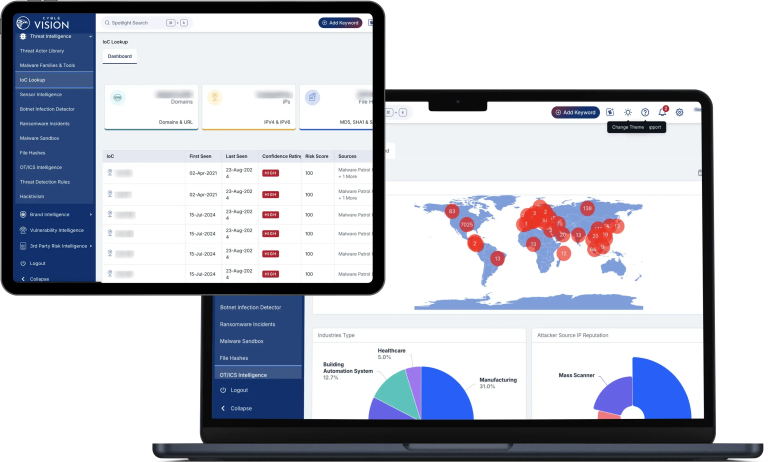
Cyble offers cutting-edge cybersecurity solutions powered by artificial intelligence for cybersecurity, enabling organizations to stay ahead of evolving cyber threats. Through AI-driven platforms, Cyble uncovers critical insights across the deep web, dark web, and surface web, empowering businesses to proactively manage their cyber risks. Cyble Vision, their flagship product, provides advanced threat intelligence that swiftly identifies and responds to cyber incidents, helping to minimize damage and ensure robust defense in an ever-changing digital environment.
FAQs About What are Cybersecurity Threats
Why is it necessary to protect against cyber threats?
Protecting against cyber threats is crucial to safeguard sensitive information and maintain the integrity of digital systems. Effective protection helps prevent data breaches, financial loss, and damage to an organization’s reputation.
Is virus a cyber threat?
Yes, a virus is a type of cyber threat that can infect and damage computers, steal data, or disrupt system operations. It is a malicious software designed to cause harm to digital systems.
What are cyber risks?
Cyber risks refer to potential threats and vulnerabilities that could lead to unauthorized access, data breaches, or disruptions in digital systems. These risks include malware, phishing attacks, and insider threats.
What are the most common cybersecurity threats?
Some of the most common cybersecurity threats include:
– Phishing attacks
– Malware (viruses, worms, ransomware)
– Denial-of-Service (DoS) and Distributed Denial-of-Service (DDoS) attacks
– Insider threats
– Advanced Persistent Threats (APTs)
– Zero-day exploitsHow do cybersecurity threats impact businesses?
Cybersecurity threats lead to financial losses, reputational damage, and operational disruptions. They can also result in regulatory penalties, loss of intellectual property, and increased security costs.
What is the difference between a cybersecurity threat and a vulnerability?
A cybersecurity threat is a potential danger, like malware or phishing, that targets systems. A vulnerability is a weakness, such as outdated software, that threats exploit to cause harm.
How can cybersecurity threats be prevented?
Use strong passwords, update software regularly, enable firewalls, and educate users about phishing and malware risks.
What are examples of cybersecurity threats?
Examples of cybersecurity threats include phishing, ransomware, malware, insider threats, and Distributed Denial of Service (DDoS) attacks, all of which target systems, data, and individuals.
How do hackers exploit cybersecurity threats?
They exploit vulnerabilities in software, weak passwords, or unpatched systems to gain unauthorized access or steal data.
What are the types of cybersecurity threats?
Cybersecurity threats include malware, phishing, ransomware, insider threats, and advanced persistent threats (APTs).