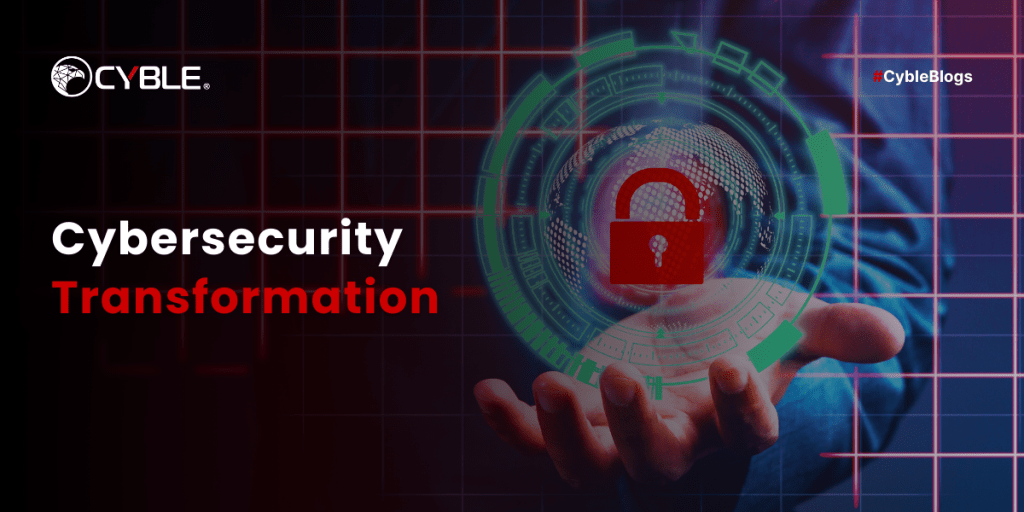
Cybersecurity transformation involves implementing a holistic cybersecurity strategy that includes multiple components, such as risk management, cyber threat intelligence, incident response planning, security governance, regulatory compliance, and security awareness training.
At its core, cybersecurity transformation aims to integrate cybersecurity practices seamlessly into all facets of a business, ensuring alignment with the overarching goals of digital transformation.
Why Is Cybersecurity Transformation Important?
Investing in cybersecurity has become crucial as trends like hybrid work models, cloud security, artificial intelligence, machine learning, and IoT security continuously reshape the business landscape.
Cybersecurity transformation enables companies to stay ahead of adversaries by modernizing, integrating, and consolidating essential components of an effective cybersecurity strategy. This includes network and IoT security, cloud security, threat intelligence, SIEM, IAM, multifactor authentication, and more.
Additionally, it fosters a company-wide culture of cybersecurity through awareness training, incident response planning, compliance audits, security governance, adherence to cybersecurity frameworks, and the implementation of a zero-trust model.
Critical Components of Cybersecurity Transformation
Cybersecurity transformation is a comprehensive process to enhance an organization’s security posture to protect against evolving cyber threats. The top five key components of cybersecurity transformation include:

Risk Assessment and Management:
Regular and comprehensive risk assessments are crucial for identifying vulnerabilities and potential threats. This process entails assessing the likelihood and impact of various cyber risks and implementing measures to address them. Risk management should be ongoing, with updates made to accommodate shifts in the threat landscape and the organization’s operational context.
Security Architecture and Implementation:
Developing a strong security architecture is essential for protecting critical assets. This includes designing and implementing layered defenses, such as firewalls, intrusion detection/prevention systems (IDS/IPS), and secure network configurations. Implementing a zero-trust model, which operates on the premise that no entity within or outside the network should be automatically trusted, improves overall security.
Governance, Risk, and Compliance (GRC):
A comprehensive GRC framework helps ensure security practices comply with relevant laws, regulations, and standards. It includes creating policies and procedures, performing regular audits, and maintaining documentation to demonstrate compliance. Effective governance ensures that security initiatives align with business objectives and risk tolerance.
Security Awareness and Training:
Human error is one of the major factors found in many security breaches. Providing ongoing security awareness and training programs for employees at all levels helps foster a security culture. Training should cover phishing prevention, safe internet practices, and recognizing social engineering tactics. Regularly updating training materials to address new threats and conducting simulated attacks can enhance preparedness.
Incident Response and Recovery:
A clearly defined and thoroughly tested incident response plan is vital for promptly and efficiently managing security incidents. This plan encompasses establishing an incident response team, delineating roles and responsibilities, and outlining procedures for detecting, reporting, and addressing incidents. A robust disaster recovery plan also ensures that the organization can restore operations and data integrity following a significant security event.
Implementing these key components provides a holistic approach to cybersecurity transformation, ensuring that organizations can effectively adapt to and mitigate emerging threats.
How to Implement Cybersecurity Transformation?
Cybersecurity transformation typically requires strong support from top executives and board members, as it impacts security technologies, business processes, and corporate culture.
Key steps for a successful cybersecurity transformation include:
Executive Commitment:
Securing commitment from top management to create a comprehensive cybersecurity strategy that aligns with digital transformation goals.
Comprehensive Assessment:
Perform a comprehensive assessment of existing cybersecurity technologies and vulnerabilities, addressing aspects such as risk management, cloud security, IoT security, network security, threat intelligence, vulnerability management, artificial intelligence in cybersecurity, and cybersecurity frameworks.
Stakeholder Engagement:
Engaging key stakeholders, such as employees, executives, IT personnel, SOC teams, and, where applicable, customers and partners across the supply chain and broader ecosystem.
Technology Partnerships:
Collaborating with key IT and cybersecurity technology partners.
Prioritization and Goal Setting:
Establishing priorities and setting goals, including timelines, budgets, and risk management profiles, while ensuring regulatory compliance and preparing for compliance audits.
Roadmap Development and Communication:
Creating a cybersecurity transformation roadmap and regularly communicating progress, goals, and timelines to stakeholders.
Ongoing Audits and Assessments:
Performing continuous security audits and assessments.
Measuring Results:
Assessing outcomes whenever feasible, with a focus on enhanced risk management and key performance indicators (KPIs) like speed to market or accomplishments in digital transformation.
Advantages/Benefits of Cybersecurity Transformation
Mitigates Risk:
Cybersecurity Transformation significantly decreases your vulnerability to emerging cyber threats that can severely impact your organization and harm your reputation.
Confidently Embrace Digital Transformation:
Secure your new digital assets and the critical customer data they handle while maintaining your rapid pace of innovation.
Control Costs:
Protect your organization and safeguard your customers in an increasingly complex business ecosystem, all at an affordable price.
Enhance Operational Resilience:
Develop a technology infrastructure that can withstand cyber-attacks and adapt to rapid changes in work methods without compromising security.
Challenges and Barriers to Cybersecurity Transformation
Scarcity of Security Expertise:
More skilled cybersecurity professionals necessitate intuitive and adaptable tools that simplify analyst onboarding and training. These tools enable security teams to scale their efforts and perform essential security functions more efficiently than ever.
Implementing New Technologies:
Integrating cutting-edge security solutions into your infrastructure requires careful planning and precise execution to ensure minimal disruption.
Alignment with Business Goals:
Effective communication and cross-departmental collaboration is essential to aligning cybersecurity transformation objectives with overall business goals.
Future Trends in Cybersecurity Transformation
Cybersecurity is a dynamic challenge, constantly evolving with new vulnerabilities arising from hybrid work setups, IoT, and AI. As adversaries adapt, organizations must transform technologically and culturally to stay ahead.
Cybersecurity transformation establishes a robust foundation for organizations to become faster, more efficient, and more confident in navigating this ever-changing threat landscape. It equips them to address current challenges and anticipate future trends, including:
– Expansion of multi-cloud environments
– Hybrid and remote work dynamics
– Enhanced digital supply chains
– IoT security concerns
– Identity and access management (IAM) strategies
– Integration of artificial intelligence, like ChatGTP
By embracing cybersecurity transformation, organizations can seamlessly integrate advancements in security technologies into their environments. This approach enables a zero-trust framework and embeds cybersecurity strategy into overall business strategies.
Business leaders can confidently make informed decision, assured that cybersecurity risk management, regulatory compliance, and security governance have been seamlessly integrated into the decision-making process. This promotes attentiveness to customers’ and employees’ requirements and stimulates innovation, shifting cybersecurity from a possible hindrance to a facilitator of business operations.
Cybersecurity Transformation with Cyble
In the face of increasingly intricate threats and a shifting attack landscape, IT and security teams require comprehensive visibility into unfolding processes within their environment. The Cyble Vision platform empowers organizations in their cybersecurity journey by streamlining IT and security workflows through a unified platform. Utilizing cutting-edge AI capabilities, it provides real-time indicators of attack and top-tier threat intelligence.
The Vision platform stands out by seamlessly integrating technology, intelligence, and expertise, offering holistic security coverage across key areas of enterprise risk: endpoints, identity, and data.
Cybersecurity Transformation FAQs
Does cybersecurity transformation align with digital transformation?
No, cybersecurity transformation is not just a tool; it’s a strategic approach aimed at enhancing an organization’s overall cybersecurity posture and resilience.
Is cybersecurity transformation merely a tool?
No, cybersecurity transformation is not just a tool; it’s a strategic approach aimed at enhancing an organization’s overall cybersecurity posture and resilience.
Is it necessary for all organizations to undergo cybersecurity transformation?
Given the increasing frequency of cyberattacks, the significance of cybersecurity transformation cannot be overstated. Organizations with robust cybersecurity frameworks encounter fewer disruptions, achieve improved customer outcomes, and generate higher revenue.
Is cybersecurity consolidation a part of cybersecurity transformation?
Indeed, cybersecurity transformation incorporates numerous strategic initiatives, such as consolidating security tools through a platform-based approach. This enhances an organization’s risk management capabilities while streamlining its security infrastructure.