
Overview
H3C4KEDZ is a Cambodia-based hacktivist known for its focus on website defacements and distributed denial-of-service (DDoS) attacks, primarily targeting Thailand. Having operated since at least September 2023, this individual or group has ties to organizations such as TermuxZero and CyberTeam0. Beyond defacements and DDoS campaigns, H3C4KEDZ, also known by aliases such as CyberTeam0, TermuxZero, We_H3c4kedz, and h3c4kedz0, has demonstrated capabilities in exploiting Cross-Site Scripting (XSS) vulnerabilities by injecting external JavaScript payloads into web applications.
Geographic and Sectoral Focus
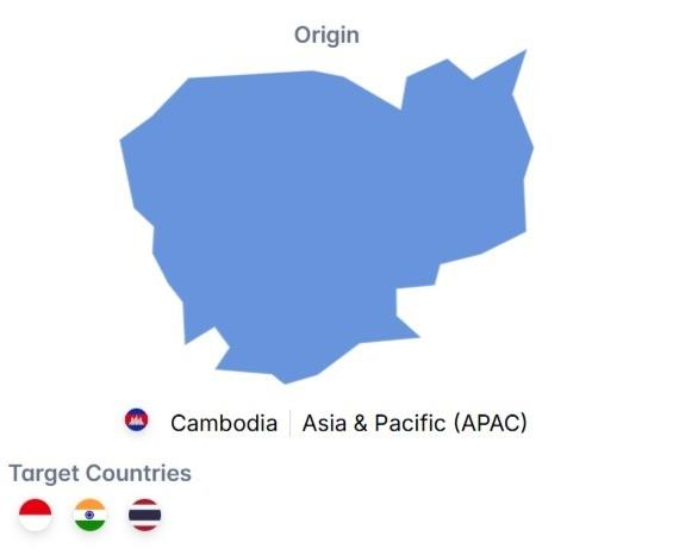
Originating from Cambodia, H3C4KEDZ operates predominantly within the Asia-Pacific region, with reported targets in Thailand, Indonesia, and India. Their attacks affect a wide array of industries, including:
- Consumer Goods
- Education
- Energy and Utilities
- Government and Law Enforcement Agencies (LEA)
- Information Technology and IT Enabled Services (ITES)
This broad targeting suggests an intent to disrupt critical infrastructure and services that hold social and economic significance in the region.
Linked Groups and Associations
H3C4KEDZ is associated with other hacktivist entities, notably:
- Mr.Kxichixx: A Cambodia-based group known mainly for DDoS operations.
- Wolf Cyber Army: An Indonesian collective that initially gained attention for leaking personal data, though much of this appeared to be recycled from prior breaches. Since 2024, Wolf Cyber Army has shifted focus toward DDoS attacks and website defacements. Due to repeated bans on public platforms like Telegram, they now operate mainly through private channels, maintaining coordination while evading scrutiny. Despite these challenges, they remain active in targeting diverse online platforms.
Attack Methods and Techniques
H3C4KEDZ and allied groups commonly begin their operations by exploiting vulnerabilities in publicly accessible systems, such as websites, cloud services, and databases. These weaknesses typically arise from software bugs, configuration errors, or inadequate security measures, allowing adversaries initial access.
Once inside a system, attackers may leverage flaws in widely used software—web browsers, office productivity suites, or third-party tools—to execute malicious code. Such exploits often require some form of user interaction, like opening a malicious attachment, but can also occur silently during normal browsing.
Operational goals frequently include:
- Website Defacement: Altering the visual content of targeted sites to broadcast propaganda or intimidate.
- Distributed Denial-of-Service (DDoS) Attacks: Overwhelming servers and networks with traffic, often using botnets or spoofed IP sources, to disrupt service availability.
Before attacks, thorough reconnaissance is typical. Adversaries gather information on target identities, network infrastructures, and system details, ranging from personal data to login credentials, to customize and enhance subsequent intrusions.
Mitigations and Recommendations
To protect against H3C4KEDZ and similar hacktivist threats, organizations are encouraged to implement multi-layered defense strategies focusing on web, network, and operational security:
- Web Security Measures: Keep servers updated, use input validation and CSP to block XSS, and deploy WAFs to stop malicious traffic.
- DDoS Protection: Use traffic filtering, rate limiting, load balancing, cloud-based DDoS protection, and regularly test incident response plans.
- Reconnaissance Risk Reduction: Restrict public access to sensitive information, enforce strong access controls with MFA, and monitor logs and threat intelligence for suspicious activity.
- Endpoint and Network Security: Use endpoint protection and network segmentation, regularly back up data, and enforce application whitelisting to control software use.
- Disrupting Adversary Coordination: Monitor threat actor communications channels and collaborate with law enforcement agencies to counter coordinated campaigns.
Conclusion
H3C4KEDZ represents a modern hacktivist active in the Asia-Pacific region, combining website defacements, DDoS attacks, and advanced web exploits like XSS to target key sectors in Thailand, Indonesia, and India. This persistent threat highlights the need for vigilant, proactive cybersecurity measures. Cyble, a leader in AI-driven, intelligence-focused cybersecurity, offers advanced solutions to help organizations detect, defend, and stay ahead of such evolving cyber threats with real-time visibility and autonomous protection.
Schedule a free demo with Cyble to experience cutting-edge defense against actors like H3C4KEDZ.
MITRE ATT&CK Techniques Associated with H3C4KEDZ
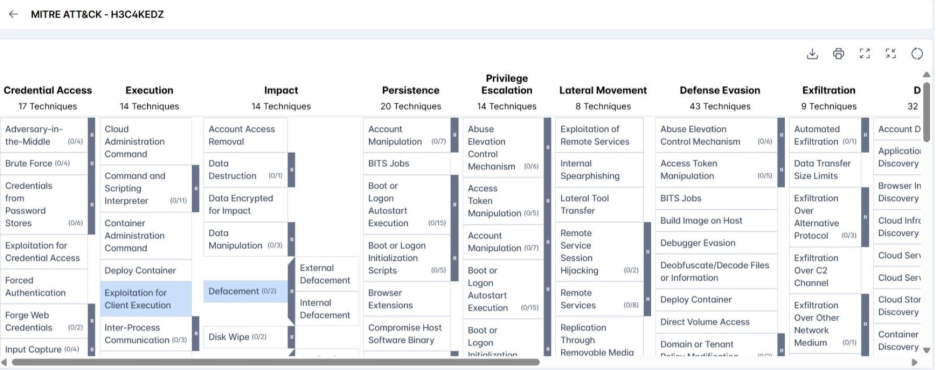
- Exploit Public-Facing Application (T1190): Attackers exploit vulnerabilities or misconfigurations in internet-facing systems like websites, databases, and cloud infrastructure to gain initial access.
- Exploitation for Client Execution (T1203): Attackers exploit software flaws in client applications—such as browsers, office tools, or third-party apps—to execute malicious code remotely.
- Defacement (T1491): Adversaries alter website or internal visual content to deliver messages, intimidate, or claim credit, often using offensive images to pressure victims.
- Network Denial of Service (T1498): Attackers overwhelm network bandwidth with malicious traffic to disrupt access to services like websites, email, or DNS, often using spoofing and botnets.
- Endpoint Denial of Service (T1499): Attackers exhaust system resources or cause crashes on endpoint devices hosting services, disrupting availability without saturating the network.
- Gather Victim Identity Information (T1589): Adversaries collect personal and sensitive data, including credentials and MFA details, through phishing, probing, and public data to enable further attacks.
- Gather Victim Host Information (T1592): Attackers gather detailed information about victim systems to aid in targeting and planning subsequent phases of the attack.