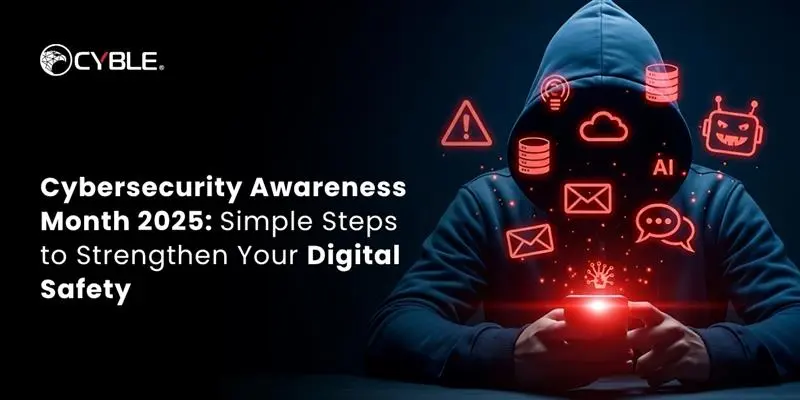
October is the commencement of Cybersecurity Awareness Month 2025, and a good reminder, whilst another call to action for all of us to do our part to safeguard the digital space. The theme for this year’s campaign, which is sponsored by the Cybersecurity and Infrastructure Security Agency (CISA), looks at protecting the critical systems that we rely on every day, and that must be trustworthy to function, whether that be our water, health care, financial transactions or our communication networks.
The Secretary of Homeland Security Kristi Noem stated that cooperation between the public and private sectors is essential in any war against cyberspace. Besides that, cyber security starts with basic activity that everybody can perform. To quote her, “Cybersecurity is just as critical a theater as our defense of the Homeland. Every day, bad actors are working to steal our information, sabotage critical infrastructure, and exploit citizens.”
The 2025 CISA slogan “Secure Our World” urges the public, businesses and governments to be vigilant in keeping their digital environments safe – security is everybody’s job. And that is the main goal of Cybersecurity Awareness Month – making people strong enough to defend themselves and the critical infrastructure that allows us to live in society.
Even as technology is improving and technology innovation accelerates, human decisions and actions represent our greatest vulnerability. This engagement – protecting your digital space with habits, is small and powerful. For example – one small but powerful habit is enabling multi-factor authentication (MFA)- also referred to as two-factor authentication or 2FA. This simple addition provides another layer of protection beyond just your password.
Best Practices for Digital Safety
In the field of cybersecurity, the experts have mentioned some practices that can really increase your safety level in the digital world:
- Enable Multi-Factor Authentication (MFA): This option is always going to be a lifesaver as it will put a second layer of security on your account. It will ask for a method of verification that is more secure than just a simple password entering. To illustrate, when you finish typing your password correctly, you will get a pop-up asking for a verification code that has already been sent to your phone in order to let you into your account. The acceptance of Multi-Factor Authentication not only but also reduces the chance of your device being compromised.
- Use Strong Passwords: Strong passwords start from their length as they should be at least 8 characters long. Also, avoid using easily guessed passwords such as “password” or “123456”. It is always a good idea to include uppercase letters, lowercase letters, numbers, and special symbols in your passwords. One other thing to consider is the use of a password manager that can generate and keep complicated and very secure passwords.
- Regularly Update Software: Updating software is another way to protect your devices by making sure you are getting the latest security patches that fix the known vulnerabilities. Keep the automatic updates on for your devices so that you can always be one step ahead of the attackers.
- Identify and Report Phishing Attacks: Be suspicious of unsolicited emails, texts, or other communications that ask for personal or sensitive information. If something seems suspicious, verify the identity of the sender before clicking on links or opening attachments.
- Secure Your Devices: Using reputable antivirus software and firewalls is one of the best methods to protect your devices from malicious attacks. Scan your devices frequently and ensure your protection software is turned on and current.
- Practice Good Cyber Hygiene: Back up important data, do not perform sensitive transactions while connected to public Wi-Fi, and be mindful of what information you share online.
The Contribution of Organizations to Cybersecurity
Organizations play a crucial role in enhancing the cybersecurity culture. These activities are only a few of the measures that organizations can take to ensure cybersecurity. They are also responsible for having a security incident response plan in place for the case of data or network infiltration.

Taking a step further, while many companies might present cybersecurity as their primary tool, Cyble goes a full mile with its “in the wild” threat intelligence. Their solution makes it possible for firms to detect (and resolve) risks even before the damage is done. Knowing the trends of the coming risks will help in putting up a stronger barrier of data and asset protection.
Conclusion
National Cybersecurity Awareness Month brings up the point that cybersecurity is a shared responsibility of everyone and not just IT Departments or government agencies. Through best practices and vigilance, everyone can contribute to a safer cyberspace. The key is that we should all understand that we could be the linchpin for a geopolitical threat, data leakage, or even a plain old phishing attack. Let’s make emphasis on this not just in October but every day.