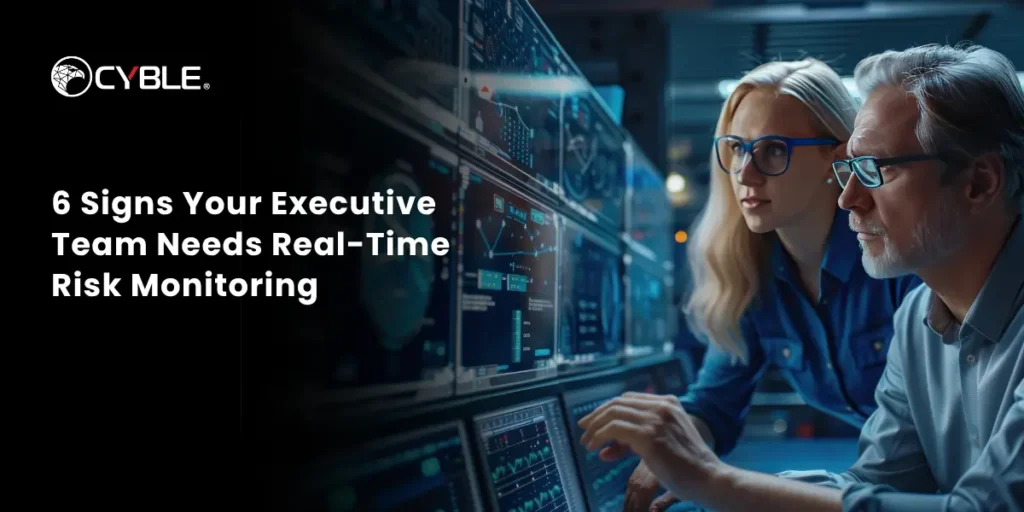
Today, cybersecurity threats are no longer confined to networks and endpoints. High-level executives, from CEOs and CFOs to board members and CISOs, are now primary targets of cybercriminals. Why? Because attackers understand that infiltrating the executive digital footprint is often the fastest way into an organization’s crown jewels.
From spear-phishing executives to impersonation scams and dark web exposure, your leadership team’s online presence has become a potential weak link in your security chain. This is where Executive Risk Monitoring and Real-Time Threat Monitoring come in, not as luxury tools, but as critical components of your CISO security strategy.
In this article we have highlighted six signs that indicate your executive team needs to embrace Executive Threat Intelligence right now.
1. Increasing Incidents of Spear-Phishing and Impersonation
Have your executives been receiving targeted phishing emails? Have employees or clients reported suspicious emails or social messages claiming to be from the CEO?
These are classic signs that your leadership team is being watched, and attacked.
Cybercriminals often use Executive Threat Intelligence tools to map out an executive’s online behavior, identifying the best time and method to strike. With access to personal details, calendar schedules, or even social posts, they can craft eerily convincing phishing emails or impersonate executives in real-time.
Executive Risk Monitoring helps detect such attempts early by monitoring social media, dark web chatter, and leaked personal identifiable information (PII) related to your leadership team. It’s not just about protecting the executive, it’s about protecting everyone who trusts them.
2. Blind Spots in Executive Digital Footprints
Executives live highly public lives, often unknowingly expanding their executive digital footprint every day. From public speaking engagements and online bios to podcasts and published papers, there is a treasure trove of information readily available to bad actors.
Worse, many executives reuse passwords across personal and professional accounts or store sensitive data in unsecured locations. Without Real-Time Threat Monitoring, these actions can lead to dark web exposure, credential theft, and even unauthorized access to VIP systems.
Executive Risk Monitoring tools illuminate these digital blind spots. By providing visibility into where and how your leadership’s data appears online (including the dark web and cybercrime forums), organizations can take proactive steps before attackers strike.
Get real-time threat alerts with Cyble Executive Monitoring Solution
3. Gaps in VIP Account Protection
C-level executives often have elevated privileges across platforms, be it email, financial systems, or business communication tools. These VIP accounts can be a goldmine for attackers.
However, traditional cyber threat visibility solutions don’t always extend to the personal digital environments of executives. If your organization is still relying solely on perimeter defense, you are missing a huge piece of the puzzle.
With C-Suite Risk Management tools like Executive Risk Monitoring, you can extend visibility and control to the accounts that matter most. VIP account protection ensures that executives are not the weak link, but a secured node in your security framework.
4. Regulatory and Brand Risk Is Rising
When an executive is impersonated or breached, it’s not just an IT issue, it’s a brand reputation and compliance crisis.
Think about it: an impersonated CFO communicating false financial data could cause a stock plunge. A breached CEO account discussing strategic mergers could trigger insider trading investigations.
Executive Cybersecurity is no longer about individual protection, it’s a layer of defense for the entire brand. Regulatory bodies are also tightening compliance requirements around executive protection. Failure to demonstrate sufficient C-Suite Risk Management can lead to not just breaches, but legal consequences.
Real-Time Threat Monitoring for executives ensures your organization is not caught off guard. It provides the agility to respond swiftly and mitigate both cyber and reputational damages.
5. Your Current CISO Security Strategy Doesn’t Cover the Leadership Layer
If your CISO security strategy primarily focuses on infrastructure, endpoints, and employee awareness, that’s a good start, but not enough.
Leaders tend to operate slightly outside of normal IT channels, often bypassing standard processes due to their busy schedules or role-specific exceptions. This increases their risk dramatically.
Executive Risk Monitoring fills this gap by focusing on what traditional security controls miss, external threats targeting executives personally. This could include AI-powered security platforms that continuously monitor for new threat signals, leaked information, or real-time impersonations.
Integrating Executive Threat Intelligence into your overarching security strategy ensures your protection scales all the way to the top.
6. You Lack Real-Time Cyber Threat Visibility for Executives
As cyberattacks are speeding up, timing is everything. If you are learning about a breach only after it goes public, or worse, after damage is done, you are operating reactively.
True Executive Cybersecurity demands real-time insights into emerging threats. This includes knowing if a new phishing kit is impersonating your CEO’s LinkedIn profile, if an executive’s credentials just appeared on a hacker forum, or if someone is selling fake C-level accounts on the dark web.
Real-Time Threat Monitoring offers this proactive visibility. It doesn’t just alert your security team, it empowers them to act, mitigate, and neutralize threats before they evolve into full-blown crises.
Why Executive Risk Monitoring Needs to Happen Now
Let’s face it, executives are busy. They often aren’t cybersecurity experts. But they are very much cybersecurity targets.
By investing in Executive Risk Monitoring, you are not only protecting your leaders, you are reinforcing the entire organization’s resilience. Modern threat actors are increasingly bypassing firewalls and zeroing in on people. Your best bet is to beat them at their own game, with Executive Threat Intelligence that’s smart, swift, and always-on.
And while no tool is a silver bullet, AI-powered security platforms have made this kind of monitoring more precise, contextual, and scalable than ever before. They continuously gather threat signals, analyze them in real-time, and provide actionable insights to your security team.
Cyble’s Executive Monitoring solution quietly strengthens your organization’s defense posture. It tracks impersonations, detects dark web exposure, and surfaces leadership cybersecurity threats, all in real-time. Designed with simplicity and depth, it brings clarity to chaos without overburdening your team.
By staying ahead of attackers, Cyble helps you protect what matters most: your people, your data, and your reputation.
Monitor executive threats in real time with Cyble
Conclusion
If your organization shows any of these six signs, from phishing attacks and impersonation to poor visibility over executive threats, it’s time to rethink your approach. Implementing Executive Risk Monitoring and Real-Time Threat Monitoring isn’t about chasing trends, it’s about closing gaps in your armor.
Cybersecurity starts at the top. Don’t let leadership become your entry-point of the vulnerability.