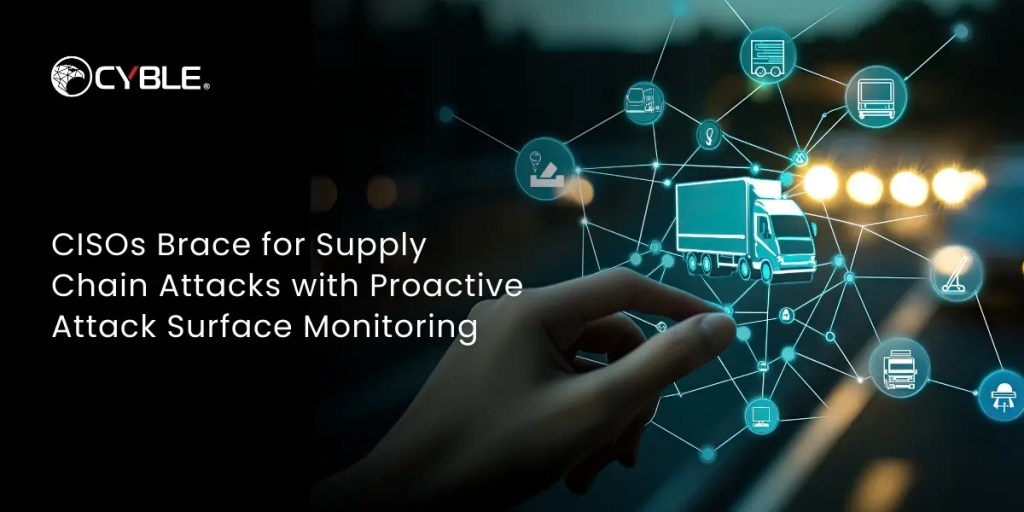
Supply chains are no longer limited to suppliers, warehouses, and logistics providers. Modern businesses depend on cloud services, software vendors, APIs, SaaS platforms, contractors, and technology partners to keep operations running.
That interconnectedness creates efficiency, but it also expands cyber risk.
A vulnerable vendor, exposed cloud server, or compromised third-party application can provide attackers with a path into a much larger organization. As supply chains become more complex, CISOs are looking beyond traditional perimeter security and toward continuous visibility across their extended digital ecosystem.
This is where Attack Surface Monitoring becomes critical.
Instead of waiting for a breach or relying solely on periodic vendor assessments, organizations can continuously monitor exposed assets and identify potential weaknesses before attackers exploit them.
The question is no longer just which vendors an organization works with. It is what those relationships expose.
Why Supply Chain Attacks Are Growing
Supply chains create opportunities for attackers because a single compromised organization can provide access to multiple connected businesses.
Rather than attacking a heavily protected enterprise directly, threat actors may target a smaller supplier or technology provider with weaker security controls. Once compromised, that relationship can become a pathway to downstream organizations.
A software provider, for example, could be compromised and have malicious code introduced into an application used by customers. A logistics provider could expose sensitive credentials. A cloud service could be misconfigured and unintentionally expose business data.
The attack does not necessarily begin with the organization that ultimately suffers the damage.
It can begin several steps away.
This makes third-party risk particularly difficult for CISOs to manage.
The CISO’s Supply Chain Security Challenge
CISOs are now responsible for understanding risks beyond the organization’s own infrastructure.
That includes vendors, contractors, suppliers, subsidiaries, cloud providers, and other third parties.
The challenge is scale. Large enterprises can have hundreds or thousands of external relationships, making manual monitoring impractical.
Vendor questionnaires and periodic security assessments still have value, but they provide only a snapshot. A vendor can deploy a new service, expose a cloud resource, change its infrastructure, or suffer a credential compromise shortly after an assessment is completed.
Continuous monitoring helps close that gap.
A vendor can pass an assessment today and become exposed tomorrow. Continuous visibility helps security teams see the difference.
What Is Attack Surface Monitoring?
Attack Surface Monitoring is the continuous process of identifying and monitoring an organization’s digital assets for changes, vulnerabilities, and potential exposures.
These assets can include:
- Domains and subdomains
- Web applications and APIs
- Cloud infrastructure
- Internet-facing servers
- Email systems
- IoT devices
- Databases
- Public code repositories
- Digital certificates
- Third-party infrastructure
Traditional security tools often focus on assets that are already known and managed internally.
Attack Surface Monitoring takes an outside-in approach, helping security teams understand what is actually visible from the internet.
For supply chain security, this visibility is especially valuable because third-party exposure may not appear in an organization’s internal asset inventory.
How Attack Surface Monitoring Helps With Supply Chain Risk
1. Greater Visibility Into Third Parties
Continuous monitoring can help organizations identify internet-facing assets associated with vendors, suppliers, subsidiaries, and other external relationships.
This creates a broader view of the organization’s digital ecosystem.
2. Earlier Detection of Exposure
Misconfigured cloud resources, exposed services, open ports, vulnerable applications, and other weaknesses can emerge at any time.
Continuous monitoring helps detect these changes sooner instead of waiting for the next scheduled assessment.
3. Better Third-Party Risk Prioritization
Not every vulnerability represents the same level of danger.
Security teams need to understand which exposed assets are connected to critical business relationships and which vulnerabilities present the greatest potential impact.
Combining attack surface data with threat intelligence can provide that additional context.
4. Faster Remediation
The earlier an exposure is discovered, the sooner it can be investigated and addressed.
This allows organizations to move from reactive incident response toward proactive risk reduction.
Attack Surface Management vs. Attack Surface Monitoring
Attack Surface Monitoring is part of the broader Attack Surface Management (ASM) discipline.
ASM covers the full lifecycle of managing digital exposure, including:
- Asset discovery
- Classification
- Vulnerability assessment
- Risk prioritization
- Remediation
- Continuous monitoring
Attack Surface Monitoring focuses primarily on keeping that visibility current.
For supply chain security, both are important. Organizations need to discover external assets, understand their risk, and continuously monitor them as the environment changes.
The Role of External Attack Surface Management
External Attack Surface Management (EASM) is particularly relevant to supply chain security because it focuses on internet-facing assets from an outside-in perspective.
EASM can help identify exposed domains, applications, cloud services, servers, APIs, and other infrastructure that may not be visible through traditional internal security tools.
This can be especially useful when organizations need to understand exposure associated with subsidiaries, vendors, and other third parties.
For example, an organization may discover that a supplier has an exposed application or vulnerable internet-facing service. That finding can then be investigated as part of the broader third-party risk management process.
EASM does not replace vendor assessments or internal security controls.
It adds another layer of visibility.
Dark Web Monitoring Adds Another Layer
Not every supply chain threat starts with an exposed server.
Compromised credentials, stolen data, source code, and corporate information can appear on underground forums and marketplaces before they are used in an attack.
This is where dark web monitoring can complement attack surface monitoring.
Monitoring underground sources can help identify:
- Compromised credentials
- Leaked corporate data
- Stolen information
- Exposed source code
- Threat actor discussions
- Illicit access sales
For CISOs, this provides another perspective on third-party risk.
An external asset may look relatively low risk until intelligence reveals that credentials associated with it have already been compromised.
Why Continuous Monitoring Matters
The external attack surface changes constantly.
New vendors are onboarded. Applications are deployed. Cloud resources are created. Infrastructure changes hands. Acquisitions introduce new environments.
A periodic assessment cannot capture every change.
Continuous monitoring helps organizations identify new assets and exposures closer to when they appear, reducing the window in which an unknown vulnerability can remain exposed.
For CISOs, this means attack surface monitoring should become an ongoing security capability rather than an occasional audit exercise.
The goal is simple: reduce the time between exposure and detection.
How Cyble Supports Supply Chain Security
Cyble Attack Surface Management helps organizations discover, monitor, and assess internet-facing assets across their digital ecosystem.
The platform provides visibility across areas such as:
- Domains and IP addresses
- Web applications
- Cloud infrastructure
- Mobile applications
- Email infrastructure
- IoT assets
- Public code repositories
- Internet-facing services
Cyble combines attack surface visibility with threat intelligence to help security teams understand not only what is exposed, but which risks deserve attention first.
Its capabilities can support continuous asset discovery, external exposure monitoring, vulnerability identification, risk prioritization, and threat intelligence analysis.
Cyble’s broader threat intelligence capabilities can also help organizations monitor for compromised credentials, leaked information, and other indicators appearing across underground sources.
This creates a more complete view of supply chain exposure—across both the visible attack surface and the threat landscape surrounding it.
Don’t wait for a third-party breach to reveal what continuous monitoring could have found earlier. See what attackers can see with Cyble Attack Surface Management.
Best Practices for Supply Chain Attack Surface Monitoring
A proactive program should combine technology with strong third-party governance.
Organizations should:
- Maintain continuous visibility into external assets
- Identify critical vendors and business dependencies
- Monitor third-party exposure between assessments
- Prioritize vulnerabilities based on business and threat context
- Combine EASM with threat intelligence and dark web monitoring
- Establish clear remediation processes
- Track exposure trends over time
The goal is not to eliminate every third-party risk. That is rarely realistic.
The goal is to understand the organization’s exposure well enough to reduce the risks that matter most.
Conclusion
Supply chain attacks demonstrate that an organization’s security perimeter extends well beyond the systems it directly controls.
Vendors, suppliers, cloud providers, software partners, and other third parties can introduce new attack paths into the business. As those relationships grow, organizations need more than periodic assessments and manually maintained inventories.
Attack Surface Monitoring provides the continuous visibility needed to identify changes, detect exposure, and respond before risks become larger problems.
Combined with Attack Surface Management, EASM, and threat intelligence, it gives CISOs a more proactive approach to managing third-party cyber risk.
The supply chain should enable business growth—not become an overlooked gateway for attackers.