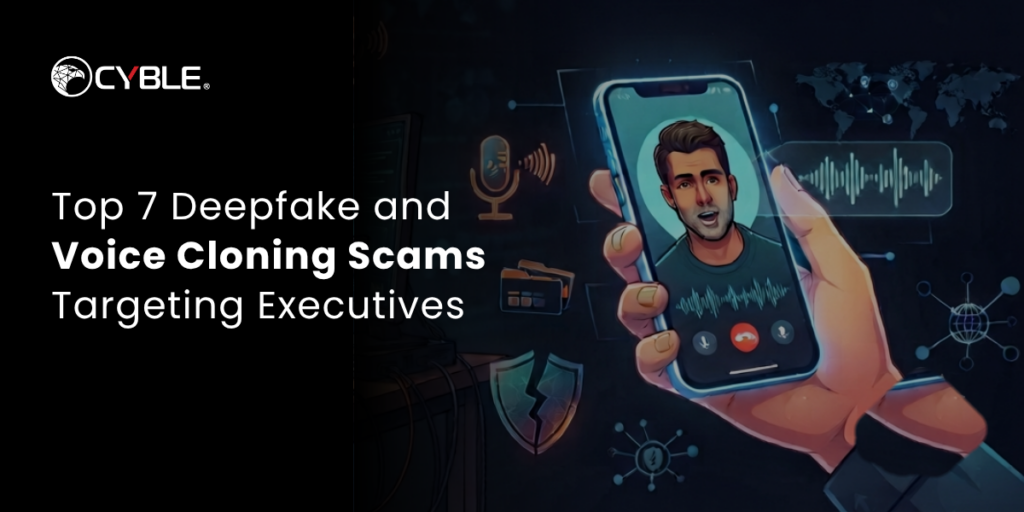
A finance employee joins what looks like a routine video call with the CFO and a few familiar colleagues. Everyone looks right, sounds right, and asks for an urgent transfer. He sends it. Only afterward does it come out that everyone on that call was a deepfake. Cases like this have already happened at real companies, and they’ve become the reference point for a threat that’s no longer rare. Deepfake and voice cloning scams are quickly becoming one of the most effective ways attackers target executives and the people around them.
The technology behind this barely requires effort anymore. A short public clip is often enough to clone a voice convincingly, and every earnings call, podcast appearance, or recorded interview an executive has ever given is sitting in public, ready to be used as training material for exactly this kind of fraud.
Here are seven of the deepfake and voice cloning scams currently targeting executives and the finance, HR, and IT teams around them, along with what actually helps stop each one.
Deepfake Scams Putting Executives and Their Teams at Risk
1. The Fake Video Call Wire Transfer
Attackers use publicly available footage of real executives to generate synthetic video and audio convincing enough to run an entire multi person video call, then use it to authorize a large wire transfer. In documented cases, the employee involved was actively trying to verify the request and still got fooled, because the verification itself relied on seeing and hearing familiar faces, which is exactly what the deepfake was built to fake.
What makes this variant so effective is the group dynamic. A single deepfake voice on a call might raise suspicion, but a full video call with several recognizable colleagues reinforces trust through sheer numbers. Employees rarely question a request when multiple familiar faces appear to agree on it, even when none of them are real.
2. The Urgent Voice Call to Finance
A cloned voice of a CEO or CFO calls a controller or accounts payable clerk directly, usually framed around urgency: a closing that can’t wait, a confidential deal, instructions not to loop in legal until after the transfer clears. This pattern shows up again and again because it exploits exactly how real executives sometimes behave under pressure, which makes the request feel plausible even when it’s rushed.
The confidentiality instruction is doing a lot of the work here. Telling someone not to mention a request to anyone else removes the exact safety net, a second person asking questions, that would normally catch a scam like this before money moves.
3. Deepfake Job Candidates Targeting System Access
Not every scam goes after money directly. There have been documented cases of candidates using deepfake video during remote job interviews to impersonate someone else entirely, sometimes to gain access to corporate systems once hired. This one matters for executives because senior technical and financial roles often come with access that would be damaging in the wrong hands, and remote hiring processes rarely include verification built for this kind of threat.
4. Synthetic Earnings Calls and Market Manipulation
There have been instances of investors and journalists on a call unknowingly listening to a deepfake audio clone of a public company’s CEO making statements that moved market perception. This is a newer and less common variant, but it points at a real risk for publicly traded companies, where a convincing fake statement doesn’t need to fool employees, it just needs to spread fast enough to cause damage before it’s debunked.
5. Synthetic Identity Fraud Using Executive Likeness
Criminals combine AI generated faces with stolen personal data to build synthetic identities convincing enough to pass identity checks at financial institutions, sometimes borrowing an executive’s public likeness to add credibility. These identities get used to open accounts, take out loans, or launder money, often without the executive or company ever knowing their public image was involved until much later.
6. The Spoofed Follow Up Email
Voice and video deepfakes rarely work alone anymore. A cloned voice call often gets followed almost immediately by an email from a spoofed lookalike domain, sending wire instructions that look like they came from legitimate counsel or the executive themselves. This layered approach is particularly effective because the voice call already did the work of building trust before the email even arrived, making the follow up feel like routine confirmation rather than a second attempt at fraud.
Chances are, some of your credentials are already out there. Book a Cyble demo and see for yourself.
7. Payroll and HR Data Requests
Cloned executive voices are increasingly used to pressure HR or payroll staff into changing direct deposit details, sharing employee records, or approving unusual payroll adjustments. This target set gets less attention than wire fraud, but the damage compounds differently, since redirected payroll or leaked employee data creates a second wave of problems long after the initial scam call ends.
Why These Scams Are Working So Well Right Now
People generally aren’t good at spotting a well made deepfake, whether it’s a voice on a call or a face on video. That’s the core problem with deepfake and voice cloning scams. They don’t attack firewalls, they attack the very things employees have always been trained to trust, a familiar face and a familiar voice.
Finance, HR, executive assistants, and IT teams remain the most targeted groups because they manage payments, credentials, and system access directly. Smaller and mid sized companies often carry even more exposure here, since informal approval processes and single person authorization make a convincing fake request even easier to push through without a second check.
Quick Answers on Deepfake and Voice Cloning Scams
How much audio does it take to clone someone’s voice?
Very little. A short public clip, taken from a podcast, an earnings call, a conference talk, or any other recording an executive has ever appeared in, is often enough.
Can people reliably tell a cloned voice from a real one?
Not consistently. Most people struggle to confidently tell the difference on a phone call, and even convincing video deepfakes can be difficult to spot in real time.
What’s the single best defense against these scams?
A callback protocol using a previously verified phone number, combined with a rule that no financial request gets processed based on a voice or video call alone, no matter how convincing it sounds.
What Actually Stops These Scams
The pattern across nearly every real case is the same. Voice and video alone were treated as sufficient proof of identity, and that’s exactly the assumption these scams are built to exploit. The fix isn’t a better filter or a smarter algorithm sitting between an employee and a call. It’s a callback protocol using a known, previously verified number, a mandatory second approver on any unusual transfer request, and a policy that no financial or credential related request gets processed based on a single voice or video call, regardless of how convincing it sounds.
This is also where knowing what’s already exposed about an organization’s executives matters more than most companies realize. Every public appearance, interview, and recorded call becomes raw material for a future clone, and most companies have no visibility into how much of that material is already circulating or how their brand and executive identities are being referenced across the internet.
This is where Cyble’s threat intelligence platform adds real value for organizations worried about executive impersonation. Cyble continuously monitors the surface web, deep web, and dark web for leaked data, brand misuse, and early signs of targeted campaigns tied to an organization’s executives and infrastructure, giving security teams a chance to respond before a cloned voice ever reaches someone in finance.
Deepfake and voice cloning scams aren’t going away, and the technology behind them keeps getting cheaper and more convincing. The companies staying ahead of it are the ones building verification into their process now, before a call like the ones described above lands on their own finance team’s desk.
Find out what’s already public about your leadership team. Book a Cyble demo.