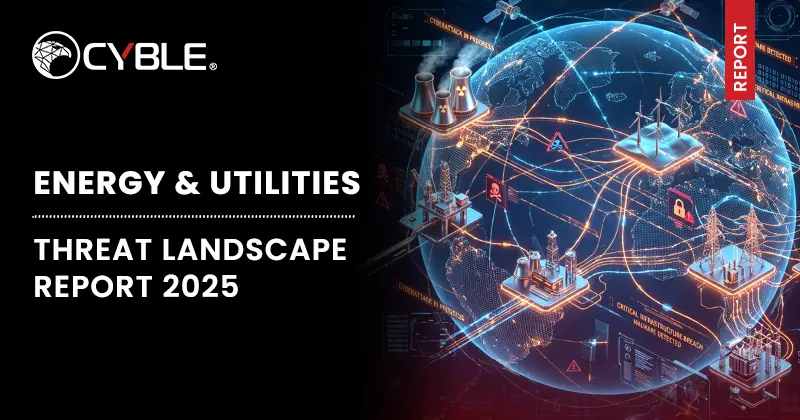
The Colonial Pipeline ransomware attack at the beginning of this decade which shut down fuel supplies to nearly half of the United States was a wake-up call for overeign Cyber Intelligence. Since then, state-backed threat actors have increasingly targeted nuclear facilities, power plants, military networks, and telecom infrastructure across several countries.
These incidents were part of coordinated campaigns aimed at critical national infrastructure. Systems that traditional cybersecurity frameworks were never fully designed to defend against.
For government agencies, the threat landscape looks very different from what commercial enterprises face. Their adversaries are nation-states with vast resources, advanced capabilities, and patience that stretches across years. The targets are not just financial assets or corporate data but include national security systems, diplomatic operations, and the critical infrastructure that citizens rely on every day.
This reality requires a different approach to cybersecurity. One that is termed as the sovereign cyber intelligence.
What Is Sovereign Cyber Intelligence?
Sovereign cyber intelligence refers to the collection, analysis, and operational use of threat intelligence designed specifically to protect national security interests, government operations, and critical infrastructure.
Unlike traditional threat intelligence programs that focus on protecting corporate assets or customer data, sovereign cyber intelligence focuses on threats with geopolitical consequences. These include state-sponsored espionage, sabotage campaigns against infrastructure, intellectual property theft from defense and research organizations, and supply chain compromises affecting national security systems.

Importantly, this intelligence does not just analyze attacks after they happen. It focuses on the earlier stages of cyber operations like monitoring where threat actors communicate, plan, and exchange information before launching attacks.
By identifying signals during the planning phase, government agencies gain early warnings that allow them to strengthen defenses, deploy countermeasures, and stop attacks before they occur.
Sovereign cyber intelligence combines multiple intelligence disciplines. It brings together open-source intelligence (OSINT) from public data, signals intelligence from communications monitoring, cyber intelligence from technical threat analysis, and geopolitical insights that explain how cyber activity fits into broader strategic objectives.
Together, these sources provide a complete picture that no single intelligence stream can deliver on its own.
Why Government Agencies Can No Longer Ignore It
Over the past five years, cyber threats targeting governments and critical infrastructure have evolved significantly. Prime example is the Russia-Ukraine war. Nation-state actors are no longer focused only on espionage. Many are actively preparing for disruption or sabotage operations that could be triggered during geopolitical conflicts.
As a result, the traditional distinction between peacetime cyber activity and wartime cyber preparation has largely disappeared.
Critical Infrastructure Is Under Constant Pressure
Energy grids, water treatment systems, transportation networks, telecommunications services, and healthcare infrastructure are now frequent targets of highly capable adversaries.
These attacks are not random or opportunistic. They are often long-term campaigns designed to map system vulnerabilities, establish persistent access, and position capabilities that could later be used to disrupt or destroy critical services.
For agencies responsible for protecting national infrastructure, reactive security models are no longer enough. By the time a traditional detection system identifies an attack on a power grid or nuclear facility, the damage may already be underway.
Sovereign cyber intelligence offers the foresight needed to detect targeting activity early, identify preparation before execution, and intervene before systems are compromised.
Supply Chains Are the New Attack Surface
Modern critical infrastructure relies on large and complex ecosystems. Technology manufacturers, contract manufacturers, research partners, and IT service providers all play roles in maintaining essential systems.
This interconnectedness creates new attack opportunities.
State-backed threat actors frequently target smaller suppliers with weaker security controls as a way to gain indirect access to larger, well-protected organizations. They steal intellectual property from defense contractors to understand vulnerabilities in weapons systems. They infiltrate research partners to monitor innovation—or even sabotage critical projects.
Traditional security approaches focused on organizational boundaries cannot effectively address these risks. Sovereign cyber intelligence extends visibility across entire ecosystems, allowing agencies to detect compromises before they spread through trusted relationships.
The Risk of Strategic Information Exposure
Beyond infrastructure disruption, governments must also guard against the exposure of sensitive information that could damage diplomatic relations, reveal strategic capabilities, or trigger international tensions.
Leaked diplomatic communications, stolen military planning documents, and exposed research projects can have consequences far beyond the impact of a typical corporate data breach.
Underground forums and dark web marketplaces have become hubs where stolen government data is traded and weaponized. Credentials from government systems often circulate among threat actors, who then use them for additional attacks. Sensitive documents sometimes appear on leak sites before agencies even realize they were stolen.
To address this risk, government agencies need continuous visibility into the underground ecosystems where threat actors operate—visibility that many commercial threat intelligence platforms were not designed to provide.
How Cyble Hawk Supports Sovereign Cyber Intelligence
Cyble Hawk was built as a proactive cybersecurity investigation platform specifically designed for law enforcement agencies, governments, and federal organizations responsible for defending national infrastructure.
Unlike commercial tools that were later adapted for government use, Cyble Hawk was designed from the beginning to address the intelligence requirements of sovereign cyber defense.
Deep Visibility Across the Dark and Surface Web
Cyble Hawk monitors a wide range of sources including dark web forums, encrypted communication channels, criminal marketplaces, and surface web platforms where threat actors coordinate activity.
This is not basic scanning. The platform collects intelligence from restricted and invitation-only communities where sophisticated cybercriminal groups and state-backed actors often operate.
Using advanced deep learning algorithms, Cyble Hawk identifies threat actors and correlates activity across multiple platforms to detect coordinated campaigns targeting government infrastructure.
When threat actors discuss vulnerabilities in critical systems, trade stolen government credentials, or coordinate attacks, the platform can detect these signals in real time—providing early warnings before attacks begin.
Intelligence With Geopolitical Context
A key differentiator of Cyble Hawk is the integration of geopolitical and strategic context into cyber threat intelligence.
Threat intelligence analysts work alongside agencies as extended team members, offering expertise in threat actor behavior, operational patterns, and strategic motivations.
This context allows agencies to understand not only what is happening technically, but why it matters strategically. Analysts can identify patterns that indicate coordinated campaigns, assess adversary capabilities, and explain how cyber activity fits into broader geopolitical developments.
The intelligence delivered through Cyble Hawk therefore helps decision-makers evaluate risks to national security, diplomatic stability, and infrastructure resilience.
Real-Time Alerts for Strategic Sector Exposure
Cyble Hawk provides immediate alerts when compromised credentials, vulnerabilities, or data breaches affect sensitive sectors such as defense, aviation, energy, telecommunications, and government operations.
For example, if military network credentials appear on a dark web marketplace, or if threat actors discuss vulnerabilities affecting critical infrastructure systems, agencies receive instant notifications.
This speed is essential. The time between credential exposure and exploitation can be extremely short—sometimes just hours. Early detection allows agencies to revoke compromised access, patch vulnerable systems, and reinforce defenses before threat actors act.
Insight Into Threat Actor Conversations
Cyble Hawk also provides intelligence derived from conversations within underground forums and encrypted channels.
These insights reveal what threat actors are discussing—such as vulnerabilities they are targeting, organizations they are prioritizing, and tools they are developing.
Access to this intelligence allows government agencies to anticipate threats before attacks occur. Instead of reacting to breaches, they can prepare defenses and disrupt adversary plans while attacks are still in development.
Why Sovereign Cyber Intelligence Is Now Essential
For government agencies and operators of critical infrastructure, cyber threats are no longer just technical issues handled by IT teams.
Nation-state adversaries are strategic, persistent, and well-funded. Their objectives go far beyond financial gain and often involve national security, geopolitical leverage, or long-term disruption capabilities.
Sovereign cyber intelligence platforms like Cyble Hawk provide the specialized visibility, strategic insight, and early warning capabilities needed to defend against these threats.
In a world where cyber operations directly influence national security and critical infrastructure resilience, relying solely on reactive cybersecurity measures is no longer enough.
The real question is not whether governments need sovereign cyber intelligence—it is whether they will implement it before the next critical infrastructure attack happens, or only after it does.
Request a demo to explore how proactive digital risk protection can reduce hybrid and geopolitical threats and help strengthen your security posture.